Daily insights for city builders, delivered every morning at 6 AM ET. I’m Brandon Donnelly — a Toronto-based real estate developer and founder of Globizen. I’ve been writing here since 2013.

Tag: atc

  • 4 design strategies for your cold-climate waterfront

    Photograph Sugar Beach in Toronto by christophmarten on 500px

    Sugar Beach in Toronto by christophmarten on 500px

    Since we’ve been discussing waterfronts lately, I thought I would share this post from ArchDaily talking about 4 ways that cold-climate cities can make the most of their waterfronts.

    They are:

    1. Plan for winter sun
    2. Create plazas that block wind
    3. Break up outdoor spaces with comfort stations (not sure why they just have to be stations)
    4. Design for active winter programming

    These, of course, aren’t new design strategies. Cities have been built around their climates since, probably, the beginning of cities. It wasn’t until more recently that we started basically ignoring local climates and focusing more on what mechanical systems can do to make us feel comfortable.

    But I think that was a mistake. I don’t think that mechanical systems are bad though. I just think that there’s a lot that we can do first – without mechanical systems – to address local climates.

    If you’ve ever sat on a patio during a swing season (i.e. right now) where the wind was blocked and you were in the direct sun, you already know that there’s a lot that can be done without relying on active systems.

    But the other thing I like about this post is that it acknowledges the fact that winter waterfronts require just as much, if not more, design attention than a warm-climate waterfront.

    Saying that we’ll (insert cold-climate city name here) never be Miami or Barcelona or Sydney is just giving up.
  • I would make a terrible politician

    Ever since I was a little kid, I have thought that I would one day get into politics. 

    A lot of it has to do with me wanting to affect positive change, which is also one of the reasons I love real estate development (and one of the reasons I write this blog). Developers might have a bad rap in some circles, but I view it as a mechanism for positive change in the built environment.

    However, I have also felt that politics is something that’s better to do when you have grey hair and you don’t actually need the money to live. That way people take you more seriously and you can, hopefully, just do what you feel is right as opposed to playing the political game.

    But more and more I find myself thinking: Brandon, you would make a terrible politician.

    I don’t want to play games. I don’t want to have to think about which stance will win me the most votes. And I don’t want to have to dance around questions so I can avoid upsetting certain constituents. I’d rather be clear and decisive about what I think is the right thing to do.

    But that doesn’t always work so well in politics. So I think I’ll just stick to building things and writing this daily blog.

  • A petition to Toronto City Council to remove the Gardiner Expressway East

    image

    “If the decision ultimately of the council is to support the hybrid I think frankly it’ll be a major step backwards and you’re going to miss a once in a lifetime opportunity, and I’ll be very frank, we’ll be the laughingstock of the world.” 

    -Paul Bedford, former chief planner of Toronto

    As many of you I’m sure know, I have been a vocal and passionate supporter of removing the eastern portion of the elevated Gardiner Expressway in downtown Toronto. I have written about it so many times that a lot of you are probably sick of hearing about it.

    I’m sorry if that’s the case. But it’s a hot and important topic in Toronto right now. We’re just over 3 weeks away from City Council finally making a decision. That is scheduled to happen on June 9th and/or 10th. 

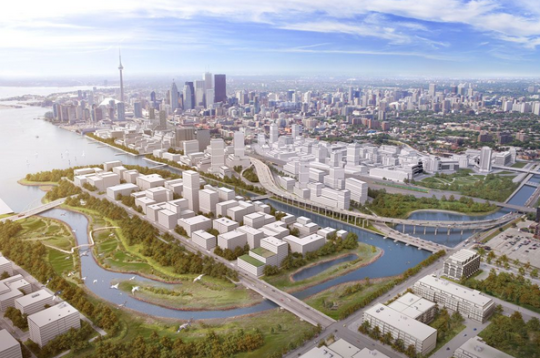
    For the most part though, I was pretty confident that we would ultimately make what many of us believe is the right decision. But then this past week Mayor John Tory went public in his support for the “hybrid” option, which is basically to rebuild the elevated expressway in a slightly different configuration. And that really upset me.

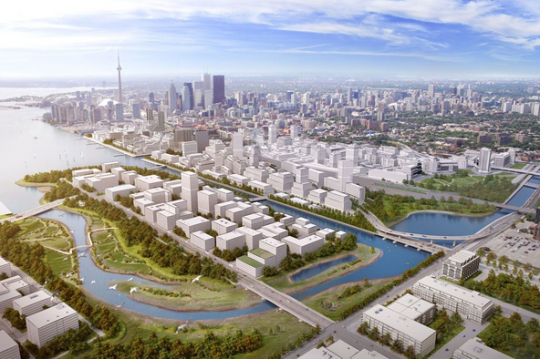
    Here’s what that looks like (versus the remove option shown at the top of this post):

    image

    Have we learned nothing from our past city building mistakes?

    Since that announcement, I went on Twitter every night this week to check out the discussions that were happening around #GardinerEast. And every night it got me so worked up that I then had trouble falling asleep. I have since stopped reading about the Gardiner East before bed.

    But rather than just get frustrated, my friend (a fellow city builder named Stephen Job) and I decided to do something about it and create a petition using Change.org.

    It is a petition that we will ultimately be sending to Toronto’s entire City Council prior to their June 9 meeting and we hope that you will consider signing it and sharing it with your network – regardless of whether or not you happen to live in Toronto. (Although it’ll certainly help if you’re a taxpayer and voter in the City of Toronto.)

    We just finished getting it up and you can check it out and sign it by clicking here.

    Images: Toronto Star

  • The perfect high street

    How do you create and maintain a thriving high street in this era of increasing online shopping? This was one of the questions that Monocle asked at its recent Quality of Life Conference in Lisbon and here’s a video with its recommendations. Click here if you can’t see the video below.

    [youtube https://www.youtube.com/watch?v=Ox2WJwDbuIo?rel=0&w=560&h=315]

  • When the crowd builds a city

    I’ve been following and checking out Kickstarter pretty much since the beginning. But it wasn’t until last night that I backed my first project. 

    After doing that, I immediately started thinking about urban projects that might be able to also get crowdfunded using Kickstarter. How could it be used for city building? A Kickstarter project, after all, just has to be something with a defined scope and a clear end goal.

    Not surprisingly, this has already been happening for many years now.

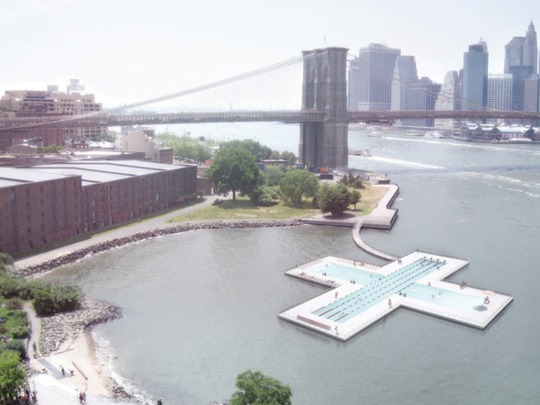
    A great example is +Pool in New York, which is an initiative to build a publicly accessible floating pool that also filters river water. The project launched in June 2011 and by July 2011 they had raised $41,648 USD to build and test different filtration techniques.

    image

    Today, the project is still moving ahead and they are now offering up the opportunity to buy and have your name engraved on tiles within the pool. If I lived in New York, I would be all over this.

    But what’s powerful here is the ability for crowd-based platforms (like Kickstarter) to both get radical new ideas off the ground and to empower local communities to affect change. Here’s a quote from PSFK:

    It’s very difficult to get funding for these ‘out there’ ideas that regular systems might not support. Creators have to take risks and be imaginative, as well as put their ideas out there and let the public decide. There are no traditional guidelines on crowd-sourced platforms—they’re much more meritocratic. You can think in big scope and that changes what gets made and who can access it. Anybody with a couple of doubles can voice what they want to be built, and in that way we see the entire community having a huge say in the design world.

    And when I see projects and platforms like this, I can’t help but wonder if (when) city building is going to become even more decentralized. 

    Last night I was also at an event – being put on by Ryerson University’s City Building Institute – called Bridging Divides: What Can Cities Do? And one of the suggestions that came up was that Toronto needs more local and granular community councils (there are currently 4) in order to bridge some of the divides that are happening in our city.

    But in a world where it’s possible for each and every person in a city to not only have a say but to quickly say it from their smartphones, why can’t we go even more local? Instead of 4, 10, or 90 community councils, why can’t we have everyone more engaged?

    I think we’re headed in that direction.

  • “Regulation for thee but not for me”

    Urbanist Aaron Renn recently published an interesting article in City Journal called “Libertarians of Convenience”. It talks about how today’s urban progressives are selectively favoring deregulation for the things that only matter to them – everything from urban housing to food trucks.

    Here’s a snippet:

    But it’s hard to avoid thinking, too, that some of the inconsistency reflects elite biases. The things that liberal-minded city residents like and want to do—eat from hip food trucks, smoke dope, and other “bourgeois bohemian” pursuits—should be left as free as possible, consequences be damned (raw-milk advocates downplay the nearly 1,000 cases of illnesses caused by it from 2007 through 2012). Those that they consider déclassé—Big Gulps, Marlboro Lights, McDonalds—should be restricted or even shut down. It’s regulation for thee but not for me.

    I like his angle, because we’re probably all – at least a little – guilty of subjectively wanting more of the things we like and less of the things we don’t like.

    What do you think of his argument?

  • The infrastructure sandwich

    Today I came across the following tweet by Brad Tabke. (Brad is the mayor of Shakopee, Minnesota.)

    //platform.twitter.com/widgets.js

    On the left of the image is downtown Memphis. On the right is the Mississippi River. And in the middle is, well, a bunch of elevated highways. 

    It’s a powerful image regardless of where you happen to be from. But if you’re from Toronto, you might know why I’m posting it today.

  • Red stripes, iceberg homes, and laneway houses

    This morning I was reading a CityLab article talking about a homeowner in London’s wealthy Kensington neighborhood who painted her house in red stripes after the city and her neighbors derailed her renovation plans. I’m thinking it is supposed to be symbolic of government “red tape.”

    She had hoped to add a two-floor “mega-basement” to her home, which is curiously enough a thing in London due to how restrictive traditional home expansions can be. Locally they are called “iceberg homes.”

    What’s interesting about this phenomenon is that it shows you how far people will go to find and/or create the space they want in the neighborhoods they want to live in. Kensington is an incredibly wealthy area and so one has to assume that she is not without other housing options.

    As another example, here’s how the article describes her house:

    The candy-striped home in question, for example, is actually a mews house, a kind of outbuilding running along an alley behind a great house, originally intended as a place to tidy horses, carriages and maids away from the main residence.

    So not only did she want to create an “iceberg home”, but she wanted to do so in what was previously a back alley. In Toronto, this home would be called a laneway house.

    What this tells me is that as real estate values rise, people will naturally start to seek out overlooked spaces to repurpose. They will look for some way to carve out a home. And it’s for that reason that I think laneway housing is an inevitable outcome here in Toronto.

  • Name your laneway

    Photograph Urban Explorer by Andrew B. on 500px

    Urban Explorer by Andrew B. on 500px

    Laneway housing is becoming an incredibly popular topic here in Toronto. Lots of people seem to be interested in building, or least living in a compact ground-related laneway dwelling. 

    A big part of this, I think, has to do with affordability (or the perception of affordability). A lot of people want to live in a central urban neighborhood, but it has simply gotten both expensive and difficult to secure low-rise housing. Here’s an example of a young couple in Toronto who went door-to-door in their desperation to find a house.

    I believe that laneway housing has the potential to be a more affordable low-rise housing solution in this city, as well as in many other cities around the world who have a similar urban condition. But today, at least here, it’s not that way.

    Since the City of Toronto does not officially support laneway housing, it would be an uphill to get one approved and you need to be willing to put a significant amount of money at-risk in order to try. It’s unfortunate, but that’s the reality today.

    I’m certain that will change. But it will take a bit more pioneering. The Laneway Project, which I advise, is working to change the way Toronto thinks about its laneways and I know that there are many other small entrepreneurs working on doing the same.

    One of the first things that will need to happen is that we’re going to need to name our laneways. Some of them are already named, but many of them are not. And while this may not seem like a big deal, it is. For laneway housing to become a reality, they will need to have addresses and we will need to think of our laneways as legitimate streets.

    Recently The Laneway Project published a how-to guide called: How to Name Your Laneway. So if you’re interested in laneways and laneway housing here in Toronto, I would encourage you to give it a read and then try and get your local laneway named.

  • Dubai time-lapse video

    I’ve only been to Dubai once. I had a lot of fun, but it’s not my favorite city in the world. That’s largely because I tend not to be drawn to cities where you feel like you need to drive in order to properly experience it.

    But boy, this time-lapse video sure makes the city look cool. Click here if you can’t see the video below.

    [youtube https://www.youtube.com/watch?v=zGtz_GOA79w?rel=0&w=560&h=315]