Daily insights for city builders, delivered every morning at 6 AM ET. I’m Brandon Donnelly — a Toronto-based real estate developer and founder of Globizen. I’ve been writing here since 2013.

Tag: apple

  • Why I write about tech on my city building blog

    I had a friend ask me this week about how I decide what to write on this blog. His comment was that I tend to write about a variety of different topics. He wondered: Isn’t it better to focus on one particular niche?

    The simple answer is that I write about what interests me. And secondary to that is any concern around what will get the most clicks. In fact, I try not to fall into the trap of worrying about the latter. Sometimes it can be paralyzing to fixate on what will appeal most to the tens of thousands of people who read this blog on a regular basis.

    The reality is that my interests are much broader than, say, just design and real estate; though these two topics are clearly central. 

    I learned a long time ago while studying architecture and art history that what we make as a society is generally a product of the cultural milieu at the time. In other words, the built environment doesn’t happen in a vacuum. It is the physical manifestation of what we believe to be true at a particular moment.

    Today, it’s pretty hard to ignore the importance of tech. Think of some of the most valuable companies in the world right now: Apple, Google, Amazon, Facebook, and so on. Now, technology has always shaped our cities, but what makes this moment different is the decisive shift toward software.

    It’s arguably no longer about who can build the best mousetrap. It’s about who can build the best software layer on top of that mousetrap.

    In 2011, venture capitalist Marc Andreessen (previously the co-founder of Netscape) published a widely shared essay called, “Why Software Is Eating the World.” And over the past 6 years he has been proven to be very right.

    The 3 main points he aimed to make with that essay are as follows:

    1. Every product or service that can become software will become software.
    2. Every company will have to become a software company.
    3. The winning companies will be the best software companies.

    Depending on your industry, this may sound ludicrous to you. Certainly in 2011 it probably seemed that way. 

    But a perfect example of this phenomenon is the iPhone. The phone itself is manufactured in China, albeit where a lot of great hardware innovation is taking place. 

    But at this point, phones have become fairly commoditized. The profits that Apple makes from the iPhone disproportionately come from the software layer and the app ecosystem it has developed.

    You could make a similar argument with Tesla. Autonomous navigation – which most of us can agree will have a profound impact on cities – is largely a software challenge. 

    And so if you believe that autonomous vehicles will be a fundamental part of the future of mobility, then it’s not that hard to believe in point number three: the winning car company will also have to be the best car software company.

    Some industries have been less touched by tech and software – real estate being one of them. But if Andreessen is right and it’s not a question of if, but a question of when, then it behooves all of us to think about the potential impacts.

    I love how Andreessen ends this podcast discussion with Barry Ritholtz of Bloomberg and so I’m going to repeat it here to close out this post. He says: “There are no bad ideas. There are only early ideas.” 

    And that’s why I write about tech on my city building blog.

    Photo by Michal Pechardo on Unsplash
  • The Anti-Portfolio

    In the world of venture capital, it is not uncommon to make most of your money off only a small fraction of your investments. Here’s how Fred Wilson describes his firm’s “batting average”:

    “I’ve said many times on this blog that our target batting average is “1/3, 1/3, 1/3” which means that we expect to lose our entire investment on 1/3 of our investments, we expect to get our money back (or maybe make a small return) on 1/3 of our investments, and we expect to generate the bulk of our returns on 1/3 of our investments.”

    I’m guessing that this is one of the reasons why mistakes are more readily embraced – or even celebrated – in venture capital and in tech. It’s part of the DNA of the industry.

    A perfect example of this is something called the Anti-Portfolio. Venture capital firm, Bessemer Venture Partners, has a page up on their website dedicated to “honoring those we missed.” It is a list of phenomenally successful companies that for various reasons BVP decided not to invest in. That is, they had the opportunity but they decided to pass.

    Here’s a taste (copied verbatim from their site):

    • [Apple] BVP had the opportunity to invest in pre-IPO secondary stock in Apple at a $60M valuation. BVP’s Neill Brownstein called it “outrageously expensive.”
    • [Facebook] Jeremy Levine spent a weekend at a corporate retreat in the summer of 2004 dodging persistent Harvard undergrad Eduardo Saverin’s rabid pitch. Finally, cornered in a lunch line, Jeremy delivered some sage advice “Kid, haven’t you heard of Friendster? Move on. It’s over!”
    • [Google] Cowan’s college friend rented her garage to Sergey and Larry for their first year. In 1999 and 2000 she tried to introduce Cowan to “these two really smart Stanford students writing a search engine”. Students? A new search engine? In the most important moment ever for Bessemer’s anti-portfolio, Cowan asked her, “How can I get out of this house without going anywhere near your garage?”

    As I was going through BVP’s Anti-Portfolio, I immediately thought about how different this sensibility is compared to the real estate industry. I mean, could you imagine a developer celebrating all of the sites she or he passed on and all of the projects that lost or made no money?

    One of the reasons you do this is to learn from your mistakes. So perhaps we could all use some sort of “anti-portfolio.”

  • The self-driving car arms race

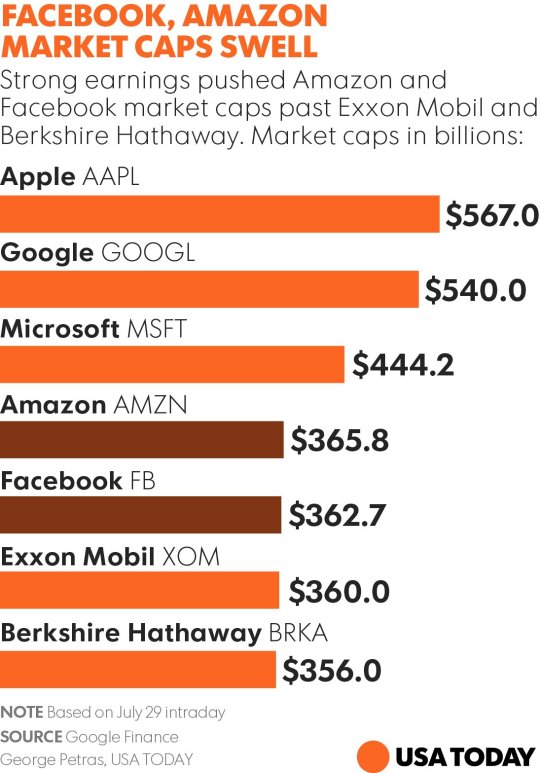
    Earlier this month, I came across the following chart from USA today. 

    image

    It was based on market caps as at July 29 and so the order wouldn’t look quite the same today. Still, here are the largest companies by market cap and the top 5 are US consumer-facing technology firms.

    Remember when it was a big deal that Apple had surpassed Exxon Mobil as the world’s most valuable company?

    We are living in a tech-driven world.

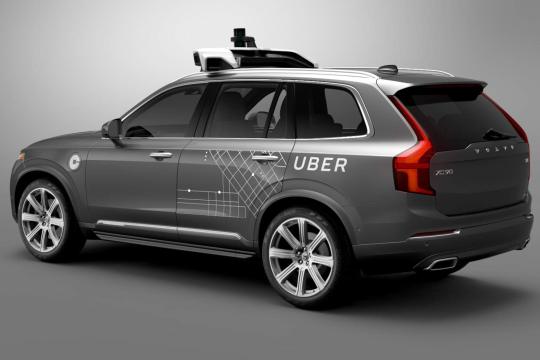
    Then yesterday, I was reading this New York Times article talking about Uber’s acquisition of Otto (a startup focused on self-driving truck technology) and its plans to allow riders in Pittsburgh to summon self-driving vehicles later this month.

    The vehicle will be a tricked out Volvo:

    image

    These two snippets from the NY Times stood out for me:

    Suddenly, it seems, both Silicon Valley and Detroit are doubling down on their bets for autonomous vehicles. And in what could emerge as a self-driving-car arms race, the players are investing in, or partnering with, or buying outright the specialty companies most focused on the requisite hardware, software and artificial intelligence capabilities.

    “There’s an urgency to our mission about being part of the future,” Travis Kalanick, Uber’s chief executive, said on Thursday in an interview. “This is not a side project. This is existential for us.

    The way it will work in Pittsburgh this summer is that the self-driving Volvos will still arrive with a driver, in addition to a sidekick in the passenger seat taking notes about how the vehicle is performing. But the goal is to start weaning us off of human drivers. These pilot rides will be free to start.

    This is quite possibly the start of a general change in terms of the way cities operate (quote from Bloomberg):

    In the long run, Kalanick says, prices will fall so low that the per-mile cost of travel, even for long trips in rural areas, will be cheaper in a driverless Uber than in a private car. “That could be seen as a threat,” says Volvo Cars CEO Hakan Samuelsson. “We see it as an opportunity.”

    Uber is currently logging about 100 million miles per day. Hopefully it is clear at this point that this is not as simple as ride sharing vs. traditional taxis. Cities who are thinking about it in this way are thinking short-term and missing the bigger picture.

    Companies such as Uber, Tesla, and Google are aiming for a fundamental rethink of urban mobility. There is an arms race going on that I believe will completely eradicate the need for human drivers.

  • Towards a walletless society, almost

    image

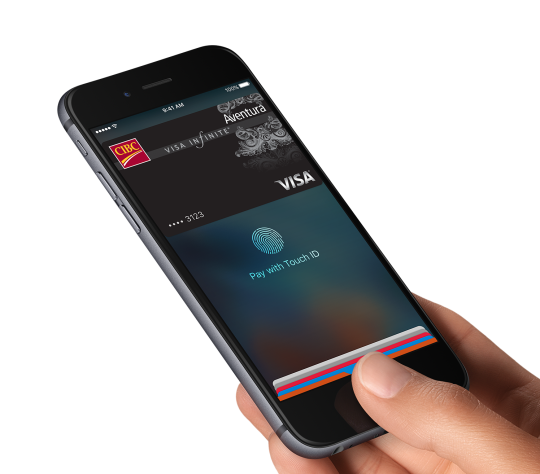
    Today I am one step closer to not only going cashless, but also going walletless.

    This is going to be old news for those of you in the U.S., but yesterday, all 5 of Canada’s big banks signed on to Apple Pay. Before yesterday, you had to have an American Express credit card – which I do not have – to use Apple Pay in Canada. Now you can use a debit and/or credit card from these institutions.

    What’s great about Apple Pay is that it can be used anywhere that contactless, or tap, payments are currently accepted. And since this is pretty commonplace in Canada – more so than in the U.S. I think – Apple Pay can, at least in theory, be used almost anywhere.

    Being the early adopter and geek that I am, I went out for lunch today determined to test out Apple Pay. As I pulled out my phone to pay for lunch, the guy told me: “That’s not going to work. Other people have tried before.” But I tried anyway and, boom, it worked like magic. The transaction amount popped right up on my screen.

    I am pretty excited about this for a couple of reasons. 

    Firstly, it’s more secure. Apple Pay works in tandem with the iPhone fingerprint scanner. So even if I were to lose my phone, nobody would be able to charge anything to it. That’s not the case with a lost wallet. Anyone can tap a credit card to buy something.

    Secondly, Apple is working on allowing reward cards to be stored in its Wallet app. I am terrible about remembering to collect rewards and use gift cards, so anything that consolidates and simplifies is a positive in my view.

    Thirdly, I like to go to the gym and go cycling with just my phone and headphones. I don’t like carrying around my wallet. I’m always afraid that I might lose it or someone might steal it from a locker. So I try and leave it at home. Now I can do that and still pay for stuff – assuming my battery will last that long.

    Of course, it’ll be awhile until we can all really go walletless. I’m not aware of any significant push to digitize government IDs. But it will happen. (Does that mean there will be no more fake IDs for underage drinking?)

    As this transition happens, I can’t help but think of all the small businesses that only accept/use cash and probably hide some of their earnings. I suspect it’s going to be a lot harder to do that in the future.

    I’m also thinking about how transit agencies are going to have to quickly get onboard with this technology. Here in Ontario, we’re still rolling out a card-based payment system. And cards are about to disappear; perhaps sooner than most people think.

    Image: Apple

  • Can starchitecture trump soul-crushing sprawl?

    Hunter Oatman-Stanford just published a longish read over on Collectors Weekly that talks about the history of suburban office complexes in America. That part alone makes it an interesting read.

    But he also makes the argument that innovative companies like Apple and Google are still stuck in a midcentury suburban mindset with their new mega headquarters:

    “I look at Apple’s Norman Foster building, and it’s 1952 all over again,” Mozingo says. “There’s nothing innovative about it. It’s a classic corporate estate from the 1950s, with a big block of parking. Meanwhile, Google is building another version of the office park with a swoopy roof and cool details—but it does nothing innovative.”

    Others have made this same argument. Back in 2013, Wired published an article talking about why Apple’s new Norman Foster spaceship could result in them losing the war for tech talent. 

    And if you read the piece in Collectors Weekly, you’ll see just how little, in some cases, the office environment has changed since the middle of the 20th century.

    Back then, we also had big name starchitects designing suburban head offices for innovative companies. Below is a photo from the GM Technical Center in Warren, Michigan. It was designed by Eero Saarinen and it opened in 1956.

    image

    There’s lots of research that suggests that, today, both entrepreneurs and capital are flocking to urban centers, instead of the suburbs. And I certainly don’t need to repeat that to this audience.

    But given this shift, I think we will increasingly view the suburban sprawl of places like Silicon Valley as a serious competitive disadvantage. I mean, I am sure these new buildings will be lovely, but I certainly wouldn’t want to work there. 

    Would you?

  • Towards a cashless society

    I increasingly never carry cash on me. I just never think to take out money and, when I do, I hate paying for things and getting change back. That change just ends up in a “change jar” in my apartment and then never comes out ever again. I keep telling myself that I need to buy coin rolls but that never seems to happen.

    Lucky for me, it’s pretty clear that many cities and countries are quickly headed towards a cashless society. It’s pretty easy to get by in most cities today without cash. Here in Toronto, I use Uber and my PRESTO card to get around. I can use my phone for many purchases like coffee. And I can use my credit/debit cards for everything else. I never really thought about it until recently, but I have unintentionally gone almost completely cashless.

    But of course it’s not just cash that is going to disappear; it’s also our physical wallets. Just this week Fred Wilson wrote a post on his blog about how he forgot his wallet at home and how Apple Pay came to the rescue at Whole Foods. I can’t wait until more banks roll this out in Canada. It’s also encouraging to see that under “coming soon” on the Apple Pay website, the Toronto Transit Commission is listed. I guess that means it will be integrated with PRESTO.

    However, this transition is not happening in the same way everywhere. There are many countries that still prefer cash. According to CNN (November 2015), only about 10% of people in Indonesia and the Philippines would prefer to pay with a credit card. And it’s for this reason that Uber now accepts cash in a number of countries. It’s what those customers wanted. I find this interesting though, because not having to carry cash is one of the main reasons I use Uber.

    Of course, there’s also the question of what happens to people who are currently not connected in anyway to electronic forms of money. I get asked by people on the street for change at least every day when I walk around Toronto. But there is actually no way for me to transmit the money I have to them. I don’t carry cash and I certainly don’t carry change.

    I would be curious how many of you have gone or are close to going cashless. And if you are operating cashless, did you even notice the transition happening?

  • [Video] Gang of Four

    Scott Galloway, professor of Marketing and Brand Strategy at NYU Stern, recently delivered a presentation on the Gang of Four: Apple, Amazon, Facebook, and Google. These dominant companies are also often referred to as the “Four Horsemen.”

    The video is about 16 minutes long and I would highly recommend that you give it a watch.

    It’ll be like drinking from a firehose, but there are so many fascinating takeaways. You’ll also quickly discover how far reaching the societal impacts of these companies have been and will likely be in the future.

    If you can’t see the video below, click here.

    [youtube https://www.youtube.com/watch?v=jfjg0kGQFBY?rel=0&w=560&h=315]

  • Foursquare uses their global foot traffic data to accurately predict iPhone sales

    I am a fan and long time user of Foursquare – now known as both Foursquare and Swarm.

    Foursquare has struggled against competitors such as Yelp.com when it comes to local business recommendations. And I have less than 100 friends on my Swarm. It doesn’t seem to be that popular here in Toronto.

    But I’ve always loved the data collection aspect of Foursquare / Swarm. Even though most people don’t seem to care about that. When I check-in somewhere, such as the gym, it’ll tell me how many weeks in a row I’ve been there, whether it’s a new personal record, who else is nearby, and a host of other things.

    I’ve always felt like there was so much potential in all of the data it was collecting.

    Well the company is starting to make better use of that data. Recently they used their foot traffic data at Apple stores (I am assuming this goes beyond just check-in data) to predict the number of iPhones that Apple was going to sell globally following the launch of the 6s and 6s Plus.

    They predicted between 13 to 15 million handsets and it turns out they were right:

    This validates the accuracy of our prediction and while we’re proud of the result, we certainly aren’t surprised. Foursquare’s data is essentially the world’s biggest panel of foot traffic data — we have the best sense of the trends and patterns of the movement of people and their phones around the world.

    This is powerful stuff. If there were a way for me to be bullish on Foursquare beyond just writing this post, I would be.

  • Are we becoming more or less entrepreneurial?

    Aaron M. Renn of The Urbanophile, recently wrote an interesting article in Governing called, Where’s America’s Entrepreneurial Economy? In it, he argues that despite the fact that there’s a perception that entrepreneurship is on the rise, overall rates are actually declining.

    The Brookings Institution found that so-called “firm entry rates” have declined since the 1970s and that they suffered a steep fall post-2005. And though millennials are often seen as an entrepreneurial generation, The Wall Street Journal reports that business ownership among those under the age of 30 recently hit a 24-year low. Self-employment has seen a similar downward trend. A study by Economic Modeling Specialists International found that both the total number of self-employed and their share of jobs have fallen since 2006.

    His argument is that outside of tech — where yes, the barriers to entry have fallen significantly over the years — it has actually become harder to start a company in a lot of other cases. And he specifically mentions two industries where he believes that is very much the case: construction and real estate.

    Why is that?

    Well, he cites a number of possible factors, one of which is increased licensing requirements for many industries. But the two most interesting for me are slow disruption cycles and the presence of large dominant firms.

    Real estate has both of those. 

    It’s also a capital intensive industry. And it’s becoming harder for smaller private players to compete with larger institutions and pension funds who struggle with “moving the investment needle”, not with access to capital. Real estate is no longer the fringe asset class it once was.

    In contrast, you have the tech space with fast disruption cycles and low barriers to entry. Yes, you also have large dominant players (Apple, Google, Facebook, Amazon, and so on), but even they don’t have complete immunity in an environment where new ideas frequently trump access to capital.

    A culture of entrepreneurship across all industries is important for our society. I hope we never lose that.

  • Spring forward with Apple’s new watch

    image

    Today was Apple’s big “Spring Forward” event. We already knew the Watch was coming, but now we know that it’ll be available for sale on April 24, 2015 and that their high-end “Edition” line will start at just $10,000.

    Within the tech community, there are mixed opinions when it comes to the Apple Watch. Some think it’ll be a total flop. Some think it’ll be the next iPhone. And some think it’ll do reasonably well, but that it just won’t be the next category killer for Apple.

    I personally think it will do really well. 

    I think there are enough use cases for which looking at your wrist is a better experience than pulling out your phone – particularly for quick glance activities. Think payments, transit fares, airline tickets, location-based notifications, and so on. 

    However, one of the big challenges for Apple Watch will be that they’re trying to replace an entrenched fashion piece. So not only is Apple trying to solve a problem that most people didn’t know they had, but they’re also trying to get people to give up their Movado or Patek Philippe – which is why they created a super high-end line.

    Whatever the case may be, I plan to pre-order a Watch next month (just the regular one, not the $10,000 one).

    I’m excited to try the health features (it’s a passion of mine). I’m excited to see what kind of data this new device generates both for me personally and in aggregate. And I’m excited to see what clever software developers end up creating for this new platform. Because that’s where the real potential lies.

    It might not seem like a big deal to move a computer from your pocket to your wrist (assuming people are willing to do that). But I think we’ll all be surprised at what kind of new ideas that generates.

    Hopefully I’ll soon be able to board a Toronto streetcar and tap my wrist to pay the fare. That would certainly be a civilized way to travel.

    What about you? Do you plan on buying an Apple Watch?