
Daily insights for city builders, delivered every morning at 6 AM ET. I’m Brandon Donnelly — a Toronto-based real estate developer and founder of Globizen. I’ve been writing here since 2013.

Tag: apple

  • How smartwatches will augment location

    image

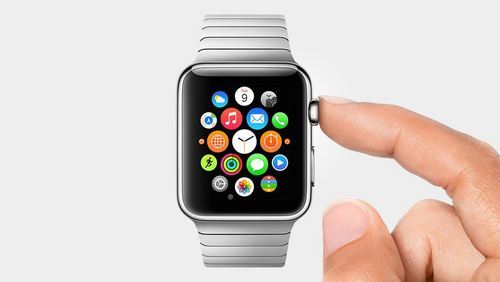
    So the rumors were right. Apple released a watch today. There will be 3 different “collections”, but lots of flexibility in terms of how each can be customized. There’s a big emphasis on health and fitness monitoring. Prices start at $350. And you’ll need an iPhone. Though you won’t be able to get one on your wrist until next year.

    Who knows whether or not it’ll catch on in the same way that iPod and iPhone did, but I think it has a damn good shot (more on this below). They’ve clearly put a lot of thought into both usability and the whole fashion side of the equation, which obviously needed to be done. Given that most people today use their phone for the time, the watch market strikes me as being heavily about style.

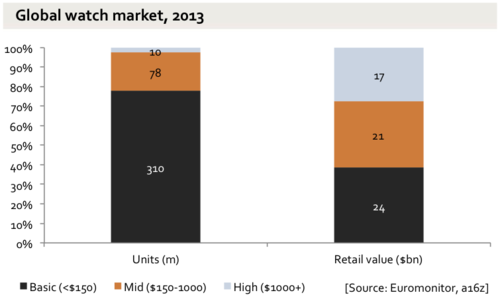
    In case you were wondering, here’s the watch market size as of 2013 (courtesy of Benedict Evans):
    image

    A lot of you might be skeptical about the need for a computer on your wrist (remember those watch calculators from the 80s?). But I think this time is different. Consider the number of people that now walk around with their phone in their hand and/or immediately pull it out whenever they have a free moment. We’ve become reliant (okay, addicted), to notifications and information.

    But in many of those cases, the smartphone isn’t the most efficient medium to be delivering those messages. Just like it’s not ideal to have to reach into your pocket to figure out what time it is, I think the watch could emerge as a new and better medium for a bunch of other pieces of information. And the big one could be location-aware or contextually-aware notifications.

    Here’s a tweet from Dennis Crowley – founder of Foursquare (Swarm) – talking about that exact thing:

    So what does this even mean?

    It means walking into a restaurant and having a tip pop up on your watch telling you what the best dish is (as shown in the tweet above). It’s driving down the street and having your watch notify you that there’s an open house 3 blocks away (and then giving you directions). It’s walking into a condo building and having your watch tell you that one of your friends is having a party on the 23rd floor. And so on.

    All of these notifications are currently already possible on your phone, but it’s not the ideal place for many of them. Which is why we’re all walking through life looking down at our phones. So while a computer strapped to your wrist may feel like we’re going further down that rabbit hole, it may actually free up more of our hands and our attention.

    And I’m sure there are many other possibilities that nobody has even thought of yet. Location just feels like a big one to me.

    //platform.twitter.com/widgets.js

  • Real artists ship

    Last night at 10pm I finished my last MBA exam, ever.

    I’ve spent the past 2.5 years completing my MBA part-time at the Rotman School (at the University of Toronto). Since I had already done a 3-year masters (I know, it’s a lot of school), I had decided that my opportunity costs were simply too high and I wanted to remain working.

    But in order to do that, it meant I had classes from 7-9am and then went to work for the day. This past semester I had those morning classes 3 times a week. It’s made for an intense 2.5 years, especially when you add in group meetings, tutorials and other commitments.

    But as much as I’m happy to be finished the program (I fast tracked to finish a semester early), there’s always something bittersweet about closing one chapter and moving onto another.

    Since 2011, being a “MBA student” has been part of my personal brand. I would talk about the classes I was taking, and I would try and apply what I was learning to what I was doing in real life—both professional and personal. Believe it or not, I once had a debate with a Baptist Minister over the discount rate I used in one my calculations for a lease agreement.

    And while I have learned a lot through almost 6 years of graduate education in both Canada and the US, this is in many ways only the beginning. When I was younger I used to tell myself that my 20s should be about formal education, exploring, and crafting my identity, and that my 30s should be about execution.

    Well now it’s time to execute. In the words of the Steve Jobs: “Real artists ship.

  • The Toronto font

    Susan Kare was the screen graphics and font designer for the original Apple Macintosh computer in the 1980s. Being from Philadelphia’s affluent Main Line, she initially proposed that the various fonts be named after the railroad stops along it.

    However, when Steve Jobs asked where the names had came from, he contested that, if the fonts were to be named after cities, they should be named after “world-class cities”, rather than small ones that nobody had ever heard of.

    image

    And since that’s what Jobs wanted, that’s what Jobs got. The fonts were renamed: Venice, London, Athens, Toronto, Chicago, New York and Geneva. Some of these font names you’ll probably still recognize but some, including Toronto, were eventually abandoned. 

    The Toronto font was removed from System 6 onwards. So from 1988 onwards.

  • Pay what you want

    In my pricing class this morning we looked at the strategy used by Radiohead with the release of its In Rainbows album. For those of you who aren’t fans, what they did was offer up the new album via their website on the basis that customers could pay whatever they want.

    At first blush this probably sounds ridiculous. But if you break it down, it turns out to be pure brilliance.

    First, it’s important to understand how pricing overall works in the music industry. In the olden days when people still bought CDs, an artist might make 15% of that sale price. So if you buy an album for $14.99, the artist’s royalties would be in and around the range of $2.25. The rest goes to the record label, their overhead and so on.

    With the advent of iTunes, artists still make around 15%. But now a typical album costs $9.99. This is because overhead costs are lower for an online-only store. Still, the artist now only makes $1.50 or so per album sale.

    In case the of Radiohead, their record label contract had expired and so they decided to self release In Rainbows. This obviously means that they were able to cut out a lot of overhead and other expenses. But would it not have been better to just sell the album for a fixed, but discounted, price?

    The thing is, when you give people the option of paying nothing, you maximize your potential distribution. This is good when you’re trying to sell concert tickets, merchandise and other revenue producing items in the future.

    But interestingly enough, when you give people the option you also maintain a business model. In this case, it turns out that, on average, people paid over $3 per album. This may sound irrational, but people do it for a number of reasons: because they’re big fans, because they want to support the artist, etc.

    Whatever the reason, Radiohead actually brought in more per album than if they had gone through a record label and/or sold through iTunes. In fact, In Rainbows netted the group over 8x more than their previous album Hail to the Thief – which was released through a record label. 

    This got me thinking.

    What other markets would be well served by a pricing model such as this? Could you make parking a pay what you want service? I know that Shakespeare in High Park uses the model. So does it only work for artistic markets where people feel an emotional connection? I certainly don’t think we could sell condos using this approach.

  • Gentrification and corporate shuttle buses

    A couple of months ago I had coffee with an urban planner who had recently relocated from the Bay Area back to Toronto. One of the interesting things that came up during our conversation – that I hadn’t really given a lot of thought to before – was how corporate shuttle buses (from the likes of Apple, Google, Facebook and so on) could be impacting cities.

    On the surface, they seem fairly benign. Most of the big tech companies are located outside of San Francisco, but young smart people today like living in cities. So let’s run shuttles buses that take people back and forth. Employees get to live the life they want and employers get broader access to human capital. It seems like a win-win.

    But in reality, some argue that these shuttles buses reinforce a powerful trend already plaguing the region: The alienation of non-tech people. George Packer of the New Yorker called the buses “a vivid emblem of the tech boom’s stratifying effect in the Bay Area.”

    What I wonder though is to what extent these buses are not just an emblem, but an actual driver of stratification and other negative outcomes. The first concern that comes to my mind is the possibility for this to lead to infrastructure disinvestment. Already there seems to be a philosophical divide around transit (see BART strike).

    Wired just published an interesting set of maps that try and map “Silicon Valley’s gentrification problem through corporate shuttle routes.” They’re worth checking out. It’s also interesting to see how they collected the data; it was a fairly messy process.

  • When you grow up, you tend to get told that the world is the way it is and your life is just to live your life inside the world, try not to bash into the walls too much, try to have a nice family, have fun, save a little money. That’s a very limited life. Life can be much broader, once you discover one simple fact, and that is that everything around you that you call life was made up by people that were no smarter than you. And you can change it, you can influence it, you can build your own things that other people can use. Once you learn that, you’ll never be the same again.

    Steve Jobs