Daily insights for city builders, delivered every morning at 6 AM ET. I’m Brandon Donnelly — a Toronto-based real estate developer and founder of Globizen. I’ve been writing here since 2013.

  • Bookings are now open for Parkview Mountain House

    December 12, 2024 · View original


    For the last 16 years, I have been going on an annual ski and snowboard trip with some of my closest friends from Penn and from Toronto. Two years ago we went to Park City. Last year we went to Les 3 Vallées. And this winter we’ll be going to Hokkaido, which has been on my bucket list for a very long time. I enjoy doing a lot of different sports, but nothing comes close to snowboarding for me. It’s my first love. There’s just something about being in the mountains. So I look forward to our “annual” all year.

    Because of this, I have long had the goal of building a house and short-term rental in the mountains. Firstly, I felt that there weren’t a lot of design-focused options in many mountain towns. You know, something clean and minimal. And secondly, I wanted a place that could embody and share our love of the mountains with others. As many of you know, this resulted in Parkview Mountain House. Globizen partnered with two regulars on the trip and we created what we refer to as a “creative retreat.”

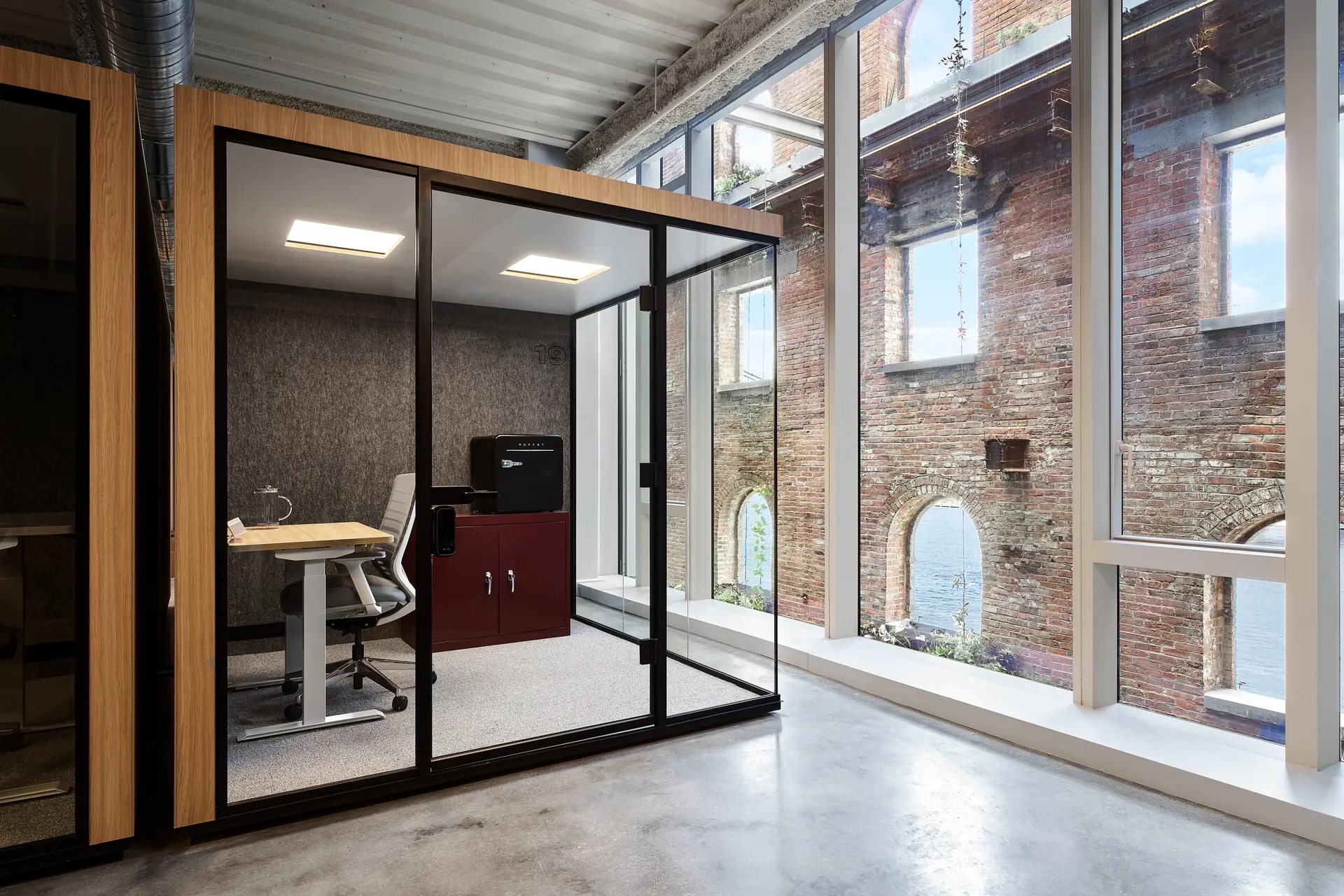
    Here are a few photos of the house:

    Today, I’m super excited to announce that bookings are now open at PMH! If you’d like to book a stay, you can visit AvantStay’s website (who is our hospitality manager) or you can book through Airbnb, if you prefer that. Because we’ve just gone live, all of the rates are at an introductory level while we build up our initial review base. So now is a good time to get something in the calendar this winter (or next summer which is also a really beautiful time). Neat B and I, and a few friends, will be there later this month and we can’t wait.

    Cover photo by Alex Moliski on Unsplash

  • Everything is branded

    December 11, 2024 · View original


    Every project in Miami is now a branded residence. This is not exactly true. But it’s mostly true. What I heard over the last two days at Elevate is that Miami is the second most active city in the world when it comes to branded residences (after Dubai).

    So much so that when a developer sits down with a prospective sales team, one of the first questions they will ask is, “cool, so what’s the brand?” Is it Elle? Dolce & Gabbana? Or Pagani? You need a brand. And on average, the end pricing premium is somewhere between 20-30%, in exchange for paying a 3-5% licensing fee (on total revenue).

    This makes sense. Brands have value. And I agree with Daniel Langer — who presented at the conference — that there is “added luxury value” when it comes to brands that are truly premium and luxury. It’s the only way to explain why certain goods & services command a premium. Consumers don’t generally pay more for something for the hell of it. They pay more because they believe that they are getting more value.

    One interesting example that Daniel gave is a research study involving two groups of people looking at basically the same photo of a woman getting of a car. The only difference is that in the first photo, she is getting out of a Volkswagen, and in the second photo, she is getting out of some fancy car. I can’t remember which one, but just know that it’s fancy and expensive.

    Now, the two groups had no idea this was a study related to “luxury” and they had no idea there was another group and photo, but when comparing the results, the differences were measurable. The fancy car improved perception of the woman in virtually every dimension: she was thought to be more competent, intelligent, attractive, and the list goes on. This is interesting. It demonstrates that brands matter.

    So again, it’s no surprise that developers are “borrowing” hotel, fashion, car, and many other brands to strengthen the perceived value of their projects. It makes economic sense. But at the same time, I think there are different ways to go about this and I worry about the long-term value and resiliency of some of these branded projects.

    For example, in some cases, the brand just seems like a superficial add-on to an otherwise banal project. And in these situations, it may work out for the developer in the short term, but at some point, people will come to the realization that there isn’t actually anything differentiated.

    To do it well, you want the brand to permeate the project and you need it to survive after completion. This is why hotel brands are a natural fit and what started this category — they have property brand standards and they are typically there after construction is complete and the building is operational.

    There’s also the peculiarity that in, adopting a branded residence approach, the developer is by default relegating their own brand to a backseat position. And so there are developers, including one panelist at this conference, who flat out reject this approach — they want to manage, control, and grow their own brand, not somebody else’s.

    This is a reasonable approach, but it’s a longer game. Brand equity isn’t built overnight; it takes time and consistency. Not every developer has the benefit of being in this position, or maybe they don’t care to be. They want to remain entrepreneurial and nimble and just tool up on a project-specific basis.

    So I guess the answer to the question of whether to brand or not is that it depends on your approach and on how you execute. But regardless, know that this is a massive business and that Miami is one of the branded residence capitals of the world. In the most desirable submarkets, it certainly feels a lot like table stakes.

  • Weights and measures

    December 10, 2024 · View original


    YouTube video

    Canada is a metric country. We started adopting the metric system in 1970 and in 1971 we got the Weights and Measures Act. But even though we are officially a metric country, it is still common to use the imperial system in everyday life. For example, my driver’s license says 190 cm, but I would never tell someone this, unless I were in Europe. I would use feet and inches.

    The other area where it is common to use the imperial system is in construction and real estate. Officially, all drawings submitted to a municipality need to be in metric. Typically millimeters are used, meaning a common residential floor-to-floor height in Toronto works out to something like 2950 or 3000 if you want 9 feet clear to the underside of each slab.

    As you can see, in design and construction it is very common to switch back and forth between millimeters and feet/inches. Marketing floor plans are typically always in square feet as well. A lot of this, I’m sure, has to do with our historical ties to the UK and our deep integration with the US market.

    But the reality is that switching back and forth is inefficient, and imperial weights and measures feel like a random and outdated system. Nate Bargatze does a hilarious job of highlighting that in this SNL skit called Washington’s Dream. So I don’t know about you, but I’m ready to go full metric. I wonder what it will take for the US to finally get on board with the rest of the world.

    (Thanks to my business partner Lucas for sharing the above skit with me. I’m a big Nate Bargatze fan.)

    Cover photo by patricia serna on Unsplash

  • Elevate 2024

    December 9, 2024 · View original


    I just landed in Miami for the annual Elevate conference that is taking place here at the Fontainebleau Hotel. I’m an ambassador for the event and I’m also moderating a panel on Tuesday afternoon about resident experiences in multi-family buildings. So for the next few days, I suspect I’ll be writing about the conference and some of my takeaways.

    I love Miami. It’s one of my favorite cities. I love the weather. I love the vibe. I love the entrepreneurial spirit. And I love that Spanish can feel like the first language here. It’s almost always the first thing I hear when I get off the plane and there’s something oddly comforting about that even though I don’t speak a word of it. Maybe once I’ve mastered French I’ll turn to Spanish.

    What’s less great about Miami, though, is the traffic. Between Art Basel and the herd of elephants on the beach that everyone is talking about right now, the traffic in this city is bad. Like, Toronto bad. As I write this post, I’m looking out the window at Collins Avenue, and it’s been completely jammed the entire time.

    The Miami region is car oriented and car-oriented cities do not deal well with sudden spikes in demand. It usually breaks them. They’re also harder to scale up. So this region will have some big decisions to make as it continues to grow. That said, I’m noticing a lot more bike lanes across Miami and Miami Beach, and lot more people cycling and using e-scooters. That’s good.

    I know there’s a fairly large contingent of Toronto real estate people here this week, so if you’re also in town and attending Elevate, please do get in touch.

  • Toronto is getting a new chief planner

    December 8, 2024 · View original


    Just over a year ago, Toronto’s former chief planner, Gregg Lintern, announced that he would be retiring at the end of 2023. Here’s the post I wrote thanking him for everything he had done for our city. He was a positive force in so many ways and I remember feeling sad at the time.

    Following the announcement, nobody knew who would replace him. But I remember thinking to myself, “you know who would be fantastic for this position, Jason Thorne.” Jason and I met when Slate first started investing in Hamilton (he was the general manager of planning and economic development). I then became an avid follower of him on Twitter, which is the case for many people in our industry.

    In 2018, we even got a few planners together for a bike ride around downtown Toronto to look at some new city building initiatives. In a nod to Jerry Seinfeld, we called it “planners on bikes getting coffee.” We really should reignite this meetup.

    Fast forward six years and this week it was announced that on December 30, 2024, Jason will assume the role of Toronto’s chief planner. This is great news for our city. He is a true city builder and he understands the task at hand. Toronto is one of the fastest growing global cities in the world and yet we are battling with the transition from a car-oriented suburban region to a multi-modal urban center.

    This is why traffic is so crippling and housing is so expensive. We haven’t fully embraced this future urban state. But real progress is being made, and I think you’d be hard pressed to find anyone who cares more about cities and who spends as much as time as he does thinking through the ingredients that make them great places to live, work, play, and invest.

    Congratulations on the new role, Jason!

    If you’d like to follow Jason, check him out on Bluesky. I think this is where he is now most active.

    Cover photo by Scott Webb on Unsplash

  • Bitcoin is up, condos are down

    December 7, 2024 · View original


    This is how the meme goes:

    At the time of writing this post, Bitcoin is up ~129% YTD. One Bitcoin is now US$101,256.70, which is a big deal in that it’s a nice round milestone and it sounds like an impressive number to most people, including me. The result is that more people now want to buy Bitcoin, hence the above image. Now, this may turn out to be a good time to do this, or it may not be, I really have no idea. But as a crypto believer and long-term holder, I’m certainly happy to see this momentum.

    At the same time, the current crypto market makes me want to buy less of it. Ethereum, which makes up the majority of my holdings, is also up this year. But I was dollar-cost-averaging more of it over the past few years when it was dropping and sentiment seemed to be against it. That, to me, felt like a better time.

    My favorite investing framework is one that I have written about many times before on this blog and one that people far more successful than me like to talk about. It goes something like this: you want to be right about things that most people think are wrong. Said differently, you want to aim for non-consensus bets, and that’s because it’s pretty hard to find value when everyone else is chasing the same thing. Markets are competitive.

    So as a general rule of thumb, if you can find opportunities that you believe wholeheartedly in, but that many people think are dumb, then directionally, you’re probably getting warmer. Obviously, you can’t believe in something and then be wrong about it. That’s not productive. But if you start with something that many/most people are critical of and then work backwards, you might find something interesting.

    I am reiterating all of this today because of our current market dynamics: crypto is way up, as you know, but many real estate markets are way down. For example, here in Toronto, few people are buying pre-construction homes, whereas a few years ago, they were lining up and banging down the doors of sales offices. We have moved from consensus to non-consensus.

    This is making for a challenging development environment. But at the same time, I think it’s a wonderful opportunity for people looking to buy/rent a home and for real estate companies willing to grind it out and be creative. Legacy deals will need to get worked out and competition is only going to lessen as groups leave the market to focus on other things, like buying Bitcoin above $100k.

    More specifically, this is what I’m excited about right now as a developer:

    – It is significantly easier to buy wonderful real estate. There’s far less competition, and so the opportunity is there to structure creative deals. This is especially valuable for smaller companies like ours. – You have to know what you’re doing to be successful. The market isn’t going to bail you out. You need to roll up your sleeves and execute on your strategy. – Creativity and new ideas are now being rewarded. A red hot market only strengthens our bias toward the status quo. Everything is working, so why change? Except now it’s not. So what are we going to do?

    Market cycles are a healthy phenomenon. And I think we’ll start the next cycle in a better place. Housing will be more affordable and projects will be better tailored toward end users, among other changes. But in the interim, there is now this great opportunity to be right about things that most other people think are wrong. And that’s because so much feels wrong. But that’s okay. Because it’s actually the exact precondition you want.

    Disclaimer: Nothing in this post should be construed as investment advice. I am long Ethereum and Toronto housing, and I don’t plan to change this, but you should do your own homework.

    Cover photo by Saad Salim on Unsplash

  • Where rich people are moving

    December 6, 2024 · View original


    Henley & Partners is a firm that specializes in residence and citizenship by investment. What this means is that if you have a lot of money and you’d like to take take up residency somewhere else, or if you’d like to start a company somewhere else, they can probably help you with that. And, if you’re a country, they can also help you design a program to attract the above rich people.

    As a result of being in this line of work, the company has a pretty good understanding of where rich people are going. This year, for example, they are forecasting that approximately 128,000 millionaires from around the world will end up moving somewhere else. This doesn’t mean that they’ll simply get residency in another country; it means they’ll start spending greater than 6 months each year there.

    It’s interesting to look at these provisional flows.

    Here are the countries where millionaires are currently leaving:

    And here are the countries where they’re going:

    The United Arab Emirates isn’t very big. It has somewhere around 11 million people (2024 estimate). This makes the US about 30x bigger in terms of its population. And yet, they seem to have designed a pretty good mouse trap for catching millionaires. Having no income taxes helps. But the same could be said for a number of the countries on this list: relatively small and jockeying for high-net-worth individuals.

    Cover photo by Fredrik Öhlander on Unsplash

  • Local, and global

    December 5, 2024 · View original


    Real estate development is often described as a hyper local business. You need local relationships and you need to understand the nuances of your market so that you can identify opportunities and best manage your risks. This is all true. New buildings don’t exist in a vacuum; they are the result of land use policies, politics, economic conditions, culture, and countless other very specific factors. So when capital invests with a local “sponsor”, they are expecting that developer to have the knowledge and experience to navigate all of these local risk factors.

    At the same time, the world is only getting smaller and more interconnected. The result is that there are many things that aren’t actually different across markets. For example, I find it interesting that, today, you can speak to a developer on the other side of the world and for it to feel like they’re living the same life: “yeah, so, office vacancies are up (though we’re looking at conversions), residential demand is down (individual investors have left the market), but there’s still demand for student housing and distribution centers.” On some level, we are all living and operating in the same market.

    So perhaps a better way to think about real estate development is that it’s both local, and global. And you need to be able to operate at all of the different scales in between. You need to worry about what’s happening down the street and the R-value of your wall assemblies in the context of your local climate, but you also need to think about the macro environment. And this is likely to become only more true as time goes on and as new technologies continue to bring us closer.

  • Living Breakwaters

    December 4, 2024 · View original


    The obvious response to sea level rise and storm surges is to try and keep the water out by building things like walls. But there are other options. At the southern tip of Staten Island, New York, for example, a new near-shore breakwater system was just completed this past October.

    Designed by landscape architect Kate Orff of SCAPE, the project cost $111 million, runs about 2,400 linear feet, and is designed to “break” future storm surge waves as they approach the coast. This won’t completely eliminate the risks, but it will help to reduce them.

    At the same time, by slowing currents next to the shoreline, these barriers are expected to reduce shoreline erosion (and eventually reverse it) and improve the overall habitat for plants and animals along it. The breakwaters themselves are also intended to attract organisms, hence the term “living.”

    It’s a novel approach when it comes to flood infrastructure in the US. But it’s certainly not a new idea:

    > Breakwaters is an ancient idea for how to protect shorelines – and the people who live close to them – by building underwater seawalls to defend a harbor or a beach from the force of waves. Kate has designed an extraordinary, modern-day interpretation, the Living Breakwaters, which will not only protect humans and revitalize the coastline of New York City, but also restore lost marine biodiversity. This is a visionary project that tackles the full task of adaptation, and which has the capacity to inspire and to positively impact vulnerable shorelines worldwide.

    It’ll now be interesting to see how this performs during storms. But in the meantime, you can find more information about the project on SCAPE’s website.

    Photo from SCAPE and Ty Cole

  • Project Bench rezoning approved

    December 3, 2024 · View original


    Today I have two things to share.

    One, I’m not very good at following proper protocols during council meetings. You know, where you’re supposed to direct communication via the chair person and say things like, “Through you, Mr./Madam Chair.” I will work on improving this.

    Two, I’m thrilled to report that, last evening, the proposed zoning and Official Plan amendments for Project Bench were approved by the Town of Lincoln Councillors in an 8-1 vote. This is following the positive planning staff report that I wrote about last month. Once again, this is an important milestone for the project and we’re excited for the next steps.

    At the same time, we recognize that change can be difficult. And this development represents change for the community. Three people from the community spoke last night in opposition of the project.

    I spoke to one of them after the meeting and he was very respectful and said, “congratulations.” But he also went on to say, “I hope that you and the team will continue to work with the community as you have been doing.” My response was, “absolutely we will.”

    Onward.


    Update: Just to be clearer on the planning process details, last night was the Town of Lincoln’s Committee of the Whole meeting. The Committee of the Whole has three areas of focus: community services & infrastructure, general business & finance, and planning & economic development. All Town of Lincoln Councillors, including the mayor, voted on the project at this meeting. The next step is for the Committee’s recommendation to go to Council for final approval, and this meeting is scheduled for December 16, 2024. Following this, a formal Notice of Decision will be issued.