Daily insights for city builders, delivered every morning at 6 AM ET. I’m Brandon Donnelly — a Toronto-based real estate developer and founder of Globizen. I’ve been writing here since 2013.

  • Building for passion at 37 Canerouth Drive — how much is that worth?

    image

    Poll: How much do you think this home is or will be worth? Respond in the comment section below. I’ll be giving away one free ATC t-shirt. (Comments)

    A few weeks ago a good friend of mine – who is a builder – called me up and told me that I had to come and see a house under construction in Etobicoke (west end of Toronto). He told me that the owner was doing everything from geothermal to a car elevator, and that he was doing it all, not with the intent of ever being able to sell it, but because he just wanted to build something really cool.

    I thought: Amazing. I need to see this.

    So this past Saturday afternoon, I drove out to 37 Canerouth Drive in Etobicoke to take a look. Situated near Centennial Park, the house is at the end of an unassuming cul-de-sac filled with post-war bungalows that you could probably pickup for anywhere between $800,000 to $1M, fully renovated. This house, on the other hand, has had many multiples of that sunk into it.

    But before I get into the house, let me start from the beginning.

    The owner actually used to live next door on Canerouth Drive. He lived in a nice, newly renovated bungalow, but he wanted something else. Something cooler. Something he could create from scratch. Being a car collector, one of the driving forces behind a new build was to create a place for all his cars. At one point he had around 7 or 8 of them. So he had decided that it was time to do a knock-down and start again.

    But before he could demolish his house, his neighbors – whose bungalow hadn’t been renovated, but which had a slightly bigger and better lot – said to him: “You’ve got to be crazy. Your place is fully renovated.”

    Somehow that comment led to the two neighbors actually switching houses. (I think this is fascinating, because I wonder how many of these types of transactions would be possible under the right circumstances.) The neighbors got a newly renovated house, and he got a better lot to build his dream home. It was a huge win for the neighbors, but it also meant one less neighbor to oppose him at the Committee of Adjustment when he went in for his variances.

    The biggest variance was apparently density. The house is almost 6,000 square feet. It has somewhere around 4 bedrooms, but also includes a few studio and study areas, a spa area, 2 walk-in closets the size of the bedroom in my condo, and even a “meditation hallway”. The master bedroom and main living areas are all on one floor so that as the couple ages the home remains functional. (There’s also an elevator just in case.)

    image

    Being at the end of a cul-de-sac, the lot is pie shaped and the architecture of the house mimics it. The front is concave and the rear is convex – opening up the main living areas and master bedroom to the ravine at the back (see above photo). The owner was absolutely firm in his belief that these curves were central to the architecture. Without them, the house simply wasn’t worth doing, he said.

    The initial intent was to build a completely passive solar house, but he found that it was extremely difficult to do so within the confines of our building code. Still, the house contains a significant amount of thermal mass, which is one of the principles of passive solar design. The home uses precast hollow core slabs with 3" of poured concrete on top and in-floor radiant heating and cooling. All of the floors will be polished concrete – love it.

    Here’s the main stairwell (check out the support stringers):

    image

    image

    image

    Here’s the view from the kitchen looking towards the living room and out to the backyard (the far wall will be outfitted with custom millwork for his pottery collection):

    image

    Here’s a shot of the through-fireplace that will connect the living room area to the main stairwell area shown above:

    image

    And here’s the meditation hallway:

    image

    The most over the top part of the house though, is probably the underground parking garage. This shouldn’t come as a surprise to you given that he’s passionate about cars and it was one of the main reasons he wanted a new house in the first place. At the front of the house (shown in the first image above) is a single car garage, which conceals a parking elevator he sourced from the US.

    It looks like this from the basement:

    image

    And it leads into this below grade parking area:

    image

    There’s enough room for all of his cars and it’ll be fully equipped so that he can work and tinker on them.

    But what stood out to me most from my visit – more so than the scale of this project or all the fancy bells and whistles – was his attention to detail and his passion for design. Here is a guy who is worrying about baseboard details and the design of the space down to the centimeter.

    Here’s his door detail:

    image

    In fact, he gave me a number of examples where a couple of inches here and there were having a profound impact on the experience of the space and he forced the trades to change it. He even spoke about how the 3" concrete floor topping had changed his experience of the outside (for the better). These are subtleties that most people don’t even notice, or care about.

    But he sure does.

    Of course, in some ways, this is the difference between building for yourself and building strictly for profit. When it’s a passion project, you do things that you love, but that other people will tell you don’t make economic sense. But sometime it’s good to be crazy. I mean, what do those other people know? 

    So today, I thought we would play a little game on ATC where you try and guess what you think this home will be worth upon completion? Take a guess. There’s no wrong answer here. I’ll also randomly select somebody from the comments to receive a free ATC t-shirt.

    I have a rough idea of the costs in my head, but I’d like to see what you come up with on your own first. I’ll also be forwarding this post to the owner, so make sure you respond in the comment section below as opposed to via email or on social media. I’m sure he’d love to see your numbers 🙂

    To add one last piece to this story, I discovered midway through our tour that the owner of this house used to be my family’s veterinarian before he retired sometime in the mid 2000s. What a small world. He was an excellent veterinarian (my mom told me to tell him that), but that clearly wasn’t his only passion.

  • The will to try new things

    image

    I’m a big fan of wine. But in particular, I like and I support Ontario wines. And last night I was in Niagara-on-the-Lake for the Stratus Vineyards annual harvest party. It happens every year and, as the name suggests, it kind of marks the end of the growing season for the vineyard. I say kind of because not all varietals have been harvested by this time.

    At one point during the evening, I was speaking with the winemaker, J-L (Jean-Laurent) Groux, who is a native of the Loire Valley in France and first learned how to make wine in Burgundy and Bordeaux. And I asked him: why Niagara? Why did you bring your talent to Niagara? (When he came, Niagara would have had a great reputation for crappy wines.)

    He first responded by saying that he had been traveling around the world to different wine regions, and Niagara just so happened to be where he was when he ran out of money. But he went on to say that he saw Niagara as a place of opportunity. It was a region on the rise and he knew that he would have the creative freedom to experiment and do whatever he wanted.

    And that just wasn’t the case in France where tradition dictated. Good for Niagara.

    But as he was telling me all of this, I couldn’t help but think that it’s the classic business story of incumbents and disruptors. I’m not saying that French winemaking will get disrupted. I’m just saying that in a world of established wineries, corporations and other groups, it would seem impossible for them to be threatened in any way by upstarts. They, the incumbents, have more money, more people, and more resources all around.

    But what they sometimes lose along the way, is the will to try new things.

  • The story of two urban giants

    This morning I stumbled upon an interesting documentary (via The Urbanophile) about two New York skyscrapers that were built in the 1930s as telecommunications buildings: the Western Union Building and the AT&T Long Lines Building. It’s fascinating to see how they have evolved along with technological change. Click here if you can’t see the video below. It’s only 8 minutes long.

    //player.vimeo.com/video/97945495

  • London garage to sell for £550,000

    image

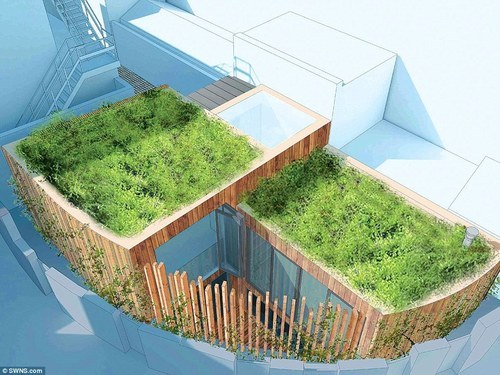
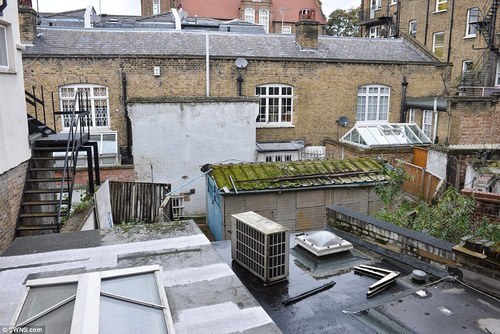
    The garage shown above (with the pseudo green roof) is located in the Chelsea neighborhood of London. It measures about 11’ x 7’ and it – along with the site it sits on – is about to go up for auction.

    It’s expected to go for more than £550,000 according to the DailyMail UK, which would make it the most expensive garage ever sold in the UK. The site area is 535 square foot – about the size of an average 1 bedroom condo in Toronto.

    Below is an aerial view of the site. It basically looks to be residual land.

    image

    But as awkward as this site might appear, the expected value is being driven by the fact that planning permissions were granted to turn it into this:

    image

    It’s a 2 bedroom house that feels a lot like a laneway house. It certainly fits the description of “a house behind a house”, which is often how laneway housing gets described here in Toronto.

    I wanted to share it because it supports my belief that, sooner or later, Toronto will come around to laneway housing. As property prices rise and affordability continues to erode, people will – quite justifiably – start looking in all sorts of new places for a decent urban home.

    Many thanks to my friend Adrian for sending me the link.

  • From utility to fear and greed

    image

    Roger Martin – who is the former dean of the Rotman School of Management and one of my favorite business thinkers – recently published a post on the Harvard Business Review blog called: The Dark Side of Efficient Markets.

    In it, he makes an interesting distinction between what he calls use-driven markets and expectations-driven markets, the latter of which is assumed to be the more efficient one:

    In the natural evolution of markets, as markets become more efficient, they turn from being use-driven to expectations-driven — like equities, real estate, or derivatives based on both.

    The example he starts off with is that of corn. In its simplest form, this market is about farmers growing corn, taking it to a local market, and then selling it to real humans who will then go home and eat it for dinner. Simple. And this is what he means by a use-driven market.

    But as markets grow and evolve, you have middle agents or market makers that insert themselves between buyers and sellers, suppliers and consumers. They help create greater marketplace liquidity and generally help buyers and sellers find each other and transact.

    However, as this happens, Roger argues that the game eventually shifts from being use-driven to expectations-driven. Now people buy, not necessarily to consume, but to invest, resell, and generally speculate on future values. In other words, they stop buying the corn to eat it. And instead buy it (or sell it) because of what they think it might be worth at some point in the future.

    Now, his argument is that even though this latter stage is considered to be more “efficient”, there’s a dark side to it: increased price volatility. When people are buying, not because they need something, but because of future expectations, it can lead to big price swings. And that’s because the market is now being driven by fear and greed, as opposed to utility. Interesting. 

    But I want to talk about something a bit different today. I agree with him, but I want to look at it from a different angle.

    What I’m instead curious about after reading his article are the following:

    • Are these non-use-driven markets really that “efficient”?
    • Is this a natural market evolution only because we had no other choice and no other distribution options?
    • And how does the internet change this natural evolution?

    Efficient markets are supposed to be based on perfect information. Buyers and sellers know the same things, prices accurately reflect intrinsic value, and all that other good stuff. But while this may be more true in some markets – such as perhaps the stock market – I would argue that it’s far from the truth in others.

    The real estate market in my view is actually an imperfect market. There’s lots of missing information and there’s overall poor transparency. And I’m sure this also leads to big distortions in the market. So I find it difficult to classify the real estate market as an efficient one – though it may still have a dark side.

    I also don’t think you can talk about markets, today, without talking about the internet. One of the most interesting things for me is how it’s completely rewriting distribution between buyers and sellers, producers and consumer.

    In the old days, we needed middle actors because it wasn’t cost effective to distribute on your own. If I wanted to write about cities every day, I would have had to get picked up by some newspaper or publication. But today (for better or for worse), I and anybody else can self-publish for basically no cost. The same goes for videos on YouTube, short-term spaces on Airbnb, and so on.

    Now, I’m not exactly sure how the changes taking place in marketplaces will ultimately play out in the financial markets, but I do think there’s room for our markets – the simple act of people buying and selling stuff – to get a lot more “efficient”. And as that happens, maybe the dark side won’t be as dark anymore.

    Image: Flickr

  • Avoiding driving

    If you’ve been reading Architect This City since last winter, you might know that every year I go on one big snowboard trip with a group of guys I went to grad school with at Penn. Last year we went to Jackson Hole and Vail, and this year the plan is to go to Banff and Revelstoke.

    We start planning it by the fall and so already we’ve been trying to sort out the details for this winter’s trip. But as we finalize the plans, one thing I’ve noticed is how I’ve automatically been trying to minimize the amount of driving that we’ll need to do. In fact, in a perfect world, we wouldn’t have to rent a car at all.

    Now, small mountain towns aren’t usually the best for public transit, but there are often ways to get around that. When we were in Jackson, we took the public bus to get to the mountain every day, as did most people who lived or stayed in town.

    This winter, the plan is to fly into Calgary and stay in Banff for the first leg of the trip. So I’ve been trying to figure out if there’s a train that can get us from Calgary to Banff and which hotels offer shuttle buses to the mountains. Because I’d rather not drive, and I know many of my friends feel the same way. It’s an added cost and it gets in the way of après ski.

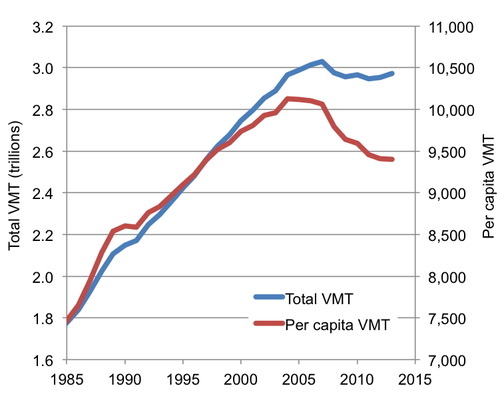
    What’s interesting about this, is that not only do I try and minimize the amount of driving I do here in Toronto, but I do it when I travel as well. And if you’ve been following the macro trends, you might know that many other people feel the same way. That’s why total Vehicle Miles Traveled in the US has been in falling since about the mid-2000s:

    image

    People are falling out of love with driving, and many believe that this shift is permanent. Here’s a recent report from the US PIRG Education Fund talking about just that:

    //platform.twitter.com/widgets.js

    I also think this shift is permanent – until maybe the nature of driving changes and cars start driving themselves. But at that point, it won’t be called driving anymore and there will probably be many other changes. So on this rainy Wednesday morning, my big bold prediction is that future generations will no longer drive.

    What do you think?

  • Flux launches Austin Preview to help streamline development

    image

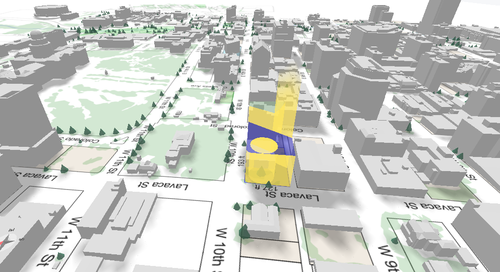
    I recently wrote about a startup called Flux.io in a post titled: How technology could completely change the real estate development industry. Given that I received a lot of positive feedback on this post, I thought I would let you all know that, as of today, you can now test out the product yourself for free online.

    Here are a few snippets from today’s announcement:

    At Flux we believe that data, analytics, and visualization can help bridge understanding between stakeholders and result in smarter growth and faster development and faster building. The Austin Preview of Flux Metro is an important first step in this direction.

    Flux Metro aggregates geographic data from public and private sources to build a three dimensional visualization, starting with downtown Austin. Alongside a rendering of the existing landscape, Metro shows what can be built on a lot or parcel under the zoning code. It considers more than 10,000 code sections for land use guidelines, height limits, floor area limits, setbacks, and view access rights as well as the locations of protected trees and daylight shadows to project what can be built and how it fits into the existing environment.

    We believe that everybody should be able to understand what a zoning code means for their city and that visual representations are the best way to create a shared understanding.

    Click here to signup and give it a try. It is based on Austin’s development code and on the same building site that was shown in the video I shared in my post.

    Image: Flux

  • Multi-modal cities are the new reality

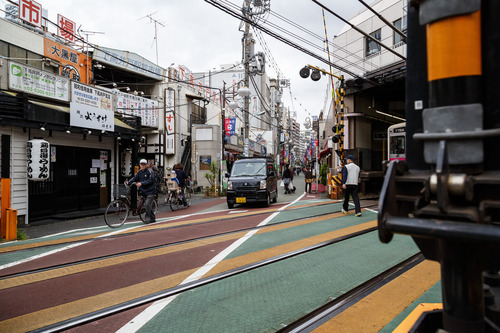
    CityLab published an article last week on multi-modal cities that caught my attention (because it used a picture of Toronto with about 3 or 4 streetcars stacked up along Queen Street). The premise of the article is that all of this car vs. transit debate is actually missing the bigger picture: our cities are multi-modal and we need to be planning for that.

    That’s not to say that the shift away from cars isn’t a good thing. It is. But it’s not as simple as saying that, instead of driving, people should now only take transit. In today’s cities people walk, bike, take streetcars, take buses, take subways, take taxis, take private shuttles, use Uber, and, yes, they still drive.

    From my own experience, this is absolutely how I get around Toronto today. I walk to the gym. I ride my bike whenever I’m going somewhere downtown. I take the subway to my office in midtown because it’s far and I would be too sweaty if I biked there. I use Uber and Hailo when I’m going out at night. And I drive when I need to go to the suburbs or leave the city.

    But the key takeaway here is that we now have a much tougher challenge on our hands. When we were only optimizing for cars – however detrimental to our cities that was – we only had one mode to plan for. Now we have several. Some of which are public and some of which are private.

    However we also have access to technologies that we didn’t have before. We are networked in ways that weren’t possible before and we’re at the dawn of many profound mobility changes, such as driverless cars. (Have you read about Tesla’s new Autopilot feature yet?)

    So as I’ve said before, I really believe that we need to look at this, not as a war on the car, but as a war on inefficiency. The problem we are trying to solve relates to mobility: What’s the best way to move lots of people around dense urban regions? Stop focusing so much on the technologies and focus more on the people.

    Image: Flickr

  • Doing new things

    image

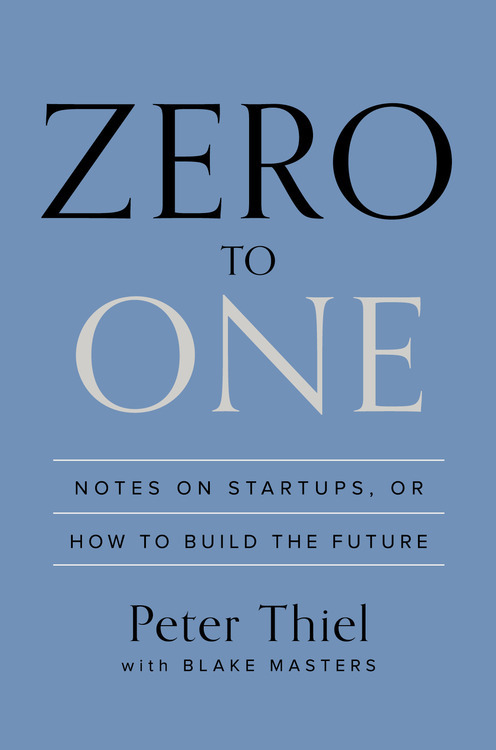
    I just finished reading Peter Thiel’s new book, Zero to One: Notes on Startups, or How to Build the Future. For those of you who may not be well-versed in the world of technology geeks, Peter Thiel is an entrepreneur and investor. He was one of the founders of PayPal back in 1998 and was the first outside investor in Facebook in 2004. He invested $500,000 for a 10.2% stake in the company!

    While the focus of the book is obviously on technology startups, it’s less about “here’s how you build a startup” (there is no formula) and more about “here’s how to think about the world, humanity, and the future of our civilization.” So even if you’re not a founder, or startup and technology enthusiast, I think you’d still find it really interesting.

    As one example, Thiel makes the distinction early on in the book between what he calls “vertical or intensive progress” and “horizontal or extensive progress.” The specific example he gives is of typewriters and word processors. If you take one typewriter and figure out how to make 100 of them, you’ve made horizontal progress. However, if you’ve just replaced typewriters with word processors, you’ve made vertical progress.

    In other words, vertical progress is doing new things and horizontal progress is just copying things that we know already work. In the grand scheme of the world, he argues that globalization is really just a form of horizontal progress. The rise of China is a result of them copying what has already worked in developed countries. But the true way to advance our economy and civilization is to not just copy – that’s easy – it’s to do, new, things.

    That, of course, is a lot harder to do. But to build the future, you need to build things and do things that haven’t been done before.

    Which is why Thiel actually gives $100,000 to a handful of college students every year so that they can drop-out and pursue a startup. In his mind, our education system is just perpetuating the status quo. MBAs move money around without creating anything new. Lawyers just preserve value and mitigate risk, also without creating anything new (Thiel is trained as a lawyer). And so he doesn’t believe that is the best way forward.

    This may not sit right with many of you, but questioning the status quo is a prerequisite if you’re trying to do new things.

  • A video of Melbourne’s laneways

    Yesterday UrbanToronto.ca published a post talking about Melbourne’s laneways (something I also wrote about here on ATC a few months ago). As part of their post, they included the video that I’ve embedded below. I think it does a good job of showing the vibe and energy in these repurposed laneways, and so I wanted to share it with you all as well. What are your thoughts on these spaces? I think they’re great.

    If you can’t see the video below, click here.

    [youtube https://www.youtube.com/watch?v=j-Qb31cUyRE]