Daily insights for city builders, delivered every morning at 6 AM ET. I’m Brandon Donnelly — a Toronto-based real estate developer and founder of Globizen. I’ve been writing here since 2013.

  • Planning for the unplanned

    I was listening to The Urbanist (Monocle Radio) last night while I was making dinner and there was a segment on Moscow’s “illegal retail kiosks.” These are small scale retail structures that were built without formal planning permissions and so the city decided to demolish them. 

    There was lots of backlash. Photos here.

    Now, I’ve never been to Moscow. So I can’t really comment on the attractiveness and usefulness of these kiosks. But I suspect that these illegal retail kiosks, many of which seem to have been located around metro stations, contributed quite a bit to the city’s urban vibrancy. Retail is hard to get right. It doesn’t work everywhere.

    All of this got me thinking about our tendency to sterilize and overplan cities. I’m not saying that planning is bad. It’s not. But I do think we should acknowledge that we don’t know everything about the future and that human ingenuity will undoubtedly unlock new things we never thought would be beneficial.

    So how do we plan for the unplanned? Perhaps it starts with accepting the off-center. Here’s a quote from Anthony Bourdain (it’s all over the internet, but I can’t seem to find the original blog source):

    I think that troubled cities often tragically misinterpret what’s coolest about themselves. They scramble for cure-alls, something that will ‘attract business,’ always one convention center, one pedestrian mall or restaurant district away from revival. They miss their biggest, best, and probably most marketable asset: their unique and slightly off-center character. Few people go to New Orleans because it’s a ‘normal’ city — or a ‘perfect’ or ‘safe’ one. They go because it’s crazy, borderline dysfunctional, permissive, shabby, alcoholic, and bat shit crazy — and because it looks like nowhere else. Cleveland is one of my favorite cities. I don’t arrive there with a smile on my face every time because of the Cleveland Philharmonic.

    There’s value at the margins.

  • Building the future

    Toronto-based heritage architect Michael McClelland recently published a piece in Spacing called: Misuse of Heritage Conservation Districts can deaden both past and future

    Here are a couple of snippets:

    The City of Toronto believes it has found a silver bullet to control development pressure in the downtown core through the use of a tool known as a “heritage conservation district” (HCD).

    The problem is that HCDs are meant to conserve intact and bone fide heritage areas, such as Wychwood Park, Rosedale, or Cabbagetown. They were never intended to control development downtown.

    In preparing for a HCD designation, consultants trained in history examine an area’s context and determine what is of value historically. They do not generally study the growth potential of an area, its future, nor any economic considerations, nor the larger planning policy framework, or even an evaluation of the built form generated by other market forces. HCDs look at heritage.

    The rigidity of the proposed new urban design controls introduced by the HCDs effectively prohibits innovative and thoughtful architecture in the downtown core.

    My own view is that it should be a balance between preservation and progress. We should respect our past, but at the same time look towards the future. Don’t fear change. Michael argues that HCDs achieve neither of those things. It’s worth a read.

    Speaking of the future, the CityAge conference is returning to Toronto on October 6 and 7. Their mission statement is about “building the future.” I was on one of their panels last year and it was an overall great event.

    If you’d like to attend, use the code “CITYAGE” to save $100. And if you’re a young professional (under 35) and/or a startup, email Marc Andrew to get an even sweeter deal. Tell him you’re a reader of this blog.

    Image: Photo by me taken at People’s Eatery on Spadina Avenue

  • The universities that produce the most funded founders

    PitchBook recently published a report looking at which universities produce the most funded founders.

    What they did was track founders of companies that received a first round of venture funding between January 1, 2006 and August 15, 2016. They then looked at which school they graduated from and sliced the data to find companies valued over $1B (”unicorns”), big exits, Ivy vs. non-Ivy league alumni, and so on.

    The full report can be downloaded here for free. However, you’ll need to enter your email. Below are some of the key highlights.

    Top 10 MBA:

    Top 10 MBA by female founders:

    For all of you Canadian readers, the top undergraduate schools include:

    • University of Waterloo (#20)
    • McGill University (#32)
    • University of Toronto (#33)
    • University of British Columbia (#49)

    McGill does quite well in the unicorn department, placing in the top 10. However, it is clear that Canadian universities need to step up their game.

    Of course, the question remains: what is it that is holding us back? How much of it is the school itself and how much of it is external and perhaps cultural?

  • Forest

    I just backed the following project on Kickstarter:

    https://www.kickstarter.com/projects/991195979/n-o-r-t-h-simple-timeless-and-refined-watches/widget/card.html?v=2

    It is a new watch line from two Montreal designers. The brand is called Forest Time Co. There’s so much creative talent in that city.

    I was immediately drawn to the focus on minimalism and on high quality materials. That’s a philosophy I can get behind. I plan to go for the black band with copper case.

    I know nothing about watch movements, but it’s a “Japanese Miyota.” I assume that’s pretty basic.

    I love finding interesting projects on Kickstarter. There’s something about backing a team and their new creation. We should all aspire to make and create more.

    At the time of writing this post, they’re about $1,000 shy of their funding goal of $24,000. I hope they reach it by this Sunday. I’m sure they will.

  • $10,600 per square foot

    It was just announced that the full floor 8,255 square foot penthouse in the Rafael Viñoly-designed 432 Park Avenue (New York) has closed at a sale price of USD$87.7 million. That works out to be just over $10,600 per square foot.

    It was purchased by Fawaz Al Hokair and is currently the most expensive sale in the building. However, the most expensive sale, ever, in New York remains the penthouse of One57, according to Curbed. It was purchased for $100.5 million.

    Architecturally though, I much prefer 432 Park Avenue. I love its simplicity.

    Each floor plate is 812 square meters. But because of the building’s height (424 meters / 1,395 feet) it appears a lot smaller. The ratio of building width to building height is about 1:15.

    Because of this “slenderness ratio” the building is split up into 7 distinct volumes with a void between each. These voids – which are completely empty save for the building’s core – reduce wind loading and help with the building’s overall structural stability. (I’m sure it’s fine.)

    The structural system is the exposed concrete grid. This leaves the interior of the floors completely column-free. Every window within this grid is exactly 10 square meters. 

    Here’s a good interior example of that:

    On a none architectural note, the building also features a private restaurant. I am curious how a private restaurant can operate sustainably in a building with 100 and some apartments owned by many people who probably don’t spend all (or much?) of their time in New York. Perhaps it’s partially carried by the ~$2.10 per square foot monthly maintenance fee.

    Occupancy is available immediately if you happen to be in the market.

    Images: 432 Park Avenue

  • A new kind of homeownership

    Yesterday Andreessen Horowitz announced an investment in the startup Point. They led an $8.4 million Series A round.

    Point is an alternative to traditional home equity loans and HELOCs. The way it works is that you actually sell a portion of your property. Here’s an example:

    In this scenario, the home is worth $1M. Point makes an offer to buy 10% of today’s value in exchange for 20% of the home’s future appreciation on a 5 year term. You pay a 3% fee when the $100,000 (10%) is paid out, but you don’t make any monthly payments. You just give up potential future appreciation. (If the home doesn’t appreciate, Point doesn’t make money.)

    What’s interesting about this model is that traditionally “housing” has meant one of two things. Either you own 0% of the home (i.e. you rent) or you own 100% of the home (usually with the help of a mortgage).

    Point is making it easier for you to potentially own 95% or 90% of your home. They are taking an equity stake, which is why there are no monthly payments associated with it. 

    The investment angle is that homeowners get to diversify their wealth out, and (Point) investors get to diversify in, without having to worry about actually managing the property.

    Would you use this as a tool to unlock your home equity wealth?

  • BARED: Michael J. Cooper, Dream Unlimited Corp

    In 1974, at the age of 13, Michael J. Cooper won his first sailing championship in Toronto. And at this very young age he quickly learned that if you’re good at something, people treat you better. You become influential.

    But the real lesson came when he and colleague Jason Lester started making money by cleaning and taking care of other people’s boats. What Michael learned was that different professions seemed to attract, or perhaps cultivate, different personalities.

    The doctors weren’t the best customers. They weren’t that engaged. And they weren’t that personable. The lawyers were marginally better, but even then they weren’t like the business people. The business people were engaging and overall better customers.

    But then, in Michael’s words, you got to the real estate people. Now, they were charismatic. These are the people that Michael wanted to hang around. They were funny and interesting. They were the people that young Michael admired. His career wasn’t a direct line to real estate, but this early experience would later impact its trajectory.

    Like David Wex (previous BARED post), Michael started out as a lawyer. He went through law school and loved every minute of it. He found it conceptually fascinating. It was a different way of thinking. But after his first day working in a firm, he said to himself: “I can’t believe lawyers do this for a living!”

    He quickly discovered that his personality wasn’t a good fit for law. Michael framed it to me in the following way: “I asked myself, was I going to be an airline pilot or a baseball player? As an airline pilot, like a lawyer, my job would be trying to be 100% mistake proof. However, as a baseball player, I could make audacious plays, only be right 30% of the time, and still be considered excellent.”

    He wanted to be a baseball player.

    I would argue that most entrepreneurial minds think of themselves more as baseball players than as airline pilots. Billionaire Mark Cuban has famously said: “All that matters in business is that you get it right once. Then everyone can tell you how lucky you are.” Nobody remembers all of the failures.

    So Michael decided to go back to school, get an MBA, and figure out a way to do the most exciting thing possible – which in his words was “ABL, baby!” (Anything But Law!)

    In order to complete his MBA and not put himself deeply in debt, he decided to “pull a George Costanza.” Meaning, he continued to work full-time, but he also enrolled at the Schulich School of Business full-time. He would simply come into the office in the morning, put down a cup of steaming coffee, and then take off to class.

    Anything but law, baby.

    Upon graduating and upon reflecting on his childhood experience cleaning boats, he decided that real estate was the most exciting thing he could get into. So he drafted up a bunch of letters and sent them over cold to 10 different real estate developers. His offer was that he would work for free. (He had the ability to do this because of his clever George Costanza-like employment moves.)

    As luck would have it, he ended up getting a job with a man whose boat he had washed as a teenager. It was a man by the name of Walter Zwig. Walter Zwig had a 50-year real estate career in Toronto. He was responsible for developing over six million square feet of space in 13 downtown Toronto office towers, before eventually selling his portfolio to Olympia & York Properties; the legendary Toronto-based development company started by Paul Reichmann and his brothers. It was alleged to be largest development company in the world before going bankrupt.

    Michael started in 1986 and he would eventually work for Walter until 1993. However, Walter didn’t want him to work for free so he started him at $1,000 per month.

    Michael would cut his teeth with Zwig and eventually go on to develop office properties such as the Dynamic Tower at 1 Adelaide Street East, the Zurich Centre at 400 University Avenue, and the Atrium on Bay at 595 Bay Street. It was a small and flat organization without titles and Michael was able to learn a lot.

    But then the early 90’s hit and everyone went broke. The industry went into dormancy.

    However, as luck would again have it, he got a call from Ned Goodman who felt that there were great opportunities emerging in the market. (Ned also appeared in my BARED post about David Wex.) Michael had met Ned’s son, David, while he was looking for office space and Michael had greatly impressed him.

    Michael had brought David to five office buildings. Two of the buildings were owned by Zwig, but three of them weren’t. However, Michael knew that with the current economic climate, the buildings now had more debt on them than they were worth. So if the Goodman’s needed the space, he could simply buy the debt at a discount and take it over. Michael was showing buildings that his company didn’t own and he had a damn good reason why.

    On January 4, 1994, Michael, Ned, and Walter sat down for lunch at the Victoria Cafe in Toronto’s Financial District. The agenda was to figure out how to merge both Goodman and Zwig’s businesses into one and capitalize on what was starting to happen in the real estate market.

    However, Walter said that he was too old to join. He was out. But he encouraged Michael to seize the opportunity. In 1994, Michael Cooper became co-founder of what would eventually become Dream Unlimited Corp. He was 32 years old at the time.

    Remember, if you’re good at something people treat you better.

    Since 1994, Dream (TSX: DRM) has grown to over 1,000 employees and over $15 billion of assets under management in North America and Europe. They provide asset management services for 4 funds listed on the Toronto Stock Exchange and they have operating businesses that span master-planned communities and condominiums to renewable energy infrastructure and retail centre development.

    But what is not necessarily obvious from the above numbers is that, alongside Dream’s incredible growth, Michael also became one of “the real estate guys” that he admired so much as a young teenager cleaning boats. After sitting down with Michael to learn about how he got to where he is, I can honestly say that he is one of the funniest and most charismatic people I have ever met. He is the kind of guy you want to do business with and then go out drinking with afterwards.

    Perhaps not surprisingly, when I asked Michael if he had any advice for young aspiring developers (which I know is a lot of you readers), he quickly suggested that people study the classics. Speech. Drama. He said: learn how to connect with people.

    Because as a developer, your job is to conceptualize what the future could be and then get other people to believe in that same vision. Michael describes navigating all of the constraints on building as one of the most creative things you can do. And in a market like today where you have to be willing to pay the most for a piece of land, it’s the best ideas that win.

    That doesn’t sound like a lawyer or airline pilot to me. That sounds like a real estate guy with one hell of a batting average.

    ———————————————————

    This is the second post in my blog series called BARED (Becoming A Real Estate Developer). A big thanks to Mariane for helping to coordinate this piece. More posts to come in the following weeks. Subscribe to stay in the loop.

  • The Silicon Valley of hardware

    I generally dislike derivative city monikers – such as the title of this blog post. But I appreciate that it quickly gets the point across.

    Fusion recently published an interesting article talking about how Shenzhen, China is quickly rising as the hardware innovation capital of the world. Rather than simply serve as the place of production for companies such as Apple, the Chinese government would like to see it serve as a place of creation. In fact, some organizations are suggesting a terminology change from  “Made in China” to “Created in China.”

    A big part of the reason for all of this is that Silicon Valley long ago moved “up the stack.” It focused itself on software and internet services, because hardware wasn’t where the margins were. It wasn’t sexy. And so production got moved over to a low cost market. But now, with the rise of IoT, drones, and many other physical products, one could argue that Shenzhen has become highly relevant in the innovation ecosystem.

    It’s also important to think about how Shenzhen fits in to the larger Pearl River Delta region. Here is an excerpt from the Fusion article:

    “Shenzhen has the geographical footprint of Los Angeles, but a population three times its size at 12 million people. It’s part of the Pearl River Delta, which also includes Hong Kong, the global financial capital and port city; Macau, the world’s largest gambling city; Guangzhou, home to one of China’s major ports, trading centers, and factories; and Dongguan, a manufacturing hub. It’s as if the tech talents of Silicon Valley, the big banks of New York, the manufacturing plants of Detroit and Pittsburgh, the casinos of Las Vegas and the shipping ports of Long Beach were all in one small part of the US, and a two hour drive from one another.”

    If you’re interested in this topic – both hardware innovation and the rapidly growing city of Shenzhen – take an hour and watch this documentary from Wired. Embedded below.

    [youtube https://www.youtube.com/watch?v=SGJ5cZnoodY?rel=0&w=560&h=315]

  • Photoblog: TIFF

    This past weekend was the first weekend of the 2016 Toronto International Film Festival. It’s a great time to be in the city – regardless of whether you’re into film or not. It felt as if the entire city decided not to sleep this past weekend.

    Growing up in Toronto, it was also the signal that summer is coming to an end and the city is now about to refocus itself on work. Game on.

    Here are a few photos from the weekend:

  • Corporate disaggregation (and some book suggestions)

    The truism is that both people and companies are moving back to downtowns. We are living in an urban era. But when you really look at the data, it is clear that the suburbs are far from dead. And when it comes to companies, the way in which they are relocating to downtown is not the same as it was in previous generations.

    The Economist calls it “corporate disaggregation.” Aaron Renn calls it “executive headquarters.” And it is the idea that it is primarily the elite executive jobs that are moving back downtown. The routine jobs are remaining in the suburbs or are being pushed out to even further outposts. On top of this, a move downtown can also provide the impetus for downsizing.

    Here’s an excerpt from The Economist:

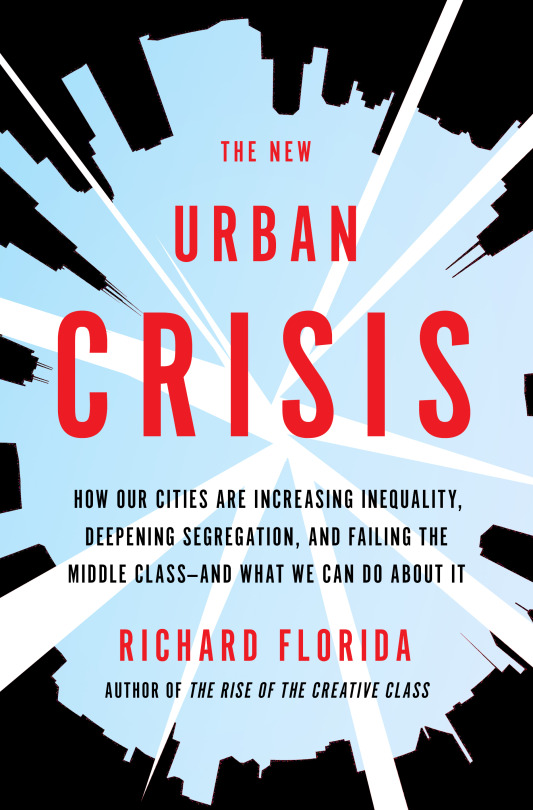
    “The best book to read if you want to understand corporate America’s migration patterns is not Mr Florida’s but a more recent study, Bill Bishop’s “The Big Sort”. It argues that Americans are increasingly clustering in distinct areas on the basis of their jobs and social values. The headquarters revolution is yet another iteration of the sorting process that the book describes, as companies allocate elite jobs to the cities and routine jobs to the provinces. Corporate disaggregation is no doubt a sensible use of resources. But it will also add to the tensions that are tearing America apart as many bosses choose to work in very different worlds from the vast majority of Americans, including their own employees.”

    It is interesting, and probably disconcerting, to note that the divisiveness we are seeing in politics is also manifesting itself in our cities. The causes are likely the same. We may be living in an urban era, but we are also living in an era where, sadly, broad-based urban prosperity appears to be declining. See Elephant Graph.

    Another somewhat related book that may be of interest is Overcomplicated: Technology at the Limits of Comprehension. It is about the increasing complexity of our cities and our inability to properly understand it all. It argues that it may be time to seek out new tools.