Daily insights for city builders, delivered every morning at 6 AM ET. I’m Brandon Donnelly — a Toronto-based real estate developer and founder of Globizen. I’ve been writing here since 2013.

  • The 2×2 investment matrix

    Today I am thinking about product/market fit.

    Product/market fit is startup speak for being in a good market and having a product that satisfies the needs of that market. This may sound intuitive, but having the best product doesn’t matter if there’s no market for it. I like this line from Marc Andreesen: “Markets that don’t exist don’t care how smart you are.”

    So the first takeaway is to create products that people care about. Sounds simple enough. But another reason why this is a thing worth talking about is that markets evolve and there’s always a chance that you can unlock a new market that nobody else is servicing. That’s obviously riskier, but it’s an ideal scenario.

    Below is another way of thinking about that. It’s a quote from Andy Rachleff.

    “Investment can be explained with a 2×2 matrix. On one axis you can be right or wrong. And on the other axis you can be consensus or non-consensus. Now obviously if you’re wrong you don’t make money. What most people don’t realize is if you’re right and consensus you don’t make money. The returns get arbitraged away. The only way as an investor and as an entrepreneur to make outsized returns is by being right and non-consensus.”

    It’s a lot scarier to be charting new territory and sitting in the non-consensus camp. Consensus is comforting. But this is how the game works. I try and remind myself of this on a regular basis. I would like to say more, but I will leave it at that for today’s post.

  • The lure of super-places

    image

    If you’re a very talented person, you have two choices: you either move to New York or you move to Silicon Valley. This is the message that Peter Thiel delivered to a conference being held in Chicago earlier this month. Not surprisingly, it pissed a few people off.

    Peter responded by saying that he was simply illustrating the “extreme version” of a metaphor about the impacts of globalization and technology. And while it certainly doesn’t sound very nice if you’re sitting in Chicago, or the countless other fantastic cities between the coasts, I can appreciate what Peter is getting at.

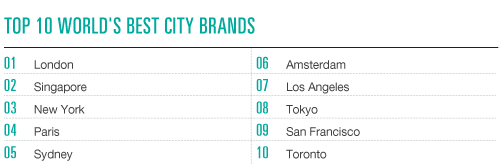
    Saskia Sassen is known for coining the term global city. These are cities which play an important role in the functioning of the global economy. But what has happened, she acknowledges, is an even further concentration of activity within a select few “super-places.”

    Here is an excerpt from a Financial Times article by Simon Kuper (2014) talking about Amsterdam’s position in the world:

    “…a new, higher category of cities may now be emerging: global capitals. Amsterdam has risen but New York, London and Hong Kong have risen faster. The Dutch elite is moving to Amsterdam; but many ambitious Dutch people no longer want to join the Dutch elite. They want to join the global elite. That often requires moving to a global capital.”

    Anecdotally, I can say that almost everyone I know who has left Toronto for an opportunity has moved to New York, Silicon Valley, London, and so on. They have moved up the rank of global cities/capitals.

    So while Peter may not have chosen the right way to deliver this message, I do believe it is a message worth delivering.

  • Who needs work?

    Earlier this month, The Atlantic published an article called: The Free-Time Paradox in America. The gist of the article was that the wealthy are increasingly starved for time, whereas the exact opposite is happening to the poor.

    The article throws out this stat: “In 2015, 22 percent of lower-skilled men [those without a college degree] aged 21 to 30 had not worked at all during the prior twelve months.”

    More recently, Larry Summers published the following graph on his blog, along with the prediction that by the middle of the 21st century over a third of men between 25 and 54 will no longer be working in America.

    He cites technology and declining marriage rates as two possible explanations. Supposedly unmarried men are more likely to be out of work.

    If you’re interested in this topic, Nicholas Eberstadt has a new book called Men Without Work. The focus is on a new class of men who are neither (1) employed nor (2) unemployed and looking for work. Instead they voluntarily electing not to participate in the US labor force. Similar to Ed Glaeser, part of his argument is that the incentives not to work (welfare) are simply too great.

    This drop in labor force participation is largely concentrated among those without a college education. The problem seems to be that we are no longer creating enough good paying jobs for the less well educated. So the way I see it is that we have two options: we figure out how to do that (again) or we focus ourselves on education and training.

    Richard Florida has written a lot about elevating service and retail jobs to fill this gap. But I have never understand how that works. I think it comes down to figuring out how to better elevate people.

  • The Edge — The World’s Greenest Building

    When I was in grad school, I used to search around online and make lists of real estate developers that I felt were philosophically aligned with my own view of the world. I didn’t want to work for just any developer, I wanted one that cared about design, technology, sustainability, and so on.

    One of the developers on my list was OVG Real Estate in Amsterdam. They describe themselves as “the largest real estate technology company in The Netherlands” and they have recently completed The Edge, which is being called the greenest office building in the world. It received a 98.36% sustainability score from BREEAM-NL.

    The building uses 70% less electricity than the “typical office building” and uses solar panels on its rooftop, as well as on some neighboring university buildings, to produce more energy than it consumes. The building is also a great example of the Internet of Things. Anchor tenant Deloitte created its own mobile app so that employees can control lighting, climate, and so on.

    The building also has an on-site gym. I’m a big fan of mid-day workouts.

    There’s a lot going on with this building, so here’s a video from Bloomberg describing how it functions (click here if you can’t see it below):

    [youtube https://www.youtube.com/watch?v=JSzko-K7dzo?rel=0&w=560&h=315]

    Photos of the building here.

  • Abu Dhabi signs cheapest electricity contract, ever

    The Abu Dhabi Water and Electricity Authority recently completed a 350 MW solar tender. They received a total of 6 bids and the low bidder was Japan’s Marubeni Corp and China’s JinkoSolar Holding Co Ltd. Their bid was USD $24.2 per MWh or 2.42 cents per KWh.

    This is really low.

    According to the U.S. Energy Information Administration, the average cost of a new natural gas-fired plant is 5.6 cents per KWh. More than double the above solar bid.

    In fact, author, blogger and futurist Ramez Naam calls the above bid, “the cheapest contract for electricity ever signed, anywhere on planet earth, using any technology.” (Blog post here.) 

    Huge.

    Now, Abu Dhabi is obviously a very sunny locale. No shortage of bluebird days there. But that doesn’t negate the fact that we are seeing a rapid decline in solar power prices.

    This, along with the growing adoption of electric vehicles is excellent news for us sustainability dorks. Just this morning I was thinking to myself that the car I currently own will likely be the last gasoline-powered car I ever own.

    Hopefully they start making an electric version of the G-Class.

  • Sign me up for Spectacles

    image

    Snapchat just changed their company name to Snap Inc. and announced a new product called Spectacles. They are sunglasses with an integrated video camera that captures a 115 degree field of view. Compared to the camera on your phone, this is more similar to what our eyes see.

    Here’s their announcement video:

    [youtube https://www.youtube.com/watch?v=XqkOFLBSJR8?rel=0&w=560&h=315]

    Some of you are probably thinking that Google already tried something like this and failed. But that doesn’t mean that Snap won’t be successful. I think Spectacles will be a huge success. 

    Evan Spiegel is calling them a fun toy right now, but lots of meaningful products start out that way (including Snapchat itself). Regardless, it strikes me as absolutely the right move for a company like Snap.

    What differentiates Snapchat is that, relative to other social platforms, the content that gets shared is far more natural and unfiltered. It empowers a different kind of conversation and a different kind of content creation.

    Still, there is something about pulling out your phone that takes you out of the moment. And Snapchat is all about sharing that moment. That’s where Spectacles come on. They are further minimizing the barriers to sharing.

    But here’s the other thing: Snap made them look cool. Google Glass looked positively dorky. I already want to take a pair of Spectacles snowboarding and on tours around different cities. I can think of so many interesting/entertaining use cases. If I were GoPro, I’d be anxious right now.

    Snap, if you’d like to send me a pair to test out, please shoot me an email. Thanks 🙂

  • The Toronto startup ecosystem in numbers

    When I met with all of the lovely folks from Amsterdam last week, one of the things that I mentioned about intensification is that it is almost certainly a contributing factor towards innovation, agglomeration economies, and the overall startup ecosystem here Toronto. 

    I don’t know to what extent, but I feel it happening. And there’s lots of research correlating urban density with innovation

    The continued densification of Toronto means it is constantly becoming easier to schedule that morning coffee before going into the office or to pop into that meetup after work. And those sorts of things are hugely valuable in today’s economy.

    I talked about a number of local startups in my presentation, including 500px, Wattpad and Wealthsimple. But I didn’t show any hard data. So I’d like to do that today. Below is a chart showing total venture funding (internet/software) and the number of deals (Seed to A/B/C/D) in Toronto since 2009:

    image

    It was taken from this Medium post. Supposedly this places us 12th in the world as far as startup cities go.

    Again, who knows how much of this venture growth has been helped along by intensification. After all: “Silicon Valley proper is soul-crushing suburban sprawl.” But I would bet money that it’s moving the needle in the right direction.

    Here is another relevant post by venture capitalist Albert Wenger where he talks about the great startup ecosystem that Toronto is growing. He posted it earlier today.

    All of this is important because some of these deals will spawn big companies. And those companies will the hire lots of people, as well as consume space. 

    Real estate developers like to talk about how they create jobs. And we do. But we can’t have a city of people just building buildings. People and businesses need to fill that space and that hinges on entrepreneurs who are willing to go out there and forge something new for themselves. Fortunately, Toronto seems to have a growing number of those kinds of people.

  • Last lake swim of the year

    I’m in Muskoka right now, with very little time to write. 

    I had about an hour before dinner, but I decided that a far more responsible thing to do would be to jump in the lake for what will likely be the last lake swim of the year. It might be the end of September, but it still feels like summer.

    Here’s what that looked like:

    If you’re searching for something more city related, check out these high resolution maps of Canada according to our trails, roads, streets, and highways. My good friend Peter just sent them over to me. Thanks Peter.

    Regular scheduled programming will resume tomorrow.

  • Mapping the creative soul of US cities

    Polygraph (visually-driven essays) has a great piece called, The Entire History of Kickstarter Projects, Broken Down by City. What they did was look at 88,475 Kickstarter projects to map the various creative communities across the US.

    Here’s a snapshot (you may need to zoom in):

    image

    In general, Kickstarter in the US sees a high concentration of music projects (24%) and film & video projects (19%). But where it gets interesting is to see which cities over-represent in certain categories.

    New York = film & video, theater, and dance

    Los Angeles = film & video (not surprisingly 45% of all projects)

    San Francisco = design and tech

    Chicago = theater

    Detroit = music

    Nashville = music (76% of all projects!)

    They also measured the size of each project (number of backers) and created these neat bubble diagrams:

    image

    Above is New York. Red is music. Orange is film. And yellow is theater.

    I also like their explanation for why they did this project:

    Pretty much all existing attempts to map creative communities use census and jobs data. But creative efforts are often side-hustles. They’re garage/basement/cottage industries that will not appear in a census.

    It’s true. This data should be a much better capture of each city’s creative soul.

  • Building crap

    Last night I participated in an excellent dinner discussion with a group of planners, architects, city officials, and politicians from Amsterdam. They were visiting Toronto to see first hand what rapid intensification has done to this city. And I very much appreciated the invite. Thank you.

    My message was that intensification has created a far more vibrant and exciting city compared to 15 or so years ago. It’s hard to know what exactly could be correlated with intensification, but we have certainly seen an explosion of culture, innovation, and pride in this city – among many other things. (It could be all Drake’s doing.)

    However, the counter argument at the dinner table was that Toronto is letting unfettered development produce unremarkable architecture. We are simply building glass tower after glass tower. And I know that, for many of you, this will ring true. I hear it all the time, including in the comments of this blog.

    Now, I will be the first to admit that there has been a lot of shit built in this city. No argument there. Some people have no taste. But at the same time, I think it’s myopic to assume that it’s strictly because of profit-motivated developers. 

    Oftentimes the perception is that development projects are awash in cash. There’s tons of money in which to do the right thing. Developers just need to stop being so greedy and start being more creative.

    The reality is that developers operate within a market. There are real limits to what people will pay for new space. And when, for instance, land prices go through the roof (an input), municipal fees jump (cost of doing business), and approvals drag (time value of money), guess where everyone starts looking for savings? In the build.

    I say this not to justify building crap. If I had it my way, everything would be beautiful. I champion design whenever possible. I say it simply to shed light on the process. Because when we all understand the factors at a play, I believe we all become more effective at finding solutions.