Daily insights for city builders, delivered every morning at 6 AM ET. I’m Brandon Donnelly — a Toronto-based real estate developer and founder of Globizen. I’ve been writing here since 2013.

  • The rise of paradiplomacy

    In the words of Mike Bloomberg, then mayor of New York: “We’re the level of government closest to the majority of the world’s people. We’re directly responsible for their well-being and their futures. So while nations talk, but too often drag their heels, cities act”. Whereas diplomacy is carried out for the state, paradiplomacy is executed for the population.

    Rodrigo Tavares has an interesting article up at the World Economic Forum talking about the rise of foreign policy and international relations at the local level. The argument is that as cities rise (and they are certainly rising) paradiplomacy is inevitable.

    He admits that the diplomatic networks tend to be stronger for regions who have “flirted with sovereignty.” Regions such as Quebec, Catalonia, and Scotland are given as examples. However, this shift is by no means exclusive to them. Lots of examples in his article.

    It is also manifesting itself very differently compared to at the national level. And that’s part of the advantage. One example is London & Partners, which is an arm of the City of London that sells consulting services to other cities and nations who want to replicate its successes. Do nations do this?

    I have argued before on this blog that our governance structures do not accurately reflect today’s urban reality. Rodrigo’s article is a reminder that we continue to underestimate the role of cities in the global economy.

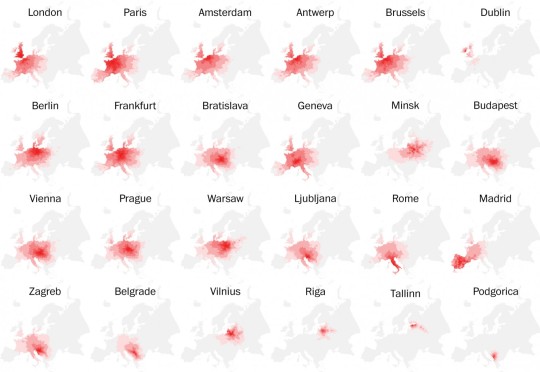
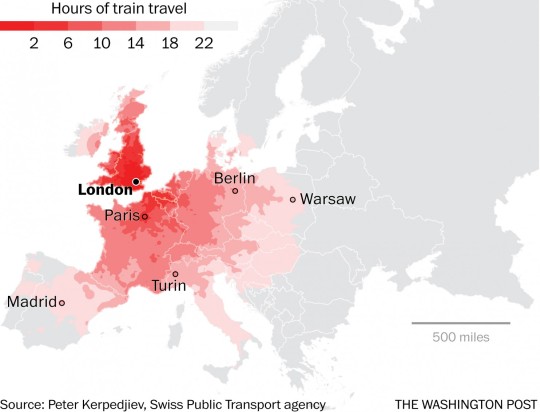
    I’ll end with this chart from his article:

    image

  • Urban change through rapid prototyping

    image

    The Market Street Prototyping Festival is just finishing up in San Francisco. The festival, which is now in its 3rd year, is centered around urban interventions that can be rapidly prototyped and tested. The goal is to discover new ideas that could be used to transform and improve Market Street – the city’s civic spine. It is a joint effort of both the San Francisco Planning Department and the Yerba Buena Center for the Arts.

    Here is a list of all the prototypes. You can “like” projects, but I wish they would have made it easier to filter and see which ones are the most popular.

    One project that I liked is Vote With Your Feet. It consists of two doorways and a single crowdsourced YES/NO question above it. You vote by choosing a doorway. Once you walk through, you are then shown the results. Here’s a Boomerang video of it in action. I like it because it provides a frictionless way to acquire lots of ground-up feedback. Imagine placing something like this at the exit of a busy train station or transforming the existing doors.

    Tactical urbanism can be a great mechanism for investigating and instigating positive change. This is hugely important considering how slow moving and bureaucratic city building can be. It’s not the same format, but NXT City here in Toronto has similar ambitions. They source new ideas for our public spaces from young people. I am thrilled that both of these initiatives exist.

  • Adaptive reuse in Hamilton

    Yesterday evening I was in Hamilton, Ontario for an adaptive reuse building tour that was put on for the 2016 OPPI Symposium (Ontario Provincial Planners Institute). 

    Hamilton has lots of these sorts of projects underway. The city has a rich history and, because it never saw the development pressures that cities like Toronto saw from the 70s to 90s, many of these buildings now remain ready to be reused. That’s my theory at least.

    I was told that last year downtown Hamilton delivered about 600 residential units. This may not seem like a lot, but keep in mind that the number was zero for a very long time. In fact, just seeing a crane up in the air is exciting for those who lived through that period of inactivity. I can’t fully relate to that.

    But it’s not just development that is going on. It’s city building. 

    The city is creating new cultural spaces and developers such as Core Urban have carved out niches working on boutique-scaled “pain in the ass” heritage projects. How’s this for commitment: Core Urban has been awarded heritage builder of the year 3 times, but they have yet to work on a designated heritage property.

    I’ve said before that I think there’s a new breed of developer emerging in cities today. Hamilton is no exception. And that’s very exciting for this region.

    If you’re interested in Hamilton, check out the blog Rebuild Hamilton. It’s written by Thomas Allen who I think of as Mr. Hamilton. It’s a phenomenal resource for architecture and city enthusiasts.

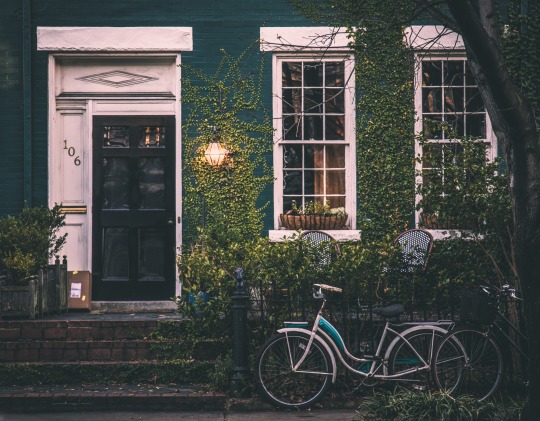
    The photo at the top of this post was taken by me within the proposed Beasley Park Lofts by Stinson Developments.

  • The value of urban lighting

    image

    This week I picked up the Philips Hue lighting system. For those of you aren’t familiar with it, it’s a connected home lighting system. All you need are a Philips Bridge (which hooks up to your wireless router); a smartphone; and whatever bulbs, lightstrips and fixtures you want to use with it. It also works seamlessly with the Apple Home app.

    At first I was a bit nervous that it would turn my place into a cheesy nightclub. But as soon as I powered it on and started messing around with the Hue app, I was blown away by the quality of the light and the options. There are settings for reading, to simulate a sunset, and so on. You can schedule routines, such as a bedtime lighting scheme, and you can even color match a photo to find exactly the light you want.

    After playing around a bit, I then sent out an obligatory tweet saying that I was now hooked on and obsessed with the Philips Hue lighting system. Trust me, it’s really cool. My friend Andrew then responded saying that he doesn’t get it. Why would anyone want a color of light besides “white?” To me, this is like asking: Why would anyone want to see a beautiful sunrise or sunset? The sun should just appear or disappear using one consistent color.

    In a city like Toronto where most of us in the winter will wake up when it’s dark and come home from work when it’s dark, I have always believed that we should be more creative and daring with the way we light our city, our buildings, and our public spaces. We don’t want to be kitschy about it, but there’s an opportunity to maximize our darker months and enhance the overall urban experience.

    The CN Tower is a perfect example. Its night lighting has completely changed how we view it and has become a beacon for what is going on in this city. I can see it clearly from my elevator lobby and I always look to see what color it is. I’m not great at picking out when it’s Rett Syndrome Awareness Month, but I can usually tell when there’s a game going on.

    Now my place is certainly not the CN Tower. And there’s only one CN Tower in the world. But that doesn’t mean we can’t get fun and creative in other ways within the shared walls of the public realm. We should do that. Let’s not be so conservative.

    If any of you have great examples of urban lighting, please share it in the comments below. Perhaps we can all use it as inspiration to make a change.

  • New Squarespace HQ

    I am a big fan of the company Squarespace. They have a great and beautiful product. I use them for globizen.com.

    Recently they moved into a new office in Lower Manhattan (98,000 sf), which was a consolidation of 4 distributed offices. The interiors were designed by New York-based A+I.

    Not surprisingly, it’s a beautiful space:

    image

    (Photography by Magda Biernat via Contemporist)

    But two other things stood out for me. 

    One: The amount of informal working/meeting spaces. I really had to look for the conventional office seating.

    Two: The ground floor presence and the lobby which doubles as a possible event space.

    For consumer-facing companies, I am really attracted to having a street presence and having spaces that can be programmed. It’s a way to engage and plug in to what’s happening beyond the office. Here’s a related example.

    I’m not sure if their narrative is the same as mine, but regardless: cool space.

  • Sonder — intimate neighborhoods, consistent quality

    Airbnb has been a game changer. I know many people who have made Airbnb their full-time career or who “stay for free” when they travel because they Airbnb their home. Airbnb likes to focus on the “community” rather than on the business possibilities, but regardless, it unlocked space in a new way.

    Here’s another take on decentralized vacation rentals: Montreal-based Sonder. Similar to Airbnb, you submit your property to their platform. But unlike Airbnb, they take care of everything from reservations and guest communication to operations and housekeeping. It’s a completely hands-off approach for owners.

    The value proposition to guests is that they get a more consistent experience, but with all the “local color” of a traditional vacation rental. And for owners, they get to maximize revenue without having to be as hands-on as with an Airbnb. (Presumably Sonder’s take is greater.) In many ways, it’s like a decentralized hotel chain. Same supply source as Airbnb, but they are now unifying the customer experience.

    It’s fascinating to watch this software/internet layer developing on top of real estate. It’s giving me all sorts of ideas.

  • Vancouver-Seattle

    The New York Times has an interesting article up talking about how Vancouver and Seattle are trying to more closely align themselves and create a unified tech corridor. 

    BC premier Christy Clark and Washington governor Jay Inslee recently signed an agreement to that effect, which included more research collaboration between the University of British Columbia and the University of Washington.

    Seattle wants this because its companies need talent (read: foreign workers) and Vancouver’s borders are more open. Vancouver wants this because its tech industry is relatively small (go Hootsuite!) and it could benefit greatly from being more proximal to Seattle.

    On a side note, Seattle is an interesting case study. In terms of venture capital dollars invested, it is below top tier cities such as San Francisco, New York, Boston, and so on. But in terms of the companies it has birthed (Microsoft, Amazon, Zillow, Expedia…) it is certainly a heavy hitter.

    One of the key factors will be physical connectivity. There’s talk of high speed rail and/or a dedicated lane for autonomous vehicles. However it’s done, I think bringing this trip to < 1 hour would be the ideal scenario. There’s a psychological barrier beyond that.

    If any of you live/work in either of these cities today, I would be curious to hear your thoughts.

  • Flynn in the city

    I very much enjoy the branding and marketing side of the development business. It’s probably an architect / designer thing. So I’m always looking out for interesting case studies.

    Recently I came across The Flynn in Chelsea, New York. The developer is IGI and the agency is Winkreative.

    What they did was create a namesake character named Flynn. Everything then became about a day in the life of. 

    The Instagram account is flynninthecity. They made colorful animations. And they even partnered with the Spring Street Social Society to host in-person performance art pieces. The Being Flynn series was a bunch of vignettes that combined “dance and physical comedy” and highlighted a cast of fictional characters who all, of course, reside at The Flynn.

    As you all know, selling condos is typically about selling a lifestyle. A dream. In this case, they created a character to show you exactly what that dream should be.

    Real estate marketing can sometimes often be cheesy. But I thought this was a clever and overall creative approach. Winkreative does great work.

    What do you think of the approach?

    Image: Winkreative

  • Tools for promoting healthy, responsive, affordable, high-opportunity housing markets

    This month the White House released a Housing Development Toolkit. The report starts by talking about the local barriers to building and makes this statement:

    “The growing severity of undersupplied housing markets is jeopardizing housing affordability for working families, increasing income inequality by reducing less-skilled workers’ access to high-wage labor markets, and stifling GDP growth by driving labor migration away from the most productive regions.”

    It then goes on to highlight a number of tools that American cities have adopted or should adopt “to promote healthy responsive, affordable, high-opportunity housing markets.” 

    They are:

    • Establishing by-right development
    • Taxing vacant land or donate it to non-profit developers
    • Streamlining or shortening permitting processes and timelines
    • Eliminate off-street parking requirements
    • Allowing accessory dwelling units
    • Establishing density bonuses
    • Enacting high-density and multifamily zoning
    • Employing inclusionary zoning
    • Establishing development tax or value capture incentives
    • Using property tax abatements

    None of this will be news to regulars of this blog. We have spoken about almost every single tool in the above list. 

    I’m not necessarily sold on all of them (good discussion to have), but I have gone on ad nauseam about eliminating parking minimums (off-street parking); the value of accessory dwelling units (commonly called laneway housing here in Toronto); and the negative impacts of barriers to building.

    The good news is that there’s growing alignment around a similar set of actions. Change takes time. There’s usually a heavy bias towards the status quo.

  • 365 project

    I love the idea behind a “365 project.” Two examples here and here. I learned about it from Bijan Sabet.

    The idea is simple. It’s a personal photography project where you post a single photo each day of the year with a short blog-style caption. In the above examples, it’s typically a description of what’s going on in their lives.

    Obviously there’s a major element of discipline to this project, but I also really like that the photos become a celebration of the mundane. The ordinary. The everyday.

    One photo I saw had the caption: “Today wasn’t a very good day.”

    Social media has evolved to become a high curated representation of our lives. We use it in an aspirational way to tell a story about who we hope to become or who we want people to believe we already are.

    I am not exempt. 

    But it’s refreshing to think about “an honest account of your life.” Unless you happen to have a life that consists entirely of Vegas trips and yacht parties, a daily photo means that it won’t always be epic and it will sometimes feel like a chore.

    I frankly don’t have the time for another daily commitment beyond this blog, but I would love to do a 365 photography project. Perhaps some of you have the time and the interest.