Daily insights for city builders, delivered every morning at 6 AM ET. I’m Brandon Donnelly — a Toronto-based real estate developer and founder of Globizen. I’ve been writing here since 2013.

  • Weekend architecture roundup

    image

    Things have been far too serious around here this week with talk of interest rates, unrealized gains, flooding, and the EU referendum. So let’s change that and do a bit of an architecture roundup. It has been on my agenda for a few weeks now to move toward some sort of regular post about architecture and design.

    1.

    DUS architects of Amsterdam recently completed a fully 3D printed urban cabin (pictured above). It totals 8 square meters and was printed using “bio-plastic,” which means the entire structure could be shredded and reprinted into something else. The Urban Cabin is a research experiment, but the thinking is that 3D printed homes could serve as an “on-demand housing solution” in rapidly urbanizing cities, in disaster areas, and so on. That said, the niche use case can quickly become the mainstream use case.

    2.

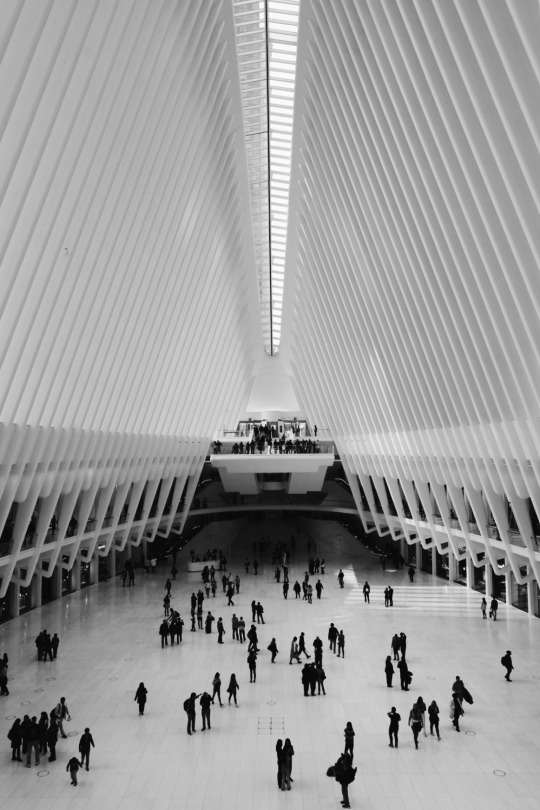
    REX has just released their design for a Performing Arts Center on the World Trade Center site. The design is a minimalist “mystery box” that provides an infinitely customizable interior canvas for directors. I have long been interested in the work of REX because of the hyper-rationale approach they quite often bring to architecture. It’s about allowing architecture to emerge from the project’s constraints, programmatic requirements, and so on. Here’s a video of the project.

    3.

    Finally, this Swiss chalet (not the restuarant) in the town of Anzère has got me pretty excited about the upcoming snowboard season. It was designed by the Amsterdam-based firm SeARCH. And I love the dichotomy between the raw exposed concrete and the softer wood details. Also note how the garage, situated beneath the house, is built into the mountain. It is connected to the house above via an elevator that is also carved into the mountain. Sadly, my ski retreats don’t typically involve James Bond-style lairs.

    Image: Copyright Ossip

  • Where are rates going?

    Real estate is a highly levered asset class, which means
    that pricing is sensitive to interest rate changes.

    Larry Summers recently published a post on his blog
    where he argued that the Fed (US) is being far too complacent about their
    ability to respond effectively to a future recession. He sees this as their
    biggest monetary policy challenge going forward.

    Given the potential impact to real estate and city building
    as a whole, I thought I would summarize some of his key points:

    • Private sector GDP growth in the US averaged
      1.3% over the last year
    • Since the 1960s, this level of tepid growth has
      typically foreshadowed a recession
    • Larry sees > 50% chance that the US economy
      will enter a recession in the next 3 years
    • 400-500 basis points of monetary easing is
      usually needed to counter recessionary pressures
    • The Feds will likely not have this much room to
      play with when the next recession comes along

    I don’t think anyone could have predicted that rates
    would remain so low for so long. (10-year Treasury = ~1.6% at the moment.) Still,
    my view has been that rates in Canada and the US won’t be posting meaningful
    increases anytime soon. And Larry’s post reinforces that for me.

    What’s your view?

  • That emotional connection

    Marketing guru Seth Godin recently published this value
    triangle on his blog
    :

    image

    No matter what business you’re in, it’s worth giving some thought to this. What do you offer?

    At the bottom of the triangle is function. A hotel room functions as a place
    to sleep. A smartphone functions as a device to make calls, send text messages,
    and download some apps. A condominium functions as a place to live, eat, sleep, have sex, and so on. But all functions being equal, most of us will buy whatever product is the cheapest.

    That is until there’s an emotional connection. I love the
    way Seth frames it: “Where do people like me do things like this?” It is about defining
    who you are. Am I the kind of person who buys A or am I the kind of person who buys
    B? If I care deeply about the environment and B promises to respect that, I am
    likely to buy B.

    But then, moving even further up the triangle, if two items offer the same function and the
    same emotional connection, many of us will go for the one that appears sexier, shinier (the new iPhone 7 is very shiny), and more
    stylish. It just deepens the connection.

    Finally, at the very top of the triangle is now. This is
    about scarcity. What’s hot right now?
    Think of that new restaurant that just opened downtown that you haven’t been
    able to get a table at. It’s now and you want to Instagram the food so badly so
    that you can show everyone you were there. You want to be now.

    The point of all of this is that we consume things for
    reasons that go well beyond simple function. That’s just the start of it all.
    One could argue that all of this is simply smoke and mirrors, but that’s a
    topic for another blog post. This is our reality.

    To relate this topic back to architecture and real estate, I
    am curious how many of you have made a housing decision that you believe went
    beyond function. How much of it was based on connection and style?

    Not surprisingly, for me, architecture and design matter a
    great deal.

    Earlier this summer I was driving around the city with my
    father and he was pointing out to me all of the new build single family homes
    that were sprouting up. He then asked me what I thought of them. I responded: “They’re
    shit.”

    What I was really saying with that glib remark was that
    those homes – no matter how expensive – didn’t reflect my own belief system
    about the world. Sure they served their function, but they didn’t offer the
    connection and style that “people like me” like to praise. To borrow once again
    from Seth: we are all part of a certain tribe.

    What tribe do you belong to? And does your housing choice
    reflect that?

  • Open for business

    I just received the September issue of Monocle magazine. One of the features I always read is the “Observation” on the very last page. It reads as the editor in chief’s personal blog.

    In this issue he talks about the recent EU referendum and the changes he is making to his business in response to that. Monocle is headquartered in London, but he is now finding it challenging to be “an international media business in a country that hasn’t figured out how it’s going to move forward.”

    His response?

    They are shoring up the Zürich office. They are looking at the possibility of a second bureau somewhere on the continent. And they are similarly looking to increase staff in both Toronto and Singapore.

    When one place closes up, the companies and talent will find other cities that are open for business. 

    As someone who is closing one chapter this week and starting a new one, Tyler Brûlé’s Observation also reminded me of the importance of change. Oftentimes change feels uncomfortable. But that’s not necessarily a bad thing. In fact, it’s more likely a sign that you’re on to something.

    What have you done lately that made you feel uncomfortable?

  • The politics of flooding

    Do you believe that human action has caused and is causing negative outcomes with respect to the environment?

    The New York Times published a feature piece this week on the flooding of the US east coast. 

    Associated with the article is a fantastic infographic that shows all of the NOAA (National Oceanic and Atmospheric Administration) tide gauges up and down the eastern seaboard. It then zooms in to a few locations and shows mean sea level rise (in inches) since 1950 and the number of days of “nuisance flooding.”

    Here’s a sample screenshot:

    If you don’t feel like reading the full article, at least check out the infographic. The increase in nuisance flooding for some cities – such as Wilmington, N.C. (shown above) and Annapolis, MD – is astounding.

    What’s frustrating about the whole climate change debate is that it remains not only a debate, but an ideological debate. Here’s a quote from the article that stood out for me:

    “I’m a Republican, but I also realize, by any objective analysis, the sea level is rising,” said Jason Buelterman, the mayor of tiny Tybee Island, one of the first Georgia communities to adopt a detailed climate plan.

    In other words: I’m not supposed to think this way, but I do.

    Politics.

  • I can’t spend unrealized gains

    image

    Earlier this week the Wall Street Journal published an article claiming that the celebrated venture capital firm Andreessen Horowitz was lagging behind its elite peers in terms of returns.

    The firm then responded with a well-written blog post explaining why this accusation is off the mark. Their response was simply that you can’t measure returns on “unrealized gains.” Until there is a liquidity event – that is, the company gets sold or goes public – it’s just paper returns. And what matters is cash. 

    As the post clearly states: “I can’t spend unrealized gains.”

    But beyond just a rebuttal, the blog post is a great primer on how the venture capital industry works. We talk a lot about the tech space on this blog, so I thought some of you might find it interesting. 

    One of the reasons I like to follow the VC space is that there are many similarities to real estate development. Not only in the way that the funds are structured, but also in the way that the gestation periods are incredibly long.

    The post talks about this as a “J curve.” In the early years of a fund, the returns are negative. Money is going out the door to invest in immature and risky startups. And it’s not until the harvesting period (7+ years later) that the realized gains start getting paid out to investors (LPs).

    It’s also interesting to note that the exit timing for companies – at least according to Andreessen Horowitz – seems to be increasing (10+ years). This is yet another similarity to real estate development where it seems to be getting harder and harder to build and deliver new supply.

  • Which cities shop small businesses?

    Using anonymized credit and debit card data from over 54 million Chase customers across the US, City Observatory recently published a chart showing the percentage of retail sales that goes to “small businesses” in 15 US cities.

    This is based on proprietary data (2015) from JPMorgan Chase and is surely not perfect. But it’s still an interesting approximation.

    At the top of the list is New York with 36% of all retail sales going to small businesses. And at the bottom of the list – keep in mind that this list only has 15 cities – is Columbus with 23% of retail sales.

    One of the overarching findings was that urban centers tend to see 10-15% more retail sales going to small and medium sized businesses compared to the suburbs.

    Intuitively, this makes sense to me. Space is a precious commodity in urban centers and that may naturally privilege the small operator. There’s also the question of consumer preference among urbanites.

    If you’re interested, you can download the full report from JPMorgan Chase, here.

  • 11 months in Antarctica

    I came across this tweet last night before bed:

    //platform.twitter.com/widgets.js

    I am late to the party on this one, but Dr. Christine Corbett Moran has been living in the Amundsen-Scott South Pole Station since January 2016. She is “wintering” with the South Pole Telescope and studying Cosmic Microwave Background radiation with the University of Chicago.

    I don’t profess to be a student of CMB, but I am so intrigued by her settlement situation. She is living in a place where there is effectively one long day and one long night. There’s sun for 6 months and then no sun for 6 months. 

    I’m not sure how I would feel living in such a remote place with no sun for half of the year. I’m thinking about it now and it’s making me a bit anxious. I’m not sure if the remoteness would make me feel liberated or trapped.

    Thankfully, Christine has a newsletter where she shares her experience in the South Pole. I signed up for it last night and I’m looking forward to seeing what she publishes. If you’d also like to give it a go, you can sign up here.

  • Staying foolish

    I am still a young guy, but already I find people of my vintage starting to hate on some of the things that even younger people are into.

    I hear people say that they’re not into Snapchat because it’s for teenagers. What’s the point?

    I hear people say that they don’t get why anyone would want to rent an urban shoebox. It’s so small. Do you have to hang from the ceiling like a bat when you sleep?

    I hear people say that they don’t get how that new app will ever make money and turn into a business. It’s just a toy.

    It’s so easy to fall into this mentality, where you think that you’re right and everyone else is wrong. But it can be toxic.

    Because what is crazy and fringe today could very well become mainstream tomorrow. And the earlier you can recognize that shift, the easier it is to stay ahead of the curve in business and in life.

    I’m not suggesting that we all try and predict the future. Instead I am suggesting that we all try and remain as open as we can so we recognize the shifts earlier.

    I think there can be a natural tendency to close up over time – unless you deliberately fight it. We start to believe that there’s a certain way that things should be done. We get busy and don’t want to reinvent the wheel. I find myself falling into that trap sometimes and then I try and fight it. This must be why Steve Jobs told us to “stay foolish.”

    In an information and attention economy where the best new ideas win, it pays to keep an open mind.

    (This post was written on my phone which is why it’s void of links.)

  • 3 years of daily blogging

    image

    This past Sunday was the 3rd anniversary of this blog. That is 3 years of me writing something here every day (I think I’ve only missed 2 days in the past 3 years). So I have now written almost 1,100 blog posts.

    Admittedly, they weren’t all masterpieces. But that doesn’t really matter. To do good work, I think you have to be prolific and show up every day.

    The big change this year was that I “unbranded” this blog and started writing just under my personal name, as opposed to Architect This City. I got some initial pushback when I did that, but I continue to believe it was the right decision for what I am trying to achieve here.

    I recently had someone ask me if there was any change in traffic after the switch. And the answer is no. If anything, traffic increased. 

    Over the last year, this blog received about 225,000 page views. Of course, this doesn’t include the 14,000 or so people who read via email subscription and Tumblr, and never actually land on this site.

    But honestly, I don’t care about the numbers anymore. I used to. But not anymore. I blog because it:

    – Forces me to stay current on the topics that matter to me

    – Allows me to clarify my thoughts in a way that thinking alone can’t do

    – Holds me publicly accountable for the things I say and the stances I take

    – Connects me with people I would never otherwise meet

    – Exposes me to new business opportunities

    – Gives me a distribution channel for discussion and sharing

    – Allows me to learn from readers who know more than I do

    – Feeds my desire to create things (creating > consuming)

    – Allows me to exert my personal independence (I write what I want here)

    – Promotes greater transparency and, hopefully, better city building

    I could go on, but those are some of the most salient points.

    At the same time, the world of blogging and social media is all about giving first. So I do try to curate content and posts that I think would be valuable to the readership of this blog. If there’s something else you’d like to see on here, I am always open to suggestions.

    Thanks for reading! Regular scheduled programming will resume tomorrow. And yes, those are my old skateboard decks hanging on the wall behind my desk.