Daily insights for city builders, delivered every morning at 6 AM ET. I’m Brandon Donnelly — a Toronto-based real estate developer and founder of Globizen. I’ve been writing here since 2013.

  • Less is more

    The Wall Street Journal recently asked: Venice Beach Is a Hot Place to Live, So Why Is Its Housing Supply Shrinking? 

    According to Issi Romem, chief economist at BuildZoom, it’s because Venice Beach is the toughest place in America to build housing.

    Here are some numbers from the WSJ:

    “The Venice Beach population is shrinking even as the local economy has boomed. The neighborhood had about 27,000 residents in 2015, about 3,800 fewer than in 2000, according to U.S. Census data. At the same time, the ZIP Code has added 4,000 new jobs, according to Jed Kolko, chief economist at employment website Indeed.”

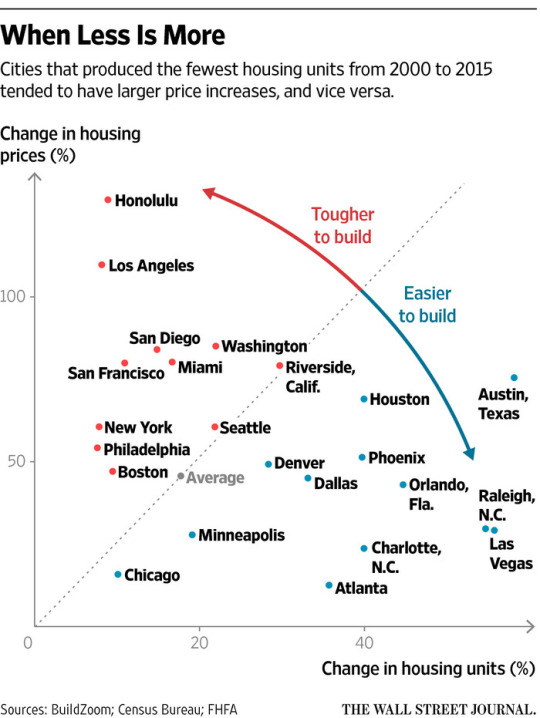
    And here is a chart that speaks to the relationship between housing prices and housing supply:

    Housing supply, alone, isn’t going to solve all of our problems. But it certainly matters. Also, what’s up with Chicago?

  • Contentment as vice

    “Contentment used to be a virtue. Now it’s a vice.”

    I came across this line on Brad Feld’s blog

    For those of you who aren’t familiar with Brad, he is a successful entrepreneur and early stage VC investor. He cofounded the Foundry Group, Mobius Venture Capital, Intensity Ventures and Techstars, and sold his first company back in 1993. 

    But Brad has also struggled with depression over the years and so you’ll find that a number of his blog posts are also quite contemplative.

    This particular post – where the above line comes from – is about a societal norm that I am sure many of you can relate to. I know I can. Here’s another snippet from the post:

    “We talked for a few minutes about the overall, dominant American culture of achievement. The endless striving. The need to feel busy, important, and successful. The deep cultural norms around ambition.”

    Whether it’s because we’re all deeply insecure or because we just need to fulfill our egos, this has become our modus operandi. It has become all about “the hustle” and about “crushing it 24/7.”

    Just this evening I was at a friend’s birthday party and I couldn’t tell you how many times I said “busy.”

    “Hey Brandon, how are things?”

    “Busy!”

    This is an absolutely terrible response. I know that. And I’ve started introducing other responses into my small talk repertoire. But busy is so ingrained in our culture. Being busy makes us feel important. It means we are in demand. We do things. We create value.

    But is the reverse – not being busy – now a vice?

    Regardless of your position on the appropriate balance between contentment (being ok with what you’ve got) and work (striving for more than what you’ve got), I think the first line of this post is an incredibly poignant commentary on the life that many of us live today.

  • Where’d the night go?

    I’m a few months behind on this one, but back in April the CBC published a documentary called: Where’d the night go? 

    It’s about Toronto’s grassroots music community and “DIY venues”, all of which are under pressure as a result of rising real estate values and an overall crackdown on illegal venues. This is a perfect example of what Jane Jacobs was getting at when she said that new ideas require old buildings. 

    If you can’t see the video below, click here. When I watched it, I got stuck watching 3 pre-roll ads. Sorry if that happens to you as well.

    //www.cbc.ca/i/caffeine/syndicate/?mediaId=924601923901

  • Only 9% of new homes sold last month were low-rise single-family

    BILD (the Building Industry and Land Development Association) just released its June 2017 data for the Greater Toronto Area’s new housing market. You can read the full release here. But I would like to point out a couple of things:

    About 91 percent of the 6,046 new homes sold last month were multi-family condo apartments in high-rise and mid-rise buildings and stacked townhomes, while only nine percent were low-rise single-family homes.

    The average price of available new condo apartments continued to rise with an increase of more than $22,000 from May. June’s $627,000 average price marked a 34 percent increase from a year ago. The average available unit was 845 square feet with an average price per square foot of $742. A year ago, the average price per square foot was $587.

    From this, it’s once again clear that Toronto is in the midst of an incredible transformation from a low-rise city to a more vertical city. New supply on the low-rise side of the market is heavily constrained.

    I get the sense sometimes that many people in this city, and others, believe that access to a low-rise detached house should be a right. Go to school. Get a good job. And then buy that house with a backyard. 

    The data speaks to a very different reality.

    Photo by Victoria Heath on Unsplash

  • Architecture pour tous!

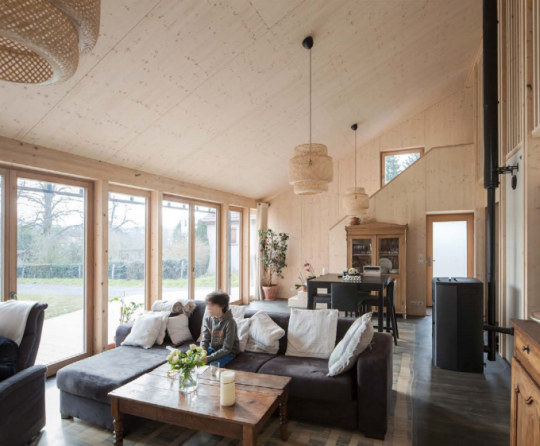
    In 2015, Studiolada Architectes (of Nancy, France) completed a 117 square meter home for a retired couple. On the firm’s website they call the project: Réalisation d’une maison individuelle à Baccarat

    Here are two photos (1 exterior and 1 interior) via the architects:

    Most of the house is finished in wood. It was a modest build costing 174,361 € in total before taxes. The house itself cost 146,506 € and the standalone garage cost 20,245 € (both before taxes). The balance of the costs seem to have gone to exterior landscaping.

    If you consider only the house, that works out to be about 1,252 € per square meter or about 115 € per square foot. Speaking of reasonable.

    What’s particularly interesting about this project though is that after it was completed the architects published what they call a dossier de synthèse en Open Source (click through to download) – effectively an open source file of all the project’s documents.

    Included are all of the plans, assembly details, construction photos, and even the entire construction budget. The ambition was to build an affordable and sustainable house and then make all of the information publicly available so that others might replicate what was done.

    I think this is great.

    So I’ve decided to publicly commit to doing the same for my proposed laneway house. If and when it gets built, I will document and publish the entire journey – including all development/construction costs – and make it freely available on this blog and probably elsewhere.

    I got a bit of flak (on the internet) for calling my laneway house a “prototype” project. But that’s truly what I want it to be for Toronto. Hopefully sharing more, rather than less, information will help it to serve that purpose.

  • Online shopping and “last mile” real estate

    The Globe and Mail recently published an excellent article on “how e-commerce is driving a real estate revolution.” This is a topic that I’m very interested in: how online manifests itself offline.

    Not surprisingly, the article talks a lot about Amazon, including their 4th warehouse in the Greater Toronto Area, which is an 850,000 square foot facility in Brampton equipped with 350-pound robots (8050 Heritage Road).

    The first thing I did after reading the article was figure out the location of all of Amazon’s fulfillment centers in the GTA. Amazon doesn’t seem to publish this. But according to TaxJar, they are here (I mapped out the addresses):
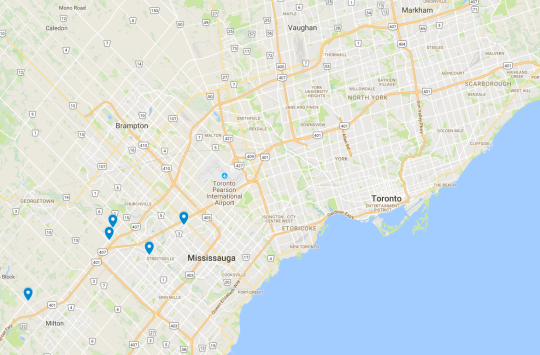
    There are two in Brampton at the precise location where Hwy 407 (toll route) and Hwy 401 meet. The other three are distributed along Hwy 401 in Milton and in Mississauga.

    Now let’s get back to that Globe and Mail article:

    – In 6 years, Amazon has leased over 2 million square feet of warehouse space in Canada.

    – Toronto is the third largest warehouse market in North America. It represents 43% of Canada’s total inventory.

    – Average net rents have increased 9.7% over the past year and vacancy rates have dropped to 2.7% (CBRE data). In Vancouver, those same numbers are 5.1% and 3%, respectively.

    – Online shopping is thought to account for about 6.5% of all retail sales in Canada. But in Toronto, 23% of all industrial space is already e-commerce-related (CBRE data, again).

    – CBRE believes that every $1 billion in new online sales per year requires an additional 1.25 million square feet of warehouse space. 

    – Based on online sales projections, Canada needs another 27.5 million square feet of industrial space over the next 5 years. We don’t have that much space in the pipeline.

    – Clear heights are increasing for stacking purposes. Amazon’s new Brampton facility is 45 feet tall / 4 floors. 10 years ago new warehouses were 26 feet tall.

    – Average sale price of warehouses in the GTA has gone from $119.35 psf to $142.19 psf over the last year.

    Perhaps the most interesting takeaway from the article is the discussion around “last mile” distribution hubs. These are fulfillment centers located closer to the city, which are used to offer shorter delivery times: 

    “…instead of having inventory stored for days or months, these fulfilment centres will turn over their inventory in one day, sometimes twice a day.”

    This is something that I addressed in my recent presentation about the “mall of the future” at B+H’s retail design charrette. Where do these physical distribution centers want to be as online sales continue to grow and delivery times continue to compress? Where’s the future growth?

    According to this article, it’s going to be in “last mile” fulfillment real estate – relatively smaller spaces that are located very close or directly in the city center.

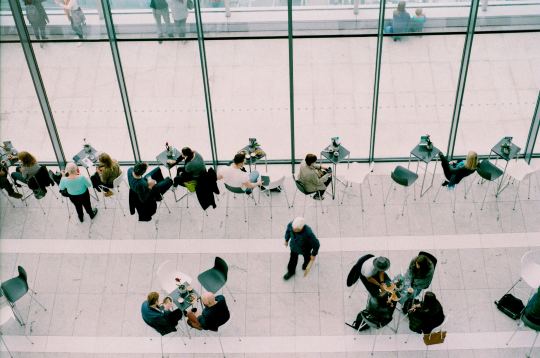
    Photo by Samuel Zeller on Unsplash

  • The next generation of wireless architecture will perform a lot like our cities

    I just finished watching this brief talk by Daniela Perdomo, who is CEO of the mesh networking startup goTenna. It was given at the recent Cities of Tomorrow conference in New York.

    The company sells a product called goTenna Mesh, which is a consumer device that pairs with your phone and allows you to create your own device-to-device (mesh) network for text and GPS communication.

    This network exists independently of centralized cell towers and so part of the value proposition is that during times of disaster – when cell service often goes down – this device allows you to maintain communication.

    I can’t say this is something I feel compelled to invest in right now, but I’m intrigued by something that Daniela mentioned in her presentation. 

    She said that traditional cell tower service degrades as more people use it. That’s why it often becomes “oversaturated” during times of crisis or when you’re at a packed event, such as a concert.

    But unlike traditional cell service, decentralized mesh networks by definition get stronger as more people participate. And that’s because the mesh gets bigger and denser. 

    So her argument was that mesh networks are actually a lot like cities. More people and more nodes make the entire ecosystem stronger and more resilient. I like that because we know that many things, such as productivity, do in fact increase as cities get bigger.

    While I may not be pulling out my wallet right now for this device, it strikes me that this wireless architecture – which mimics some of the natural strengths of our cities – is something we will certainly see more of in the future.

    Veniam is an another example of a company focused on mesh networks, but in this case it’s through vehicles. They are building “the internet of moving things.”

    Photo by Daria Shevtsova on Unsplash

  • Second Nature

    There is a deep connection between skateboarding and cities. Skateboarders are constantly surveying the built environment and looking for new and creative ways to engage with it. I think it’s a beautiful way to experience cities. (Sadly, we often respond by making it illegal.)

    The below video is a perfect example of this connection. It’s a 20 minute documentary about pro skater Janne Saario (of Finland) who eventually went on to become a successful landscape architect. Here is his firm. And if you can’t see the embedded video below, click here.

    [vimeo 46685196 w=640 h=360]

  • Gigantic shopping machines

    image

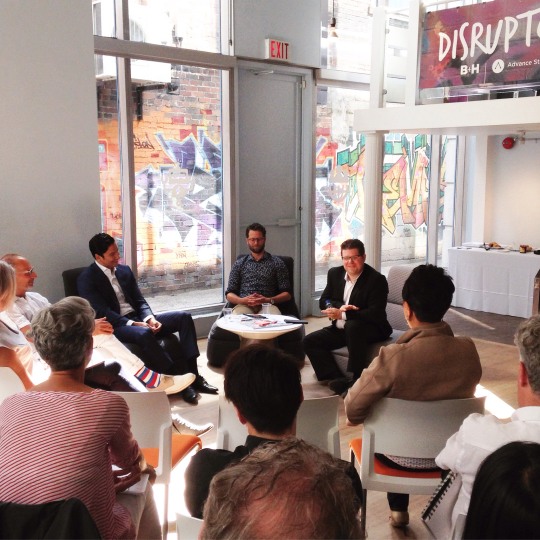
    This morning I gave a presentation and participated in a design charrette that was organized by B+H Advance Strategy about the “mall of the future.” (See photo above.) It’s a 2-day event and I was only able to stick around for a few hours in the morning, but I think it’s great that B+H Architects takes the time to research and get a deeper level of understanding in the areas in which they work. Great design demands that.

    The way the charrette was structured was around a handful of future scenarios. The idea being that it’s impossible to accurately predict the future, but it is possible to play out different possible futures to see what you get. I’m looking forward to seeing what the teams ultimately come up with at the end. I would also be really curious to hear your thoughts in the comment section below.

    But before we decide on what malls are going to become in the future, it’s perhaps useful to think about how they got their start. The man largely credited with inventing the fully enclosed mall typology is a man by the name of Victor Gruen. He was a Vienna-born architect who moved to the US in 1938. 

    In the words of Malcolm Gladwell:

    “Fifty years ago, Victor Gruen designed a fully enclosed, introverted, multitiered, double-anchor-tenant shopping complex with a garden court under a skylight—and today virtually every regional shopping center in America is a fully enclosed, introverted, multitiered, double-anchor-tenant complex with a garden court under a skylight. Victor Gruen didn’t design a building; he designed an archetype.”

    The most interesting thing about this story though is that Gruen’s initial hope was that the mall would urbanize America’s suburbs. The garden court was supposed to be a kind of town square. And his broader vision included a mix of higher density uses surrounding the perimeter. But in reality the opposite happened: The mall helped to further suburbanize America.

    However, as our malls begin to show their age (or die) and as we relearn to appreciate walkable urban environments, mall landlords are increasingly thinking mixed-use and higher density. And ironically, many of the plans probably don’t look all that dissimilar to Gruen’s original ideas. So maybe one possible future is simply the one that Gruen wanted to create all along.

    Image: Kinetic Commerce

  • From self-storage to urban logistics

    image

    I have long told myself that if I ever needed to rent self-storage space, it would mean that I own too much stuff and that I need to get rid of some of my shit. But I recognize that there are many reasons why someone might need extra storage and I recognize that the storage market in the United States alone is something to the tune of $30 billion a year.

    Here is an interesting case study about the storage company MakeSpace, which to-date has raised almost $60 million in equity funding. Their model is likely one that you’ve heard of or used before. Instead of you yourself going to the “self-storage” facility, they do the pickup and delivery. So they call themselves a logistics business, like Amazon, except that it works in reverse. Instead of you receiving deliveries, they take your stuff from your home back out to their warehouses.

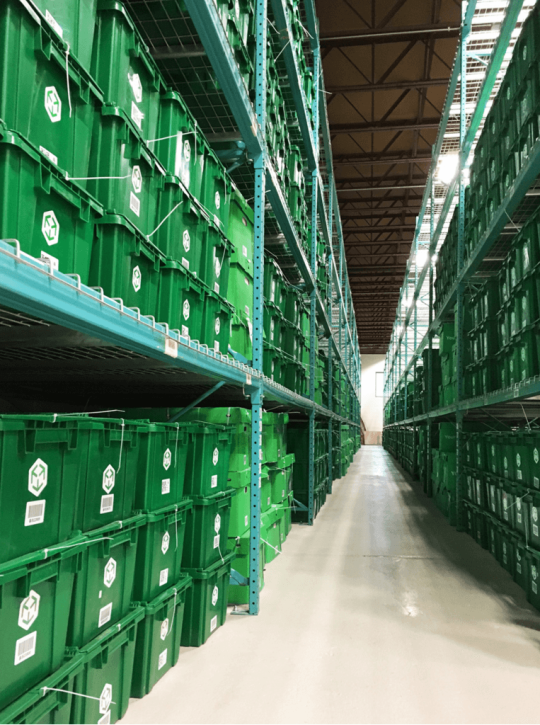
    Because of the route management software that they’ve been building over the last 4.5 years and because there’s enough density in the areas that they service, their pick-up and drop-off routes are apparently profitable. You no doubt need a certain amount of scale for that to happen, but they seem to have it. By the end of this year, they expect their reoccurring revenues to be in the $10′s of millions. That’s coming from the volumes of green boxes you see at the top of this post.

    What’s particularly relevant for this audience are the built form and real estate implications. Because their customers aren’t physically visiting their facilities, they’ve been able to locate all of their distribution centers on the outskirts of the cities in which they operate. And because of this, their physical real estate costs are said to be less than 50% of traditional self-storage firms and they believe this number will trend to around 20% as volumes continue to grow.

    All of this has me thinking about some of the other implications of the on-demand economy on cities and on real estate.

    Image via Both Sides of the Table