
September 25, 2025 · View original
I was out for dinner last night on Ossington (here in Toronto). Afterwards, my business partner Rick and I walked the street for a bit. It was a beautiful evening. Every restaurant had their doors and windows open. All of the patios were full, many with the kind of awnings that I love from Paris. And in between these patios were endless options for beautiful window shopping. So during our walk, we couldn’t help but say to each other, “man, what an awesome street.”
Our line of thinking then went here: How did this ~600-meter stretch of street between Queen and Dundas become one of the coolest retail streets in the city? As you might expect, it follows the typical urban trajectory. It was a seedy street with cheap(er) rents. Then the artists and creatives started moving in, along with OG dive bars like Sweaty Betty’s. And then the city implemented a brief moratorium on bars and restaurants because things were getting a bit too fun.
I also think it’s fair to call Ossington’s rise as being a spillover from Queen Street West. As rents rose on Queen, Ossington became a natural outlet. It was in the right location, and it already had a commercially-oriented and fine-grained ground plane, meaning the buildings could be easily repurposed for galleries, bars, restaurants, and whatever else. This is also why the strip just dies north of Dundas — there are no more suitable buildings.
To show you just how entrenched this built form was and is, here are a few archival photos from the 1920s and 1940s:
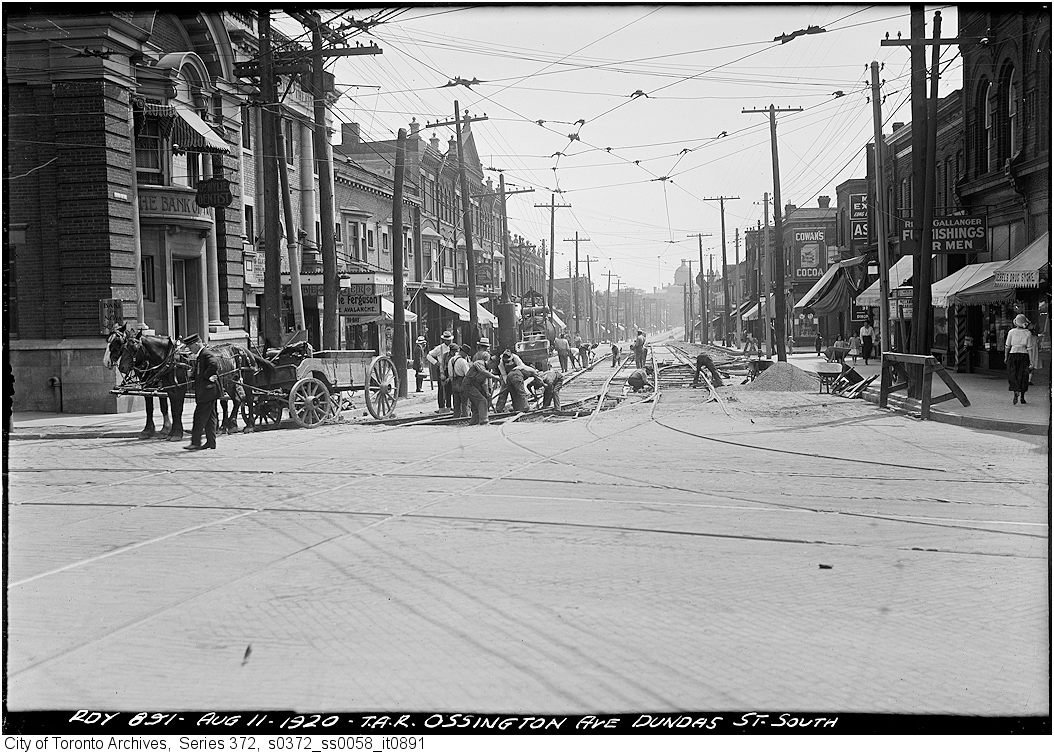
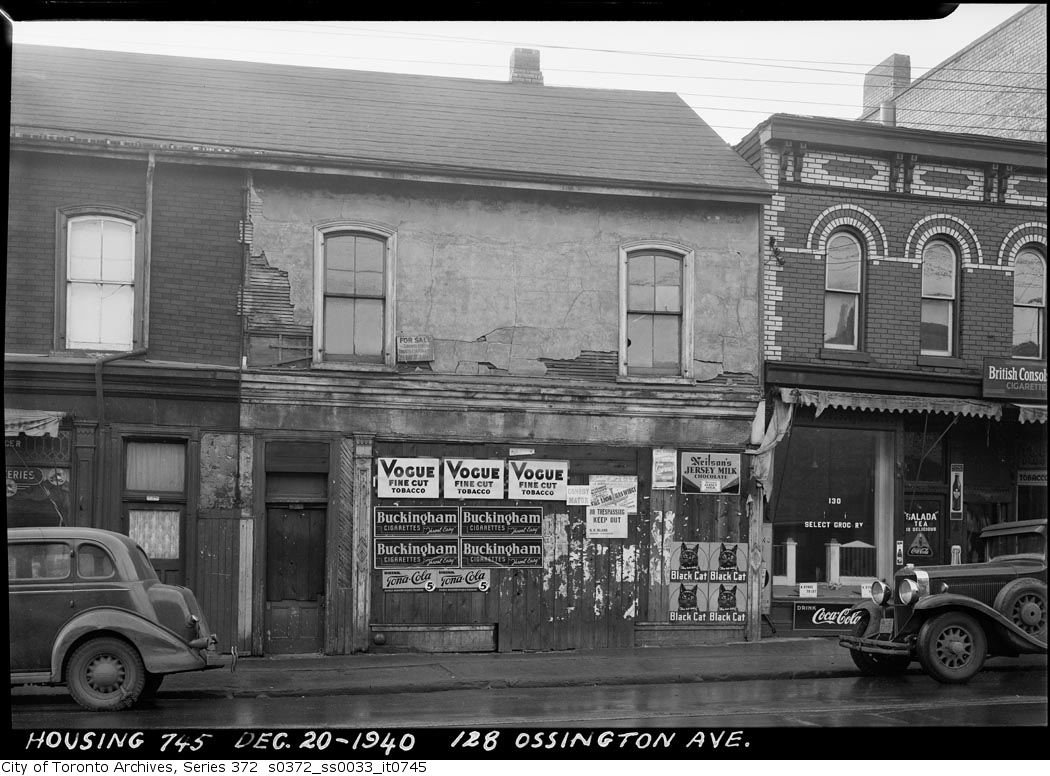

Beyond this, there’s nothing particularly special about Ossington as a street. It has a 20-meter width, which is typical of most of Toronto’s central main streets, and it’s filled with a bunch of 2 to 3 storey buildings. So another thing it does is make you wonder: How many more Ossington Avenues could Toronto have if only we created the right preconditions for new businesses and ideas to flourish?
Of course, not every street can be an Ossington. What I’m talking about is simply creating more walkable, mixed-use streets. That’s a lot harder to do when you don’t have the bones that Ossington had, and you have primarily large lots and/or residential uses. But that doesn’t mean it’s impossible. As Toronto works to intensify its major streets, it’s crucial that we also consider what the ground plane might one day want to become.
More on this in future posts.
Leave a Reply