Daily insights for city builders, delivered every morning at 6 AM ET. I’m Brandon Donnelly — a Toronto-based real estate developer and founder of Globizen. I’ve been writing here since 2013.

Category: Real Estate

  • Cheap mortgages are something to hang onto

    If you really need a new home, then I guess this makes sense:

    We thought rising mortgage rates would crush the homebuilders, and bet against Pulte in the FT stockpicking contest. But the exact opposite happened: high rates froze the existing house market by giving homeowners a huge incentive not to move — their irreplaceable cheap mortgages. That left new homes as almost the only game in town for anyone who really needs to buy a home. Pulte has been one of the best- performing stocks in the S&P 500. Never pick stocks, even in a stupid stockpicking contest, on the basis of superficial research.

    And here’s a chart that supports this argument (new homes as a % of total single-family home inventory, including resales):

    It’s an interesting nuance.

    But it’s certainly a different story here in Toronto with new condominium sales. According to Urbanation, in the first half of this year, the Greater Toronto Area sold 6,727 new condominium homes. This is down 59% compared to 2022, and represents the slowest first six months in a decade.

    In this case, higher rates have dramatically slowed the market.

  • Retiring on Lake Como

    For those of you thinking about summer in Europe right now, here is an interesting WSJ article about the real estate market in Lake Como, Italy. It’s behind a paywall, though, so here are two things that stood out to me.

    Firstly, the market is all about foreign buyers:

    The key driver of the Como market is, and has long been, foreign buyers. Prepandemic, Baysal estimated, non-Italian buyers were responsible for 70% to 80% of sales, with buyers from Russia, the U.K., Germany, and Switzerland leading the way. Today, foreign buyers still dominate. But while Russian and British buyers have gone quiet, said Baysal, North Americans stepped into their shoes last year, attracted by the relative strength of the dollar.

    More:

    Sara Zanotta, founder and managing director, Lakeside Real Estate, said most of her buyers are American, Swiss, Scandinavian and German vacation-home buyers. Armed with budgets of between $880,000 and $2.75 million, they are eager to buy a four- to five-bedroom villa, preferably historic, with a lake view and within walking distance of the water. Apartments in historic houses are also popular. “Outside space is a must,” she said. As a result of strong demand, Zanotta estimates that prices for this class of home have increased by around 20% between 2021 and 2022. 

    Secondly, there appears to still be some deals if you don’t need to be directly adjacent to George Clooney. The first home that is profiled in the article is a 1,000 sf two-bedroom condominium with a clear and direct view of the lake. It was purchased back in 2020-2021 for US$254,000.

    That feels very reasonable — $254 psf! The owner also purchased the property site unseen, visited it for the first time in 2021, and is somehow already approved for an Italian citizenship. (Doesn’t naturalization usually take 5 years of residency?)

    I can think of worse places to retire than Lake Como.

  • “Offices are over”

    This is an interesting article from Brookings that talks about the “myths of converting offices into housing.” What I especially like about the article is that it’s nuanced, and it directly addresses many of the myths that currently surround offices. The first one is that “offices are over.”

    Regular readers of this blog will know that I don’t agree with this. And the article provides some good data points to support this:

    • Office utilization may be below pre-pandemic levels in many cities, but the data suggests that we have not yet hit a plateau. Utilization rates continue to increase, albeit gradually. So if we are to be more precise here, it’s not that some people will never return to the office, it’s just that it’s taking longer than I think many people expected.
    • That said, this is not the case in all cities. Downtown Salt Lake City, as we have talked about before, is the busiest it has ever been. Similarly, ridership on the Utah Transit Authority network is up 26% from pre-pandemic levels.
    • Europe is generally ahead of North America with utilization rates in the 70-90% range, according to JLL. And Asia is even further ahead with rates in the 80-110% range. Meaning that, similar to downtown Salt Lake City, there are (many?) cities in Asia where more people are in the office today compared to in 2019.

    So I would not be so quick to claim that “offices are over.”

    For the full article, click here.

  • The neutral rate and housing supply

    Below are two interesting excerpts from this recent Globe and Mail interview with Tiff Macklem (the current governor of the Bank of Canada of the former dean of the Rotman School).

    The first has to do with where he believes the “neutral rate” will be in the foreseeable future. He believes it will be higher than where it has been in the past:

    We have different models we use to estimate the neutral rate [the central bank’s estimate of where its policy rate would settle if the bank were neither trying to stimulate nor restraining the economy]. … Those models, based on the data we have, still suggest a neutral rate in the range of 2 to 3 per cent.

    When we look forward, and we look at a number of the forces, it seems more likely that the neutral rate is going to be higher than that … [rather] than lower than that. We don’t have that data yet. But there are a number of factors.

    More people are retiring. The labour market looks like it could be sort of structurally tighter going forward. Globalization has at least stalled, if not reversed. That could create more cost pressures. We’re going to need a lot of new investment in cleaner technologies if we’re going to meet our emissions-reduction targets. When I say ‘we,’ it’s the world – so that’s going to affect global real interest rates.

    So when you look forward, it seems more likely that the neutral rate is higher, not lower. And the message is that households, businesses, governments, the financial system, they need to be prepared for that possibility.

    The second is about his view on Canadian housing:

    The fundamental issue in the housing market, and this has been an issue in Canada for 10 years, at least, is structurally the demand for housing is growing faster than the supply. And so yes, interest rates go up, the housing market will slow. But it’s only going to slow so much because there is a sort of structural shortage of supply relative to demand.

    I think what you’re seeing is that with supply growing less than demand, the housing market has started to tick back up, housing prices have started to tick back up. That’s something we need to take into account in monetary policy. But we’re not targeting the housing market. We have one target: CPI inflation.

    These two forces are opposing ones. Higher rates create downward pressure on home prices. But, as we all know, a structural housing supply problem does the opposite. Where these two forces balance out is anybody’s guess. But as Tiff mentions above, his concern is not home prices; it is inflation.

    I am not an economist, but my view is that the broader real estate market is still going through its reset. There will be more pain and less housing supply overall in the short-term. Risk and leverage are still being unwound and that takes time. It also sucks.

    Because of this, I think if you ask most people today, they will likely tell you to wait: “We haven’t yet hit the bottom of the market.” This is likely true. But I have zero ability to time the bottom of a market. And at the same time, the future does feel a lot more knowable compared to a year ago.

    My philosophy is more akin to what I blogged about earlier in the week: If it’s cheap, if the thesis is sound, and if you have the ability to think long-term, then these downturns are when you want to buy. And that is how I’m starting to feel about things right now. This includes everything from real estate to NFTs.

    Disclaimer: This is not investment advice.

  • Mail-order homes speak to a simpler time

    There was once a time — generally in the early 20th century — when some people used to order their new home from a catalogue.

    You would pick the model you wanted and then all of the required materials, along with assembly instructions, would get mailed to you.

    Mind you, this was never the most popular way to make a new home. According to Brian Potter, mail-order homes, even at their peak, represented less than 10% of all yearly housing starts in the US.

    So arguably, it was never entirely successful as a model. Building a home is tough work, especially without fancy power tools.

    Still, it’s interesting to think about its relative simplicity: “Here’s a bunch of raw building materials and some instructions. Go figure it out. It’s like an Ikea bookshelf, except it’s your entire house.”

    Contrast this to what it takes to build new urban housing today. There is a litany of new barriers. It’s nowhere near as simple as ordering a kit of parts; so it’s no wonder housing is more expensive.

    For more on “The Rise and Fall of the Mail-Order Home”, check out this recent post from Brian Potter’s Construction Physics newsletter.

  • If it’s cheap, buy it

    Reading Howard Marks’ investment memos is up there with reading Paul Graham’s essays. You just need to do it. Howard’s latest is about “taking the temperature” of the market and I think you’ll find the lessons invaluable for everything from equities to residential real estate.

    Here’s an excerpt that I liked:

    We don’t say, “It’s cheap today, but it’ll be cheaper in six months, so we’ll wait.” If it’s cheap, we buy. If it gets cheaper and we conclude the thesis is still intact, we buy more. We’re much more afraid of missing a bargain-priced opportunity than we are of starting to buy a good thing too early. No one really knows whether something will get cheaper in the days and weeks ahead – that’s a matter of predicting investor psychology, which is somewhere between challenging and impossible. We feel we’re much more likely to correctly gauge the value of individual assets.

    These are investing words to live by. Avoid your own emotionality and value the asset. If it’s not cheap, don’t buy it. If it’s cheap, buy it. Then take a long-term view. It all sounds simple enough, but it’s clearly not so easy. And that’s why we have extreme highs and extreme lows in the market.

    Eighteen months ago, everyone wanted to buy residential real estate. Today, prices are lower, but fewer people want to buy residential real estate. Part of this is obviously because of interest rates. But part of it is also just because of emotion.

  • Real estate investors are outbidding people who own strollers

    Here’s a potential scenario:

    “When you have investors competing with first-time buyers who walk in with a couple of [baby] strollers, typically the investor is going to win,” Mr. Pasalis says. “They are well capitalized. They can pay a higher price. And this is why our home ownership rate is declining, because more and more homes are actually going into the hands of investors who rent them out, and amplifying home and amplifying condo prices. We are seeing that.”

    But let’s break this down a little.

    Where are these first-time buyers walking into? Is it a resale home showing or is it a pre-construction showroom? If it’s the latter, then we know it’s going to be difficult / atypical for them to make a buy decision so far in advance. They already have multiple strollers in hand, do they want to wait 4-7 years for their pre-construction home to be ready?

    I would also add that in our current environment — where investor demand for pre-construction homes has waned significantly — the development industry has not seen a marked uptick in end-user demand. Why are they not stepping up now that they’re not being outbid by investors? In my opinion, it’s an ideal time to buy!

    One reason could be that people who own strollers still largely prefer low-rise housing. Maybe it’s for reasons of affordability, maybe it’s a cultural bias, or maybe it’s a genuine preference. Either way, let’s turn our attention to resale homes. In this scenario, who is likely to pay the most?

    If you’re an investor, then you are looking for a specific yield. And so in theory, it should be a mostly dispassionate decision: “Here’s the most that I can pay in order to meet my minimum returns. Do not exceed.” But the question is whether is this is going to be more or less than what a stroller-owning group of people would pay.

    The answer is probably that it depends. However, if the answer is that the investor wins and they then turn around and rent it to people who own strollers, is this actually a problem? And if this same investor happens to own 25 other rental homes and they’re all rented to people who own strollers, is this an even greater problem?

    I suppose it is a problem if you’re worried about Canada’s homeownership rate, which has in fact declined from about 69% (in 2011) to 66.5% (in 2021). But what does this even mean? Is a higher homeownership rate always better? Does Canada have a target number? As of February of this year, the homeownership rate in Switzerland was only about 36.3%. And the last time I checked, it was still a rich country.

    There is nothing wrong with renting. I know wealthy people who have opted to rent their entire life because they enjoyed the flexibility and/or had better places to put their money.

    All of this said, the argument in the above scenario is that, but for investors outbidding people with strollers, these homes would be more affordable and that would in turn increase the homeownership rate. It’s a similar argument to, but for foreign buyers or but for Airbnbs, these homes would be more affordable.

    But in a city like Toronto, we are building very little in the way of new low-rise houses. New supply is virtually non-existent. Similarly in Seattle, they are now building more accessory dwelling units than they are single-family houses. So it is any wonder that demand is constantly outstripping supply and that prices are being bid up?

    In my opinion, a better solution is to rethink how we build our low-rise neighborhoods. And here and here are two good places to start.

  • Every home is for sale; it’s just a question of price

    Over the last few weeks, a number of people have told me that, when it comes to their current home, they have a number in mind. They more or less said, “I’ve already spoken with my husband/wife about it and, if someone were to offer us $X, we would sell and move immediately.”

    What’s fascinating about this is that it’s a form of housing supply that generally doesn’t exist anywhere right now. Sure, the people I was speaking with would sell and move for a price, but how does something like this actually happen? How do buyers find them?

    I suppose it could happen through word of mouth. I now know their prices and so if someone I know were interested in such homes, I could tell them. It is a low probability, but it’s still a possibility. Alternatively, someone (an agent or otherwise) might just show up on their doorstep and make them an offer. My dad actually sold his last home this way.

    But again, how likely is this to happen? It doesn’t seem scalable. And this is why Zillow used to have something called a “Make Me Move” listing. Rather than a traditional listing, it was a listing for, “I don’t necessarily need to sell, but if you offered me $X, I would move.” For whatever reason, though, Zillow no longer offers this service. Presumably, it’s because it wasn’t working. Hmm.

    Here’s how I’m thinking about it.

    Today, most housing markets are binary. A home is either for sale or it’s not. Sometimes enterprising people manage to secure an “off-market home”, but generally speaking the market is binary. If a home isn’t for sale, most people don’t usually bother with it. Mostly because they can’t easily find it.

    But market conventions aside, the conversations I’ve been having suggest that it’s actually more of a gradient. On the one side are people who really don’t want to sell. Maybe they’re never sellers. Let’s pretend that the home has been in their family for generations and so to convince them to sell you’d probably have to offer them an absurdly high price and that might not even do it.

    On the other end of this gradient are people who are ready to sell today. In an extreme example, they might even need to sell by a certain date, or else. In this case, a below-market price could get them to sell. They are highly motivated and one sure-fire way to increase speed is to lower price.

    But for everyone else in between, it is a big unknown gray area where price and desire to sell are, I would think, inversely correlated. As desire to sell increases, expectations around price probably need to come down until they reach a point where the market can bear it and a transaction will occur. This is my hypothesis at least.

    But if it’s true, and there’s a big untapped gray area, then the housing market is a lot bigger than we think it is.

  • Most new condominiums are not owner-occupied — is that actually a bad thing?

    Here’s some data (via Jeremy Withers) explaining that a large portion — about 61% — of new condominiums built in Ontario between 2016 and 2021 were not owner-occupied. In the case of low-rise houses, the figure is lower — about 24%.

    Now, the premise of Jeremy’s tweet storm is that non-owner-occupied housing is bad and that the government should be doing more to discourage this. Simply taxing and restricting foreign buyers is not enough (and I agree that this is mostly symbolic).

    But is non-owner occupied really such a bad thing?

    First of all, non-owner occupied implies that somebody else is renting the place. I don’t think that a significant chunk of these homes are being left vacant. So isn’t the fact that somewhere around 61% of all new condominium apartments are becoming rental housing something that is potentially positive?

    One counter argument would be that these investors are bidding up new home prices and squeezing out end users. But that brings me to my second point: small-scale individual investors are a critical ingredient in the delivery of new condominium housing in Ontario.

    This point cannot be overstated.

    The lender requirement to pre-sell suites in order to obtain construction financing means that developers rely heavily on buyers who are willing to purchase many many years before occupancy. And this is generally a lot more challenging for end users, as we have talked about many times before.

    So if it weren’t for investors, I am certain that we would see a lot less new housing getting built. And in turn, that would mean a lot less new rental housing getting built.

  • Vacation rentals in Park City

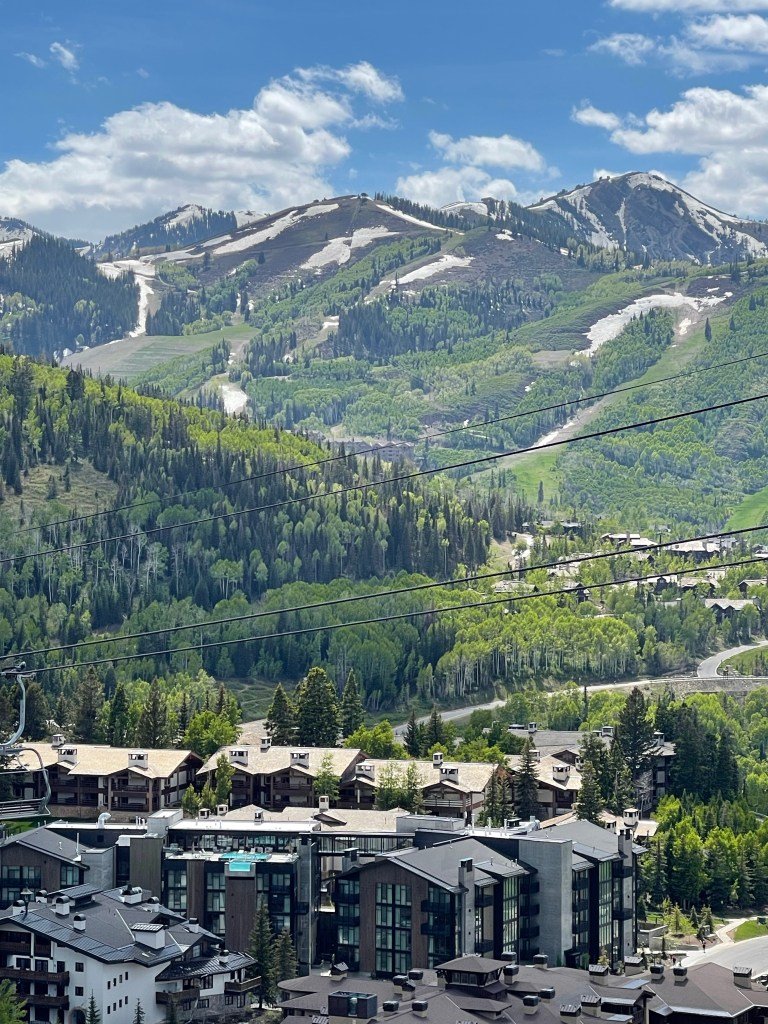
    We spent his morning meeting with prospective property managers for Parkview Mountain House. Here’s what we learned about the short-term rental market in Park City, Utah:

    • Property management fees generally range from 20-35% of revenue (these are turnkey solutions)
    • Airbnb is somewhere around 80% of the market here; though it does tend to skew toward slightly smaller rentals, whereas VRBO skews larger
    • Sundance Film Festival and New Year’s Eve are the two busiest times in Park City (demand greatly exceeds the available vacation rentals — 120%?)
    • Many Sundance guests tends to be people on expenses accounts: not price sensitive, but apparently very demanding
    • Winter is obviously peak demand because of snowboarding and skiing, but demand is still strong in the summer because of cycling, hiking, golfing, fishing, etc.
    • The two slowest times are spring (mud season) and fall
    • Many PMs will track booking lead times, which is the period of time between booking and check-in
    • This past winter season, demand was strong but average lead times were way down — meaning people were booking last minute and responding to snowstorms
    • During heavy snowfall seasons, like the one Utah had this past winter, you’ll likely need to budget for roof snow clearing (a few thousand for the season)
    • Heated driveways are a very good idea in the mountains
    • The most popular / most searched amenity is by far a hot tub; servicing one will run you about $125 per month

    I always find it fascinating to dig in and learn about a new industry and/or market. And that’s exactly what we did this morning.