Daily insights for city builders, delivered every morning at 6 AM ET. I’m Brandon Donnelly — a Toronto-based real estate developer and founder of Globizen. I’ve been writing here since 2013.

Category: Real Estate

  • Doom loop or boom loop?

    One of the interesting things about return-to-office trends is that there’s a meaningful difference between smaller and larger cities. In smaller cities, most people have returned to working in their offices. But in larger cities, this hasn’t been the case. This makes intuitive sense. Larger cities tend to have more expensive real estate (which forces people to decentralize) and, in turn, longer and more punishing commutes. So in a larger city, the individual benefits of WFH (i.e. having zero commute costs) tend to be far greater.

    However, in-person interactions are critical to what are known as agglomeration economies. This is why we have things like financial districts — because there are real economic benefits to even competing firms locating proximate to each other. WFH arguably reduces these benefits. And in this recent report called, Doom Loop or Boom Loop: Work from Home and the Challenges Facing America’s Big Cities, the authors, Richard Voith, David Stanek, and Hyojin Lee, have tried to estimate what these agglomeration losses might be for cities like New York, San Francisco, and Philadelphia.

    Here’s New York City:

    If you agree with their assumptions, then you might also agree with their policy recommendations. Among other things, the report argues that larger cities, like New York City, should be focused on promoting themselves to industries/jobs that benefit the most from in-person interactions, recognizing that WFH isn’t going away. At the same time, cities should understand that reducing the cost and increasing the pace of housing production also helps to reduce agglomeration losses. It keeps more people centralizing around a particular place.

    To download the full report, click here. It’s an interesting read.

  • European office vacancy rates: La Défense vs. the Paris-CBD

    The first thing that stands out to me in this European office vacancy rate chart from Savills is the difference between Paris-La Défense (~15%) and Paris-CBD (2%).

    For those of you who maybe aren’t familiar, La Défense is the largest purpose-built business district in Europe. It houses upwards of 40 million square feet of office space and covers about 1,400 acres. It’s also more or less where Paris decided to allow and put tall buildings. Though, it is about 3 km west of the city limits.

    The Paris-CBD, on the other hand, is within the city limits and I’m assuming it refers to the quartier central des affaires (QCA). But regardless of the exact boundary definitions, what we are comparing here is a purpose-built business district to an older supply-constrained central one. And clearly there are, right now, meaningful differences in demand for the offices in these two areas.

    What’s also interesting is that there’s a meaningful difference in the rents. According to Reuters, office space in La Défense is on average about 50% cheaper than the QCA. This, to me, is a reminder that monofunctional urban areas tend to be less resilient over time. And that’s why La Défense is actively working to add additional uses, such as more residential.

    But it’s not just about uses. The area will also need to contend with the fact that it has a vastly different kind of built form; one that isn’t fine-grained and walkable like the QCA. This matters.

  • My last day at Slate

    As some of you may have gleaned from this recent RENX article, I have moved on from my development position at Slate Asset Management to focus exclusively on Globizen. After 8 very productive and exciting years at the company, it was time.

    I joined Slate in 2016 to help start the development group. Here is the post that I wrote back then. And it all came about because of a coffee meeting at Starbucks at the corner of Yonge & King.

    At the time, Lucas Manuel was looking to hire someone, and so our mutual friend, Kieran Boyd, connected us with the expectation that I would make some industry introductions. But at the end of our meeting, Lucas was quick to say, “actually, I think you should come join Slate.”

    And obviously, that’s what I did.

    Fast forward to today, and Slate has grown into a global investment and asset management company with $13 billion of assets under management across Canada, the US, and Europe. And within this platform is a supremely talented development group with an awesome portfolio of sites and projects.

    Thankfully though, this is not a goodbye. Myself and the Globizen team will still be working very closely with Slate on a handful of development projects, including One Delisle and Corktown. And the intent is that we will continue to work on new projects together in the future.

    I learned a lot during my time at Slate, and I have so much respect for Blair and Brady Welch and the rest of the partners. They have built an incredible global company and assembled some of the most creative, entrepreneurial, and smartest people I have ever worked with.

    Thank you for everything over the last 8 years.

    So what’s the plan for Globizen? This will be the topic of a follow-up post.

  • Victor Horta-designed building for sale in Brussels

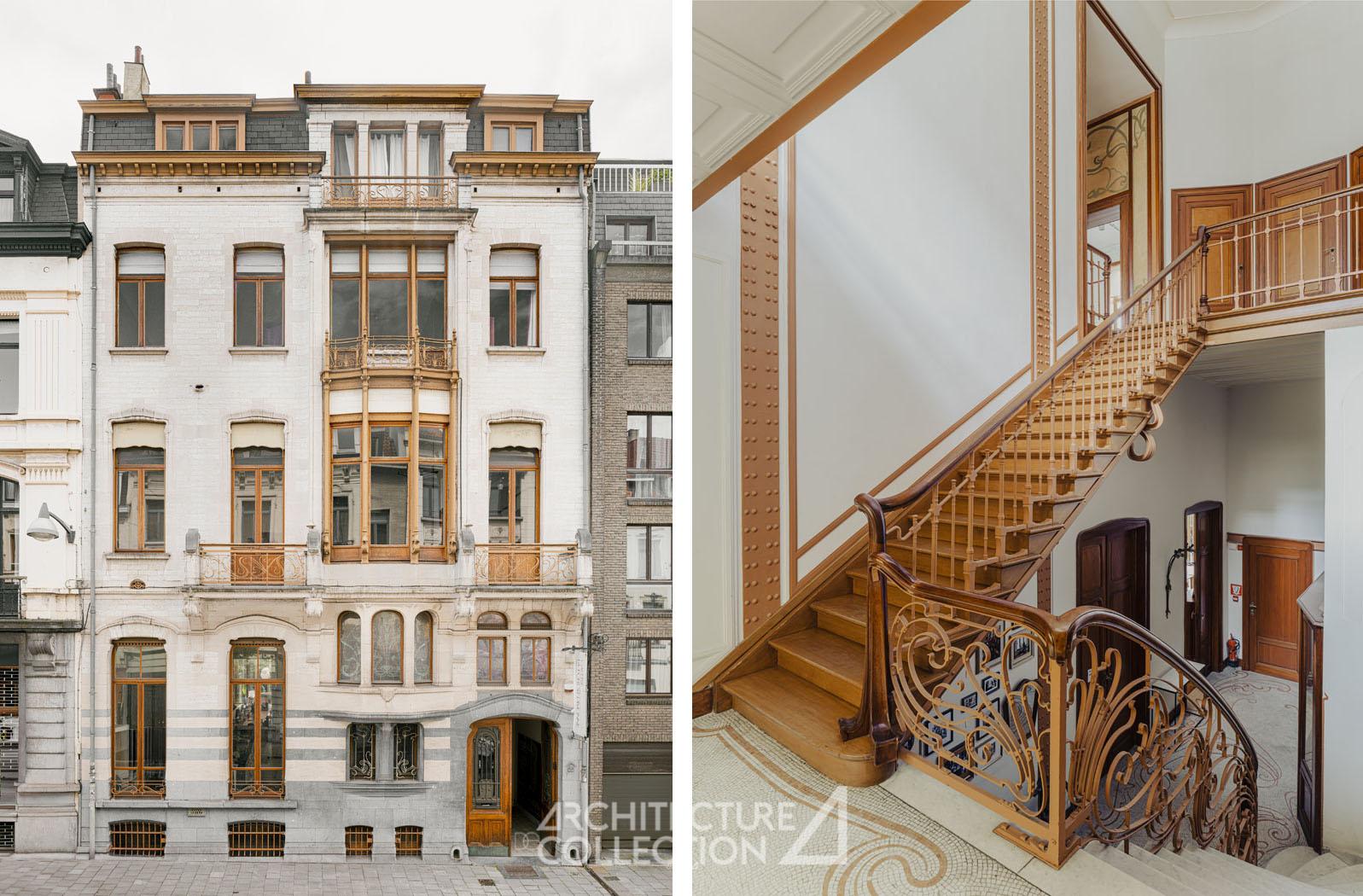
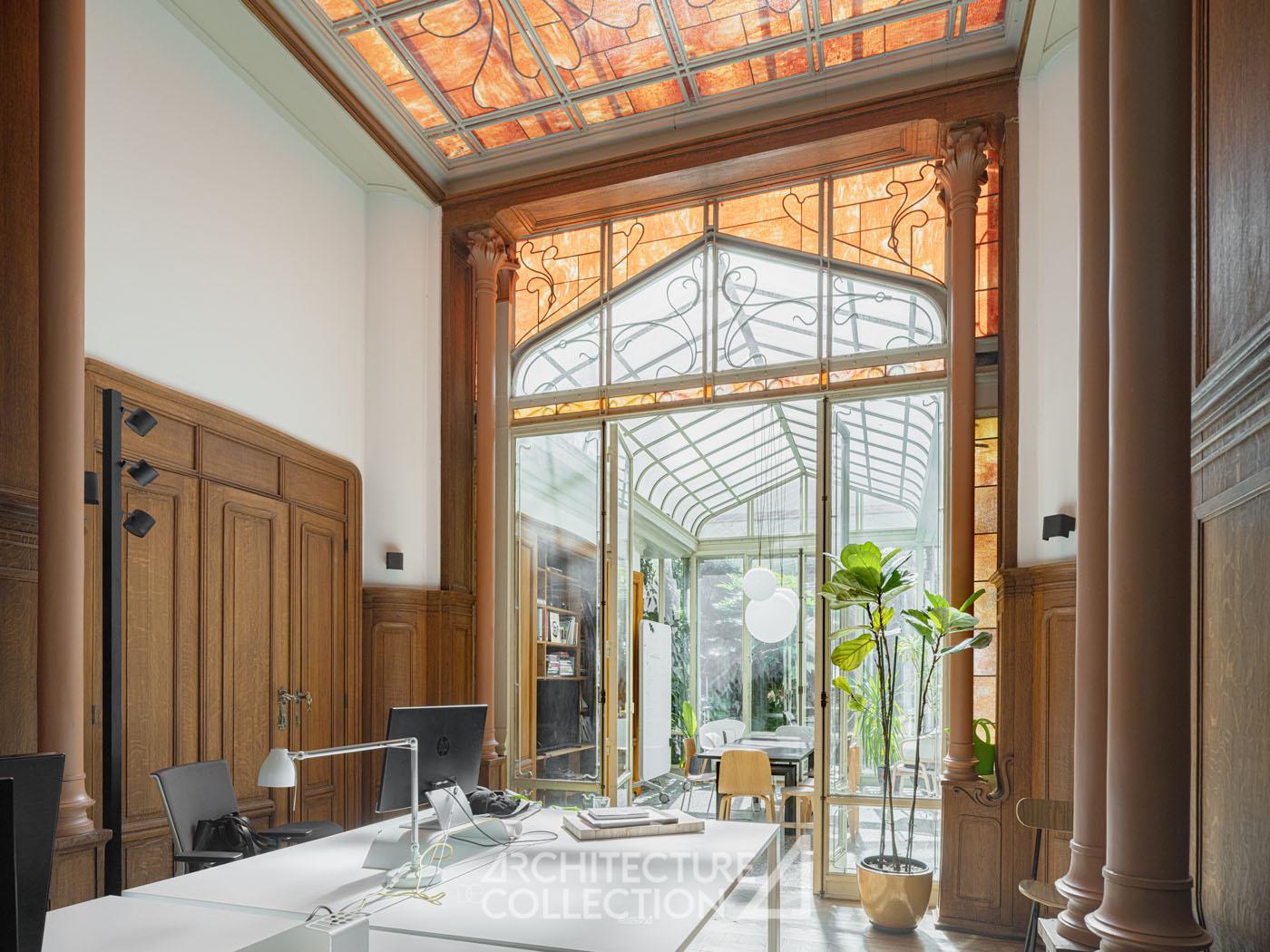
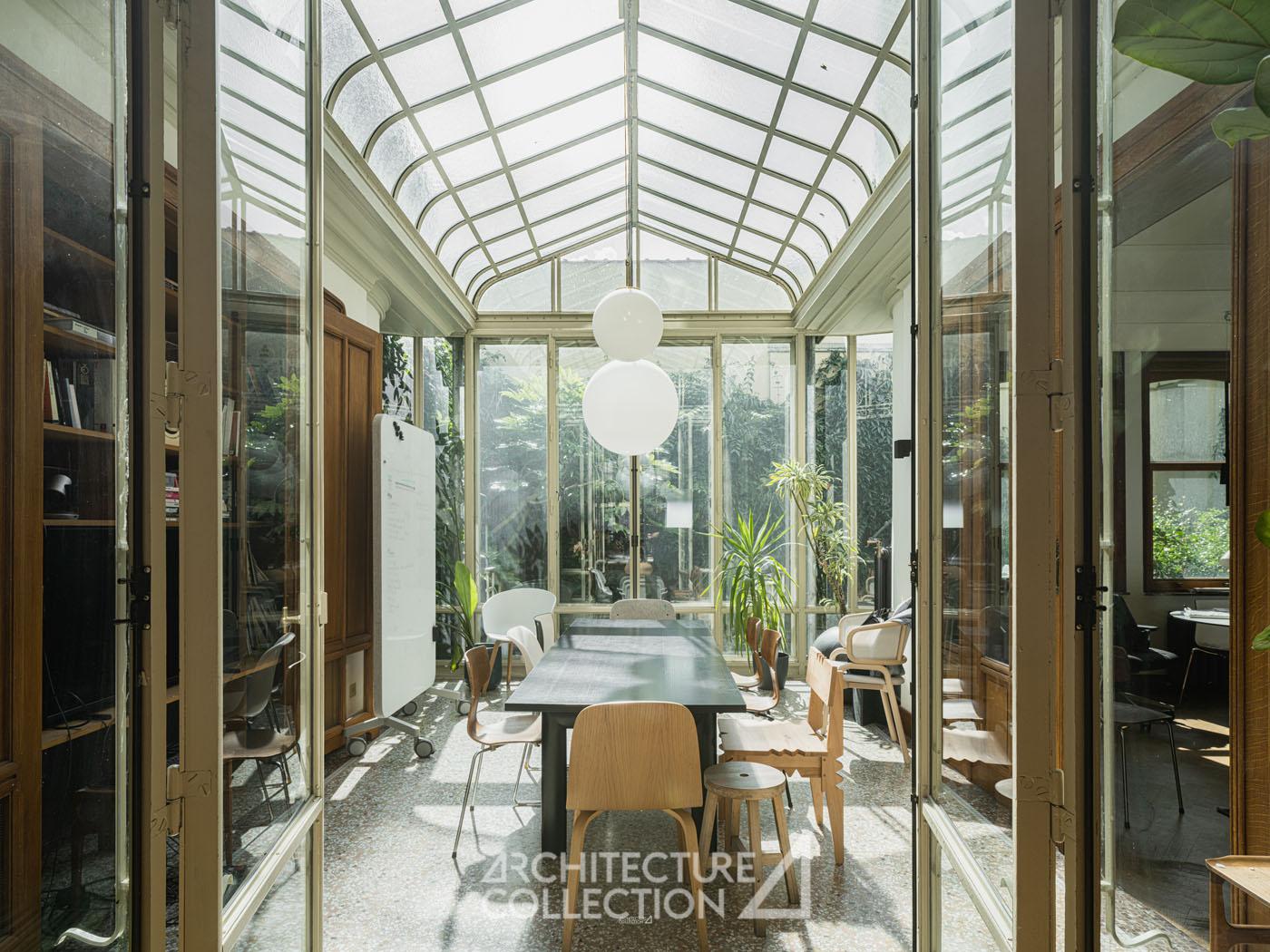
    If you happen to be in the market for an Art Nouveau building near the center of Brussels, then you may want to check out this listing from Architecture de Collection. Built in 1897 and designed by architect Victor Horta — one of the founders of the Art Nouveau movement — the property consists of three distinct units, including multiple office spaces and a large art gallery.

    It’s listed for €3,900,000 and has a total of 930 m2. That works out to about €4,194 per square meter or about €390 per square foot (inclusive of 6 parking spaces located in a neighboring building). I’ve never been to Brussels, nor do I need an office and art gallery there, but this is a beautiful building. If you’d like to learn more, click here.

    Photos: Jeroen Verrecht

  • Angles and atria

    Studio Libeskind has a recently completed project in Brooklyn that looks like it was designed by Studio Libeskind. It has angled facades and, judging by the comments on Dezeen, its design is polarizing. But it is an affordable housing project for seniors, and it does have a large atrium in the middle of it.

    Atria are a bit of a unique feature in multi-family housing (at least in this part of the world). For better or for worse, the gold standard has become the double-loaded corridor. And that’s because it’s “efficient.” It helps you maximize the amount of rentable or saleable area to gross construction area.

    Here in Toronto, a typical efficiency — calculated as the net saleable/rentable area divided by the gross construction area — would be somewhere between 75-80%. Though many factors can affect this percentage, such as the amount of amenity space in the building.

    There is certainly the option of just building a less efficient building, but then it means you’ll likely need to increase the price of the homes to compensate for this loss in efficiency.

    This is the trade-off that is often made with smaller suites. More and smaller suites usually translate into more corridor space (i.e. a lower overall efficiency). But it may make sense to do this if you think your smaller suites will generate more revenue on a per square foot basis.

    Off the top of my head, I can only think of two residential building in Toronto with an atrium. And that’s 71 Front Street East in the St. Lawrence and “The Atrium” at 650 Queens Quay West. The latter is pretty neat inside. The last time I checked, it even had fake palms.

    In the case of both The Atrium and Libeskind’s Brooklyn project, the atria result in single-loaded corridors. (I’m not sure how 71 Front was designed.) Here’s what Libeskind’s project looks like:

    The obvious advantage of this condition is that you get natural light into the corridors, whereas with a typical double-loaded corridor you don’t. But again, the disadvantage of this design is that you only have apartments on one side, instead of both sides.

    In this case, the thermal envelope of the building is the outside face of each corridor (atrium side). This means the corridors are interior or conditioned spaces.

    Another option would be to create open-air corridors, like in this example from Montreal. This creates corridors exposed to the elements, but now you’ve reduced your overall energy consumption (less space to heat/cool) and you’ve created the possibility of double-aspect units.

    Personally, I’m a fan of atria and courtyards in residential buildings. But for the reasons we just talked about, they’re not that common. My sense is that they’re far more common in commercial buildings. John Portman, for instance, made a name for himself designing and developing hotels around them.

    What are your thoughts, though? Would you pay a premium to live in a residential building with a nice atrium? I bet some of you would if it meant an improved suite design, such as more windows and more natural light.

    Photos: Hufton + Crow

  • Fewer babies, fewer homeowners

    Since the 1940s, the US has been adding roughly 9 million new homeowning households about every 10 years. This, after all, is a fundamental component of the American Dream. But Aziz Sunderji — who writes over at Home Economics — has recently been arguing that this 80-year boom is now at an inflection point. And it is largely because the rate of population growth in the US is now declining. Here’s his chart, which uses data from the US Census Bureau and the World Bank:

    In fact, for the first time ever, the Census Bureau is now forecasting the US population to start declining. The current forecast has its population reaching a high of 370 million in 2080 and then declining to 366 million by 2100. But even before these far off dates, organic growth is expected to turn negative in less than 15 years (see above). So yeah, it makes sense that this would impact the real estate sector.

    For more on the future of homeownership, check out Aziz’s Home Economics.

  • Eating by algorithm

    Grocery shopping is one of those things that — despite a lot of people really trying — has remained a stubbornly in-person activity. However, the pandemic did give online grocery shopping a significant boost, and lot of that has stuck, even if it has been trending slightly downward from its peak. Here are a few slides from Dan Frommer’s Consumer Trends: 2024 Food & Wellness Special report:

    Part of the challenge may be that the majority of people say they actually like grocery shopping, and doing so in a physical store:

    So it is very possible that, for the foreseeable future, there will always be a large segment of buyers who prefer to shop in-store. But then again, if you asked me these same questions, I would also tell you that I like grocery shopping and that I prefer buying in-store. However, that doesn’t mean I wouldn’t be open to alternatives. I just haven’t explored and found a suitable online option.

    At the same time, and according to the same Consumer Trends Survey, about 10% of Americans say they currently dislike grocery shopping. Maybe this is the same 10% who are right now shopping online. Either way, this is already a large segment of people who would rather not go into a grocery store.

    Intuitively, as the online offerings get better, one would expect this number to grow. Here, for example, is an interesting overview of the service Hungryroot. One part “meal kit” delivery and one part online grocery shopping, the company uses machine learning and algorithms to determine what its customers might want to buy. Already, about 70% of what it sells is picked automatically.

    On the back end, McKean explains, among other actions, Hungryroot is “clustering” its new customer with other users who have answered its onboarding survey similarly and have already been with the service for multiple years. “And so we can say, ‘okay, people who filled out that signup flow like you… they loved these top recipes with high probability, so we think you’re going to love these recipes with high probability’.”

    What I like about this is that it requires fewer decisions; it has the potential to feel like you have a private chef (one that learns what you like and adjusts accordingly); and it promotes dietary variety. For the typical American, 75% of what they buy in a grocery store is the exact same as what they bought the last time. There’s very little variety, because it’s always easier not to have to think.

    Given this stat, it is maybe surprising that this 75% hasn’t become more automated for more people. Perhaps it’s the 25% that keeps most of us going into stores. I’m not sure, but I think I’m ready to try a service like Hungryroot.

  • Cost-plus price floor

    Oftentimes, it feels like there is a perception that developers price new housing with the fattest of margins. Meaning, if only developers were less greedy, housing could be more affordable. But as we have spoken about many times before, real estate development is a competitive industry; therefore, projects happen on the margin.

    Ordinarily, the prices you see are the result of a cost-plus pricing strategy. Developers figure out what it will cost to build and develop, they add on a margin that they think their investors will accept, and then they determine what sticker prices they need to make the project financially feasible.

    I’ve been writing about this approach for many years, but today it’s even more obvious. According to Urbanation’s Q1-2024 condominium report, new unsold condominium inventory in the GTA is currently sitting at approximately 23,815 units. This is up 30% YoY and is equal to about 23 months of supply. Two years ago in Q1-2022, this number had reached an 18-quarter low of 8,726 units.

    Developers are highly motivated to sell and move their projects forward. Time is a killer, especially today. So the logical explanation for this rising inventory is simply that they can’t sell it. Their cost-plus pricing doesn’t overlap with what most buyers in the market are willing to pay. Like I said, development happens on the margin.

    In theory, there is always a price where buyers would be willing to transact. If I listed a beautiful condominium for $100k today, many people would want to buy it. Supply would quickly run out. The problem is that no developer can build for this. There is always a very real price floor and, right now, that floor doesn’t seem to be low enough for many buyers.

  • Housing affordability in Canada

    By some measures, housing affordability is, in aggregate, the worst it has been in Canada going back to the 1980s. Below is a chart from RBC showing homeownership costs as a percentage of median household income.

    The previous spike came around the early 90s, but following that, we saw 3 decades of relative affordability. In fact, for a large portion of this timeline, condo apartments look to be hovering around 1/3 of median household income. This is a common rule of thumb for measuring affordability.

    Now obviously things changed pretty dramatically during the pandemic. But that time has ended and a reset is underway. New housing supply has slowed dramatically. Developers are sitting on record levels of inventory. And sellers of all shapes and sizes are clinging, as best they can, to yesterday’s prices.

    With so much uncertainty, it’s challenging, if not impossible, to know exactly how all of this will play out in the coming years. But I suspect that, as time goes on, the above chart is going to start to mirror what we saw in the early and mid-90’s. In other words, affordability is going to improve.

  • Ballin’ out for charity

    Today, Rad Marketing and Blackline hosted their second annual “Ballin’ Out For Charity” basketball tournament. And it was a fantastic event. My sore lower back proves it. It’s always fun getting so many Toronto real estate people into one room (or onto a giant court at the University of Toronto). But more important is the fact that it was for a good cause. This year’s tournament raised money for the MLSE Foundation (which you can learn more about here). And last year’s tournament raised over $70,000 for the Daily Bread Food Bank.

    I’m looking forward to this becoming an industry staple. Everyone involved in the organizing of this event should be very proud of what they accomplished. Great job.