Daily insights for city builders, delivered every morning at 6 AM ET. I’m Brandon Donnelly — a Toronto-based real estate developer and founder of Globizen. I’ve been writing here since 2013.

Category: Places

  • New York City is testing new “flex gates”

    I spent a good chunk of this morning talking and thinking about underground building details that most people (unless you’re in the industry) would never think to consider. This is not a criticism on most people. I mean, I don’t know how iPhones are made. I just use and enjoy them. But when it comes to buildings, I’m paid to ask questions and understand how things work.

    There’s a lot of risk in the ground.

    You have to think about things like bearing capacity, environmental contamination (usually), hydrostatic pressure and, generally, how you’re going to manage water, particularly if you have a high groundwater table. Usually this last one is about making sure you’re keeping the water out. A pretty important detail both below and above grade.

    So when I came home tonight and saw the below tweet, I felt obligated to write about it.

    https://twitter.com/kayeblegvad/status/1197266655891599362?s=20

    If you read the reply from NYC’s Metropolitan Transportation Authority, you’ll see that this is them testing something they call a “flex gate.” It is a flood barrier that allows them to seal off subway entrances in the case of a storm surge and they run these tests (shown above) for 4 hours at a time to make sure they’re installed property. This one was.

    Managing water is a big part of city building. New York City, Miami, Venice, and countless others know this all too well right now.
  • Holding back the sea, in Venice, maybe

    Venice has been keeping flood records for 150 years, though it is generally understood that the city has been regularly flooding since the very beginning. It usually happens between the fall and the spring and the earliest record is believed to be from the 6th century.

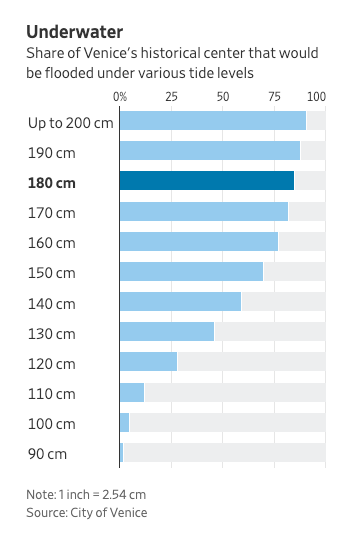
    This past week, Venice saw its acqua alta (or high water) peak at 187cm (6’2″) above its normal level. This is the second highest number on record and is just below its 1966 peak. At these numbers, about 80% of the historic center is underwater. Here is a chart from the WSJ explaining that:

    Venice has been working on a flood management project called MOSE since the 1980s. The name is an acronym, but there’s a deliberate biblical reference here. Remember when Moses parted the red sea?

    The project has been mired in engineering delays and corruption scandals, and so it’s not yet operational. If it were, it would have, in theory, protected the city this past week. 2022 is the anticipated completion date, but I don’t know if that’s realistic or not.

    The system consists of 78 mobile gates that fill with water and sit flat on the seabed when the tide is low. When a high tide is predicted, the gates are then to be pumped with air so that they rise (hinged on one side) and close off the three inlets that connect the Venetian Lagoon to the Adriatic Sea.

    As I was reading about this project and everything else that has been going on in Venice this past week, I became curious about how exactly the Dutch have been managing to hold back the sea. I mean, a big chunk of the Netherlands sits below sea level.

    If you’re also curious, here’s a video that explains how they do it.

  • Gentrification in New York, San Francisco, and Chicago is not as it would seem

    Matthew L. Schuerman has a new book out called, Newcomers: Gentrification and Its Discontents. I haven’t read it. But in it, he argues that “gentrification is all around us.” Hence the title. Will Stancil has an interesting rebuttal to this position as part of his book review in the Washington Monthly. Here’s an excerpt:

    Schuerman settles on what he admits is a simple definition of gentrification: the process by which a neighborhood goes from having below-average to above-average incomes for its region. But he never really applies it. While he frequently asserts or implies that gentrification is exploding across cities, he doesn’t say how many neighborhoods actually meet his definition.

    As a demographic researcher, I decided to check. Using U.S. Census data, I looked at the share of people in New York, San Francisco, and Chicago living in places that met Schuerman’s definition of having gentrified between 2000 and 2016. In New York, it’s 3.1 percent of residents. In San Francisco, the number is 4.4 percent. In Chicago, it’s 4.8 percent. Needless to say, this does not represent a vast swath. Although the numbers might increase if the time frame were extended, change at a generational pace is far less disruptive than change that takes place over a few years. Using Newcomers’ own definition, the story of urban America is not a tidal wave of gentrification but creeping racial and economic transition.

    In fact, this aligns with the growing academic consensus that gentrification is much rarer than is commonly believed. This year alone, there have been no fewer than three national studies into the prevalence and location of gentrifying neighborhoods. (Disclosure: I authored one of these studies, for the University of Minnesota.) Despite using very different methods, all three studies roughly appear to agree that about 10 percent of neighborhoods in metro areas were gentrifying. Research has also tended to show that no matter how you measure gentrification in the urban core, it’s almost always more common to find neighborhoods afflicted by intensifying poverty. Out of the fifty biggest American regions, forty-four have core cities where the population in poverty has grown faster than the overall population since 2000. The only exceptions are New York City, Los Angeles, D.C., New Orleans, Atlanta, and Providence.

    This issue of concentrated poverty has come up before on the blog through posts like this one about Detroit. The data is pretty clear: The number of high poverty Census tracts in the US is increasing faster than the number of gentrifying Census tracts (i.e. Census tracts that are becoming wealthier).

    So could it be that the problem isn’t actually gentrification? It is that, paradoxically, gentrification isn’t happening enough and more broadly, and that it is leading to rising inequality across our cities. That strikes me as being the greater issue.

    Photo by Hardik Pandya on Unsplash

  • Qantas pilots new 20 hour ultra long haul flight from New York to Sydney

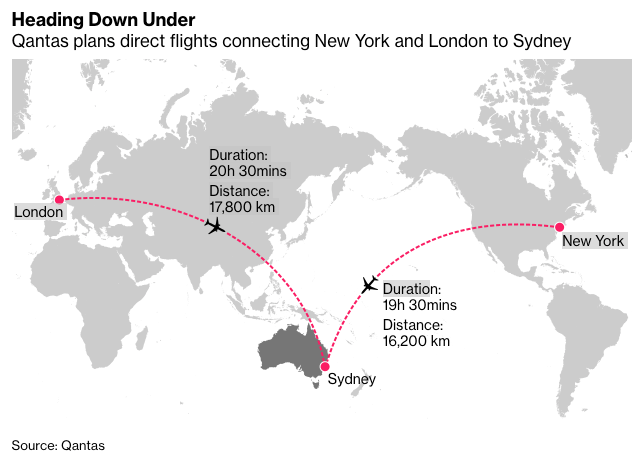
    Over the weekend, Qantas Airways set a new record with a nonstop ultra long haul flight from New York to Sydney. At a distance of 16,200 kilometers and a duration of 19 and a half hours, this is now the world’s longest flight. Though, this was still a test voyage. It remains to be seen whether this will be a commercially viable route. The company also plans to offer a similar ultra long haul from London.

    It’s fascinating to think about the logistics that go into a flight like this. The flight took off with its fuel tanks maxed out at 101 tons. But according to Wired, the loss factor on each additional ton of fuel is about 60% simply because of the additional weight. In other words, most of the incremental fuel to get all the way to Sydney just gets cannibalized by the heavier load. Wow. That doesn’t feel all that sustainable.

    Similarly, every ten passengers roughly equates to one ton (200 pounds per person). So there’s a balancing act between reducing weight (optimizing fuel consumption) and maximizing revenue (adding lots of people). There’s also a question of how best to price discriminate across economy, premium economy, and first class.

    Initially these ultra long haul flights were imagined to be flying hotels, where people could sleep, workout, and do all sorts of other things while they traveled halfway around the world. But the economics didn’t work. Too much wasted space on non-revenue generating items.

    The other interesting thing about these ultra long haul flights is how much work goes into passenger comfort, specifically around our body’s natural rhythms. Angus Whitley of Bloomberg was onboard this maiden voyage and he talks about how the food they served — spiced with things like chili and lime — was designed to fire up your clock when you shouldn’t be sleeping.

    And this isn’t new a feature of ultra long hauls. Qantas already employs things like hot chocolate laced with tryptophan in order to help people sleep onboard. I’m not great at sleeping on planes, generally because I don’t fit in the seats very well. But maybe it’s because I’ve been passing on the hot chocolate.

    Image: Qantas via Bloomberg

  • Paris and Vancouver population densities compared

    In this January 2018 report from the Fraser Institute, they pegged the average population density of Paris to be about 21,067 inhabitants per square kilometer (2014 population year). It is the second densest city in their report after Hong Kong, but the densest in Europe. By comparison, Vancouver sits at around 5,493 inhabitants per square kilometer (2016 population year).

    Now, these are of course city averages. Some neighborhoods will be higher and some will be lower. According to a January 2018 study by Alasdair Rae — who is a works in the Department of Urban Studies and Planning at the University of Sheffield — these are the most densely populated square kilometers across Europe (or at least within the 39 countries that he looked at).

    Paris, once again, comes in near the top with a peak density somewhere around 52,218 inhabitants per 1km square. The square in question is in the neighborhood of Goutte D’Or. And the only square within the study to come in denser is one from the L’Hospitalet de Llobegrat in Greater Barcelona (53,119 inhabitants per square kilometer).

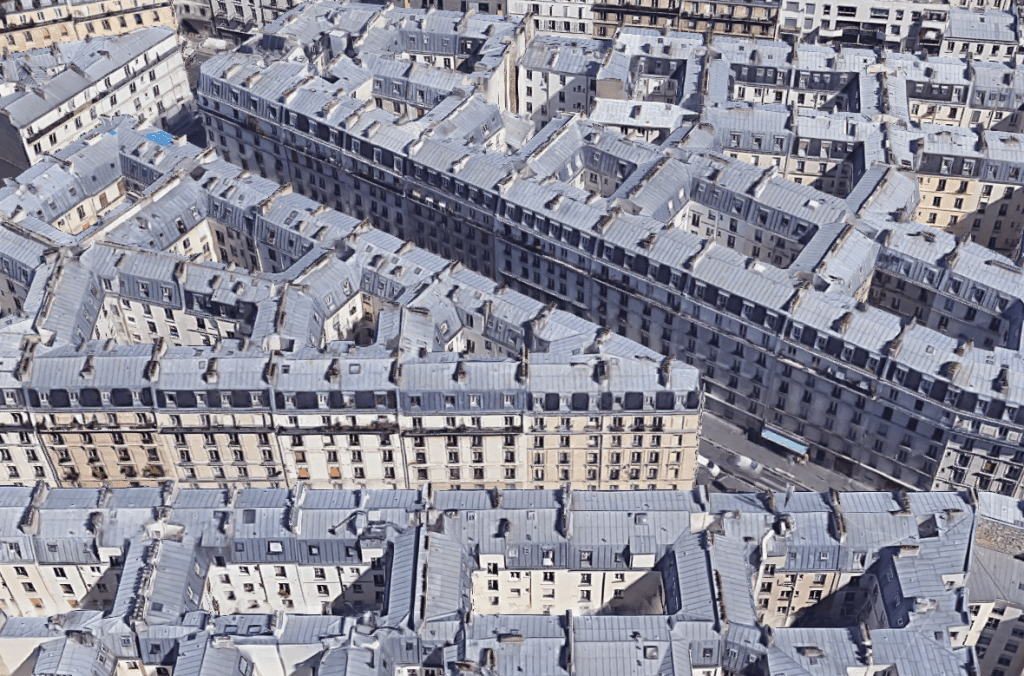
    Now let’s take a look at how these sorts of densities actually manifest themselves. Below is an aerial capture from Google Maps showing a section of Goutte D’Or in Paris. The buildings are all pretty much 7 storeys (mid-rise), but the blocks are mostly filled in. Lots of interior courtyard apartments. This is one way to get to over 50,000 people per square kilometer.

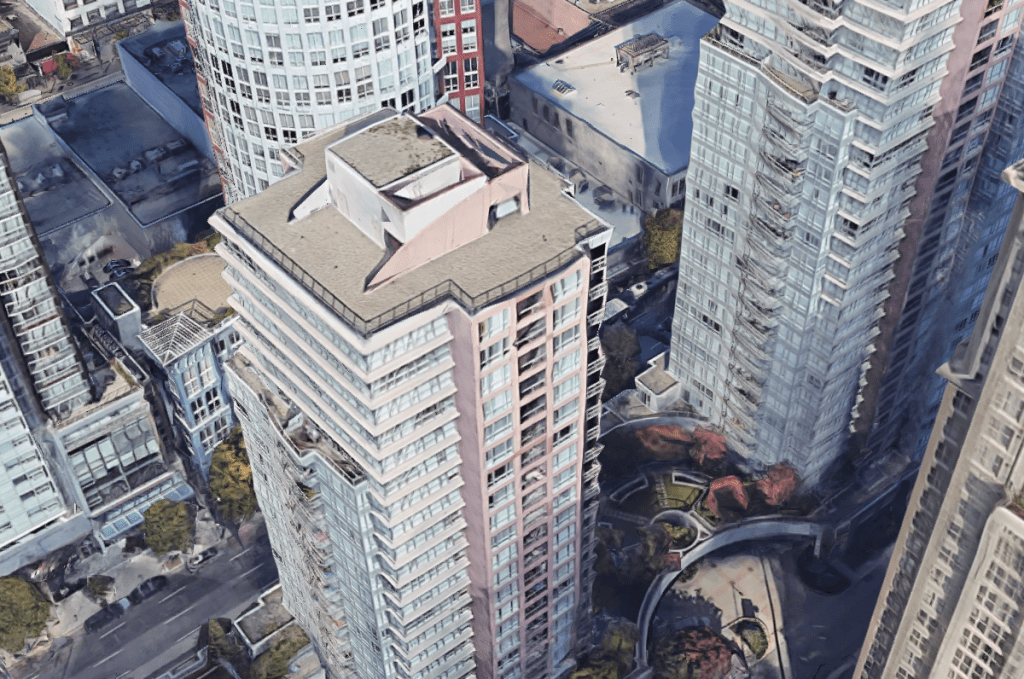
    Returning to Vancouver as a point of comparison, below is an aerial capture from downtown Vancouver at exactly the same scale as the Paris capture. I couldn’t find a density map of downtown, but it’s probably safe to assume that it’s greater than 5,493 and a lot less than 52,218 residents per square kilometer.

    What you see here is typical Vancouverism. Lots of slender point towers, careful tower positioning and spacing, and generally low podiums. It is a perfect demonstration that height and density do not necessarily correlate. It is possible to have low buildings and high density, which is something that Europe obviously does very well.

    But here’s the important question: In which of these two examples would you rather live? Please leave a comment below.

  • Small art museum (in Tokyo)

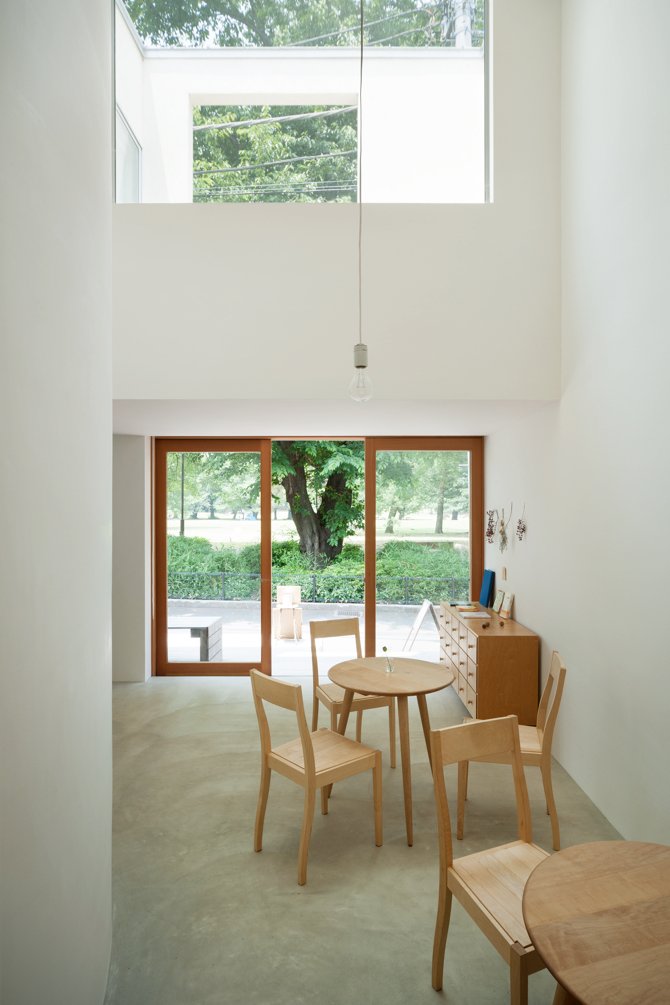
    Few are able to do “small houses” quite like the Japanese. Below is the Flat House in Tokyo by Yoshinori Sakano Architects. Completed in 2011, it was designed for a young couple in their twenties who wanted to build a home that was like a “small art museum.” Looking at these photos, I bet many of you will be surprised to know that the site area is only 100.10m2. The building footprint is only 49.00m2. And the total floor area is 79.36m2. This is the kind and scale of housing that is now permissible on many of Toronto’s laneways. And here, in Tokyo, you can see that it is serving as a family home. (The working kitchen is quite a contrast with the rest of the house.)

    Photos: Takumi Ota

  • New York state law restricts condo conversions

    The State of New York just enacted a new law (on June 14, 2019) requiring that 51% of existing tenants agree to buy their apartments before a building can be converted into a condominium or a cooperative. There was previously no requirement for anyone to buy in order for a conversion to take place. Tenants who chose not to buy, could simply remain in the building as a renter.

    Supposedly, the real estate industry believes this new requirement will be a largely impossible threshold to meet, meaning that condo/co-op conversions could now be dead in NYC. There’s also an argument that conversions have historically helped many middle class New Yorkers buy a home since they sometimes (usually?) had the chance to buy their apartment below market at the time of a conversion.

    I’m not familiar enough with this space to be able to opine on the merits of these arguments, so I won’t. Perhaps some of you will in the comment section below. Instead, I will leave you all with a chart showing the median condo sale price in Manhattan over the last ~30 years (taken from the same WSJ article). I like seeing long(er) term charts. Maybe you do too.

  • Aman New York’s $180 million penthouse

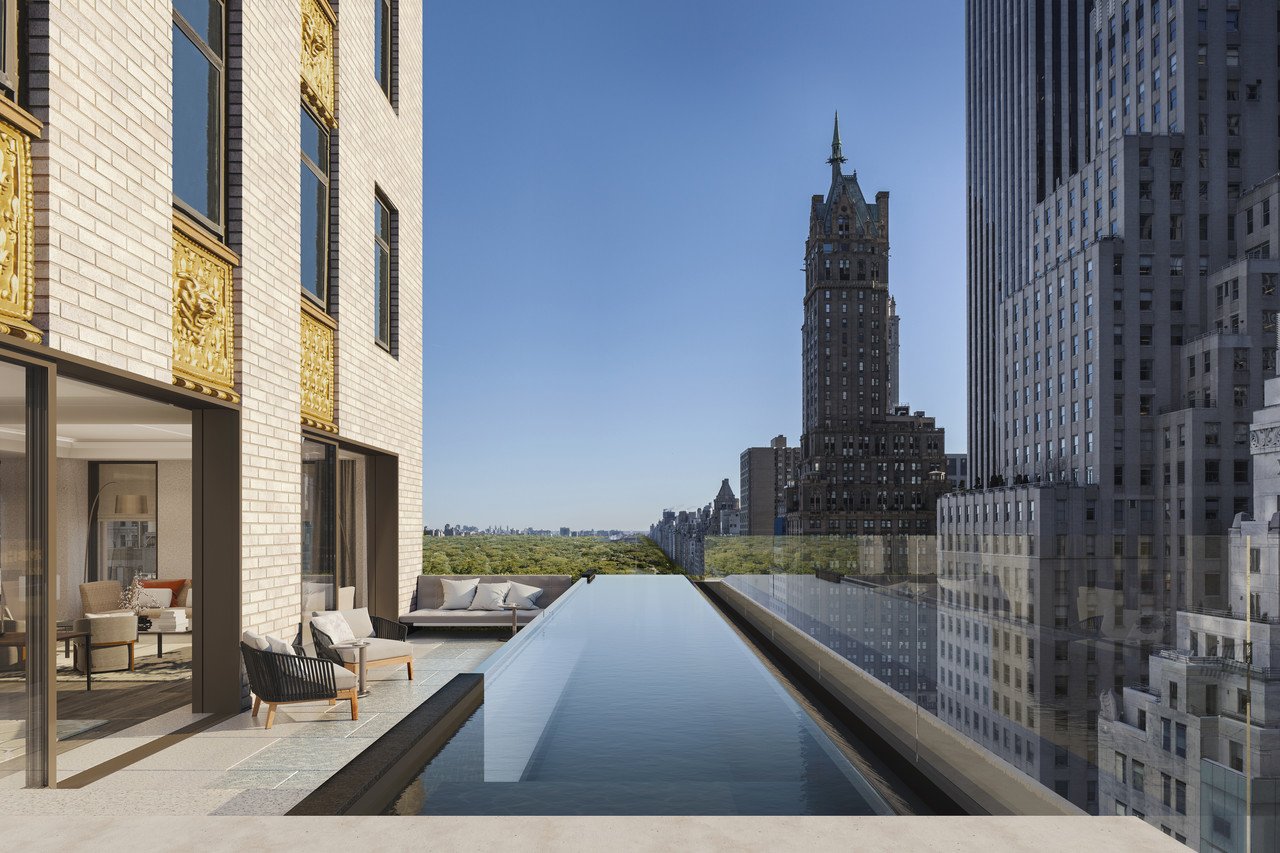
    This morning I was reading about Aman’s new condo and hotel project in New York, which is planned for the 100-year-old Crown Building at 730 Fifth Avenue. It will have 83 hotel rooms and just 22 homes, and be the first urban condominium for the resort company.

    Owned by OKO Group, the hospitality company is mostly known for their “sleek, minimalist hotels in secluded, far-flung destinations,” according to the WSJ. Rooms go for upwards of USD 2,500 per night and they, supposedly, have a rabid customer base known as “Amanjunkies.”

    What’s interesting about this project is that (among other things) it’s a bet the Aman brand will translate to an urban context and drive above-market pricing. And it will do it at a time when the ultra high-net-worth segment of the market in NYC has been cooling because of a new “mansion tax” and probably other factors.

    The five-storey penthouse, which will be built into the building’s “crown,” is asking USD 180 million. If/when it sells, it will break the record for the most expensive home ever sold in the city on a square foot basis at $14,358 psf.

    If you subscribe to the WSJ, you can read the full story here. I find it valuable to see how projects position themselves.

    Rendering: Aman

  • Tokyo’s kitchen cars (or food trucks)

    Click here for a short video (by Monocle) about Tokyo’s nascent “kitchen car”, or food truck, scene. (The soundtrack is fun.) Historically, street food stands, or “yatai,” have had a questionable reputation in Japan. They proliferated across the country following World War II when times were tough and food was being rationed. But as Tokyo prepared to host the 1964 Olympics, local governments began to clamp down on yatai. They were seen as unhygienic and a place for drunks to hang out. There may have also been a sense of shame around the country’s post-war struggles. Whatever the case may be, these new food trucks have — aided by technology — changed the way people eat on the street.

  • Skateboarding to debut at the Summer Olympics in Tokyo

    The 2020 Summer Olympics, which will be held in Tokyo, have added 5 new sports, one of which is skateboarding. As someone who grew up skateboarding as a teenager, and is all too familiar with being chased out of public spaces, this lends a great deal of legitimacy to the sport.

    It’s hard to think of a sport that is more closely connected with architecture and, more specifically, public architecture. Curbed’s recent long-form article about “the public spaces that shaped skateboarding” is a good reminder of that. Here is an excerpt (EMB refers to Embarcadero Plaza in San Francisco, which was previously known as Justin Herman Plaza):

    When skateboarding debuts at the Tokyo Olympics next summer, some three decades after the first polyurethane wheels hit the bricks at EMB, it will have completed the long, improbable trip from criminal act to social and institutional acceptance. But even as an Olympic sport, skateboarding will remain a direct physical response to the varied terrain of American public architecture.

    Interestingly enough, one could go on to argue that the history of skateboarding is really steeped in the adoption of public spaces that had, in many cases, failed to serve their intended purpose. In other words, skateboarders were often the only people using these urban spaces:

    “What made Justin Herman Plaza attractive to skateboarders and work for skateboarders was its inappropriateness to the traditional city scale and function,” King says. “You had all these planners and architects in the 1950s and ’60s saying cities need these grand, celebratory spaces—and they really didn’t.” But apparently skaters did.

    Welcome skateboarding to the 2020 Summer Olympics in Tokyo.

    Photo by Frans on Unsplash