Daily insights for city builders, delivered every morning at 6 AM ET. I’m Brandon Donnelly — a Toronto-based real estate developer and founder of Globizen. I’ve been writing here since 2013.

Category: Places

  • What will be the new New York City?

    Peggy Noonan argues, in this recent WSJ article, that the world has changed forever. A human habit was broken during this pandemic and city life, including office life, will never be the same in New York City. She qualifies this by saying that some people will return to offices, potentially in significant numbers. (People like being around other people.) But that things will never be what they once were. We’ve learned that we can decentralize and still get work done.

    As many of you know, I am bullish on cities and I am bullish on offices. So I found myself disagreeing with many of her arguments. But Peggy does raise some valid concerns: How are cities going to pay for what just happened over the last 12 months? According to the Partnership for New York City, the city lost about 500,000 private-sector jobs since March 2020. About 300,000 residents from high-income neighborhoods also filed for a “change of the address” during this time period.

    Given that the top 5% in New York represent about 62% of the state’s income tax base, the movement of people to low-tax states (and warmer places) is something to watch. It’s also a trend that existed well before this pandemic.

    At the same time, I’m not necessarily convinced that (at least some of) these fleeing rich people aren’t coming back. I was speaking with a real estate agent over the weekend who is based in a popular US resort/recreation market and while he told me that, yes, he’s seeing a massive influx of people from expensive coastal markets, these people are largely choosing to rent. They want to take the lifestyle for a test drive and they are also waiting to see what happens with the world once city life returns.

    There will be real financial challenges coming out of this. But as I’ve said time and time before, cities are remarkably resilient. And as Jack Shafer argued in this recent article about “memorializing the pandemic,” humans tend to have short memories, especially when it comes to bad things. The Spanish Flu has been regarded by many as a forgotten pandemic. We moved on and the same will happen this time around.

  • Net new housing units in New York City since 2010

    Here are a few interesting stats from a brief report that New York City published this month about their supply of new housing units:

    • From January 1, 2010 to June 30, 2020, New York City delivered 205,994 net new housing units across the five boroughs.
    • This total includes 202,956 units from new construction and 29,161 units from the alteration/conversion of existing buildings. However, it also factors units that were lost as a result of demolition (-17,400) or alteration (-8,723).
    • Brooklyn saw the most supply, followed by Manhattan. The four highest-growth Community Districts were responsible for 1/3 of all new housing additions. These CDs are all formerly non-residential areas that were rezoned to allow living.
    • Manhattan saw the greatest loss in housing units as a result of alterations (people combining units). This was most prevalent in wealthy neighborhoods such as the Upper East Side, Upper West Side, and Greenwich Village.

    What is interesting about this last point is that it shows you that cities are far from static. New York City lost 26,123 housing units during the above time period, with 8,723 units being lost to alterations and people combining units.

    The orange areas on the above map are neighborhoods which actually became less dense over the last decade. And of course, this phenomenon is not unique to New York City. We are seeing the same thing play out in some/many neighborhoods in Toronto.

    What this mean is that the role of new development is really twofold. It allows a city to grow (i.e. house new New Yorkers), but it also replaces lost housing and relieves some of the pressures on the existing housing stock. I don’t think many people appreciate this dynamic — or perhaps they don’t care.

    For a copy of the full report (it’s only two pages), click here.

  • Tokyo-based BALMUDA delivers one sexy toaster

    Founded in 2003, Tokyo-based BALMUDA refers to itself as a creativity and technology company that creates home appliances and other products designed to deliver “thrilling and wonderful experiences.” Last year they entered the US market with products such as The Kettle and The Toaster. A toaster is perhaps one of those things that isn’t usually described as being thrilling. But BALMUDA The Toaster is one beautiful toaster, and according to Monocle Magazine it has become a sleeper hit around the world. (The company went public last December in Tokyo and its share price is up nearly 80% at the time of writing this.) It has a special steaming technology that keeps bread moist on the inside and crispy on the outside. What you do is add 5 cc of water to the toaster before heating it up and that produces a thin layer of steam within the appliance. I never knew that my bread needed this, but clearly it does. Watching the latest movie from The Minimalists has taught me nothing. I hope these guys start shipping to Canada very soon.

    Image: BALMUDA

  • A new Frame Home in Brooklyn

    Fred Wilson (venture capitalist) and Joanne Wilson (also an investor) have been working on a passive house apartment building in Brooklyn for the last five years. Their development company is called Frame Home. And this past week they received a pretty great Christmas gift in the form of a Temporary Certificate of Occupancy from NYC Buildings.

    At 5 storeys and with only 10 two-bedroom units, you could classify this building as the kind “missing middle” housing that gets so much air time here in Toronto. And so not only have they managed to build relatively small, but they’ve done it using passive house design principles.

    Here are some of the apartment building’s features:

    • Cross-laminated timber (CLT) structure
    • Passive house design approach
    • Triple-pane windows
    • Interior polished and insulated concrete walls (presumably to act as a thermal mass to moderate heating/cooling throughout the year)
    • Solar panels installed on the upper facade and roof (passive house design should, in theory, allow these to supply a big chunk of the building’s energy needs)
    • No fossil fuels used throughout the building — everything is electrical
    • Fully sub-metered units
    • Outdoor circulation spaces/stairs, providing access to a shared rooftop courtyard (I’m assuming these also serve as required egress for the building)
    • Dedicated elevator entrance for every suite (i.e. no interior circulation/corridor spaces)
    • Composting facilities within the building
    • Bike room connected to the ground-floor lobby

    There’s also a co-working and community space planned for the ground floor called “Framework.” Interestingly enough, they have already responded to the current pandemic. Instead of open-air desks, you rent fully enclosed 8′ x 8′ pods that are sound-proofed and come with their own HVAC systems.

    Congratulations Fred and Joanne on such an exciting and pioneering project. (I would love to see the development pro forma!) If you’d like to learn more about Frame 283, here is their website and here is a profile that the New York Times did on the project back in January. Building with CLT is apparently prohibited in NYC. Frame 283 got an exemption.

  • Vancouver is probably getting transport pricing

    Earlier this month, Vancouver City Council approved a plan that will have staff developing a “transport pricing” strategy for the city’s core. (Transport pricing is just another term for road pricing or congestion pricing.) The plan is for staff to go away and work on this and then report back to Council with a pricing strategy sometime in 2022. At that point Council will look to approve the plan and it will all get implemented by 2025. Or at least that’s the plan. I remain somewhat skeptical because Vancouver certainly isn’t the first Canadian city to look at pricing its roads and congestion. Toronto has tried and failed. And so if Vancouver does end up doing this, they’ll likely be the first city in the country.

    So why are they doing this, or least trying to do this? Well, if you’re a regular reader of this blog you’ll know that I’ve been a supporter of road pricing for many years. Lots of old posts over here. But in the case of Vancouver, their stated goals are really as follows: 1) They want to reduce congestion and encourage people to use other forms of mobility; 2) they want to reduce carbon emissions by 50% by 2030; and 3) they want another revenue stream that can be used to fund things like transit and active transport. Put differently, it’s about pricing/taxing the things that we want less of and then using that money to pay for the things we want more of.

    Some of you might be wondering whether this is a good idea at a time when the centralizing pull of cities is being called into question. But I think it’s important to keep in mind that Vancouver thinks it needs at least five years to implement its transport pricing. We’ll be living through the roaring twenties by then. I am also a firm believer that cities are going to snap back significantly faster than most people think.

  • Extell Development to build $2 billion ski resort near Park City

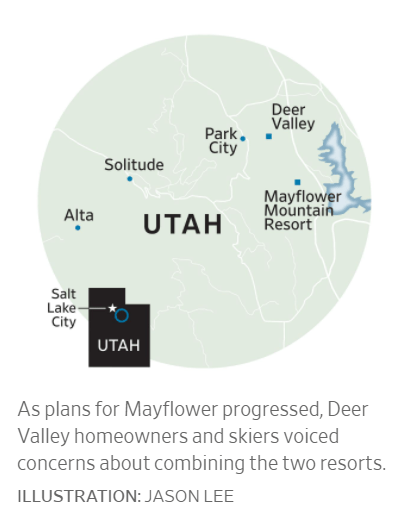
    New York-based Extell Development is, according to this recent WSJ article, in the midst of trying to build a $2 billion full-service ski and snowboard resort near Park City, Utah. It would be the first new resort in the United States in about four decades. These things are, clearly, difficult to get approved, and the fundamentals are, arguably, not all that great. In the early 1990s, the US had about 546 ski and snowboard resorts across the country. As of the 2018-2019 season that number had dropped to 476, according to the WSJ. People are skiing less than they used it, it would seem.

    To be a bit more precise on its location, the proposed resort, which is currently called Mayflower Mountain Resort, is to be located next to Deer Valley Resort. And there’s even a plan floating around to possibly merge the two resorts. That’s apparently what the county planners want. I’m not all that familiar with Deer Valley because they don’t allow my kind there (snowboarders). But it’s an exclusive resort with a country-club kind of feel (or so I’m told). So it shouldn’t come as a surprise that the proposed merger doesn’t seem to be getting a lot of traction with the patrons of Deer Valley.

    But here’s the interesting thing about the Mayflower site. It’s generally controlled (to what extent, I don’t exactly know) by an entity called The Military Installation Development Authority. And this entity has the power to do things like issue bonds and grant certain land-use approvals. This means that there may be an angle to streamline the approvals process (i.e. make this project actually feasible) and to leverage things like tax increment financing (TIF) in order to fund the project.

    Supposedly a new mountain resort has been on the books for this site for some 30 years. Could now finally be the time? If they allow my kind, you can count me in.

    Image: WSJ

  • Tech and New York City

    Tech:NYC has just launched a new podcast called Talk:NYC. The first episode is with venture capitalist and blogger Fred Wilson. (Though, it should be noted that Fred and his wife, Joanne, are also involved in the real estate development space.) In this episode, Julie Samuels and Fred Wilson talk about why he came to New York, how to manage through a downturn, where working spaces are going, and why the magic of New York is still there — among a bunch of other things. Click here if you can’t see the embedded podcast below.

    https://soundcloud.com/user-212806065/talknycep01fredwilson
  • Ikea launches new digital influencer campaign in Tokyo

    Social media, as we all know, isn’t all that real. Photos are cropped, edited, and distorted all the time. But that’s kind of how things work these days and it’s not just on social media. Back in 2014, it was revealed that about 75% of Ikea’s catalogues were made up of computer generated images. It’s simply a lot faster to do that than stage a bunch of spaces for photoshoots. Fast forward six years and Ikea is now taking it a step further by integrating “digital influencers” into their ads. Here’s what that looks like:

    This particular campaign was done to promote a new store in Tokyo’s Harajuku district. And it features a popular digital influencer known as Imma. This is my first foray into the world of digital influencers, but Imma is apparently popular enough to have some 265,000 followers on Instagram. What I have just learned is that a real human is first photographed and filmed for all of this content. Imma’s digital head is then transplanted onto said content. That’s how these digital influencers are created.

    It all feels very Japanese to me. It also feels a bit like the starting premise of a great Black Mirror episode. But on the other hand, is it really all that different from the highly doctored content that already graces the internet?

  • New York City makes outdoor dining permanent

    New York City just made its “Open Restaurants” program permanent. Originally set to expire at the end of the October, the al fresco dining program — which allows restaurants to use sidewalks and curb lanes adjacent to their business — is now being thought of as something that will permanently reshape public space in the city.

    Along with this announcement, the City also provided clarity on how heating and enclosures may be used throughout the winter months. Electrical heaters can be used anywhere. But propane heaters can only be used on sidewalks and you’ll need to get a permit from the fire department. Prior to this announcement, there was an outright ban on propane heaters.

    Tents and other enclosures are now permitted, but at least 50% of the side walls needs to remain open for ventilation. Otherwise it gets classified as indoor dining and those rules would then apply. However, fully enclosed structures, such as cool looking Instagrammable domes, are allowed for individual parties provided there’s “adequate ventilation.” Whatever that means.

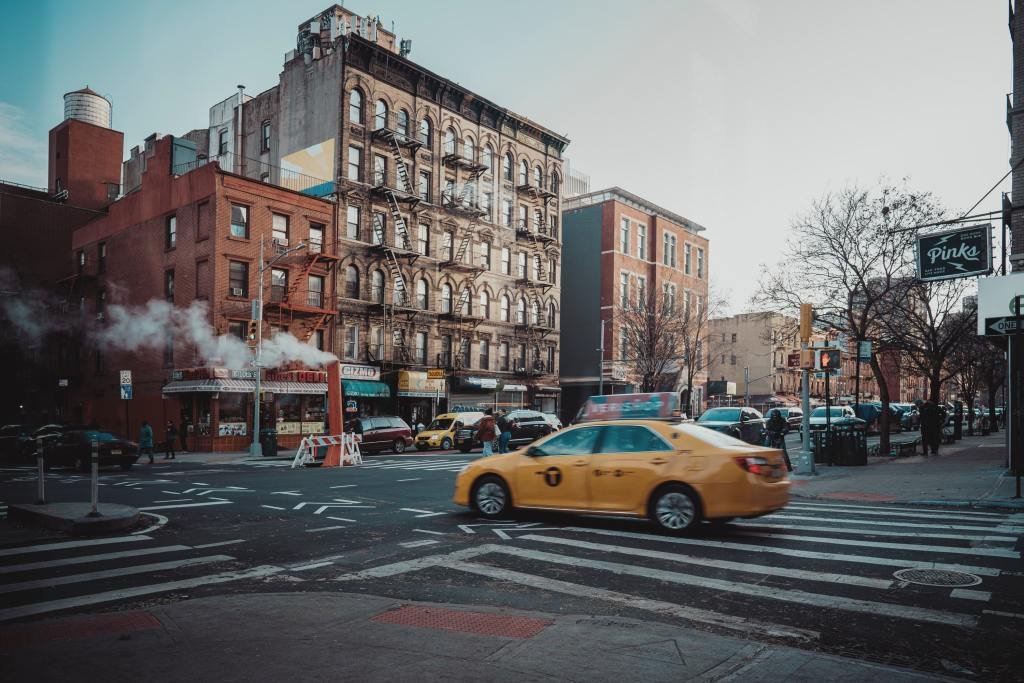
    This is yet another example of how COVID-19 is forcing us to reconsider the way we think about and use public space within our cities — perhaps forever. And in this particular case, it’ll be interesting to see to what extent cities embrace dining outside in the winter. Some of us already do it when we, for example, après ski. Could the same thing work in our cities?

    Photo by Aleks Marinkovic on Unsplash

  • Housing supply in Tokyo

    It has been well documented that Tokyo tends to build a lot of housing. And the argument goes that this has helped to maintain a certain level of housing affordability. The city is constantly building and rebuilding. It also has different views about housing. Now, we could, of course, debate how much of its relative affordability is a direct result of supply but, regardless, there seems to be a lot of it. In 2014, the city of Tokyo saw 142,417 housing starts, according to this recent FT article. This is compared to ~5,000 units across the Bay Area (2015 data), 83,657 units for the state of California, and 137,010 units for all of England.

    If you’re wondering how Toronto is doing, here are the latest numbers: