Daily insights for city builders, delivered every morning at 6 AM ET. I’m Brandon Donnelly — a Toronto-based real estate developer and founder of Globizen. I’ve been writing here since 2013.

Category: Places

  • Shinjuku east exit cat — a new trompe-l’œil in Tokyo

    https://twitter.com/nytimes/status/1413167259988774915?s=20

    Last month, a giant 4K digital cat was installed on a billboard near Shinjuku station in Tokyo. See above tweet. It was created using a 26 x 62 foot LED display, and the resulting effect is very much a trompe-l’œil. The cat looks like it’s sitting on a ledge that is carved into the side of a building.

    The cat doesn’t have a name. But the New York Times has reported that locals have started to call it “Shinjuku east exit cat” because of where it is situated relative to the station. I am going to assume that this name sounds a little more endearing in Japanese.

    Having spent a fair bit of time in Asia in my twenties — mainly Taipei, Tokyo, and Hong Kong — I’ve always been impressed by how playful Asian cities are with their buildings, billboards, signage, and lighting. It can make us feel overly conservative. A trip to Tokyo can be like a trip to the future.

    I appreciate that most people don’t want their cities to be overrun with advertising, and that’s what billboards are usually for. It can get tacky. I get it. But sometimes it just makes sense to stick a massive 3D cat on the side of your building. It’s fun and it captures people’s attention.
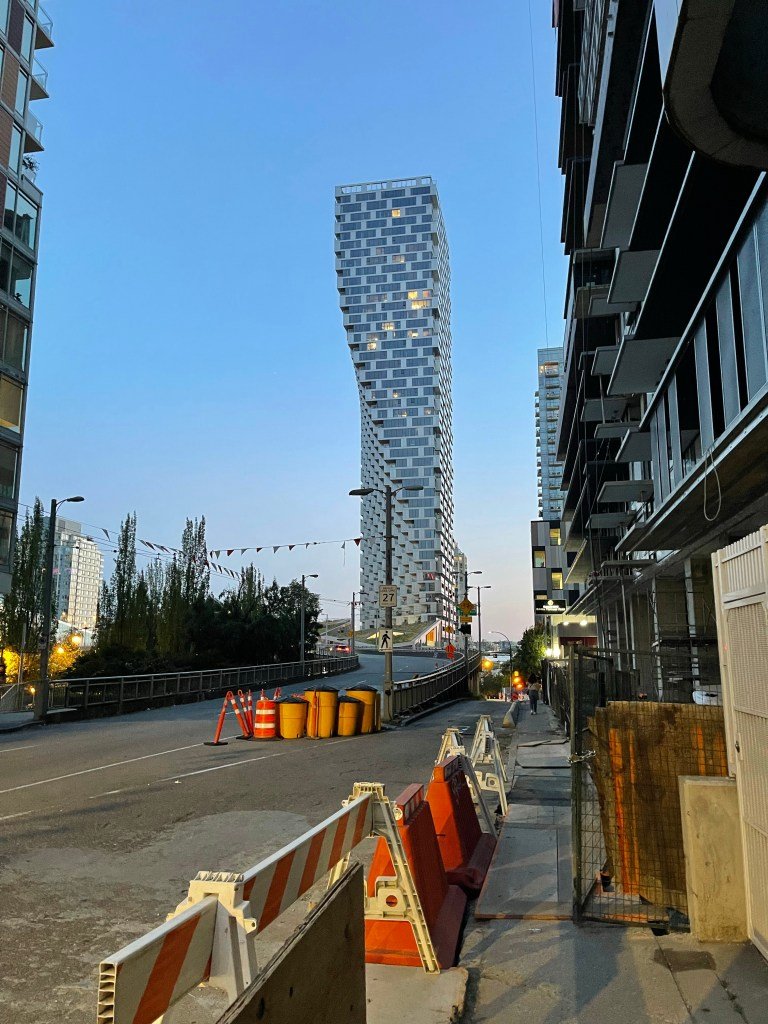
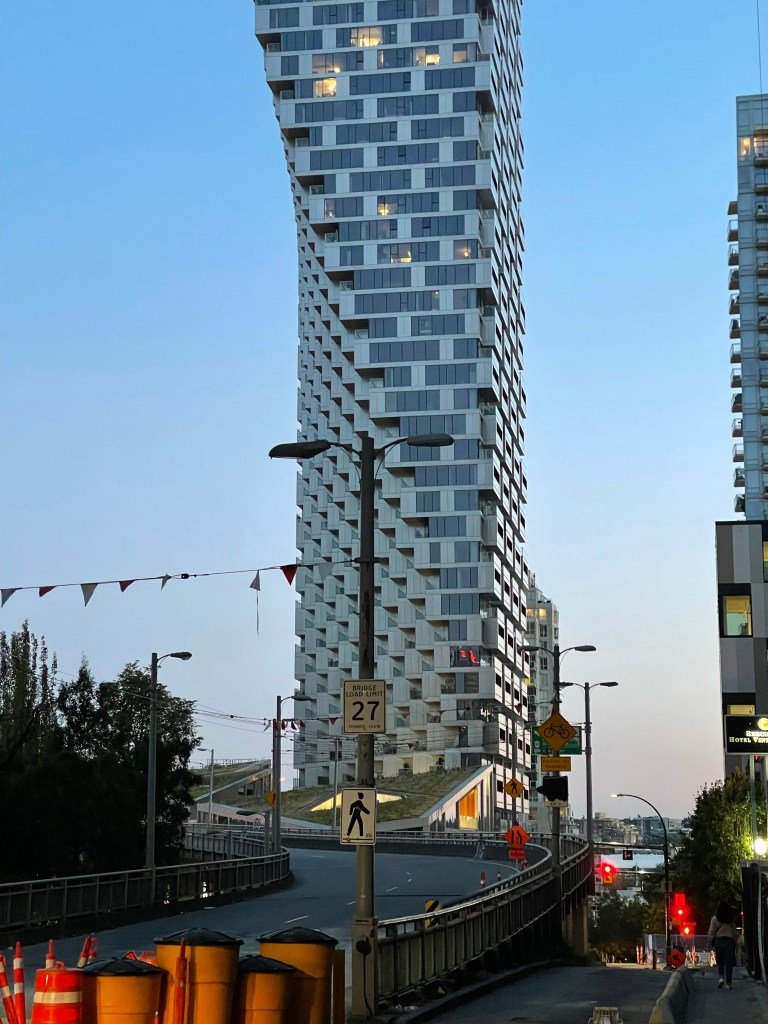
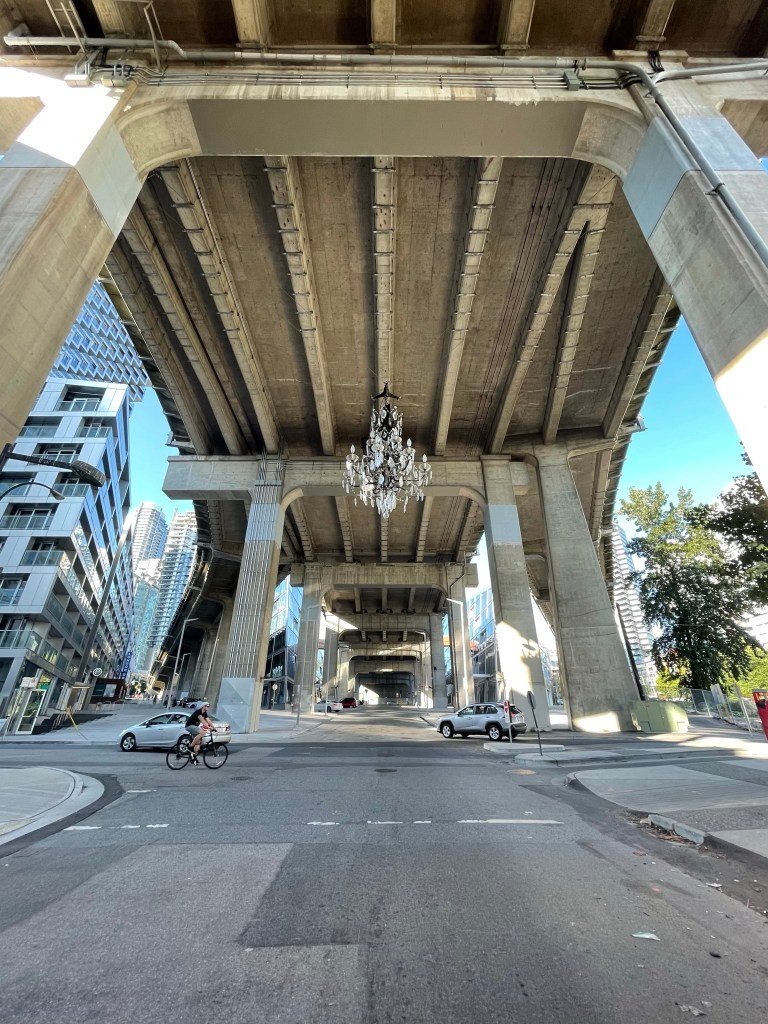
  • A walking tour of Vancouver House

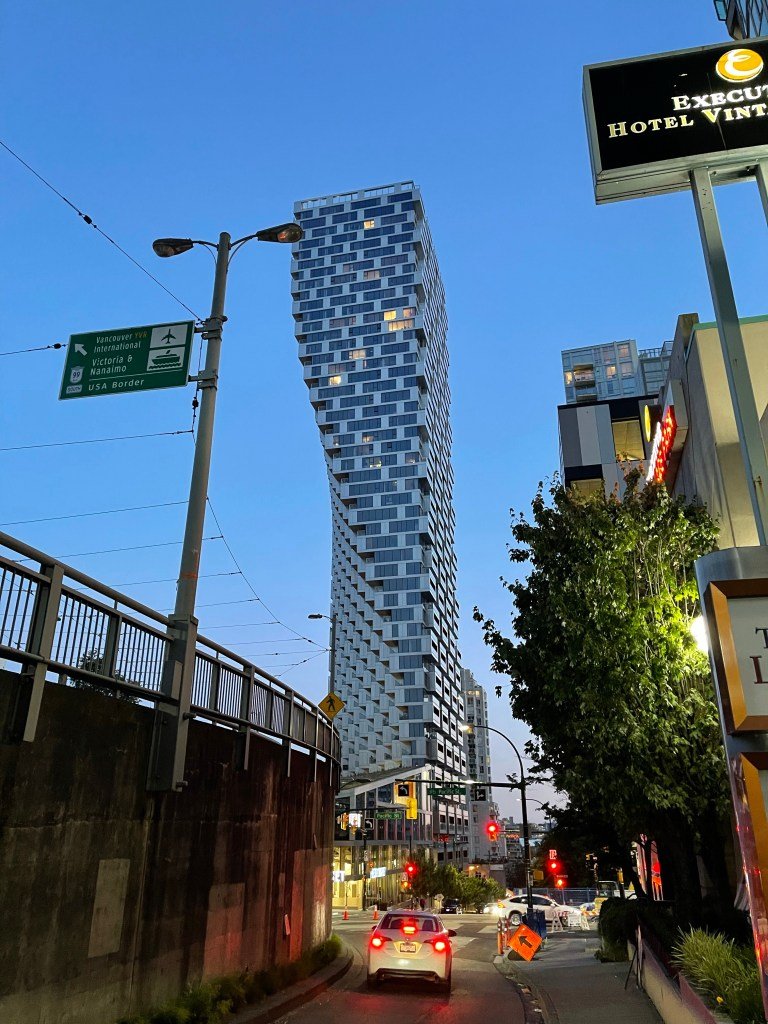
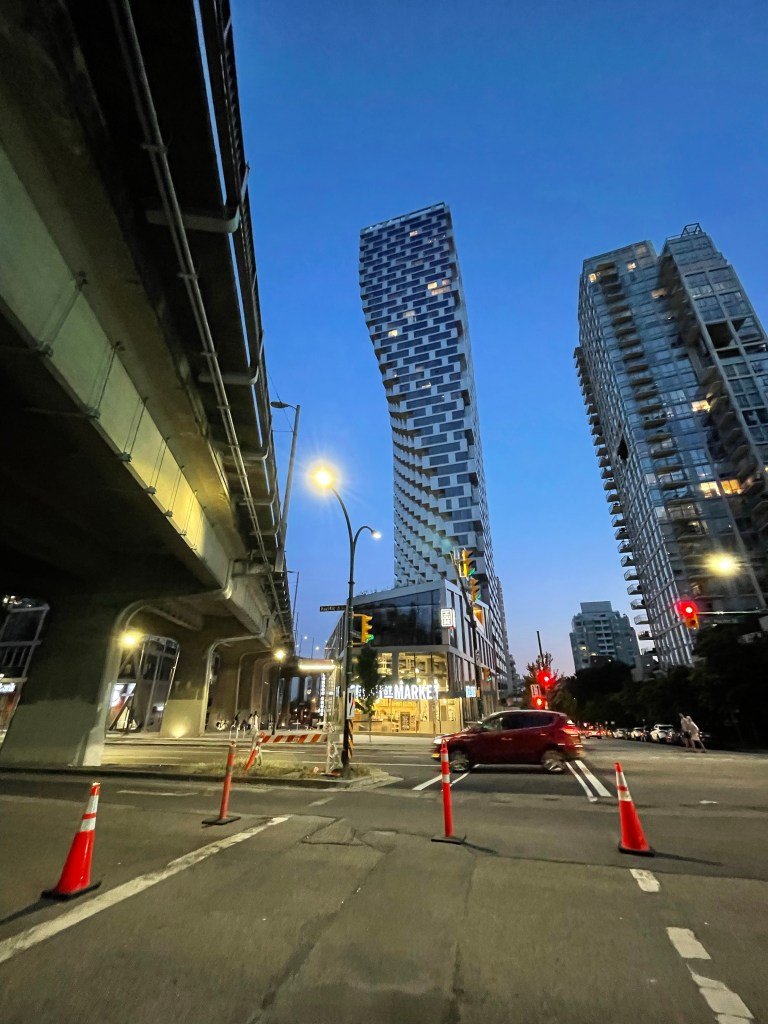
    Vancouver House is such a wonderful example of great city building. It’s an awkward site hugging the off ramps of the Granville Street bridge. It’s less than ideal.

    And yet Westbank (developer) and Bjarke Ingels Group (architect) have turned it into something remarkable. The tower is incredibly unique, though it is not form for the sake of form. It is a direct result of the site’s setback constraints.

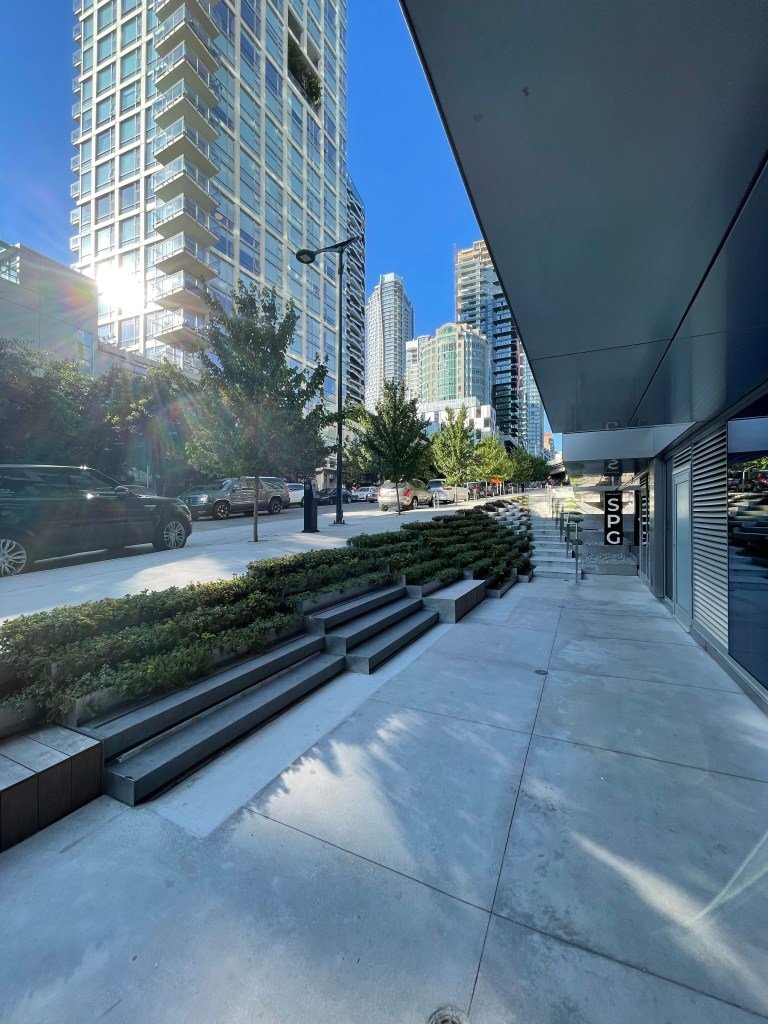
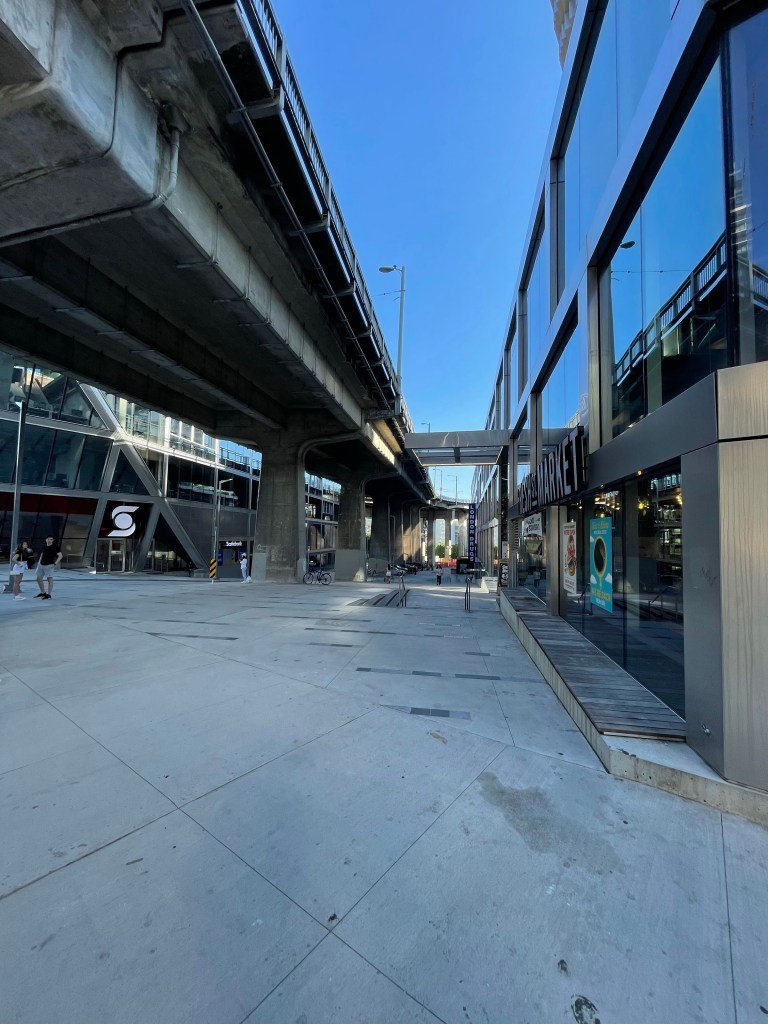
    But perhaps more importantly, the project manages to activate the ground plane and underneath the off ramps through its architecture, a mix of uses (retail and office) and a giant chandelier.

    So if you happen to find yourself in Vancouver, I would encourage you to visit the Beach District and do a walking tour of Vancouver House.

    There’s also a great Italian restaurant in the base of the tower (Autostrada Osteria) that you should try once you’ve finished your tour.

  • Speed and simplicity in Vancouver

    This is a good follow-up to my recent post about the barriers to developing mid-rise here in Toronto. I have just learned (thanks to Michael Mortensen) that Vancouver has proposed some specific zoning changes that are intended to increase the supply of new rental housing.

    Oddly enough, some of these proposed changes are consistent with what I put forward in my post and include 1) streamlining the development approvals process and 2) simplifying the allowable built form. i.e. Fewer step-backs.

    Here’s a capture from the report that went to City Council:

    The report is dated May 2020 and I truthfully don’t know the current status of these proposed changes. I’m sure Michael would have all of the details. But regardless, the report very clearly acknowledges that lengthy entitlement timelines are a barrier to new rental housing, as are more complicated building forms. Speed and simplicity can go a long way.

    For the full staff report, click here.

  • Google opens first ever retail store in New York City

    Google just opened up its first ever retail store. It’s in Chelsea in New York City at the base of its offices in a building that the company owns. The space is about 5,000 square feet and it occupies a full city block.

    A collaboration with New York-architect, Suchi Reddy, the retail space is deliberately different from what you’ll find at an Apple store (though the broad intentions are arguably similar). Instead of sleek, metallic and futuristic, the focus here was on creating a warm and inviting space that feels more like a home. (Note the pale woods.)

    The approach is intended to make a statement about the role that technology, or at least Google’s technology, should play in our lives. It is about tech servicing humanity and not the other way around.

    FastCompany has a good article, here, that explains all of this.

    It is interesting to watch these spaces evolve into what we are now calling experiential retail or commerce. If you read the FastCompany article you’ll read about the work that Johns Hopkins University is doing on neuroaesthetics, which is the study of how spaces and aesthetics affect our bodies. That is how finely tuned these spaces have become.

    And it’s kind of what you need to do today. Consider the example of Microsoft’s retail stores, which launched in a clear attempt to mimic the successes that Apple has seen with its stores. They even looked somewhat similar. But then last year Microsoft announced that the company would be closing all of its stores.

    Why? Part of the problem is that they were too focused on just selling Microsoft products. And that, it would seem, can’t really be the main objective anymore. You also need to consider the experience. What story are we telling about our brand with our space, and is it compelling enough to standout?

    P.S. The first image at the top of this post is of their Google Translate booth. You walk in. Say something. And Google translates the hell out of it for you.

    Photos: Google

  • Parasol installation unveiled in downtown Vancouver

    Tangible, which is a Vancouver-based art and design studio, has just unveiled its latest “immersive experience.” It’s called Parasol and it can be found in downtown Vancouver in front of the Bentall Centre near the intersection of Dunsmuir and Burrard. An illuminated canopy-type structure, the 40 fins that make up each Parasol are equipped with LEDs and are designed to mimic the underbelly of a mushroom. If you can’t see the embedded video above, click here.

    I am a big fan of urban lighting and I have long felt that we don’t do nearly enough to light our cities in ways that are fun and playful and that promote a stronger sense of place. This is particularly true during the winter months where, in cities like Vancouver, the sun sets before many people even leave work. So I am sharing Parasol with all of you today as a kind of call to action: Let’s be more fun with our cities. This is a great example for how to do that.

  • New York City rolls out contactless fare payment at every single subway station

    I’m late to the party here, but I was reading this morning about how New York City recently completed the rollout of its One Metro New York (OMNY) fare payment system. What this does is allow you to use contactless payment systems, like Apple Pay, to get on the subway. ONMY is now available across the five boroughs on every bus and at all 472 subway stations (feel free to impress your friends at virtual parties with this stat).

    Metrolinx here in Toronto is similarly piloting contactless payments on the Union Pearson Express. You now have the option of tapping a credit card, a phone, or a watch. Maybe this doesn’t seem like such a big deal, but I still remember when the PRESTO payment card was first rolled out — it felt late to me. Apple added near-field communication (NFC) to iPhone in 2014, and at that point I think it was fairly obvious that standalone payment cards wouldn’t be around much longer.

    That time has arrived for New York City and will be hopefully arriving shortly for Toronto. And I think it will be particularly useful for tourists who may not have a Metrocard (NYC) or PRESTO card (Toronto) and just want to jump on a train. I’ve only taken the subway a handful of times during this pandemic, but I’ll be back at it once the world fully resumes. And I definitely can’t wait to take the UP Express to the airport again (and to the Junction).

  • Coupe d’une maison parisienne

    This is an interesting article by ArchDaily, looking at the “evolution of the house plan in Europe” between 1760 and 1939. The article focuses on London, Paris, Amsterdam, and Moscow and includes floor plans, photographs, as well as well-known illustrations like the one shown above. Created by Bertall in 1845, the drawing shows a section through a Parisian house and is called The Five Floors of the Parisian World.

    What it shows is the declining opulence that used to exist in Paris’ apartment blocks as you moved upward. If you were rich, you lived on the second floor, right above the ground floor lobby. The ceilings were higher on this floor and maybe had a balcony overlooking the street. If you lived on the third floor it meant that you were a less rich. And if you lived in the top floor attic, you were poor. That is what this comic is showing.

    Now, all of this changed over time as new technologies, namely the elevator, were brought to multi-family buildings. All of a sudden it became convenient to live higher up and all of a sudden people wanted better views and to get further away from the chaos of the street. What I’m curious about, though, is how posterity dealt with the lower ceiling heights on these upper floors.

  • A modernist utopia at Summit Powder Mountain

    About 60 miles north of Salt Lake City is the largest ski resort in America, called Summit Powder Mountain. It’s some 10,000 acres. But beyond just being big, there is also a fascinating story and philosophy behind the mountain.

    It was started by four partners — Elliott Bisnow (of Bisnow events), Brett Leve, Jeff Rosenthal and Jeremy Schwartz — who partnered up with Learn Capital in 2013 to buy the mountain from a distressed seller for $40 million.

    The four guys were already running a successful invitation-only event series for entrepreneurs and creative types called the Summit Series, and big part of their vision for the mountain was to recreate this same ethos.

    The idea was to create a community focused on relationship-building, entrepreneurship, innovation, environmental sustainability, and good design. Put differently: a kind of utopia for rich people.

    So far, about 80% of the home buyers at Summit Powder Mountain are members of the Summit Series.

    All of this has translated into some pretty cool mountain architecture (see above). In fact, people who buy vacant lots within the community are effectively banned from building the kind of faux chalet stuff that permeates a lot of (or most?) mountain towns.

    Here is a taste of some of the homes that have already been built.

    Image: Paul Bundy for the Wall Street Journal

  • Upsizing to a larger apartment in New York City

    This is an interesting story about New Yorkers starting to seek out larger homes. Last month, Manhattan saw 140 purchase agreements signed for homes priced at $4 million or more. In the last week of February alone, 40 contracts were signed, which is apparently a weekly record for this price point that hasn’t been seen since August 2016.

    What’s also interesting is that, in some of these cases, we’re talking about buyers who bought preconstruction and then went back to the developer to swap for a larger apartment. Developer Scott Avram is quoted in the above article saying that 10 buyers have “upgraded their contracts” at 130 William (David Adjaye project) over the last six months.

    As we’ve talked about before, this is likely happening for a bunch of reasons. People have been working from home and want more space. Interest rates are low. And New York saw some softening in prices and now people are jumping back in to seize on those opportunities. At the same time, it is yet another example of people going long on dense urban living.

  • Venice in numbers

    Here are some interesting figures about Venice take from this recent FT article by Chris Allnutt:

    • Tourist visits to Venice last year were estimated to be about 1/5 of what they usually are
    • Short-term rental bookings as of December 2020 were down about 74% year-over-year
    • It is estimated that short-term rentals normally represent about 12% of homes in Venice (this is significantly higher than the “typical city” which is estimated to be about 1-2%)
    • Even before the pandemic, average property prices had declined from about €4,500 per square meter in 2018 to €4,341 in 2019 (2020 data is still coming)
    • Pre-pandemic, the population of the city was about 50,000, which is less than a third of what it was back in the 1950s
    • A 2018 study by Airbnb reported that for every local Venetian the city had 74 tourists on average (wow)
    • Being a dominant port city, the city has generally been disproportionately impacted by plagues and other health crises throughout its history
    • The Lazzaretto Vecchio, which still stands today, is a small island in the Venetian Lagoon that was founded in the 15th century as a hospital to care for plague victims; apparently it was the first of its kind in the world
    • During the 15th century, Venice saw its population drop by about two-thirds as a result of an epidemic
    • At the height of the Republic of Venice in the 1790s, the city had a population of about 170,000; after falling to Napoleon it halved to about 96,000
    • It’s worth pointing out that the “height of the republic” occurred after many great epidemics; the subsequent population decline was seemingly the result of a conquest and not pestilence

    Photo by @canmandawe on Unsplash