Daily insights for city builders, delivered every morning at 6 AM ET. I’m Brandon Donnelly — a Toronto-based real estate developer and founder of Globizen. I’ve been writing here since 2013.

Category: Places

  • What does Toronto want to be?

    So, what bold and uncomfortable 21st-century master plan should Toronto adopt? I don’t know exactly, but what I was getting at in my lead-up post is that it’s hard not to sometimes feel like Toronto is trying to run a 21st-century global city on a 19th-century Victorian street grid, surrounded by Houston.

    In the core of the city, we have narrow, generally 20-metre rights-of-way. Many of these east-west arteries are beautiful streets to walk on with fine-grained retail patterns, but the streets themselves have slow-moving streetcars in the middle two lanes and on-street parking on both sides. The result is streets that don’t move and are frustrating to navigate for all users: drivers, transit riders, and cyclists. It can take an hour to drive 10 km.

    Other major streets don’t have streetcars or much retail activity, but the land-use pattern reflects a bygone era. It doesn’t make sense to have only single-family housing on Toronto’s busiest arteries. It’s time for these streets to grow up. (To be fair, the City of Toronto is trying to achieve this with its new Major Streets policies, but the development economics do not make these changes feasible at scale.)

    As you move out of the core, Toronto’s major streets naturally widen along with the recency in which they were built. Now we have the opposite problem where we’re faced with “stroads” with little to no urbanity. Overall, it’s the result of a city that grew organically over time without the same kind of defined plan seen in cities like New York, Barcelona, and Paris (after it had already been built out).

    Here’s the thing: Toronto’s low-rise single-family era is over. Virtually the only single-family housing that gets built nowadays is when somebody demolishes an existing house and builds anew. The future is a uniformly higher-density city built on the backbone of robust transit, vehicular, and cycling networks; not a monocentric downtown that people commute to.

    So what might that mean exactly?

    To start, I believe it means getting our transit vehicles onto their own dedicated lanes, widening certain major streets (for the benefit of cars), shrinking and pedestrianizing others (for the benefit of human-scaled urbanism), carving through new major streets to fix connectivity gaps, and pricing congestion as a means of funding constant transit expansion. My fellow urbanists may not want to hear me advocate for the selective widening and creation of arterial roads, but we have to stop pretending that cars are going to disappear.

    Once the bones are in place, it’s then a matter of getting the land-use policies right and letting the private sector do what it does best — build for the future. Now, I don’t profess to know the exact combination of major street widths, one-way patterns, and whatever else should be done, but I do feel strongly that it’s time for a bold and uncomfortable 21st-century master plan for Toronto.

    What does Toronto want to be? We should host an international design competition and find out.


    Cover photo by Oles Borys
  • The entire city is your backyard

    I rarely watch any TV, but when I do, I enjoy browsing YouTube. One of my favourite channels, one that I have mentioned before on this blog, is Never Too Small. It’s a look at small urban spaces from around the world, with the architect or designer walking you through their intent and the various design details. Whenever I watch an episode, I usually get excited about the possibility of buying some piece-of-shit apartment in Paris and turning it into something cool. One day.

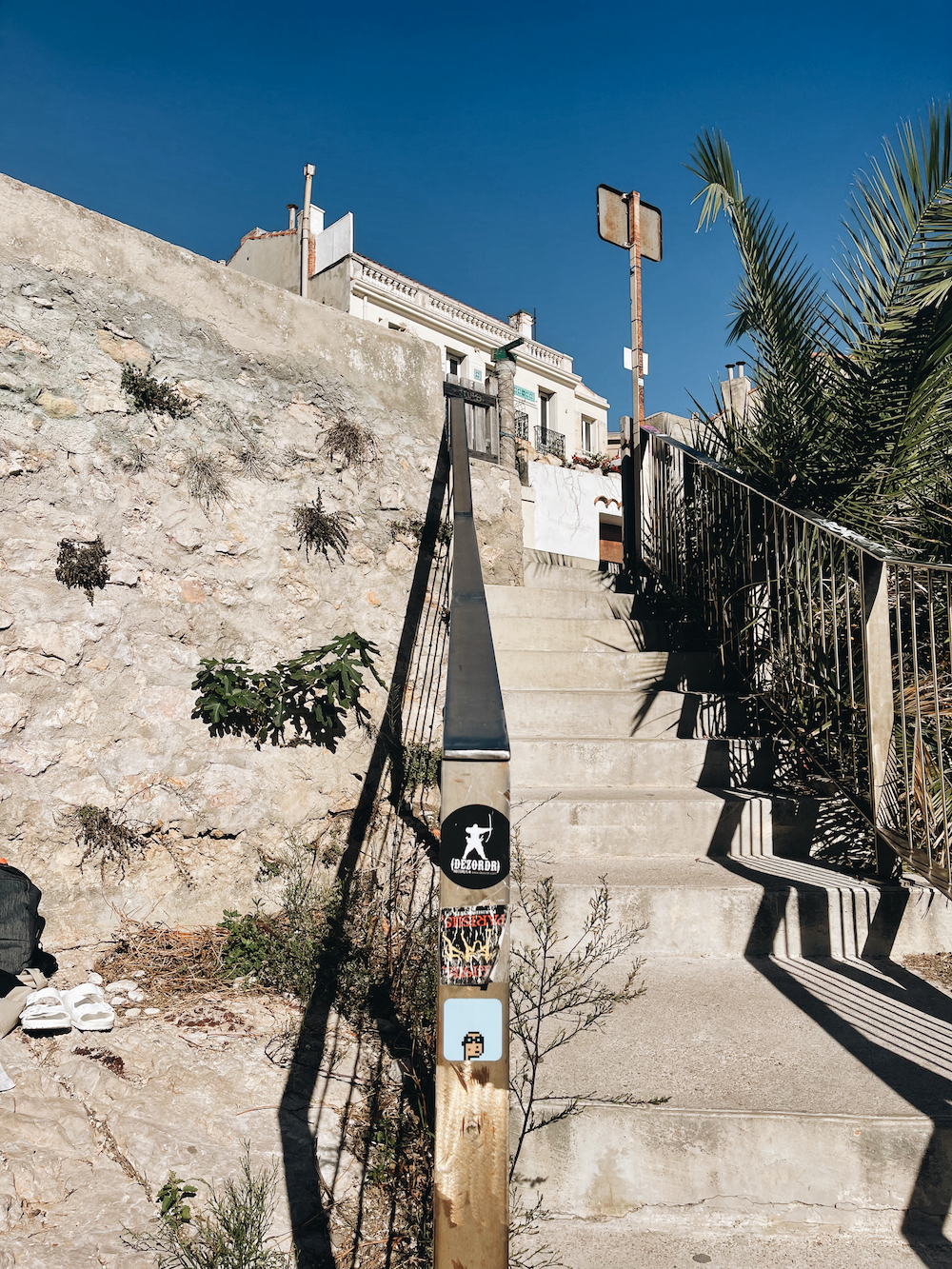
    Now NTS has a new series coming out, and it’s premiering this week on July 30. It’s called My City, My Backyard, and it’s a look at cities, specifically through the eyes of creatives. I already know that I’m going to like it, and I love the title. When you live in a city, the entire city is your backyard and amenity. The first city in this new series also happens to be one of my favourite cities: Marseille.

    Marseille is having a moment right now, and that’s not just my confirmation bias speaking. In 2024, the city saw 19.5 million overnight stays, which were a 20% increase compared to the year prior (they hosted 10 medal events during the Paris 2024 Olympics). But even if you strip out its Olympic boost, tourism is rising. Spring 2025 recorded a 7% year-over-year increase, which included a 19% increase in international visitors. Summer 2025 visitors were also 10% higher than in 2023.

    What’s driving this, beyond its vibrant culture, great restaurants, and breathtaking landscapes, is that Marseille has just the right amount of edge. It’s not always a hyper-polished Instagram moment; it’s an effortlessly cool place where finding an uncomfortable rock next to turquoise waters will give you everything you need.

    In other words, it is a place that feels authentic. And in a world of global sameness and AI-generated simulacra, I think many of us are now seeking that authenticity — something that feels real and a little raw. Marseille has that in spades. Oh, and if any of you happen to visit la plage de Maldormé, let me know if my unauthorized sticker is still there.

    Here is NTS’s channel in case you want to check out Marseille this week.


    Cover photo by Jeet Sandhu

  • Toronto needs a bold and uncomfortable 21st-century master plan

    Earlier this week, I tweeted that Toronto needs a Haussmann moment where we make some bold and uncomfortable changes in order to set ourselves up to be a dominant 21st-century global city. I mentioned Haussmann because his work is perhaps the most notable, but that is just one example.

    In addition to Haussmann’s renovation of Paris (1853-1870), I was also thinking about the Commissioners’ Plan for New York City (1811), and Ildefons Cerdà’s grid system of octagonal blocks for Barcelona (1859), as well as some more contemporary examples.

    In recent years, Barcelona has revisited its grid system and pioneered a new set of “superblocks” that focus traffic along the periphery and create pedestrian-focused spaces on their interior.

    The common thread among these examples is that they all represent a grand master plan. In the case of Barcelona and New York, it was a plan that served to guide development as the city grew. And in the case of Paris, it was a destructive plan that went back and redid what was deemed to have not been working. (In thinking about this now, it’s probably best that I used Haussmann as the example in my tweet).

    Toronto has never had such a plan. We flirted with the City Beautiful movement at the beginning of the 20th century — a movement intent on beautifying and introducing monumental grandeur to our cities — but, not surprisingly, we ultimately saw it as a superfluous and frivolous spending exercise.

    Instead, Toronto has grown incrementally, becoming what I see as an accidental global city. We are no longer the ultra-conservative, deeply Protestant city that we once were, but at the same time, it’s hard not to feel like we have a grid and public realm that doesn’t reflect the city we have become today.

    Toronto needs a bold master plan. And over the coming weeks, I’ll put some of my ideas to paper. In the meantime, if you have any of your own, please feel free to share them in the comment section below.

  • Housing complexity does not erase fundamental economic laws

    Business in Vancouver just reported the following breaking news: If you build a lot of new housing, it will become more affordable for people.

    Here’s an excerpt:

    Nearly 24,000 rental units are expected to be delivered in the region over the next two years, adding significant supply and intensifying leasing competition, according to Cushman & Wakefield ULC.

    Record construction completions in 2025 and high deliveries in 2026 are pushing down rent growth and creating tenant-friendly conditions, said a first-quarter report from the firm released in May.

    It could take several years to absorb existing inventory, with meaningful rent growth unlikely to resume until 2028, when longer-term supply constraints could re-emerge if development activity slows and immigration resumes, said the firm.

    This is, of course, the YIMBY argument. Increase housing supply, and housing becomes more affordable.

    But critics will argue that housing supply isn’t the main problem. Indeed, there are surveys that indicate skepticism around the overall housing supply argument. Ask people if producing more widgets will lower the price of widgets, and most agree. Ask people if producing more housing will lower the price of homes, and it’s mixed.

    Housing gets a little more complicated because of investors, speculators, foreign buyers, immigration policies, short-term rentals, and other demand-side factors. And at the end of the day, housing supply adjusts to changes in demand at a snail’s pace. So, from time to time, we will get it wrong. We overbuild at the end of the cycle and underbuild at the beginning of it.

    But none of this means that housing supply isn’t fundamental. Understanding the demand side is important, too. But regardless of where we are in the development cycle, when supply outstrips demand, it is going to create downward pressure on rents and help housing become more affordable. That’s exactly what we’re seeing today.


    Cover photo by Peter Skaronis

  • Toronto is now an apartment city

    July 12, 2026 · View original


    The way CMHC typically tracks and categorizes housing types is as follows: single, semi-detached, traditional row, and then everything else. This “everything else” bucket is called “apartment,” and it includes high-rise apartments, mid-rise apartments, low-rise apartments, duplexes, triplexes, multiplexes, and anything else that doesn’t fit into one of the other categories.

    This taxonomy reflects our bias toward single-family, grade-related housing because if you look at the distribution for a city like Toronto, it doesn’t really make sense to do it in this way. For example, if we were to look at housing starts in Toronto proper for 2025, the distribution looks like this:

    – Single: 5.2% – Semi-Detached: 0.4% – Row: 2.5% – Apartment: 92%

    If we were to look at the entire Toronto CMA, the distribution updates to the following:

    – Single: 12% – Semi-Detached: 0.5% – Row: 14.2% – Apartment: 72.8%

    Do we really need a separate category for semi-detached houses? And would it not make sense to get a bit more granular with the apartment category given that it’s basically what we’re building these days? Obviously, markets vary, but in the case of Toronto, we have flipped to an apartment city.

    Now, if you were to look at an aerial view of the Toronto CMA, you would see the opposite. You would see concentrations of towers surrounded by seas of low-rise housing, and you would be forgiven for thinking differently about the city. But this is a lagging indicator. The leading indicator is housing starts, and it’s pretty clear what that is saying.

    These are important stats to think about because they help illustrate the housing problem that needs to be solved. Last year, Toronto saw a net domestic out-migration of 77,500 people. One possible explanation is that some of these people left for more affordable, single-family housing. For the sake of argument, let’s assume that’s the case.

    A portion of this segment may only be interested in single-family housing, and if that is the case, Toronto will never again create the housing they want at scale. But I would wager that there’s another meaningful segment that would have stayed in Toronto if only they could have found housing that met their needs. And that is the opportunity that exists today for city builders.

    We know that apartments are the future of Toronto, but we also know that they can take many forms, from 100-storey towers to small “missing middle” projects that are still grade-related. The housing solutions we seek are necessarily going to lie within the black box we today call “apartments.”


    Cover photo by Venrick Azcueta

  • The real story behind Toronto’s stalled population growth

    July 10, 2026 · View original


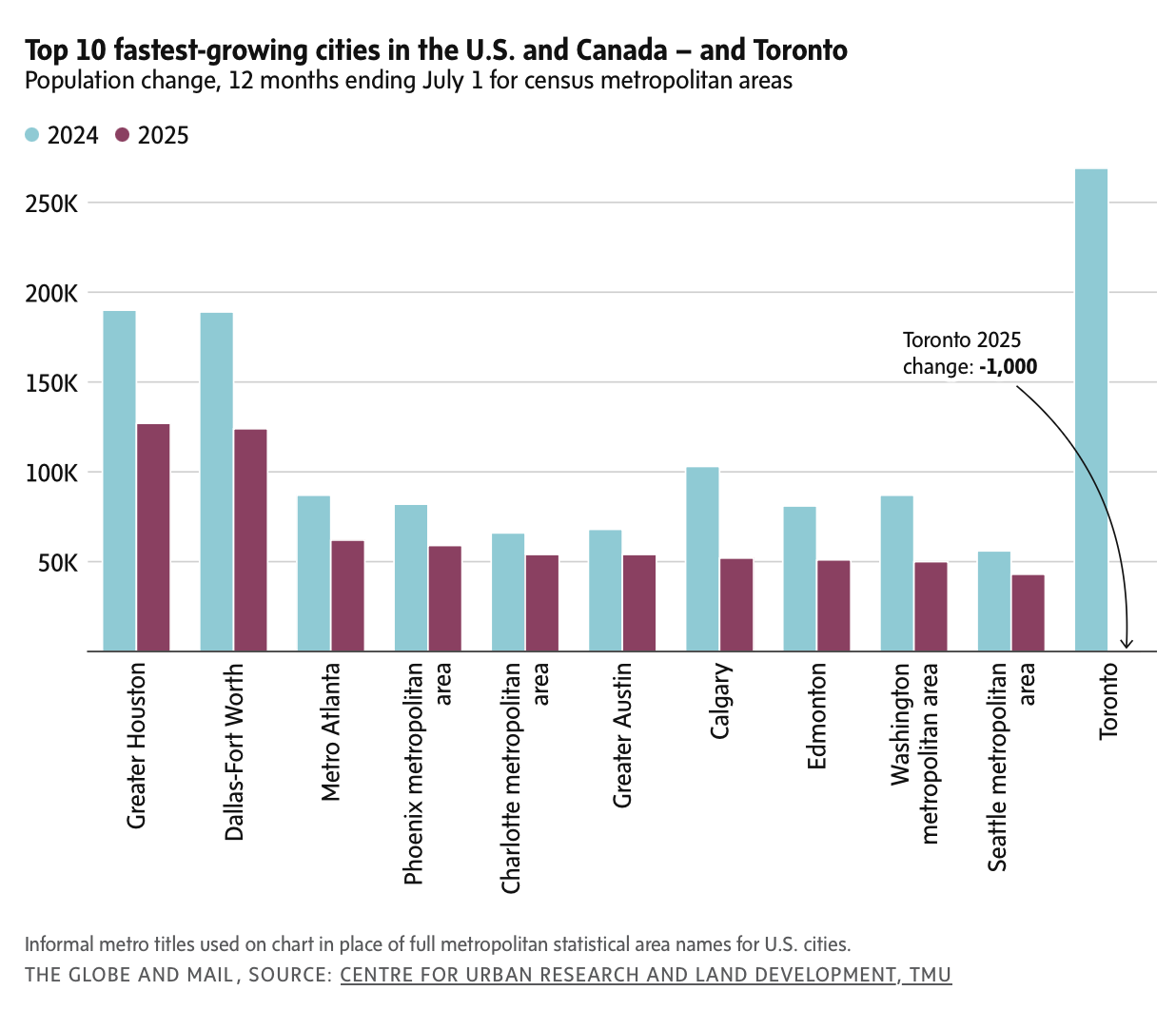
    How quickly things can change. In 2024, the Toronto Census Metropolitan Area was the fastest-growing region in Canada and the US. Then, last year, it lost around 1,000 people and dropped to 443rd place. See above chart. The obvious explanation is Canada’s concerted effort to reduce temporary workers and international students. But actually, Toronto is still one of the top regions when it comes to net international migration, adding 53,000 people in 2025. The real story, according to recent analysis from the Centre for Urban Research and Land Development at TMU, is that Toronto has simply gotten too expensive, driving massive domestic out-migration. Last year, Toronto lost 77,500 people this way, wiping out its natural growth and its net international migration gains. This is our regular reminder that we need to be far better at delivering attainable housing at scale.


    Cover photo by Frank Huang

    Chart from The Globe and Mail

  • How public transit connects the World Cup host cities

    July 9, 2026 · View original


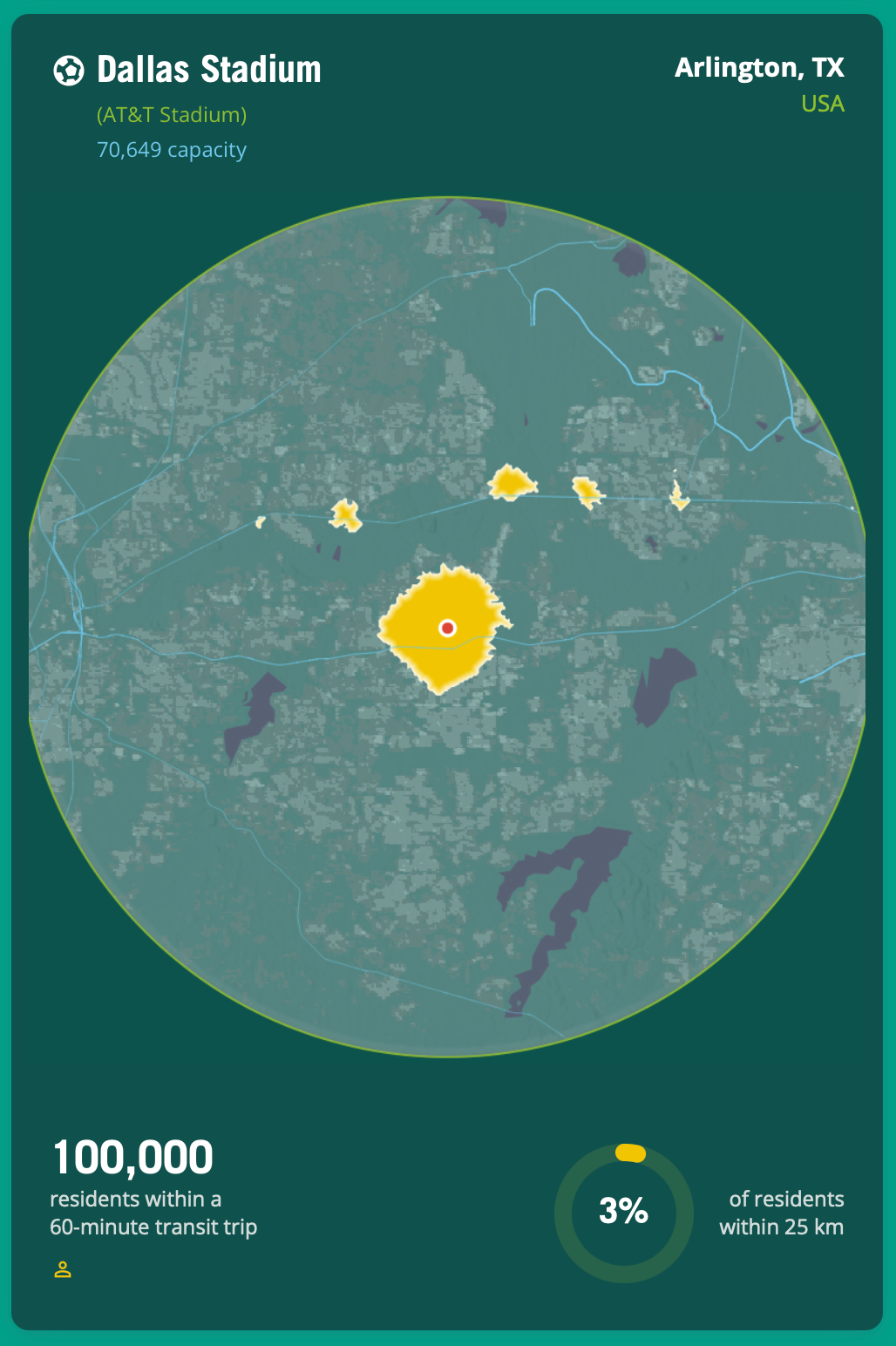
    The 2026 FIFA World Cup is being hosted across 16 different cities in Canada, the United States, and Mexico. The city hosting the most games is Dallas, with 9 matches. Supposedly, this is because the city has a nice stadium with a retractable roof and capacity for 70,649 people, and Dallas is a fairly central location for a tournament being hosted across North America.

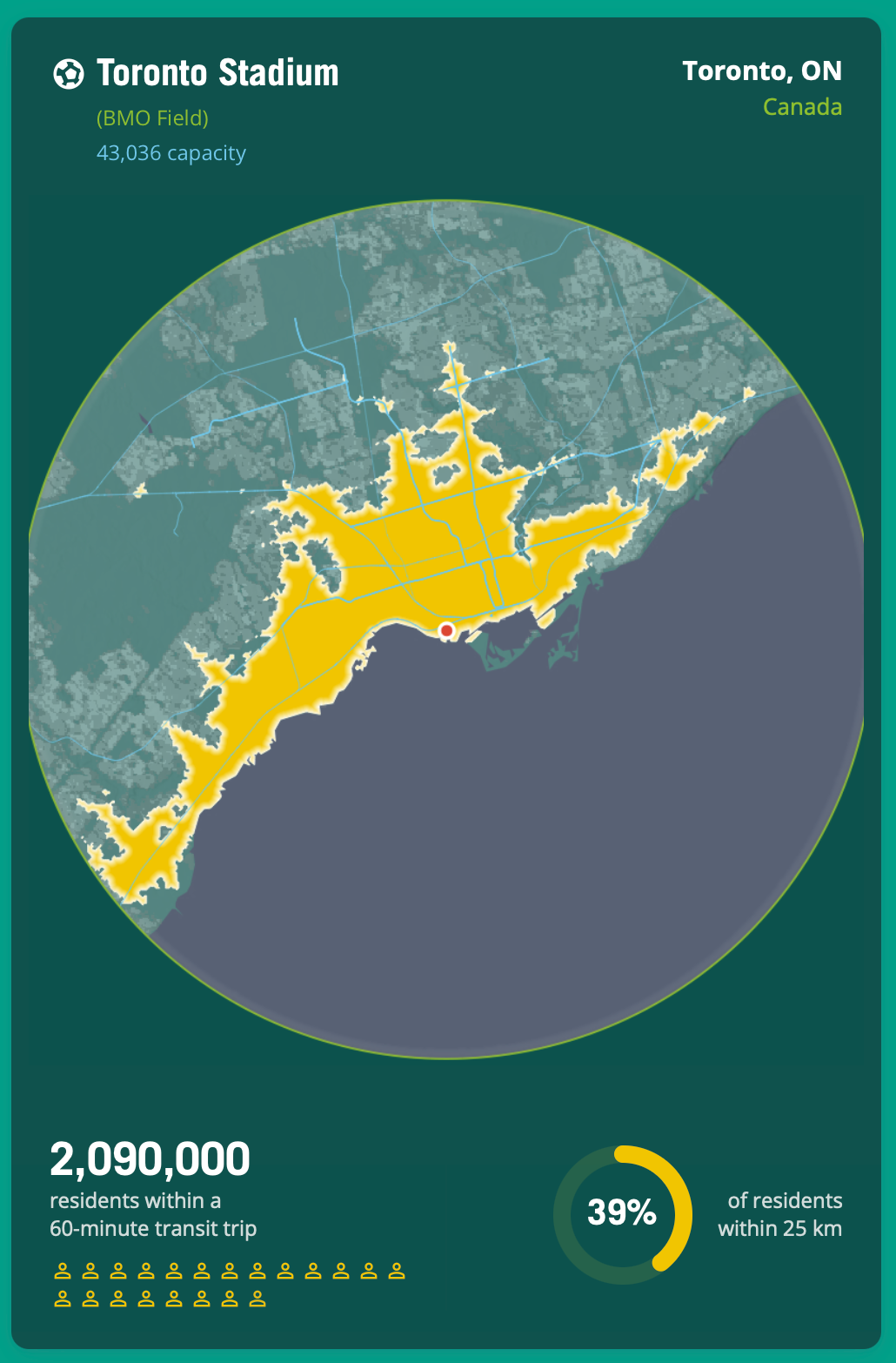
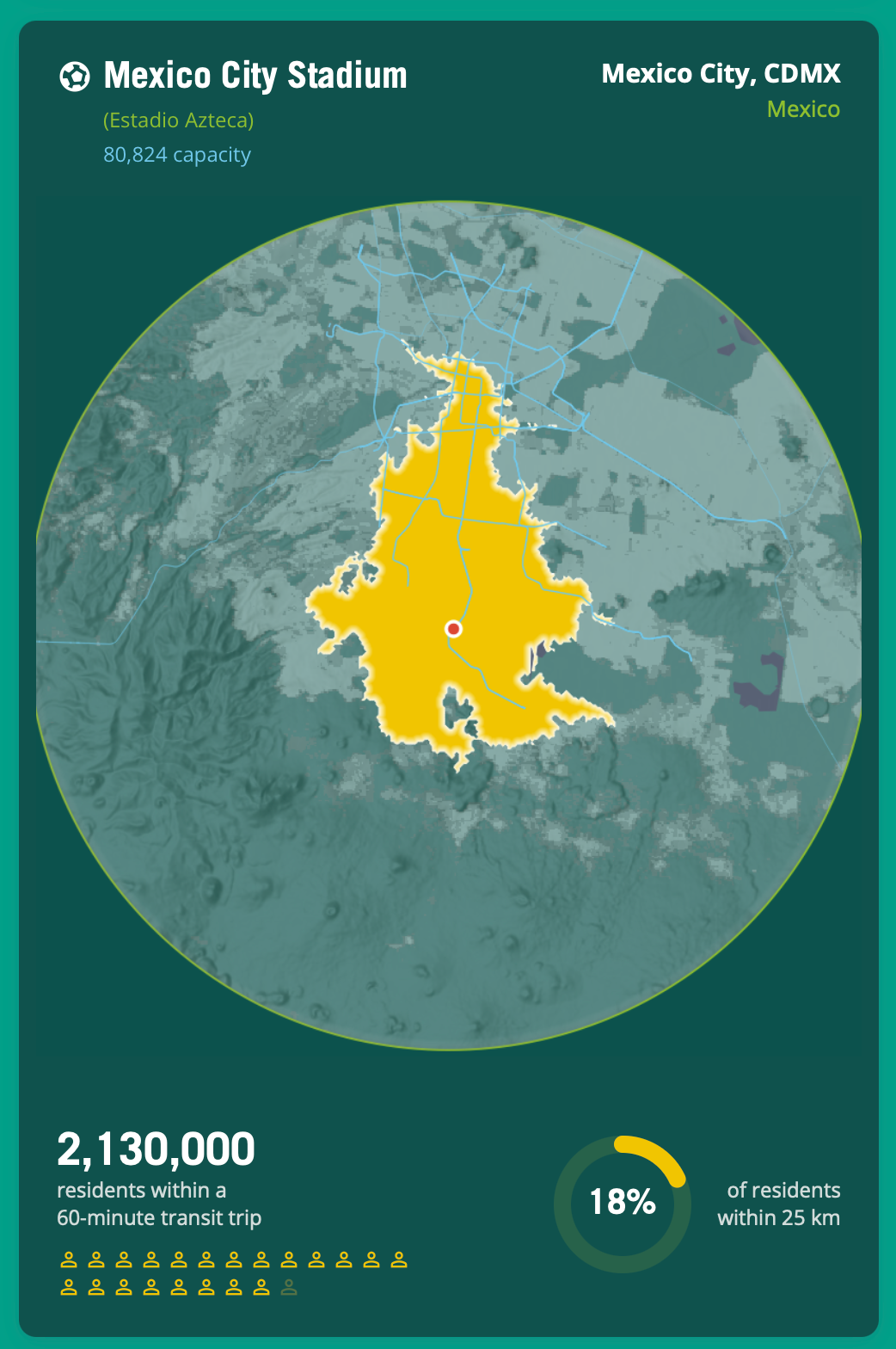
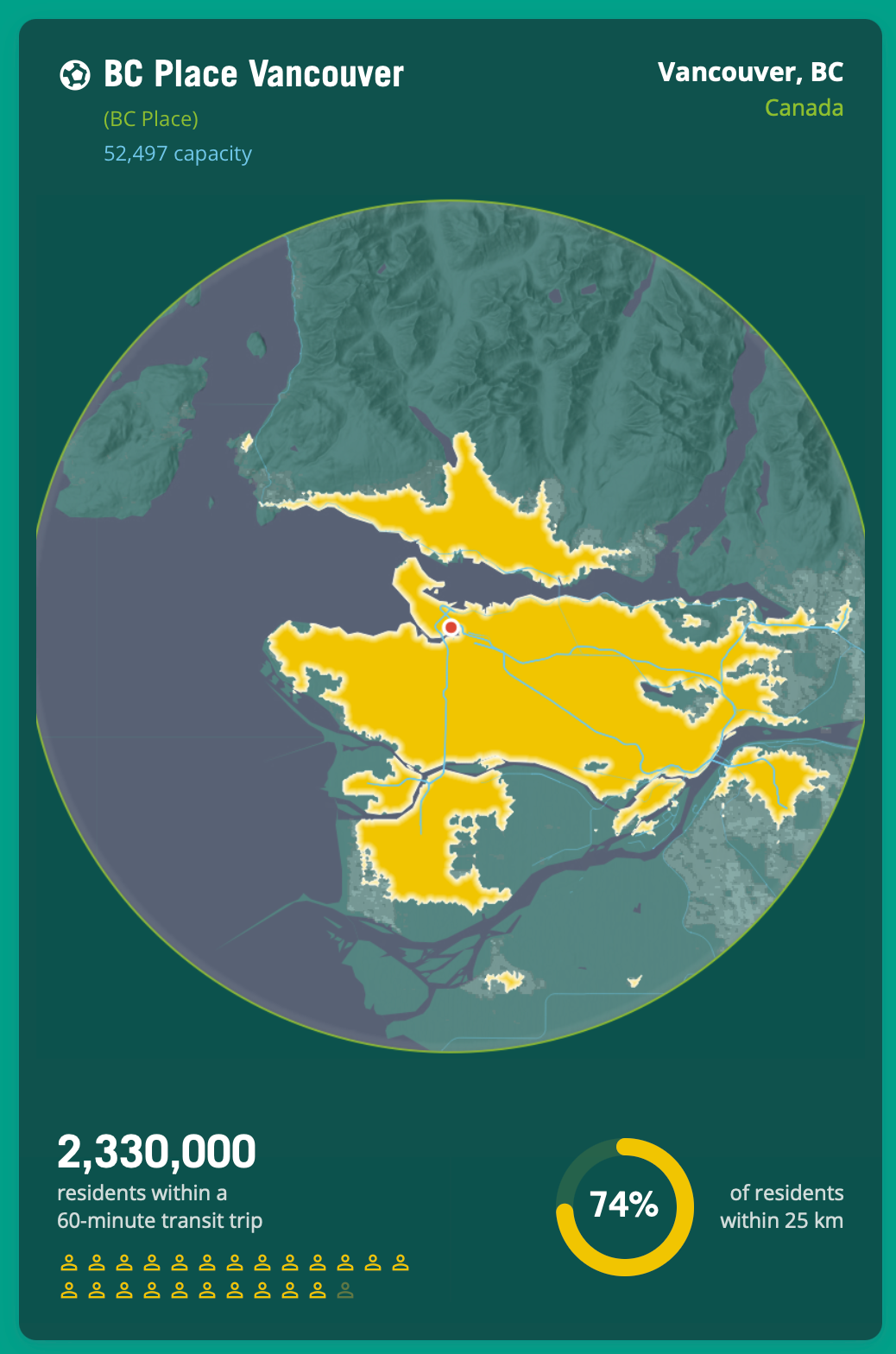
    But here’s another way of looking at the stadiums. The School of Cities at the University of Toronto recently published a study called “Transit-Oriented Stadiums.” What they did was look at how well connected each stadium is to its host city by public transit. More specifically, they looked at how many people live within a 60-minute public transit isochrone polygon.

    Dallas Stadium (AT&T Stadium) is in Arlington, Texas, and it has about 100,000 residents within a 60-minute transit trip:

    Now, here’s Toronto. BMO Field has a much smaller capacity (43,036 people), but over 2 million residents live within a 60-minute transit trip:

    Mexico City’s transit catchment reaches over 2.1 million people, despite its stadium being out of the core of the city:

    And Vancouver takes the top spot with over 2.3 million people:

    These diagrams highlight a striking divide in land-use patterns. The two key factors are stadium placement and transit investment. Obviously, if you flipped the script and mapped the number of residents within a 60-minute drive, then Dallas Stadium would perform quite differently. But bringing 70,000 people to one location via cars will never match the spatial efficiency of public transit.


    Cover photo by Ronin

    Diagrams from the School of Cities at the University of Toronto

  • The liveability rankings are shifting toward Asia

    July 8, 2026 · View original


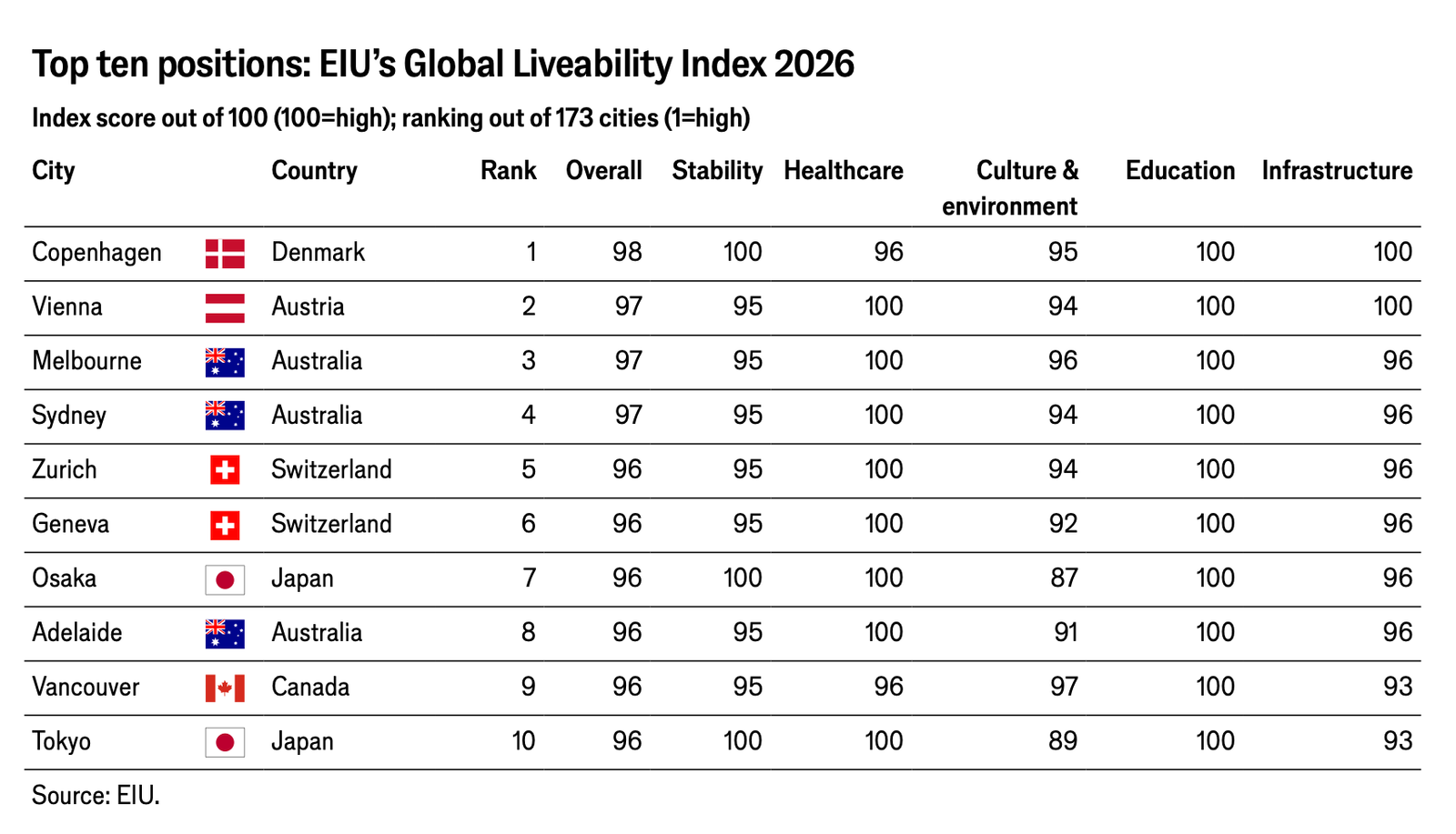
    The Economist just released its list of the world’s most — and least — liveable cities in 2026. It has a somewhat similar complexion to Monocle’s quality of life survey in that you’ll find cities like Copenhagen, Vienna, Sydney, Zurich, and Vancouver on both. But at the same time, there is a core difference.

    Basically the way it works is that The Economist’s ranking is designed to help HR departments calculate “hardship allowances” when staff are relocating overseas, whereas the Monocle survey places a much greater emphasis on questions like: Can I grab a drink at a cool bar at 2 AM on a Tuesday? It’s for this reason that you won’t find cities like Lisbon, Paris, and Madrid on The Economist’s top 10 list.

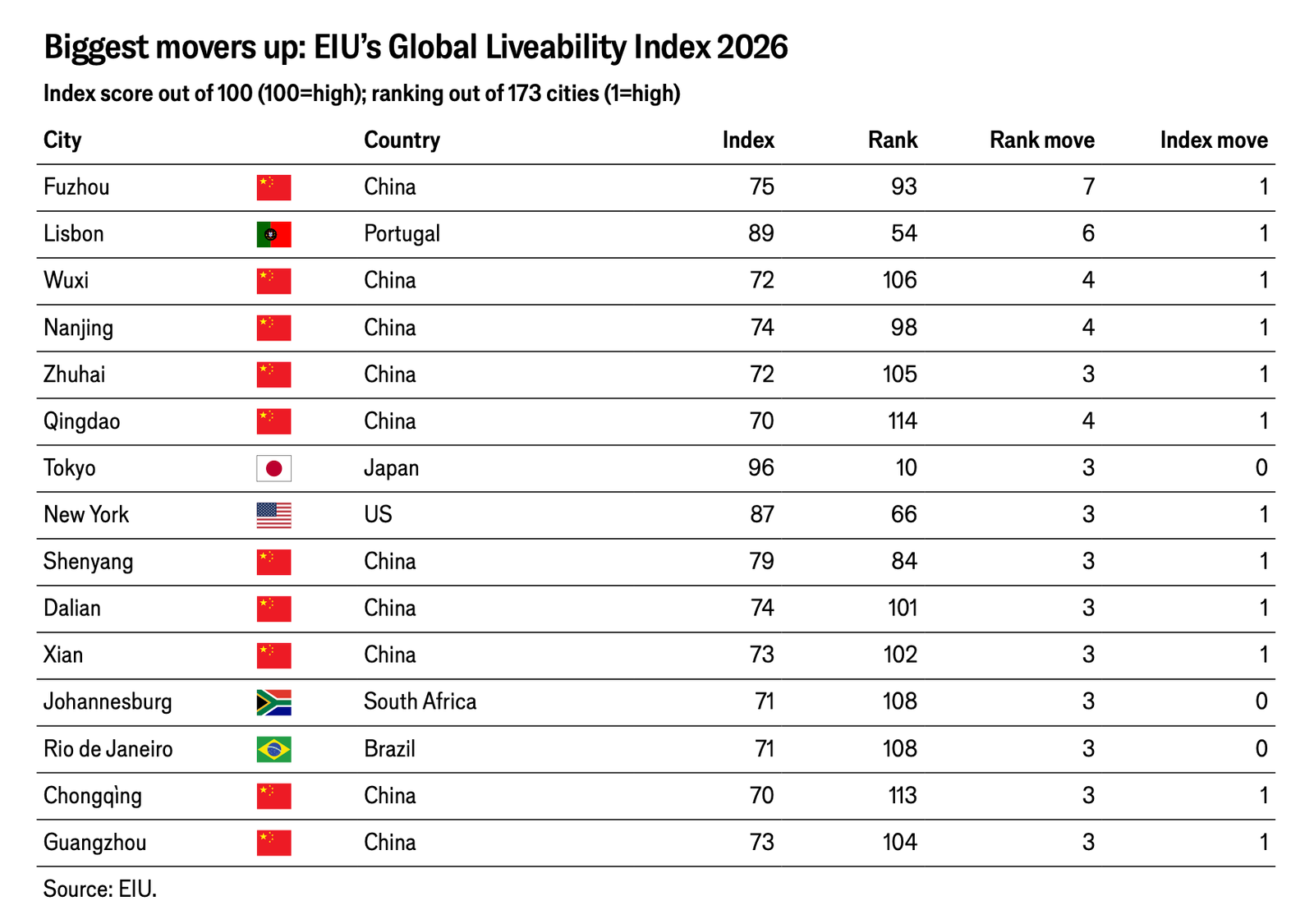
    The other not-very-surprising fact of this year’s ranking is that cities in the Middle East and North Africa (MENA) broadly saw the largest declines in liveability. This is due to the Iran war and deteriorating “stability” points.

    Perhaps the most interesting takeaway is the rise of Asia, and in particular China. There are now 9 Asian cities in the top 20, compared to 7 cities in Europe. According to The Economist, improvements in healthcare are why Chinese cities are posting the biggest gains. Also on the movers-up list is New York, due to falling crime rates and a reduced perceived terrorism risk.

    While this is certainly positive, if you’d like to dive deeper, you can download a full copy of the EIU Global Liveability Index 2026.


    Cover photo by Julius Carmine

  • The return of price discovery in Toronto’s condominium market

    July 7, 2026 · View original


    I was speaking to a developer friend the other week about the current state of the Toronto market, and I told him that I think we’re at the bottom. He responded with, “Oh yeah, I think so too, but how long are we going to be here for?” Good question.

    The answer is, of course, unknowable. We can all speculate based on the lack of housing starts we have seen over the past few years, when positive immigration is expected to return, and other factors, but nobody can say for sure.

    As Howard Marks said on a recent Prof G Markets podcast, this is what makes investing so interesting and rewarding. There’s no way to ever know all the answers!

    What I think we can say about this year, though, is that the condominium market has successfully returned to price discovery. Since roughly 2022, the market has been frozen because the bid-ask spread was simply too great.

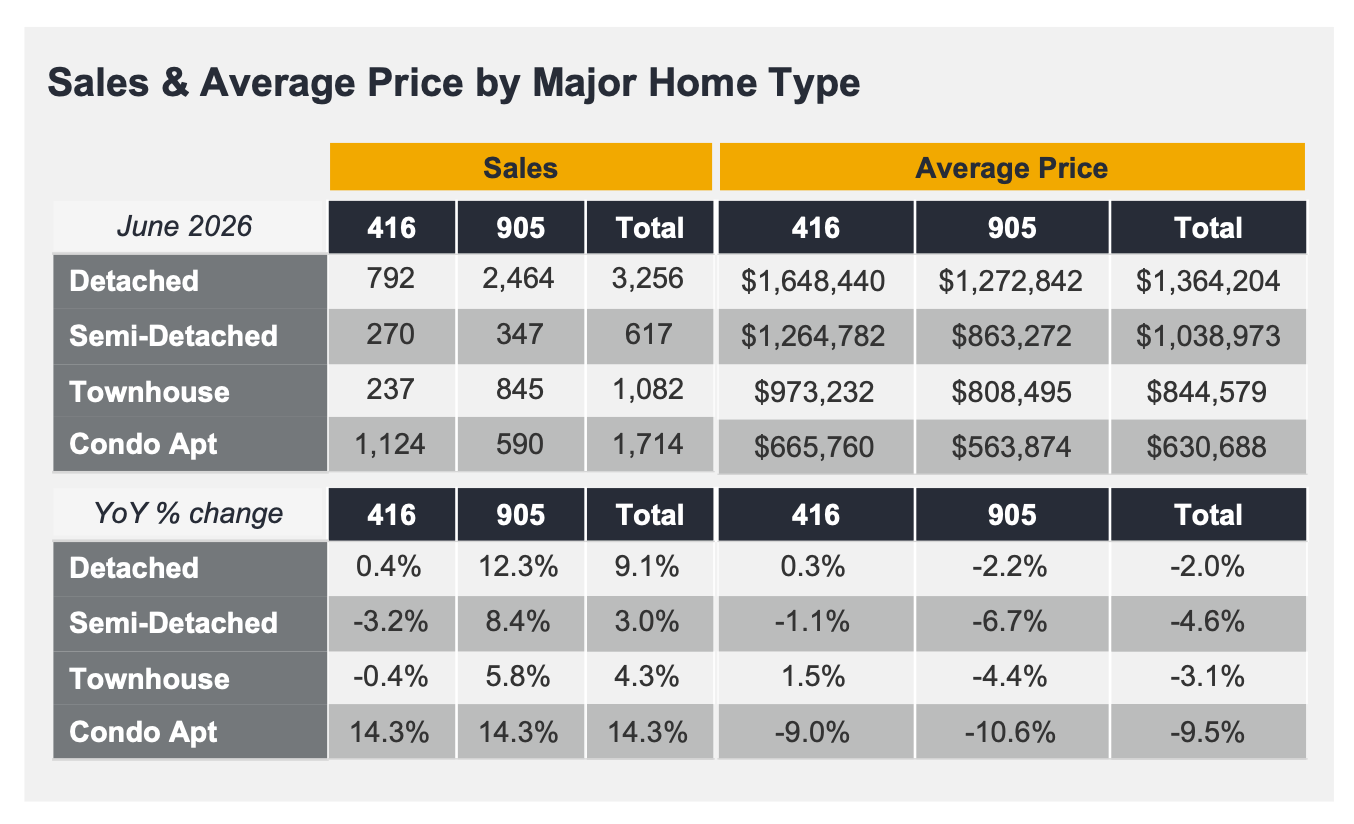
    But deals are once again getting done. In June of this year, the Toronto Regional Real Estate Board (TRREB) reported 1,124 condominium apartment sales in Toronto and 590 sales in the suburbs. Both of these numbers represent a 14.3% year-over-year increase.

    We’re talking about a limited dataset, but I’m seeing and hearing from colleagues a similar dynamic play out on the new construction side of the business. End-user buyers have emerged from the sidelines and are now the dominant buyers (versus investors).

    This doesn’t necessarily tell us what the next few years will look like, but I suspect that when we look back on the second half of 2026, it will represent an important milestone.


    Cover photo by Narciso Arellano

    Chart from TRREB

  • The fundamental contradiction in Canadian housing

    July 6, 2026 · View original


    > “Show me the incentive and I’ll show you the outcome.” —Charlie Munger

    Canada is, broadly speaking, a nation of homeowners. In the 2021 census, 66.5% of Canadians owned their own home. So, most. And this is encouraged. Owning your own home is typically viewed as a way to generate wealth, build equity, and provide tangible evidence that you have enough creditworthiness to make a mortgage payment every month.

    Given the above, you could say that the majority of Canadians are incentivized to do things to protect the value of housing and, in turn, their personal net worth. But we also know that this creates an inexplicable housing paradox. We want housing to be more affordable for some, but ever more valuable to others. How exactly should we achieve this?

    In this recent opinion piece in the Globe & Mail, John Turley-Ewart argues that the recent announcement in Vancouver translates into housing no longer being a home. Rather, it has become a “supply-managed good in a protected industry,” similar to dairy and telecom in this country. So: “The result will be a country where homeownership is reserved for the few by design. It shouldn’t be that way.”

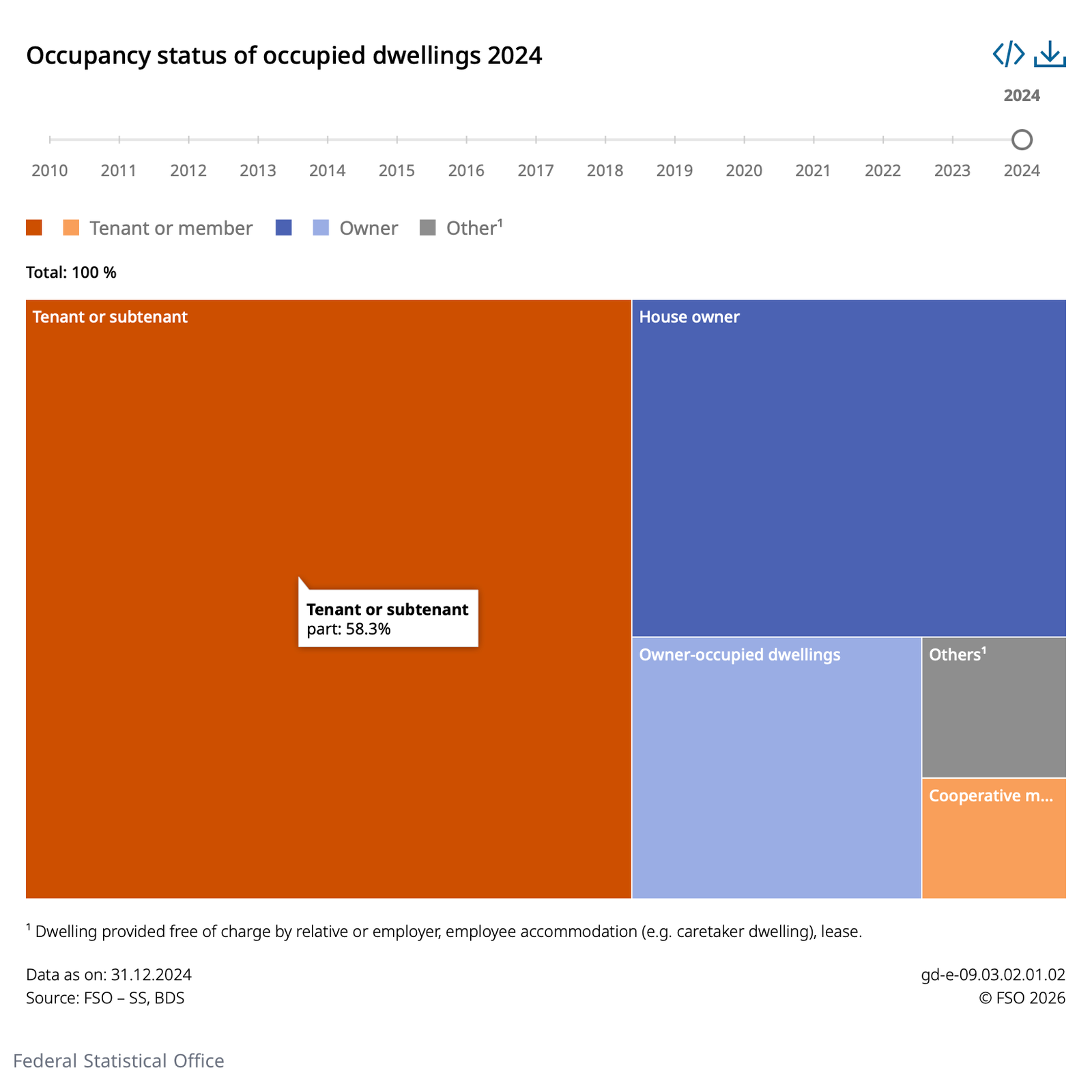
    Here’s a thought exercise: Why would it be a problem if Canada’s homeownership rate dropped to, say, one-third — the same rate as Switzerland? Is it because housing should appreciate faster than the rate of inflation and generate wealth for Canadians, or is it simply because pride of ownership is good for people’s moral well-being? If it’s the former, well, then the argument eats its own tail.

    We are saying we want housing to be more affordable so more people can own it, but if it were constantly depreciating (getting cheaper), or even just appreciating at the rate of inflation, should people even want to own it? Why not just rent and invest the down payment elsewhere to earn greater returns? That’s what the Swiss do by and large.

    Swiss households tend to rent rather than own.

    I believe the more precise argument being made in the Globe & Mail is that housing has simply gotten too expensive for middle-class incomes, so what we need is less government meddling and a reset before the market begins to re-appreciate in favor of the 66.5% of Canadians who are invested. While I certainly agree with the basic idea that we need to stop overtaxing new housing and reset our development cost structures, let’s not ignore our clear housing paradox.

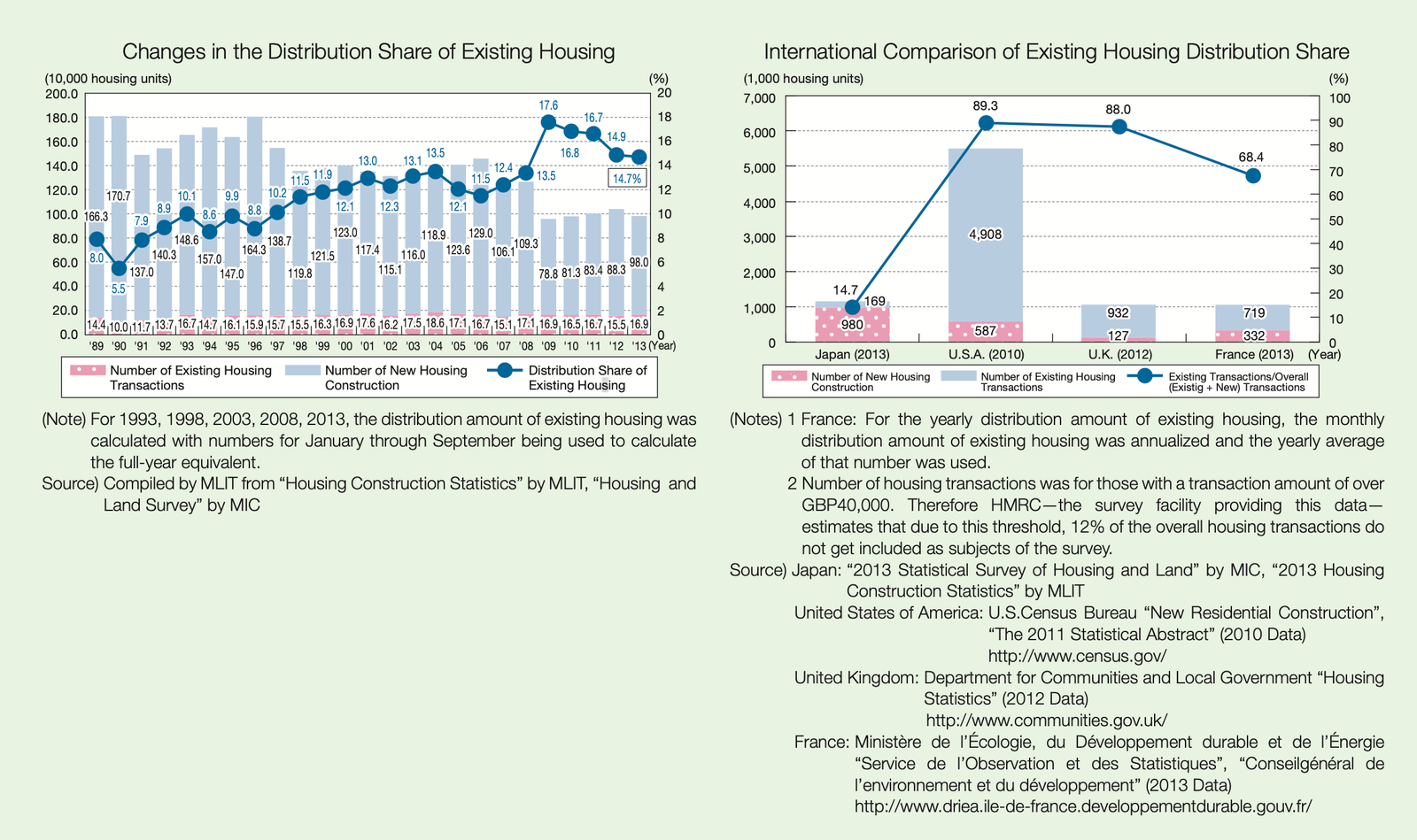
    In Canada, we view housing as an investment, and that runs counter to the idea that housing should be as affordable as possible to the greatest number of people. As we know, this viewpoint isn’t the same everywhere. Japan, for instance, has historically viewed housing as a consumer good. You bought it new, or built it new, when you needed it, and once you were done with it, the expectation was that there wouldn’t be many buyers for it.

    Historically, Japanese households have greatly favoured new construction over resale housing

    As recently as 2013, the percentage of existing housing transactions as a share of the overall housing market in Japan was only 14.7%, compared to over 89% in the US (2010 figure). The government has since worked to get this number up, but it shows a distinct historical view of housing. It also led to more daring residential architecture. If you’re not concerned about what the next buyer might think, you become a little more free-willed.

    The point of this post is not to pass a value judgement on any one approach; rather, it is to point out that there are many different ways to think about housing. Deciding the precise outcome we want is always going to be helpful in determining the right solutions.


    Cover photo by Aditya Chinchure

    Swiss housing occupancy status diagram from the FSO

    Japan charts from the White Paper on Land, Infrastructure, Transport and Tourism in Japan 2015