Daily insights for city builders, delivered every morning at 6 AM ET. I’m Brandon Donnelly — a Toronto-based real estate developer and founder of Globizen. I’ve been writing here since 2013.

Category: Places

  • Paris introduces new limited traffic zone

    As counterintuitive as it may sound, one way you could try and improve traffic congestion is to discourage people from riding their bikes and instead encourage them to drive more. That’s what’s happening in Toronto right now. Another way is to dramatically restrict car usage. And starting this Monday, that’s what Paris will be doing with its new limited traffic zone (zone à trafic limité) in the center of the city:

    This new ZTL is approximately 5 square kilometers. About 100,000 people live within its boundaries, and it is estimated that somewhere between 350,000 to 500,000 vehicles enter it each day. But according to the city, it is estimated that only around 30% of these trips are absolutely necessary (because of a lack of alternatives, for example). The purpose of the ZTL is to reduce the unnecessary ones.

    The way it will work is that drivers will no longer be allowed to drive through this zone. You’ll only be able to enter if you plan on stopping for a legitimate reason. It’s not yet clear what this exact list of approved reasons will be, but the general idea is that if you want to drive in for dinner or to attend a meeting, that’s fine. What you can’t do, though, is just drive around in a souped-up Honda Civic blasting Taylor Swift.

    The next 6 months are planned to be a period of education. Drivers exiting the zone are just going to be told that there’s this new ZTL and that they better have stopped somewhere. But eventually there will be a 135 euro fine and eventually drivers will be expected to furnish some sort of supporting evidence for their stop, such as a restaurant receipt. There’s also talk of adding automatic cameras.

    Of course, this creates a lot of gray areas. What about if you’re just going over to a friend’s place for dinner? Will they then need to write you a note saying that you went over for some homemade bouillabaisse? Yeah, I don’t know the answer to this. But you have to admit that this is a bold city-building move, and a far more effective way of improving traffic flows.

    Unlike removing bike lanes, this plan will actually work.

  • Canada announces high-speed rail between Quebec City and Toronto — finally!

    The train from Paris to Marseille takes just over 3 hours:

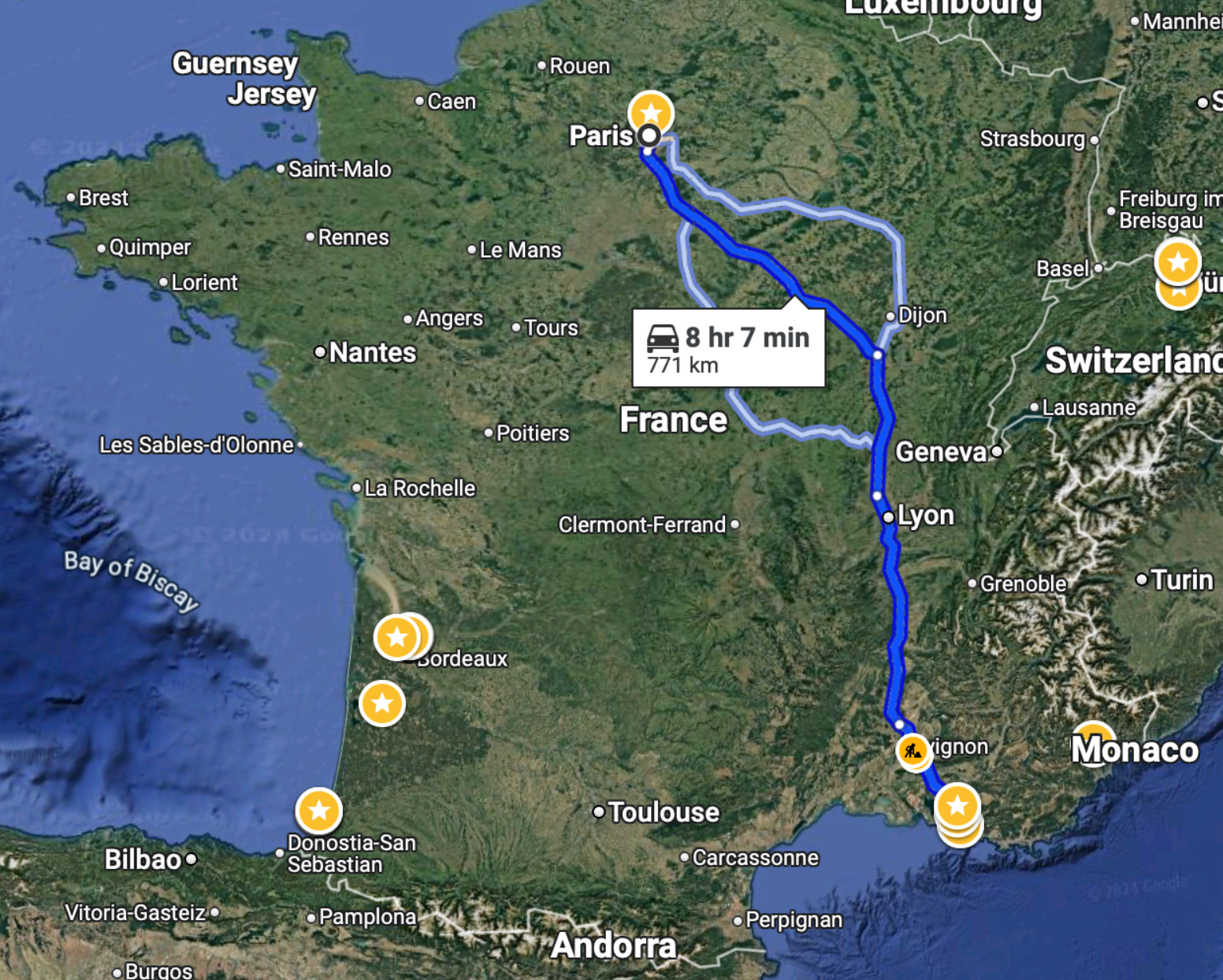
    To drive this same distance, it would take just over 8 hours:

    So unless you had a very specific reason, I don’t know why you’d ever want to drive this route. I certainly hate long drives and would avoid this at all costs.

    On a related note, the Canadian government announced this week that it will actually be moving forward with a high-speed train linking Québec City to Toronto, stopping in Peterborough, Ottawa, Montréal, Trois-Rivières, and Laval. And unlike previous announcements, it will actually go pretty fast — upwards of 300 km/h, which is comparable to what the TGV does on the above route.

    There are three consortia currently competing for this contract, but apparently the federal government has already chosen a winning bidder. An announcement is expected next month. At the same time, the project office owns all of the bids, and so there’s a chance that elements from each of them could be used in the final project.

    According to official messaging, the design alone is expected to take some 4 to 5 years, which is an eternity and way too long. But at least we seem to be moving forward. This rail link is a no brainer. It will compress the geography of an importantly bilingual corridor with nearly 20 million people — about half the population of Canada! It’s our megalopolis.

    Now we just need to move forward with urgency and with an unwavering commitment to creating the best high-speed rail service in the world. Let’s not accept mediocrity. And let’s not cancel it once we’ve already sunk millions into it. That would be a terrible outcome for such an obviously important nation-building project.

    LFG.

  • Low-carbon cement

    By some measurements, cement production alone is responsible for about 8% of human-caused carbon dioxide emissions every year. And so there is an imperative to find suitable low-carbon alternatives. Here is what is currently happening in the US (via Grist):

    On Tuesday, Terra CO2 Technology was picked to receive a $52.6 million federal grant to build a new manufacturing plant just west of Salt Lake City. The company has devised a method that turns common minerals into additives that can help replace Portland cement — a key component in concrete, and one of the most carbon-intensive materials in the world.

    In addition to this new facility, the company is set to start construction on its first plant in the Dallas-Fort Worth area:

    The project is expected to break ground in January 2025 and begin shipping out materials by late summer 2026, Yearsley said. The facility will be capable of producing up to 240,000 metric tons of SCM [supplementary cementitious materials] per year when completed, or enough to serve roughly half of the local metropolitan market.

    And all of this is part of a broader initiative by the US Department of Energy:

    The Utah facility is one of 14 projects provisionally selected this week to receive $428 million in total awards from the U.S. Department of Energy’s Office of Manufacturing and Energy Supply Chains. The initiative, which is funded by the Bipartisan Infrastructure Law, aims to accelerate clean energy manufacturing in U.S. communities with decommissioned coal facilities. Officials said the projects are expected to create over 1,900 high-quality jobs across a dozen states.

    For the rest of the article, click here.

  • Map of every development project in Paris

    It is surprisingly difficult to find good real estate and development information about a market that you’re not familiar with. So I was pretty excited when I came across this map of every development project in Grand Paris (Greater Paris) created by Arthur Weidmann.

    It’s in Google My Maps and what he has done is pin every project according to status: under construction, under renovation, approved, proposed, and recently delivered. For each pin, you’ll also find information like the expected completion date, the use(s), the area, the architect(s), and photos. It is unbelievably detailed and, according to Google, it was last updated 8 hours ago.

    Here’s the full map with all statuses shown:

    And here’s what it looks like if you filter by only projects under construction:

    It’s interesting, but not surprising, to note that the majority of construction projects seem to be taking place outside the boundaries of Paris proper. However, if you alternate to projects under renovation, it more or less flips, with most of the projects being within Paris:

    This tells you something about the city.

    Sometimes when I’m looking at or for information like this, I think to myself that I must be in the minority of people who are interested in tracking development projects with this level of detail. So I find it interesting that this map has been viewed nearly 300,000 times. Clearly, I’m not actually alone.

  • Western resort real estate is in very high demand

    People like ski and snowboard towns. Here’s an excerpt from a recent WSJ article talking about Park City:

    Prices continued to rise in most luxury ski towns this past year, but none grew as much as Park City, a former silver mining town 32 miles east of Salt Lake City. The average home sale price there grew 35% in 2023 from 2022, compared with a 9.4% increase at Vail and Beaver Creek and 3.2% at Aspen, according to the resort report by Summit Sotheby’s International Realty. 

    The main point of the article is this: Park City has gotten really expensive, and so people are now looking and buying homes further out in places like Heber City, Midway, and Kamas. Here’s how expensive expensive is:

    Over the last four years, Covid has stoked demand for western resort real estate. In Park City, single-family homes have sold for a median price of $4 million year-to-date, up from $1.996 million in 2019, according to Redfin, which averaged the monthly median sales prices weighted for the number of homes sold. One home was listed in September for $65 million, which could set a record for the state. It’s now under contract, according to listing agent Paul Benson of Engel & Völkers, who declined to disclose the sale price.

    This, of course, isn’t a novel phenomenon. It’s the whole “drive until you qualify” thing. But what’s interesting about this particular mountain example is that it’s not centered around access to a CBD or downtown; it’s centered around “how fast can I get to a ski and snowboard resort?”

    For example, Deer Valley has a new East Village that is expected to open up in 2025. This brings the cities mentioned above closer in. And buyers seem to be doing that math: “It’s a 25-minute drive today, but next year I’ll be able to get on a lift in 15 minutes. Score.”

    Given that Deer Valley also doesn’t allow snowboarders, it’s interesting to think about how these trends could be bifurcating the region between skiers and snowboarders. I don’t have any data on this, but I bet if you mapped it out, there would be some sort of clustering happen.

    The article also goes on to talk about transportation. Because you can’t talk about new development and real estate without talking about traffic. But I think Bill Ciraco (Park City Council) gets it exactly right in the article: This is a car problem, and less of a people problem.

    In my mind, the Wasatch Range is destined for something like this ONE Wasatch concept, which is/was a proposal to link seven resorts through a handful of new skiable connections. This is similar to what you’ll find in Europe, and it means less driving and more time on the mountain.

    That’s what everyone wants to be doing anyway.

    Photo by Lauren Pandolfi on Unsplash

  • Toward smaller condominium apartments

    Statistics Canada recently published some data (from 2022) looking at investors in the condominium apartment market. Here is what they believe to be the share of condominium apartments used as investment properties in Ontario’s 10 largest census metropolitan areas:

    It’s worth noting that this is after excluding condominium buildings where every single suite is owned by a single investor. This is/was most prevalent in London, and it’s the result of there being property tax benefits to registering a condominium (individual unit assessments), even though for all intents and purposes it’s a rental building (building in its entirety assessed).

    The article goes on to rightly suggest that the prevalence of investors, and the way that condominiums are financed, could be leading to the construction of more buildings with smaller suites. Here’s the proportion of new condominium apartments under 600 square feet by period of construction:

    The unsurprising takeaway is that condominium suites have gotten smaller. In the 1990s, the average condominium apartment built in the Toronto CMA was 947 square feet. This is compared to 640 square feet after 2016. And the same thing happened in Vancouver, which went from an average of 912 square feet to 790 square feet.

    Investor preferences certainly have something to do with this. But what the article doesn’t specifically mention is that this phenomenon is also a direct response to rising build costs: making suites smaller was how the market tried to maintain some level of affordability. Put differently, imagine how expensive new condominiums would be if the average size was still 947 square feet.

    But there are obviously limits to this. I was with one of our architects the other week and he made an interesting comment to me. He said, “Brandon, before when build costs used to go up and things got less affordable for consumers, we could just make the suites smaller to offset the impacts. But I don’t see how we can go any smaller now. We’ve reached the limit.”

    This is one of the reasons why I think this downturn is going to ultimately be a good thing for Canada’s housing markets. It’s a reset. It’s forcing everyone out of complacency and, hopefully, it means that when the next cycle begins we’ll be starting from a better foundation.

  • Vancouver’s social housing initiative

    Vancouver just put forward a bold proposal to encourage more social, or non-market housing, across the city. As drafted, new social housing projects up to 6 storeys would be permitted as-of-right in “villages” and social housing between 15-18 storeys would be permitted as-of-right in “neighborhood centers.” This is a big deal. I mean, look at the above map. Between these two area designations, big chunks of the city would receive these new permissions. For more information on the proposal, check out this short video.

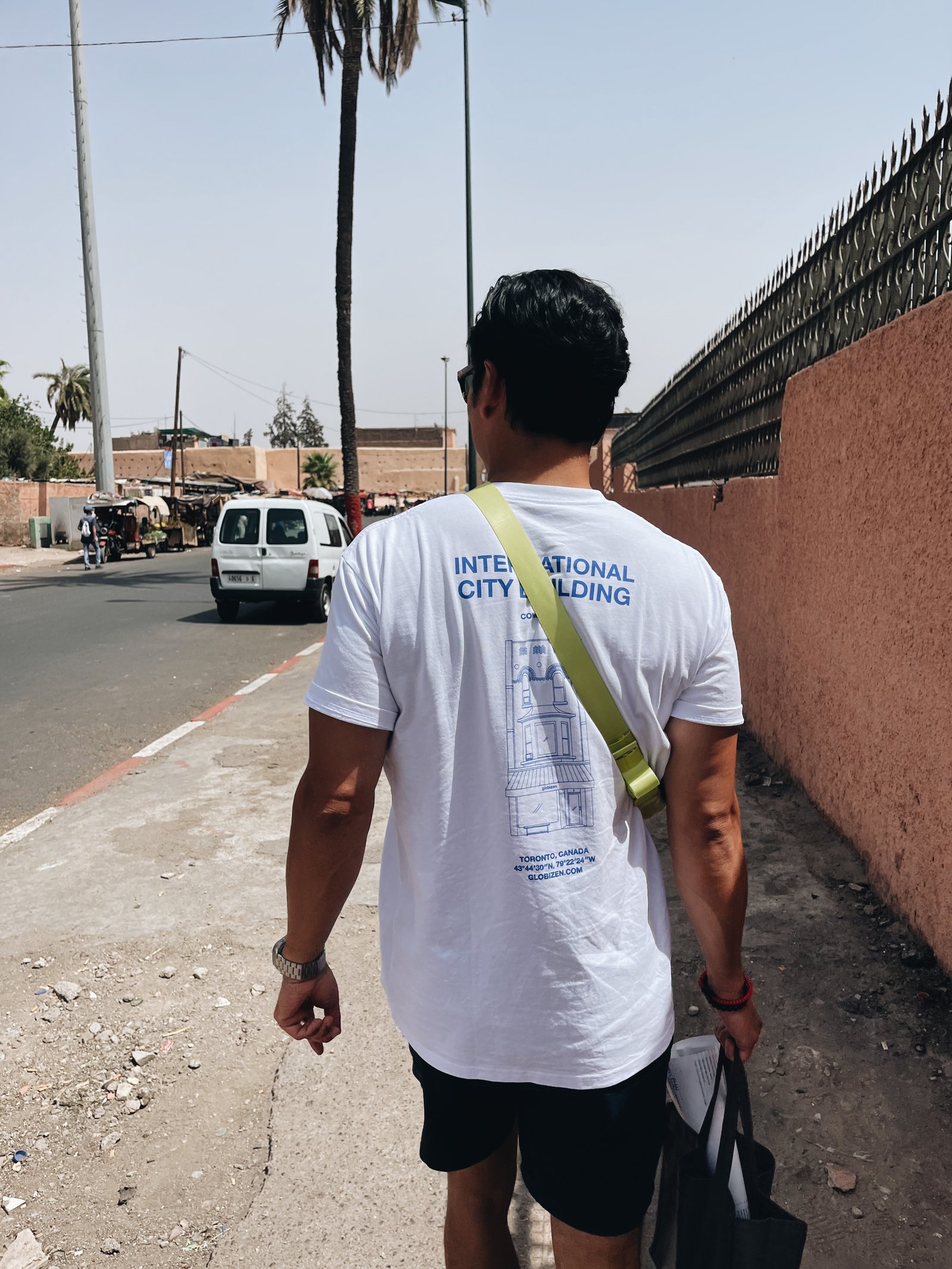
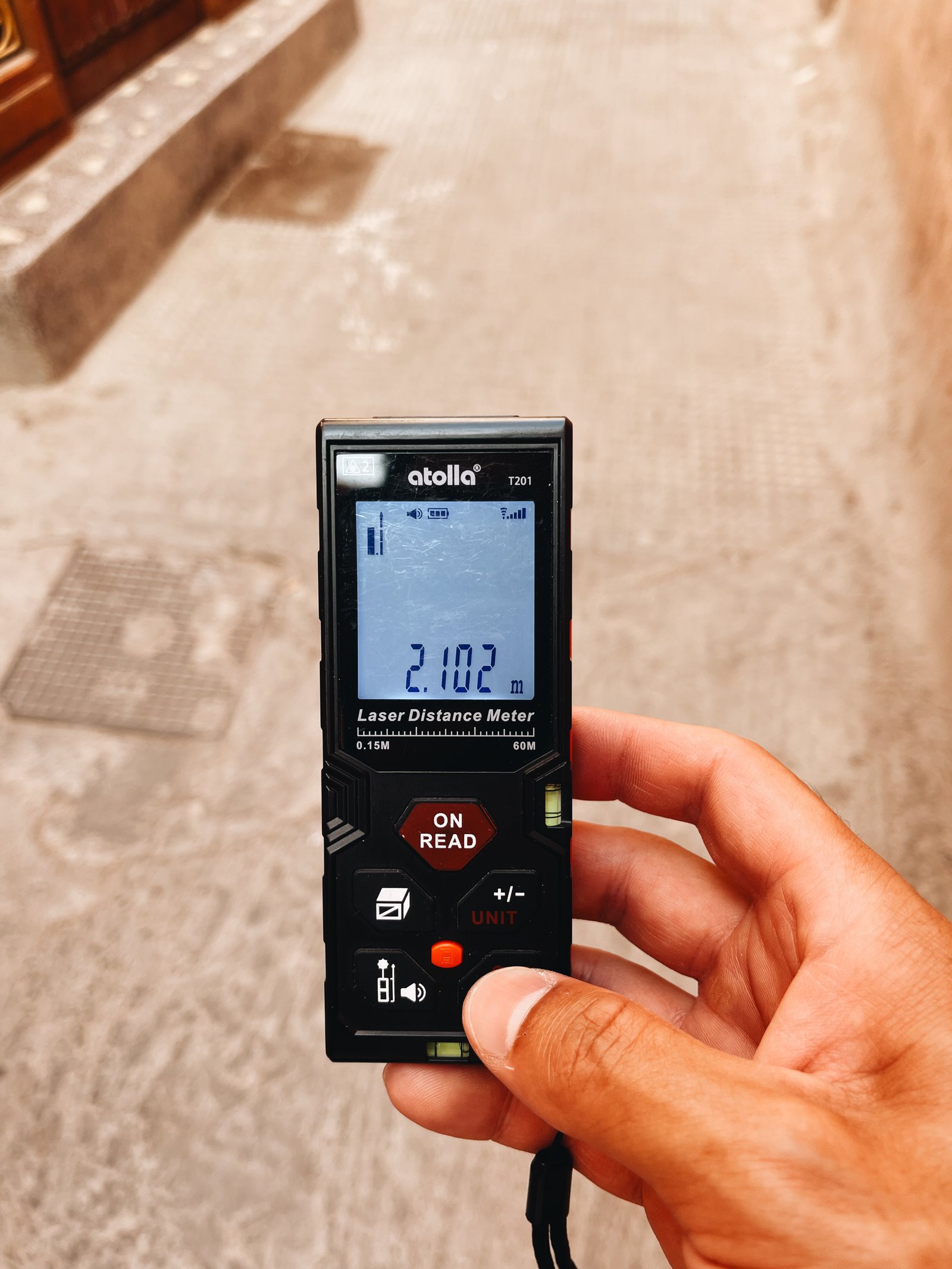
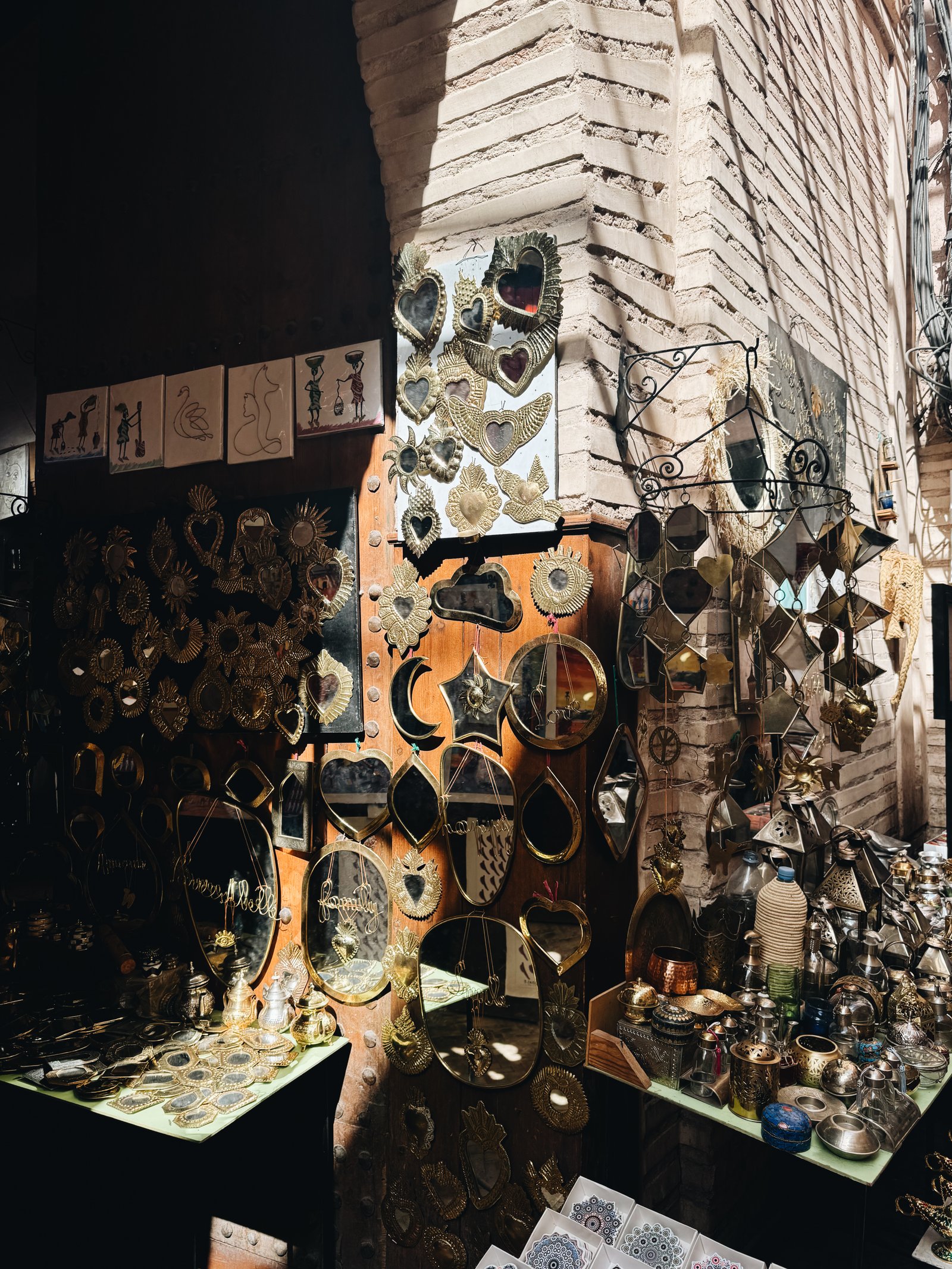
  • Streets of Marrakech

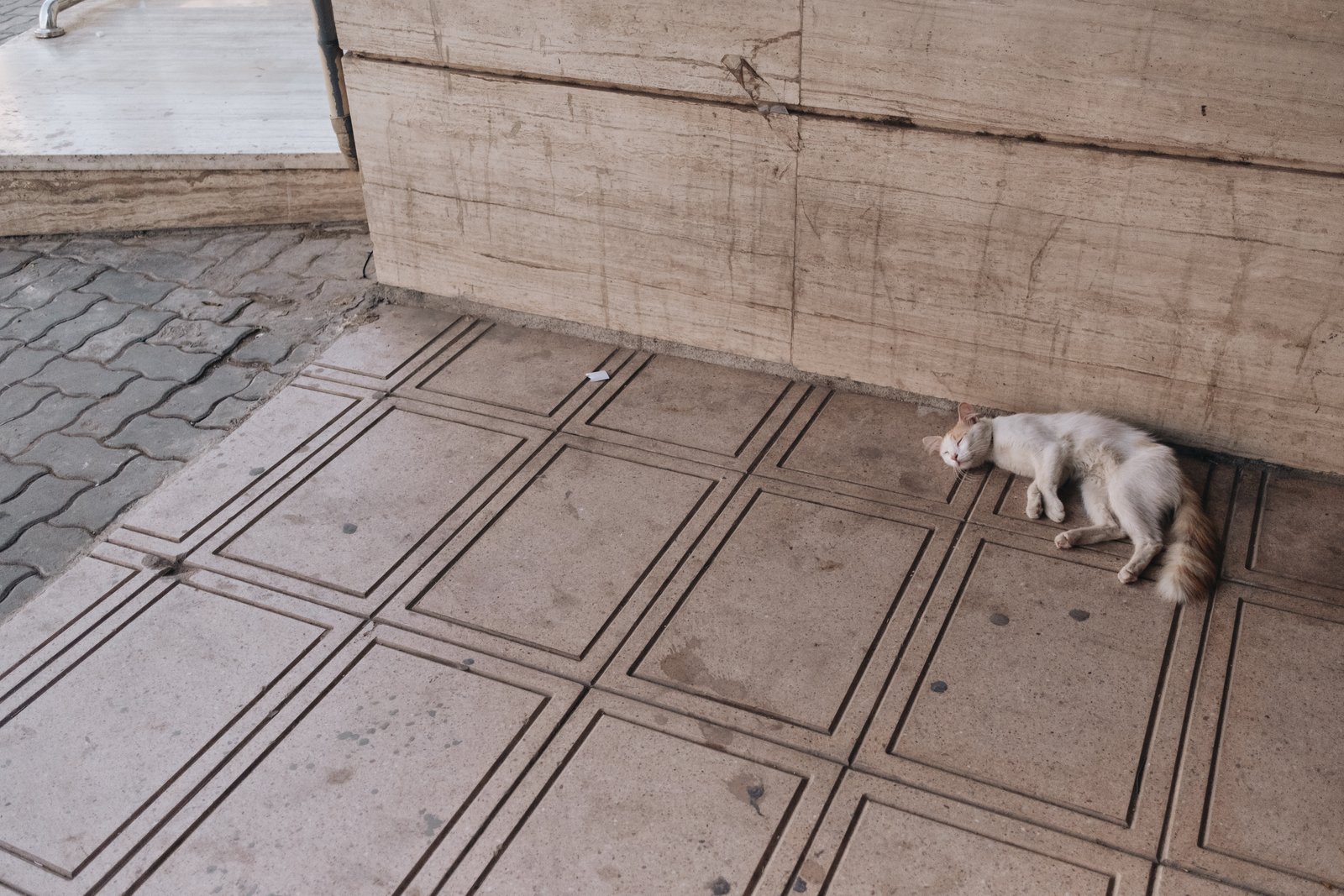
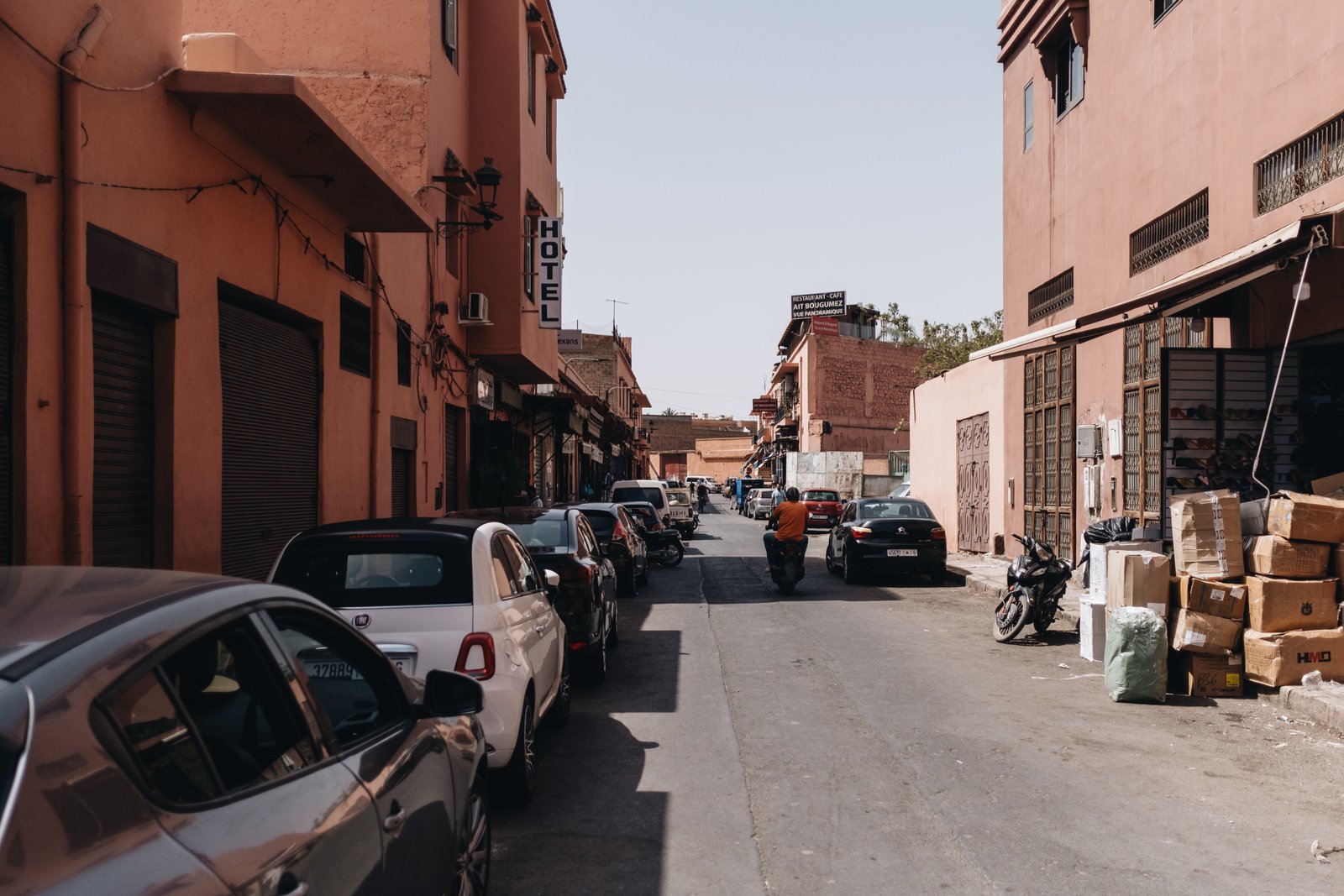
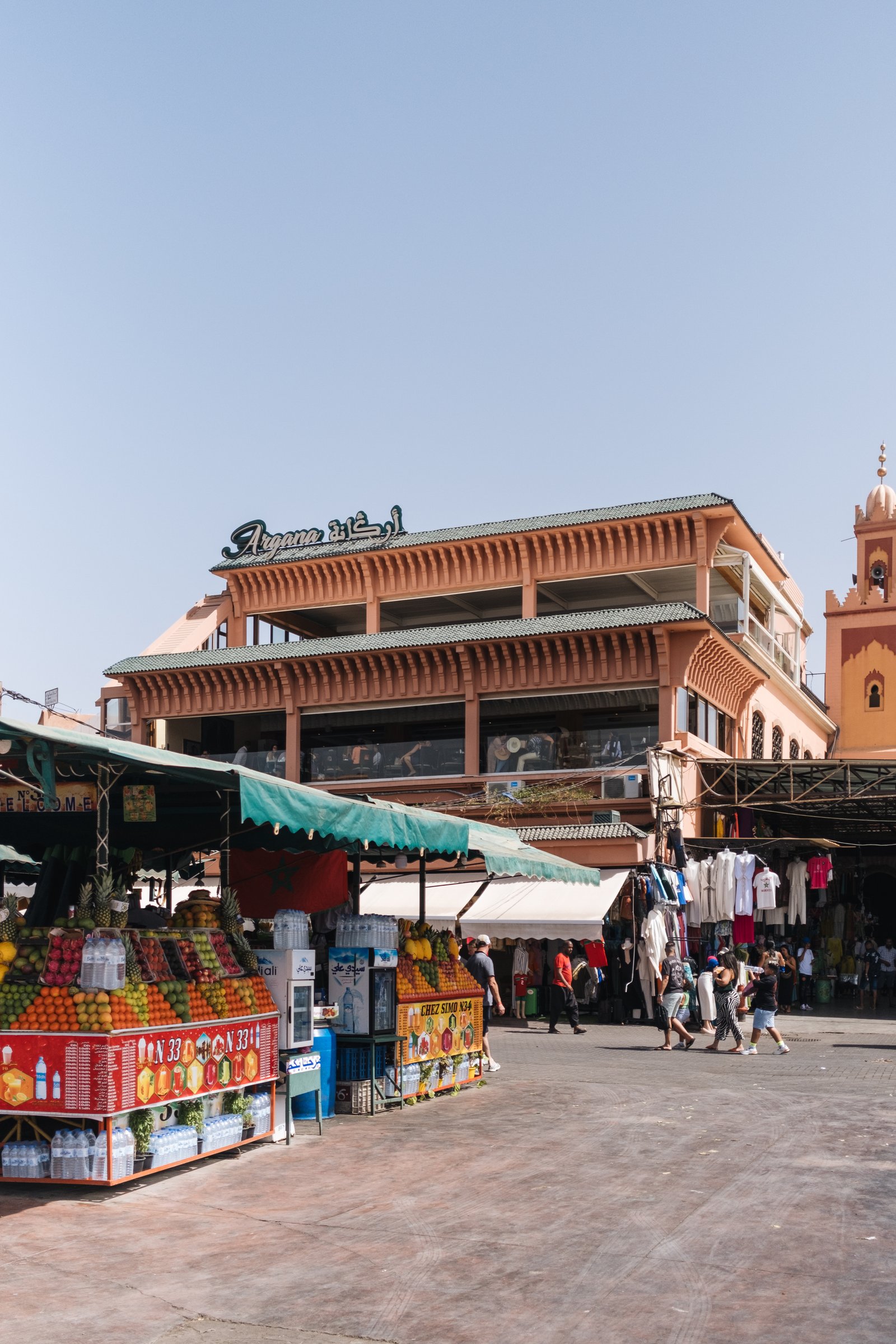
    Camera: Fujifilm X-T3 (23mm lens)

  • Lingua franca

    The two official languages of Mallorca are Catalan and Spanish. However, there is also a local dialect of Catalan spoken on the island called mallorquí. Many of the locals we met last week spoke all three. At the same time, it was also our experience that everyone spoke English.

    In Morocco, the two official languages are Arabic and Berber. Berbers are an ethnic group that predate the arrival of Arabs to the Maghreb region of North Africa. And today, about a quarter of Moroccans still speak it according to Wikipedia.

    French colonial rule in Morocco (which lasted from 1912 to 1956) also means that a large percentage of the population speaks French. The “official” number was above 60% in 2012, but our experience in Marrakech has been that it’s virtually everyone.

    This has also been our experience with English. Though, interestingly enough, some of the locals have told us that this was not the case as recent as 10 years. English is a new phenomenon in Marrakech. Anecdotally, it means that many of the locals seem to speak a minimum of 4 languages.

    This is, of course, par for the course in this part of the world. But as a Canadian who is working diligently to try and master only two languages — I take a weekly French class at Alliance Française in Toronto — it’s an easy way to feel linguistically inadequate.

    Languages are difficult. They’re relatively easy to learn when you’re young, but if you don’t use them consistently and if you’re not immersed, they’re also easy to lose. Which is why some estimate that by the end of this century, at least 50% of the languages currently spoken will become critically endangered or completely extinct.

    Here is how UNESCO classifies endangered languages:

    The simple takeaway is that it starts with children. A “vulnerable” language, for instance, means that kids still speak the language, but that it may be restricted to only certain domains, such as at home with relatives. A “definitely endangered” language means that kids are no longer learning and speaking it. This is a kiss of death.

    So to get a sense of where things are headed, it’s a good idea to ask people, “what languages do kids learn in school and/or at home today?” And the answer to that question in Marrakech seems to suggest that English has overtaken French as the preferred second language after Arabic.

    As we all become more globally connected, it only heightens the need for a lingua franca — a common language that we can all use to communicate with each other. And today that global language is English. That certainly makes things easier and more efficient, but it also comes with negative consequences.

    It is going to mean sacrificing the local languages and dialects that emerged at a time when the world wasn’t so small.

  • La médina de Marrakech

    Marrakech is one of the most frenetic, vibrant, and exciting cities that I have been to in a long time. Walking through the Medina means walking on streets that are only a few meters wide, but that are still somehow filled to the brim.

    Filled with a beautiful cacophony of people, smells, and merchants, selling everything from leather sandals to engine parts. Filled with an endless supply of people vying aggressively for your attention (and who all seem to coincidentally have a relative in Toronto). And filled with motorbikes that are liable to ride over your feet if only you let your guard down for a second.

    Sensory overload. It is at the same time exhausting and one of the coolest experiences ever.

    Another name for these streets would be “shared streets,” which is a way of saying that the formal distinctions between areas dedicated to pedestrians, cyclists, and motorists have been removed. While they are intended to be pedestrian-oriented, the overall approach is that all users just, you know, figure it out. Today, this is viewed as an enlightened approach to street design. Though it’s clearly not a new one.

    I will, however, be the first to admit that it’s easy to feel like an uptight Canadian in the Medina of Marrakech. This thought definitely crossed my mind: “I can’t believe they let motorbikes rip through these tiny streets.” You can see why somebody at some point felt it might be a good idea to carefully segregate uses.

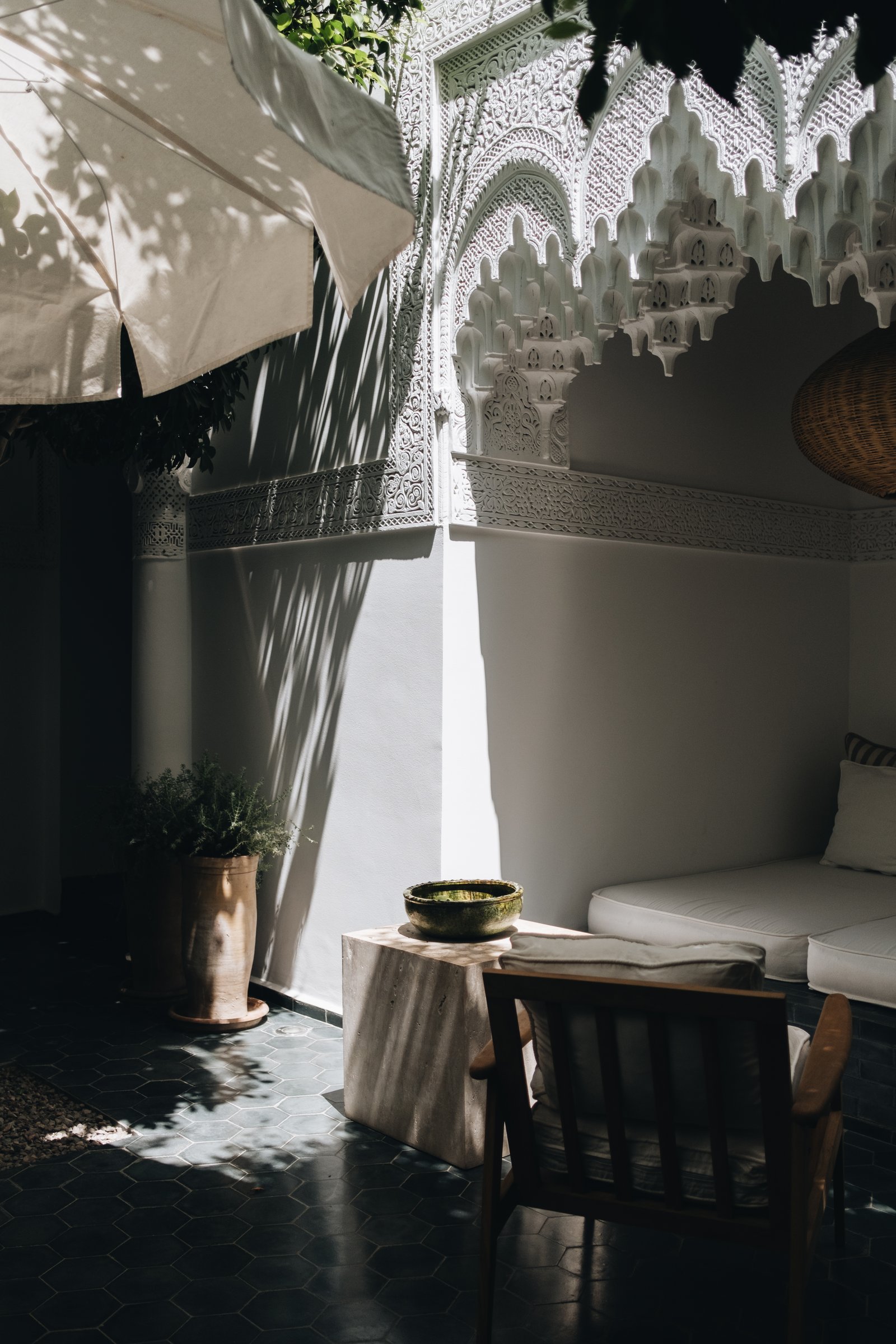
    At the same time, the architecture of Morocco feels like the perfect complement to these chaotic streets. Notably inward facing, the central feature of a traditional riad is its courtyard. These spaces offer much-needed protection from the hot Moroccan sun, but they also allow for family privacy, which is something that is important in this culture.

    The result is that you immediately feel it every time you walk inside. You have now entered a beautiful and calm oasis in the middle of a frenetic and exciting city.