Daily insights for city builders, delivered every morning at 6 AM ET. I’m Brandon Donnelly — a Toronto-based real estate developer and founder of Globizen. I’ve been writing here since 2013.

Category: Park City / Utah

  • Blocks and superblocks in Barcelona and Salt Lake City

    Let’s continue with our theme of city blocks and talk about another city with a noteworthy street grid: Barcelona. Up until the middle of the 19th century, Barcelona was a tiny medieval city hemmed in by 6 km of walls and totalling just over 2 square kilometers. If you look at a map of the city today, it’s pretty easy to see where this was:
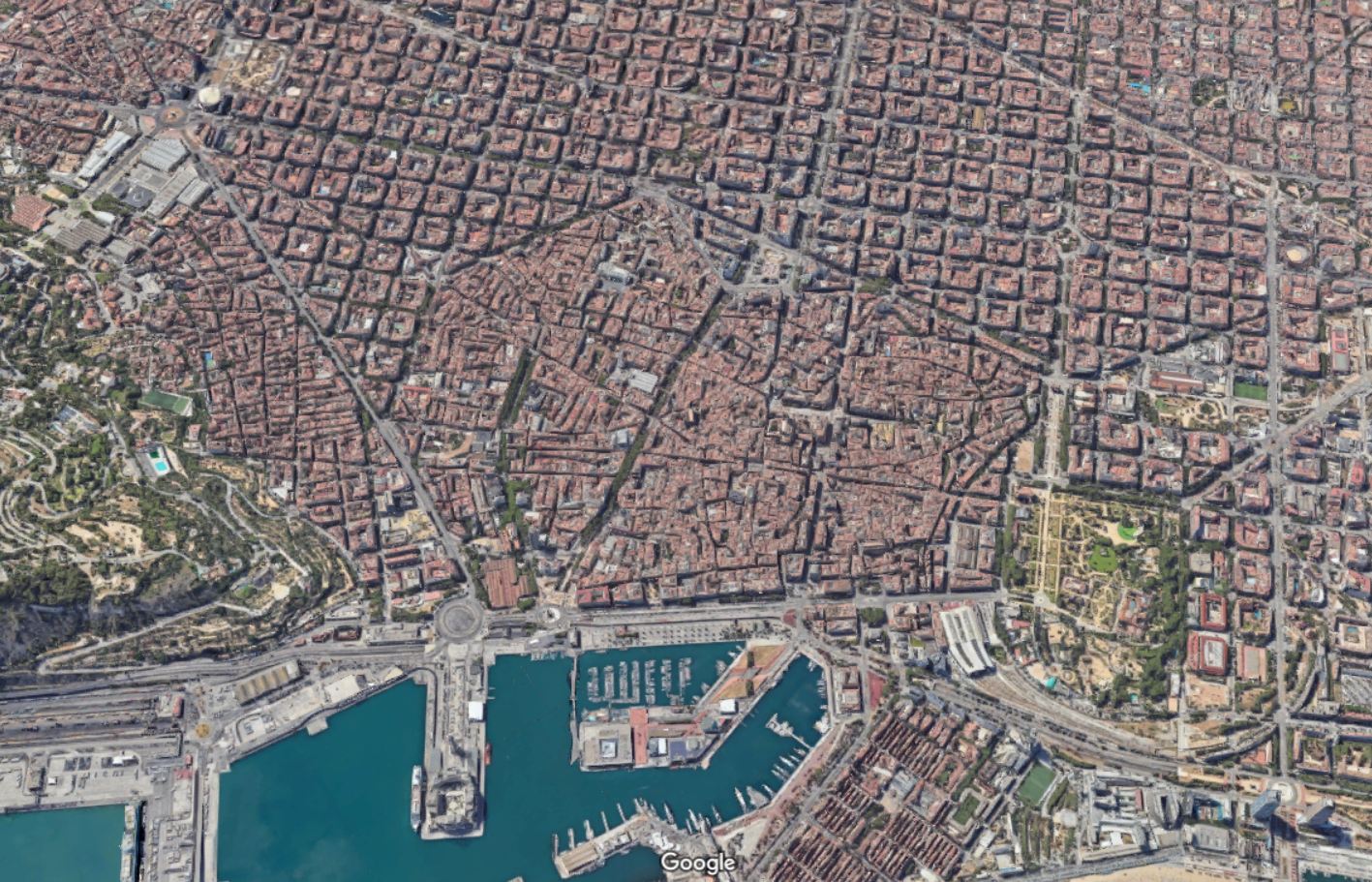
    This was of course done for military purposes. Barcelona’s medieval walls helped the city resist siege after siege. But the result was also overcrowding, unsanitary conditions, and a generally low life expectancy. So after much debate, it was eventually decided that the walls would need to come down and that the city would need to expand outward.

    This then raised the question: how should it be done?

    Enter a civil engineer named Ildefons Cerdà. Created in 1860, the Cerdá Plan for Barcelona was a continuous grid of blocks intended to guide the future growth of the city, similar to what the Commissioners’ Plan did for Manhattan. The blocks measured exactly 113.3 by 113.3 meters and each was to have a central open space of at least 800 square meters.

    In his original plan, the streets were to be 35 meters wide. But supposedly these were narrowed to no more than 20 to 30 meters due to criticism from the public. Wide streets and more lanes were, I guess, not seen as a benefit in the second half of the 19th century. Either this, or landowners simply wanted bigger buildings.

    The Cerdá Plan got approved in 1860 and, today, the city looks like this:

    One particularly unique feature of this plan was that the blocks all had/have chamfered corners. This improved visibility at the intersections, as well as created opportunities for public spaces and other uses. For better or for worse, today, you’ll find parking for cars and scooters, bike share stations, ramps leading to underground garages, patios, and more.

    The heights of the buildings on each block were also intended to be capped at a consistent height. But even with relatively few tall buildings, the Cerdà Plan led to one of the densest cities in Europe. Today, it is also viewed as a highly livable and desirable city. Hence why the city announced a total ban on short-term rentals. Too popular.

    Now for a comparison. Last week we spoke about Salt Lake City’s large city blocks (here and here). And so for fun, here’s what these blocks would look like on top of Barcelona:
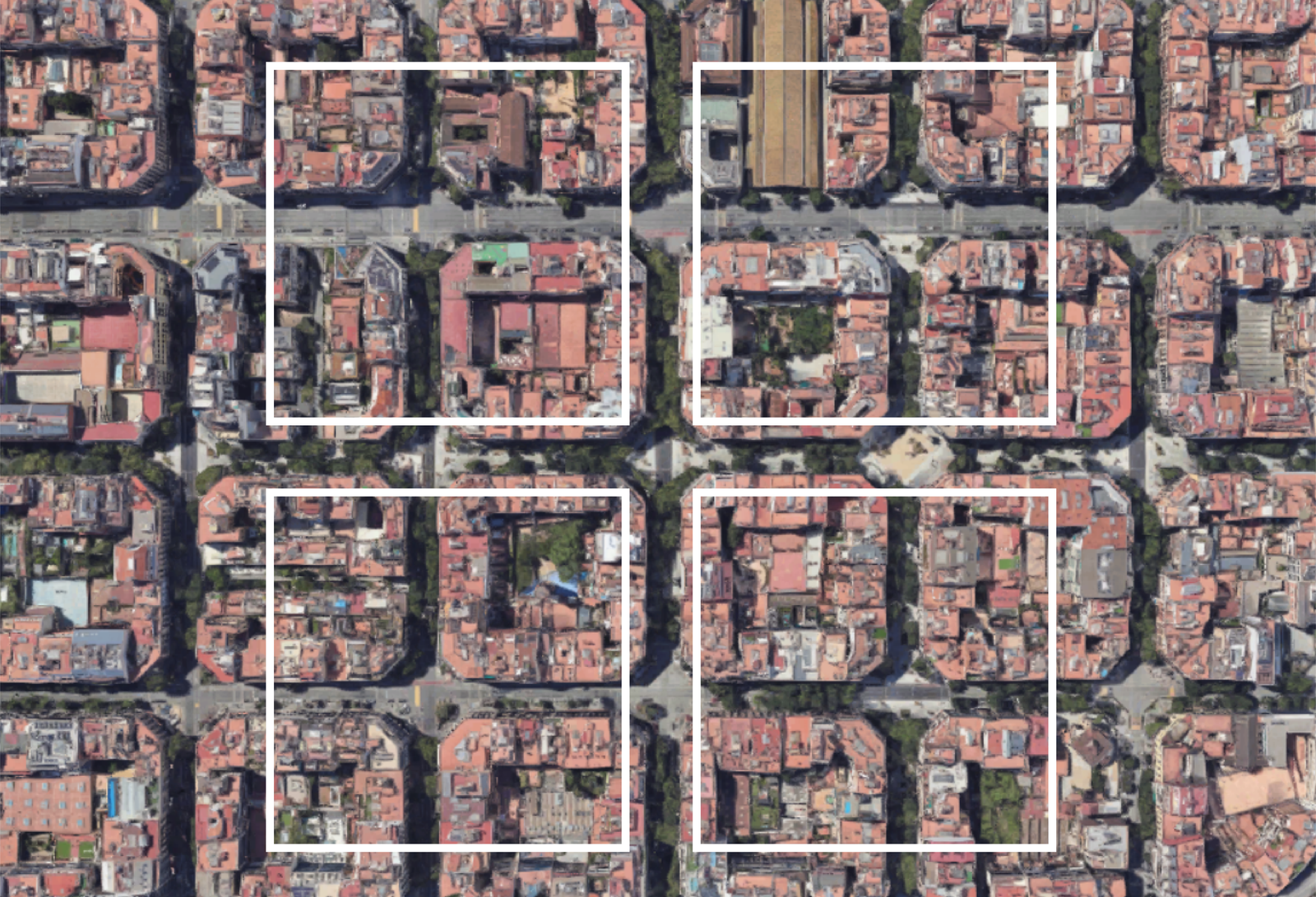
    The most obvious takeaway is that Salt Lake City has larger city blocks than Barcelona, and that’s one reason why, objectively, Barcelona is more walkable and urban than SLC. But I think you could also view this graphic as a tremendous opportunity.

    Barcelona is in the midst of rethinking its urban fabric around something called “superblocks.” The idea here is to cluster blocks together and then concentrate transit and vehicular traffic along its edges, creating a more pedestrian-focused center. For example, in its largest form, a superblock might be a 3 x 3 grid, creating a grouping of 9 city blocks.

    But it doesn’t necessarily need to be a 3 x 3 grid. Other permutations are possible and the city plans to eventually introduce over 500 of them.

    The first superblock was implemented in 2017 and, not surprisingly, it improved air quality, increased quietness, and led to a significant decrease in car usage (-92%). Interestingly enough, it only led to a moderate increase in car traffic on surrounding streets (+3%). Traffic can be a funny thing.

    Creating superblocks out of smaller blocks is naturally easier than the opposite. You have an existing grid to work with. But there’s no reason that the opposite can’t also be done. And I think that’s one way to look at Salt Lake City’s street grid. It already has its superblocks. Now it’s just a question of creating all of its smaller blocks.
  • Ontario Silver Mining Company

    If you hang around Park City long enough, you will come across things with the name Ontario. There’s Ontario Avenue. There’s the Ontario hiking trail at Deer Valley. And I’m sure there are other things.

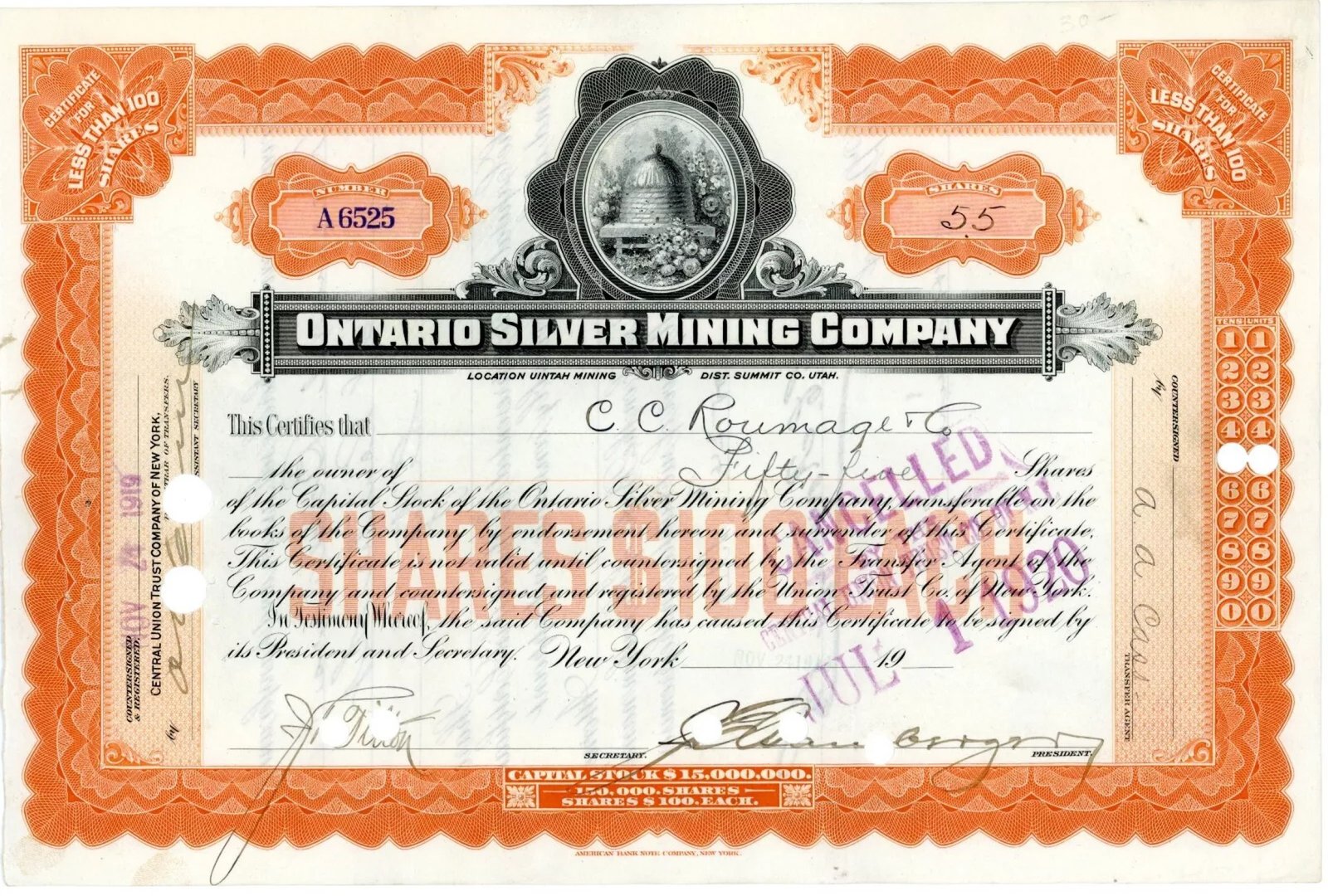
    As a Canadian, I couldn’t help but wonder why. So today I looked it up. And it turns out that the mining company that first put Park City on the map was the Ontario Silver Mining Company (see above stock certificate).

    Established in 1872, it was a major contributor to Park City’s economy (when it was a mining town) and it is usually credited as the mine that generated the most consistent yield in Utah during the late 19th century.

    Cool, so why was it called Ontario? Well, according to the Park City Museum, the mine was first discovered by prospectors from Canada (though they later sold off their claim to George Hearst for a handsome $30,000).

    I can’t seem to find any info about these Canadians, but the province of Ontario did get its name in 1867, so at least the chronology check outs.

    Image: Park City Museum

  • Cecret Lake

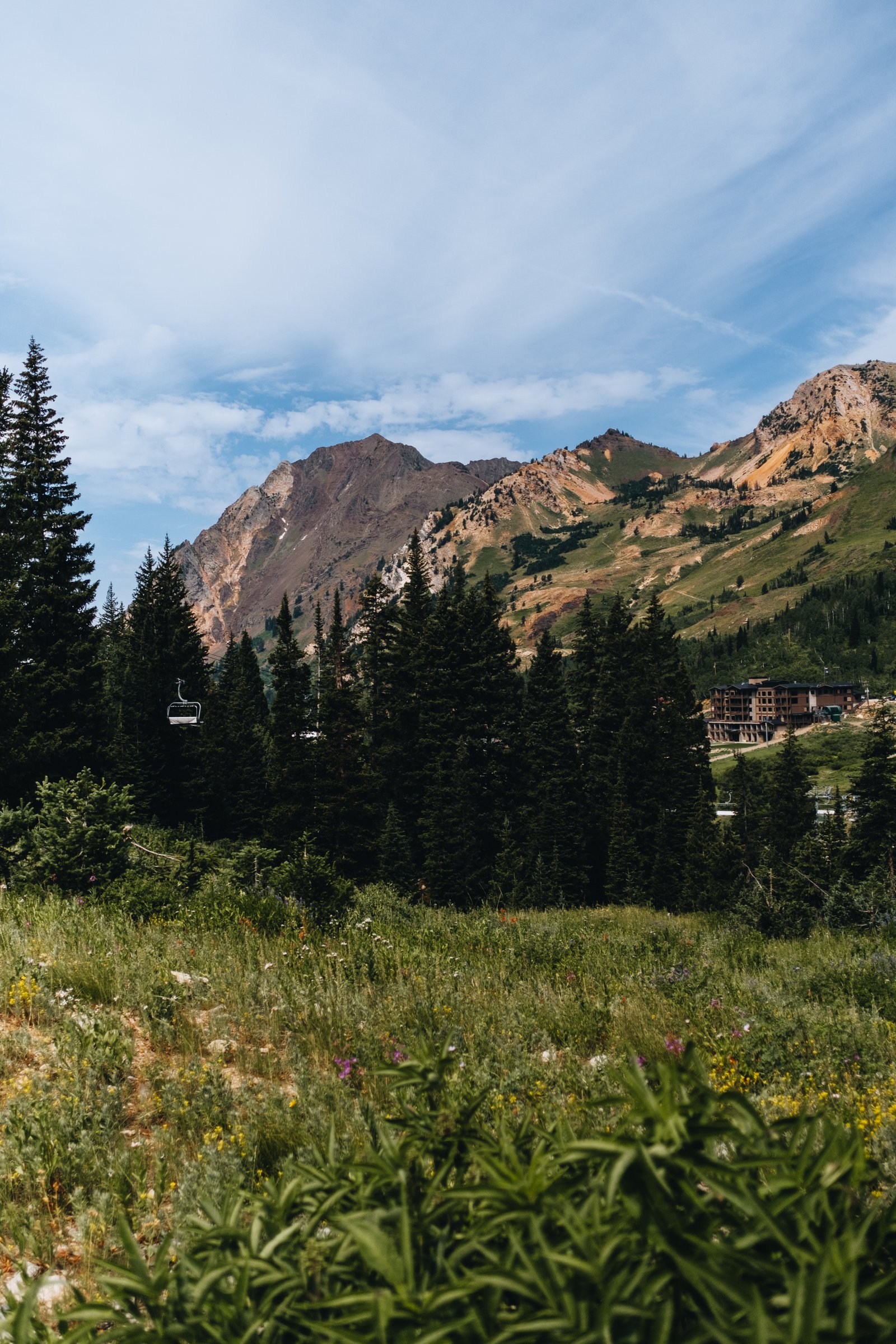
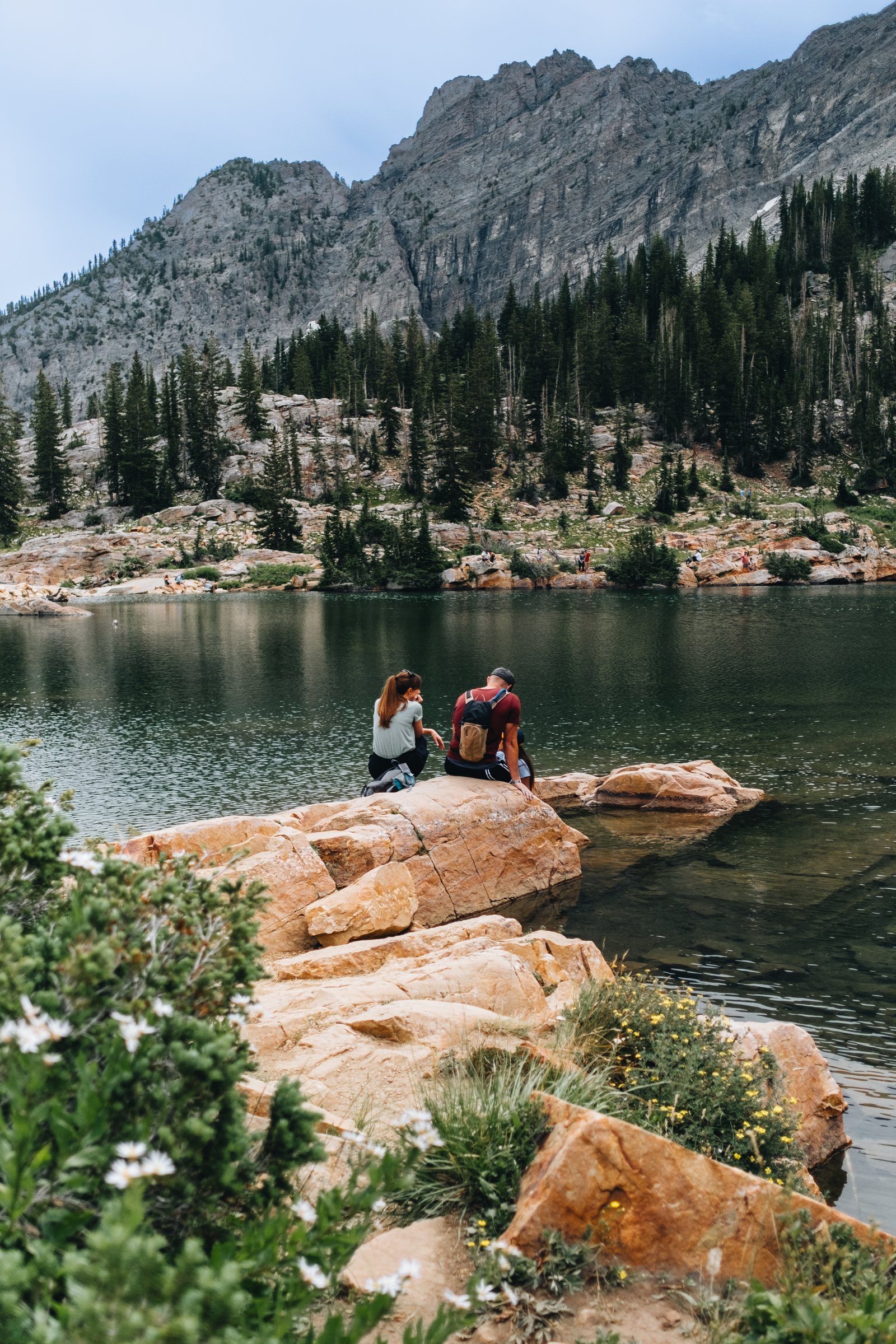
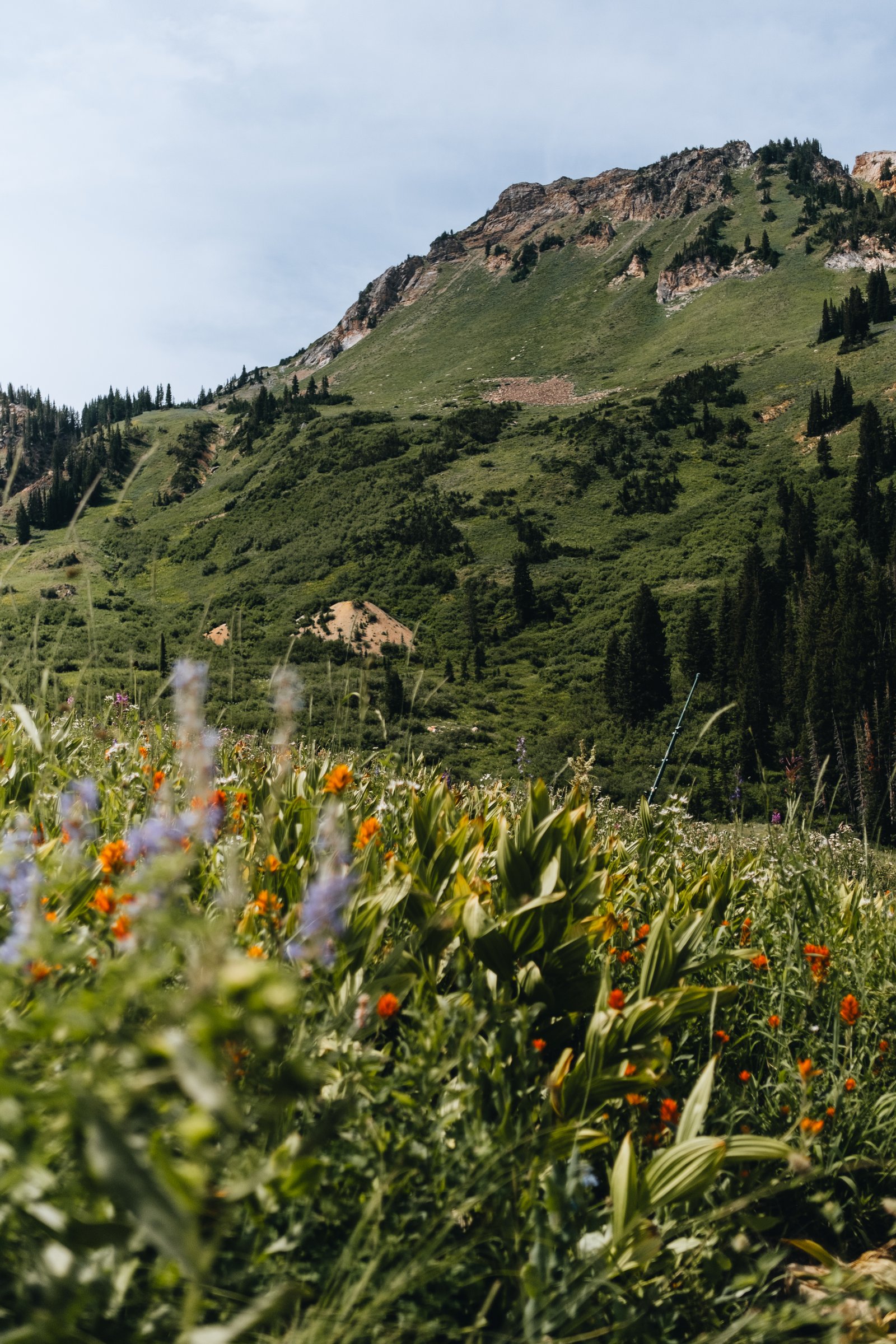
    It is Neat B’s birthday this weekend and we are hanging out in Utah. Today, we hiked up to Cecret Lake, which is accessible from the Alta Ski Area in Albion Basin. Alta is a ski-only resort, so hiking is the only way that my kind — snowboarders — gets to see this area. The basin is known for its beautiful wildflowers and it didn’t disappoint. Cecret Lake is also a watershed area for Salt Lake City. So as you hike up, there are signs telling you not to swim in the lake or do things like bath your dog. Because what goes into the watershed will end up in the faucets of Salt Lake City within 24 hours (according to the signs). If you haven’t done this hike, I would highly recommend it. It’s easy/moderate, and a great way to work up an appetite for In-N-Out Burger, which is a real treat for us Torontonians.

  • The French Alps and Utah are getting the Winter Games

    In my humble and partially biased opinion, two of the greatest places on earth to snowboard are the French Alps and Utah. I say the French Alps because, after 13 years of annual trips, I have yet to find better food and better après parties. And I say Utah because it’s, like, pretty hard to beat the greatest snow on earth.

    Well today, both of these places were announced as future hosts of the Winter Olympics. France will host the games in 2030 (once it has successfully met certain conditions) and Utah will host the games in 2034. This is exciting.

    But it was also entirely expected.

    France was the preferred choice since June. And Utah was the only choice for 2034. To host the Winter Games, you generally need to have at least two things: money and snow. And right now, fewer places want to spend the former on something that may or may not generate an ROI, and fewer places are getting the latter.

    Remember this post looking at the impact of climate change on the Winter Olympics?

    Because of these challenges, there is talk of the IOC adopting a permanent rotation of Winter Olympic cities. And Utah has been eagerly positioning itself to be one of the places. Biases aside, this feels like an obvious choice. Salt Lake City has some of the best and most accessible snowboarding in the world (SLC is a great airport) and — most importantly — it still snows there.

    Photo by Alex Moliski on Unsplash

  • Salt Lake City wants to turn Main Street into a pedestrian promenade

    Last year, I wrote about how Salt Lake City wants to build a new linear park around its downtown. That post can be found, here.

    Fast forward to today, and the city’s Department of Economic Development has just published a new comprehensive 215-page study that supports turning Main Street into a pedestrian promenade.

    Specifically, the area running from South Temple to 400 South, and including 100 South from Main to West Temple:

    As part of the study, they highlight a number of successful case studies from around the world, including 16th Street Mall in Denver, Bourke Street Mall in Melbourne, and Queens Quay here in Toronto.

    In the case of Denver, they cite the one-mile stretch as single-handedly generating over 40% of the city’s total downtown tax revenue! And in the case of Toronto, they refer to Queens Quay as a global destination. (Toronto readers, do you agree?)

    Like most city building initiatives, this vision is will take years to realize. But it’s interesting to note that, of the eight design alternatives included in the study, there is already one clear preference within the local community — option B.

    Option B is a pedestrian/transit mall, but with multi-use trails. In other words, it is a no-cars-allowed alternative that would still allow bicycles and scooters. Here’s the street section:

    If you’d like to download a copy of the full Main Street Pedestrian Promenade Study, click here.

  • How the ski industry price discriminates

    Snowboarding in Europe, of course, sounds really fancy. And don’t get me wrong, it can be fancy if you want it to be. But the reality is that it’s also a cheaper option. And that’s because the price of a single day lift ticket at most resorts in America is now many multiples of what it costs in Europe. Think $250 vs. €50.

    North America has become the expensive destination.

    According to a recent Economist article titled “the economics of skiing in America,” resorts in Europe are often owned by local or national governments. This is not the case in America, and it’s why the lift tickets in Europe seem, by comparison, cheap. But this price differential is also the result of an evolving business model.

    Historically, owning a ski resort has never been a stable business in the US. And this makes sense. Most resorts make their money on lift ticket sales. However, sales are dependent on snowfall. If you get a lot of snow, then you make a lot of money. If the planet starts warming up and you don’t get a lot of snow, then you don’t make a lot of money. Vail has since changed this.

    What they have done is made it so punitive to buy a single day lift ticket in North America, that even if you’re an occasional skier, the only sensible thing to do is buy a subscription-like pass in the spring — well before the next season starts.

    This is what I have started doing and it gives you unlimited skiing for less than the price of a few days. It also gives Vail a source of revenue that isn’t so dependent snowfall. Season passes now make up about 61% of their lift-ticket revenue, according to The Economist. At the same time, it is a model that relies on being able to price discriminate against single-day, non-pass users:

    In basic economic theory, excessive market power reduces the efficiency of an industry. Firms reduce output so as to be able to charge more. There is, however, an exception: if a monopolistic firm can charge different prices to different customers, it need not reduce output to increase its profit. The skiing industry shows the truth of this. As the industry has consolidated, daily prices have soared, extracting more cash from price-insensitive skiers.

    But this isn’t the only way to do it. There’s also the whole real estate thing. Last year, Reed Hastings, cofounder of Netflix, became the majority owner of Powder Mountain. And here, they’re trying out a different business model:

    This December, Powder Mountain in Utah announced that it would be moving to a model where only local property-owners are allowed to ski certain chairlifts. The idea is to profit from real-estate sales, by offering private skiing without the crowds. “To stay independent and uncrowded, we needed to change,” says Reed Hastings, the firm’s boss.

    Even still, neither of these approaches is making snowboarding and skiing more accessible. Which is why it’s not uncommon to come across stickers and t-shirts at local ski shops that say, “Vail — ruining ski towns since 1966.” People are missing the old days when lift tickets were cheap and the lines on powder days weren’t so long.

    What skiing needs is in fact much of what the economy more generally needs: supply-side reform, and especially the construction of new housing and transport in the most popular spots. Though there are more skiers than ever, there are in fact fewer resorts than there were a few decades ago.

    This sounds familiar.

    All quotes are from The Economist.

  • Choosing speed over perfection

    This morning, I was on site at Parkview Mountain House reviewing construction progress and finalizing some finishes with our contractor. And during that time, he said two things to me that I was frankly happy to hear.

    The first is that we are his only client — ever — where they didn’t need to touch the construction contingency line item. (Knock on wood. We are about 2 months out from completion at this point.) And the second is that he loves working with us because we are also his most decisive client.

    Now to be fair, both of these things are easier to do when you’re not building your own home, or something else for yourself. The process becomes less emotional and more just about business.

    Even still, this is generally the aspiration with all construction projects. As an owner, you want to leave your contingency untouched. You want to minimize changes. And you want to make decisions as fast as humanly possible.

    In fact, this is a prime example of the mantra that “any decision is better than no decision.” And that’s because poor decision making is the kiss of death for construction projects. You need to keep things moving.

    I also find that decisions tend to seem more daunting in the moment. When you’re staring at 37 different shades of white paint and being asked to pick just one, it can be easy to get analysis paralysis. Is a yellow white with a subtle green undertone really the right one?

    But more often than not, when the project is done, you’re probably not going to remember the other 36 shades of white you didn’t select. Or least that’s been my experience. So choosing speed over perfection is typically your safest bet.

  • I think Roman Mars would appreciate Utah’s new state flag

    Utah got a new state flag over the weekend that looks like this:

    And I immediately thought of this TED Talk by Roman Mars. For those of you who don’t know, Roman is the creator of 99% Invisible and a great lover of well-designed flags. His general rules of thumb are to keep things super simple and to use meaningful symbolism. And I’m fairly certain that he knows what he’s talking about because, in his talk, he refers to the Canadian flag as the gold standard for flags.

    In the case of Utah’s new flag, the symbols are this. The blue at the top is meant to represent Utah’s wide-open skies and lakes. The white in the middle represents its snowy mountains (of course). The red stripe is meant to represent Southern Utah’s red canyon landscape. The hexagon is meant to reference a honeycomb. And finally, the beehive is there because, well, Utah is the beehive state.

    Utah has long enjoyed this reference to beehives. Supposedly, it was early pioneers who started throwing around this reference because they believed it symbolized working together, perseverance, and overall industry. And that’s why the state’s official motto is, “Industry.” So I’d say that they used/kept the right meaningful symbolism.

    Though when I first saw the new flag, I immediately wondered whether the hexagon and honeycomb could have been made just a little simpler. Was the yellow fimbriation, for example, really needed within the blue hexagon? But the more I look at it, the more I like it and the more I think that Roman Mars would be happy with how this turned out. What are your thoughts?

  • Utah needs to secure 24,000 hotel rooms to host the Winter Olympics

    Sometime before the Paris 2024 Olympics this summer, the International Olympic Committee (IOC) is expected to announce who will host the 2030 and 2034 Winter Games. Right now, the two frontrunners are thought to be the French Alps and Salt Lake City/Park City — I think respectively.

    Obviously these are two fantastic winter locations. But one of the things that the local committees need to do before they can secure the games is show the IOC that they have enough hotel rooms on hand. More specifically, they need 24,000 rooms reserved for 33 nights. This covers 17 nights during the games, 14 nights before, and 2 nights after.

    Most of these rooms, about 10,000 or so, will go to journalists.

    I didn’t fully appreciate — or I just didn’t think about it — that this was something that needed to be done 6-10 years out. Because right now there is a human running around try to lock up these rooms in advance of the decision this summer.

    According to the Salt Lake Tribune, they’re already at 85% of the requisite 24,000 rooms. Though some of these rooms have yet to be built and some of them reach into neighboring Wyoming, which apparently isn’t an atypical distance when it comes to meeting this accommodation requirement.

    For obvious reasons, I’m rooting for Utah here. I really want them to get the Winter Games.

  • Snowboarders are annoying

    There are three resorts in the United States that do not allow snowboarding. They are: Deer Valley and Alta in Utah, and Mad River Glen in Vermont. New York-based Extell is also developing a new resort next to Deer Valley that was previously known as the Mayflower Resort. For a while, it was up in the air whether they would allow snowboarders, but this past summer it was announced that it will become part of Deer Valley and that their snowboarding ban will remain firmly in place.

    As a snowboarder, I’m not overly fussed by this. There are, of course, lots of other places that will welcome my kind. But I do think it’s both interesting and worth poking fun at. It speaks to the tribal-like nature of humans. I get down the mountain on this device and you get down the mountain on that device. So we are fundamentally different humans. And I do not want to associate with you. At the same time, I do respect the ability for private resorts to make their own decisions. And this seems to be what their paying customers want.

    But what about if the resort happens to be on public land? Does that make things any different? Deer Valley sits on land that is privately owned; whereas Alta sits on land that is owned by the National Forest Service. Which is why in 2014, a bunch of cantankerous snowboarders sued the resort, claiming that its ski-only policy violated the 14th Amendment to the Constitution. I’m not a lawyer, but I am told that this is typically used in cases involving discrimination.

    Alta ultimately won the case. They argued that even though the land they sit on is public, their lifts are still private. And so they get to decide who uses them. I guess that’s fair. But at the same time, this technically means that snowboarders are allowed on the mountain, they just can’t use any of the lifts. I tried to confirm this fact with Alta on X the other day, but they have yet to respond.

    In any event, my prediction is this.

    Snowboarding is a relatively young sport. It grew massively in popularity during the 1990s (which is when I switched over from skiing), and so its participants tend to skew younger (my assumption). This is probably why fancy resorts like Deer Valley don’t feel the need to cater to them. However, young people tend to both grow up and, you know, make more money. And so at some point — when there’s a real business imperative — we may find that people suddenly change their minds.

    If you’re trying desperately to sell luxury condominiums at the base of a resort and if snowboarders keep showing up at your sales office, for how long will you continue to say no to their money?