Daily insights for city builders, delivered every morning at 6 AM ET. I’m Brandon Donnelly — a Toronto-based real estate developer and founder of Globizen. I’ve been writing here since 2013.

Author: Brandon Graham Donnelly

  • This slash that

    Maison Kitsuné is a French-Japanese lifestyle brand that was founded in 2002 as both a record label and a fashion house. Apparently, the founders — Gildas Loaëc and Masaya Kuroki — started out by DJ’ing in order to promote their brand and clothes.

    In 2005, they released a full ready-to-wear collection and, according to Wikipedia, fashion has come to represent about 90% of the company’s revenue (2020 figure).

    In 2013, Kitsuné opened their first coffee shop in Tokyo. And since then, they have expanded around the world, opening cafes in Paris, Vancouver, Shanghai, and many other cities. As of today, I think they have 35 around the world.

    Their latest venture is something a bit new though. It’s called Desa Kitsuné, it’s located in Canggu, Bali, and it’s their first ever clothing shop/restaurant/club. It also comes with a pool and the idea is that you can do lots of different things here: shop, lounge during the day, and/or party at night.

    I always find it interesting when different ideas and approaches are combined. And that’s what Kitsuné continues to do. They also plan to do more of it. According to Monocle, the company wants to reach 100 cafes/restaurants around the world in the next 5 years.

    So keep an eye out for more foxes in your city.

  • ❤️

  • Massive transfer slabs

    Sometime next month we’re going to be pouring a large concrete transfer slab at the second floor of One Delisle. Its function is to take the loads coming down from the entire tower above it and “transfer” them onto new structural elements, before being brought down to our mat foundation at the bottom of the parking garage.

    Put differently — and, as always, I should warn you that I’m not a structural engineer — a transfer is used whenever you have a change in your structural grid and the loads don’t have a straight path down to your foundations. Because whenever this happens, you’re now introducing moment forces and those need to be dealt with structurally.

    Transfer slabs are relatively common here in Toronto (which isn’t the case in every market), but they are expensive and they consume a lot of depth. In the case of One Delisle, our level two transfer slab is 1.8 meters deep and it’s going to contain about 1,200 m3 of concrete. (Some of you might also recall that One Delisle’s mat foundation is over 4m deep.)

    We were reviewing this with the team today and we think that we’ll be able to pour about 100 m3 of concrete per hour. That means that this slab will take about 12 hours to pour! This requires a lot of coordination. Neighbors need to be notified, pumps need to be on standby in case of a breakdown, and so on.

    Another major consideration is heat. When concrete cures it generates a lot of it. And with a thick slab like this one, I am told that we run the risk of the middle starting to overheat (especially with the hot weather that we’ve been having lately). The guideline limit is 60 degrees Celsius, so we’ll be monitoring it for probably about 1-2 weeks following the pour.

    I find these details fascinating. Maybe some of you do too. So once it’s poured, I’ll share a few photos.

  • NYC’s congestion relief zone is now on indefinite pause

    Boy, congestion charges are a pain to implement. Back in 2018, I wrote that New York City was considering a congestion charge for drivers entering Manhattan below 60th Street. Then in 2019, about a year later, I followed up with this post saying that the plan could be adopted as early as April of that year!

    That didn’t exactly happen. But I followed up again with a post in 2022 saying that New York City was still considering a congestion charge. And ultimately, it did finally get approved, even if it did take much longer than expected. It was rebranded a congestion relief zone (“relief” sounds a lot less offensive than “pricing”), and it was set to come into effect on June 30, 2024.

    This remained the situation until the first week of this month, which is when NY Governor Kathy Hochul held a surprise press conference and announced that the congestion relief zone would be placed on “indefinite pause.” I think that means cancelled. And it happened less than a month before the state was finally set to start collecting money.

    There is a legal question around whether she actually had the authority to intervene in this way, but let’s put that aside for now. Irrespective of that, this is a disappointing outcome precisely because we know that road pricing works. If you have a traffic congestion problem, price it, and then you will have less of it.

    What’s even more disappointing about this particular instance, though, is that many of us were looking to New York City to show us the way. We were looking for the most walkable and transit-rich city in the US to show people that, hey, road pricing works, and it won’t decimate your CBD.

    It is shocking to me that traffic congestion is allowed persist in the way that it does in our cities, and that there remains zero political will to actually address it. Instead of action, we like to preoccupy ourselves with red herrings. If only we didn’t have streetcars, Ubers, and so many bike lanes, then there wouldn’t be congestion.

    So what hope do we have now that even New York won’t do what is bold and right? Lots, as always. Cities, now is your chance to do what New York was too scared to do. Who will lead?

  • Victor Horta-designed building for sale in Brussels

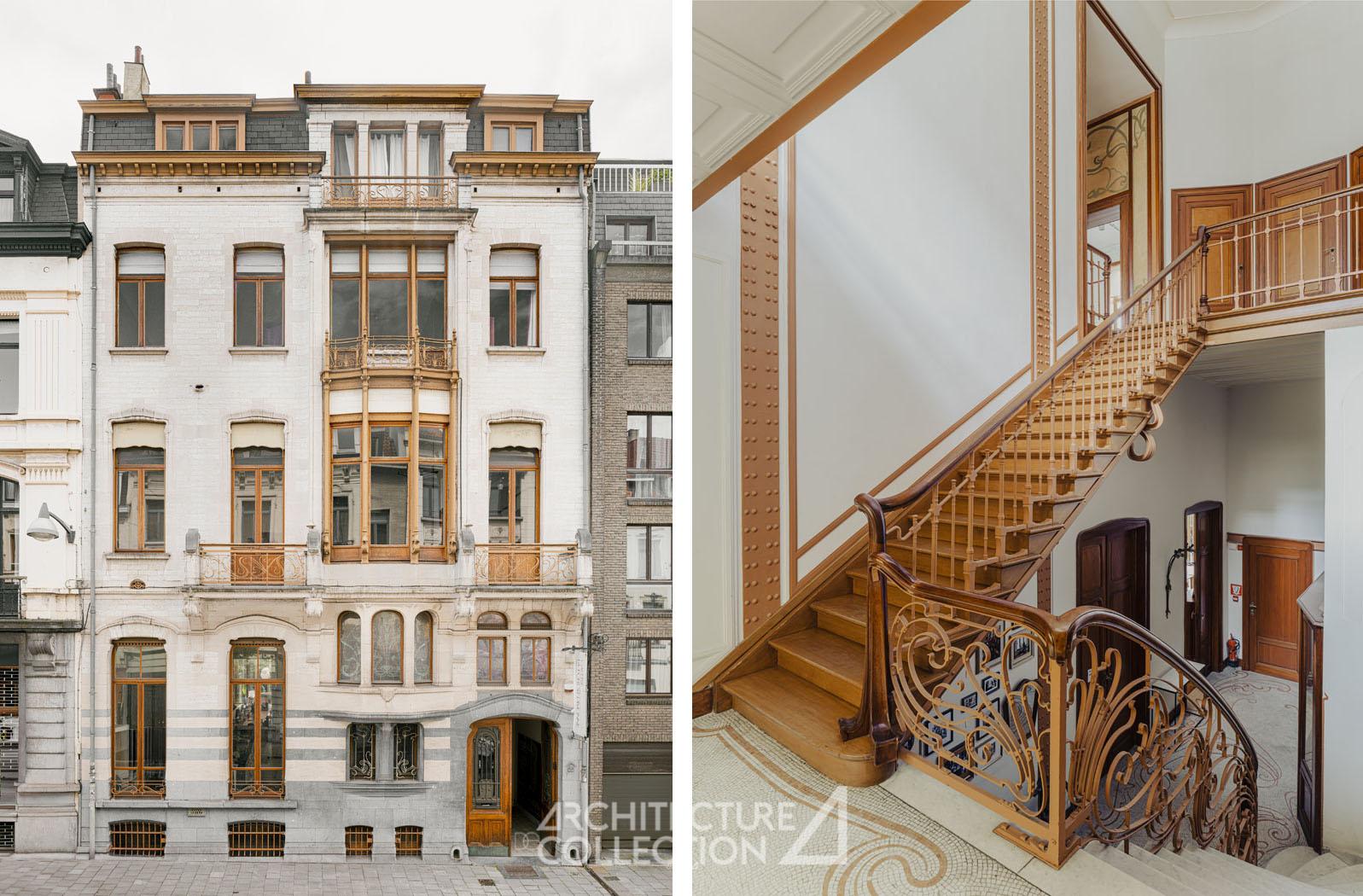
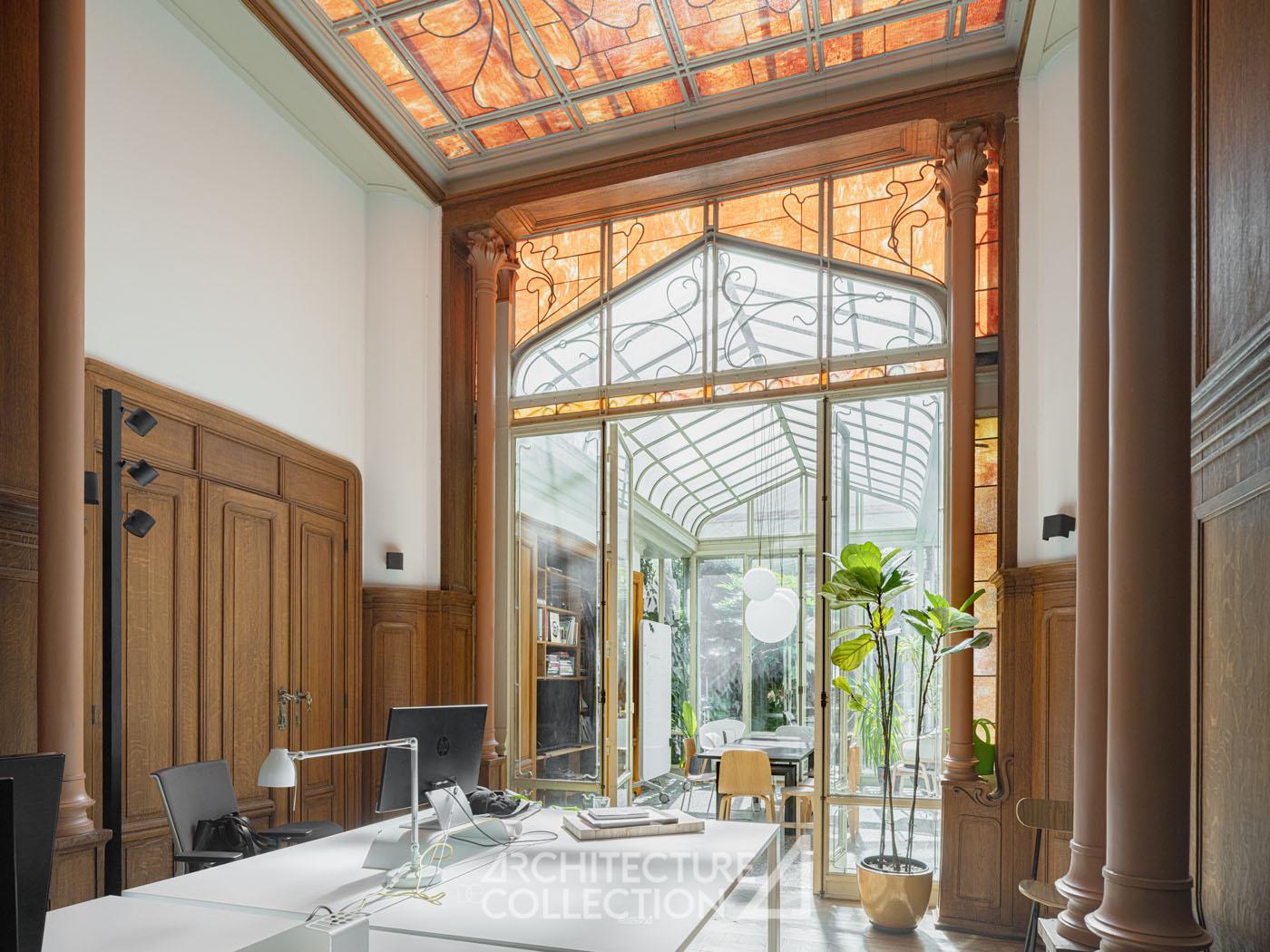
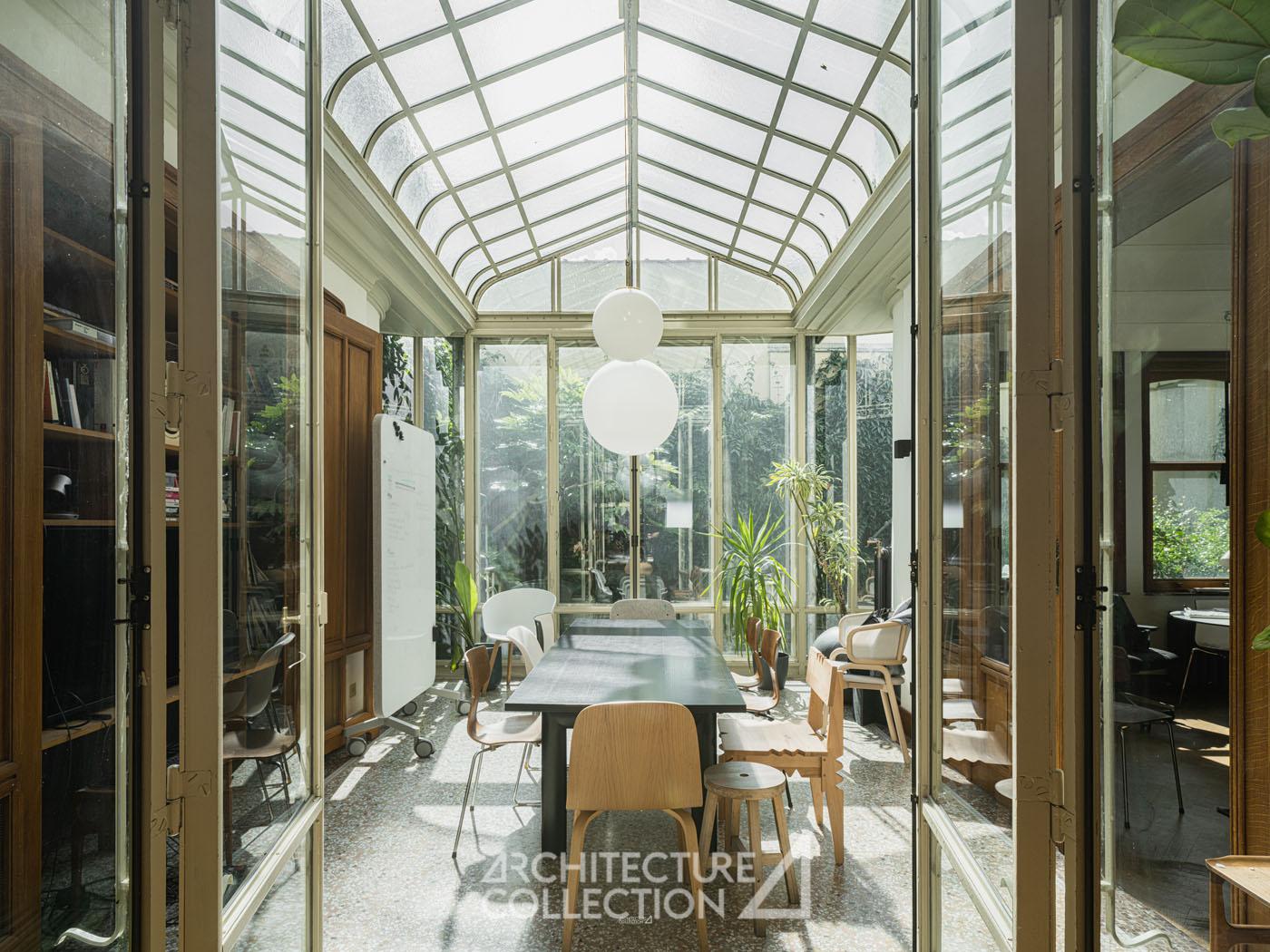
    If you happen to be in the market for an Art Nouveau building near the center of Brussels, then you may want to check out this listing from Architecture de Collection. Built in 1897 and designed by architect Victor Horta — one of the founders of the Art Nouveau movement — the property consists of three distinct units, including multiple office spaces and a large art gallery.

    It’s listed for €3,900,000 and has a total of 930 m2. That works out to about €4,194 per square meter or about €390 per square foot (inclusive of 6 parking spaces located in a neighboring building). I’ve never been to Brussels, nor do I need an office and art gallery there, but this is a beautiful building. If you’d like to learn more, click here.

    Photos: Jeroen Verrecht

  • The next generation of CarPlay

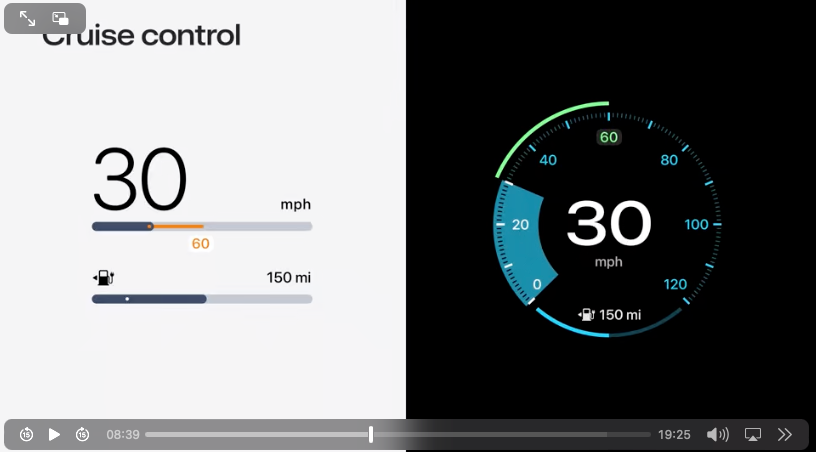
    Apple had plans to make an electric car. Then, earlier this year, it cancelled that project. Now, the plan seems to be to just get Apple CarPlay into everyone else’s cars.

    This is obviously smart, because it expands the Apple ecosystem, but it also means that they have to make it so that automakers want them in their cars.

    And since car companies have their own brands to manage, you end up with a somewhat unique scenario where Apple doesn’t own and control both the hardware and software, and it needs to be flexible in order to scale.

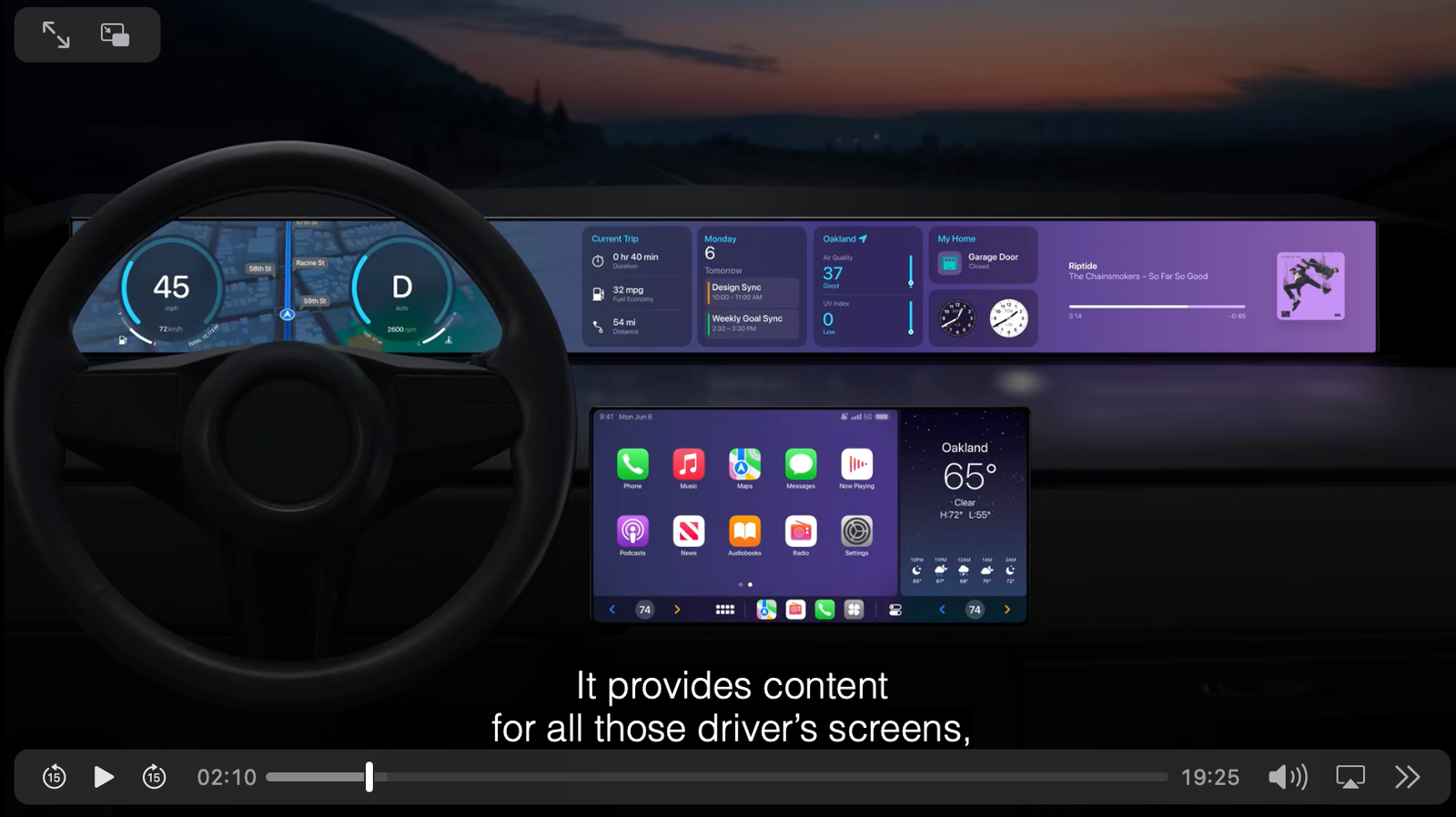
    This is if they want to control all of this:

    The solution: A special co-branded experience that is going to allow car makers to heavily customize the appearance of CarPlay such that it reads as their own brand. This is how the next generation of the software will work and I think it’s a fascinating balancing act.

    Here’s another screenshot:

    If you’re also interested in this sort of thing, here’s a video explaining the new CarPlay’s design system. It’s primarily aimed at automakers and system developers, but you’ll also like it if you’re a designer.

  • Do rich people love quiet?

    Now that phones work on the subway (here in Toronto), I sometimes find myself having to take calls while in transit. And one of the things it has made me realize is that the subway is a very noisy place. It’s not a suitable place for calls.

    But interestingly enough, I only really realized this once I started taking calls and once I wanted it to be quiet. Before that, it was just the sounds of the subway and it was perfectly fine from an auditory perspective. And that’s maybe the thing about noise in the city: it’s relative, and it depends on your expectations.

    Here’s an excerpt from a recent article in the Atlantic by Xochitl Gonzalez that refers to urban silence as “the sound of gentrification”:

    Attempts to regulate the sounds of the city (car horns, ice-cream-truck jingles) continued throughout the 20th century, but they took a turn for the personal in the ’90s. The city [of New York] started going after boom boxes, car stereos, and nightclubs. These were certainly noisy, but were they nuisances? Not to the people who enjoyed them.

    And here’s another quote that directly speaks to its relativeness:

    In the years that followed, many of New York’s nightclubs migrated to Brooklyn, which remains loud and proud. An analysis of 2019 data ranked it as the loudest borough in New York. It earned this distinction by racking up the most noise complaints to 311—the city complaint hotline. Which raises the question: Was it the noisiest borough? Or was it just home to the densest mix of loud people and people who wanted to control those loud people?

    Urban noise is obviously an important consideration. If you have to get up for work at 5 AM and someone or something is keeping you up, that is going to be supremely annoying. But if you’re looking for something fun to do, then a noisy Brooklyn nightclub could be the cacophony of sounds that you’re after.

    When I first heard about the issue that we spoke about in yesterday’s post, my mind immediately went to noise. I thought, “That must be it. Well-caffeinated coffee drinkers are disrupting the rest of the neighborhood!” I have no idea if that’s actually a problem in this particular case, but it’s often a thing.

    According to Xochitl Gonzalez, rich people love quiet. Do you agree?

  • Don’t serve coffee

    For the last few weeks, a small corner store/cafe at 42 Dewson Street has been in the news here in Toronto. It has been in the news because, despite the fact that Toronto is actively working to allow more uses like these in residential neighborhoods, it is my understanding that it currently remains a legal non-conforming use. Meaning, it’s allowed to operate only because it’s been there for a long time.

    The specific fight right now, though, is around whether this corner store is allowed to serve people coffee. It can sell groceries and stuff, but can it serve coffee? (Also, self-serve coffee is apparently an entirely different thing and acceptable behavior.) The store owner thinks the answer is yes. But then somebody called in an anonymous tip and the city came knocking:

    CityNews reached out to the City of Toronto for a response. They said “the building at 42 Dewson St. is in a Residential Zone, and a non-residential/commercial use is not permitted. Any change of use from a Retail Grocery/Variety Store is not permitted; and that includes store staff preparing food or drinks (or coffees) for sale to patrons. A change of use, requires zoning relief from the Committee of Adjustment.”

    Okay, so serving coffee to people is potentially problematic. But why? Here are three possible reasons that immediately come to mind:

    • Somebody else in the neighborhood is serving coffee and they’re ruthlessly trying to eliminate all competition.
    • Serving coffee encourages people to linger and lingering people make more noise relative to people who don’t linger.
    • The neighborhood is filled with pedants who like to read zoning by-laws in their spare time and they just can’t stand seeing such a blatant disregard for refreshment rules.

    There are, of course, other possible reasons. And according to Twitter/Reddit, the real reason is that the property is owned by a rich developer and the neighborhood is, for a variety of reasons, pissed off at said rich developer. I don’t know that this is true, but maybe it is. Because fighting over served versus self-served coffee seems like an insane thing to argue about.

    If you happen to agree, Dan Seljak has a petition you can sign, here.

    Photo: CityNews

  • America’s most and least car-oriented cities

    My partner Kieran sent me this chart this morning:

    It is a summary of the average weekday miles traveled by adults in private vehicles, including taxis and ride-hailing vehicles, for the 50 largest metro areas in the US (data is from the fall of 2023). At the top of the list with the most miles traveled is Raleigh, and at the bottom of the list with the fewest miles traveled is, not surprisingly, New York.

    The other cities on the bottom of this list probably won’t surprise you either. But it’s a good reminder of how built form determines our mobility choices. If you look up which US cities have the highest population densities and the most compact built forms, I think you’ll generally find that it mirrors what you’re seeing here.

  • Approved but unbuilt

    Recent data from the City of Toronto indicates that there were approximately 106,000 new residential units completed between 2019 and 2023. That averages to about 26,500 homes per year.

    At the same time, Toronto is reporting that 258,397 units are currently approved for development and that 436,421 units are currently under review. The former means that the projects have been approved and that a building permit has been applied for or has been issued. And the latter means that the units are still under review or under appeal.

    These feel like staggering numbers. If we were to use the same completion rate as 2019-2023, it would take over 26 years to build these 694,818 new units (homes approved + under review).

    However, I think it’s safe to assume that not all of these homes will be built; at least not in the short term. Many (perhaps most) of these projects are simply going to evaporate in the current market environment. They’re unfinanceable.

    Because that’s the thing, zoning approved does not necessarily equal built and occupied. And right now, in this market, these two things feel like they’re diverging. Toronto grew by about 207,000 people between 2019 and 2023. And it built about half of this number in new homes.

    When we look back at the next four years, I suspect that this housing supply number will be noticeably lower. This is despite the staggering headline numbers.