
The Bank of Canada raised its policy rate by 25 basis points this week to 2.5%. It was the first increase since July 2023, and it was largely because of high oil prices:
Given persistently high oil prices, CPI inflation has been around 3% since April and is expected to rise to about 3½% by the end of the year. Excluding gasoline, inflation was 2.2% in September and measures of core inflation remain close to 2%. But cost pressures are building, with high fuel prices raising the costs of production and transportation. Imported industrial and electronics input prices have also increased. While businesses have mostly absorbed higher input costs so far, Bank surveys suggest cost pass-through will increase over the next year. Near-term household and business inflation expectations have risen, while longer-term inflation expectations remain well anchored.
David Rosenberg of the Globe and Mail called the hike “totally unnecessary and premature” given that this is an energy cost problem and that the bank seems to be wearing rose-coloured glasses when looking at GDP growth estimates.
Cue the mortgage renewal scare articles:
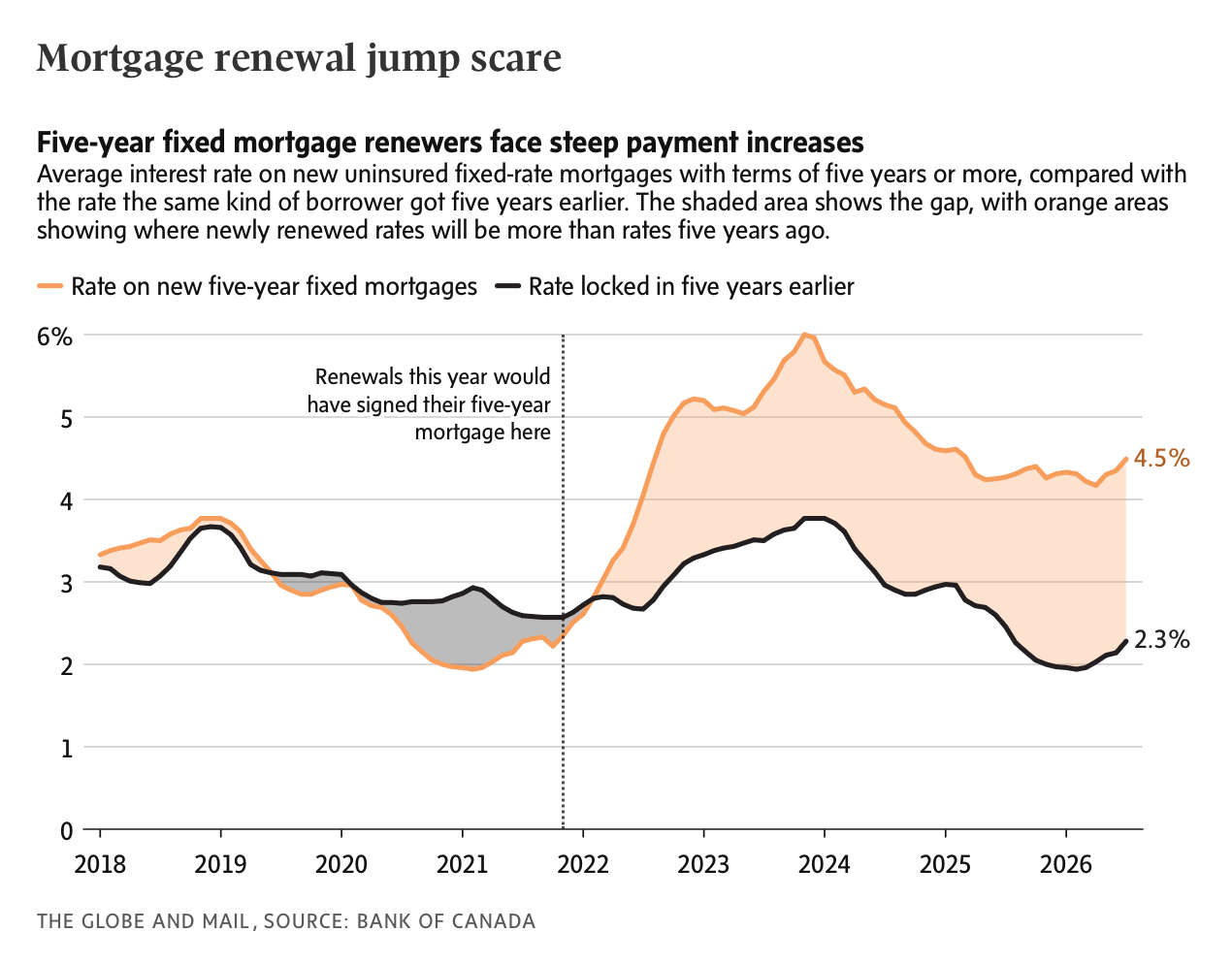
But let’s keep in mind that 4.5% is not that high. Historically, this is still relatively low-cost debt. The concern isn’t the absolute level — it’s the delta, and the fact that real estate values are highly sensitive to interest rates and get re-priced when rates change.
Now, when it comes to Canadian housing, a five-year mortgage is very typical, and then the rate resets to market. That’s why 2026 was predicted to be an alarming year for homeowners. That hasn’t been the case. And the faster the market normalizes, the healthier it will be.
On the other hand, I often think about the US where 30-year fixed-rate mortgages are possible and there are homeowners sitting on 2-3% rates with a powerful economic incentive never ever to move. This is going to be a massive generational distortion to the housing market.
When people don’t move, inventory declines, people become over-housed, and urban labour markets become less dynamic. Canada’s 5-year resets might create periodic jump scares, but they force reality into the housing market.
Leave a Reply