
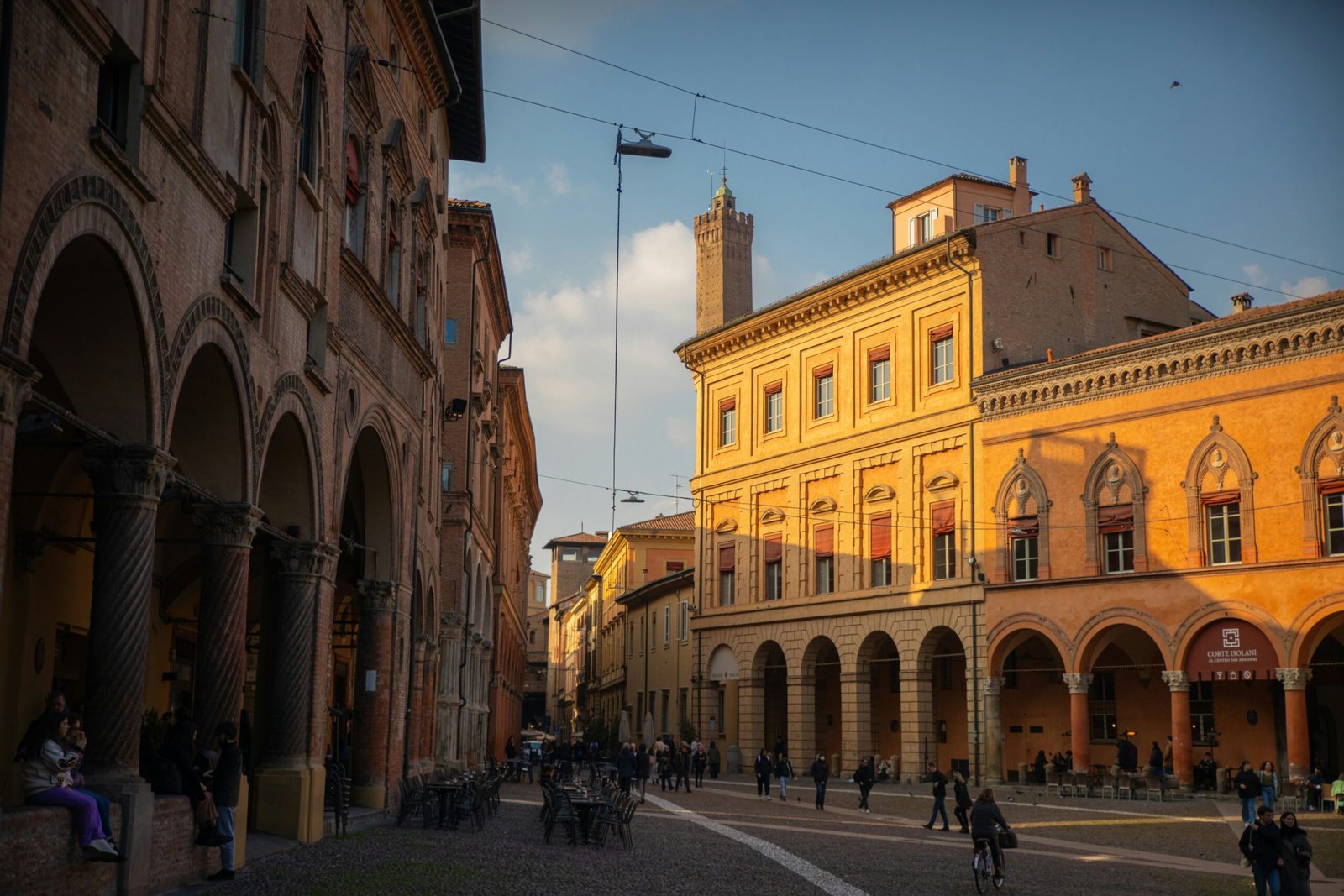
Bologna, I’m told, is a city famous for its colonnades or porticoes. I’ve never been, but it’s a city that’s on my list. Bologna has 62 km of covered walkways, 40 km of which are in the city centre, and they are designated as a UNESCO World Heritage Site. They provide shade in the summer, and protection from rain during the winter. But how did this happen? What’s the legal structure underpinning them?
Bologna’s porticoes go back roughly a thousand years and, interestingly enough, they are a result not of some grand, top-down master plan, but of a ground-up, market response. Bologna was a dense, walled city, with a growing population. Space was at a premium and so unscrupulous developers and landlords started encroaching into the public right-of-way and cantilevering their buildings outward. Few people were apparently fussed.
The earliest evidence of a portico in Bologna seems to date back to the year 1041 — an example of private use of public land. But over time, the utility of these colonnades started to be more broadly appreciated. Not only did they protect pedestrians from the elements, but they allowed craftsmen to work outside of their workshops with natural light and with similar shelter.
Gradually, porticoes became obligatory (at least in some areas and on some sites). This then transferred the porticoes from private use of public land to public use of private land. Developers were forced to build them.
My understanding is that the vast majority of the porticoes exist today with this legal structure. The land is private, but the public enjoys an access easement in perpetuity. This means that private owners must pay to maintain these colonnades. It’s an example of what we often call here in Toronto a POPS space — a privately-owned, publicly accessible space.
These spaces took many centuries to become codified, but what I find most interesting is that they are a product of ground-up innovation. A more contemporary example of this is Tokyo, which is often considered to be an example of bottom-up planning. Here’s a book on the topic called Emergent Tokyo — Designing the Spontaneous City.
Turns out, Bologna’s beloved colonnades weren’t the product of visionary planning, but of Medieval squatters.
Leave a Reply