Daily insights for city builders, delivered every morning at 6 AM ET. I’m Brandon Donnelly — a Toronto-based real estate developer and founder of Globizen. I’ve been writing here since 2013.

Month: February 2026

  • What is a “stable” neighbourhood?

    February 28, 2026 · View original


    Read through planning documents across North America and you’re bound to find language that refers to low-rise residential neighbourhoods as “physically stable areas” where the “existing neighbourhood character” is paramount. But to be more precise, what this kind of language is actually saying is not that these neighbourhoods need to be broadly stable; it is saying that they just need to look more or less stable.

    Here in Toronto, for example, it has been widely documented that many of our low-rise neighbourhoods are losing people. Household sizes are getting smaller, and houses that used to be subdivided are being returned to single-family use. A similar thing is happening in other cities like New York:
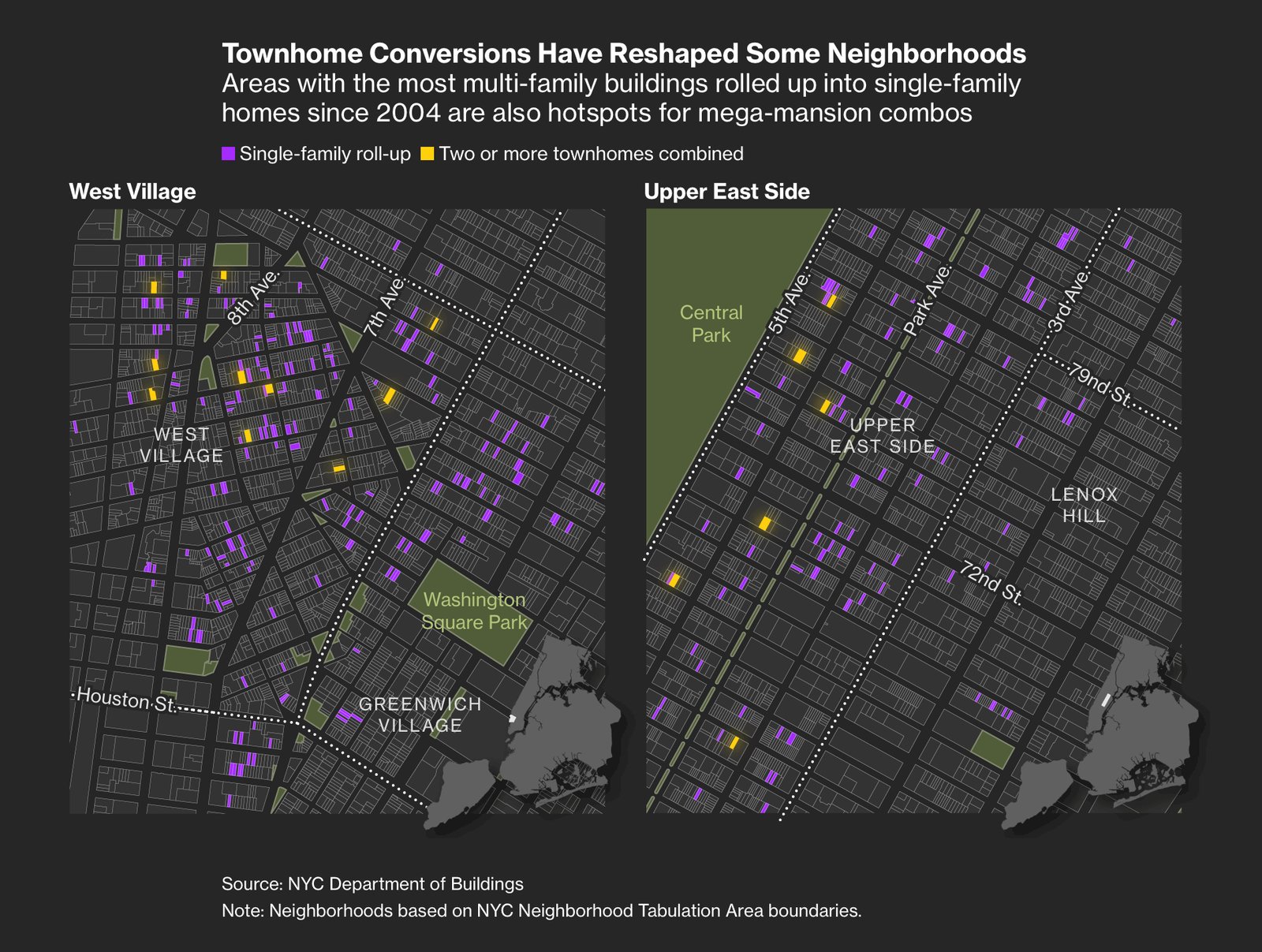
    Bloomberg News recently reported that since 2004, at least 9,300 homes have been lost as a result of multi-family buildings getting “rolled up” into single-family homes. More recently, the city has even seen an increase in people combining two or more buildings into large urban mansions.

    And while the total number of homes removed is relatively small for New York as a whole, it can be quite impactful to individual neighbourhoods. In the West Village, where there’s a high concentration of rowhomes and townhouses, Bloomberg estimates that one out of every six small apartment buildings has been rolled up into a single-family home since 2004!

    From a built form standpoint, you could say these are “physically stable” areas that are obediently adhering to their existing neighbourhood character. But under the hood and behind their street walls, they are clearly changing.

    It is one of the great ironies of city building. People often fear new development because they worry it might disrupt the character of a neighbourhood. But preventing development does not guarantee stasis. In fact, we know that not building new housing actually increases the pressures felt on a city’s existing housing stock, as people compete for a more fixed amount of supply.

    The wealthy can always outbid the less wealthy on housing. So if you don’t provide any new options, the wealthy will just buy up the existing stuff and turn it into what they want. Alternatively, you can build more housing and create a “moving chain” that frees up more existing housing for people of lower incomes.


    Cover photo by Chanan Greenblatt on Unsplash

    Map from Bloomberg
  • London approves the pedestrianization of Oxford Street

    February 27, 2026 · View original


    It’s not easy gaining support for pedestrian-only streets. Here in Toronto, Kensington Market is a neighbourhood that has been under consideration for pedestrianization for as long as I can remember. Yet it remains an aspiration, largely because of a number of common objections: it will hurt local businesses, lower foot traffic, and limit access for those with mobility issues.

    Yonge Street in downtown Toronto went through a similar debate, and the end result is a plan that will prioritize pedestrians, while still allowing one vehicle lane in each direction. This will still be a nice improvement, and my understanding is that the option to fully pedestrianize has been or will be designed in. Construction is expected to start on this in 2030, once the Ontario Line Queen subway station is complete.

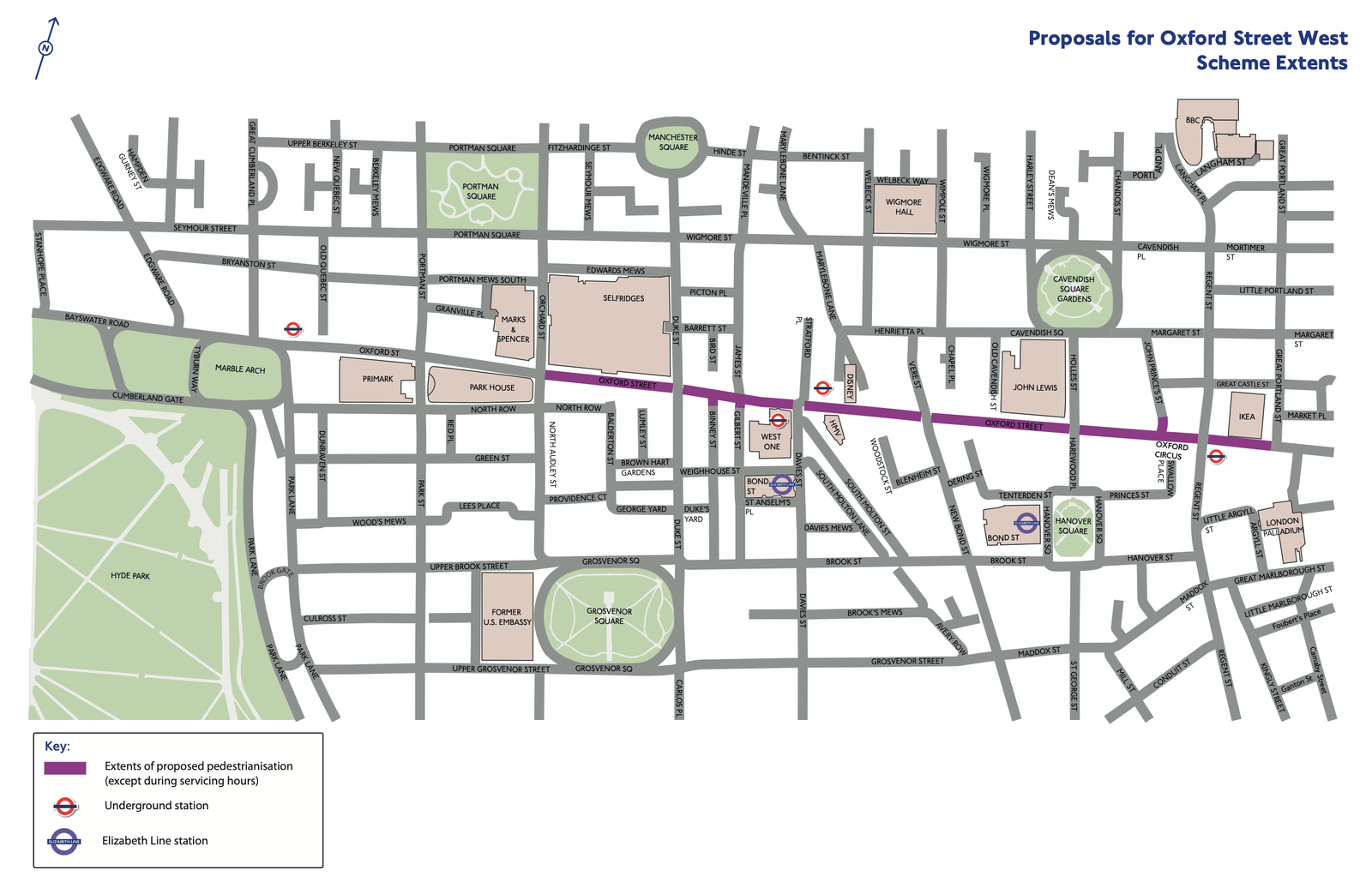
    But there are cities that are going all the way. This week, it was announced that London has approved the pedestrianization of Oxford Street, specifically the stretch between Orchard Street in the west and Great Portland Street in the east.

    Oxford Street is one of the most important thoroughfares in the world, and one of, if not the, busiest shopping streets in Europe. It is estimated that nearly 500,000 people visit it each day, meaning that most are not travelling there by car.

    Pedestrianizing Oxford is an idea that arguably dates back to the 1960s, when a plan was put forward to create pedestrian-only walkways on top of podiums; although, this may have been more about getting people out of the way of cars. Pedestrianizing the street was also a prominent part of Mayor Sadiq Khan’s platform when he was first elected in 2016, some 10 years ago. So, it too has had its opponents.

    However, consultations done last year showed that nearly two-thirds (63%) of Londoners were in favour of pedestrianizing the street — a figure that increased to almost three-quarters (72%) when the question was asked to people who had specifically visited the area within the last 12 months.

    Data from similar pedestrianization projects completed around the world indicates that both foot traffic and retail sales should increase once the project is built out. And I have little doubt that the same will prove true here in London. If you can’t pedestrianize a pre-eminent, transit-rich street in one of the world’s capital cities, then where can you?


    Cover photo from the Mayor of London

    Map from Transport for London

  • The cost of spending too much on housing

    February 26, 2026 · View original


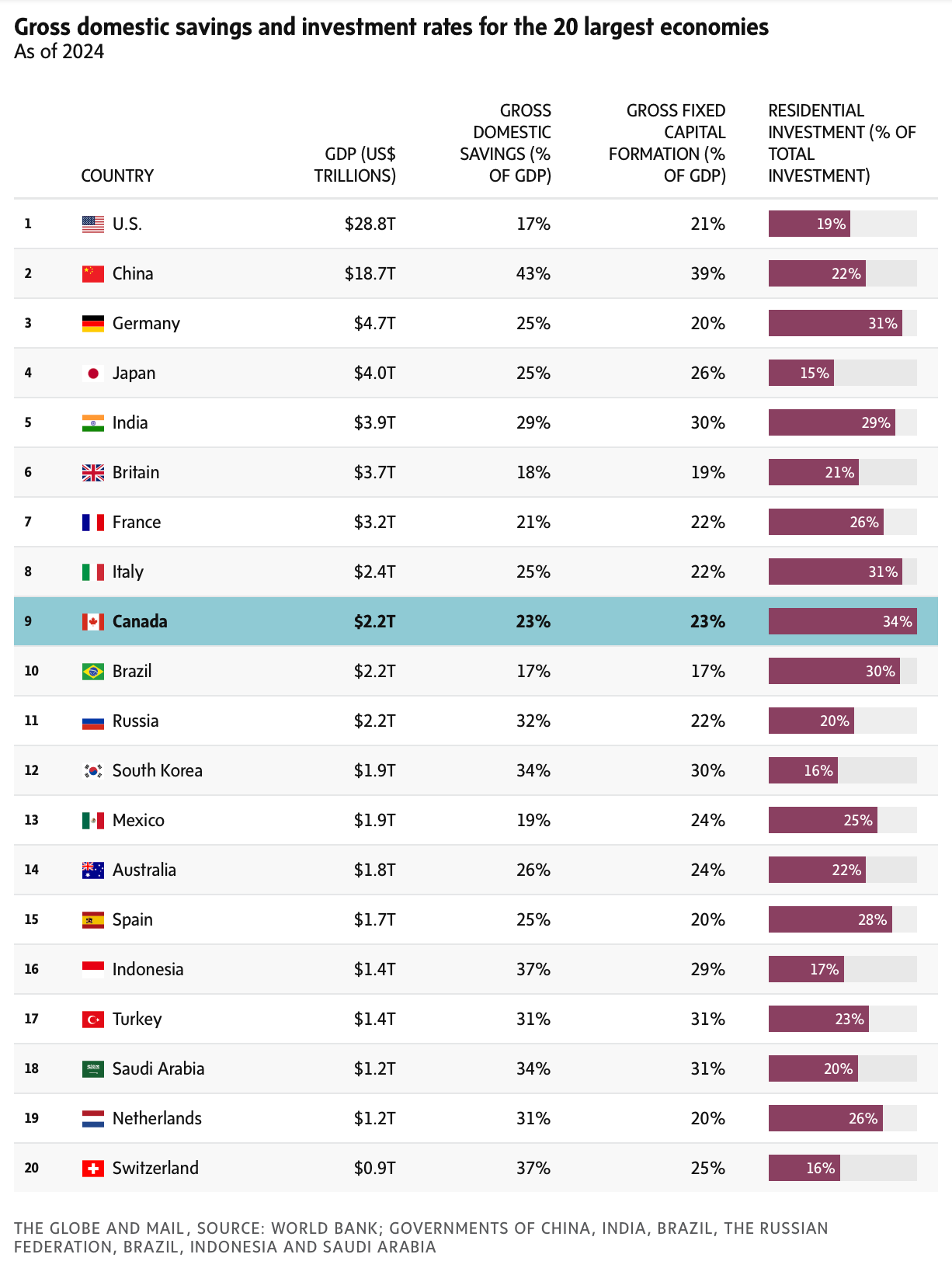
    This is an interesting chart from the Globe and Mail. It shows GDP, Gross Domestic Savings (how much a country’s residents and businesses save), Gross Fixed Capital Formation (technical term for investments in productive long-term assets), and the share of total investment going into housing for the 20 largest economies in the world.

    One of the key takeaways from the chart is that Canada invests the most into residential real estate (figures are from 2024). Now, I’m not an economist, but the risk here is that we are tying up too much of our capital in housing, as opposed to investing in new ideas, emerging tech, and the future. And this imbalance could help explain why Canada has had weak productivity growth for decades.

    Housing demand should be a byproduct of a strong economy; simply building housing won’t drive an economy forward on its own. And I say this as a developer of housing.


    Cover photo by Roshan Raj on Unsplash

    Table via the Globe and Mail

  • Waiting for the real estate bottom

    February 25, 2026 · View original


    Deflation is bad for economies.

    That is why the typical standard for most central banks is a target inflation rate of 2%. This leaves a factor of safety in case you miss your target. Because if you target 0% and end up with a negative number, then you’re in trouble. A negative number is significantly worse than moderate inflation. The principal problem with deflation is that consumers start expecting goods and services to be cheaper next month and stop buying non-essential items, creating a vicious cycle with prices.

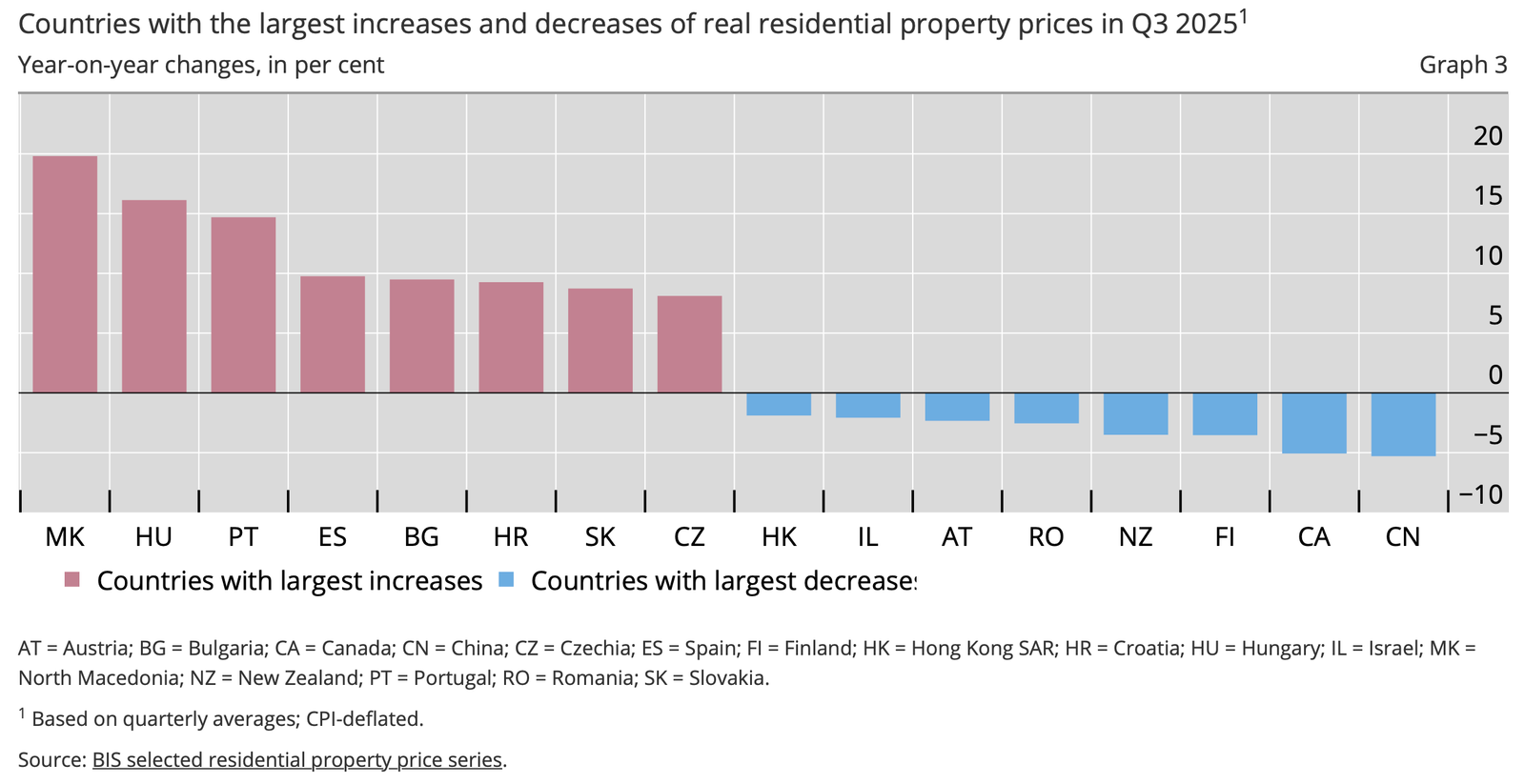
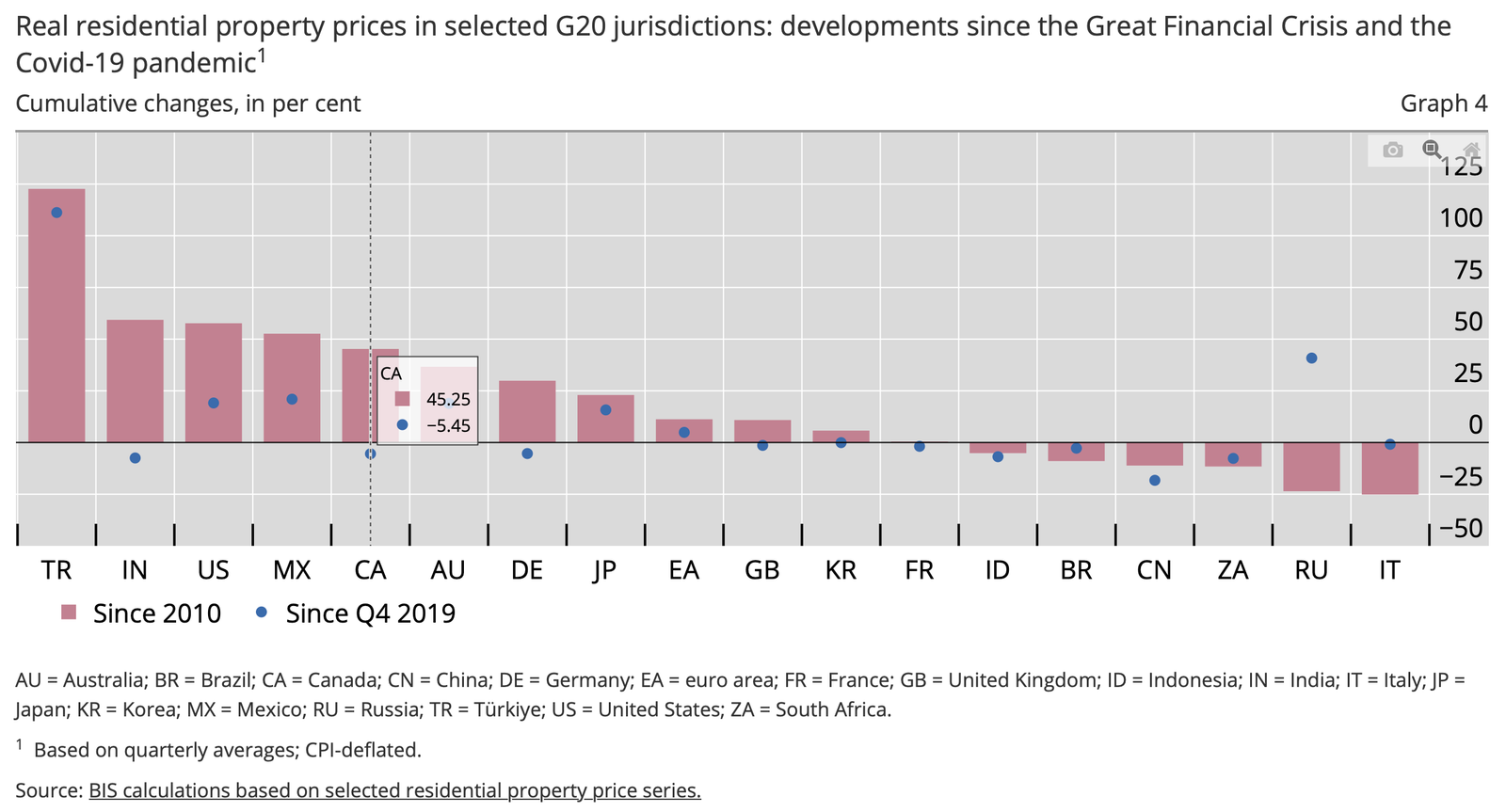
    I think we are seeing this same psychology play out with real estate in Canada (though not in every local market). According to the above charts from the BIS, real residential property prices across Canada were down just over 5% year-over-year in Q3-2025. And since Q4-2019, they were cumulatively down 5.45% (but up ~45% since 2010 after the Great Financial Crisis). Right now, many buyers are waiting on the sidelines, just in case things get cheaper.

    But I expect things to stabilize and feel better toward the end of 2026 and into 2027. And once that happens, a different buyer psychology will come to the fore.


    Cover photo by Anthony Maw on Unsplash

    Charts from BIS

  • The effects of new housing supply in Switzerland

    February 24, 2026 · View original


    Last month, we talked about how even “luxury” housing can improve overall housing affordability in a market. In that post, we spoke about a recent study that looked at the downstream effects of a new condominium tower in Honolulu. Today, let’s look at Switzerland.

    I stumbled upon this working paper on Twitter. The authors are Lukas Hauck and Frédéric Kluser, both from the University of Bern. In it, they look at the country-wide effects of new residential housing supply in Switzerland and, more specifically, the “moving chain” that new supply produces.

    Moving chains work generally as follows:

    – A household moves into a newly constructed home – Their previous home becomes vacant – Another household moves into this vacant unit, leaving their previous home vacant – And the process continues, until someone breaks the chain (which can happen by way of a new household being formed or someone moving in from out of the market)

    The authors found that these moving chains are relatively short in Switzerland. Approximately 75% of them terminate within three migration rounds. But this doesn’t mean that these chains aren’t critical for the market.

    Importantly, they found that every new market-rate unit typically results in 0.75 moves for households with below-median incomes. So, that is 75 moves for every 100 new homes constructed.

    The reason why new supply ends up also benefiting lower-income households is because there’s a clear income and rent gradient across the moving chain:

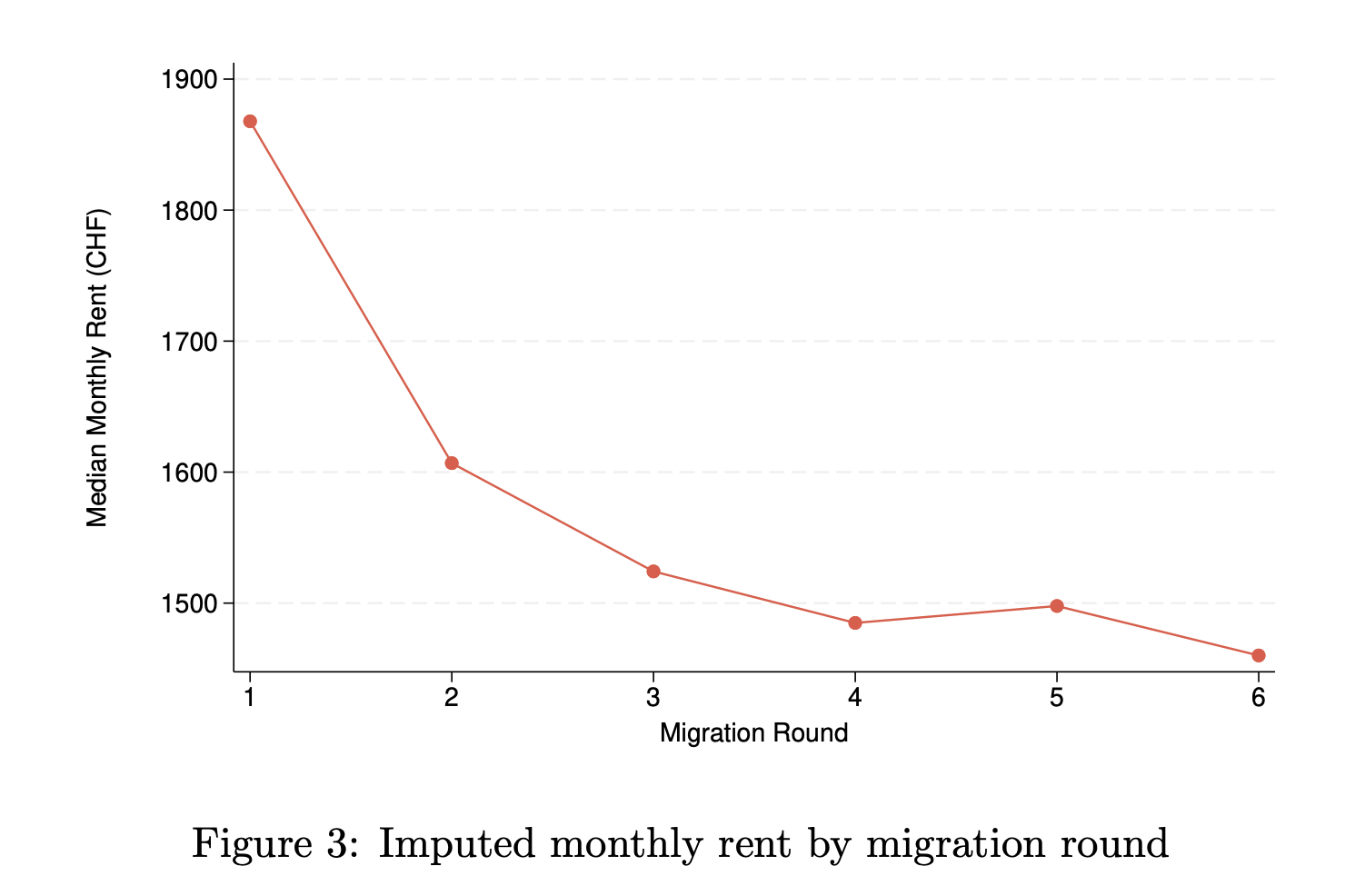
    New housing (migration round 1) is typically priced at the highest end of the market. This makes sense because we know that development happens on the margin. But by migration rounds 2 and 3, median rents fall off noticeably, creating housing opportunities for other people.

    New market-rate housing is sometimes criticized for only serving one segment of the market. But once again, we see evidence that it helps to ease overall housing pressures. There are other indirect benefits that shouldn’t be ignored.


    Cover photo by Henrique Ferreira on Unsplash

    Chart from “Country-wide effects of new housing supply: Evidence from moving chains.”

  • Salt Lake City proposes new small lot development ordinance

    February 23, 2026 · View original


    One of the big housing trends that we have seen across North America over the last several years is the push to allow greater supply in low-rise neighbourhoods.

    Here in Toronto, this has come through a well-known program called Expanding Housing Options in Neighbourhoods (or EHON), which I believe launched around 2020. But you can find countless similar programs in other cities.

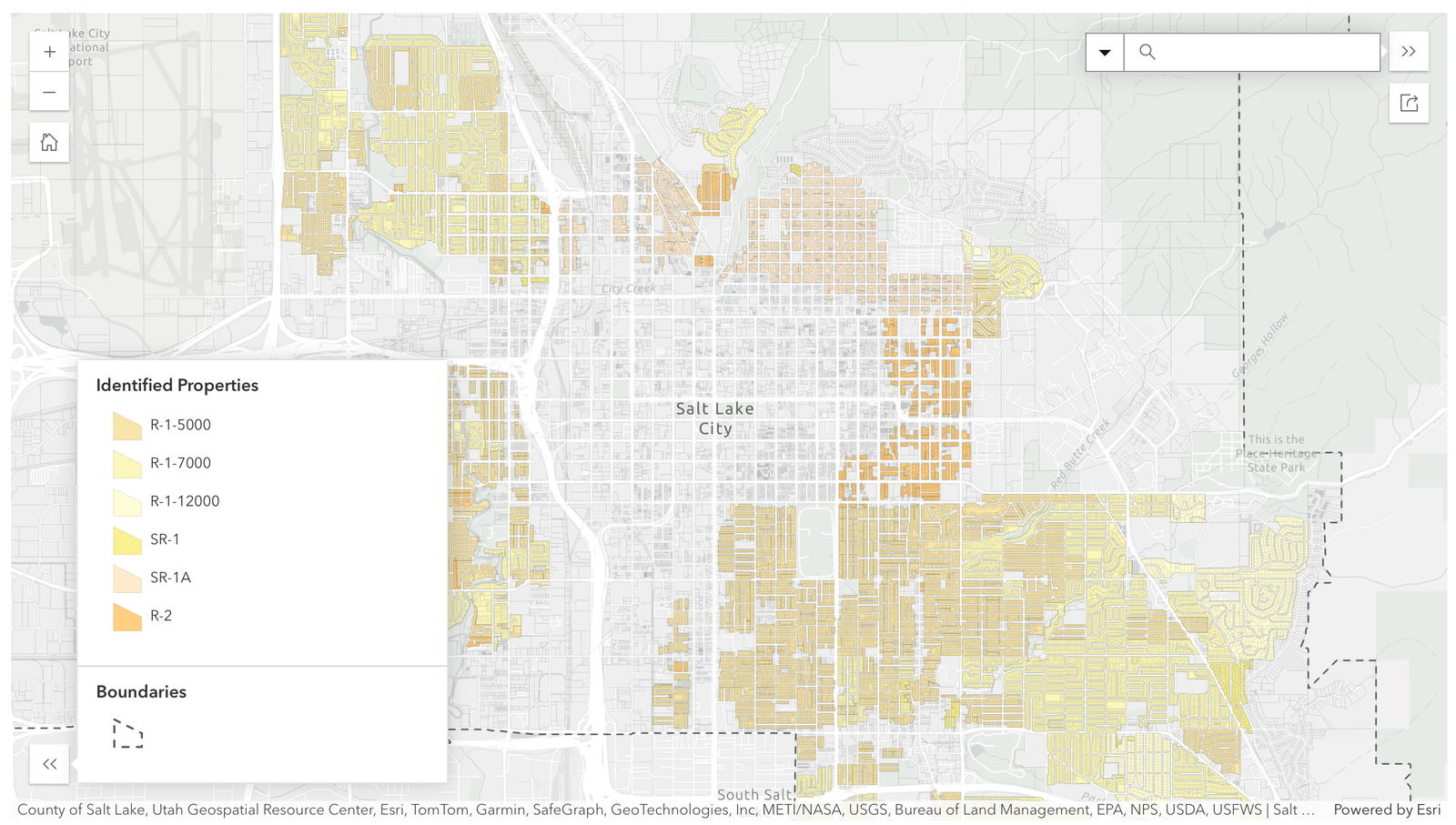
    Salt Lake City, for example, is currently looking at updating its single-family exclusive zoning) to allow for “gentle infill opportunities” on smaller lots. The zones under consideration cover 77% of the land zoned for residential in SLC. And interestingly enough, this program is also called Expanding Housing Options.

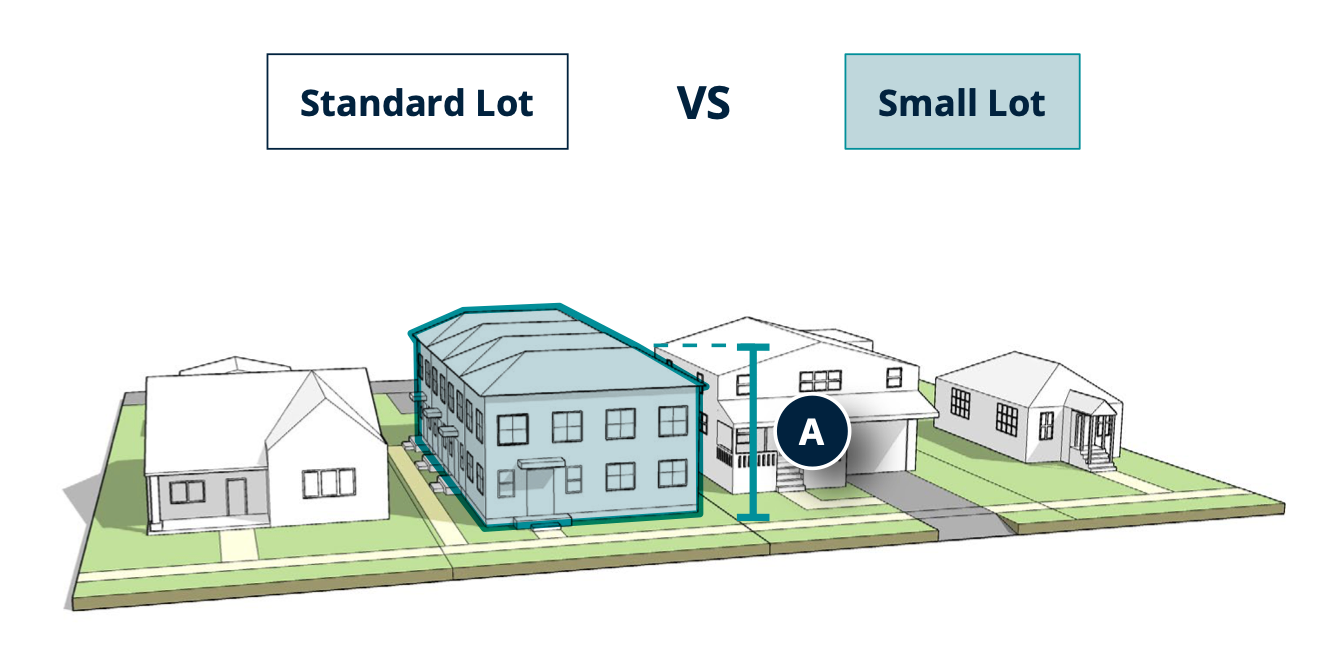
    In their case, they are proposing to create a new definition for “Small Lot Dwellings,” which would, among other things, reduce the minimum lot area per dwelling to 2,000 sf, reduce the number of required off-street parking spaces from 2 to 1 per dwelling, and allow up to four homes per lot via fourplexes and townhomes.

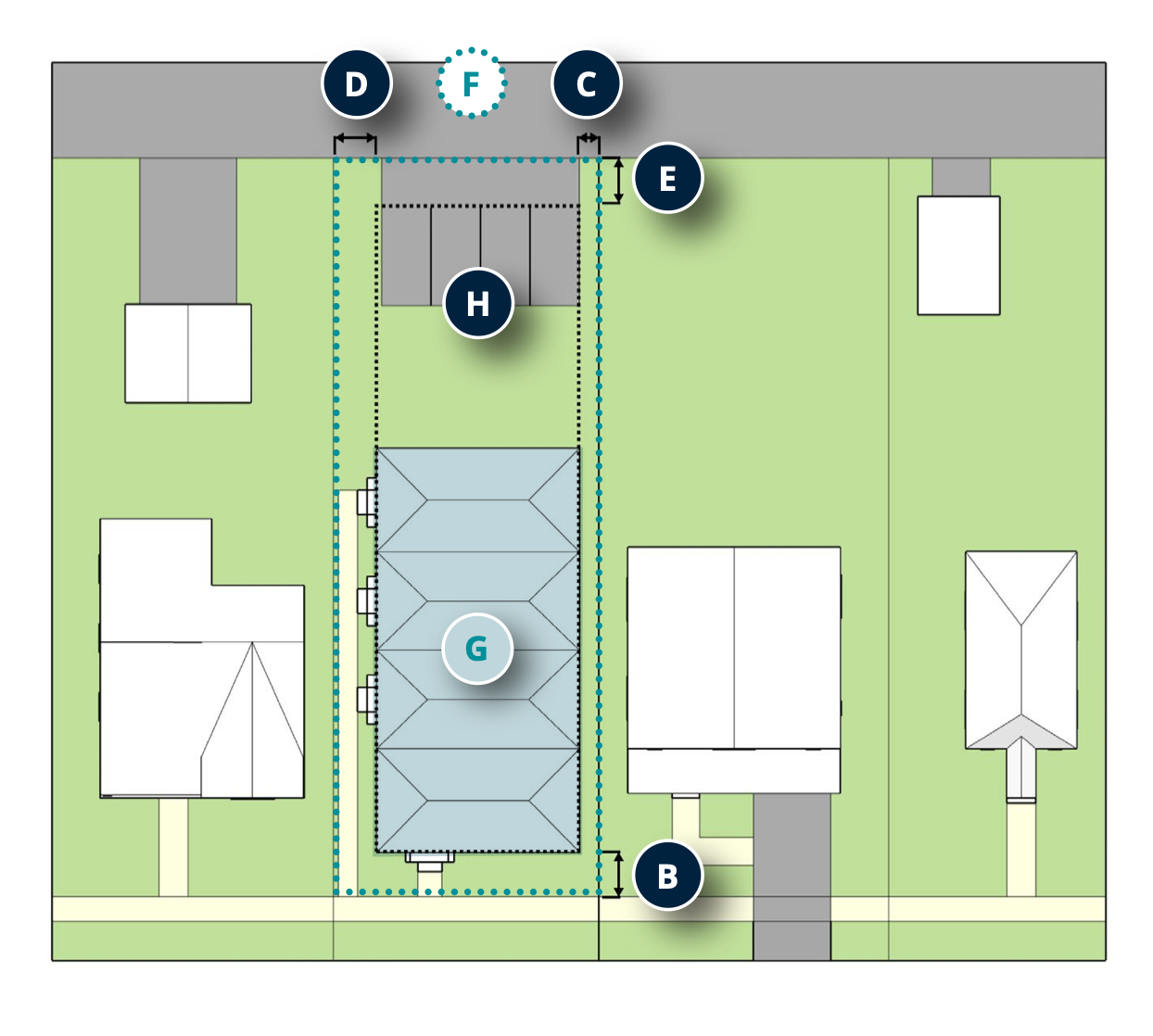
    One of the things that I found interesting about their proposed policies is that they seem to explicitly encourage “sideways” multiplexes and row houses like this:

    This starts to tell you something about the scale of SLC’s urban fabric, even though there are no dimensions on this conceptual site plan. These are big lots.

    Despite sometimes having the same moniker, cities are responding to their urban contexts in different ways. SLC uses explicit density math: at least 2,000 sf of site area per dwelling. Whereas Toronto increasingly relies on built-form standards: here’s the envelope you can build, if you can fit a fourplex within it (or a sixplex in certain wards), go for it. And don’t worry about parking.

    If Toronto mandated one parking space per dwelling unit, virtually no multiplexes would ever get built in the city. Our lot sizes simply don’t allow for it. Moving away from the car is also the only way that Toronto will be able to continue to grow and scale up.

    Despite these local nuances, the overall ambition remains the same. Low-rise neighbourhoods across North America are being asked to house more people on the same amount of land, and that’s a positive step forward.


    Cover photo by Ashton Bingham on Unsplash

    Map and planning diagrams from Salt Lake City Planning Division

  • The best and brightest from around the world

    February 22, 2026 · View original


    It’s not hard to notice that public sentiment in Canada toward immigration has shifted dramatically over the past few years. When I tweet something positive about immigration, I know full well that the comments will be overwhelmingly negative and searing (mind you, it’s Twitter).

    But this isn’t just the case on social media. A 2025 survey by the Environics Institute and TMU showed that the majority of Canadians believe there’s simply too much immigration. And a more recent survey by Research Co. found that almost half of Canadians — a number that is up 9% since July 2025 — believe immigration is having a mostly negative effect on the country.

    While I can appreciate where this is coming from, I think it’s important to keep in mind that immigrants in Canada account for approximately one-third of all business owners with paid staff. They help create jobs. And they represent the majority of business owners when it comes to sectors like restaurants, grocery stores, and truck transportation. In sectors like “computer systems design and services” it’s roughly 50/50 between immigrants and Canadian-born citizens.

    Some of Canada’s most notable companies and brands have also been founded by immigrants: Shopify, BlackBerry, Aldo, Magna, Hakim Optical, Molson Brewery, and many others. And in the US, it is reported that at least 59 of the top 100 highest-valued unicorn startups have a foreign-born founder! So, I am of the strong opinion that Canada benefits enormously when the best and brightest choose to come to our country in search of opportunity. It boosts prosperity for everyone.

    But let’s consider three objections that I have heard.

    The first is that immigration is good, but we stopped attracting the best and brightest. Fine; if that’s the case, we should better optimize for attracting the world’s top talent. Let’s not throw the baby out with the bathwater.

    The second is that it’s important to first stop the best and brightest who are already here from leaving. And I would agree that this is critical. The “brain drain” needs to be stemmed. But at the same time, these do not need to be mutually exclusive activities. In fact, it may be best to think of it as solving the same problem: increasing opportunities for everyone both attracts and retains talent.

    Lastly, I hear some people talk about “cultural continuity.” The argument is that economic prosperity isn’t everything. We need to also think about our national identity and the value of our local customs. I believe wholeheartedly in a strong Canadian identity. I’m profoundly proud to be Canadian. But what, specifically, must be continued? What should be allowed to change?

    Let’s consider my favourite city in the world, Toronto.

    For roughly a hundred years, Toronto was an intolerant and primarily Anglo-Protestant city. Should that still be the case today in the name of “continuity”? If so, it’s likely I wouldn’t have been born here. I was raised Catholic, I went to a French-speaking school, and my ethnic background is primarily Irish, French, and Chinese (via South America).

    Would the Protestants of Toronto have accepted my kind? It’s unlikely on three accounts. Catholics were a problem. A French school would have been viewed as a rebellious political statement. And the Chinese Exclusion Act may have precluded my bloodline before I was born. A little discontinuity has been good for me — and others.


    Photo by Richard Hong on Unsplash

  • How cities shape our daily steps

    February 21, 2026 · View original


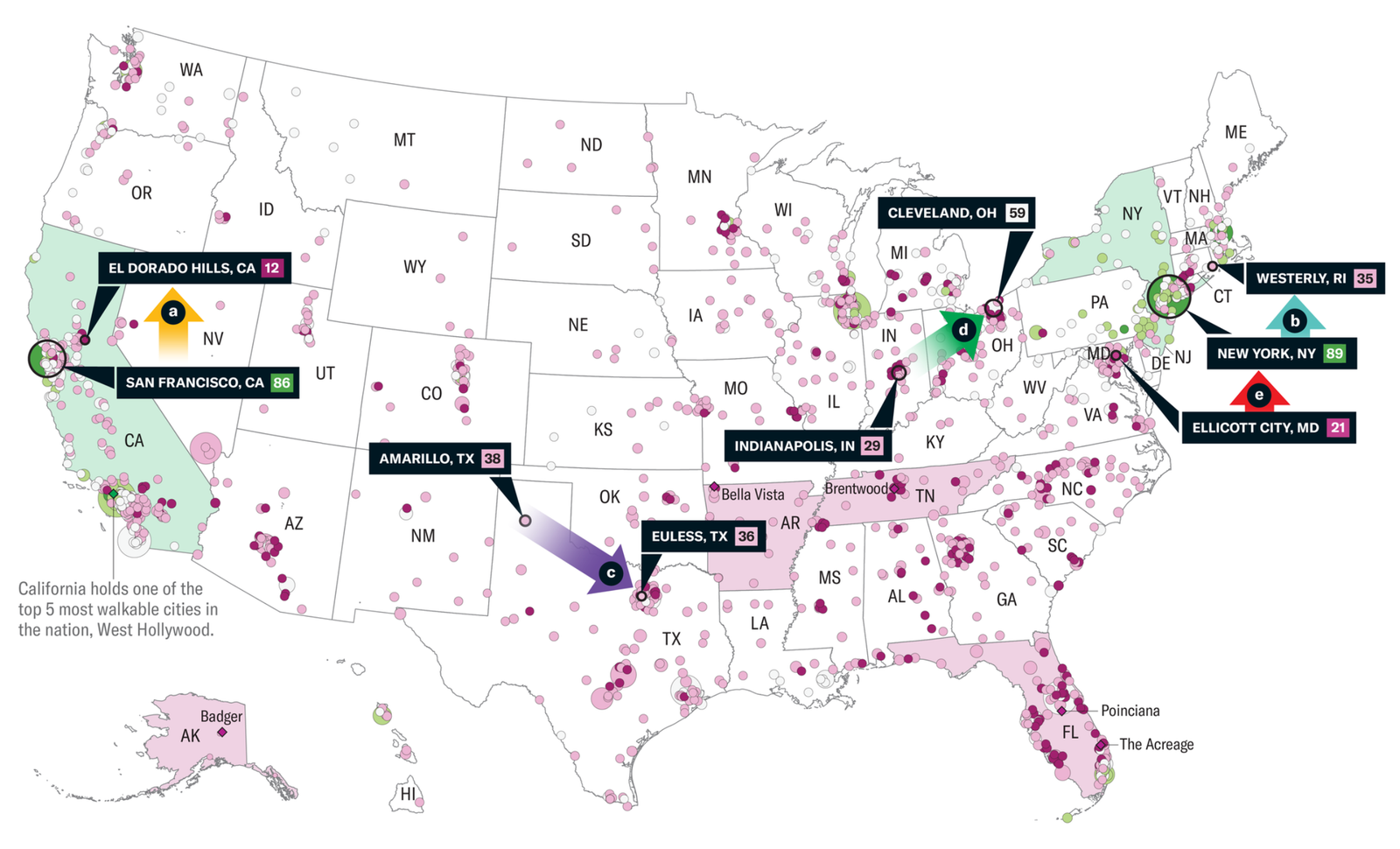
    In some ways, the findings of this walkability study should feel intuitively obvious. But at the same time, it’s an important reminder that we are all products of our environment. If you grow up and live in a city like San Francisco, there’s going to be a higher probability that you will choose a career in something tech-related versus if you’re in, say, Scranton, Pennsylvania. If you grow up and live in a city like Copenhagen, there’s going to be a higher probability that you will cycle versus if you’re in, say, Badger, Alaska.

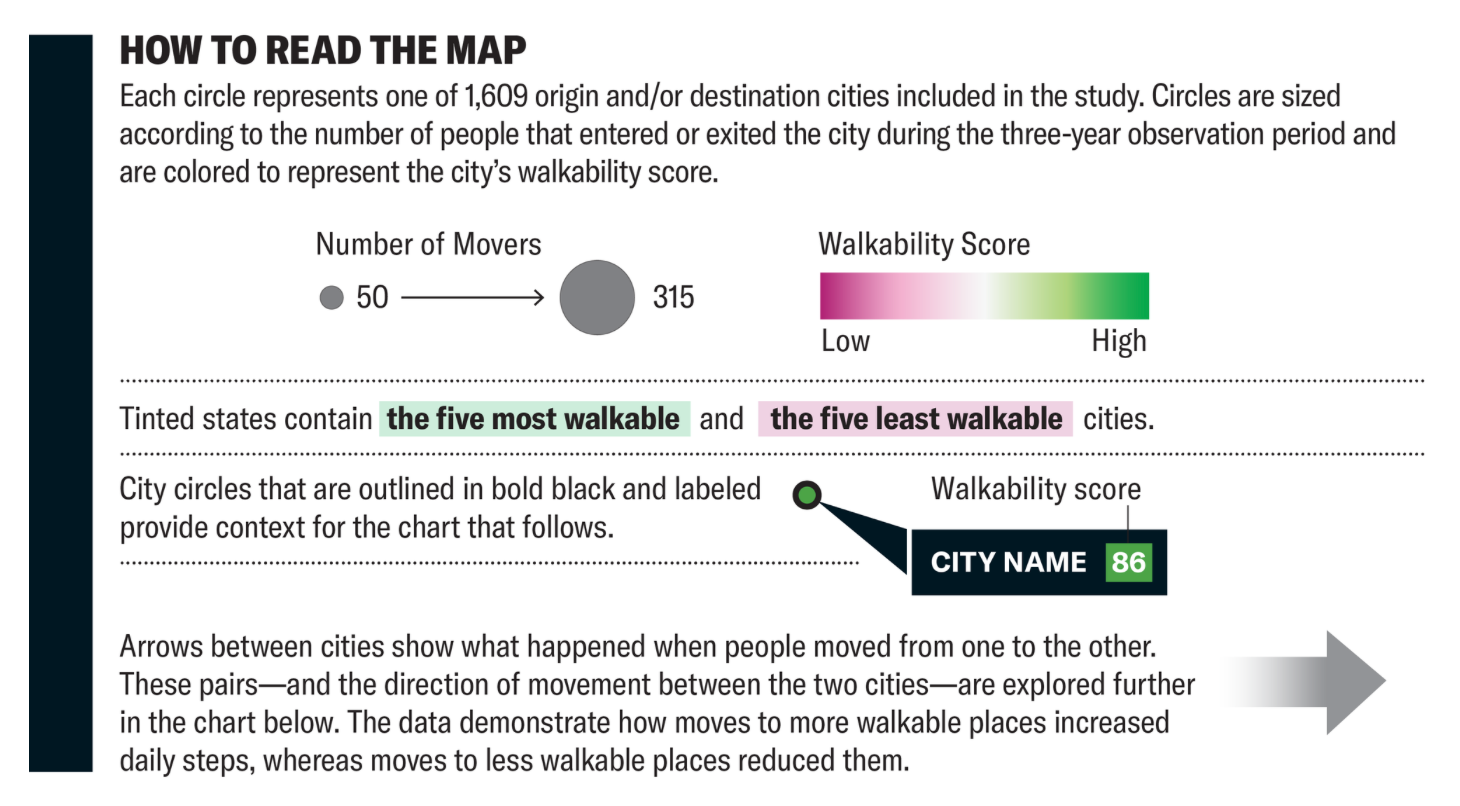
    And, it turns out, if you live in a walkable city, you’re more likely to walk. Importantly, it doesn’t appear to be because of some sort of “selection effect,” meaning that people who like to be active naturally gravitate to more walkable cities. In the study, researchers analyzed smartphone data from 2013 to 2016 for 2 million people, including more than 5,000 people who moved during this time. What they found was that after relocating to a more walkable city, people took on average about 1,100 more steps a day (roughly 11 minutes of extra walking).

    The inverse was also true: people who relocated to less walkable cities tended to walk less. Again, on some level, this may seem intuitive, but it shows just how mutable our behaviours are. People will generally do what their built environments have been designed to accommodate — whether that’s driving, cycling, or walking. Perhaps this also explains why, when I’m traveling, I want to buy that absurd article of clothing that I know I’ll never wear back home in Toronto.

    At the time, and in that environment, it feels appropriate.


    Cover photo by Abby Rurenko on Unsplash

    Map from Scientific American

  • The Toronto Effect

    February 20, 2026 · View original


    A few weeks ago, we spoke about the dramatic change that Toronto’s East Bayfront has undergone over the last two decades. It’s now a place. I also shared a time-lapse video from Waterfront Toronto showing how the Parliament Slip was landfilled in order to improve the street network in this area. If you missed it (and you like to nerd out on construction), it’s worth watching.

    In addition to this, Waterfront Toronto has (just?) released this interactive website showing in more detail what’s planned for the Quayside area. And if you make it all the way to the end of the experience, you’ll land on the below image, which shows some towers and the site earmarked for a school and potential cultural destination.

    Clicking on the site leads to this pop-up:

    Schools are obviously critical. Education is the number one predictor of household wealth. Build it. But I also think it’s important that we take advantage of this opportunity to build a truly remarkable cultural destination on Toronto’s doorstep. This is an opportunity for a globally recognized symbol that elevates the city’s brand, drives tourism, and serves as an economic development catalyst.

    So I would like to encourage those in charge to take this seriously. (If Globizen can help in any way, give us a call.) The right way to do it would be to host an international design competition and put the challenge to the world’s best architects. This is not the time or place to be timid. Rather, it’s the time and place to beat our chests. This could be a Sydney Opera House or Bilbao moment.

    Actually, it could be something even greater: The Toronto Effect.


    Cover photo by Antonio Gabola on Unsplash

  • Waymo needs way more vehicles

    February 19, 2026 · View original


    Earlier this month, self-driving car company Waymo announced that it had raised $16 billion (largely from its parent company, Alphabet) at a $126 billion post-money valuation. This is a big number. And according to Bloomberg, the company’s annualized revenue run rate is around $350 million, meaning its current valuation is sitting at 360x revenue.

    Multiples can often be sky-high for new, huge-bet companies, but Om Malik recently offered an interesting take on the “physics of the problem.”

    As of the end of 2025, Waymo was operating approximately 2,500 vehicles across its cities, with San Francisco and Los Angeles currently responsible for about 68% of the company’s rides. And these cars are already running 16 hours a day, with an estimated 18 minutes of average idle time between trips.

    To get from 400,000 trips per week (where they are today) to 1 million trips per week (where they want to be by the end of 2026), Om estimates that the company will need to add at least another 3,500 vehicles to its fleet.

    If I then ask Gemini to extrapolate this out such that its revenue increases enough to drop its multiple down to 30x revenue, the company needs a global fleet close to 25,000 vehicles. That’s ~22,500 more than it has today, and at $175k per Jaguar, that’s an additional $4 billion in vehicles.

    I guess it has the money for that, but it’ll be fascinating to see how easily the company is able to scale around the world. This year, the plan is to expand to 20 more cities (with a list that erroneously leaves out Toronto). If successful, this will have a profound impact on our cities. And the lofty valuation represents an expectation that it will be.


    Cover photo by Josh Hild on Unsplash