Daily insights for city builders, delivered every morning at 6 AM ET. I’m Brandon Donnelly — a Toronto-based real estate developer and founder of Globizen. I’ve been writing here since 2013.

Month: June 2025

  • Monocle’s city of the year

    June 20, 2025 · View original


    It’s that time of year again.

    Monocle has just released their annual Quality of Life Survey. This is their 18th annual ranking of the world’s top cities according to what they do best: whether it be housing or nightlife. What I like about this survey is that it does things a little differently. Most liveability surveys tend to be a list of the world’s most boring cities. It’s as if uneventfulness is the measure of quality of life.

    This is not that.

    For example, number 3 on the list is Athens. And it’s there specifically because of its nightlife. Monocle refers to it as “one of Europe’s few truly 24-hour cities.” Also on the list, at number 7, is Mexico City. This is a city that is required to have women-only subway cars because the men apparently can’t behave in public.

    Of course, it’s an incredible city in so many other ways. It has leafy neighborhoods filled with the kind of mid-rise buildings that Toronto is now desperately trying to add to its major streets. And according to the survey, the city’s population grew by about 600,000 people between 2019 and 2023 — many of whom came from the US and Canada.

    Jumping to the top of the list, Monocle’s city of the year and best all-rounder is a city that we talk a lot about on this blog: Paris. This is perhaps not surprising given the city’s bold moves to pedestrianize streets, plant trees everywhere, build more than 1,000 km of bike lanes, and generally enhance the overall urban experience.

    But it’s not just that:

    > All of this, combined with the policies of the country’s most pro-business president in a long time, has helped Paris to draw and foster enough talent to snatch London’s double crown as Europe’s top venture-capital city and its leading technology hub. “Paris lends itself far more to an office-based culture than cities such as San Francisco or London,” says Jordane Giuly, the founder of fintech company Defacto. He points out that the French capital’s gentle density is conducive to cross-pollination between start-ups and preferable to the vast distances that one needs to traverse in its rivals.

    For their full list of the 10 most livable cities in the world, click here.
    Cover photo by Vlad B on Unsplash

  • Cities need to be able to change

    June 19, 2025 · View original


    Yesterday afternoon and evening was a series of interesting discussions about city building in Toronto. First, I met with Jeff Ranson of Northcrest Developments for a tour of YZD. This is the 370-acre former Downsview Airport lands that is now the biggest urban redevelopment project in North America.

    The tour also involved the two of us e-scootering around the property, which was timely given yesterday’s post about not hating on them so much. Jeff is up next on Globizen’s Global City Builder series, so stay tuned for that.

    After that I was on Ben Myers’ Toronto Under Construction podcast. After 80+ episodes, he finally invited me to join (wink wink). It was a great discussion with Rob Spanier of the Spanier Group and Ilana Altman of The Bentway. When the link comes out, I’ll be sure to share it on the blog.

    But one of the common threads across both discussions, that I’m now thinking about, is about how city builders can better provision for flexibility in new urban projects. Flexibility is an important feature because cities need to be able to grow and adapt over time.

    Consider some of the older main streets in Toronto where it’s very clear that the shop or restaurant you’re in used to be someone’s home that has now been converted. This is a very good outcome. It’s the city iterating.

    But this isn’t always possible with newer developments. Condominium corporations, land use restrictions, and a variety of other factors can make this largely impossible. It’s for this reason that I’m always drawn to things like live/work suites. They already contemplate a greater degree of flexibility.

    Two specific examples that come to mind are the live/work suites fronting onto Fort York Boulevard (in CityPlace), which have over time become more retail oriented, and loft buildings like 90 Sumach Street, which is known for housing a lot of creative professionals.

    Cities are at their best when they are able to change and adapt. So I think it behooves us to spend more time thinking about how we can encourage greater flexibility through different design approaches, flexible land use permissions, legal carveouts, and whatever else might be necessary to fully unlock the potential of our cities.

    Cover photo by Minh on Unsplash

  • Stop hating on shared e-scooters

    June 18, 2025 · View original


    Toronto never adopted a shared e-scooter program. And as far as I know, e-scooters in general are technically illegal to use on our public roads, though this illegality seems to be minimally enforced. But today, more cities around the world seem to be following suit.

    Paris — which had become the leading scooter market in Europe — voted to ban them in 2023 (albeit with an extremely low voter turnout). Shared e-scooters are now also banned in Madrid, Malta, and in all of the Netherlands.

    But I continue to think that this is a shame. I first tried a shared e-scooter in Lisbon in 2019. And at the time, I wrote “I now know what all the fuss is about!” It was a lot of fun. I used it to ride out to the Museum of Art, Architecture, and Technology. I also said that they would be arriving in Toronto imminently. Nope.

    The main concerns seem to be around urban clutter and riders using them irresponsibly. But I think you could say the exact same thing about cars, and we’re not going to ban those anytime soon.

    So I agree with what Karen Vancluysen says in this recent CityLab interview: Keep e-scooters on the menu and give people as many transportation alternatives as possible. They’re not going to work for everyone, but that’s okay. They’re one option in a broader mobility network.

    Cover photo by Kseniia PENKOVA on Unsplash

  • Waymo is more expensive than Uber and Lyft — huh?

    June 17, 2025 · View original


    The autonomous vehicle narrative has historically gone something like this: remove the labor component of rides (i.e. drivers) and rides will become significantly cheaper. Then, people won’t need or want to own a car anymore. They’ll just Uber or Waymo or whatever around.

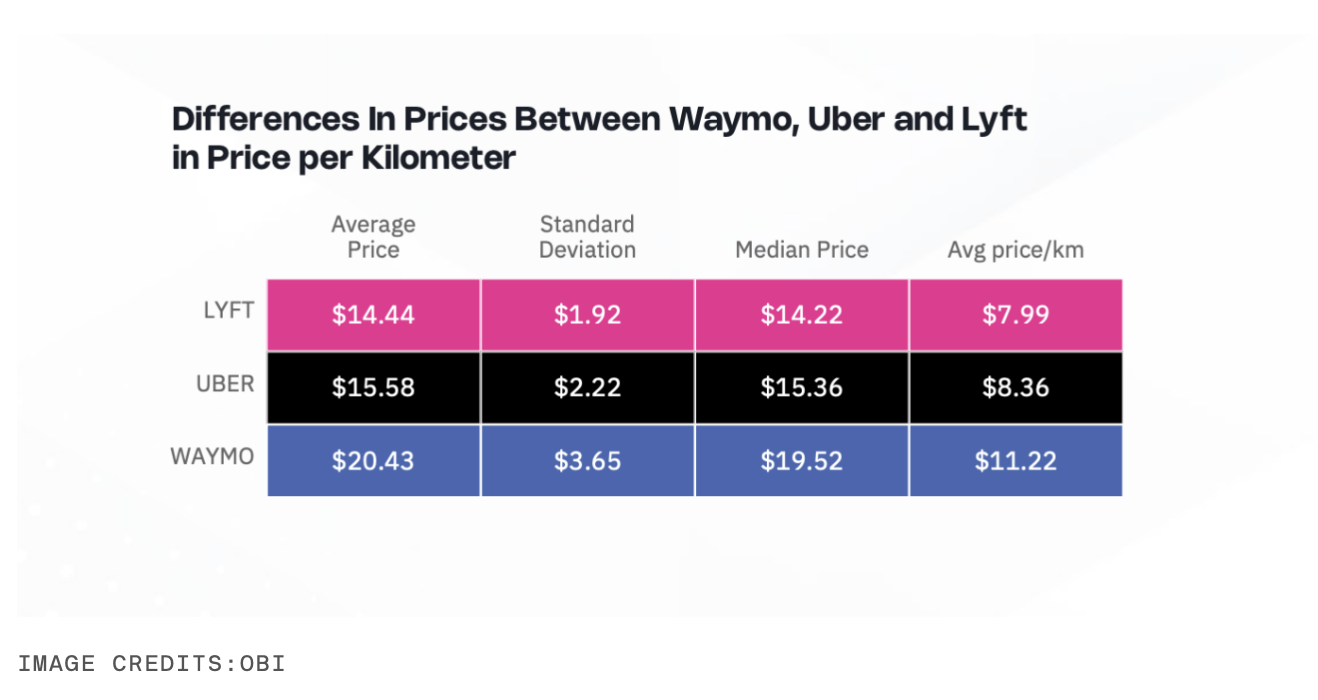
    But as Waymo provides in and around 250,000 paid trips per week in the 4 cities in which it operates, the opposite has proven to be true — at least so far. A recent report by Obi (an app that aggregates real-time ride pricing) has just revealed the following for San Francisco during the period of March 25 to April 25, 2025:

    In other words, Waymo is more expensive than Uber and Lyft, especially for shorter distances. Is this right? Well, Waymo may not have to pay drivers, but they do own and operate their own cars. Uber and Lyft do not. This represents a very different cost structure.

    They also have a more inelastic supply base, meaning they have cars whether demand is high or not. Whereas in the case of Uber and Lyft, supply can be variable. That’s the idea behind “surge pricing” — to induce more drivers onto the road when it’s needed the most.

    Fewer Waymos also means that wait times are going to be longer and that their cars are probably spending more time driving around without paying passengers. That’s a cost.

    Whatever the reasons, lots of people seem to be willing to pay the premium. Part of this almost certainly has to do with the novelty of riding in an autonomous vehicle. I’d pay more if they were in Toronto today. But another reason seems to be that people really appreciate being in the car alone. I guess it’s akin to driving your own car.

    It, of course, remains to be seen how Waymo’s cost structure and pricing model will evolve over time, but I have no doubt that privacy will remain a feature people are willing to pay something for. In the modern world, we are all going to have at least two places of solitude: bathrooms and Waymos.

    Cover photo by gibblesmash asdf on Unsplash

  • Unsurprisingly, lots of people want to live in Cape Town

    June 16, 2025 · View original


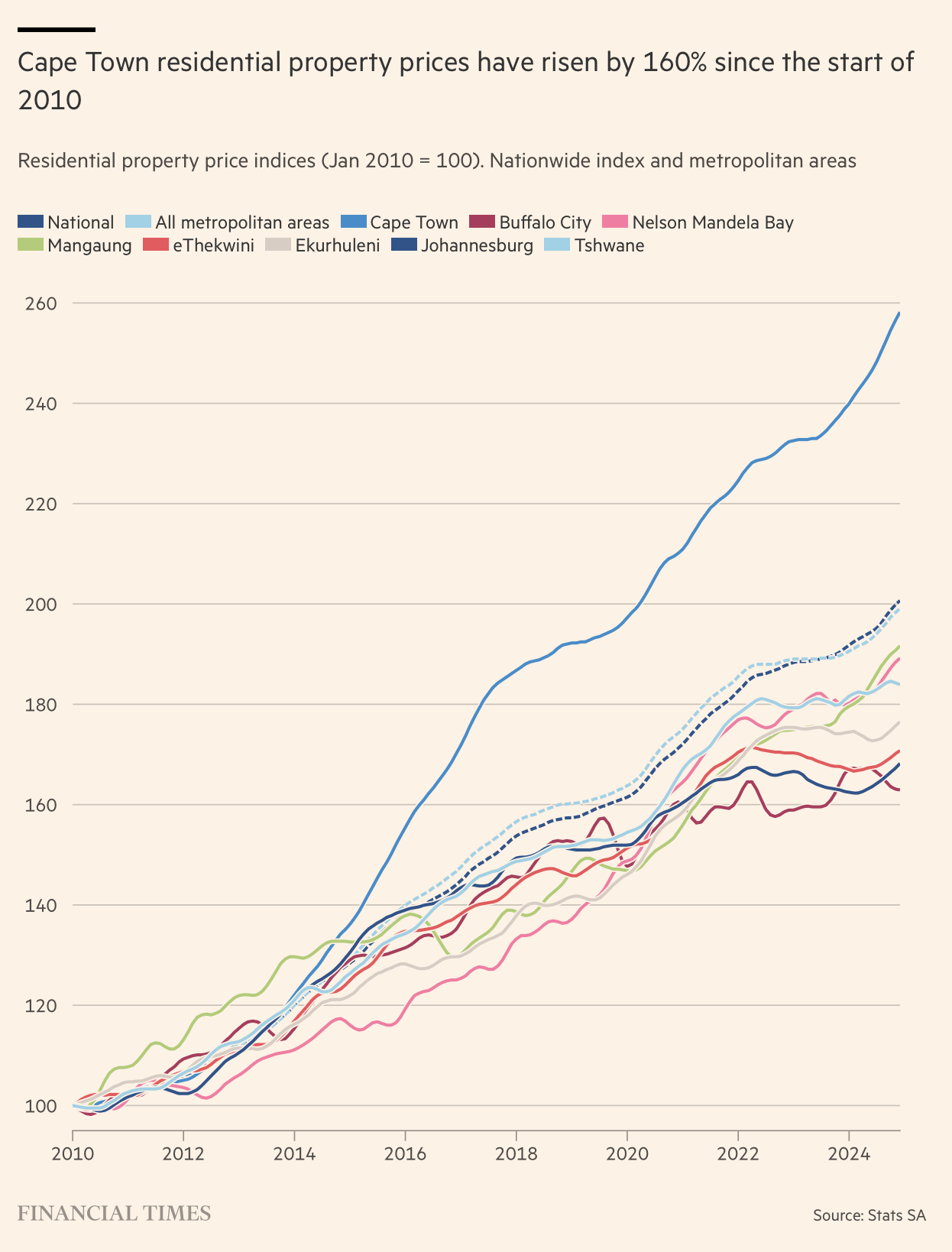
    According to the Financial Times, Cape Town’s population (metropolitan area) grew by 27.6% from 2011 to 2022, landing at approximately 4.77 million. Last year it was estimated at 4.97 million. At the same time, residential property prices increased by about 160% during the period from 2010 to 2024, outpacing all other cities in South Africa. Last year the average price of a home increased by 8.5% in Cape Town versus the national average of 4.5%. And as is the case in most desirable cities around the world, this has some people worried.

    But who and what is to blame?

    Is it because of tourism? It is estimated that there are some 25,800 active short-term rental listings in the city. Is it digital nomads? South Africa recently launched a Digital Nomad Visa program allowing foreign nationals to live and work in the country provided they can demonstrate an annual income of at least 650,976 ZAR (US$37,500). However, this is a recent thing. Is it foreigners coming with US dollars, euros, and/or pounds? Or is it because of internal migration, which South Africans refer to as “semigration?”

    As always, it’s a debate. But I think the outcome we are seeing makes intuitive sense for at least three reasons. One, Cape Town is an objectively beautiful and amenity-rich city sandwiched between mountains and the ocean. See above cover photo. It also has a warm and temperate climate. The average high in January (their summer) is 29 degrees and the average high in July (their winter) is 19 degrees. This is a huge competitive advantage — albeit a natural one.

    Two, it’s a relatively safe place. The above FT article quotes a transplant from Johannesburg saying, “You can’t ride your bike in Joburg unless you are in a walled-off estate.” If you have the means, that’s a strong motivator to move somewhere else. And it’s understandably easy to assign a lot of value to safety and security. “Sure, this home may be more expensive, but I can walk to places and ride my bike without fear.” That’s something worth spending money on.

    Lastly, we are all becoming less tethered to specific locations. Digital nomadism and remote work are here to stay. But I don’t think this means that people are going to just decentralize and move to the middle of nowhere. I think it means that people are going to increasingly vote with their feet and choose exactly where they want to live their life. What this means is that the need to create better places is only going to become more important. Because more than ever, every place is now in a global competition for talent and investment dollars.

    Cover photo by Tobias Reich on Unsplash

  • You can’t manage what you don’t measure

    June 15, 2025 · View original


    Broadly speaking, cities tend to have better data on vehicular traffic than on pedestrian and bicycle traffic. This is because road design has traditionally prioritized the movement of cars, above all else. So it has felt right to bias traffic counts. But there are lots of places where pedestrians and cyclists greatly outnumber vehicles.

    For example, I was on Queens Quay yesterday visiting my mom and, if you’ve ever been to Toronto’s waterfront in the summer, you’ll know that it has one of the busiest bike lanes/trails in the city — if not the busiest. But if you ask ChatGPT just how busy it is, it will more or less say, “I don’t know. Really busy?” And that’s because we don’t have real-time usage data. We have estimates. And the same is true of pedestrian counts.

    (If you’re aware of a great dataset, please share it in the comment section below.)

    But this is starting to change with the advent of AI traffic monitoring solutions that can handle multi-modal environments. Meaning they’re capable of counting everything from pedestrians and scooters to cyclists and trucks. This is what cities need to make better decisions. And as this new tech becomes more widespread, I think it’s going to show us just how much we’ve been missing.

    Cover photo by Joshua Chua on Unsplash

  • Good architecture, bad urbanism; bad architecture, good urbanism

    June 14, 2025 · View original


    > Tweet: You can have bad urbanism with good architecture, and good urbanism with bad architecture https://t.co/RSXicNU4Ui

    I like and agree with this tweet: “You can have bad urbanism with good architecture, and good urbanism with bad architecture.” The two provided examples of this are (1) Brasilia and (2) what appears to be some random little street in Japan.

    Brasilia is the capital of Brazil. It’s a masterplanned city designed by Lúcio Costa, Oscar Niemeyer and Joaquim Cardozo in the 1950s. And it was all part of a plan to move the capital from Rio de Janeiro to a more central location in the middle of the country.

    The result is some incredible architecture by Oscar Niemeyer that, for me, is emblematic of the country. Brazil was one of the first countries outside of Europe to adopt modern architecture and it’s precisely for this reason that Brasilia is high on my list of places to visit. (Rio is also one of my favorite cities.)

    But whenever I tell a Brazilian that I want to visit the city, the usual response is, “Why?” I then have to explain that it’s because of Niemeyer and the architecture, and then they say, “Oh, okay, that makes sense. But besides the architecture, there isn’t much else to see or do there.”

    Part of the reason for this could be because the city has objectively bad urbanism. When you look at it in plan view, the layout of the city resembles a plane or bird in flight, and that is, I guess, symbolically cool when you view it on Google Maps. But on the ground, cities are not at their best when they’re designed around abstract symbols.

    They’re at their best when they’re designed around people. And this is what example number two does well. The architecture is ugly and nondescript, but the street is narrow, the road is shared, and the buildings contain a mix of fine-grained uses.

    It’s a dead simple approach, but it works — really well. It’s good urbanism.

    Cover photo by Thandy Yung on Unsplash

  • Extroverted courtyards in Southern California

    June 13, 2025 · View original


    The American Institute of Architects (AIA) just announced its 2025 Architecture Award winners. This is a program that celebrate the best contemporary architecture in the US, spanning all scales and budgets.

    Firstly, I’m obligated to share that Studio Gang won an award for its Kresge College Expansion at the University of California, Santa Cruz. This is a beautiful project consisting of 4 new mass-timber buildings — three residential halls and an academic center — in the middle of a redwood forest in northern California.

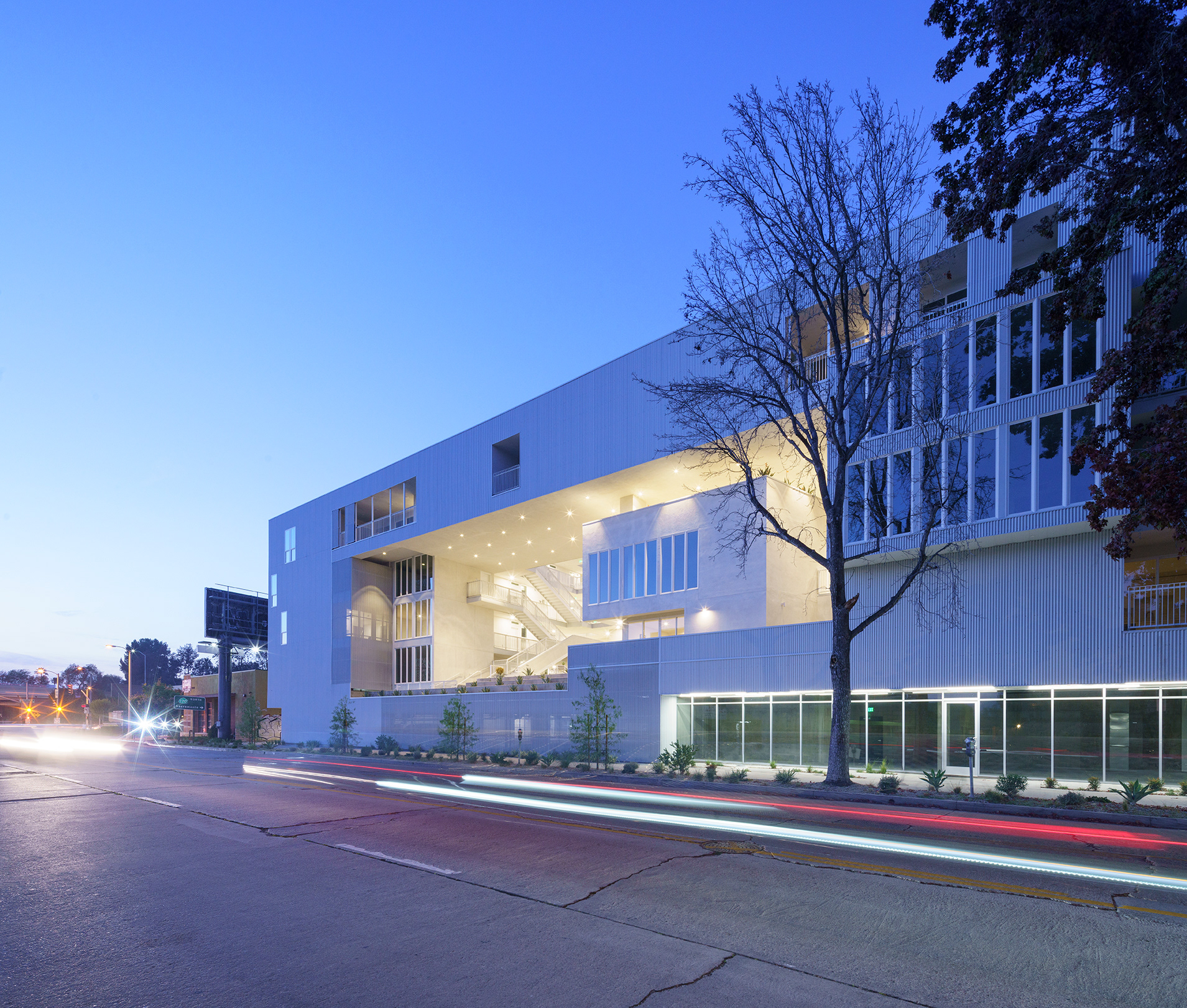
    But since we talk a lot about housing on this blog, I also wanted to highlight two projects by Brooks + Scarpa. The first is 11NOHO in North Hollywood, CA. This is a 5-storey apartment consisting of 60 suites, 12 of which are affordable (which allowed for a density bonus).

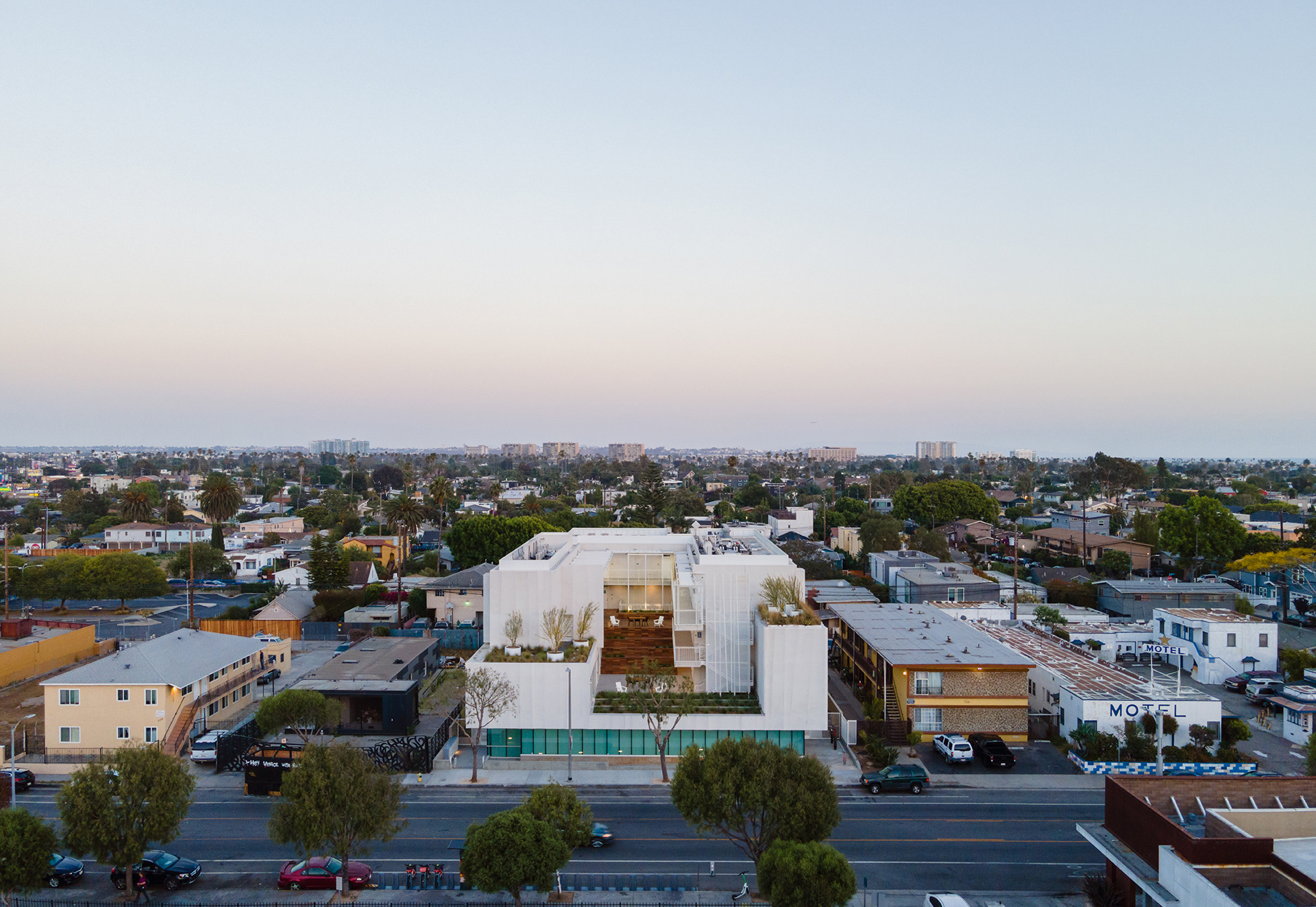
    The second is the Rose Mixed-Use Apartments in Venice, CA. This one is a 4-storey apartment and is 100% affordable. I’d like to know how they got the pro forma to work, but regardless, it’s proof that Europe doesn’t have a monopoly on beautiful social housing projects.

    What I really wanted to point out, though, are the projects’ courtyards. Southern California has a rich history of courtyard buildings and these two projects offer a contemporary interpretation of this tradition. Both include an elevated courtyard and both have found a way to maintain a connection to the street.

    What I like about this approach is that it’s simultaneously extroverted (there’s a connection to the broader urban context) and introverted (residents get a semi-private amenity).

    I think this duality can be particularly helpful when you’re designing and developing in a context that maybe isn’t the most conducive to intimate urban spaces. It allows you to create your own new ground plane, while not turning your back on the city.

    Coincidentally, it also happens to be one of the design moves that Globizen put forward in a recent submission to Salt Lake City for the redevelopment of a full city block in the Granary District.

    Photos from Brooks + Scarpa

  • The narrowest street (or lane?) on São Miguel

    June 12, 2025 · View original


    The Azorean adventure is over. But it wouldn’t be a trip to Europe without some sort of post about street dimensions.

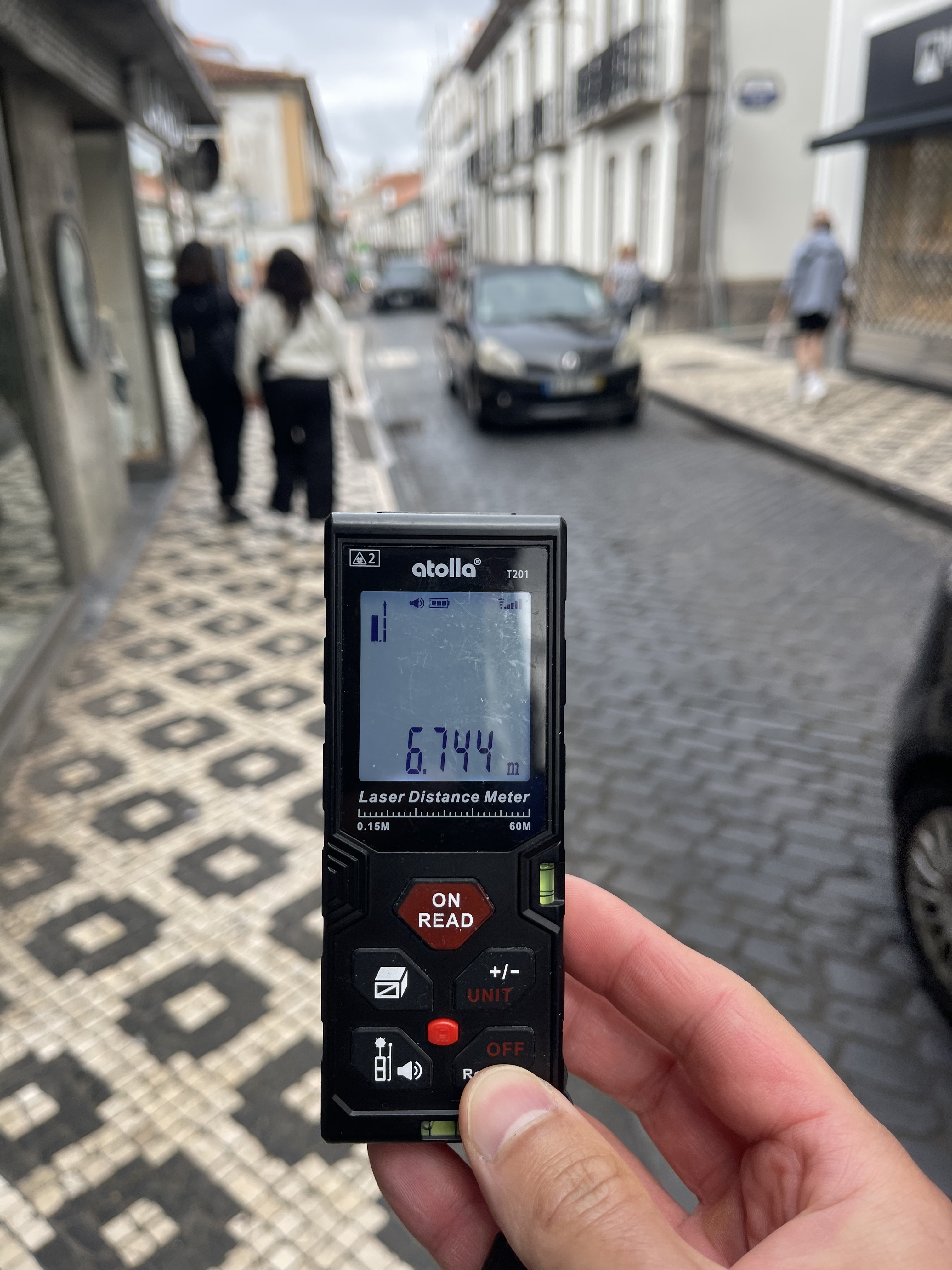
    So here’s a primary retail street in downtown Ponta Delgada — 6.7m from building face to building face, or about the size of a standard two-way drive aisle in Toronto.

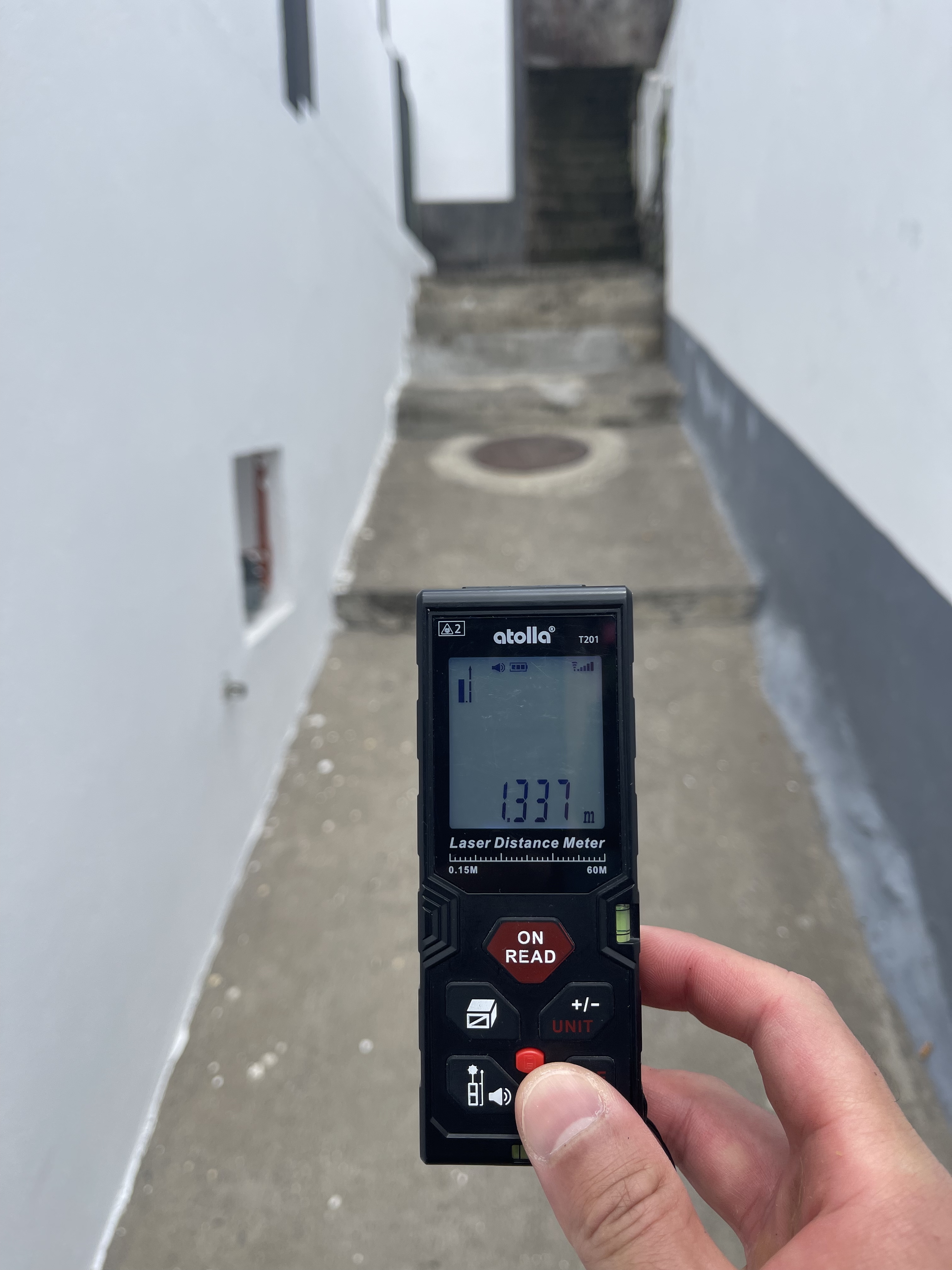
    And here’s the narrowest street/lane that I came across on the island. I couldn’t find a street name, but it did have utility meters on it, and it was about the size of a residential building corridor.

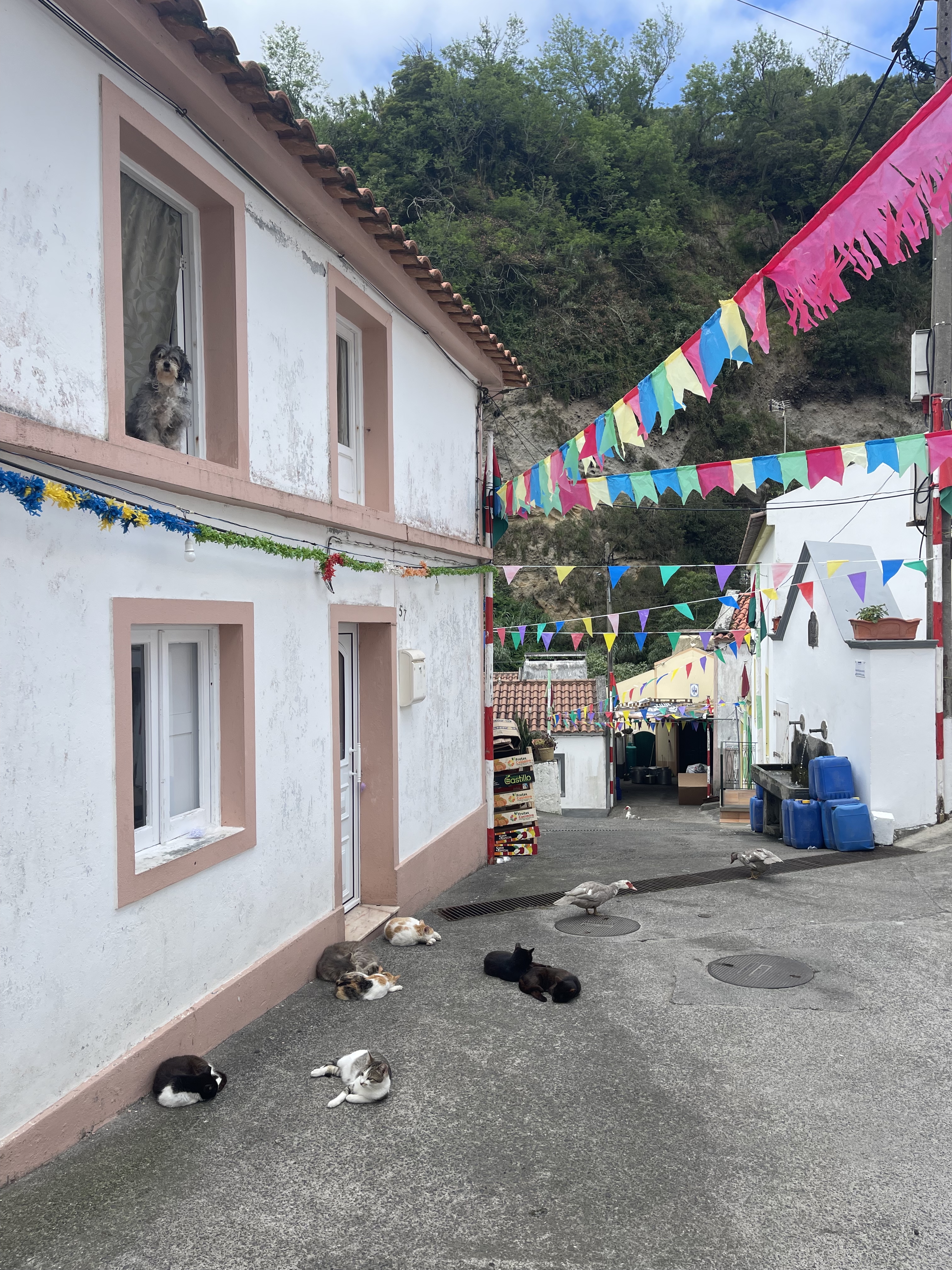
    We also stumbled upon quite the street party in this same area. There’s a lot happening in this photo.

    I did also manage to find a memory card reader for my camera at a Continente (supermarket) along the way. So make sure you’re following Globizen’s Instagram page.

    Regularly scheduled programming will resume tomorrow.

  • The Blue House Azores

    June 11, 2025 · View original


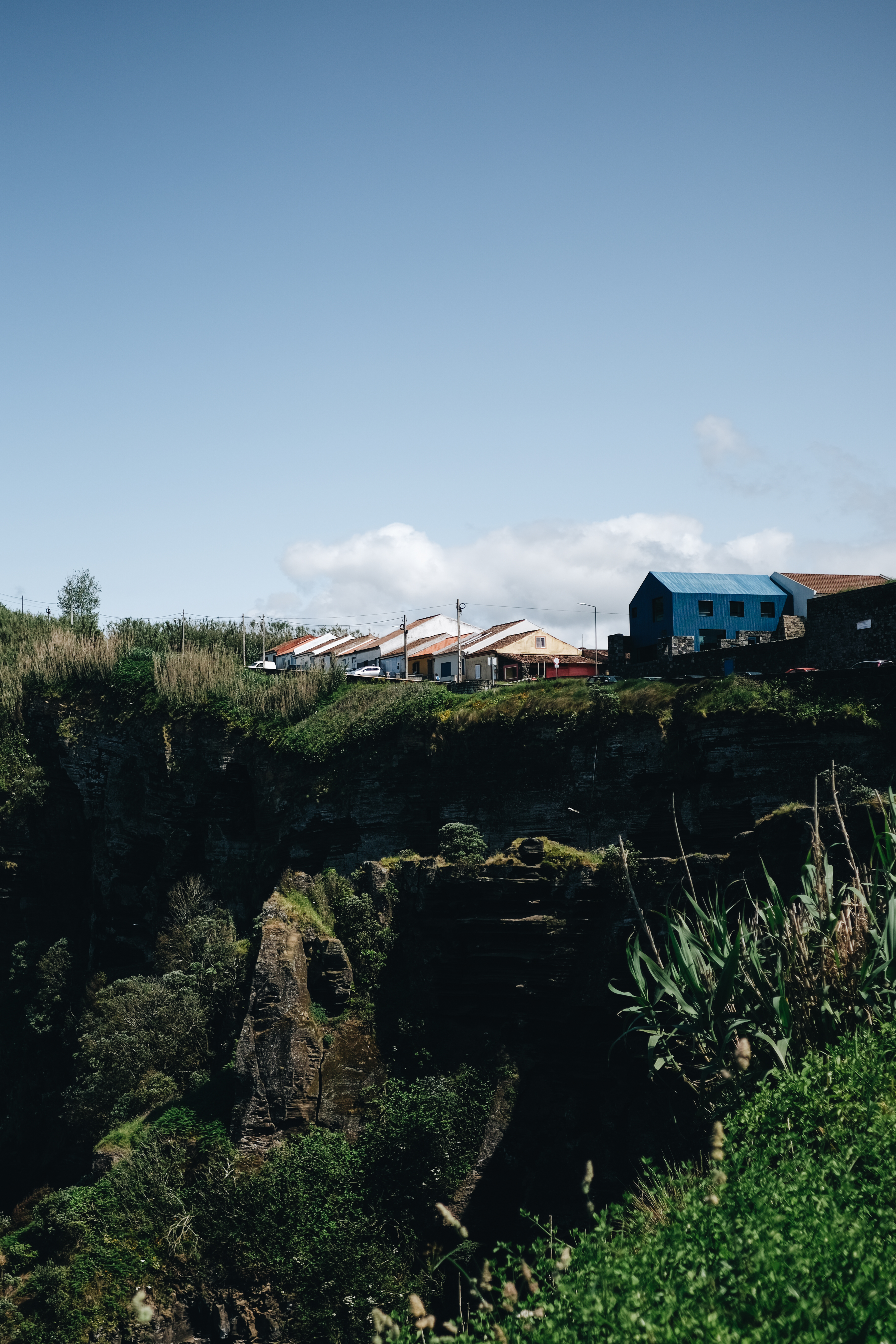
    These are photos of the Blue House — and its siting — in the civil parish of Capelas on the island of São Miguel. Designed by the Portuguese firm Atelier Backlar, the house was completed in 2023 and now serves as a popular short-term rental in the Azores. If you’d like to take a look inside and/or book it, here’s the Airbnb listing. Right now it’s going for over C$1k per night.

    But what’s even more interesting about this property is that it once belonged to Bianca’s maternal great-grandparents. Her great grandfather was a whaler and so its location on the water beside the Porto das Capelas was naturally ideal for days in the office. This is also where Bianca’s grandmother lived prior to emigrating to Toronto in the 60s.

    Like a lot of real estate, there’s an emotion-filled story that explains why it’s no longer in the family. But I do think it’s nice that the architects chose to preserve some of the existing walls of the previous house (which they describe as an abandoned ruin on their website). I also think it’s cool that it has become one of the most noteworthy examples of modern architecture on the island.

    Let’s call this the second-best outcome.