Daily insights for city builders, delivered every morning at 6 AM ET. I’m Brandon Donnelly — a Toronto-based real estate developer and founder of Globizen. I’ve been writing here since 2013.

Month: February 2025

  • Apartment rents in Austin are down 22%

    February 28, 2025 · View original


    Nowhere in the US are apartment rents declining as fast as they have in Austin. Average rents are down 22% from their August 2023 peak. This is according to Bloomberg. What seems to have happened is this: Lots of people started moving to Austin during the pandemic, rents jumped up dramatically, and so the city enacted policies to encourage more housing supply. Developers responded as they do and, between 2023-2024, well over 50,000 apartment suites were completed in the city. Now landlords have very little leverage in the market, and so rents are naturally dropping. It all makes perfect sense, but I will say that I’m surprised by the chronology. Apartment rents jumped 25% in 2021, there was a pro-development policy response, and then increased supply started flooding the market in 2023. How? Then again, Yahoo Finance is reporting that “builders [in Austin] typically take two years to go from buying land to welcoming tenants.” That’s development magic and I’d like some of it.

    Cover photo by Carlos Alfonso on Unsplash

  • Our looming housing shortage

    February 27, 2025 · View original


    The turning point for the Toronto housing market, including pre-construction condominiums, was, I would say, in the spring/summer of 2022. This is when the market turned and sentiment changed dramatically. What that means is that we are about to enter year three of this downturn. Time flies when you’re grinding away. How long it lasts is anyone’s guess, but new sales and completions are a good place to look.

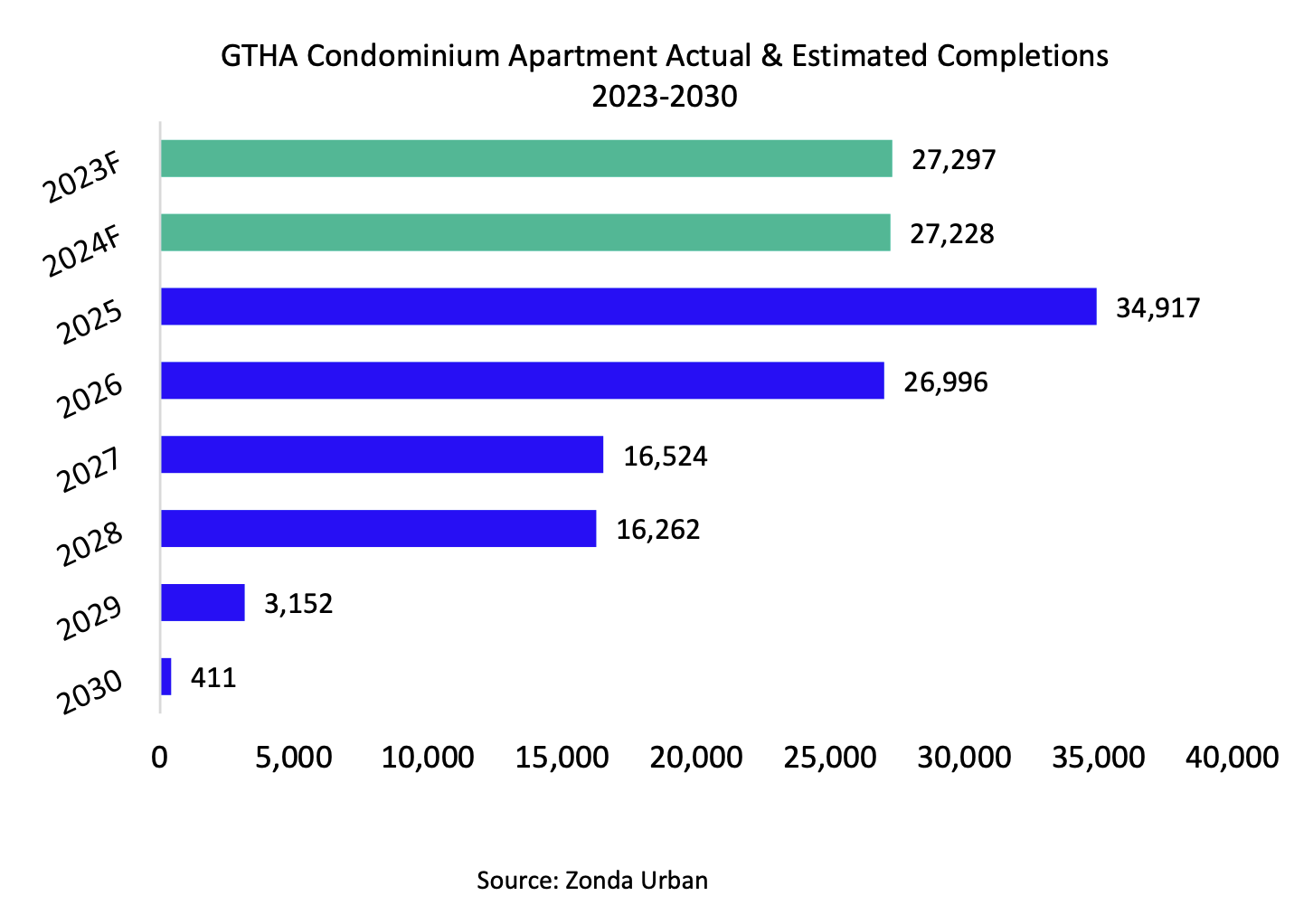
    Last year, the GTHA saw approximately 29,800 condominium homes complete according to Urbanation. This is slightly above Zonda’s estimate of 27,228. Whatever the exact number, it was a high number of completions. And this year, the forecast is for something similar. But given how precipitously new home sales have fallen off, it’s only a matter of time before completions do the same.

    Here’s what Zonda Urban is currently forecasting:

    They are expecting 2027-2028 to be fairly normal. The above figures would be just under the 10-year average. But then completions fall off a cliff starting in 2029 and go down to basically nothing in 2030 — 411 condominium homes could be a single project!

    My sense is that this cliff is going to occur earlier. 2027 will be five years since the market turned. That’s enough time for many, if not most, pre-sales to get through construction. It’s also important to point out the obvious fact that some large percentage of the above completions need to be categorized as new rental housing. So this looming housing shortage will impact both buyers and renters.

    Cover photo by Patrick Tomasso on Unsplash

  • How to improve the feasibility of infill housing (in Toronto)

    February 26, 2025 · View original


    Here’s an interesting Twitter thread by Zoë Coombes describing the crossroads that Toronto finds itself at when it comes to housing. We know we need to build more urban housing geared towards families. But unfortunately, the economics underpinning new housing bias the opposite: smaller homes. And in our current market environment, it’s a real challenge to even build any new housing. Period.

    Zoe argues that we have two options: we can either open up the greenbelt (i.e. sprawl) or we can make it more feasible to build infill apartment buildings catering to families. In her words, “there’s no third option.” I am a strong proponent of the latter over the former, and so here are a few things we really ought to be doing to improve the feasibility of these housing types in Toronto:

    – Greater as-of-right permissions across the city. The new Major Street policies are a huge step in the right direction, but, in my opinion, more will need to be done to unlock a greater number of sites. Land use planning, by virtue of its political affiliation, is an especially iterative process. – Eliminate the Site Plan Control process for larger projects. Currently, projects with more than 10 units are subject to Site Plan Control. This is an unnecessary barrier that adds cost and extends project timelines. My understanding is that this change is already underway. Good. – Eliminate or greatly reduce Development Charges on new infill housing. I’ve already written a lot about this topic, so I won’t repeat myself. But know that it’s material to development feasibility. Here’s some positive news from the end of last year. – Allow buildings with a single exit stair. This is crucial for smaller-scale projects where every bit of efficiency counts (net rentable area to gross construction area). It will also help to unlock better floor plans, including dual-aspect suites. – Streamline environmental approvals. In Ontario, if you are “converting” a site to a more sensitive land use (such as residential), you are required to obtain a Record of Site Condition from the Ministry of the Environment, Conservation and Parks. Depending on the conditions of the site, this process can take years. Human safety is obviously the number one priority, but lengthy review timelines do make small projects entirely infeasible.

    Again, the good news is that some of these changes are already underway. So we’re at least headed in the right direction. But is there anything else you would add to this list?

    Cover photo by Kai Pilger on Unsplash

  • The fastest growing US states

    February 25, 2025 · View original


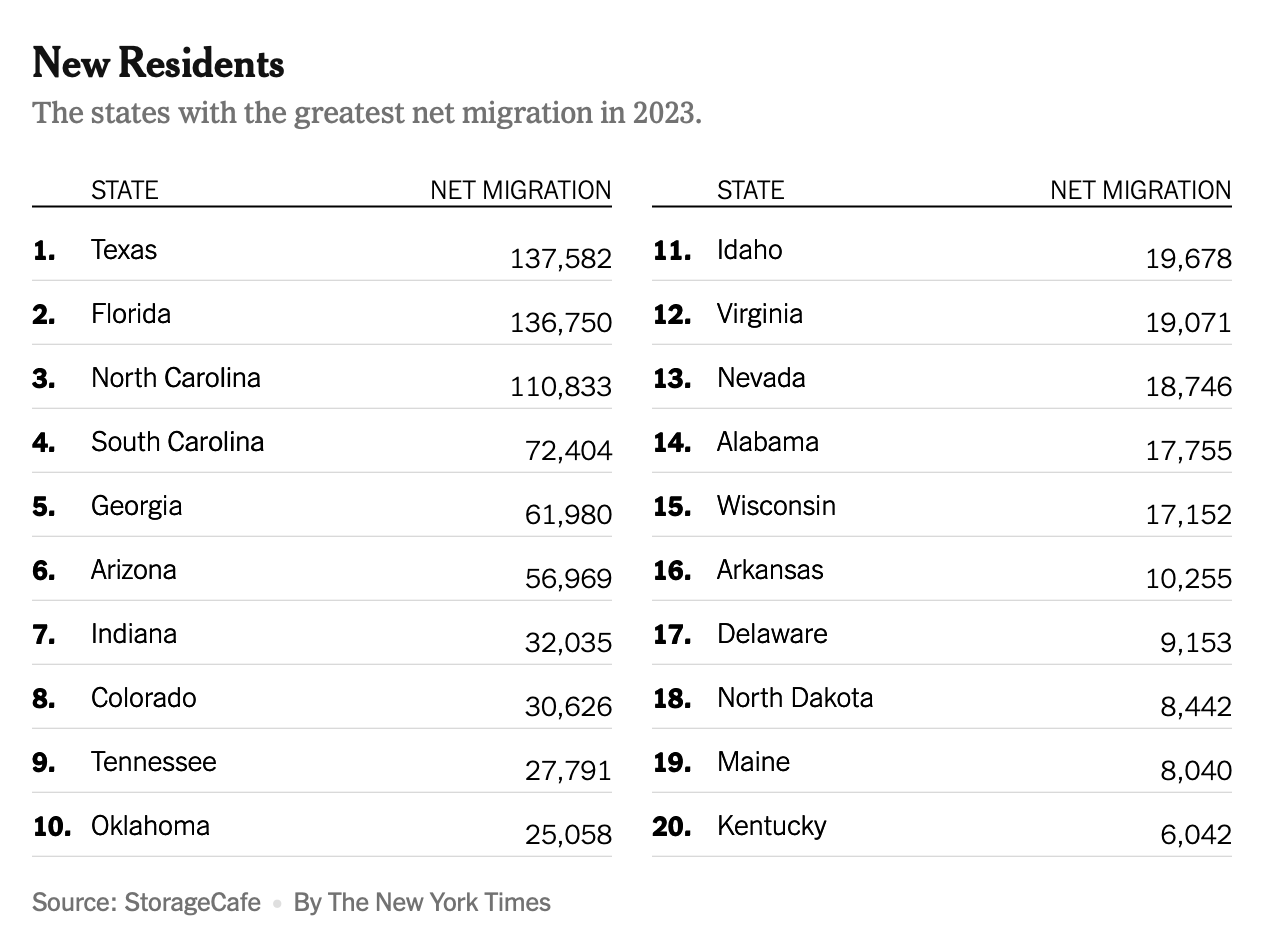
    Here is a chart, via the New York Times, showing the US states with the greatest net migration in 2023:

    This is calculated by looking at the difference between arrivals and departures for each state, but only within the US. And for the first year since 2014, Texas has overtaken Florida, though admittedly not by much.

    I saw some discussion about this on Twitter, but I think it’s important to point out that this is only domestic migration. Between 2023 and 2024, the US grew by some 3.3 million people. And 84% of this growth (about 2.8 million people) came from international migration.

    So let’s include those numbers (data via the US Census Bureau).

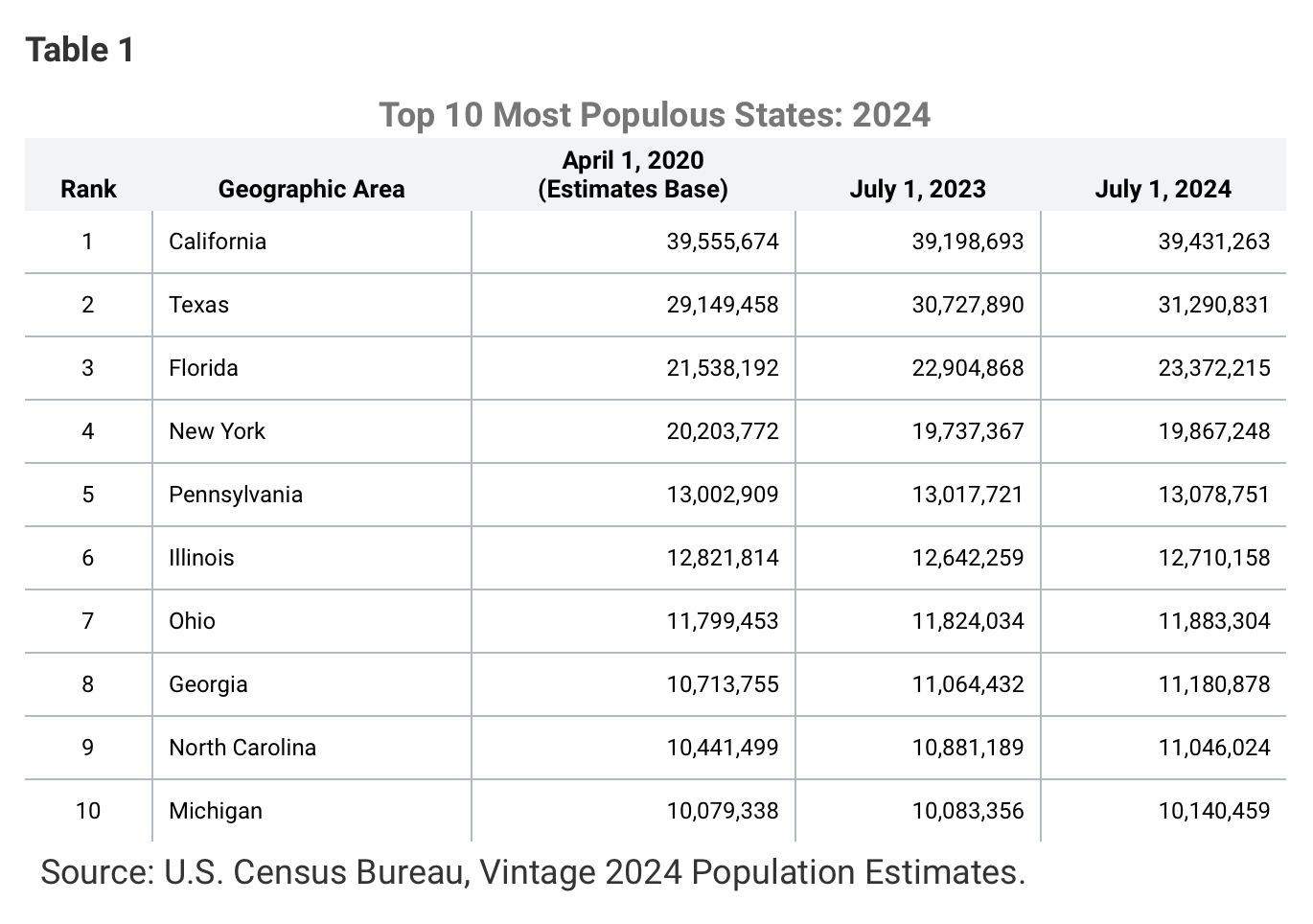
    Here are the most populous states:

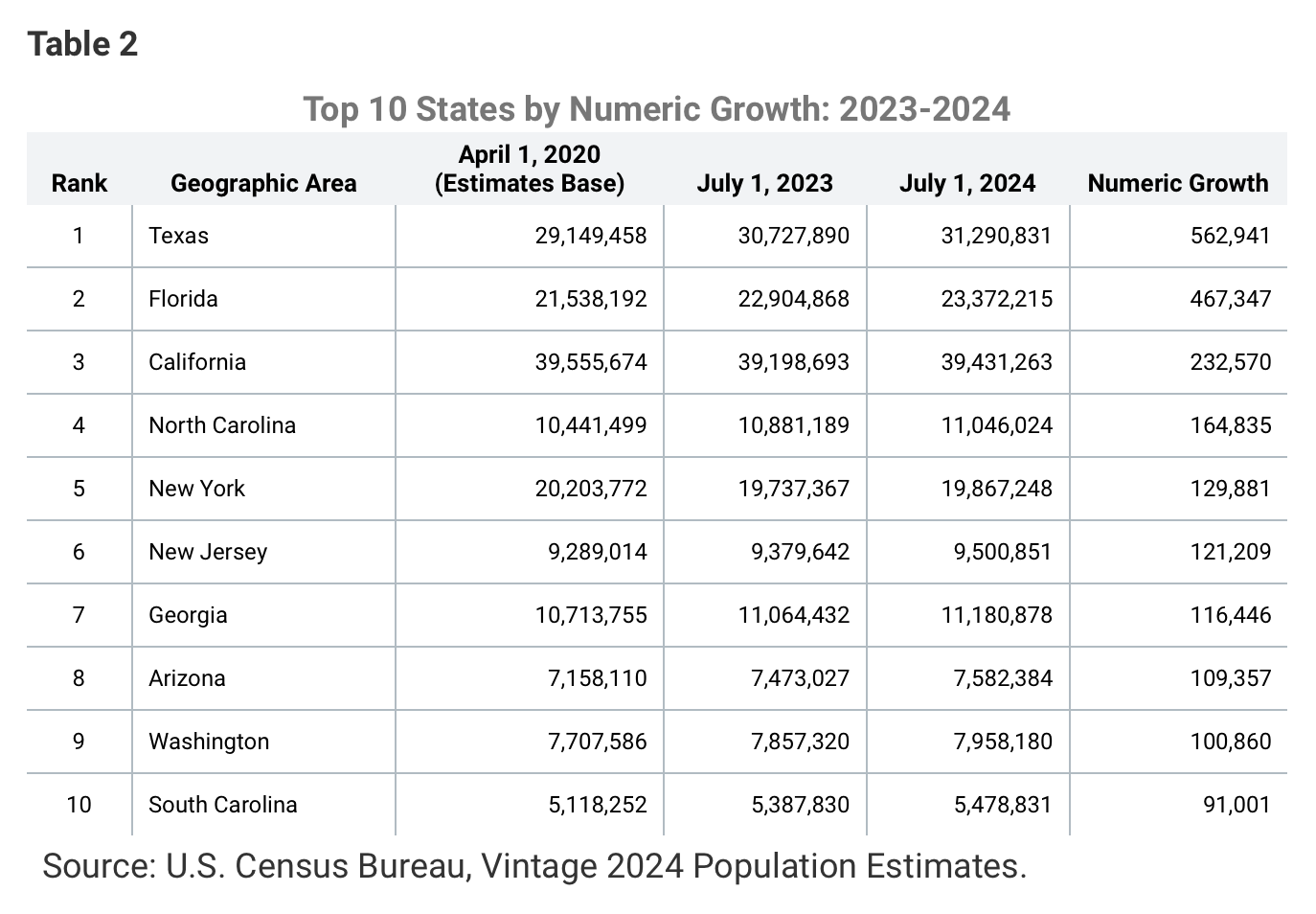
    Here are the top 10 states by numeric growth:

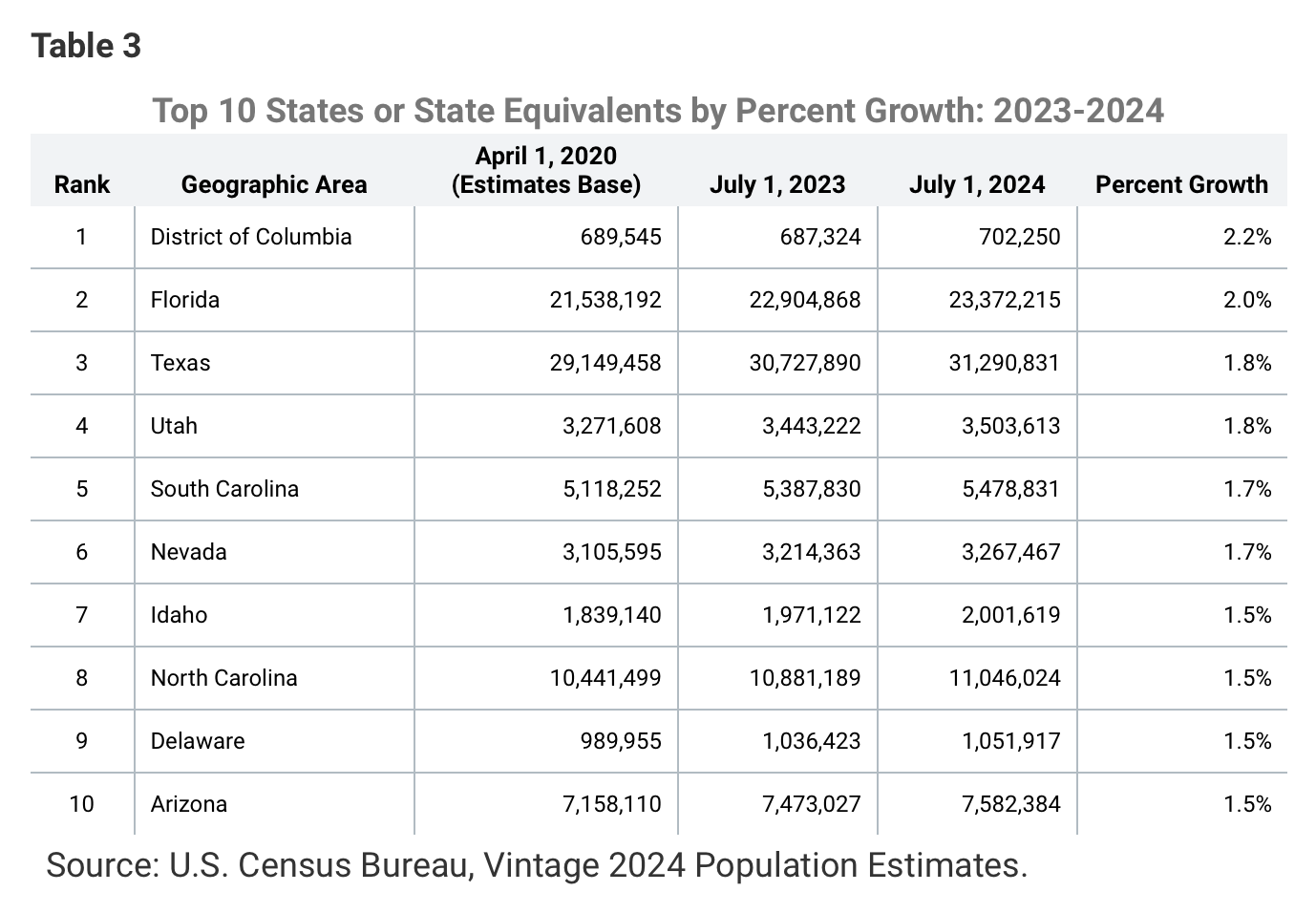
    And here are the top 10 states by percent growth:

    When looking at overall numeric growth, Texas and Florida still land at the top. (They’re also among the highest in terms of percentage growth, despite already being the second and third most populous states.) But now states like California and New York show up on the top 10 list, which speaks to their ability to draw people from around the world.

    None of this is particularly surprising, but I still think it’s valuable to see the numbers.

    Cover photo by Courtney Rose on Unsplash

  • Bargain-purchase folly

    February 24, 2025 · View original


    This post is ultimately going to be about real estate, but bear with me for a minute. In Warren Buffet’s 1989 letter to shareholders, he describes something that he refers to as the “cigar butt” approach to investing. This has been talked about a lot since this letter, but the general idea is that if you buy a company cheap enough, it doesn’t matter that there may only be “one puff left.” Your low cost basis will make that puff all profit.

    This has a logic to it, but Buffet goes on, in this same letter, to call this a “bargain-purchase folly.” You may think you’re getting a good deal and an enviable discount to market, but if the company sucks, you’re likely in for a rough ride at some point. This lesson learned is what resulted in his famous adage that it’s far better to buy a wonderful company at a fair price than a fair company at a wonderful price.

    Now, let’s consider something that Howard Marks wrote in the memo that I cited yesterday. He calls it one of his guiding investment principles and goes like this:

    > “There’s no asset so good that it can’t be overpriced and thus dangerous, and there are few assets so bad that they can’t get cheap enough to be a bargain.”

    Interesting. I agree with the first piece. It doesn’t matter how good an asset may be — and we can now start to turn our minds to real estate — there’s of course a way to pay too much. But is this second part entirely or at least mostly true? I’m not so sure. It might be a cigar butt.

    One of my own rules for real estate is that just because an asset is cheaper than it was before, it doesn’t necessarily mean that you’re getting a good price. And that’s because I have seen “bargain prices” drop even further. In fact, when it comes to real estate, including development land, sometimes the value that you should be willing to pay might even be negative or less than zero.

    What this means is that someone would need to pay a rational market participant in order to take on the asset or development project (usually this comes in the form of a subsidy and it means the market isn’t functioning on its own).

    “Buying below market” and “buying below replacement cost” are commonly sought after features in the real estate industry. And indeed, buying well is critically important. But I do think that it’s important to be just as worried about overpaying as you are about buying a shitty asset. Buying too cheap can also be a problem, assuming the market is pricing the asset accurately. It means you probably don’t want to own it.

    Cover photo by Simone Hutsch on Unsplash

  • A few unusually insightful people

    February 23, 2025 · View original


    As many of you will know, I very much enjoy reading the investing memos of Howard Marks. And buried somewhere in one of them is an analogy about the kind of investors who try and time the market and/or who constantly chase the next hot thing (whatever asset class that may be).

    It goes something like this: If you’re trying to catch a bus and you’re running from bus stop to bus stop trying to perfectly time the arrival of the next one, there’s a chance that you might never catch a bus. But if you patiently wait at one stop, eventually a bus will come and eventually you’ll be able to get on it.

    I like this analogy because you see this jumping around in every industry. In tech, a lot of people have moved from the crypto bus stop to the AI bus stop and, in real estate, we’ve seen it, and are seeing it, with industrial, student housing, and other in-demand asset classes. Capital wants its yield.

    Now, it’s obviously important not to ignore macroeconomic shifts and fundamental changes to your sector. If your bus route has been cancelled or rerouted, you don’t want to be waiting patiently at that stop. You want to be on the move.

    But if the long-term fundamentals in your sector haven’t changed and everyone else is distracted by what’s new and shiny, hanging out can be a powerful strategy. And this brings me to something that Marks recently wrote about in a memo called “On Bubble Watch.” In it, he talks about the three stages of a bull market.

    Here’s how he describes stage one:

    > The first stage usually comes on the heels of a market decline or crash that has left most investors licking their wounds and highly dispirited. At this point, only a few unusually insightful people are capable of imagining that there could be improvement ahead.

    In my view, this is broadly the stage we are at in the commercial real estate industry. It’s tough out there. But at some point in the future, we will move past this stage and go from “a few unusually insightful people” to “most people” and then finally “everyone.” These are the exact words used in his 3 stages.

    But here’s the thing.

    There’s lots of opportunity if you can be among the “few unusually insightful people.” It gives you the chance at being right about something that “most people” are overlooking. But that means you need to hang out at the bus stop that you have high-conviction around, which can be hard if everyone has left you in search of another one.

  • Data Center Alley

    February 22, 2025 · View original


    We’ve spoken before about how much electricity is going to be demanded by data centers in the future. According to this study, data center energy usage is expected to represent somewhere between 6.7-12% of total electricity consumption in the US by 2028. And according to McKinsey, demand for data centers is going to at least 4x by the end of this decade. So the consensus is that we are going to need more, not less, data centers in the foreseeable future.

    But if data centers represent the physical infrastructure needed for our digital activities, it’s both interesting and valuable to think about where this stuff wants to go, especially since tech is, in some ways, a decentralizing force for cities. Interestingly enough, they exhibit the same economies of agglomeration as many other urban activities in that they want to be near density and other data centers. Maybe even more so.

    Here’s an excerpt from a Harvard Business School report (2022) called “Where the Cloud Rests: The Location Strategies of Data Centers.”

    > The study finds a pervasive urban bias in the location of third-party data centers. For example, we find that all large metropolitan areas with over 700,000 population have at least one supplier. Less dense areas may or may not have any. Moreover, local entry rises with the presence of local information industries and intensive data users, such as finance, insurance, and real estate. Because less supply locates in the areas with lower density, a high fraction of buyers in small and medium-sized locations must get their services from non-local suppliers—likely located in the closest major city. Relatedly, we also find supply of more specialty services in denser and more competitive locations. We interpret all these patterns as the result of tension between economies of scale and user preference for proximity.

    And here’s a quote from LA-based Rising Realty Partners:

    > Once a data center hub is entrenched, it tends to create its own gravitational pull. Data center tenants want to be near other data center tenants. And the main hubs also boast high levels of connectivity. The calculus is straightforward: It’s far easier to run a fiber optic cable across the street or across town than to run a connection across the state or country.

    This is what is happening in Northern Virginia with “Data Center Alley” and what is now now referred to as the world’s largest data center hub. As of July 2024, Loudoun County, VA (which is located just 34 miles from Washington, DC) had 43 million square feet of existing data centers and ~47 million more square feet in the pipeline. This represents an increase of ~60 million square feet compared to where the area was as recently as 2022.

    Overall, there are only so many “primary” data center markets in the US. CBRE lists 8. This makes it a relatively concentrated real estate asset class in terms of geography.

    Cover photo by Claudio Schwarz on Unsplash

  • Raclette on the Bench

    February 21, 2025 · View original


    Neat B and I were on the Bench this past long weekend. Hidden Bench Estate Winery was doing “Raclette on the Bench” and so, naturally, we went to check that out. We’re suckers for Savoie-like mountain food. Anthony Bourdain was also right when he said, “you can never have too much cheese, bacon, or starch.”

    All of the above ingredients were local and we ended up sitting beside a nice lady from Upper Canada Cheese (the source of the raclette). She told us all about the benefits of A2 milk and explained that it’s why people often feel better consuming copious amounts of cheese in Europe compared to in North America, even if they’re lactose intolerant.

    After Hidden Bench, we decided to go down the street to Domaine Le Clos Jordanne. We had never been before but we actually served one of their wines at our wedding last summer. They specialize in chardonnay and pinot noir. As soon as we walked in the door, we were super impressed by the space, and our host Tamara.

    The interiors are by Solid Design Creative and they collaborated with Pamela Nelson on a really great 16-foot high art installation. It is meant to represent the “terroir” of the winery — namely its strata of limestone, clay, sand, and silt — and that is, of course, what their winemaker is all about. Turning the Bench region into liquid form.

    If you haven’t been, I would highly recommend a visit to both of these wineries, followed by a stopover at UCC for some A2-milk cheese. Or so I’ve been told.

  • Canada announces high-speed rail between Toronto and Québec City

    February 20, 2025 · View original


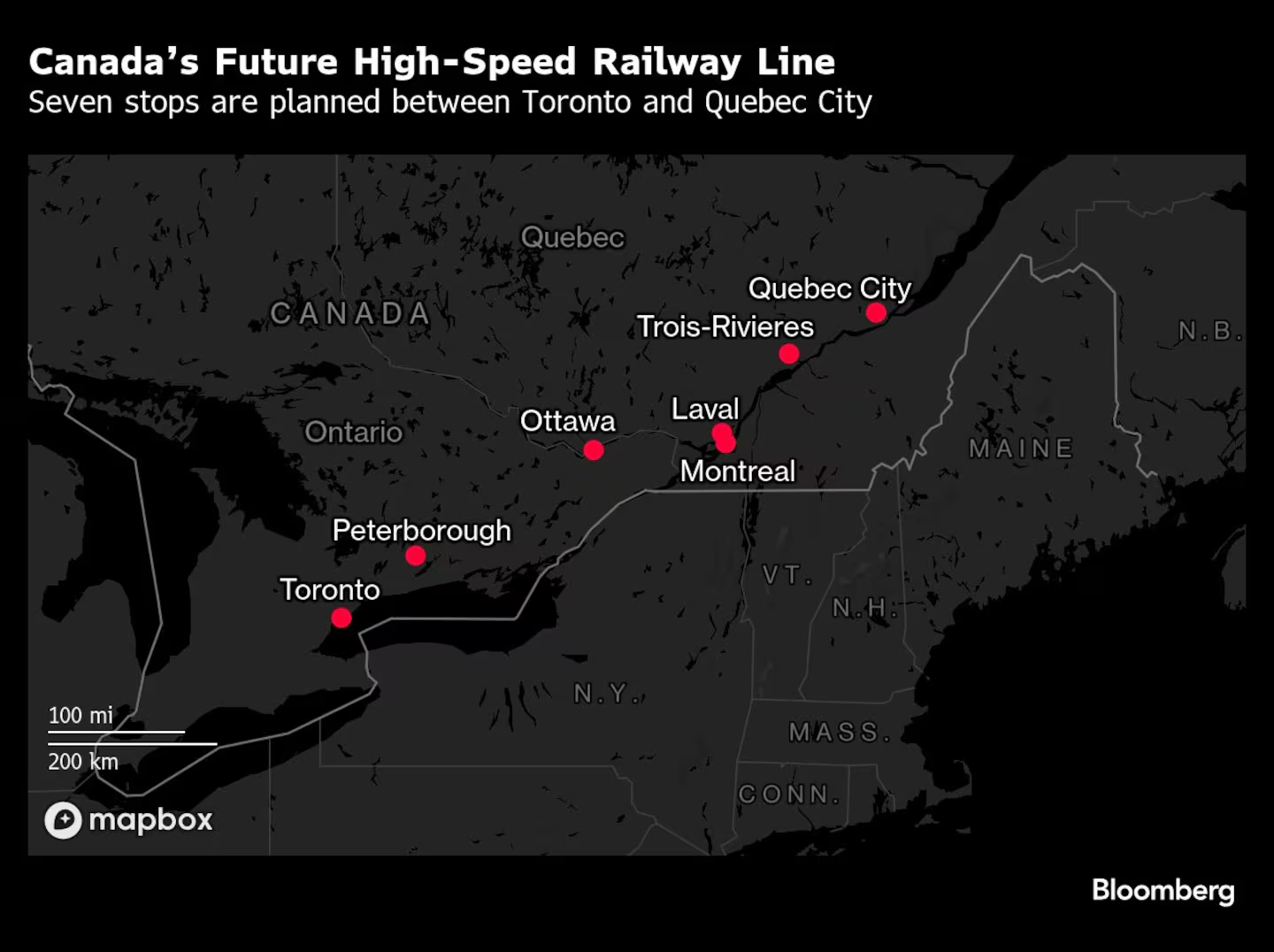
    Yesterday, the federal government announced that Canada has just awarded a high-speed rail contract to a consortium led by the Caisse de dépôt et placement du Québec. The plan, at least as it stands right now, is for the service to run between Toronto and Québec City, have a total 7 stations, and operate at 300 km/hour. And since this is the most densely populated part of Canada, this 1,000-km corridor is expected to connect and unify roughly half of the people in this country (~20 million people).

    However, many people are rightly reacting to this news with extreme cynicism. Some of the comments: It will never actually happen. It will never happen in my lifetime. The next administration will cancel it as soon as they get into office (and then we’ll have to pay hefty cancellation fees). It’ll be too expensive. This corridor is already adequately serviced by air travel. 300km/h isn’t fast enough and the technology will be outdated by the time it’s ever complete. And the list goes on.

    These are all valid and expected feelings. It’s almost as if we’re accustomed to politicians making lofty promises right around election time! And of course, deep down in side, I too share this same cynicism. History has taught us. I mean, look at John Tory’s SmartTrack proposal from 2014. This thing was supposed to be done by now. But instead, we are now in 2025 and not one station has been built and we’re down to only three on the books. Maybe this year will be the year for construction to start.

    This shouldn’t be the case. We shouldn’t have zero confidence in our country to be bold, get things done, and make transformational investments for future generations. So I’m putting cynicism and politics aside to say: let’s build! This is the right direction and attitude for our country to be taking. It’s positive for our economy, the environment, our international prestige, and our political integration, among many other things. Expect to hear more high-speed rail talk on this blog going forward.

    Image via Bloomberg

  • Which side?

    February 19, 2025 · View original


    Last week in Japan was the first time I had ever driven a car on the left side of road. I spent a summer working in Dublin many years ago but I never once drove while I was there.

    To be honest, I thought it was going to be more awkward than it was. But other than accidentally turning on the wipers a few times (they were on the opposite side to where turn signals typically live), it came to me pretty quickly.

    I also noticed that left-hand traffic seems to impact the flow of many other things in Japan. On sidewalks, for example, people walk on the left. And on escalators, everyone stands on the left (and walks on the right), whereas the opposite tends to be true in Toronto.

    Japan is also an orderly and rule-abiding place and so these conventions are widely followed. On more than a few occasions, I realized I was swimming upstream and then quickly switched sides.

    What’s interesting is how this directional convention permeates so many aspects of everyday life. Which begs the question: where and when did it start? Do the “rules of the road” always influence everything else?

    The answer seems to be that nobody really knows. There are many unproven theories. Some suggest that it has to do with how horses were ridden and walked, and that ~90% of people are right-handed.

    But I couldn’t find anything definitive. What we do seem to know, at least anecdotally, is that once a side is chosen, it broadly impacts how people generally move around. Pay attention the next time you’re on a busy sidewalk.