Daily insights for city builders, delivered every morning at 6 AM ET. I’m Brandon Donnelly — a Toronto-based real estate developer and founder of Globizen. I’ve been writing here since 2013.

Month: August 2023

  • A few charts on working from home…

    Here’s an interesting paper from WFH Research that looks at, “the evolution of working from home.” Not surprisingly, remote work tends to vary by industry, with tech being the most likely to work from home and with hospitality & food services the least likely.

    By extension, WFH prevalence also appears to correlate with population density. This largely has to do with the kinds of jobs that center themselves in big and dense cities. This is interesting because one conventional way to think about cities is that they are places where businesses and people cluster to accumulate wealth. That clustering is still happening, but work is evolving.

    And that is always the case.

    Overall, the authors conclude that about 40% of US employees are now working at least one day a week at home, and that just over 11% are fully remote. They also argue that fully remote work lowers average productivity by about 10-20%, but that hybrid work is closer to flat. Interestingly enough, opinions on productivity differ whether you ask employees or managers.

    If you’d like to read the full paper, click here.

    Figures: WFH Research

  • Hawaii’s miracle house

    Some of you have probably come across this photo online (this particular one is via Civil Beat):

    It is a photo of what looks to be the only remaining house in Lahaina, following Hawaii’s devastating wildfires this month.

    Naturally this raises an important question: Why was this house spared?

    The likely answer is that it was a combination of things. But some believe that the single biggest factor was the non-combustible zone that the owners had inadvertently created around the perimeter of their home.

    They did it to direct water and avoid possible termite damage, but it turns out that this is what most jurisdictions recommend in order to reduce wildfire risk.

    Here in Canada, FireSmart recommends a 1.5 meter non-combustible zone.

    So while luck surely played a part, so too did design.

  • 10 years of daily blogging

    This week marks the 10 year anniversary of this daily blog. In some ways it’s hard to believe that it’s been a decade and in other ways it’s hard to imagine a time when I didn’t write/post something every day. What a habit this has become.

    A lot has changed since 2013.

    Back then, I was still trying to find my way in real estate development. Instagram was only 3 years old. TikTok hadn’t been created yet. And the idea of writing a daily blog didn’t feel as antiquated as it does today. I probably should be vlogging at this point.

    But here’s what hasn’t changed:

    – I enjoy writing, and I think it’s personally beneficial — even if I don’t derive any direct benefits (such as money)

    – I like having my own little corner of the internet that I control — instead of relying exclusively on centralized platforms like Instagram or X

    Today this corner is brandondonnelly.com, but I suspect that brandondonnelly.eth will become just as important over the next decade. The world is heading toward more decentralization. And if/when that does happen, I’ll be sure to write about it on this daily blog.

    Thanks for reading everyone. As usual, I’ll see you tomorrow.

  • The Arc de Triomphe roundabout takes some getting used to

    In case I haven’t been clear enough: I love cities. I vividly remember being a kid and being excited to come downtown. My mom has told me that my eyes used to light up — every, single, time. Even today, when I’m away from Toronto and I return home, I’m excited to see the skyline. I miss it.

    This afternoon I got that same feeling on our return to Paris, even though it is not home. We spent the last two days in Normandy, specifically Étretat and Rouen, and as beautiful and as wonderful as these places are, I was genuinely excited to come back to the capital.

    My other revelation is that driving in Paris sucks.

    I would much rather walk, cycle, or take the metro. That is what this city is designed for. Still, I’m happy that we rented a car for Normandy and that I learned — after being honked at — how to appropriately conduct myself in the infamous Arc de Triomphe roundabout.

    Unlike every other roundabout in the world, you do not yield to cars already in the circle; you yield to cars entering the circle. Once you understand that, it’s significantly easier. Though, supposedly, car accidents that happen within the circle are automatically every driver’s fault and every insurer pays.

    I guess that says something about its orderliness.

    Aren’t cities wonderful?

  • Étretat 🇫🇷

    Étretat, France. Shot on a Fujifilm X-T3 with a 23mm f/2 prime lens.

  • Silicon Valley wants to build a new city about 60 miles northeast of San Francisco

    We talk a lot about housing supply on this blog. And most of the time it is about creating more and better infill housing, In other words, housing that leverages existing infrastructure and uses previously developed land as efficiently possible.

    But I suppose there are other options. You could, for instance, form an anonymous holding company, raise hundreds of a millions of dollars from leading venture capitalists in the Bay Area, spend $800 million on cheap agricultural land, and then just build an entirely new city about 60 miles northeast of San Francisco.

    And apparently that is happening:

    In 2017, Michael Moritz, the billionaire venture capitalist, sent a note to a potential investor about what he described as an unusual opportunity: a chance to invest in the creation of a new California city. The site was in a corner of the San Francisco Bay Area where land was cheap. Mr. Moritz and others had dreams of transforming tens of thousands of acres into a bustling metropolis that, according to the pitch, could generate thousands of jobs and be as walkable as Paris or the West Village in New York.

    Here’s the area; it’s generally between Fairfield and Rio Vista in Solano County:

    The real estate opportunity is an obvious one. The majority of the land in Solano County, roughly 62% of it, is zoned for agricultural uses. So it was and is relatively cheap to acquire. In isolation, I would imagine that it would be pretty difficult, if not impossible, to rezone any of it for other uses. But if you buy enough of it and if you have the resources, then maybe you figure it out.

    And if you do, it’ll all be worth significantly more, which is why this group has been reportedly paying many multiples of market value over the last 5 years. Because here’s the thing, paying $6,000 per acre instead of $1,500 per acre is almost certainly not going to move the needle considering the broader strategy. More important is that you get enough contiguous land to execute on the vision of a new city.

    This will be an interesting one to watch. And from what I have read, it sounds like they’re just now coming out of stealth acquisition mode and preparing to engage the broader community.

  • I became more French & German

    I first did 23andMe back in 2015. And at that time, my ancestry composition looked like this.

    At the highest level, I was 50.6% East Asian & Native American and 49.2% European. Going one level deeper, I was 43.7% Chinese, 16.5% British & Irish, 6% French & German, and 11.5% Broadly Northern European. 23andMe uses the term “broadly” when there’s a DNA match across multiple places and it’s not exactly sure what country or countries it might be.

    Last night, I decided to log back in to 23andMe and see if anything had changed in the 8 or so years since I first did the test and, frankly, since I logged into their website. And it turns out that it has. It seemingly got more precise. I guess that’s the power of more people using the product and more data. Now my ancestry composition looks like this:

    So what changed? Well, at a high level I’m still half Asian and half European. But 23andMe is now telling me that my Chinese roots likely trace back to Guangdong, a southern province that borders Hong Kong. This is news to me as I’m many generations removed and I had always thought it was somewhere more northern, partially because of my height.

    Apparently, I am also no longer British & Irish (0.6%). I am now 31.1% French & German and 3.3% Broadly Northwestern European (admittedly this could include Ireland). This was surprising to me since Donnelly is clearly an Irish last name. Though, my maternal grandmother did indeed have direct French roots.

    Along with this, I became more southern European (13%), with Spanish & Portuguese being the most common match (5.6%). So am I more this than Irish? I don’t know, these matches are pretty far removed and possibly go back 5-8 generations. At the great-grandparent level, I am, according to 23andMe, (1) Chinese and (2) French & German.

    I find all of this extremely fascinating and so I think I’ll spend more time exploring the site and my family tree. They are also telling me that it’s time to order another sampling kit, since I did mine so long ago. I plan on doing that, as well as ordering two for my parents. Let’s see what that does to my ancestry composition.

    Have any of you used 23andMe and found surprising results?

  • The new standard in wired charging

    It is widely rumoured that the upcoming iPhone 15 will replace its lightning charging port with a standard USB-C port. Maybe it doesn’t happen next month, but it will happen before December 28, 2024. Because this is the conformity deadline that the European Union has set for standardized wired charging.

    This said, I am already feeling like everything has switched over. All of the charging cables in my bag right now are USB-C. And I just realized that I’m going to need to buy some new travel adapters with USB-C ports, instead of USB-A (see above). This also means that hotels, airports, airplanes, and all other places around the world are going to need to start switching over to USB-C.

    I’m thinking about this right now because we are incorporating USB plugs next to work areas in some of our development projects. And there’s no point in going with USB-A any longer. That’s done. What would be even better, though, is if we could get rid of the 15 different plug types that are used around the world and switch everything over to one standard.

    Hopefully that’s next.

  • Summit County, Utah to vote on acquisition of 8,576-acre ranch

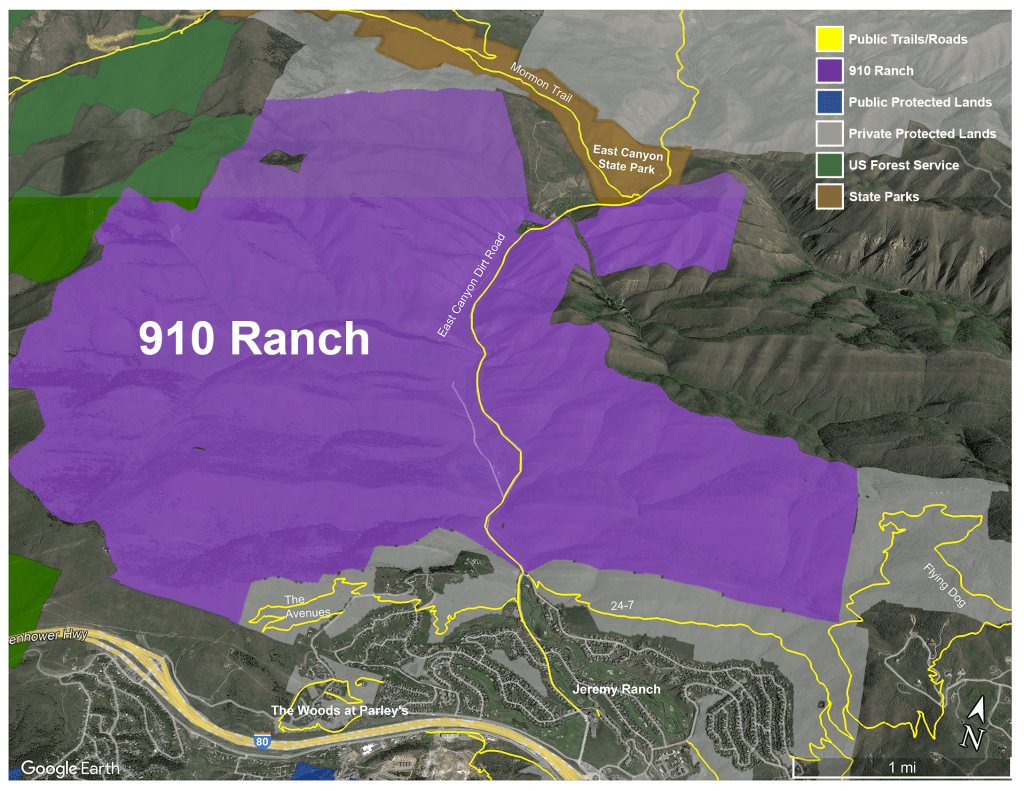
    Summit County Council is holding a special meeting this week to vote on the acquisition of an 8,576-acre property next to Jeremy Ranch and around the corner from Parkview Mountain House.

    The County Manager has recommended approval of the deal and these are the terms:

    – $55 million total purchase price (about $6,413 per acre)

    – Structured through a $15 million three-year option to purchase, with a right to extend for another year for an additional $5 million (option fees to be applied toward the purchase price)

    – During the option period, the County will have control of the property and pay $5,000 per month in rent

    Another way to look at this deal is that Summit County needs to initially come up with $15 million of equity. This is because they are getting seller financing for the remaining $40 million. (Implied loan-to-value of about 73%.)

    After 3 years, they will have to put in another $5 million, which lowers the implied LTV to about 64%. But in both cases, and assuming the $5k per month is all the County needs to pay, there’s effectively no interest on this 4-year “financing”. ($60k per year on $40-45 million.)

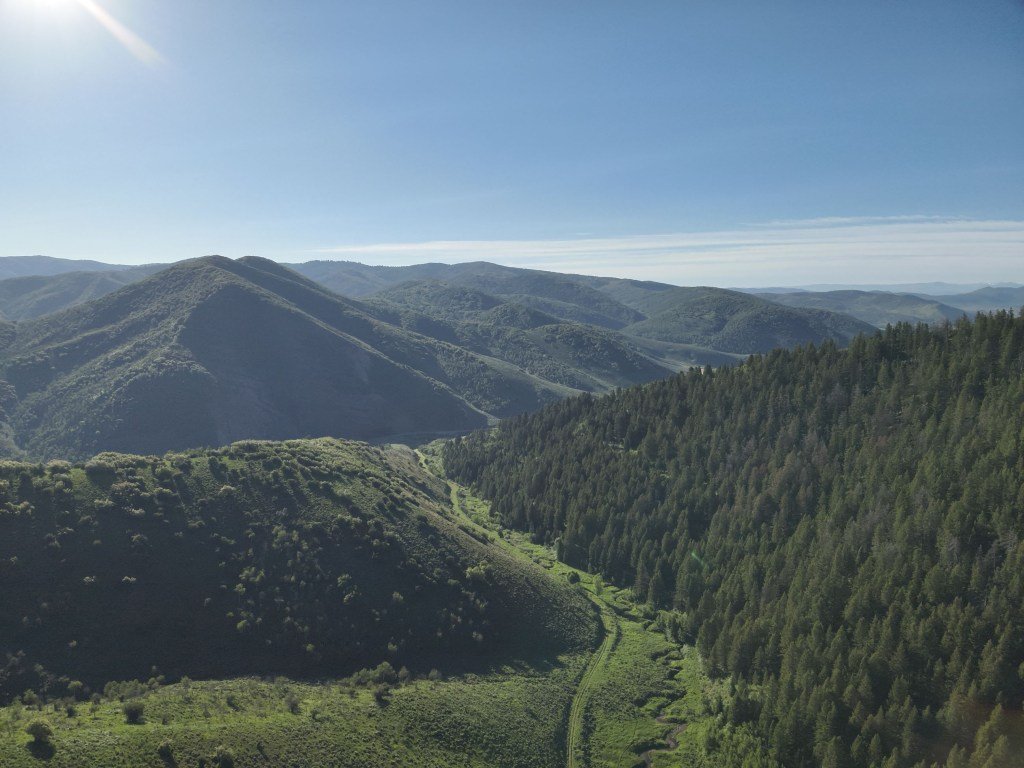
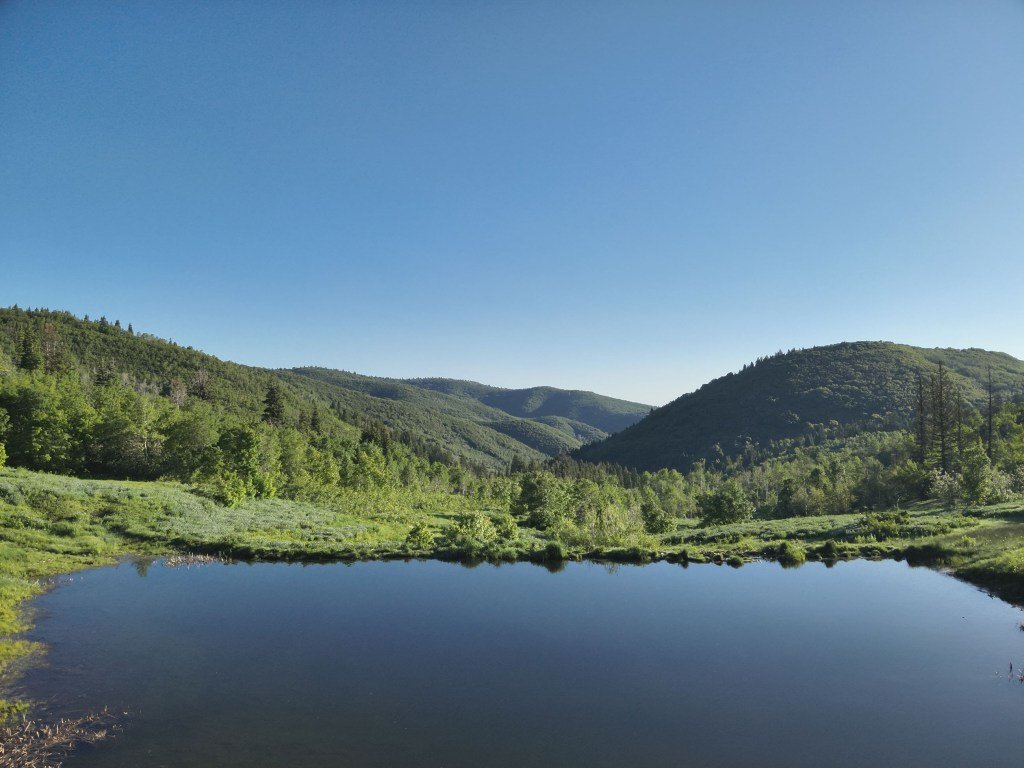
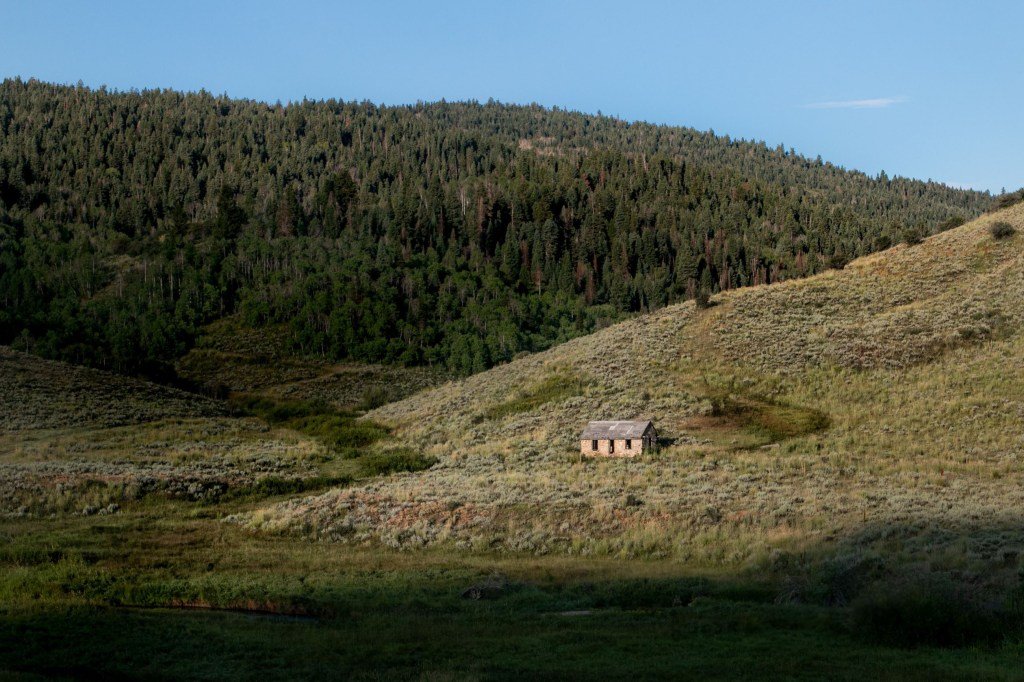
    The purchase price is also only ~$6k per acre, which should tell you that this is not development land. Its value is what you see here:

    And this is exactly what Summit County intends to do with the land: conserve it. As one of the last contiguous mountain ranches in the area that is privately owned, this sure seems like a win for the community. It’s a pretty good deal, too.

    Images: Summit County, Utah

  • Over 15% of retail sales in the US are now happening online

    Amazon was founded in 1994 and went public in 1997. By 1999, some 5 years after the company was started, only about 1% of total retail sales were being done online in the US. So you have to give it to Bezos, he saw what was coming and he got in early to help create it. This was not so obvious back in the mid 90s. The internet as a whole was still being viewed with skepticism, especially after the dot-com bubble.

    Today, online shopping represents over 15% of total retail sales. (See above chart from Charlie Bilello.) The pandemic pop is over, but it looks like we’ve returned to a pretty clear trendline — up and to the right. I guess the questions now are: When and where does this start to flatline? It doesn’t seem likely that this goes to 100% in the foreseeable future, especially if you include grocery. But it’s going to go a lot higher.

    For myself, if I were to exclude food/grocery, I would say that the vast majority (80-90%) of my retail purchases are done online. Even if I’m in a physical store, I’ll often pull out my phone to price compare. If it’s cheaper on Amazon, I’ll just order it there.

    Here’s another example.

    This past summer when I was in Park City, I discovered the brand Vuori. I had heard of them before, but I had never actually seen or touched their clothes. It’s great stuff. But instead of the store convincing me to buy something, it convinced me that I like the brand and that I should probably shop on their website at some point in the near future. And that’s exactly what I ended up doing. (Sorry Lululemon. You’re still my favorite.)

    All of this is perhaps obvious in a world where 15% of total retail sales are happening online. But I would imagine that the retail landscape and our cities will look very different when this number goes even higher. Our cities were different at 1% compared to today at 15%; so imagine what 50% or 80% might be like.