Daily insights for city builders, delivered every morning at 6 AM ET. I’m Brandon Donnelly — a Toronto-based real estate developer and founder of Globizen. I’ve been writing here since 2013.

Tag: YIMBY

  • BARF is fighting for more housing in San Francisco

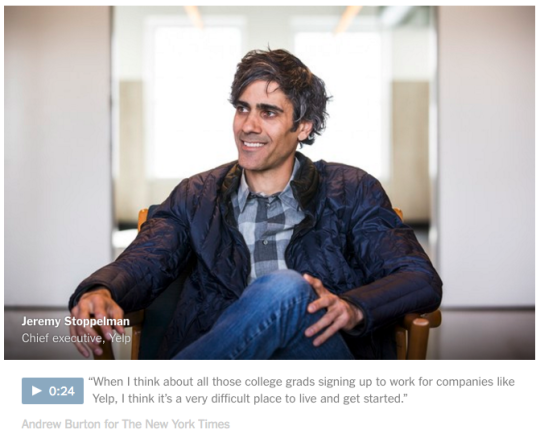
    A new YIMBY activist group is starting to gain meaningful traction in San Francisco. They were recently featured in the New York Times and they have managed to secure the financial backing of people like Jeremy Stoppelman – co-founder and CEO of Yelp. 

    (All excerpts in this post were taken from the NY Times.)
    image

    The group is called SF BARF, which stands for SF Bay Area Renters’ Federation. The group, however, supports new development of all kinds. So I think the name is more driven by the fact that the founder, Sonja Trauss, wanted the acronym to be BARF. It speaks to their shit disturbing approach:

    “Her group consists of a 500-person mailing list and a few dozen hard-core members — most of them young professionals who work in the technology industry — who speak out at government meetings and protest against the protesters who fight new development. While only two years old, Ms. Trauss’s Renters’ Federation has blazed onto the political scene with youth and bombast and by employing guerrilla tactics that others are too polite to try. In January, for instance, she hired a lawyer to go around suing suburbs for not building enough.”

    The impetus for all of this, of course, is San Francisco’s lack of affordability and severe housing shortage. Housing supply is decades behind the city’s population and job growth. 

    Most people are directing the blame at the tech community for bidding up housing. But there’s clearly growing recognition that housing supply matters.

    As a real estate developer, my industry obviously benefits from fewer barriers to building. So let’s get that out there:

    “Ms. Trauss’s cause, more or less, is to make life easier for real estate developers by rolling back zoning regulations and environmental rules. Her opponents are a generally older group of progressives who worry that an influx of corporate techies is turning a city that nurtured the Beat Generation into a gilded resort for the rich.”

    But let’s also be clear that I don’t believe we should be developing roughshod over our cities. New development should respond to what’s already there and give back. 

    At the same time, housing supply matters a great deal. A big part of the reason that cities like San Francisco, New York and Vancouver are so expensive is that they’re naturally supply-constrained markets. Geographically, they are either peninsulas or islands.

    When you overlay tight land use restrictions, fierce community opposition and/or foreign investment on top of this geography, it should come as no surprise to anyone that demand is outstripping supply. 

    New supply won’t solve every problem, but I do agree that it is an important part of the solution.
  • NO TOWER on Commercial Drive

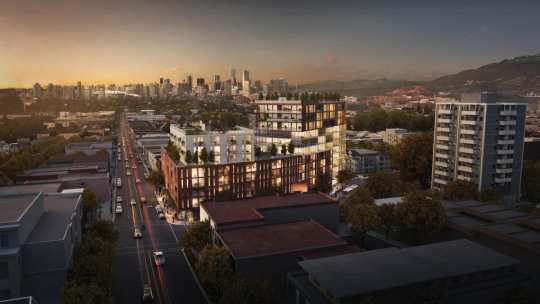
    For the past week or so I’ve been seeing the proposed Kettle Boffo Project in Vancouver make the rounds online. Here’s a rendering of the project, which is located at Commercial Drive and Venables Street:

    image

    The reason it has been making the rounds is that a community group called NO TOWER (written in all caps) has come out in fierce opposition of the 5 to 12-storey building. They have over 3,500 signatures.

    As an outsider looking in, this is surprising. The scale of the project seems appropriate. The height roughly matches the existing building shown above to the right. It may even be lower. And the project will provide somewhere around 30 social housing units, as well as additional space for the Kettle Friendship Society non-profit, who are currently on the site. (Note: An application to the city hasn’t yet been made.)

    What this has me thinking about is the push and pull between bottom-up and top-down planning. 

    When architect Bjarke Ingels talks about his Dryline project in New York, he likes to refer to it as the love child of Robert Moses (top-down planning) and Jane Jacobs (bottom-up planning). In the case of this project, it’s because it’s a large infrastructure project that they are trying to root into the local neighborhoods. Makes sense.

    But this same thinking could also apply to overall city building. Local communities rightly have their own wants. But at the same time, cities need to be thinking about the overall. The challenge is finding that right balance.

    I would be curious to hear your thoughts on the Kettle Boffo Project in the comment section below – especially if you’re from Vancouver.

  • I’m giving away a free Architect This City t-shirt

    I’m giving away a free t-shirt on April 1st, 2015 exclusively to Architect This City subscribers. There’s no catch. And no this is not an April Fool’s joke! I just want to say thanks to the people who read ATC on a regular basis. It’s that simple.

    So how does it work?

    1. You need to be an Architect This City email subscriber (either daily or weekly). If you’re not yet a subscriber, you have until midnight on Tuesday, March 31st, 2015 to make that happen. You can do that by clicking here. It’s free.
    2. You need to visit architectthiscity.com and pick the t-shirt you want. There are currently 5 different ones to chose from (the original ATC tee comes in both ATC orange and black).
    3. Finally, you need to leave a comment at the bottom of this post telling the community 2 things: which t-shirt you want and your favorite thing about your own city. That’s it.

    On April 1st I will randomly select somebody from the comments, check to see if they’re a subscriber, and then send them a free t-shirt.

    Simple, right? I’m really looking forward to giving away a t-shirt.

  • Bad neighbors build wind turbines

    image

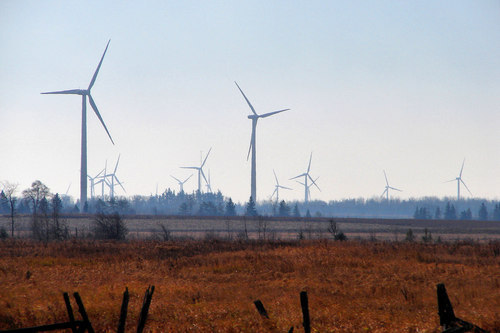
    On Friday when I was driving up to Thornbury, I ended up taking a route that goes through Shelburne, Ontario. I’ve taken this route at some point before, but I don’t remember seeing so many wind turbines. I guess it must have been before this particular wind farm had been built out.

    It turns out that these wind turbines belong to the Melancthon wind facility, which is the largest installation in Canada. The facility contains 133 wind turbines and has the capacity to generate 545,000 megawatt hours each year – enough renewable energy to power roughly 70,000 households. The facility is owned and operated by TransAlta and they’ve entered into a 20-year contract to supply renewable energy to the Ontario Power Authority.

    But what I also happened to notice were the many signs posted around with wording like the title of this post: “Bad neighbors build wind turbines.” And after speaking about it with people over the course of this weekend, I very quickly learned that there was fierce community opposition to this project.

    The concern with wind turbines is typically twofold. People don’t like the way they look and they worry about the noise that they will generate. There’s even an alleged condition called “Wind Turbine Syndrome.”

    I personally think they look quite beautiful. They seem so symbolic of the future and progress. But I am intrigued by the noise concern and so I decided to do a bit of research. I found this video from the UK. The big takeaways are that living beside a main road is generally much louder than living beside a wind turbine, and that a wind turbine isn’t usually that much louder than a quiet suburb, until you get fairly close to it. So I wonder if it’s really as bad as people are making it out to be.

    Either way, the issue at hand is incredibly important. We’re talking about renewable energy. And while you may not like the look of wind turbines scattered across the horizon as much as I do, I strongly believe that we need to figure out ways to wean ourselves off of fossil fuels. It’s for this reason that I’m a big supporter of both wind and solar power.

    So perhaps the counter to those signs scattered around Shelburne is the following: Responsible communities build wind turbines.

    Image: Wikipedia

  • New York YIMBY

    Yesterday a friend of mine sent me this NY Times article covering a site called New York YIMBY.

    I’ve spoken about the term YIMBY before and this site is exactly that: a site dedicated to “saying yes in my back yard” to new development in New York. It was founded by 23 year old Nikolai Fedak and currently receives 75,000 monthly visitors. He has plans to expand to other cities and I’ve already emailed him to see if he has any plans for a Toronto YIMBY.

    At a time when it’s common to hate on developers and new developments, it’s refreshing to see a site dedicated to the exact opposite. That’s not to say that all developments are good (New York YIMBY has no problem blasting the ones that suck, as it should), but it’s certainly framing development as a positive thing for cities. 

    In growing cities like New York and Toronto, development is going to happen. And so I would rather we focus on how to make it happen in the best way possible instead of just saying no.

  • Yes In My Back Yard

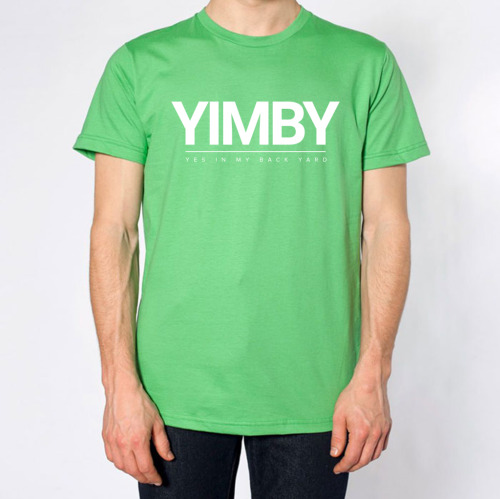
    Last week I called somebody a NIMBY. And though I probably shouldn’t have, it stems from the fact that I make a concerted effort to be the exact opposite: a YIMBY (Yes In My Back Yard, as opposed to Not In My Back Yard).

    I appreciate that change can be difficult for a lot of people. In fact, behavioral economic theory (specifically Prospect Theory) suggests that when people are faced with probabilistic alternatives involving risk, they tend to put more weight on the potential losses. This means that the potential benefits have to be, not just marginally better, but hugely more beneficial before people will make the change.

    Because I know I’m equipped with this bias, I try and constantly remind myself that change and motion are good and that oftentimes the potential losses or negatives aren’t going to be as bad as I might initially think.

    However, I also have a counter acting bias. I recently did a personality assessment (called the DiSC assessment) and I was found to be a creator. I would agree with this. What it means is that I prefer “to live in a world of possibilities.” I’m interested not in the way things are done today, but how they could be done in the future.

    And when I think about all the things I’m passionate about—architecture, design, real estate development, cities and tech—there’s a common thread: each one is about imagining something new. Whether you’re designing a building or building a new internet platform, it’s all about possibilities. I believe that the future will be better than today. I’m an optimist.

    But I recognize that this is a distinct personality type. I’m an early adopter. And not all people are like this. That’s why the adoption curve looks the way it does. 

    What would you say is your personality type?