Daily insights for city builders, delivered every morning at 6 AM ET. I’m Brandon Donnelly — a Toronto-based real estate developer and founder of Globizen. I’ve been writing here since 2013.

Tag: wynwood

  • Immersive digital experiences at Superblue Miami

    If you happen to find yourself in Miami or London in the near future, I would highly recommend that you check out Superblue. Neat B and I visited Superblue Miami this past weekend and it was an incredible experience.

    Above is a short video of one of the immersive installations (click here if you can’t see it embedded above). This one is by the Japanese art collective teamLab and what you’re seeing is a whole year’s worth of seasonal flowers coming to life and then dying off.

    It’s meant to show you the continuous change and cycle of life and death that we all live through every day, and you certainly feel that as you go through the space. The installation itself also responds to how you move and interact with it, with some actions encouraging more blossoms.

    It’s, of course, all very Instagrammable.

    But I think this descriptor is old news and doesn’t do the work justice. Superblue is a serious cultural experience. One of the other works on display right now is a piece by light and space artist James Turrell. And for this one, there were no photos and talking allowed. The timed experience was meant to be more meditative.

    It was the first time that I had seen something by James Turrell in real life and it didn’t disappoint. It made me feel things, as did the entire Superblue experience. So again, a top experience that I would highly recommend.

    On a related real estate note, the 50,000 sf Superblue space is located in an area of Miami called Allapattah (which is west of Wynwood and 5 miles east of MIA). I’m an outsider to the city building undercurrents of this city, but I keep hearing people talk about the area as the next Wynwood.

    The other cultural institution in Allapattah is the Rubell Museum, which I wrote about in 2019 as it was moving over from its original home in Wynwood. Supposedly the family now has the largest private collection of contemporary art in North America. So that’s something.

    Maybe these two anchors will be what does it for Allapattah. When we walked around the area there didn’t seem to be much else going on. But we all know how quickly that can change.

  • The new Rubell Museum

    This December 4 (2019) — the day before Art Basel starts — the Rubell family will open a new 100,000 square foot museum in Miami’s Allapattah district. (For years people have been calling Allapattah the new Wynwood.)

    A former industrial space on a 2.5 acre lot, the building was renovated by New York-based Selldorf Architects. Just over half of the building has been allocated to exhibition space and about 65% of this will be for permanent/longer-term collections.

    The Rubell family started collecting contemporary art in 1965. At the time, they were living in New York City. In 1990 they moved to Miami and in 1993 they opened up the “Rubell Family Collection” in Wynwood, which was a depressed neighborhood up until probably the early 2000s.

    With over 7,200 works, it is now one of the largest privately owned and publicly accessible contemporary art collections in the world. If you live in Miami or you happen to find yourself there this winter, you may want to check out the new Rubell Museum.

    Rendering: Selldorf Architects

  • Development is a local business

    This past weekend I toured my friend’s purpose-built rental project in Wynwood, called Midtown 29. It was completed last year and has already been stabilized.

    Real estate development is very much a local business. It is that way because so much of it is driven by relationships, but also because every market has its own little idiosyncrasies.

    This is always valuable to see. Sometimes we do things in our home market because it makes perfect sense to do so and sometimes we do it just because it’s, “the way we’ve always done it.”

    One of the most obvious things about development in South Florida is that the parking is always above-grade. No basements. That has the result of bringing down construction costs; though I understand that, with sea level rise, insurance costs are on the rise.

    If (or when) this whole autonomous vehicle thing does in fact take hold, it’s going to be a hell of lot easier to convert all of that excess parking in Miami than it will be in Toronto.

    Image: Midtown 29 (Art by Peter Gronquist)

  • Cities are always changing. What’s happening in Miami Beach?

    image

    The Miami Herald has a recent article up asking: Has Miami Beach lost its mojo? While the beach will always be an immense draw, there’s concern that entertainment dollars could now be starting to favor mainland neighborhoods like Wynwood, Brickell, and the Design District. 

    Here are some of the reasons why it is believed that may be happening:

    – Structural changes to the retail landscape

    – High rents have pushed out all of the interesting and distinctive tenants

    – City is too lenient when it comes to the nighttime economy; South Beach has become a circus

    – Investors and developers are worried about the Beach’s exposure to sea level rise

    – Strips like Ocean Drive and Lincoln Road have simply completed their urban cycle and are no longer attractive and novel

    – Overdevelopment of luxury housing (curiously, there’s a preservationist quoted in the article who appears to believe that restricting development to only mid-rise will result in less luxury housing)

    Many of these points are certainly not unique to Miami Beach. We know the retail landscape is changing. But as I was reading through the article, I was once again reminded that cities are always changing – even when we try and stop them from doing that.

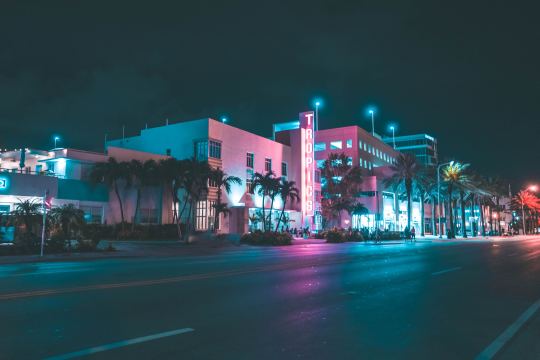
    There are over 900 historic buildings in the Miami Art Deco District. Most are low-rise and mid-rise. This includes the iconic Ocean Drive. And yet the above article is all about the changes that the Beach has seen and experienced over the years.

    Oftentimes we only associate change with new buildings. But architectural preservation does not guarantee any sort of urban stasis. Cities are far more complex than that.

    Image: Photo by Ryan Spencer on Unsplash

  • Building on stilts

    image

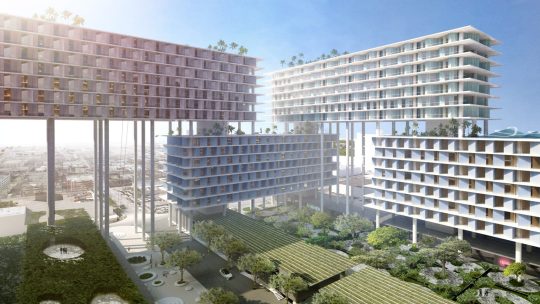
    Last week Bjarke Ingels Group and UIA Management announced a 125,000 square meter mixed-use complex in Allapattah, Miami called the Miami Produce Center. 

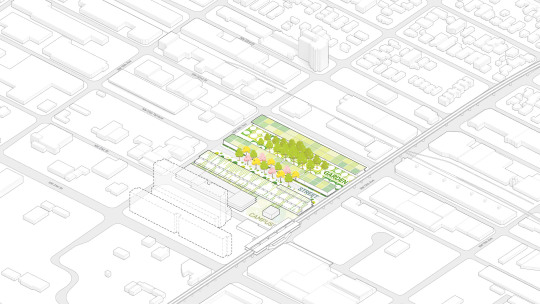
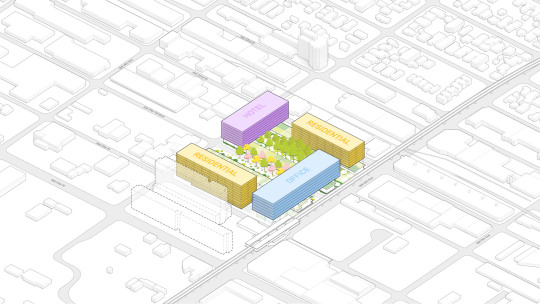
    The proposed project includes office, residential, and hotel uses on stilts over three existing warehouse buildings. The existing buildings will be transformed into restaurants, shops, cafes, and a school. And supposedly, at least according to the renderings, the parking garage will be designed so that it can be transformed into a club at a night. This is Miami after all.

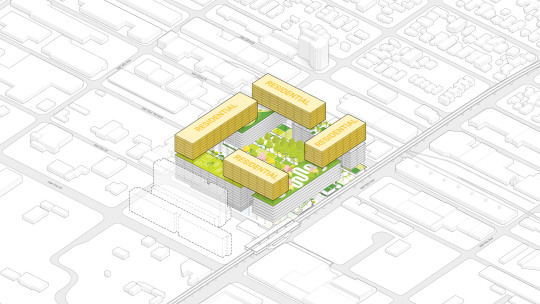
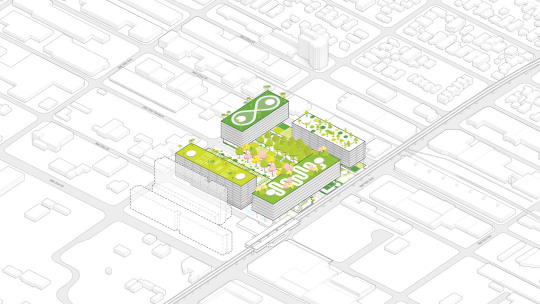
    Here are a few diagrams from BIG showing the build up:

    imageimageimageimage

    Perhaps best known for its warehouses and Dominican population, investors have been speculating for years that Allapattah would eventually become the next Wynwood. Here’s some evidence that it already has the requisite bars and artsy things.

    Does this project signify a tipping point for the area? Feels like it. But those of you who know Miami better than I do would be in a better position to comment.

    Images via Dezeen