Daily insights for city builders, delivered every morning at 6 AM ET. I’m Brandon Donnelly — a Toronto-based real estate developer and founder of Globizen. I’ve been writing here since 2013.

Tag: waterfront

  • Public access at Martin’s Beach

    I just learned about the ongoing legal dispute on Martin’s Beach (south of San Francisco) through this New York Times article

    To briefly sum it up, tech billionaire Vinod Khosla bought a 53-acre beachside village known as Martin’s Beach in 2008. On the land is about 47 beach houses, a shop that sold ice cream at one point in its life, and a road that provides the only access to the beach. The road is private, but over the years and before Khosla purchased the property, it provided both parking for and access to the beach. 

    After acquiring the property, the county told Khosla that he had 2 options with respect to the road:

    (1) Keep it open (there’s a gate that controls access). And charge no more than $2 a car for parking, which was the rate charged in 1972.

    (2) Apply for a Coastal Development Permit to change how the access works.

    Khosla opted to do neither and in turn the residents of Martin’s Beach sued him. He’s been in a legal battle ever since. But according to the New York Times, he has about $3 billion sitting in his war chest. For him it is both a matter of principle and a matter of protecting property rights.

    Not surprisingly, tech billionaire fighting to keep people off a public beach makes for a sensational headline in the media. The NY Times argued that every generation has some sort of rich Californian fighting to privatize the waterfront. Khosla is this generation’s “beach villain”.

    But beneath the headlines lies a fascinating legal debate that you can read more about through a blog post that Khosla published earlier this year. For you property lawyers out there, I would be curious to hear your thoughts in the comment section below.

  • The Cherry Street Lakefilling project

    It’s going to take a generation to build it out, but one of the most exciting revitalization projects in Toronto is going to be the Port Lands area. However, before that can really start happening and new communities can be built, the entire area needs to be flood protected. Currently about 290 hectares (717 acres) in this part of the city are prone to flooding.

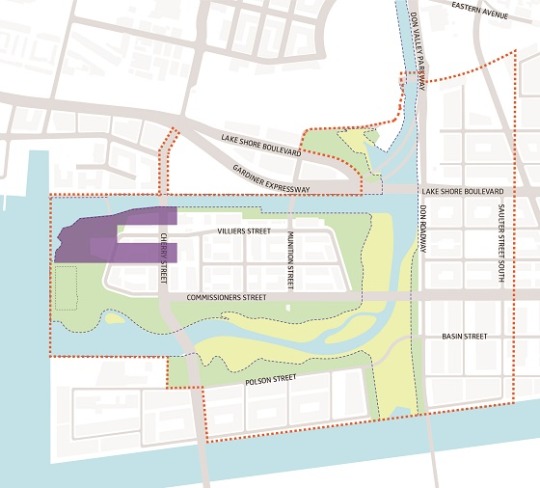
    One component of the flood protection program is the Cherry Street Lakefilling Project. Below is a plan of what that means (from Waterfront Toronto). The area in purple is new land that will be created as part of the process. Supposedly this is important for a few reasons. For one, it will allow the Cherry Street bridge to be relocated, which, in its current location, is creating a pinch point during floods.

    image

    I am mentioning all of this today because I am personally excited about this revitalization project. Hopefully I’ll see it complete in my lifetime. And maybe I’ll be fortunate enough to work on some of the buildings when that time comes. I also really wanted to share the below video with you all, showing the lakefilling in action. I bet many of you aren’t aware that this is happening.

    If you can’t see the video below, click here.

    [youtube https://www.youtube.com/watch?v=C0q_Wvn91zE?rel=0&w=560&h=315]

  • Hamilton’s Pier 8

    In December of last year, the City of Hamilton launched an RFP process to find a team (from the list of prequalified bidders) to develop a new urban community at Pier 8 along the waterfront. The ambition is somewhere around 1,500 new residential units and approximately 13,000 square meters of commercial and institutional space.

    That process has narrowed the pool to 4 teams and 1 will ultimately win the exclusive right to develop the new community. Here are the teams, along with a link to their submission materials, including a short video that I understand was a requirement of the RFP.

    – GulfDream (link)

    – Tridel (link)

    – Urban Capital / Core Urban / Milborne Group (link)

    – Waterfront Shores (link)

    This is a super exciting project for Hamilton. So I would encourage you to take a look at the presentation materials. At this point, you only have until Tuesday, April 17, 2018 to provide any comments to the City’s evaluators. If you’d like to view the boards in person, you can do that this Monday and Tuesday in the main lobby of City Hall.

  • Don’t touch the walls

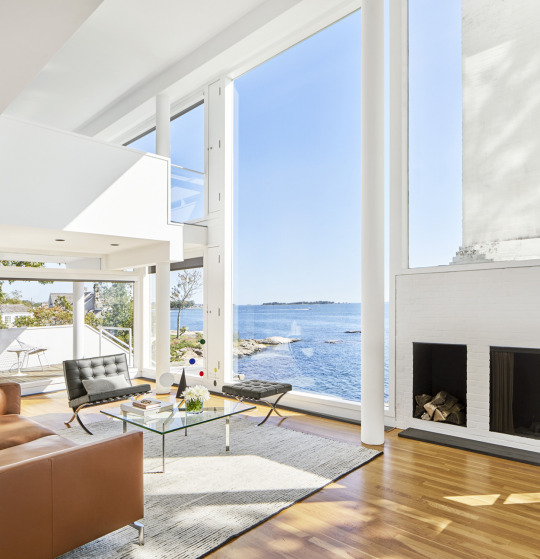
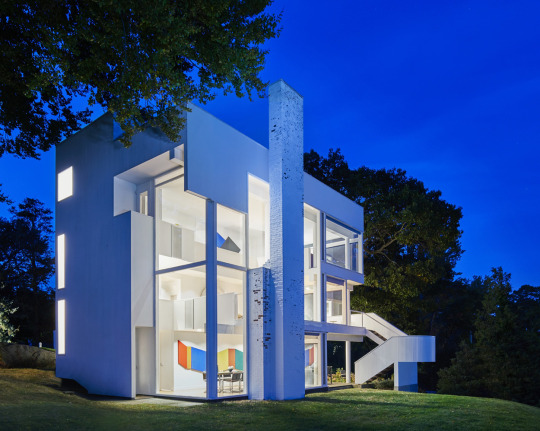
    The Smith House by Richard Meier turned 50 years old last year. In celebration of that, photographer Mike Schwartz took these photographs. And just recently they were published in Surface Magazine along with an interview of both Meier and Chuck Smith. Smith’s mother commissioned the house (completed in 1967) and he was 8 years old when the family moved in.

    My favorite comment in the article is this one by Smith:

    “Don’t throw balls in the house, and don’t touch the walls.” I must have heard “don’t touch the walls” three or four times a day. That said, there’s a crack in one of the windows where I shot it with a BB gun. We got away with some things.

    Modern architecture was supposed to be a perfectly engineered machine for living. But I guess living didn’t include touching the walls or shooting BB guns in the house.

    My favorite photos – both from Mike Schwartz – are these two:

    imageimage

    They feel like inversions of each other. The first one (day shot) is all about the views outward. Meier also talks about how the white on white helps to enhance this experience. The second one (night shot) turns the house inward on itself. Smith talks about how at night the view disappears and all you’re left with is your own reflection.

    I also like how the paint is flaking on the fireplace, which by the way, is perfectly on axis with the home’s entry. It makes you work a little bit for the view. Apparently keeping the paint on was a problem since day one. But it gives the house – which is otherwise seemingly perfect – a bit of a patina. 

    However, I’m guessing that Meier would prefer the paint stay on.

  • Lisbon creates 24-hour district

    About a year ago I wrote a post called, Lisbon is the new Berlin. The timing of the post happened to coincide with Monocle’s first ever Quality of Life Conference, which was held in the city.

    Since then, I’ve been keeping an eye out for all things Lisbon and the city has quickly jumped to the top of my list of places I want to visit. I am obsessed with understanding the triggers that catalyze change within a community and/or city.

    On a related note, Lisbon has recently put in place new regulations to control nightlife in the city. Bars in certain areas must now close at 2am on the weekdays and 3am on the weekends. Outdoor patios must close at midnight. If you have the right kind of soundproofing though, your bar can remain open until 4am. The impetus for these changes was to address nightlife noise complaints – a perennial problem in many cities.

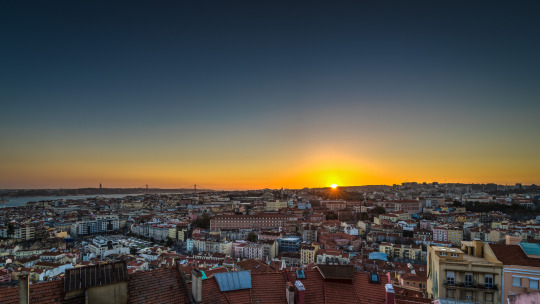
    However, Lisbon has also created a 24-hour district along a supposedly underdeveloped area of the waterfront. This means that bars and clubs in this area will have the option of staying open 24/7. At the same time though, investments are being made (Portuguese article) to transform the area into something more than just a place for drinking and dancing.

    I am noticing a real trend in European cities around using nightlife as a strategic lever to attract talent and revitalize neighborhoods. Oftentimes the knee jerk reaction is to simply focus on the negative externalities associated with nightlife. But there are strategic benefits. Many cities today recognize that.

    Image: Mhx on Flickr

  • Hybrid 1-2-3

    For those of you who have been reading this blog since last summer, you’ll know that I’m particularly passionate about the Gardiner Expressway East here in Toronto.

    Last night a public meeting was held to discuss the 3 alternative designs for what has become known as the “hybrid” option. If you’d like a visual summary of the options, click here.

    But essentially as you go from hybrid 1 to hybrid 3, the elevated Gardiner Expressway just gets pushed further north, away from the water. So as you go from 1 to 3, the hybrid option becomes less offensive to the waterfront and its associated public realm, and it opens up more land for development. However, it also becomes more expensive.

    Here’s a graphical summary of the costs, which my friend Gil Meslin tweeted out last night:

    //platform.twitter.com/widgets.js

    Notice that the boulevard (remove) option, which City Council rejected last summer, remains by far the most cost effective option. At a time when the city is searching for cash, I am surprised that nobody is looking here.

    I am also surprised to read that some are commenting on which of the above hybrid options will be the easiest to tear down should we want to remove the Gardiner East in the future. If that’s the lens we are applying, why rebuild it in the first place?

    But enough from me. What do you think? Here’s a Twitter poll I created this morning:

    //platform.twitter.com/widgets.js

  • 10 reasons to visit Toronto right now

    https://500px.com/embed.js

    Next weekend a good friend of mine from architecture school will be visiting Toronto from Philadelphia. And I’m really excited to show him the city. (Next month it’s my turn to go to Philadelphia.)

    He’s a fellow city geek. He hasn’t been to Toronto in a number of years. And I haven’t seen him since our trip to Detroit 2 years ago.

    For those of us living and working in Toronto, there’s a lot to celebrate. Sure the Gardiner Expressway East decision didn’t go as I – as well as many other urbanists, including our Chief City Planner – had hoped. But there’s no shortage of other things to brag about.

    So here are 10 reasons to visit Toronto right now:

    1. We’ve created an entirely new business district south of Union Station called South Core. Now the region’s primary mobility hub is in the middle of the country’s most important business district, as opposed to on the edge of it. It’s a better use of infrastructure.

    2. We now have a dedicated train (the Union Pearson Express) that takes you from the country’s busiest airport directly to downtown in 25 minutes. You’ll find local retailers at the stations and a brand created by the brain behind Monocle Magazine. You can even use a smart card to ride it and our local transit system.

    3. We didn’t shut down Uber. Instead our mayor wants to create new policy that will allow these services to coexist with conventional taxi services. We don’t yet know how this will turn out, but I believe it’s a step in the right direction. It’s Toronto taking a leadership approach to innovation as opposed to trying to stomp it out.

    4. We are about to host the largest sporting event in Canadian history. The 17th Pan American Games will have double the number of athletes competing as the 2010 Winter Olympics in Vancouver.

    5. We created an entire neighborhood from scratch in order to house all of these athletes (Canary District). And I think it’s destined to become one of Toronto’s great neighborhoods. I’m saving my first visit for next weekend, so expect a follow-up post on this.

    6. We are dramatically rethinking this city’s public realm. From the plaza out front of Union Station to the new Queens Quay Boulevard along the waterfront, we are prioritizing people and creating more complete streets. It has given Toronto an entirely new urban feel.

    7. We are slowly starting to embrace our forgotten laneways and alleys through the help of organizations like The Laneway Project. And this is going to eventually lead to a further rethink of our pubic spaces and urban fabric.

    8. We continue to be one of the fastest growing cities in the world (certainly in the developed world). As a result, we are building some really exciting buildings by some of the top architects in the world. This includes everyone from Norman Foster to Frank Gehry.

    9. According to a recent report coming out of the Martin Prosperity Institute, Canada is one of the most creative and globally competitive countries in the world, as well as the most open to “ethnic and religious minorities and gay and lesbian people.”

    10. The ATC community is in the process of identifying a new, quintessentially Toronto food dish. But since we have every type of imaginable cuisine here, we’re struggling to pick just one. When you visit, you can help us identify the best and most Toronto dish.

    So there’s a lot to be excited about. I for one can’t wait for us to host the Pan Am Games, starting tomorrow. It’s a chance to show off this great city. 

    So if you’re also in town next weekend and want to geek out about cities, drop me a line.

  • Before & After: Queens Quay Boulevard

    Yesterday I spent the evening walking Toronto’s new Queens Quay Boulevard, which fully reopened this past Friday after a number of years of construction. 

    It is part of Waterfront Toronto’s revitalization efforts and represents a solid decade in the making. West 8 of Rotterdam and DTAH of Toronto won the international design competition for the central waterfront back in 2006. And this past weekend a big component of that vision was unveiled.

    But first, let’s take a look at what Queens Quay Boulevard used to be like. Here’s a Google Streetview image from 2009:

    image

    The streetcars ran in the middle of the street. Cars drove on the north and south side on both sides of the tracks. And the sidewalks were fairly small and usually at capacity during the busy summer months. It wasn’t a great street.

    Now here’s a photo that I took yesterday from that same vantage point (2015):

    image

    The street has been completely reorganized. On the north side of the streetcar tracks is where the cars now drive in both directions. On the south side of the tracks the lanes of traffic have been replaced with a 2-way bike trail (part of the Martin Goodman Trail). And on both sides the pedestrian areas have been greatly expanded. It’s now a magnificent street.

    If you haven’t yet been down to the new Queens Quay, I would encourage you to check it out on either foot or bicycle. (If you go on bicycle, let me know and I’ll join you.) 

    Toronto may have taken a giant step backwards with its recent decision on the Gardiner East, but we also took a giant step forward with the reopening of Queens Quay Boulevard.

  • 14 CityBuilders come together in support of removing the Gardiner East

    This will probably be my last Gardiner East post before the decision goes to City Council next week on June 10th. But I have such good news that I need to share it with you all.

    This morning 14 “CityBuilders” came together for the first time in support of removing the elevated Gardiner East and replacing it with a surface boulevard. They are real estate developers, investors, and other prominent business leaders in the city. And they sent a letter this morning to every single Toronto City Councillor outlining their position. 

    I can’t tell you how thrilled I am to see this happen, so I’d like to call out each and every member of the CityBuilders. They are (in alphabetical order):

    1. Castlepoint Numa
    2. Cityzen Development Corporation
    3. Context Development
    4. Continental Ventures
    5. Daniels Corporation
    6. Distillery Historical District
    7. Dream Unlimited Corporation
    8. Greybrook Capital and Greybrook Realty Partners
    9. Kerbel Group Inc.
    10. Manulife Real Estate
    11. QQE 162
    12. Streetcar Developments
    13. TAS
    14. Tridel Group of Corporations

    These are some of Toronto’s most important city builders and I am sure this will get the attention of both Mayor John Tory and the rest of City Council.

    If you haven’t yet signed the Gardiner East petition that Stephen and I started, please do so by clicking here.

    Happy Friday 🙂

  • 4 design strategies for your cold-climate waterfront

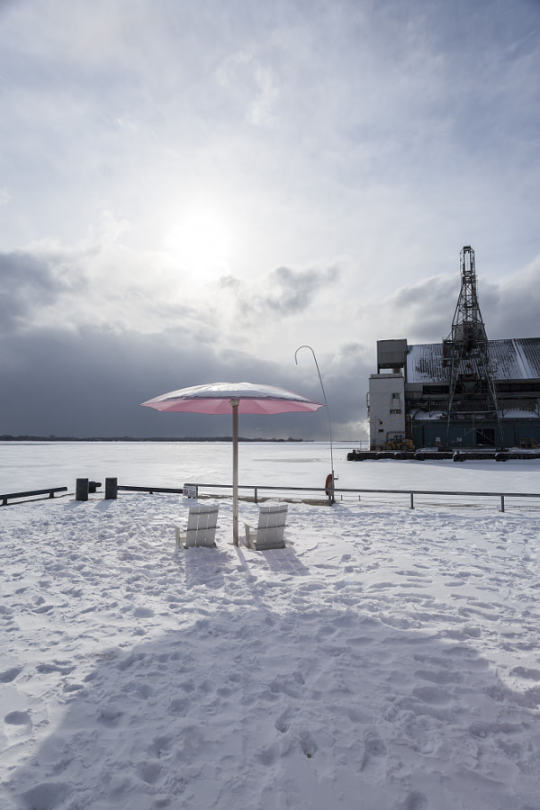
    Photograph Sugar Beach in Toronto by christophmarten on 500px

    Sugar Beach in Toronto by christophmarten on 500px

    Since we’ve been discussing waterfronts lately, I thought I would share this post from ArchDaily talking about 4 ways that cold-climate cities can make the most of their waterfronts.

    They are:

    1. Plan for winter sun
    2. Create plazas that block wind
    3. Break up outdoor spaces with comfort stations (not sure why they just have to be stations)
    4. Design for active winter programming

    These, of course, aren’t new design strategies. Cities have been built around their climates since, probably, the beginning of cities. It wasn’t until more recently that we started basically ignoring local climates and focusing more on what mechanical systems can do to make us feel comfortable.

    But I think that was a mistake. I don’t think that mechanical systems are bad though. I just think that there’s a lot that we can do first – without mechanical systems – to address local climates.

    If you’ve ever sat on a patio during a swing season (i.e. right now) where the wind was blocked and you were in the direct sun, you already know that there’s a lot that can be done without relying on active systems.

    But the other thing I like about this post is that it acknowledges the fact that winter waterfronts require just as much, if not more, design attention than a warm-climate waterfront.

    Saying that we’ll (insert cold-climate city name here) never be Miami or Barcelona or Sydney is just giving up.