Daily insights for city builders, delivered every morning at 6 AM ET. I’m Brandon Donnelly — a Toronto-based real estate developer and founder of Globizen. I’ve been writing here since 2013.

Tag: urbanism

  • Spectrum of Hope

    image

    Built in the late 1940s, Regent Park was Canada’s first and largest social (public) housing project. Like many housing projects of this era, it was modeled after Le Corbusier’s “towers in a park” ideology, though in this case most of the buildings were only a few storeys tall and hardly towers. 

    It was built to correct what had become a major slum on the east side of downtown Toronto. And like many cities around the world, this type of built form was viewed as the solution. Urban slums were crowded and dirty. Density was bad. The solution was to spread people out and surround them with green space.

    But that didn’t work out so well. Regent Park failed. So today we are once again starting again. Phase by phase, the old is being demolished and the new is being built. However, unlike the last time, I think this time it’ll be for the better

    But there’s something very ironic about this story.

    Before Regent Park became Regent Park, it was called something else: Cabbagetown. That neighborhood of course still exists in Toronto – it’s adjacent to Regent Park – but it’s now a bit smaller having given up a portion of its land to the first iteration of Regent Park.

    Today, what remains of Cabbagetown has become an affluent and desirable inner city neighborhood with, allegedly, the largest stock of Victorian housing in North America. But of course it wasn’t always that way. At the time that Regent Park was being conceived, Cabbagetown was a slum. And that’s why we built Regent Park version 1.0. It was the solution for this entire section of the city.

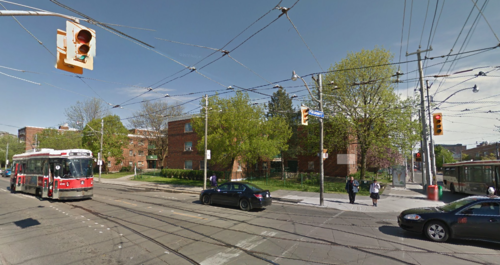
    The photo at the top of this post is the southeast corner of Gerrard Street East and Parliament Street. The building at the corner is the Hotel Gerrard. The photo is from 1919, which means it’s a photo of Regent Park when it was still called Cabbagetown. It’s part of what we demolished to make way for the new. 

    In 2013, that same corner looked like this:
    image

    What’s ironic about all of this, is that the area we spared from grandiose urban renewal plans actually became the richest part. And where we intervened is where things got screwed up. So much so that we’re now starting entirely from scratch, again. All of this just makes wonder whether Cabbagetown, in its entirety, would have ultimately taken care of itself had we just left it alone. 

    But what’s in the past is in the past.

    So to end on a positive note, I’d like to share a short video that somebody recently shared with me called Spectrum of Hope. It was co-directed by 7 young artists from the neighborhood who are calling it “a piece for Regent Park, by Regent Park.”

    //player.vimeo.com/video/106104994?color=ff9933

    Spectrum of Hope from Twice Upon a Time – Toronto/NYC on Vimeo.

    I think it’s a great example of the positive momentum developing in this neighborhood. I hope you’ll give it a watch and then share it around. Click here if you can’t see the video above.


  • Is inclusionary zoning a good or bad thing for cities?

    Today is Christmas Eve. It’s the season of giving. So I thought it would be appropriate to talk about affordable housing.

    Yesterday, Mitchell Cohen – who is a real estate developer and the president of The Daniels Corporation – wrote an opinion piece in the Toronto Star talking about just that. It was called: A perfect storm for action on affordable housing.

    Here’s a snippet that summarizes the things he believes we should be doing:

    Municipalities across Ontario also have significant tools at their disposal to make a difference. To date, these tools have not been co-ordinated to achieve maximum bang for the buck. Property taxes can and should be waived not only for affordable rental homes but for affordable ownership homes as well. Additionally, cities can and should waive all development levies and other municipal fees for affordable rental and ownership housing.

    Combined, these two measures provide municipalities with powerful leverage to implement inclusionary zoning — the most important tool in the affordable housing tool box. Inclusionary zoning on a city-wide basis creates a level playing field, an opportunity for a constructive partnership between municipalities and private sector developers to create both affordable ownership and rental homes within every new building approved for construction.

    For those of you who might be unfamiliar with inclusionary zoning, it’s essentially a zoning requirement to build a certain number of affordable units in any new construction project. It originated – as far as I know – in the US, but has been fairly controversial since the outset.

    So today I thought we could have a discussion on the merits of inclusionary zoning. Do you think it’s a good or bad thing for cities? Is it really the most effective way to deliver affordable housing at scale? Leave your thoughts in the comment section below 🙂

    I don’t have a strong view on inclusionary zoning, but I do believe that affordable housing and a mix of incomes is critical to cities and neighborhoods.

    I do, however, wonder if it’s one of those things that seems to make a lot of sense, but actually has a bunch of negative externalities associated with it. Maybe the answer is to just prototype the idea and then iterate on it.

    What do you think?

  • My identity crisis

    If you’re a regular reader of Architect This City, there are many things that you might know about me

    You might know that I was initially trained as an architect, but that I immediately transitioned into real estate development after grad school (where I studied both architecture and real estate).

    After becoming a real estate developer, you might know that I completed an MBA with a focus on innovation and entrepreneurship (which happened by default as a result of the electives I ended up being interested in).

    And finally, you might know, given the content of this blog and my startup history, that I have a significant interest in technology. More specifically though, you might know that my interest is in figuring out how technology will continue to infiltrate and impact “non-tech” industries such as real estate.

    But what you might not know is how I even ended up in architecture and real estate in the first place. Unlike a lot of people who seem to have grown up wanting to be an architect – perhaps because they had a relative who was one – I didn’t decide to study architecture until a bit later on.

    Growing up my primary interests were: art and computers.

    During high school, my art teachers used to tell my parents that I was going to be an artist. And my computer teachers used to tell my parents that I was going to be a computer geek – or maybe they said computer scientist.

    Maybe it had to do with timing and the emergence of the commercial internet in the 1990s, but computers sort of won out during that point in my life. I spent a lot of time building them from scratch, playing with software, and asking my mom not to pick up the phone because I was literally dialed-in to the internet.

    So when it came time to enrol in university, I fairly effortlessly decided on computer science. It just seemed to make sense. But after about a year I realized that it wasn’t for me. I didn’t love programming like my classmates did and the thought of doing it for a living scared me.

    At the same time, I felt like I needed to feed the artist in me. I wanted something both artistic and technical. So I decided to drop out of computer science and give architecture a try. It just seemed like the perfect marriage of my interests.

    I immediately fell in love with architecture. And I spent the next 7 years studying it across 2 degrees.

    But during that time, two things hit me. First, I came to the realization that real estate developers are the ones who really have the most say in terms of how our cities are built. And second, that technology was having a massive impact on business and life.

    This told me that design alone wasn’t going to be enough. I also needed to engross myself in real estate, finance, business, and technology. So that’s what I set out to do. And I really enjoyed it. On the technology side, it felt like I was coming full circle in a way.

    But today, I feel a bit like a 3 legged stool. There’s the design leg. The real estate/business leg. And the technology leg. And oftentimes I feel like life would be a lot simpler if I could just balance on one of those legs – instead of trying to stand on all three. But that’s simply not me.

    These are my passions and I need all of them to stand-up.

  • Being exemplary

    image

    Yesterday morning I had coffee with a good friend of mine and fellow city geek. We don’t connect nearly as often as I’d like, but when we do we always have great conversations about cities and about Toronto.

    One of the things he asked me was whether I was still loving Toronto. And I responded by saying absolutely. We then both agreed that there are a lot of exciting things happening in the city right now. 

    But I qualified this statement by saying that I wish we were bolder. I wish we took more chances. Because while it’s great that we’re doing things like building more bike lanes and intensifying our growth centers, lots of other cities are doing those things as well.

    To be a leading city, you have to be prepared to do things that other cities think are wrong or won’t work and that are truly remarkable. Whether you’re city, company, or an individual, following trends is never enough.

    Take for example the dramatic anti-pollution measures that were recently announced by Paris mayor Anne Hidalgo:

    By 2020, no diesel fuel at all will be burnt within Paris. Regular cars will be banned outright from its more polluted roads, which will be open solely to electric and hybrid vehicles. Meanwhile, the city’s most central districts (the first four arrondissements) will be barred to all but residents’ vehicles, deliveries, and emergency services, transforming Paris’ Right Bank core into a semi-pedestrian zone. As a counterbalance, the number of cycle lanes will be doubled by 2020, while the city will fund an extended electric bikeshare scheme to encourage more people to get on two wheels. “I want us to be exemplary” Mayor Hidalgo has declared. 

    That’s how you win hearts: by being exemplary.

    As always though, I’m incredibly optimistic about the future. Toronto has a new leader at its helm and I know that there are a lot of passionate people in this city who care deeply about its future. I am certainly one of them.

    Image: Not my actual coffee (via Flickr)

  • The power of architecture

    Architect Bjarke Ingels recently gave a talk at the WIRED by Design conference. I’m a big fan of his work and so I think you’ll really enjoy the talk. What I like is how process driven his firm is. As he explains at the beginning of the video, they always start by researching and analyzing the situation before figuring out how they’re going to intervene. That’s what informs their designs.

    Click here to watch the video. It’s about 20 minutes long.

  • The Fundamental Law of Road Congestion

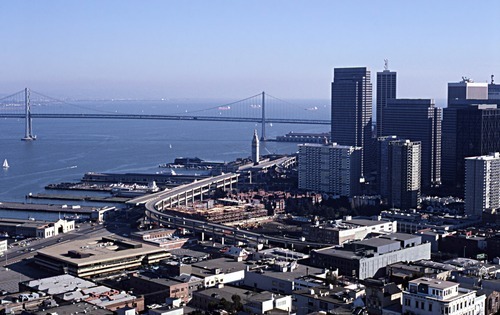
    A few days ago I wrote a post talking about what happens when you demolish an urban highway. It was a link to an article giving 5 examples of cities that have removed their urban highways and benefited.

    After I wrote the post, a number of people responded on Twitter. Some thought it was a great idea and gave examples of other cities, such as Detroit, that are thinking about doing the same. But others responded and said that I was out of line. And that while it might work in some cities, it simply isn’t a viable option in cities like Toronto.

    So as somebody who believes we should be taking down the Gardiner Expressway, I thought it would be worthwhile to revisit the topic and provide a bit more information.

    To be clear, I’m not suggesting we remove the Gardiner and replace it with nothing. My belief is that we should replace it with a broad surface street that would still move lots of cars, but that would make our waterfront much more open and accessible to everyone.

    So how is this feasible?

    Again it comes back to the concept of induced demand. Back in 2009, two economists from the University of Toronto and University of Pennsylvania – which are actually both of my alma maters – published a study called The Fundamental Law of Road Congestion.

    In it they discovered something really fascinating: there’s a near perfect relationship between new roads and highways built and the total number of miles driven. In other words, as cities increased road capacities (during their study period of 1980 to 2000), the amount of driving went up just as much.

    What this should tell you is that trying to build your way of out road congestion is usually a losing proposition. That’s why every large city has a traffic problem. Try and think of one that has solved this. And as much as it might seem intuitive to tell people at cocktail parties that your city simply needs to build more roads and highways, it’s typically not that simple. (In my view, the solution is road pricing.)

    The other really interesting thing that this study revealed is that it works both ways. When you reduce road capacity, drivers start to disappear. People choose to live closer to where they work. People choose transit. People go into the office at different times. People make all sorts of different decisions in response to this road change, just as they do when there are more free roads available to them.

    So within a reasonable band (obviously you can’t remove all roads), there is no perfect amount of road capacity. If you added another lane to your highway, it would be full. If you took away a lane, it would end up equally full. That’s why removing the Gardiner Expressway isn’t lunacy.

    Instead, it actually makes a lot of sense:

    • It’s the cheapest solution (compared to repairing it or burying it)
    • It would free up money for transit and other mobility solutions
    • It would make our waterfront more open and accessible
    • It would beautify our downtown
    • It would increase land values all along the waterfront

    And since we’re still in the early days of developing our eastern waterfront, now is the time to do it. The longer we wait, the harder it’ll get and the more expensive it’ll get.

    So I hope that the leaders in this city will think long and hard about this as opposed to immediately assuming we need an elevated highway to keep this city moving. The last time I checked, it doesn’t work so well in its current state.

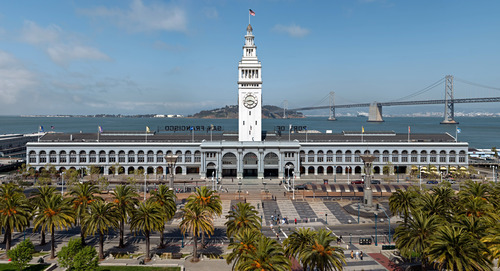
    Images: Before and After the Embarcadero Freeway in San Francisco (via Gizmodo)

  • What happens when you demolish a highway

    Earlier today I tweeted this:

    //platform.twitter.com/widgets.js

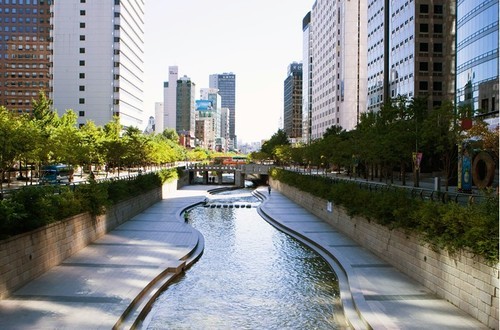
    It’s a link to an article talking about 5 cities – New York, Milwaukee, Seoul, Portland, and San Francisco – who all demolished an elevated highway that used to run through their downtowns.

    To be completely fair, some of these cities didn’t really have a choice. San Francisco’s Central Freeway was so badly damaged in an earthquake that it had to be closed. But it doesn’t make the lessons any less relevant.

    In all of these cases, the elevated highways were taken down and never replaced with another highway. Some were turned into large boulevards. Others were turned into parks. But in none of the cases was a new road of similar capacity built.

    Intuitively it might seem like this would cause utter chaos. I mean, where were all of these cars going to go? 

    But that didn’t happen. Instead, demand redistributed itself. Car volumes dropped dramatically. More people took transit. Some people took other routes. And some people traveled at different times. Oh, and nearby property values all went up.

    And the reason this happened is because of something that economists call induced demand (I’ve written about it before, here). What it means is that as you increase the supply of some valuable good (such as free highways), more of that good becomes demanded.

    In other words: more free highways = more cars on the road.

    So if you’re a city – like Toronto – with an elevated highway running through your downtown, you should give this some serious thought. The outcomes aren’t as bad as you might think. In fact, they’re quite good.

    Image: Seoul via D Magazine

  • 19 Duncan Street bought for $47 million

    image

    Last week it was announced that Allied Properties and Westbank have acquired 19 Duncan Street in Toronto for $47 million.

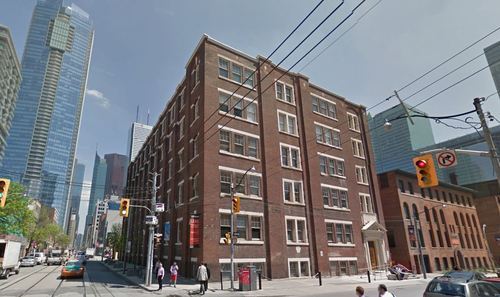
    The property sits at the southeast corner of Adelaide Street West and Duncan Street (shown above), and includes an existing 61,911 square foot (GLA) office building, 36 surface parking spots, and a laneway (it was specifically called out in the press release).

    The plan is to restore the existing heritage building, as well as build additional retail space, office space, and rental apartments. Given the nature of this site and the team behind it, I have high hopes that it will end up a remarkable development project.

    It’s interesting to see the continuing interest in rental apartments here in Toronto – which is something I’ve written about before. Up until recently, the development community had almost zero interest in purpose built rental apartment buildings. Now they’re coming back in fashion.

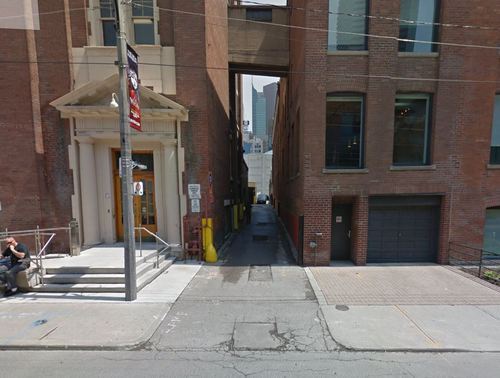
    But the other piece that’s interesting to me is the laneway. Below is a photo from Google streetview, showing what I believe is the laneway that the press release is referring to.

    image

    As many of you know, I’m involved in a non-profit here in Toronto called The Laneway Project (advisory role only). We want to transform Toronto’s underutilized laneways. And this strikes me as a perfect opportunity to do something really exciting at the corner of Adelaide and Duncan in the Entertainment District.

    So if the new owners have any interest in things that are exciting, I would encourage them to get in touch with me or one of the founders of The Laneway Project.

  • Are startups causing inequality?

    Earlier this week Richard Florida published on article on CityLab talking about the relationship between tech innovation (in cities) and inequality. Specifically, the article deals with the correlation between venture capital investment and a variety of factors, such as monthly housing costs, wage and income inequality, and so on.

    The intent of the piece was to address the growing backlash against tech workers – in places like San Francisco – who have become the symbol for the growing gap between the rich and poor.

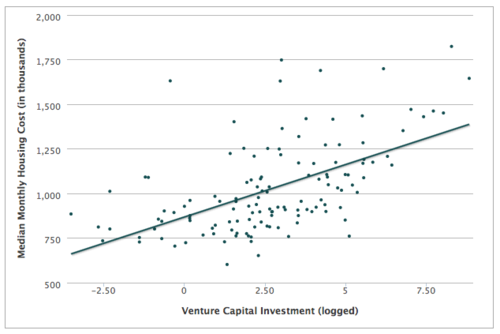
    The strongest correlation appears to exist between venture capital investment and housing costs. As the amount of venture capital goes up, so do housing costs – which probably shouldn’t surprise you. The rich start outbidding the poor for housing. Note: The two outlying dots at the top right, in the graph below, are Silicon Valley and San Francisco.

    image

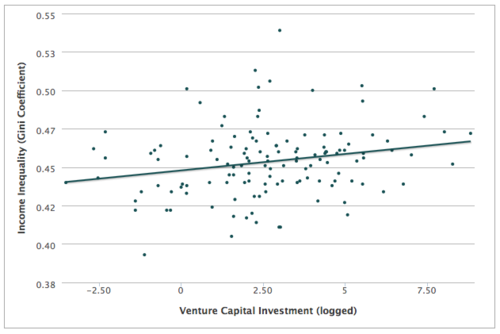
    But when it comes to inequality, the relationship isn’t so clear. For wage inequality, there seems to be a relationship. But for the broader income inequality measure, the relationship is fairly weak. Here’s the graph:

    image

    So this is not as black and white as it might seem. Regardless, Florida ends the piece with the following statement (that I think is spot on):

    It’s time to stop pointing fingers and get on with the far more important task of harnessing the urban tech revolution to create a new urban middle class and a more inclusive urbanism—one in which many more workers and residents can participate, and one from which many more can benefit.

    The answer is not to stop innovating. That would be counterproductive. We should be be encouraging innovation, but at the same time figuring out how best to harness it for society as a whole.

    Tomorrow, I’ll touch a bit more on how we might go about doing that. I have a post planned that I think will tie in really nicely to this discussion. So stay tuned.

  • Opendoor.com launches in Phoenix

    Yesterday Opendoor.com finally launched their product in Phoenix. If you’re a regular reader of Architect This City, you might remember that back in July of this year I wrote about how they had just raised $10M of funding to make selling your home as easy as a few clicks.

    Well, since then, I’ve been following them like a hawk. I had all the founders on Twitter notification (so I got notified every time they tweeted) and I was eagerly anticipating their launch.

    Now that they’ve launched, we have a much better idea of how their business model is going to work. I say “better idea” only because there’s still portions of it that are a question mark for me.

    In any event, Opendoor basically provides instant liquidity to homeowners. You go on, tell them about your home, and they then make you an offer to buy, which looks like this and lasts for 3 days. The offer they make you is calculated using comparable sales and adjustments based on your home’s unique characteristics.

    Upon accepting their offer, they then schedule a home inspection (at their cost) to confirm your home’s condition. Once this is done, you just select your move out date and Opendoor handles the rest. The fee for all this is 5.5%, which the company claims is less than the 6% that realtors typically charge (this would be high for Toronto).

    After buying your home, Opendoor plans to turn around and resell it.

    What this reminds me of is a “bought deal.” In the world of investment banking, a bought deal is when the bank itself agrees to buy the entire offering of a particular security, as opposed to going out to the market and trying to raise the money. The advantage to the company (offering the securities) is that there’s no financing risk. They know they’re going to get their money. But it usually means the company gets a lower price.

    So what I wonder, is if this is what’s going to happen here. Since Opendoor is effectively taking on the selling risk, does that mean their offers will be lower? Or are all their costs built into that 5.5% and that’s truly their core business model? I’m sure some of this will surface in the coming weeks.

    I do, however, think they are smart to be focusing on the supply-side of the marketplace and offering virtually perfect liquidity to homeowners. Real estate is a unique asset in that it’s difficult to bring supply to the market. And so if control the supply-side, I think you have a pretty good shot at controlling the market as a whole.