Daily insights for city builders, delivered every morning at 6 AM ET. I’m Brandon Donnelly — a Toronto-based real estate developer and founder of Globizen. I’ve been writing here since 2013.

Tag: urbanism

  • 3 stages of intensification

    image

    We all know that the Greater Toronto Area is growing and intensifying at an incredible pace. In fact, last year the region set a record with 25,571 new condominium units completed.

    If you listen to industry experts, such as George Carras of RealNet, they’ll tell you that this level of intensification — which usually means condominiums — is really a decade in the making. That’s when the government set out to explicitly encourage this type of growth.

    But in the decade since that decision, we’ve seen both government and the market evolve in terms of what that intensification should look like. It started out with a largely high-rise building typology. Tall buildings were to be allowed in the downtown, as well as in specific growth nodes throughout the region. But for everything in between — the officially designated “neighborhoods” — there was to be no development.

    This is what I’ll call the first stage of intensification.

    Then, we started to think about mid-rise intensification along the avenues. Most of these “avenues” (also an official term) cut through those same stable neighborhoods, but the main streets were seen as an appropriate place to allow additional growth. It makes perfect sense and so guidelines were created to help dictate what this new building typology should look like.

    This is what I’ll call the second stage of intensification.

    And it’s one that I’d argue we’re currently living through with new mid-rise projects like DUKE in the Junction (TAS project), Kingston&Co in Kingston Road Village (another TAS project), Abacus Lofts on Dundas West, and The Hive in Etobicoke. These are all mid-rise buildings going up in established neighborhoods.

    With the recent decision to also allow wood frame buildings up to 6 storeys in Ontario (instead of 4), we’ll probably see an even greater surge in mid-rise buildings once the private sector gets its head around this shift.

    So what’s next?

    I think it’s inevitable that we’ll eventually see low-rise intensification within our established neighborhoods. We started by avoiding them altogether, and then deciding that it was desirable to build along their periphery. But as demand for urban housing continues to increase, I believe it’s only a matter of time before we start to loosen the reins on our single family neighborhoods.

    Some of you might be thinking that this is going to be a bad thing, but I actually think the opposite. Projects such as Vancouver’s Union Street EcoHeritage prove that it’s entirely possible to intensify existing neighborhoods through sensitive and beautiful infill interventions. And of course, let’s not forget about laneway housing.

    The fact of the matter is that Toronto has already been intensifying its neighborhoods for a very long time — likely since the beginning — by converting single family homes into duplexes, triplexes, and other multi-family dwellings. We just haven’t been doing it in any sort of structured way.

    I don’t know when this will change, but I think it’s only a matter of time. And that will be the third stage of intensification.

    Image: Flickr
  • The hard things about retail

    image

    Retail is one of the hardest – if not the hardest – real estate category to get right. If you don’t have the right setup, the right location, and the right tenant mix, you can fail pretty easily. It’s a bit of an art. And that obviously applies to both landlords and tenants. I mean, we all know what recently happened with Target Canada.

    This past weekend I had the opportunity to visit the Aura Condos in Toronto, which is supposedly the tallest and largest residential condominium in Canada. There’s about 1.1 million square feet of residential space across 79 floors and somewhere around 150,000 to 180,000 square feet of retail space (the estimates I found online varied). The main anchors include Bed Bath & Beyond, Marshalls, and Hard Candy Fitness (which also serves as the gym for the residences above).

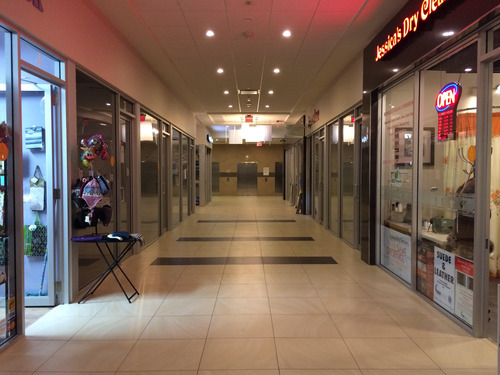
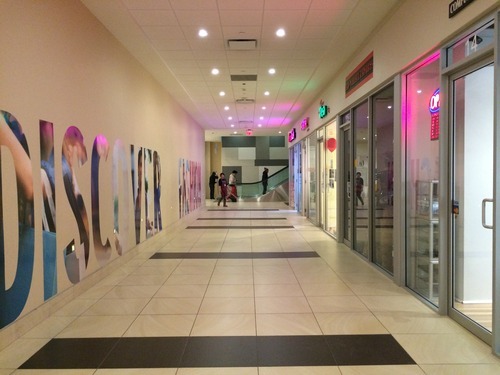
    But what’s probably most unique about the retail component of this building is the P1 level (the first underground level). It’s made up of small retail condos, some of which looked to be about 90 square feet. That means that each retail unit is individually owned, just like a residential condominium, and there’s no singular landlord focused on curating the tenant mix and ensuring the entire retail center does well.

    Now, I’m told that this approach works perfectly well in other parts of the world and I know that we’re trying it in other parts of the Greater Toronto Area, but I worry about the long term viability of this (P1) space in particular. When I was there on Saturday there was almost no foot traffic and probably half of the retail units were vacant.

    Maybe it’s because there isn’t enough employment density in the area. Maybe it’s because it’s not well connected to other P1 level retail. Or maybe it’s because the anchors all sit above this space, as opposed to around it (as they do in traditional malls). Whatever it is, I wasn’t feeling product/market fit.

    I hope I’m wrong.

    Images: P1 Retail at Aura Condos

  • The Monocle Quality of Life Conference

    image

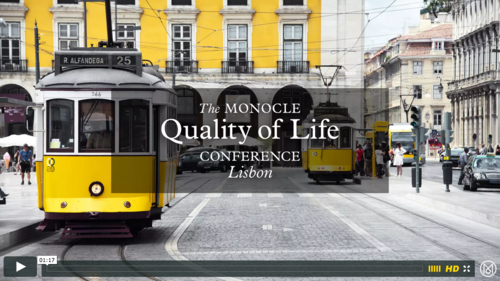
    Monocle magazine is launching their first ever conference this spring in Lisbon and it’s dedicated to quality life in the world’s greatest cities. It’s going to take place Friday, April 17th to Saturday, April 18th, 2015.

    You can click the image above for a video synopsis (there’s great urban eye candy), but if you don’t feel like doing that, here’s the text version:

    MONOCLE invites you to a weekend of peerless hospitality, great debates and in-depth conversations about the forces shaping the world’s great cities. Join our editors, correspondents and key thinkers in discussing topics ranging from architecture to independent retail, city planning to national branding.

    It sounds like a wonderful event and very much inline with some of the topics discussed here on Architect This City. If I had a conference budget that needed to get spent, I would be the first to sign up. If you’re interested, you can “register your interest” by clicking here. Tickets are €1,500.

  • How I moved over the last 3 weeks

    At the beginning of this year I wrote a post about a mobile tracking app called Moves that I had heard about through my friend Sachin Monga. He had just published a beautiful set maps showing where he physically spent his time in both Toronto and San Francisco.

    His post spurred me to download the app and at the end of my post I promised to share my own set of maps once I had collected enough data points. It’s only been about 3 weeks, but already my maps are starting to fill out, so I thought I would do a release.

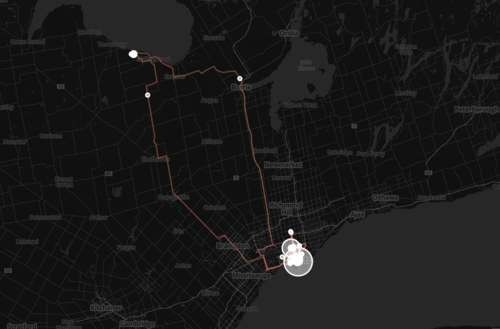
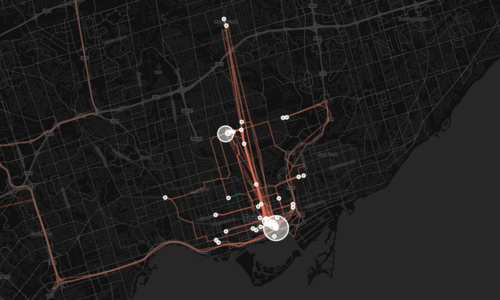
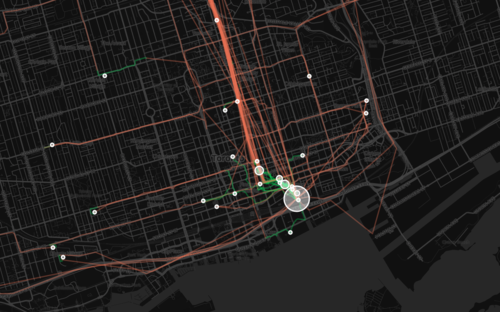
    The orange lines represent transport of some sort (car, subway, streetcar, and so on) and the green lines represent walking. I don’t cycle very often in the winter (I know, I’m a fair-weather cyclist), so you won’t see any of those lines just yet. However if I posted a map from the summer, I know it would look completely different.

    Here’s a first one showing a regional scale:

    image

    Here’s a second one showing the city of Toronto:

    image

    And here’s a third one showing mostly downtown:

    image

    What’s interesting about these maps is how much you can tell about me and the way I move around the city.

    For one, there’s a good chance I ski or snowboard given that I’m driving up to Collingwood, Ontario in the winter. You can also see how heavily dependent I am on the Yonge subway line, which is the thickest orange line in the middle of downtown. It’s also interesting to see how localized I am within my neighborhood (St. Lawrence Market). I walk to get groceries. I walk to the gym. I walk to coffee. And the list goes on.

    This is fairly typical for people living in urban neighborhoods, but it would be interesting to see where it applies in the city and where it begins to fall apart. I would also imagine that there’s a correlation to the area’s Walk Score, although this (Moves) might actually be a better measure since it’s usage data.

    Either way, imagine what cities could do if they had this sort of data for every resident. They would be able to see precise resident flows and then determine exactly where transit and infrastructure investments should be made instead of politicking to determine where they should be made.

    That time is coming.

  • Marginal cost = 0

    Earlier this week I wrote a post called: The pull from services to products. And in it I made mention of the fact that part of what’s driving this pull towards products is that the marginal cost of servicing additional users or customers is almost nothing in a world of internet services and products.

    Well the reality is that this phenomenon is driving a hell of a lot more. It could – and probably will – fundamentally change almost all aspects of the economy.

    I know that sounds like a pretty audacious statement, but if you watch the following 10 minute talk by Albert Wenger (Union Square Ventures) you might start to feel the same way. He outlines 5 changes being driven by the fact that in the digital world, marginal cost = 0. The impacts go well beyond tech, capturing sectors such as transportation and industrial real estate.

    [youtube https://www.youtube.com/watch?v=sVEtTzlqsoE?rel=0]

    If you can’t see the video, click here.

  • East Room co-working space

    image

    Amy Bath needs to leave comments here on ATC more often because she has great feedback and insights.

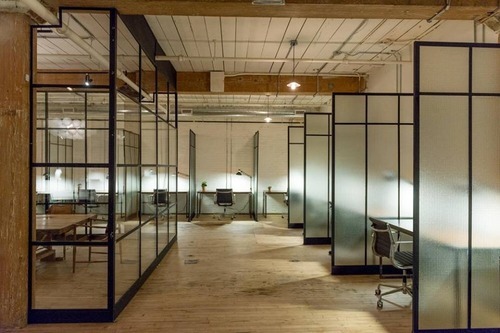
    This morning she tipped me off to a brand new co-working space on the east side of Toronto called East Room. If you haven’t yet heard of it, I would encourage you to check out their website. They’re in a gorgeous heritage building along the Don Valley and they seem to have executed really well. I love their design aesthetic.

    //platform.instagram.com/en_US/embeds.js

    They currently offer two different memberships: a resident membership ($500/month) and a club membership ($250/month).

    image

    This is exciting to me because I have a soft spot for both good design and the east side of Toronto. But probably more importantly, it speaks to the changing nature of work and the workplace, as well as to the shifts in how space is being consumed.

    Co-working spaces are, of course, blowing up all over the world from Philadelphia to Berlin. The internet has empowered new ways to freelance and make money, and these kinds of spaces are really a result of that. Because even though it’s entirely possible for many of us to work remotely at home, we still crave the social interaction that comes from being within an office environment. And that’s a big part of what these spaces are. They’re a social fabric.

    Amy’s hope is that condos will eventually start including amenity spaces that are similar to co-working spaces, and I think that’s a really interesting idea. The challenge, however, is that most developers today (and property managers) aren’t equipped to operate these kinds of environments.

    But maybe it’s only a matter of time before some do become equipped, because I’m sure we’re going to see more, not less, of these kinds of urban spaces.

    Images: @eastroom_

  • How are you attracting and retaining top talent?

    Yesterday I received a comment on my post about service and product companies with a suggestion to check out an interesting Fast Company article talking about the future of work (thank you Amy). The article was based on a research report – commissioned by CBRE and a real estate developer in China (Genesis) – called Fast Forward 2030: The Future of Work and the Workplace.

    This is a topic that’s getting a lot airtime right now because Millennials are starting to impact work in a big way. But what’s interesting about it is how broad these impacts will be. Changes in how we work will affect the way we design our cities; the way architects and developers build and lease space; the type of people and roles companies will need to hire and create; and so on.

    Here’s a snippet from the report:

    “Providers of commercial buildings and places to work will need to develop new, sometimes counter intuitive, business models and work with partners who understand service and experience in order to compete with emerging workplace competitors. Successful providers will work with tenants to unlock ‘win win’ solutions that reduce occupier costs, increase flexibility, and simultaneously provide enhanced levels of community, amenity and user wellbeing. Cities will have a role to lead and nurture changes that will support the changing landscape of work.”

    I plan to go through the report in more detail this weekend, but I did want to point out one thing. When business leaders from around the world were asked what their biggest competitive advantage would be by the year 2030, the top choice was: the ability to attract and retain top talent. This topped organizational vision and even the ability to innovate.

    This might not come as a surprise to some of you, but it’s worth repeating. And in many ways, it’s a chain that begins first with cities. 

    If you’ve ever watched The Startup Kids documentary, you’ll know that when Alexander Ljung (CEO of Soundcloud.com) was about to found his company, he actually started by first traveling around Europe looking for the coolest city in which to base his company. The last city on his trip was Berlin and that just so happened to be the team’s favorite. So that’s where Soundcloud was founded.

    My point with that story is simply that the “workplace” of today – forget the future – means so much more than just your rentable area. Yes, that’s important. But there’s a lot more to consider when trying to get the best people. Cities play a huge role.

  • Two thoughts on reviving post-industrial cities

    image

    Yesterday Adam Radwanski of the Globe and Mail published an interesting article called, Rust Belt revival: Lessons for southwest Ontario from America’s industrial heartland

    The article talks about some of the things that the Rust Belt is doing to revitalize their cities and the lessons that many cities in Ontario – which are facing similar fates – could learn from. It’s worth a read.

    I’m not going to summarize his article, other than to say that some of the key points were around tax increment financing, tax incentives, University connections, a DIY/entrepreneurial culture, and the American tradition of philanthropy – which Radwanski points out is probably the least imitable for Canada.

    And it’s this last point that I would like to focus on first. The US has a deep history of people getting rich and then giving back – certainly more so than in Canada in my opinion.

    If you think about the resurgence of cities such as Detroit, you’d be hard pressed not to think of people like Dan Gilbert. He has become the poster boy for Detroit’s resurgence by moving his companies to downtown and buying up most of the office buildings. If and when Detroit comes back (I think it’s a when), Gilbert will easily be one of the biggest beneficiaries.

    Now, you could argue that this is made possible because of greater income inequality, but there’s something to be said about powerful individuals acting on intrinsic passion. Gilbert is investing in Detroit because he personally wants to see his home city come back. And that’s hard to replace.

    The second point I would like to focus on has to do with this snippet:

    With oil’s current slide, Canada really can’t afford for it to remain a drag – and in fact there is some expectation that Ontario will instead reclaim its old role as the leader of Canada’s economic growth. Its premier, Kathleen Wynne, recently expressed optimism that plummeting oil prices and a sinking dollar will prove a boon to manufacturing. “I don’t wish for low oil prices and a low dollar for Alberta,” she said earlier this month. “But at the same time, we want our manufacturing sector to rebound. So if that [low oil price] helps, then that’s a good thing.”

    I don’t know what context this was said in, but I continue to feel strongly that we cannot rely on low oil prices and a low Canadian dollar for Ontario’s competitiveness. That is a terrible business model, and an unsustainable one. We need to figure out ways to create value and grow the economy without relying on currency differentials and other macroeconomic factors. Radwanski is right to point that out in his article.

    So let’s hope we don’t let any short term benefits go to our head. There’s lots of exciting work to be done.

    Image: Old Detroit auto factory via Flickr

  • Fun Friday: How Montreal makes winter awesome

    //player.vimeo.com/video/113321361

    It’s wintertime in Canada and that means people complaining about the cold and/or the fact that in our climate there are certain things that simply can’t (or shouldn’t) be done when it comes to city building.

    But I don’t buy that.

    A great counter example is Igloofest in Montreal. Unless you’re into electronic music (OK, fine, young people call it EDM today), you probably haven’t heard of it. But it’s basically an outdoor dance party on Montreal’s waterfront in the middle of the winter.

    The opening night is tonight and the overnight low is expected to hit -27 degrees celsius. Take a look at the video at the top of this post though (click here if you can’t see it). That’s how many people are going to crowd outside in the cold and dance their hearts out this evening.

    And so whether you’ve got harsh winters or summers, there are always creative ways to make it work for you. You just have to own it.

    If anyone would like to take a trip to Montreal this winter, I promise to stand by my words and dance outside in the cold. Have a great weekend everyone.

  • Thanks for visiting Canada, Target. Now what?

    image

    The big news in the (Canadian) retail world this morning is that Target has confirmed that it will be shutting down its entire Canadian operation. That means 133 stores will close and about 17,600 employees will soon be out of work. Here’s what the CEO had to say:

    “After a thorough review of our Canadian performance and careful consideration of the implications of all options, we were unable to find a realistic scenario that would get Target Canada to profitability until at least 2021,” said Brian Cornell, who became the new chief executive officer last summer.

    I can already hear the keyboards typing as business schools across Canada and the world prepare this case study: Why did Target Canada fail after not even 2 years?

    I don’t really want to focus on that in this post, but my initial sense is that they came in too big and too undifferentiated. Maybe they underestimated the particularities of the Canadian market and shopper, but they certainly didn’t come in lean.

    They bought up over a hundred Zellers leases and used that platform to obtain a critical mass quickly. But the problem with this approach is that it meant lots of upfront costs and fewer opportunities to adjust as they gained real feedback from the market.

    Regardless of what happened, I’m more interested in what the impact will be to the retail real estate industry going forward. Remember, Target is an anchor. And when it entered Canada, it was viewed as an opportunity to refresh some of our tired malls – many of which were already showing signs of dying.

    So what happens now? Who comes in to fill their shoes?

    Image: Flickr