Daily insights for city builders, delivered every morning at 6 AM ET. I’m Brandon Donnelly — a Toronto-based real estate developer and founder of Globizen. I’ve been writing here since 2013.

Tag: urbanism

  • Pre-leasing, pre-selling, and building on spec

    When you build a new office building, the typical strategy is to pre-lease a certain portion of it. That is, you sign leases with a tenant or a few tenants so that you know for sure that X% of the building will be occupied upon completion. It’s a way to manage risk. If you don’t do this, then you are said to be building the office building “on spec.” 

    When you build a new condo building, the typical strategy is to pre-sell a certain portion of it. That is, you sell suites to purchasers based on plan drawings, certain finishes, and a model suite intended to illustrate what that future suite will more or less look like. And the reason this is typical is because most construction lenders will require you to do that.

    So when you see office buildings and condo buildings going up, there are usually already tenants and residents who plan to move in or investors who plan to rent out their suite and have generally transferred that risk away from the developer. 

    Because really the only time that a purchaser or investor wouldn’t close on a condo suite (and walk away from their deposit) is when the market corrects so badly that it actually makes financial sense to do that. That happened in the U.S. in 2008-2009 in a number of markets.

    But by contrast, when you’re building a rental apartment building you don’t have anything to pre-sell and your tenants (unlike office tenants) aren’t going to sign leases with you for some space that will be ready in 3 years. If you’re lucky, they might sign a lease with you for an apartment that will be ready in 3 months. This means that by default you are also building “on spec”.

    Now rental apartments are often considered to be the safest real estate asset class and the least correlated with the macroeconomy. But as a developer and city builder, this dynamic is still something to keep in mind.

  • How Melbourne reinvented itself one block at a time [Video]

    https://500px.com/embed.js

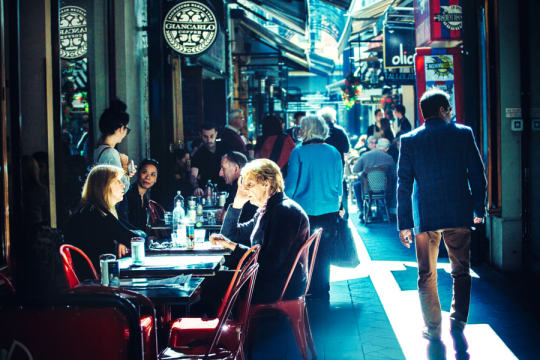
    Melbourne is famous in urbanist circles for the revitalization of its central area. In 1992, 40% of the buildings were empty above the first floor and only 5 (yes five) residents actually lived in the core. Everyone had fled to the suburbs and the city had hollowed out.

    Today, there are over 29,000 residents in the central area and Melbourne has become revered around the world for its vibrant public spaces and innovative laneway repurposing. 

    Here’s a quick 11 minute video that explains how they did it (via The Urbanist). Click here if you can’t see it below.

    [vimeo 131396094 w=500 h=281]

    What is clear from the video is that it took a lot of work convincing property owners and getting them to buy into the vision. Being able to repurpose the laneways often meant punching through blank walls at the base of buildings. And so there was pushback.

    Here in Toronto I’ve heard people say that we’re not Melbourne and we shouldn’t expect to have similar kinds of urban spaces. Well guess what, neither was Melbourne in the 1980s and 1990s. It was a dying city. But they made it happen.

  • Toronto is at the center of an emerging megalopolis

    https://500px.com/embed.js

    With the recent talk around downtown Cleveland’s resurgence, I am reminded that for those of us living near the Great Lakes, we are living in one of the most important urban agglomerations in the world: The Great Lakes Megalopolis.

    In 1962, French geographer Jean Gottmann wrote a seminal book called, Megalopolis: The Urbanized Northeastern Seaboard of the United States. And in it, he described the remarkable clustering of cities in the northeast, running from Boston in the north to Washington D.C. in the south. He called this the Northeast Megalopolis.

    The term megalopolis simply refers to a clustering or chain of generally adjacent metropolitan areas.

    Then in the 1960s and 1970s, architect and planner Constantinos Doxiadis started writing about the emergence of what he called the Great Lakes Megalopolis. In his mind, a contiguous urban region was forming that stretched all the way from Chicago in the west to Quebec City in the north east. And at its economic center was the city of Detroit.

    More recently, Richard Florida, as well as others, have been referring to these urban clusters as mega-regions. And in the case of the Great Lakes, Florida broke the area down into two distinct regions: Chi-Pitts in the west and Tor-Buff-Chester in the east. (I think you can guess how the names were derived.)

    According to his research, these two mega-regions have a combined population of almost 60 million people and an economic output equivalent to almost $3 trillion. That places it in line with the Northeast Megalopolis. But according to the Brookings Institution, the output coming from the Great Lakes could be closer to $4.5 trillion.

    Whatever the case may be and whatever you want to call it, the Great Lakes Megalopolis is unquestionably an economic and cultural powerhouse. But this has me wondering whether or not we’re doing enough to unleash its full potential.

    When I attended Joe Berridge’s talk last week on Toronto as a global city, I asked him how he thought we should be organizing our cities and regions. Do city-states make sense? Should we be rethinking the relationship between provinces/states and cities?

    His response was that we should be creating agencies and entities with regional authority (as opposed to fighting to make any constitutional changes). For example, the Toronto region should not have an array of competing transit agencies (as it does today). It should have one regional transit authority that blankets the region. People, ideas, and capital don’t follow borders.

    So with that in mind, what opportunities are there for us to unite the metropolitan areas within the Great Lakes Megalopolis?

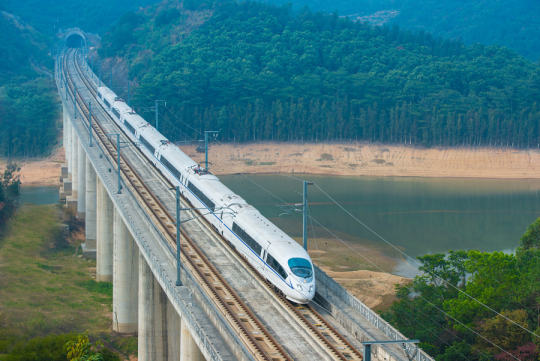
    The first idea that comes to my mind is a high speed rail network that seamlessly connects to each city’s local transit network. Imagine a Great Lakes bullet train that could zip you across the region. It would completely reorganize the spatial landscape.

    Here’s an excerpt from a recent report by the Independent Transport Commission called, Ambitions & Opportunities – Understanding the Spatial Effects of High Speed Rail:

    There has been a global shift of economic power and influence from nation states to cities and city-regions. Today’s successful cities collaborate across existing boundaries to form polycentric metropolitan regions. As a result cities function in a much less self-contained manner than they did fifty years ago. Longterm trends in the pattern of urban settlement reflect the interplay between opportunities for dispersal afforded by greater mobility, and economic and social forces promoting concentration.

    But what else could we be doing to empower the Great Lakes Megalopolis? 

    I would love to hear your thoughts in the comment section below. I think there’s a strong case to be made for thinking at the scale of the megalopolis and not just at the scale of our own backyard.

  • The Laneway Project is looking for a Fundraising Coordinator

    https://500px.com/embed.js

    As many of you know, I advise a non-profit called The Laneway Project. The goal of the organization is to change Toronto’s relationship with its laneways and help create laneway friendly policies and procedures.

    It’s something that I’m incredibly passionate about. I believe that our laneways represent a missed opportunity, both from a public space standpoint and a real estate standpoint. And I’m confident that Toronto will eventually figure that out.

    If you’re also interested in this space, now is your chance to get involved. The Laneway Project is currently looking for a Fundraising Coordinator to help develop its operational funding strategy and to help with actual fundraising.

    Since it’s still early days, this is a volunteer position (with an honorarium). But it’s a great opportunity to get involved early with a passionate group of city builders. So I hope you’ll consider applying. Click here for the full job description.

  • Before & After: Queens Quay Boulevard

    Yesterday I spent the evening walking Toronto’s new Queens Quay Boulevard, which fully reopened this past Friday after a number of years of construction. 

    It is part of Waterfront Toronto’s revitalization efforts and represents a solid decade in the making. West 8 of Rotterdam and DTAH of Toronto won the international design competition for the central waterfront back in 2006. And this past weekend a big component of that vision was unveiled.

    But first, let’s take a look at what Queens Quay Boulevard used to be like. Here’s a Google Streetview image from 2009:

    image

    The streetcars ran in the middle of the street. Cars drove on the north and south side on both sides of the tracks. And the sidewalks were fairly small and usually at capacity during the busy summer months. It wasn’t a great street.

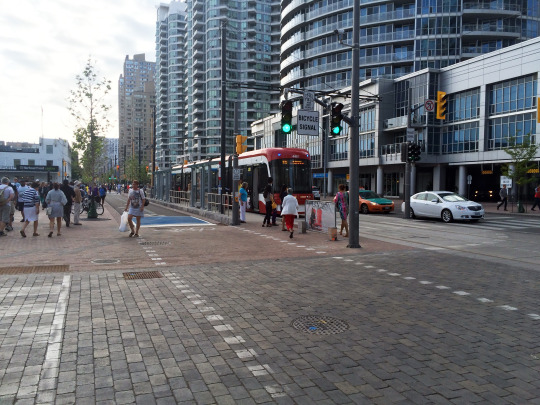
    Now here’s a photo that I took yesterday from that same vantage point (2015):

    image

    The street has been completely reorganized. On the north side of the streetcar tracks is where the cars now drive in both directions. On the south side of the tracks the lanes of traffic have been replaced with a 2-way bike trail (part of the Martin Goodman Trail). And on both sides the pedestrian areas have been greatly expanded. It’s now a magnificent street.

    If you haven’t yet been down to the new Queens Quay, I would encourage you to check it out on either foot or bicycle. (If you go on bicycle, let me know and I’ll join you.) 

    Toronto may have taken a giant step backwards with its recent decision on the Gardiner East, but we also took a giant step forward with the reopening of Queens Quay Boulevard.

  • Why I write something every single day, even if it’s garbage

    I was out for brunch last weekend with a few close friends from high school. It’s a “monthly reunion” that happens nowhere close to every month. But the hope is certainly there.

    During brunch the topic of my blog came up. And one of my friends asked me how I got started and how the hell I keep up with one blog post every single day. (I get that second question all the time.)

    I’ve written about this before, but I think it’s worth revisiting.

    Earlier this week venture capitalist Fred Wilson wrote a post on his blog called The Blank Screen. And I really liked how he described the experience of writing a daily blog post:

    Sometimes this process produces great insights for me and possibly others. Sometimes it produces garbage. But I’ve come to realize that the daily post, and its quality or lack thereof, is not really the thing. It is the ritual, the practice, the frequency, the habit, and the discipline that matters most to me. And, I would suspect, the same is true of the readers and commenters who frequent this blog.

    Fred’s blog was a major source of inspiration for me. I saw him doing it. I saw the value he was getting out of it. And I wanted to do it too. So I did, almost 2 years ago. 

    But he also inspired me in another way.

    Venture capital and real estate development share many similarities in my mind, even down to the way that deals are often structured with preferred returns and promotes.

    But the interesting thing about venture capital is that it went from a largely closed and “ivory tower” kind of industry to now one where almost every venture capitalist blogs, tweets, and strives for greater transparency (when possible).

    I thought this was a fascinating shift and it made me think that the exact same thing was bound to happen in real estate development. So I am trying to make that happen. Hopefully this blog is helping.

  • How immigration shaped Toronto and New York

    One of the things that Joe Berridge reminded me of in his talk yesterday, is that the story of Toronto is really the story of immigration. 

    In his words, Toronto has become the success story that it is precisely because we are good at taking in lots of immigrants and making them economically productive. 

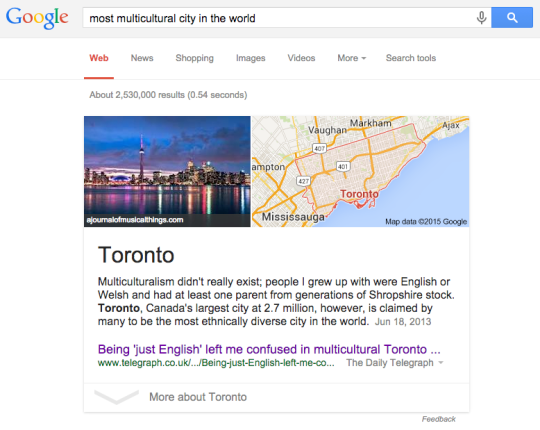
    Sure, there are many things that we could be doing better, but you don’t get to be the most multicultural city on the planet without doing a lot of things right. More than half of this city is now foreign born. The term “visible minority” is quickly expiring.

    image

    And more than anything else, this accomplishment is arguably what has allowed us to become the global city that we are. Click here for a fascinating chart from the Toronto Star that allows you to see the number and source of immigrants that have come to this city over the last half century.

    But of course, Toronto is not alone in this accomplishment.

    Urban economist Edward Glaeser wrote a great essay back in 2005 called Urban Colossus: Why is New York America’s Largest City? It’s an incredibly interesting read for those of you interested in cities and so I definitely recommend it.

    But the crux of his argument is that New York is the largest and most dominant city in America because of geography – specifically its deep harbor – and because of its success in manufacturing.

    What this meant is that New York became the center of shipping in the country and the point of entry for the majority of immigrants coming into the United States. But since transportation costs were still relatively high at the time, most immigrants arrived in New York and stayed in New York.

    Luckily, New York had a robust manufacturing economy – notably because of sugar refining, publishing and printing, and the garment industry. This allowed the waves of immigrants flooding into New York to become economically productive.

    From 1850 to 1920, the population of the New York grew about 800% from roughly 700,000 people to over 5.6 million people.

    So the moral of the story is simply that immigration has and will continue to play a pivotal role in the shaping of our cities. Canada has a sub-replacement fertility rate somewhere around 1.61 births per woman (2012). This is lower than that of United States, which is around 1.88 births per woman.

    That means that without immigration, we do not grow. We shrink. And that’s usually not a great thing for economies.

  • The PRESTO Push

    image

    Back in 2004, I spent a summer living in Asia. And one of the things that I remember really standing out for me was Hong Kong’s Octopus card. It’s a refillable card that you just tap to get onto transit. Lots of cities have them.

    But the cool thing about the Octopus card was that you could use it so many other places besides just on transit. I don’t know know what it’s like today in Hong Kong, but I remember also using it in taxis and to buy breakfast in the morning at Pret a Manger. That was pretty incredible for 2003.

    This was also great for me because I’m one of those people that dislikes carrying around paper money/change. I almost never spend my change and so it just ends up just accumulating in a container beside my front door. Here in Toronto we also use microscopic transit tokens, so that adds another layer of inconvenience.

    But that’s all changing.

    Toronto now has its own version of the Octopus card and it’s called PRESTO. Technically it launched in 2009, but I only recently noticed the card readers appear at my home subway station (King Station). So tonight I decided to finally pull the trigger and order a card. I’ve been waiting 11 years for this moment 🙂

    And I was doing that, I noticed this message on the website:

    image

    Not surprisingly, we seem to be pushing to get PRESTO rolled out before the world comes to visit. And I think that’s a great thing.

    One of the big benefits of hosting an event like the Pan Am Games or the Olympics is that it creates a hard deadline to get things done, which is something governments often need. It’s a bit like tidying up before guests come over for dinner. You find a way to do it before people arrive.

    There’s a lot of debate about whether or not it makes sense for cities to spend the money on playing host city. But I don’t think we should ignore the fact that they can be a great catalyst for city building. Things get done. And oftentimes done is better than perfect.

    Good news: I’ve been told that the PRESTO system will be compatible with mobile phones and near field communication. Because let’s face it, cards won’t be around that much longer.

  • Revisiting electronic road pricing as a way to fight traffic congestion

    https://500px.com/embed.js

    As disappointing as this week’s vote on Toronto’s Gardiner Expressway East was, there is one good thing that has come to the forefront and that is the will to explore road pricing. At this point, I have almost no confidence that this City Council would ever vote it in, but at least we’re talking about it. That’s better than not talking about it.

    If you’ve been reading Architect This City since the beginning, you might know that I’ve been a vocal supporter of road pricing. I wrote two posts on the topic: The case for electronic road pricing (which was based on an HBS case I did as part of my MBA) and More on electronic road pricing (which was a Lunch & Learn I did while I was at TAS).

    I continue to believe that road pricing is a highly sensible solution to big city traffic congestion. But I do think that an electronic/variable pricing model is preferable to and more equitable than a flat toll model. A variable model means that the price of using the road adjusts based on congestion levels and/or the time of day. I also think that we should use as much of the revenues as possible to fund continuous transit improvements.

    If you’re interested in learning more about this topic, check out the two posts mentioned above. I’d also love to hear your thoughts on road pricing in the comment section below. Would you welcome it in your city?

  • Gardiner East vote shows that Toronto is not yet ready to be an urban leader

    image

    Today is very sad day for Toronto. 

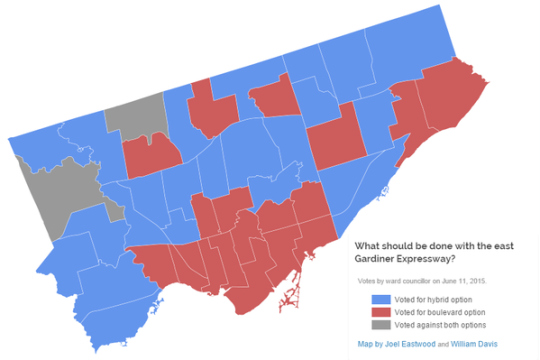
    After 2 days of debate, City Council voted this afternoon, 24-21, in favor of rebuilding the elevated Gardiner Expressway East (”hybrid” option) that runs along the city’s eastern waterfront.

    And once again, Toronto is largely divided. See above image prepared by Joel Eastwood and William Davis.

    It’s the old city of Toronto (who uniformly wanted the elevated highway replaced with a boulevard) versus the rest of the city (who for the most part voted for the hybrid).

    I can’t begin to tell you how deeply disappointed I am by not only the outcome, but also by how it happened and why it may have happened. For all of our talk about being a progressive global city, today we are clearly not that. 

    Because more than a vote on what to do with the Gardiner East, today was a vote on how we believe we should be building this city for the future. 

    When the Gardiner East was first built, the vision was one of fluid private mobility, where it would be possible to quickly circle around and across the city on an endless sea of highways. Detroit was doing it. Baltimore was doing it. Everybody was doing it.

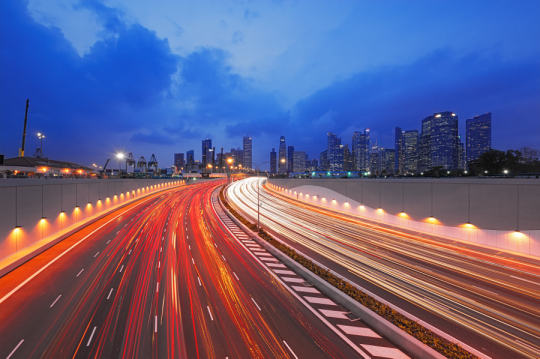
    In other words, we were building our environment around the car. And our primary – some would say singular – focus was to ensure that the car could move unencumbered around the city. That’s why Toronto is now home to the busiest and one of the widest highways in the world.

    But despite all this, Toronto remains crippled by gridlock. And so does every other big city city in the world that has bet on cars as the solution. Why is that?

    Because that model doesn’t work.

    The I-10 Katy Freeway in Houston is 26 lanes at its widest point. It is the largest highway in the world by number of lanes. But from 2011 to 2014, commute times in some sections increased by as much as 51%. Is that because they haven’t built enough highway? How much is enough?

    By comparison let’s look at a city that has bet on transit as the solution: Tokyo. 

    The metropolitan area of Tokyo is approximately 37.8 million people. That’s more than the entire population of Canada and by most accounts is the largest urban region in the world. But despite its size, Tokyo is consistently ranked as one of the most livable cities in the world and also one of the most efficiently run.

    Interesting.

    So when I heard Councillors going on today about how a vote for the “hybrid” is a vote not to increase congestion and gridlock, it became abundantly clear that many – apparently most – people in this city still do not appreciate what it is going to take to get us efficiently moving as this region approaches 10 million people by 2041.

    This should not have been a debate about 3 minutes. That, as I’ve said before, is a red herring.

    Of course, there was lots of lip service to transit. Many seemed to agree that transit is the future. And some even went so far as to say that removing the Gardiner East and replacing it with a boulevard is the right thing to do, but that we simply can’t do it now because we haven’t made the requisite investments in transit. 

    If transit is truly what we want, then we why don’t we take the boulevard savings and put it directly into transit?

    To me it’s like saying: I really want to be homeowner, but I can’t afford it right now. So instead, I’m going spend more on rent so that I can burn through more money and make it even more difficult for myself to eventually become a homeowner.

    Because that is what happened today. 

    We voted to overspend on a stretch of elevated highway that is used by a small sliver of downtown commuters (~3%), instead of replacing it with a cost-effective surface boulevard (with similar road capacities) and then prioritizing the proven solution to urban congestion: transit.

    At the same time, we also made a number of other things clear in today’s vote. 

    We made it clear that cars matter more than our city’s public realm; that cars matter more than our waterfront revitalization plans; that cars matter more than our environment and our “efforts” to reduce GHG emissions; and, frankly, that cars matter more than our overall quality of urban life.

    I believe that cars will always be a part of our cities, but I don’t believe in putting them ahead of you and I. I guess old habits die hard. That my friends, really sucks.