Daily insights for city builders, delivered every morning at 6 AM ET. I’m Brandon Donnelly — a Toronto-based real estate developer and founder of Globizen. I’ve been writing here since 2013.

Tag: urbanism

  • The value of lifestyle in attracting human capital

    When I was in Revelstoke, BC last year I met a number of people who had made the move out there from Toronto. When I asked if they missed living in a big city, pretty much everyone gave me the same answer: “No, I love it here.”

    This past week when I was in Park City, Utah, I similarly met a number of people who had made the move from New York and other large cities. And when I asked them the same question, I heard statements like: “I used to live in New York, but then I got a life and moved out here." 

    In these two examples, the obvious draw is the mountains. But it’s not like everyone just moved and became a ski bum. In fact, Inc Magazine recently published an article talking about Park City’s robust startup scene. People are figuring out how to combine hard work with the lifestyle they want.

    What I find interesting about this is that it runs counter to the trend of young people preferring big cities. Here’s a quote from NPR:

    “But affordable real estate and waterfront views don’t have millennials biting. They continue "a multigenerational pattern of young adults preferring more expensive urban areas over lower-cost rural ones because the lifestyles and opportunities in such places make the extra burden of cost worth it,” says Robert Lang, professor of urban growth and population dynamics at the University of Nevada, Las Vegas.”

    However, some small towns clearly have a unique lifestyle advantage: mountains. And that seems to be a strong enough draw that some people are simply figuring out how to create the economic opportunities for themselves.

    For me, this is yet another reminder that if you’re trying to attract the best human capital to your city or town, you need to think about lifestyle. And since young adults aged 18-34 are far more likely to move around than any other generation, you should also be thinking specifically about what this generation wants.

    Here’s a chart from CityLab that shows how precipitously migration falls off (in the U.S.) once people finish school and get settled in a job:

    image

    Obviously, not every town or small city is blessed with mountains. But there are many lifestyle advantages that can be created. It’s for this reason that I keep talking about nightlife and Toronto’s laughable 2AM last call. Those are lifestyle things and we can do better.

  • Rethinking the backyard from Seattle to Toronto

    RobCasey iphone lorens house by Rob Casey on 500px.com

    https://500px.com/embed.js

    The Urbanist recently published a guest post, called Let Us Build Backyard Cottages, that sounds a lot like a post I wrote a few years ago, called Why It’s Next to Impossible to Get a Laneway House Built in Toronto.

    It’s the same story: buy house; see opportunity to build low-cost well-designed backyard cottage (or laneway house); discover the countless obstacles in front of you; give up until the land use policies become more favorable.

    Here’s the Seattle version of the story (via The Urbanist):

    I bought my home in 2014 with the intent of building a backyard cottage on the property. The property is a mere 4,080 square feet, with a large flat backyard that is mostly wasted space. The plan was to buy a small, prefabricated, and super-insulated (to Passive House standards) house. We would install it and move into it while we brought the main house up to Passive House standards as well, adding insulation and ventilation. We would then move into the main house while my parents (who are currently living on the East Coast, and want to move closer to us) move into the backyard cottage.

    Unfortunately, Seattle’s backyard cottage requirements proved too onerous for us to move forward with building one. The requirement of an additional parking space was a bit irritating (especially considering that my family lives car-free near the future Roosevelt light rail station), despite the fact that we do technically have two parking spaces. But more frustrating than that, it was the owner-occupancy requirement that made us scrap our backyard cottage plans.

    What I find interesting about all of this is that the same narrative is happening in multiple cities, from Seattle to Toronto. That, again, suggests to me that change is likely inevitable. Especially since Seattle seems further ahead in this regard compared to Toronto. Change is happening.

    Of course, there are differences between accessory dwelling units (what The Urbanist wrote about) and independent laneway housing (what I wrote about). But I would classify them as being in the same family of urban change.

    Most North American cities are clinging to a specific kind of single family housing typology. I can appreciate why. But I believe that there will be a tipping point.

    I’m not sure that this year will be the year. Which is why I didn’t include laneway housing in my list of 10 city building predictions for 2016. But I think it will happen in the shorter term.

  • 10 city building predictions for 2016

    Dawn by Adrian Popan on 500px.com

    https://500px.com/embed.js

    Few things are better than waking up in the mountains and seeing a notification on your phone that 9″ of fresh snow have fallen overnight, bringing the 48 hour snowfall total to 16″.

    This is what people in mountain towns live for. They ski in the morning and then head to work in the afternoon. I heard a number of people on the mountain today saying that they, “want to be in the office after lunch.” It’s a lifestyle thing.

    On that note, today I’d like to focus on 10 city building predictions for 2016. I’ve been assembling this list over the past few weeks and now that I have had my fill of Utah powder for the day, I’m dedicating the rest of the afternoon to writing.

    These are never easy to put together. But here are my thoughts:

    1. We will see increased migration to secondary cities – outside of the alpha global cities – which offer a higher quality of life, more affordable housing, and the ability to live a particular lifestyle. This includes cities like Austin (creative startup hub) and Denver (outdoor recreation).
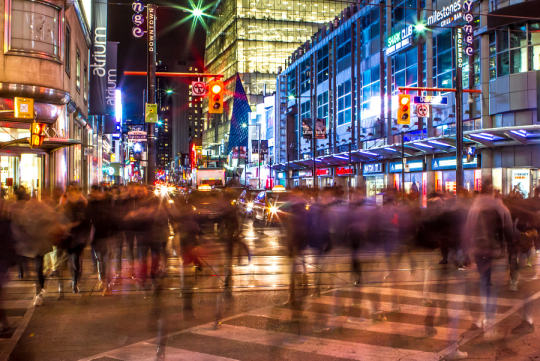
    2. As more and more cities wake up to the importance of lifestyle in attracting top talent, I think we will see a lot of cities follow the lead of Amsterdam and create “night mayors” or some other equivalent. These cities will begin to see nightlife as a competitive urban advantage.
    3. Global cities will start experimenting with different land use and property tax reform strategies to try and deal with rising income inequality and eroding housing affordability.
    4. We will see a barbell of residential unit sizes. We’ll see more well-designed small units as a way to try and promote housing affordability and we’ll see larger urban infill units for families and baby boomers who want to live/remain in walkable urban communities.
    5. In line with above, I think we will see a further rethinking of urban spaces. Flexible spaces, unique program mixes, and a continued blurring of public/private spaces. One example of this is the trend towards small private spaces surrounded by generous public/communal spaces.
    6. The Toronto and Vancouver real estate markets will continue to chug along because of low interest rates, a weak Canadian dollar, and increased foreign investment. That said, I think we will see more restraint when it comes to over-the-top luxury product.
    7. We will finally see a disruptive technology product that starts to get people in the real estate industry thinking that change is on the way. This will not be a product that ports an offline experience online; it will a new way of thinking about the industry.
    8. This will be the year that cities stop fighting Uber (and other similar marketplaces). Cities (and lobbyists) will finally accept that this is a new reality and then work to figure out the best way to create policy around it. Edmonton, Alberta has already become the first Canadian city to regulate Uber.
    9. Road pricing will get the attention it deserves in North America. Things will start out slow, but we will finally get ourselves on a path which recognizes that we can’t build our way out of traffic congestion in most major cities.
    10. I will publish a book on becoming a real estate developer.

    Many city building trends and shifts seem to happen in a global way. But I think it’s worth noting that a lot of these predictions were likely written with my North American lens on, and in some cases my Toronto lens on.

    It’s not easy sitting down and thinking about what will happen in the future. But it’s a worthwhile exercise. It forces you to take a stance and then, when the future does come, you can see how well you did. I saw Fred Wilson do this on his blog and I thought it was a great idea.

    Now I would love to hear what you think about my predictions and what yours are for this year. Please let us know in the comment section below.

  • Amsterdam is about to host the first Night Mayor Summit

    Canal Reflections by Peter Elliston on 500px.com

    https://500px.com/embed.js

    What is a night mayor, you might ask?

    Well, just as the name suggests, a night mayor is the chief executive officer of a city’s nighttime activity. And in 2014, Amsterdam became the first city ever to have one.

    Why is this important, you might ask?

    Well, for most cities the night is a blindspot. It’s viewed as something that needs to be carefully controlled as opposed to something that is celebrated and leveraged. Amsterdam saw this opportunity and, in my opinion, is now at the forefront of rethinking the night.

    Here’s an example of the kind of changes that this has meant for the city (via CityLab):

    “Until recently, Amsterdam enforced what by continental European standards is a fairly strict curfew: nightclubs had to close by 4 a.m. on weekdays and 5 a.m. on weekends. The city often had problems with noise and disorder at the exact moment when all the clubs closed, filling narrow inner city streets with rowdy people.

    To solve this problem, the night mayor suggested not less, but more time for people to go clubbing. He has helped push through the granting of 10 24-hour licenses for nightclubs. Crucially, all of them were located not in the dense city center but in thinly populated districts around Amsterdam’s outer ring road. The result was a marked reduction in street noise.”

    Some of you are probably feeling skeptical as you read this. Especially since 4AM and 5AM hardly seem strict when compared to other cities (Toronto’s last call is at 2AM). 

    But I would not underestimate the importance of what Amsterdam is doing. We are living in an era of the 24-hour global city and it’s about time that governments woke up to that. I’m sorry Toronto, but 2AM is an absolute joke.

    The night can be your competitive advantage in attracting human capital. As the CityLab article cited above suggests, a big part of what transformed Berlin into a capital of cool was its nightlife. 

    I wholeheartedly believe that and I have no doubt that the night will start to become a greater focus in city building.

    If you’d like to learn more about the Night Mayor Summit, click here.

  • Maximize your space with square foot hours

    I am more than happy to trade-off living space (that I don’t really need) for a better location. It means I get the benefit of driving less and enjoying the city more.

    But as more of us move to urban centers, we are finding ourselves having to do more with less space. Often this means creating flexible and multi-purpose spaces.

    One strategy for this that I really like – which I just learned about through 5 Kids 1 Condo – is the idea of square foot hours. Here’s how it works:

    “The concept behind ft2hours (square-foot hours) is to add a time-based measurement to how we assess and use our space. So if your 10′ x 12′ bedroom is used only eight hours a day (i.e., when you’re sleeping), your actual usage is 120 ft2 divided by three (one-third of the day), which is just 40 ft2hours of used space.”

    In many ways, this happens intuitively. If you really want to maximize a space, you figure out how to use it more often throughout the day. But I like the idea of applying some math to it.

    Of course, this runs counter to the notion that some spaces should be reserved for specific uses. In the case of a bedroom, it’s sleeping and sex. This is so that your mind doesn’t start associating it with things like work, which might start to disrupt your quality of sleep. But perhaps that’s about to become an anachronism in the modern city.

    Without having the above formula in mind, I have thought along similar lines for my own apartment.

    When I think about where I spend most of my waking hours, it’s bouncing between the kitchen and the living room. And yet my kitchen isn’t up against the windows; it’s recessed towards the back. Instead, my bedroom – where the blinds are almost always drawn – got the windows. (Access to light is a code requirement.)

    If it were up to me, I would have flipped my bedroom and the kitchen. But typically in the real estate world, “recessed bedrooms” are considered less desirable. 

    I don’t think I’ve heard many people complain about a recessed kitchen, but maybe that will change once we start thinking more about things like square foot hours.

  • UberPOOL is the new networking tool

    crossing by Milan Kalkan on 500px.com

    https://500px.com/embed.js

    UberPOOL launched in Toronto last week. It was tested in Toronto last summer and it’s been available in other cities for awhile, but now it’s officially here.

    If you’re not yet familiar with UberPOOL, it basically allows you to share your ride with other people who are headed in the same direction. I’ve heard some people on Twitter complain about route inefficiencies, but I’ve had only positive experiences with it so far.

    The disadvantage of this system is that it’s a bit slower. You’re stopping to pick up other people on the way. But the advantages of this system are twofold. First, it’s cheaper, which means it’s already starting to eat into my transit usage. And second, you get to meet new people everywhere you go.

    This second piece is really interesting to me, because I place a lot of emphasis on getting to know as many people as I can. That’s one of the reasons I blog every day and one of the reasons I spend a lot of time on Twitter. I get exposed to people that I might otherwise not meet. And I believe there’s huge value in that. I want to sit down and have a coffee with everyone. (Time doesn’t always allow that to happen.)

    Because since the beginning of cities, personal connections is one of the things that has made urban life so valuable. Here’s an excerpt from a CityLab article published back in 2013:

    “If you look at the interaction patterns of cities,” Pan says, “You will see that they grow super-linearly with population with the same growth rate as productivity, as innovation, as crime, as HIV, as STDs.”

    All of those facets of urban life have appeared until now to share a somewhat mysterious mathematical relationship. But this research suggests that this particular super-linear growth rate is directly tied to how dense cities enable us to connect to each other. As cities grow, our connections to each other grow by an exponential factor. And those connections are the root of productivity.

    “What really happens when you move to a big city is you get to know a lot of different people, although they are not necessarily your ‘friends,’” Pan says. “These are the people who bring different ideas, bring different opportunities, and meetings with other great people that may help you.”

    Clearly there can also be some negative externalities associated with urban life – such as crime and disease. But it’s also clear that for a many people, the benefits far outweigh the potential negatives. Big cities tend to make us more productive. And as we’ve discussed here before, they can also bring us happiness in ways not associated with economic success.

    If you’ve used UberPOOL before, I would be curious to hear about your experiences in the comment section below.

  • To connect rather than isolate

    When I was
    a kid growing up in the suburbs of Toronto, I never played in the backyard. I
    played in the streets. That’s where all the kids came together.

    We would
    play baseball in somebody’s driveway, using one of the garage door “squares” as
    the strike zone. We would play football on corner lots, where it was tackle on
    the grass and “two-hand touch” on the street. And we would wax our curbs so
    that we could skateboard them.

    None of these
    spaces were ever really intended for baseball, football, or skateboarding, but
    we kids repurposed them.

    As people,
    including families, continue to move into urban centers around the world, I
    have no doubt that the next generation of children will once again repurpose
    spaces for play. But that doesn’t mean that we don’t have work to do when it
    comes to properly preparing our communities for people of all shapes and sizes.

    One of the
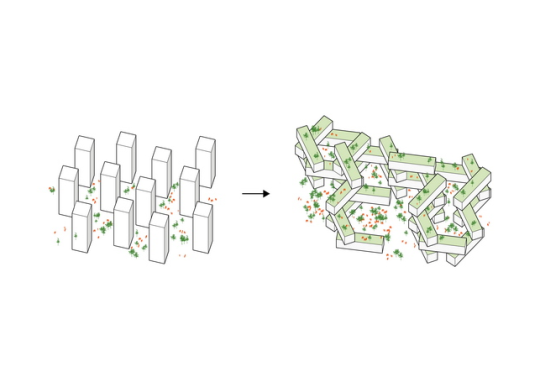
    most interesting design challenges facing us today has to do with our towers.

    Architects
    have long been obsessed with the idea of vertical villages. Le Corbusier’s Unité
    d’habitation
    in Marseille had two shopping streets embedded within the tower
    that were intended to act as public spines. I don’t know how well they did, but
    it was a highly progressive idea for the time.

    Following
    on this idea, I was recently watching a
    TED talk with architect Ole Scheeren
    (thanks Mariane) and I was fascinated
    by his obsession with breaking down the raw verticality of towers.

    His belief
    was that, yes, cities are and will continue to become more dense through tall
    buildings, but that most towers isolate rather than connect people. His work strives to do the opposite.

    And this
    one of the big trends that I think we will see more of in our cites. We will see
    new forms of urban connectedness and a blurring of private, public, and
    semi-public spaces. Screw Euclidean zoning.

    On that
    note, I am reminded that I owe the ATC community a post on my predictions for
    2016. I hope to get that out shortly.

    Diagram via Büro Ole Scheeren

  • Hybrid 1-2-3

    For those of you who have been reading this blog since last summer, you’ll know that I’m particularly passionate about the Gardiner Expressway East here in Toronto.

    Last night a public meeting was held to discuss the 3 alternative designs for what has become known as the “hybrid” option. If you’d like a visual summary of the options, click here.

    But essentially as you go from hybrid 1 to hybrid 3, the elevated Gardiner Expressway just gets pushed further north, away from the water. So as you go from 1 to 3, the hybrid option becomes less offensive to the waterfront and its associated public realm, and it opens up more land for development. However, it also becomes more expensive.

    Here’s a graphical summary of the costs, which my friend Gil Meslin tweeted out last night:

    //platform.twitter.com/widgets.js

    Notice that the boulevard (remove) option, which City Council rejected last summer, remains by far the most cost effective option. At a time when the city is searching for cash, I am surprised that nobody is looking here.

    I am also surprised to read that some are commenting on which of the above hybrid options will be the easiest to tear down should we want to remove the Gardiner East in the future. If that’s the lens we are applying, why rebuild it in the first place?

    But enough from me. What do you think? Here’s a Twitter poll I created this morning:

    //platform.twitter.com/widgets.js

  • What is an urbanist?

    Cities are in vogue. And that has brought about buzzwords like urbanism, tactical urbanism, urbanist, and the list goes. But what exactly does it mean to be an urbanist?

    If you look it up in the dictionary, you’ll likely get something along the lines of: someone who is a specialist in city planning. But I bet that there are many people out there who would self-identity as being an urbanist, but who would also not consider themselves specialists in the field.

    The term has evolved to imply other things.

    To this end, Scott Bonjukian (over at The Urbanist) recently wrote a good piece called, Why I call myself an urbanist. And in it he offered up this definition from the former mayor of Seattle, Michael McGinn:

    “At the core, urbanists want more people living in cities, so they support more urban housing of all types. They prioritize walking, biking and transit, and support a high quality shared public realm. Parks, nightlife, theaters, transit and taxis can replace backyards, TV rooms and private cars. That way we can live well with less stuff, sprawl and pollution.

    I’ll go a little further, and say urbanists prefer bottom up, granular, and seemingly chaotic innovation to top-down planning and mega-projects. Think the “Main Street” of neighborhoods with food trucks and lots of little stores, as opposed to tax-subsidized big box stores with legally required massive parking lots. Bike lanes, crosswalks and plazas instead of public garages and new highways.

    Urbanists believe that mixing people and ideas creates wealth in a city. Why else would people choose to live so close to each other? Cities, therefore, should be open to people of every background, ethnicity, race and class to maximize the potential from our human capital.”

    Scott added that most urbanists are probably also environmentalists on some level, and I can certainly see where he’s coming from with that. Regardless, I think the above definition is pretty apt.

    But if you unpack some of the points, this definition raises some interesting questions. For instance, take the first line around supporting housing of all types. 

    This could mean that even if you lived in an inner city transit-served single family neighborhood, but you didn’t support alternate housing types such as duplexes, triplexes, accessory dwelling units and/or laneway houses, then you might not be a true urbanist. You would rather homogeneity over a “chaotic” mix of housing types. And I can certainly think of inner city neighborhoods in Toronto that have fought against “monstrous” duplexes. 

    So I would be curious to hear your thoughts on the above definition of urbanist. Do you agree or disagree? Is there anything you would add or take away? Are you an urbanist? Let us know in the comment section below.

  • Toronto’s King Street to be transformed into a transit + pedestrian corridor

    Take The Car by Jason Cook on 500px.com

    https://500px.com/embed.js

    I try not to focus on local Toronto issues this much, but this morning an important initiative was announced and it’s blowing up my Twitter feed.

    By spring 2017, the city hopes to have a pilot project in place that will transform King Street – running from Liberty Village in the west to the Distillery District in the east – into a priority-transit and pedestrian corridor.

    This isn’t to say the street will be closed to cars. I would imagine that at least 1 lane would remain for cars going each way. Instead it will be redesigned to prioritize transit, pedestrians, and cyclists.

    So why is this exciting?

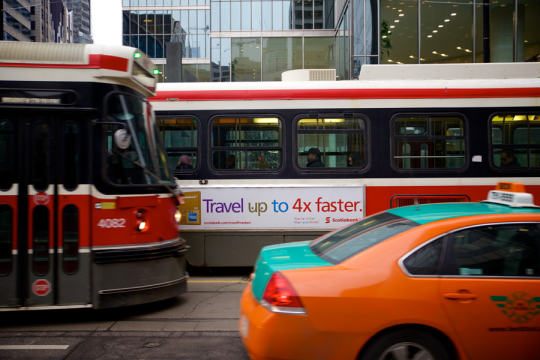
    The King streetcar is currently broken. If you’ve ever taken it across downtown during rush hour, you know exactly what I mean. It’s infuriating. You might as well be crawling on your hands and knees. One of the goals of this initiative will be to get it working again. Good.

    The shoulders of downtown – along King West and King East – are seeing some of the greatest intensification in the region. So much that it’s common for people in this city to complain that Toronto misplanned it all by allowing this development before the transit was there. Well, this is a quick and inexpensive way to get the transit there. Remember that when the inevitable “war on car” rhetoric ratchets up over the next year.

    The project will be deployed, first, as a pilot project. That will allow the project team to test and iterate. It has also become the way you get things approved in cities. You first make them temporary. 

    But I am certain that we will quickly discover how necessary these changes were.