Daily insights for city builders, delivered every morning at 6 AM ET. I’m Brandon Donnelly — a Toronto-based real estate developer and founder of Globizen. I’ve been writing here since 2013.

Tag: urbanism

  • How permissive zoning created Toronto’s King-Spadina district

    image

    Over the weekend, Marcus Gee of the Globe and Mail published a terrific article about Toronto’s King-Spadina district and how “condos conquered a rundown district of the city.” (This post will argue that condos were not the catalyst, but an outcome of other changes.)

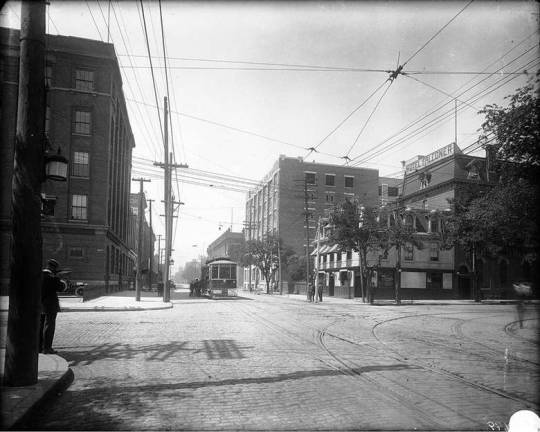
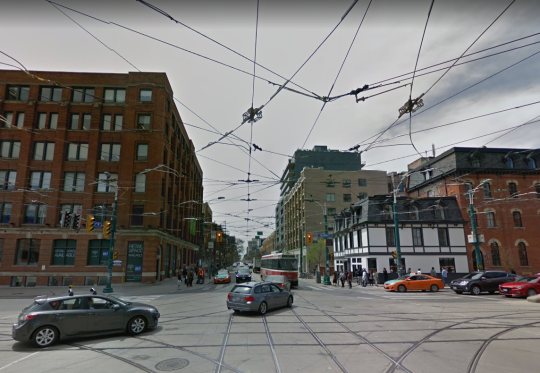
    The image at the top of this post (City of Toronto Archives) is the intersection of King Street and Spadina Avenue around the early 1900s. And here is roughly that same view from May 2016 (Google Streetview):
    image

    From this perspective, it may look like not much has changed. The buildings at the two corners are still there, although their uses have changed. The streetcars are still running, although we now have slightly newer machines. And there are overhead lines providing a canopy across the intersection.

    But as Gee points out, the reality is that in recent years King-Spadina has arguably seen more change and development than any other precinct in the city:

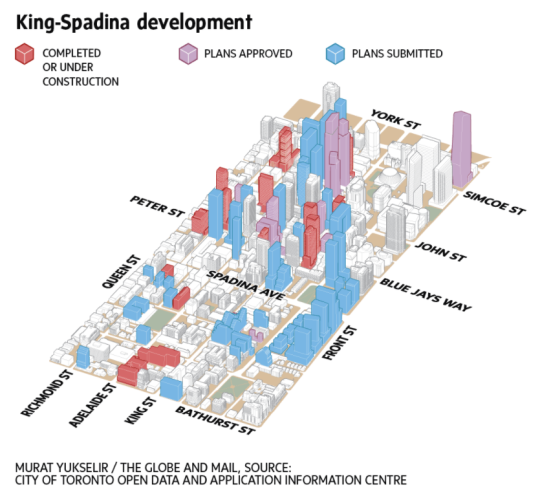
    No fewer than 99 projects have been built, approved or pitched since 2004. That’s one quarter of the total for the entire city and more than the count for two vast suburban districts – Scarborough and Etobicoke – combined. King-Spadina is overtaking even high-rise hubs such as Yonge and Eglinton in midtown Toronto and the Bay and Yonge corridors downtown.

    Below is a diagram showing the built form of that change.
    image

    But as we talk about this massive change, I would argue that this didn’t happen by accident. 

    Gee starts his piece by saying that “cities have an endless ability to evolve, to rebound, to reinvent and regenerate themselves, sometimes in ways that would astonish generations past.” I would add one word: Successful cities have an endless ability to evolve.

    King-Spadina has indeed reinvented itself many times. Prior to its current iteration, it served as a manufacturing district and as the center of Toronto’s garment industry. But from the 1970s through to the early 1990s, the area fell into decline as its manufacturing base left.

    The game changing moment happened in 1996 when “The Kings” – which includes the areas around both King-Spadina and King-Parliament – were redesignated as “Regeneration Areas.” The overarching goal was to deregulate away from single-use industrial zoning and allow the area’s buildings, both old and new, to take on almost any use.

    Now all of a sudden it was possible to have light industrial, commercial, entertainment, retail, residential, and live/work uses all mixed together. And with the bones already in place, the market responded. 

    In my view, it is these earlier changes that laid the groundwork for what has become one of the most exciting neighborhoods in the country.

    However, today some are worried about whether or not this is too much of a good thing. And I am sure that many would like to blame developers for piling up in this neighborhood. Why continue to build here when there’s lots of land elsewhere?

    King-Spadina is a perfect example of what Richard Florida would call “winner-take-all urbanism.” There are powerful clustering forces at play both globally and locally in our cities. And so there are real economic reasons for why King-Spadina has seen more development than Etobicoke and Scarborough combined.

    Permissive land use policies and the right building stock may have kickstarted things, but now economies of agglomeration have taken over. Retailers, restaurants, clubs, tech companies and people, among many others, are now fighting for space in this area for the same reason that Toronto’s garment industry once felt the need to cluster here. There are tangible benefits to doing so.

    What people are effectively asking today is at what point do we start to see diseconomies of agglomeration. This is an important question and one that needs to be actively managed. 

    Without getting into any of the details, I believe that the King Street Pilot Study – which puts transit first along the King corridor – is one very appropriate answer to this question. It is a direct response to diseconomies of agglomeration, in this case traffic congestion.

    But there are important corollaries to this question that are also worth considering: How do we now create more King-Spadinas and how do we create more broad-based and inclusive urbanism in the face of these powerful clustering forces? These are questions that go well beyond King-Spadina, but there are lessons to be learned from the successes seen on the west side of downtown Toronto.

    Images via The Globe and Mail and Google Street View

  • Crazy girl down in Virginia Beach

    Last night I received an email from a 27 year old woman in Virginia Beach that really made my day. With her permission, I am sharing that email in full here on the blog, but redacting her identity. Here it is:

    Brandon,

    You don’t know me, but I just wanted to take a moment and say, thank you. I am a 27 year-old woman living and working in Virginia Beach, VA, with a Civil Engineering degree from Virginia Tech. Up until recently, I have been trying to “find myself” in my career with little success. I always had a feeling that I was “meant to do something” with my career. The problem was that I didn’t know what the hell I wanted to do. 

    Anyway, fast-forward to November 2016, and I decided to start applying to real estate development companies in the area. After all, it seemed like a pretty cool job. I began sending random emails to a few companies to see if they would hire me…. There wasn’t a real position open – I sort of just begged. Through all my random internet searches, I happened to find your blog one day… And to be honest, you have become a great inspiration to me.

    I began to love real estate development. Not just normal development, I want to make a difference. I began to feel excited and passionate about a science, a line of work, and an end vision and goal that several people share. I want to build these wonderful, competitive, beautiful, sustainable cities. I want to make our world better and more beautiful one place at a time. I was finally able to find myself through your work, so I thank you. You have helped me to commit to a career switch, be patient with my job hunt, and apply for an MBA program.

    Thank you for doing what inspires you because by doing it, you are also inspiring this crazy girl down in Virginia Beach! Keep it up.

    I wanted to share this email for two reasons.

    One, if you’re a firm in the Virginia Beach area, you should consider meeting her for a coffee. Send me an email and I’ll forward it along to her. It’s always challenging breaking into a new industry.

    And two, her email does a great job illustrating how important it is for people to feel fulfilled with their work. People want to make a difference. And some would argue that this desire is even more pronounced in the next generation coming up and entering the workforce.

    I feel lucky that I love what I do. And I know that many of my colleagues feel the same way. 

    Sometimes my friends in the development business will say to me that it’s hard not to become cynical and jaded over time. You start out wanting to change cities for the better and you think you’re doing the right thing, but then it feels like you’re getting punched in the gut every step of the way trying to do exactly that.

    That’s what life will do to you every now and then: It will punch you in the gut. If you want to accomplish great things, you have to take those. But it’s a hell of a lot easier to take them when you’re fulfilled by the work you do. 

    Trying to build better cities is pretty damn fulfilling. I am sure that many of you would agree, regardless of what side of the industry you happen to be on.

    Photo by Ravali Yan on Unsplash

  • The authoritative architectural guide to Toronto

    It’s late. I just got home from the office. And I’m exhausted.

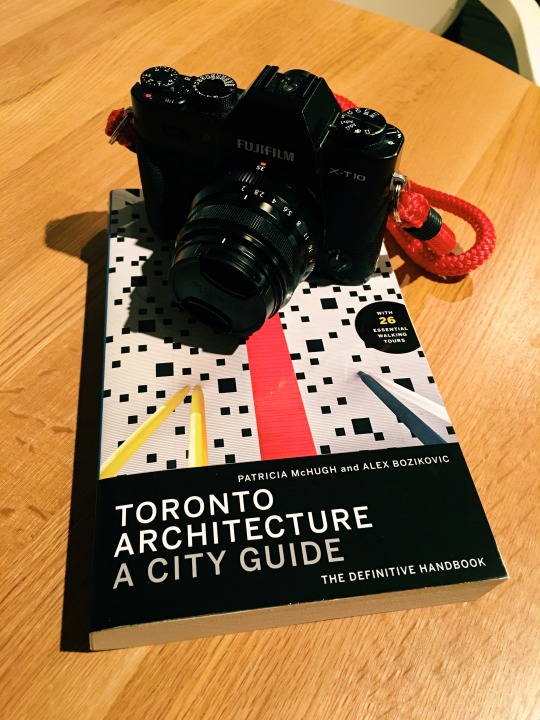
    But I did just receive my copy of Toronto Architecture: A City Guide. The “handbook” was originally written by Patricia McHugh (1934-2008), but it was recently updated by Globe and Mail architecture critic Alex Bozikovic. (Also, shout out to Vik Pahwa for the terrific photos he took for this guide.)

    When I opened the book, one of the first things that stood out for me were these two lines:

    Toronto has in fact rebuilt itself over and over again.

    This book is, in part, a tool to understand that story.

    In my view, this is one of the biggest compliments that you can pay to a city. Cities should not be static entities. Because if they are, then they will inevitably fail. Change must be a constant.

    As I read through the guide, that wonderful spirit of reinvention is abundantly clear. But I think the real way to experience this handbook is on the streets of Toronto – and probably with a good camera. That’s why it’s called a handbook. 

    The book is primarily structured around 26 distinct walking tours, each of which could be covered off in an afternoon. Along each tour, Patricia and Alex point out which buildings you should be focused on and provide pithy, yet insightful, comments for each.

    I believe that the more you know, the more you can appreciate. So if you’re interested in architecture and/or Toronto, I would you encourage you to think about getting a copy. And if you’re interested in going on a walking tour, tweet at me.

  • How did we miss this?

    I promise that this post won’t be all about laneways.

    This afternoon Erin Davis of Torontoist published a post called: Are Laneway Suites a Solution to Toronto’s Housing Crisis?

    There’s a quote in it from yours truly:

    Brandon Donnelly, a 34-year-old real estate developer, has submitted plans to the City to build a laneway home behind the house he owns in the St. Clair Avenue and Dufferin Street area. “Look, nobody is claiming that laneway housing is going to solve all of our affordable housing woes. But it will do two important things. One, it will unlock new ground-related housing, which is precisely the kind of housing that we’re no longer able to build at scale. And two, it will create additional rental housing,” says Donnelly.

    But I particularly like this one from Christopher Hume – urban affairs columnist at the Toronto Star:

    “But the City has all kinds of rules against it—‘You can’t do it for this reason, you can’t do it for that reason; oh no, we can’t have that!’ Why? Says who and for what reason?

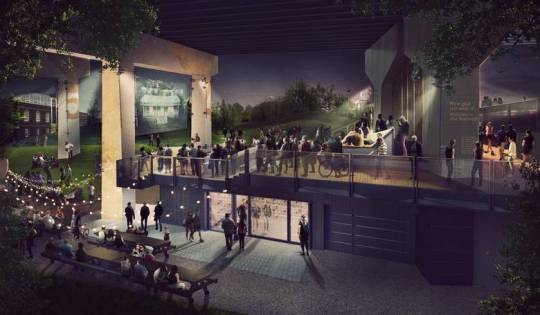
    This morning my friend Alex Bozikovic also published a piece on Toronto’s new 1.75km of public space under the Gardiner Expressway called The Bentway. It’s currently under construction and will open this winter.

    The timing of his article is actually quite serendipitous because I was in the area last night and as I walked past the construction site I couldn’t help but think to myself: “This is going to be absolutely brilliant once it’s done. Complete game changer for the area.”

    My point with these two examples is that in both cases we are rethinking – or at least trying to rethink – neglected urban spaces. It’s about finding value where no additional value was thought to be found. And I love that.

    Conventional wisdom has told us that our laneways and the spaces under our elevated Gardiner Expressway are not spaces to be celebrated. They are utilitarian at best and they are to be completely ignored at worst.

    But when The Bentway opens this winter I have no doubt in my mind that it will prove conventional wisdom entirely wrong. Who wants to hang out under an elevated highway? Watch the entire city. 

    One day I believe that we will also look back on our laneways just as we look back at the The Bentway before it became The Bentway. We will ask ourselves: How did we overlook this for so long?

    Image: PUBLIC WORK via the Globe and Mail

  • Laneway housing — right now feels different

    image

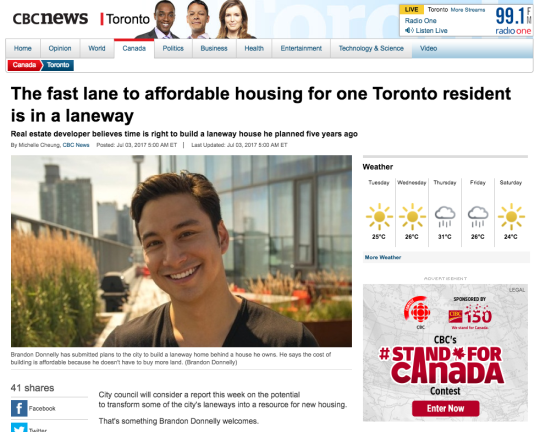
    The CBC published a piece this morning on my laneway house proposal. The subheadline: Real estate developer believes time is right to build a laneway house he planned five years ago

    It’s true. As many of you already know, this proposal has been in the works for a number of years. But right now feels different. I continue to be encouraged by all of the interest and support surrounding laneway housing in this city. 

    Thank you Michelle Cheung for covering this.

  • What land-use restrictions are doing to our cities

    I have Richard Florida’s recent book, The New Urban Crisis, sitting on my bedside table. I’m only about ¼ of the way through it, but I’m really enjoying it. I’ll write more once I’m done.

    What I instead want to talk about today is a recent (and related) article that Florida published in CityLab called: Did Land-Use Restrictions Save the Rust Belt? 

    In it, he leans on the research of two economists – Chang-Tai Hsieh of the University of Chicago and Enrico Moretti of the University of California at Berkeley – and makes 3 valuable points.

    They are:

    It is estimated that land-use restrictions (which limit development / supply) have reduced overall GDP in the U.S. by about 9% or approximately $1.5 trillion per year. It is also estimated that housing supply constraints alone lowered overall growth by more than half between 1964 and 2009.

    At the same time, these land-use restrictions may have benefited other regions – such as the Rust Belt – that would have otherwise lost more people and jobs to places like New York and San Francisco. The research found that without these land-use restrictions, employment growth between 1964 and 2009 would have been more than 1,000% higher in New York and almost 700% higher in San Francisco.

    The final takeaway is one that we’ve talked about before on this blog. One of the most effective things we can do to counteract geographic inequality is to build great transit; transit that connects both people and land to the most desirable areas of our city.

    And with that, Happy Canada Day weekend all.

    Photo by João Silas on Unsplash

  • Should Uber be shut down?

    image

    Last week Travis Kalanick – the cofounder who built Uber into the most highly valued privately held startup in the world – stepped down as chief executive at the request of his investors. This was the culmination of months of controversy related to the company’s toxic corporate culture.

    So what’s next? 

    Benjamin Edelman, associate professor at Harvard Business School, recently argued that this is it for the company: Uber Can’t be Fixed – It’s Time for Regulators to Shut It Down. I discovered the article through a good friend of mine who has felt similarly since the beginning. Uber’s business model is predicated on illegality and that should not be misconstrued as “innovation”.

    I have a few thoughts on this.

    But let me start by saying that this post is not a comment on the company’s corporate culture or its internal practices related to lobbying governments. I have not really been following what’s going on internally and I’ll leave other, more informed, people to comment on those matters.

    With that said, here are 3 thoughts.

    One, shutting down the company feels like an extreme case of throwing out the baby with the bathwater. Lots of companies go through restructuring, assuming that’s needed, without completely capitulating.

    Two, before Uber came along it was still challenging to pay for a taxi in Toronto with a credit card. More often than not the driver would tell you that the machine was broken or ask that you instead pay with cash. At that point, I would have accepted a clunky payment machine mounted to the rear of the front seats as an innovation.

    To say that Uber’s technological innovations were all banal things that its competitors were already about to introduce is downplaying so much of what the company has done outside of its beneficial cost structure. 

    We got perfect information: Where is my car right now? We got full pricing transparency before even accepting a ride: Should I take an Uber or transit or should I drive? We got the ability to get in and out of a taxi without pulling out our wallets: I’ll quickly jump out at this red light. We got dynamic ride pooling and cost sharing: Let’s split this ride 3 ways to bring the fare down. And we got clean cars that didn’t smell.

    Why weren’t any of the incumbent taxi companies do this?

    Three, I fully agree that Uber (unfairly?) benefited from a meaningful cost advantage by operating in the unregulated side of the market. This was a huge boon for the company because, as the data suggests, the demand for taxis is highly elastic.

    But I also believe that the incumbent taxi companies were perpetuating a marketplace that was anything but free enterprise. It ensured that the status quo was maintained and that those who historically benefited from the system continued to benefit from the system.

    Because of this, I’m not sure that we would have seen the innovation that we saw without a company like Uber deciding to operate within a gray area and not ask for permission. Protectionism may have stomped it out. This may be why Hailo – which operated in the regulated side of the taxi marketplace here in Toronto – ultimately wasn’t able to survive.

    Though I suppose you could argue that Hailo’s failure (at least here in Toronto) strengthens the argument that Uber was only able to thrive because of its illegal cost structure. 

    However, it’s important to remember that Uber got its start by actually charging more than traditional taxis. At the outset it didn’t have enough liquidity in its marketplace to compete based on speed and/or price, and so it decided to offer a premium experience. 

    UberX didn’t introduce steep discounts until later on and even today many people will gladly accept surge pricing at multiples of a regular taxi fare. Clearly customers are deriving some other benefits from the app.

    Edelman ends his piece by referencing Napster as an example of another startup that defied legality and was ultimately forced to shut down. Again, shutting Uber down seems extreme to me, but I do agree with his conclusion. Regardless of what happens, the lawful innovations that Uber introduced are here to stay.

    Photo by Carl Joseph on Unsplash

  • Laneway housing represents 19% of all new single family and two family dwellings in Vancouver

    One of the criticisms surrounding laneway housing is that – while great – there is no way for this housing typology to have a meaningful impact on the overall housing supply equation.

    I’ve previously written about the impact of laneway housing in Vancouver. But I wanted to revisit some of the data following this tweet by GRIDS Vancouver, where they link to a spreadsheet they prepared using the City of Vancouver’s building permit data.

    Laneway housing was first allowed in Vancouver in 2009. In that first year, only 18 building permits were issued. But since then the number has grown steadily. In 2014, they hit 377. And in 2015 (up to September), they hit 360. So for the full year, it is highly likely they will show yet another year-over-year increase.

    Since laneway houses became permissible (and up to September 2015), a total of 1,885 building permits have been issued. During this same time period, 8,239 permits were issued for other low-rise housing, up to and including duplexes. This includes single family dwellings, single family dwellings with a secondary suite, and two family dwellings.

    So for a period of almost 8 years, laneway houses have represented on average 19% of all new single family and two family dwellings in Vancouver. If you include low-rise multifamily product into this equation (more than 2 units, but 3 storeys or less ), the percentage is still slightly above 17%. This is something. It’s not everything, but it is certainly something. 

    More conventional low-rise housing still represents a greater number and, of course, most of the new supply is coming in the form of condos, apartments and other higher density housing. But 17-19% are still meaningful numbers when part of the affordability problem is clearly a lack of supply.

    It is for reasons such as these that I, along with many others, want to bring laneway housing Toronto. If you feel similarly, please consider supporting my prototype project by signing your name here.

    Update: A previous version of this post stated that 19% of all new low-rise housing in Vancouver had become laneway housing. This number was calculated on all low-rise housing up to and including duplexes, but excluded low-rise multifamily product. The above post has been updated to lend more precision to my understanding of the data.

  • Screw Toronto

    Hamilton, Ontario is on the rise. It’s no secret. 

    In fact, Toronto Life just ran a piece called The New Hamiltonians, where it profiled ex-Torontonians who have made the move west for more affordable housing and a higher quality of life.

    What stands out for me about the article is how there’s already growing resentment toward both developers and the local business owners who are helping to revitalize the city. Here is an excerpt:

    As builders encroach on Hamilton’s old neighbourhoods, a simmering resentment is building toward the upstart businesses that make rundown areas attractive to developers in the first place. Dave Kuruc, who owns Mixed Media, says that last year, the front door of his and neighbouring shops got slapped with a sticker that read “FUCK YOUR BOUTIQUE. DEFEND HAMILTON.” Last June, a bus tour for ­developers—branded “Try Hamilton!”—was interrupted by masked activists spraying sour milk out of water pistols and wielding signs that read “Developers + Investors = Predators.”

    So it’s not just developers. It’s also those damn boutiques. But the City of Hamilton eliminated development charges and put in place many other incentives for a reason. It wants to see more new construction. 

    Some people clearly aren’t happy about that.

  • The roots of the tree

    Yesterday morning I attended a CTBUH (Council on Tall Buildings and Urban Habitat) breakfast event called The Story of Marketing Tall Buildings.

    It consisted of a talk by William Murray, who is Group Director of the UK-based creative agency Wordsearch, and then a panel discussion with some of Toronto’s leading developers. (David Wex of Urban Capital was one of the panelists. Many of you will probably remember him from this BARED post.)

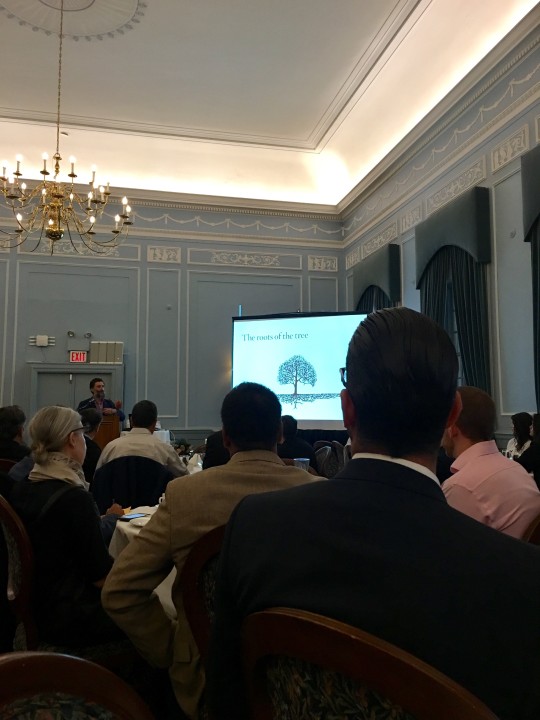
    Shown above is one of William’s slides. The title is: The roots of the tree. And I thought it was a great metaphor for what tall buildings, well really all buildings, should aspire to do.

    The tendency is to think of buildings as objects. Here, look at how beautiful this thing is. That’s obviously important, but what about its roots? What about the way in which it interfaces with its context and hopefully gives back? Is it a catalyst for positive change?

    I thought it was a good slide.