Daily insights for city builders, delivered every morning at 6 AM ET. I’m Brandon Donnelly — a Toronto-based real estate developer and founder of Globizen. I’ve been writing here since 2013.

Tag: urbanism

  • Is it only a matter of time before Amazon enters the delivery business?

    Yesterday I ordered something from Amazon Prime. The guaranteed delivery time was today before 9pm, but within an hour of ordering the delivery estimate was updated and it ended up arriving on the same day about 5 hours after my order. I thought this was pretty amazing, particularly because the package was a bit time sensitive.

    Delivering to individual residences is more expensive than delivering to more centralized businesses and stores. And with the rise of online shopping, UPS now delivers as many as 31 million packages every day. Because of this, every little detail counts. 

    Last year the company started installing Bluetooth receivers on the inside of its delivery trucks. If a driver incorrectly loads a package that isn’t on their route, it pushes out a loud beep. (This is one of the many tech and data-driven projects that UPS is working on to ensure it stays competitive.)

    Previously there was no final check. If there was a rogue package on the truck, it meant the driver would have to stray from their route, coordinate a handoff, or delay the package for another day. These mishaps can really add up when you’re delivering 31 million packages in a single day.

    With Amazon squeezing delivery times and with the rumors that it’s going to start its own delivery business (to compete directly with UPS and FedEx), one has to wonder about the impact that these volumes will have on our cities. Perhaps autonomous vehicles will really become the new roaming retail outlet – ready to deliver as soon as we click buy.

  • Cities are the destinations

    image

    Resonance Consulting out of Vancouver has a new report out: 2018 Future of Millennial Travel. You can download a free copy here. Resonance does great work and really gets content marketing.

    The first chapter immediately caught my attention, perhaps because it’s called, Cities are the Destinations. It talks about how big cities as a travel destination are a highly underreported tourism metric. Historically it’s been all about beach vacations and escaping.

    According to their survey, Millennials (aged 20 to 36 years old as of March 16, 2017) are almost as likely to travel to a major city (38%) as they are to travel to a beach resort (40%) in the next 24 months. (I wonder where the mountains fit in.)

    Also interesting is that this number increases when household earnings increase beyond $100,000. This subset of respondents is most likely to visit a major city on their next vacation (40%). It’s all about new experiences.

    I’m not an expert on travel and tourism, but Resonance is calling this a sea change and a likely indicator that, in the near future, big cities will become the dominant travel destination. Is your city ready?

    Photo by Nathan Ziemanski on Unsplash

  • ULI Hines Student Competition comes to Toronto

    I was speaking with a Penn (my alma mater) student this evening about career options in development and he mentioned to me that he recently participated in the 2018 ULI Hines Student Competition. He also mentioned that this year’s “study site” is in Toronto. (It’s the BMW Toronto dealership between the West Don Lands and East Harbor.)

    For those of you unfamiliar with the ULI Hines Competition, it’s an annual student competition (now in its 16th year) that encourages collaboration among “future real estate developers and the many allied professions, such as architecture, landscape architecture, historic preservation, engineering, finance, and others.” 

    Each year there is a real life study site and multi-disciplinary teams compete for $50,000. I participated in my 2nd year of graduate architecture school and we received honorable mention. So no $50,000, sadly. But it was a valuable experience and I would recommend it to any student who plans to be involved in the built environment after graduation.

    I am looking forward to seeing what the finalists come up with for this site. I think that the study site being in Toronto – and in particular this location – speaks to the momentum that has developed in this part of the city as a result of the West Don Lands, East Harbor, Sidewalk Toronto, and the various planned infrastructure investments. 

    Here is a copy of this year’s briefing materials.
    Good luck to all of the teams that participated.

  • Manhattan apartment rents post biggest decline since 2011

    A friend of mine sent me this article earlier today with a sarcastic comment about the relationship between housing supply and rents.

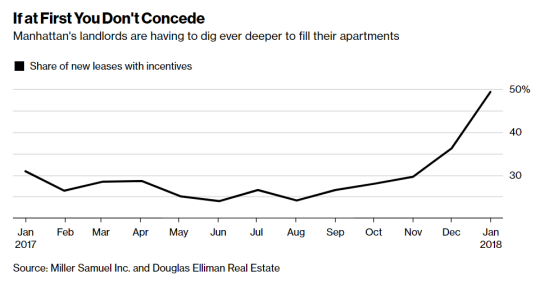
    The article talks about how rents in almost every Manhattan neighborhood have fallen compared to a year ago because of a flood of new apartment supply coming online. The median rent dropped 3.6% (year-over-year) which is the biggest decline since October 2011.

    image

    There has also been a spike in the number of leases with some sort of incentive attached to it (see above). As a landlord you typically want to use incentives, such as free rent, before resorting to lower face rents. Because lower rents mean a lower overall net operating income, which in turns depresses the value of your property.

    But sometimes you have no choice:

    “Landlords have finally realized, ‘OK, we have to adjust these prices because the concessions aren’t doing as much,’” said Hal Gavzie, who oversees leasing for Douglas Elliman. “Customers are looking past the concessions being offered and just looking for the best deals they can find.”

    A few weeks ago I wrote about a similar story playing out in Seattle. It’s almost as if excess housing supply is driving down rents.

  • Chipperfield to build tallest building in Hamburg

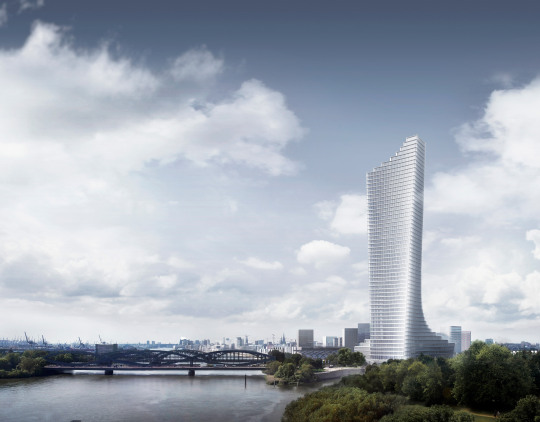
    David Chipperfield Architects has just won a design competition for the tallest building in Hamburg. It is set to rise 230 meters and look something like this:

    image

    There’s a real elegance to its simplicity. It also feels like an appropriate pairing with the nearby Elbphilharmonie designed by Herzog & de Meuron.

    But the first thing I thought to myself when I saw the design was: “Must be office. There are no outdoor spaces.”

    And sure enough, the plan is for 104,000 sm of primarily office. There are also plans for restaurants, shops, exhibition areas, and a hotel and bar.

    Some architects begrudge having to incorporate balconies into their tower designs because they can break up the elevations, muddy the concept, and create thermal bridging concerns.

    This tower – called the Elbtower – is a good example of why that is the case.

    Image via Dezeen

  • Shenzhen has just electrified its entire bus fleet

    image

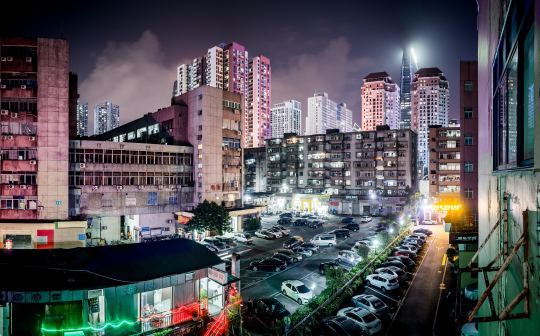
    This is impressive: Shenzhen recently finished converting its entire bus fleet to electric vehicles. That’s 16,359 buses and around 8,000 charging stations according to Electrek.

    It is estimated that this all-electric fleet saves 345,000 tons of fuel per year and reduces carbon emissions by 1.35 million tons.

    Shenzhen is now working on doing the same to its 12,518 taxis. Already 62.5% of them are electric-powered and the goal is 100% by 2020. 

    But let’s not forget that China still generates most of its electricity from coal. Coal represented 72% of its electricity generation in 2015. And in 2014, carbon emissions from China allegedly made up almost 30% of the world .

    Photo by Anton Strogonoff on Unsplash

  • Will autonomous vehicles make location irrelevant?

    I am not convinced that autonomous vehicles will make “location” irrelevant. 

    But I do agree with the following line from this recent Bloomberg article called, A Driverless Future Threatens the Laws of Real Estate.

    “The link between property and transport has been perhaps the most durable in human history.”

    So this remark by David Silver could very well be correct:

    “Real estate might be the industry that is most transformed by autonomous vehicles.”

    Technological advances in mobility have historically brought about decentralization because each advance – from streetcars to the automobile – made it reasonable to travel further distances.

    Of course, autonomous vehicles are also expected to free up our time and focus while in transit – although trains do that for us today albeit with that pesky last mile problem.

    But just like the internet in the late 90′s didn’t make location irrelevant (the opposite appears to have happened), I am similarly unconvinced when it comes to autonomous vehicles. What we consider a desirable location may simply shift.

    So this is not to say that the won’t see profound change in our cities. We will. Which is why we’re all trying to get ahead of it.

  • Skater’s Paradise: On/Off

    This skateboarding video is incredibly well done. I particularly like the 42 second mark. If you can’t see it below, click here.

    [vimeo 227394921 w=640 h=280]

    It’s incredible from a filmmaking standpoint, but – as I have said many times before on this blog – it also showcases the deep relationship between skateboarding and the urban environment.

    I can’t think of many other sports with that kind of relationship.

  • Revisited: Habitat 67

    Last summer I went to see Moshe Safdie’s Habitat 67 in Montréal. Unfortunately, you can really on experience the architecture from the street. The entire complex is clearly marked as private and you can tell they have to work very diligently to keep the throngs of architecture nerds at bay. I almost called up an agent to see if I could see one of the listed apartments, but decided not to waste anybody’s time.

    Thankfully, James Brittain has a photography exhibition going on in London right now called Revisited: Habitat 67. The aim of the exhibition is to expose the hidden side of the famous housing complex, which I find fascinating, particularly because I wasn’t able to see anything hidden last summer. You can check out a bunch of his photos over at The Spaces.

    There are many dimensions to Habitat 67. But one aspect that stands out is this idea of conferring the benefits of low-rise single-family housing – things like large outdoor spaces and access to light – onto higher density urban housing. It is something that architects today still explore and something that we consider in basically all of our development projects. Habitat 67 considered this over 50 years ago.

  • In defense of Instagrammable moments

    Surface Magazine – and more specifically the CEO of Surface Magazine – recently published this article criticizing the “trend” toward designing for Instagrammable moments.

    Here is an excerpt:

    We—and yes, this includes architects, too—have succumbed to the pressures of gaining followers, likes, and comments. High-priced, difficult-to-attain architecture degrees are now, incomprehensibly, being used to create “Instagrammable” installations for things like impromptu selfie fashion shoots and hotel lobby photo booths. The whole thing is, I must say, sad. It’s embarrassing enough that our team at Surface has received press releases from architects promoting their latest project with “Instagram-friendly interiors.” They can’t be serious.

    And here are his final words:

    If retail is dead, then its rebirth will depend on creating memorable atmospheres that don’t call for #✌💙👯🙋📷.

    I certainly appreciate the push for lasting and memorable spaces, but, at the same time, I can’t say I’m nearly as fussed about lobby selfies and the alleged timelessness of Instagram. 

    In fact, I think it would be an interesting exercise to study how social media may be impacting the way we design physical spaces.

    Maybe it is simply a fad being promulgated by “knucklehead junior marketers” or maybe 100 years from now nerdy architectural historians will look back on that quaint period of time when we designed spaces to service rudimentary 2D images shared amongst friends.

    Whatever the case may be, I think that architecture, like all art, should embody the milieu in which it was designed. 

    But often we have biases telling us that what is new is not as good as what’s existing and already accepted.