Daily insights for city builders, delivered every morning at 6 AM ET. I’m Brandon Donnelly — a Toronto-based real estate developer and founder of Globizen. I’ve been writing here since 2013.

Tag: urbanism

  • A more distributed startup geography

    The Economist recently argued that Silicon Valley’s innovation hegemony is waning and that it is a product of two factors: there appears to be more innovation happening elsewhere (good news), but that innovation in general also seems to be harder to achieve (bad news). Here is an excerpt from the article:

    Other cities are rising in relative importance as a result. The Kauffman Foundation, a non-profit group that tracks entrepreneurship, now ranks the Miami-Fort Lauderdale area first for startup activity in America, based on the density of startups and new entrepreneurs. Mr Thiel is moving to Los Angeles, which has a vibrant tech scene. Phoenix and Pittsburgh have become hubs for autonomous vehicles; New York for media startups; London for fintech; Shenzhen for hardware. None of these places can match the Valley on its own; between them, they point to a world in which innovation is more distributed.

    Part of the problem, of course, is rising costs in the Bay Area. Everything from the cost of living to the cost of operating a business. The article cites a recent survey where nearly half of all respondents said they are planning to leave the Bay Area in the next few years. This is up from 34% only two years ago.

    I don’t doubt that rising costs are causing some people to look to other cities, as well as other countries in the case of draconian visa policies. But I am suspect of the claim that we’ve heat peak “innovation” – however you want to define that.


  • Photoblog: Aga Khan Museum

    Today we visited the Aga Khan Museum here in Toronto, which is a museum dedicated to the arts of Islamic civilizations. I had been outside the building before but this was my first time inside and my first time seeing some of the collections.

    Here is the main entrance:

    image

    Here is a photo looking the opposite way over one of the reflection ponds:

    image

    The museum was designed by Japanese architect Fumihiko Maki and was completed in 2014. 

    The site area is approximately 70,000 square meters and the building itself is approximately 11,600 square meters. Maki won the Pritzker Prize in 1993.

    Here is the building’s interior courtyard, which was one of my favorite parts:

    image

    The glass is patterned with the Islamic eight pointed star. But since the symbol is typically represented by two overlapping squares, the patterning was placed on two different sides of the double pane glass. Or at least that’s my guess as to why they did it that way.

    Lastly, here is the Bellerive Room:

    image

    It was designed to be a contemplative room that could, on occasion, also host intimate events and performances. Note the shadows being cast by the screens in front of the windows.

    If you haven’t yet been to the Aga Khan Museum it is worth a visit, even if you just walk the formal gardens surrounding it.

  • Is Tesla the new iPhone?

    image

    Benedict Evans just published a great post on his blog about “Tesla, software and disruption.” I recommend a full read. In it, he tries to answer whether Tesla is really “the new iPhone” and if it will be as disruptive to the car landscape as some/many people think.

    In his line of thinking, electric (as opposed to an ICE vehicle) feels a lot more like a sustaining innovation, rather than a disruptive innovation. In other words, it something that incumbents will be able to incorporate. So it will not change the “basis of competition.”

    The more critical aspect is instead autonomy. Here are two snippets from the piece:

    All of this takes us to autonomy. Electric is compelling but will probably be a commodity, whereas Tesla’s improvements on top of electric may not be commodities but are not necessarily decisive. Autonomy changes the world in profound ways (I wrote about this here), and it’s a fundamentally new technology that doesn’t look at all like a commodity. And Tesla is doing this, too. Sort of.

    In this competition, Tesla’s thesis is that the data it can collect from its cars will give it a crucial advantage. The only reason that anyone is interested in autonomy today is that the emergence of machine learning (ML) in the last 5 years probably gives us a way to make it work. Machine learning, in turn, is about extracting patterns from large amounts of data, and then matching things against those patterns. So how much data do you have?

    But even if we are to all agree that autonomy is the “disruptive innovation”, it is not yet clear who will get there first. Maybe it is Tesla. Maybe it is Waymo. Regardless, many or most people seem to agree that it will arrive in 202x.

    Image: Tesla

  • New Toronto architecture bike tour

    I have a friend visiting from Detroit this weekend. We went to architecture school together at Penn. But unlike me, he decided to become a full fledged architect.

    Not surprisingly, he wants to see some new Toronto architecture while he’s here. I say new because he has seen the classics. So I mapped out a short bike route this morning. It’s more or less a downtown loop that starts in the St. Lawrence.

    First we head west to the Queen Richmond Centre West by Allied Properties REIT (developer) and Sweeny&Co (architect). After that I’d like to show him the main drag of King West and point out two buildings by Saucier + Perrotte Architects and CORE Architects. I don’t think Unzipped Toronto is open yet.

    Next it is north to One Spadina Crescent – home of the Daniels Faculty of Architecture, Landscape, and Design. This is one of if not my favorite new building in the city right now.

    After that I figure we’ll cruise east along the Bloor bike lanes and look up at 1 Bloor East. Then it is back south to check out the River City collection by Urban Capital (developer) and Saucier + Perrotte Architects (they are getting good face time on this tour).

    Then we’ll do what every good new Toronto architecture bike tour should do and end with a drink on a rooftop patio somewhere. Maybe we’ll check out the Broadview Hotel. I like the neon in the lobby bar.

    If I missed anything critical, let me know.

    Photo by Tiffany Nutt on Unsplash

  • How Singapore fixed its housing problem

    There are a number of affordable housing plans being thrown around in Toronto right now given that we have a municipal election coming up this fall. 

    From what I have read, the plans are largely centered around surplus and/or available public land and possibly some subsidies. 

    These subsidies are very important because the money has to come from somewhere. This is often overlooked.

    In light of these debates, I thought I would share a short Bloomberg video that my friend Evgeny shared with me this morning all the way from Tokyo.

    The video is about how Singapore fixed its housing problem. If you can’t see it embedded below, click here.

    [youtube https://www.youtube.com/watch?v=2cjPgNBNeLU?rel=0&w=560&h=315]

    It strikes me as being very Singaporean.

  • Five year anniversary

    Today is the five year anniversary of this daily blog. That’s over 1800 posts. 

    It’s almost hard to believe that it has been that long. It seems like just yesterday I was on year 2 or 3. But at the same time, it’s almost hard for me to remember a time when I didn’t blog every day. I guess we’re calling it a habit at this point.

    One of the most common questions I get regarding this blog is: “Do you pre-write posts?” The answer is never. Okay, almost never. Sometimes I’ll pre-write a post if I know I’m going to be on a plane for 12 hours and I won’t make the timezone cutoff. But generally as a rule I don’t.

    Part of the reason I don’t is because it breaks the habit. This is something I do every day. And I like that routine. I also want the posts to be timely and I want to be able to write about things that may be on my mind that day.

    Momentum is a powerful thing. And when you’ve been doing something for a number of years, and especially something as public as this daily blog, there’s a powerful incentive to keep doing it. That’s how streaks work.

    However, in the world of development, five years is perhaps not that long. It’s maybe one project. Streaks take a lot longer to establish.

    This summer One Delisle by Studio Gang went public and you’re now starting to see (bright neon) teasers for Junction House. Both of these projects are many years in the making. The Junction House story started in early 2016.

    So I reckon that this blog needs at least another five years so that there’s enough time for the really juicy stories to surface. I’ll endeavor to do exactly that. 

    Thanks for reading and making this community what it is. See you tomorrow.

  • The Oklahoma Land Rush of 1889

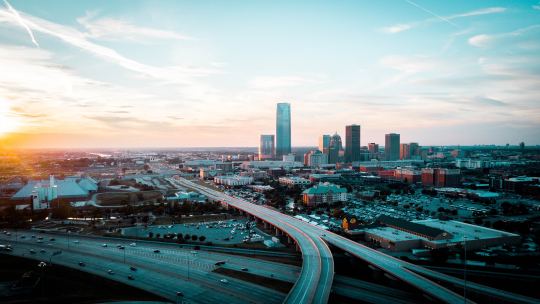
    One of our partners sent me a terrific article last week by Sam Anderson on the founding of Oklahoma City

    I have said this before on the blog, but I am deeply fascinated by the origins of cities because, oftentimes, the story isn’t all that lucid. Why right here? As Anderson points out in his article, usually cities “creep into existence.” 

    But not Oklahoma City:

    Oklahoma City was born in an event called, with extreme dramatic understatement, the Land Run. The Land Run should be called something like “Chaos Explosion Apocalypse Town” or “Reckoning of the DoomSettlers: Clusterfuck on the Prairie.” It should be one of the major events in American history. Dramatizations of it should be projected onto IMAX screens with 3-D explosions, in endless loops, forever. Every time you walk into a mall, you should be accosted by fuzzy-headed Land Run characters shouting, “What is America?!” “What does America even mean?!” Because the Land Run was, even by the standards of this very weird nation, absurd. It was a very bad idea, executed very badly. It would be hard to think of a worse way to start a city. Harper’s Weekly, which had a reporter on the ground, called it “one of the most bizarre and chaotic episodes of town founding in world history.” A century later, the scholar John William Reps reviewed the evidence and concurred. The founding of Oklahoma City, he wrote, was “the most disorderly episode of urban settlement this country, and perhaps the world, has ever witnessed.”

    To learn how Oklahoma City went from a population of 0 to 10,000 in about half a day, check out the full article.

    Photo by Gerson Repreza on Unsplash

  • The Future of Hamilton

    image

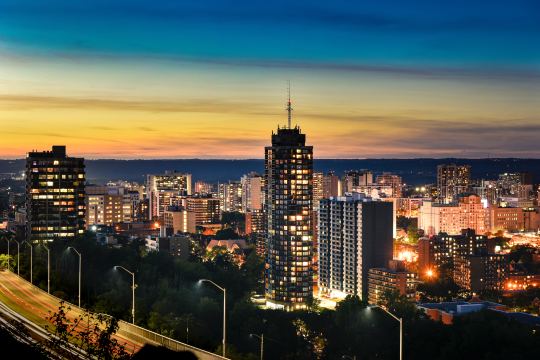
    As many of you know, we have a development project in Hamilton, Ontario – more specifically in the Corktown neighborhood. We filed our development application earlier this summer.

    Because of this I was invited to participate in a Bisnow event on The Future of Hamilton. It takes place the morning of Wednesday, September 12, 2018 in The Alley by Core Urban. I walked this space last summer while it was under construction and so I’m excited to see it finished.

    For those of you who aren’t familiar with Core Urban, they are doing some really great work in Hamilton and have established themselves as a responsible city builder with a focus on adaptive reuse projects.

    Steve Kulakowsky, who is co-owner of Core Urban, will be speaking at the event along with the mayor, some guy who has pretentiously included his middle name, and many other smart people. To see the full list of speakers and to buy a ticket, click here.

    Photo of Hamilton by Vivek Trivedi on Unsplash

  • Economies of scale in the car and housing industries

    Over the weekend I watched this interview discussion between Elon Musk and Marques Brownlee. If it doesn’t show up below, you can find the video here.

    [youtube https://www.youtube.com/watch?v=MevKTPN4ozw&w=560&h=315]

    Elon figures that if Tesla works really hard they could probably come out with a USD 25,000 car in about three years. The key to that affordability is twofold: (1) design & technology improvements and (2) scale. 

    So part of the answer is just time. As design and engineering iterations continue to take place, the components will become better and cheaper, just as they have for things like cell phones. Elon estimates that we’re in the 30th iteration of the cell phone today.

    But the second factor is simply volume. And that got me thinking about housing production and the similar importance of scale and density. We do a lot to limit volume, despite saying we want more affordable housing.

  • Planning staff reports

    A bunch of people have asked me lately about what they should do if they want to get smarter on land use planning and on the entitlement process for development projects. It was specific to Toronto, but I don’t think my answer is specific to only this city.

    I took a few planning classes in graduate school when I was in the US. But I was more focused on architecture and real estate, and so I did not leave school an expert by any means.

    I learned about the failures of euclidian zoning and about things like the Low-Income Housing Tax Credit, which always seemed like a sensible supply-side tool to get the private sector to invest in affordable housing.

    But what I have found most useful is to just read planning staff reports. These are the responses to actual development proposals and they show you how staff interpret the policies that are in place and how staff apply them to real buildings.

    I may be in the minority in that I actually find these reports interesting. But regardless, they are a great crash course in planning and development approvals and they can help you manage your entitlement risk.