Daily insights for city builders, delivered every morning at 6 AM ET. I’m Brandon Donnelly — a Toronto-based real estate developer and founder of Globizen. I’ve been writing here since 2013.

Tag: university of toronto

  • The Fundamental Law of Road Congestion

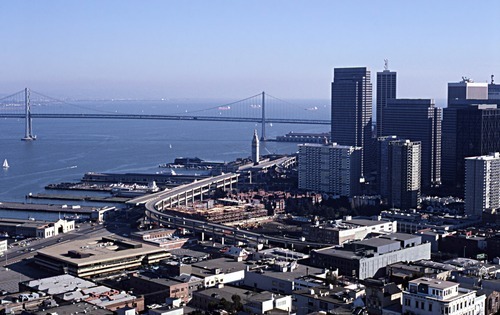
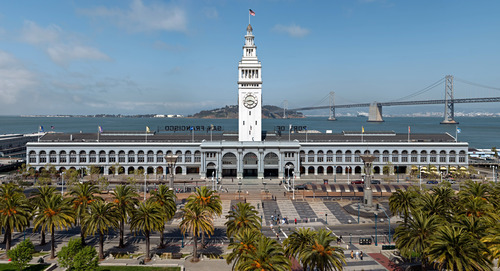
    A few days ago I wrote a post talking about what happens when you demolish an urban highway. It was a link to an article giving 5 examples of cities that have removed their urban highways and benefited.

    After I wrote the post, a number of people responded on Twitter. Some thought it was a great idea and gave examples of other cities, such as Detroit, that are thinking about doing the same. But others responded and said that I was out of line. And that while it might work in some cities, it simply isn’t a viable option in cities like Toronto.

    So as somebody who believes we should be taking down the Gardiner Expressway, I thought it would be worthwhile to revisit the topic and provide a bit more information.

    To be clear, I’m not suggesting we remove the Gardiner and replace it with nothing. My belief is that we should replace it with a broad surface street that would still move lots of cars, but that would make our waterfront much more open and accessible to everyone.

    So how is this feasible?

    Again it comes back to the concept of induced demand. Back in 2009, two economists from the University of Toronto and University of Pennsylvania – which are actually both of my alma maters – published a study called The Fundamental Law of Road Congestion.

    In it they discovered something really fascinating: there’s a near perfect relationship between new roads and highways built and the total number of miles driven. In other words, as cities increased road capacities (during their study period of 1980 to 2000), the amount of driving went up just as much.

    What this should tell you is that trying to build your way of out road congestion is usually a losing proposition. That’s why every large city has a traffic problem. Try and think of one that has solved this. And as much as it might seem intuitive to tell people at cocktail parties that your city simply needs to build more roads and highways, it’s typically not that simple. (In my view, the solution is road pricing.)

    The other really interesting thing that this study revealed is that it works both ways. When you reduce road capacity, drivers start to disappear. People choose to live closer to where they work. People choose transit. People go into the office at different times. People make all sorts of different decisions in response to this road change, just as they do when there are more free roads available to them.

    So within a reasonable band (obviously you can’t remove all roads), there is no perfect amount of road capacity. If you added another lane to your highway, it would be full. If you took away a lane, it would end up equally full. That’s why removing the Gardiner Expressway isn’t lunacy.
    Instead, it actually makes a lot of sense:

    • It’s the cheapest solution (compared to repairing it or burying it)
    • It would free up money for transit and other mobility solutions
    • It would make our waterfront more open and accessible
    • It would beautify our downtown
    • It would increase land values all along the waterfront

    And since we’re still in the early days of developing our eastern waterfront, now is the time to do it. The longer we wait, the harder it’ll get and the more expensive it’ll get.

    So I hope that the leaders in this city will think long and hard about this as opposed to immediately assuming we need an elevated highway to keep this city moving. The last time I checked, it doesn’t work so well in its current state.

    Images: Before and After the Embarcadero Freeway in San Francisco (via Gizmodo)

  • The MFA is the new MBA

    Harvard Business Review recently published a conversation between Roger Martin – who is the former dean of the Rotman School – and Tim Brown – who is CEO of the global design firm IDEO. The title of the talk is “Capitalism Needs Design Thinking.” But I decided to call this post something else after reading Roger say this:

    My friend Dan Pink argued in an HBR piece in 2004 that the MFA is the new MBA. I wrote to Dan to say that if that’s the case we have a problem because America pumps out a mere 1,500 MFAs a year versus 150,000 MBAs. Thirty MFAs per state per year is just a rounding error. This is one of the reasons I was so keen on transforming business education. It’s a huge infrastructure: 27% of all graduate students in America are in an MBA program. If they’re all being taught how to analyze things to death, that’s going to affect how they’ll shape the future of business.

    But what this conversation is really about is the future of democratic capitalism, which is why I think it’s a nice tie-in to yesterday’s Architect This City post about startups and inequality.

    I’m very worried about the fact that in America we’ve now gone 24 years without the median household income rising — it was the same in 2013 as it was in 1989. That’s unprecedented in American history. The longest that’s ever happened before is when it took just under 20 years to recover, after the Great Depression. This long period of stagnation has coincided with the top 1% of the economy doing spectacularly.

    And so while it’s easy to point fingers at the tech community and say that it’s to blame for rising income inequality, the reality, I think, is that there are other more fundamental issues that need addressing. Roger and Tim believe that design thinking can help. Here’s another great snippet from the former:

    I think the way that government generally works is to think, think, think, think, and then finally create legislation that brings about some change, and then they ignore their legislation and say okay, we’re finished with that. Then people go and figure out how to game that legislation, and the government doesn’t do anything about it. Whereas if they had a design view of it, they’d say when they passed a bill, that’s just the best idea we’ve got now, we have to go see how it works in practice, and then fix it. That’s just not the mentality.

    Technology is having a profound impact on the world. And it’s something that is very visible. But part of the challenge is that governments aren’t keeping up. They are almost never out in front.

    So when something new comes along, like Airbnb or Uber, the reaction is to just stop it. It doesn’t conform to the rules and regulations currently in place, and so it shouldn’t exist.

    But as Roger and Tim point out, maybe we need to look at our rules and regulations as simply part of an iterative process (like designers do). Because if we did that, maybe we’d be better equipped to transfer the benefits of innovation over to society as a whole.

    Image: HBR

  • Panel: What is Smart Now?

    image

    This Tuesday evening at 630pm, WORKSHOP – which is a design studio, gallery, and retail shop located in Yorkville, Toronto – will be hosting a panel discussion titled: What is Smart Now?

    On the panel will be a building scientist, a computer scientist, and two architects. The moderator will be Larry Wayne Richards, who is Creative Director of WORKSHOP and the former dean of the Faculty of Architecture, Landscape, and Design at the University of Toronto. He was dean when I was completing my undergraduate degree and is one of my favorite people in the world of Toronto architecture.

    Here’s a bit more on the panel:

    For more than half a century, visionaries and companies such as Monsanto, Hewlett-Packard, Microsoft, and Samsung have promoted the concept of technologically smart homes with highly integrated, interactive systems.  However few of these homes have actually been realized, leaving us to wonder why.

    Meanwhile, architects, builders, and home owners have become aware of the advantages of being smart in terms of energy efficiency and sustainability, from using common sense to selectively employing high-tech.  

    But now, with the digital realm and software advancing rapidly, will sophisticated smart home systems merge with recent advances in high performance materials and energy-efficient construction, making “totally smart” (and affordable) homes commonplace? Will we finally be living in the magical future that was imagined 50 years ago?  And what are the implications for architects and architectural education?

    And here are the panelists:

    • PAUL DOWSETT, Architect and Founding Principal, Sustainable TO
    • SRINIVASAN KESHAV, Professor of Computer Science, University of Waterloo
    • TED KESIK, Professor of Building Science, University of Toronto
    • JANNA LEVITT, Founding Partner, LGA Architects, Toronto
    • LARRY WAYNE RICHARDS (Moderator), Creative Director, WORKSHOP

    Given the current “Internet of Things” trend and the fact that software is creeping into so many non-tech fields, such as housing, I think this is a really timely discussion to be having. I also think it’s critical for these kinds of conversations to be cross-disciplinary. There are infinite opportunities in the housing market for people who are able to think in that way.

    If you’d like to attend, click here to sign up. It’s free and open to the public. WORKSHOP is located in the lower concourse level of 80 Bloor Street West.

    Image: WORKSHOP

  • Does the world need a Global Parliament for Mayors?

    Earlier this month a team consisting of Benjamin Barber (who is author of If Mayors Ruled the World: Dysfunctional Nations, Rising Cities), Richard Florida (who is Director of the Martin Prosperity Institute here at the University of Toronto), and Don Tapscott (who is a leading authority on innovation) released a research report advocating for a global network of cities that they’re calling a “Global Parliament for Mayors.”

    Here’s a snippet from the press release:

    “Nation-states work together through multi-lateral agreements and global institutions in an effort to solve global problems. But states have limitations, and their cooperative efforts in our new era of interdependence and globalization are increasingly insufficient and even ineffective and outmoded,” say the three prominent researchers. A Global Parliament of Mayors represents a new type of governance network – one with enormous potential.

    “Our proposed parliament would operate as a global urban network with a vibrant online community that collaborates on key issues 365 days a year,” they say. “Multi-stakeholder governance has come of age and is now fully independent from control by any government, or governmental organizations like the UN.”

    And if you dive into their report, you’ll find the following 5 reasons for why they believe a Global Parliament for Mayors (GPM) makes sense:

    1. Global migration to cities. Most people live in cities, so it makes sense to concentrate problem-solving capabilities there.
    2. Urban predisposition for problem-solving. Cities are entrepreneurial, close to the people and richly connected to a wide variety of stakeholders. They have a history of cooperation and pragmatic problem-solving. 
    3. A need for experimentation with new governance models. Traditional models of state-based global governance have struggled to advance effective solutions to many global problems, so there is an urgent need to experiment with new models. The GPM is the most promising. 
    4. Digital networks. Online collaboration technology makes it possible to operate a largely virtual parliament that would not only be more cost-effective, but more transparent, inclusive and productive.
    5. Digital citizens. There is a large, educated and motivated population of digital citizens that could be tapped to improve urban governance.

    In principle, I agree with the direction. And I feel that way because of the two major shifts outlined above: More people are living in cities (a trend that all urbanists talk about ad nauseam) and digital networks are having a disruptive effect on the way we run companies and live our lives.

    I’ve talked before about how the internet is causing a decentralization of value creation (see Airbnb, YouTube, and so on) and so I think it only makes sense that our governance structures will inevitably go through a similar transformation.

    The governance models that we are living with today were put in place during a time when the world was a different place. At one point, nation-states were the de facto way to effectively organize ourselves on a global stage – probably because there wasn’t any other reasonable alternative.

    But today, we are connected and interdependent in entirely new ways. And so the opportunity in front of us is to create a governance structure that leverages the progress and innovation that’s happening in cities, everywhere.

    If cities are our most important economic unit, then mayors are arguably some of our most important leaders. So it behooves us to figure out how to give them the frameworks and forums to best do their job.

  • Studying to become a real estate developer

    Earlier this week I received a message from an undergraduate architecture student interested in moving into real estate development after school. That was his 10 year plan. And he had clearly read my blog post, “Transitioning from architecture to development.”

    In his message, he asked me if there were any books I would recommend he read to improve his real estate and finance knowledge, and, if I could have a “redo”, if I would still do a M.Arch (Master of Architecture) or just go straight to the MBA?

    After responding to his message, I thought: “This would make a good blog post, as well as an opportunity to talk about the current state of real estate education in Canada.” So here goes.

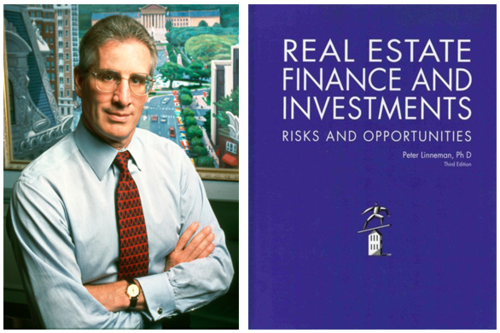
    If you’re looking for a good real estate book to get you started, I recommend checking out “Real Estate Finance and Investments: Risks and Opportunities" by Peter Linneman. It’s a much easier read and way more casual compared to most textbooks. When I was in grad school, people referred to this book as the "blue bible.” The cover on the previous edition was less purple and more blue. Unfortunately, he has also changed his glasses since the photo below.

    image

    To his second question, if I were to do it all over again, I wouldn’t change a thing about my education. I loved architecture school and combining it with business school classes and a real estate concentration was the best thing for me. I never wanted to be just a “numbers guy”, but I also never wanted to be a fanciful artist type who didn’t know how to build and manage a pro forma.

    Now, let’s talk about real estate education in Canada.

    I think we’re way behind. In the US, you can do a Master of Science in Real Estate Development, a Master of Real Estate Development, and all sorts of other real estate degrees. In Canada, you’re probably doing a MBA with a few elective real estate classes. Real estate is the largest asset class in the world. Does that not justify a dedicated degree?

    Part of the reason for this, I think, is because real estate development is still very much an entrepreneur’s business–though it has become more institutionalized in recent years. Because of this, people get into development from a variety of different professions. They just need that entrepreneurial hutzpah. And that’s all fine, but I still think that the profession, the economy and our cities would benefit from University trained developers.

    So if you’re reading this University of Toronto, I think–and I’ve thought this for awhile now–that The John H. Daniels Faculty of Architecture, Landscape and Design and The Rotman School of Management should get together and collectively form a real estate program. Who’s with me?

  • Do homes need to become more of a product?

    Yesterday evening I moderated a panel on innovation in real estate at the Rotman School. The panelists included Subhi Alsayed (Innovation Manager at Tridel); Michael Lio (President of buildABILITY Corporation); Alison Minato (VP of Sustainability at The Minto Group); and Tad Putyra (President and COO, Low Rise Development at Great Gulf).

    Though the general consensus was that the real estate industry is terrible at innovation, it was comforting to hear that a number of both low-rise and high-rise developers are working on and/or towards building “net zero” homes. A net zero home is a home with no net energy consumption. What this means is that the home produces as much as energy as it consumes.

    The general strategy with these homes is to design the building so that it’s as energy efficient as possible (as in R-40 walls and triple-pane glazing) and then use renewable energy sources (such as solar) to fulfill any remaining energy needs. Of course, the next step would be homes that actually produce more energy than they consume so that they become net contributors to a city’s energy grid. But let’s not put the cart before the horse.

    There are a number of challenges to achieving this goal—one of which is on the consumer side. Many of the panelists mentioned that consumers simply don’t care enough about building performance and energy efficiency. Instead of worrying about air tightness, they’re worried about cosmetic things, like granite countertops and hardwood floors. That’s not to say that these pieces aren’t important, but they’re only one aspect of a home.

    So what’s the solution? Do developers and home builders need to get better at consumer education? Or should utility companies be the ones shouldering this responsibility? After all, improving energy performance means lower utility costs.

    One thought that came to mind (and I’m testing this for the first time with the Architect This City community), is that maybe homes need to become more of a product. Today, developers often market projects and communities ahead of themselves. But maybe that’s not the best way to drive innovation within the real estate industry.

    For example, think about how car brands segment the market. When you buy a Mercedes, you expect a certain level of performance and quality. You probably don’t know about every little technological innovation in the car, but you assume that they’re pretty damn good.

    With a new home on the other hand, you’re buying (insert generic name) on the Park or the Residences of (something regal sounding). The developer’s brand is secondary. And maybe that’s the wrong approach. Maybe it’s making consumers believe that the only thing that matters is whether you’re getting stainless steel appliances and granite countertops.

    Maybe consumers need to know whether or not they’re buying from the Mercedes developer or from the Ford Pinto developer. After all, consumers make decisions based on heuristics. They need to be able to say to themselves:

    “This home is $50,000 more, but it’s from the Mercedes developer so I can justify it. I’ll have less problems in the future, I’m sure.”

    Instead, consumers are saying to themselves:

    “This home is $50,000 more. Why is that? They both have stainless steel appliances and granite countertops. I’ll just go for the cheaper one.”

    I refuse to believe that the real estate industry can’t be as innovative as other industries. There’s always a way. We just need to figure it out.

    What are your thoughts?

  • Real artists ship

    Last night at 10pm I finished my last MBA exam, ever.

    I’ve spent the past 2.5 years completing my MBA part-time at the Rotman School (at the University of Toronto). Since I had already done a 3-year masters (I know, it’s a lot of school), I had decided that my opportunity costs were simply too high and I wanted to remain working.

    But in order to do that, it meant I had classes from 7-9am and then went to work for the day. This past semester I had those morning classes 3 times a week. It’s made for an intense 2.5 years, especially when you add in group meetings, tutorials and other commitments.

    But as much as I’m happy to be finished the program (I fast tracked to finish a semester early), there’s always something bittersweet about closing one chapter and moving onto another.

    Since 2011, being a “MBA student” has been part of my personal brand. I would talk about the classes I was taking, and I would try and apply what I was learning to what I was doing in real life—both professional and personal. Believe it or not, I once had a debate with a Baptist Minister over the discount rate I used in one my calculations for a lease agreement.

    And while I have learned a lot through almost 6 years of graduate education in both Canada and the US, this is in many ways only the beginning. When I was younger I used to tell myself that my 20s should be about formal education, exploring, and crafting my identity, and that my 30s should be about execution.

    Well now it’s time to execute. In the words of the Steve Jobs: “Real artists ship.