Daily insights for city builders, delivered every morning at 6 AM ET. I’m Brandon Donnelly — a Toronto-based real estate developer and founder of Globizen. I’ve been writing here since 2013.

Tag: transportation

  • End of the automotive era

    Bob Lutz is a former vice chairman and head of product development at General Motors. Recently, he had this to say about the future of the auto industry. 

    Here are a couple of powerful snippets:

    It saddens me to say it, but we are approaching the end of the automotive era.

    The auto industry is on an accelerating change curve. For hundreds of years, the horse was the prime mover of humans and for the past 120 years it has been the automobile.

    Now we are approaching the end of the line for the automobile because travel will be in standardized modules.

    Everyone will have five years to get their car off the road or sell it for scrap or trade it on a module.

    Bob is 85 years old. This is somebody who spent his entire life in the auto industry telling us that the old model is now done. 

    It reinforces something that I wrote about here, where the “end of the automotive era” was pegged at around 2021. 

    And it is part of the mental model that I have started relying on today for decision making.

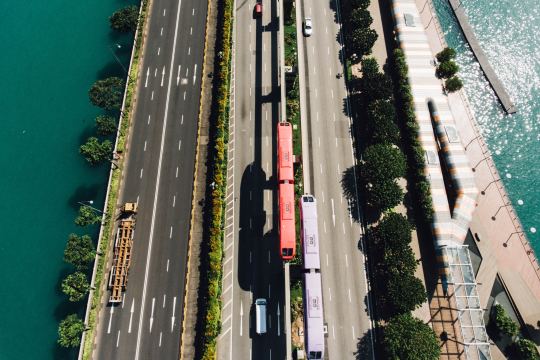
    Photo by Alessio Lin on Unsplash

  • Learning from King Street

    Toronto is now a week into the King Street Transit Pilot.

    It’s still early days and transit guru Steve Munro hasn’t yet published any before and after route performance. He will. But already the sentiment seems to be clear: This shit is working. There are many recounts of people’s commute times being more than cut in half. 

    As somebody who walks this stretch of King every day, this isn’t surprising to me. There has been a dramatic reduction in the number of cars on the street.

    What is perhaps surprising is that none of the surrounding streets seem to be any busier. I would like to see the data, but it feels as if most of the cars have simply disappeared. Are more people now taking transit? Has this been your impression?

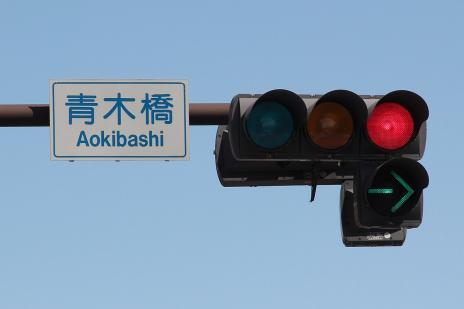
    Of course, the pilot isn’t perfect. What is not working are the signs that tell drivers they can’t drive through most of the intersections (only turn right). The circular green lights confuse them or they simply don’t care. 

    There have been suggestions for better signals, such as this one:

    image

    And if the pilot in its current incarnation does stick, I am sure there will be many additional improvements like this one made. But even at this early stage, Toronto is calling the pilot a “transit miracle.”

    When City Council approved the pilot in the summer it had a preliminary cost estimate of $1.5 million. (Figure excludes the lost parking revenue associated with removing approximately 180 on-street parking spaces).

    This is a relatively minuscule amount considering it has had an immediate impact, basically overnight, on the commute times of the 65,000 or so people who use this line every day.

    And it feels even more minuscule when you consider that our Scarborough Subway extension is expected to cost $3.35+ billion to build and only service around 64,000 people a day when you look far into the future – 2031 to be exact.

    The lesson here on King Street should be that light rail and surface transit routes can move lots of people very efficiently and cost effectively when you empower them to do precisely that.

  • Singapore just capped vehicle growth at 0%

    When I was in New York a few weeks ago, my friend (a New Yorker) said to me that he couldn’t imagine owning a car (he used to but got rid of it with zero remorse). He then elaborated on all of the nuisances that driving in the city produces.

    There are parts of Toronto where you can feel similarly. I feel fortunate to live in one of those parts. Of course, there are other parts of this city where the exact opposite is true. It’s inconvenient not to have a car. These are typically areas where lower land costs have been exchanged for higher transportation costs.

    The City of Toronto has a land area of approximately 630 square kilometers. If that’s all the land we had (the metro area is almost 6,000 square kilometers), you can bet we would think about land use and transportation a bit differently.

    Take for instance, Singapore, a city-state with an area of approximately 719 square kilometers. The Land Transport Authority estimates that 12% of the republic’s total land area is taken up by roads.

    Because of this, they just announced that they have lowered their vehicle growth rate (for cars and motorcycles) from 0.25% per annum to 0% effective February 2018. They can do this through their Certificate of Entitlement (COE) quota. And it won’t be revisited until 2020.

    Put differently: No more cars and motorcycles until, maybe, 2020.

  • Clean disruption of energy and transportation

    I just came across the below talk by Tony Seba about the coming “clean disruption” of energy and transportation. The talk follows his book of the same name. Click here if you can’t see it below. It runs about an hour, but I would encourage you to give it a watch. 

    [youtube https://www.youtube.com/watch?v=2b3ttqYDwF0?rel=0&w=560&h=315]

    The first few minutes will be things I’m sure many of you have heard before, such as the failure of Kodak to embrace digital cameras (film business considered too valuable), Moore’s Law, and so on. But he then moves on to cost curves, battery storage, solar power, and autonomous electric vehicles (A-EVs).

    You all know that I am fascinated by these topics, so here’s one piece that stood out for me: 2021 is his prediction for the year in which A-EVs become real and disrupt both internal combustion engine (ICE) vehicles and individual car ownership.

    Obviously this won’t happen overnight, but Tony’s belief is that 2021 will be the year that the economics of A-EVs become so compelling (10x) that it will crush our current business models.

    The argument is that on-demand ride hailing/sharing and A-EVs will converge and that Transportation as a Service (TaaS) will provide our mobility needs at a fraction of today’s costs. We’ve talked about this prediction before on the blog, but never has a timeline been attached to it.

    All of this reinforces two thoughts that I’ve been having over the past few years. One, I will probably never buy another combustion engine vehicle. And two, I should probably avoid buying another vehicle, period, until the next wave of business models becomes clearer. Leasing likely makes more sense at this stage if you need a car.

    In fact, Tony believes that with the collapse of individual car ownership, the resale value of cars could become negative. That is, you’d have to pay people to take a car off of your hands, because everyone will recognize the cost advantage of just using TaaS.

    We are doing everything we can to future proof our development projects so that they are ready for electric vehicles. But if A-EVs and TaaS completely erase individual car ownership within the next 5 years, then all of us in the industry are going to need to do much more to ready our buildings and cities.


  • Why dynamic road pricing is inevitable

    The Economist recently published an article called: How and why road-pricing will happen. If you’re a regular reader, you’ll know that there’s been lots of talk and support

    over the years

    on this blog for dynamic road pricing.

    It’s politically unpopular, but it’s an incredibly rationale way to deal with traffic congestion. 

    In Singapore – home of the world’s first congestion charge zone (1975) – they constantly monitor traffic congestion. As soon as average speeds drop over a three-month period, they simply raise the charge. Congestion gone.

    We know this works, but for many reasons road pricing is highly divisive. According to The Economist, there are a few reasons why this is going to become a bit more politically palatable.

    For one, the take from gas taxes and vehicle duties has been declining in Britain over the past couple of years. Electric vehicles will only exacerbate this trend. So governments are going to be forced to look elsewhere for money.

    Secondly, traditional tolls and congestion charges are becoming increasingly ineffective. Today in central London, private-hire vehicles are said to make up about 38% of all car traffic – almost double the share of traditional black taxis. 

    These are cars circling around the city, picking up passengers. Blunt charges based on suburbanites entering the city in the morning and leaving in the afternoon is simply not capturing the way that many of us move around our cities today.

    In other words, urban mobility is undergoing dramatic changes and the revenue and congestion management tools are going to need to adapt. If you’re interested in this topic, check out the full article here.

    Photo by chuttersnap on Unsplash

  • Lessons in transit success

    image

    Dylan Reid of Spacing was recently at the International Transport Forum in Leipzig, Germany and has been publishing some interesting posts related to transit. Here is one about what makes transit systems succeed and fail.

    I really like the point that we too often think about transit projects as culminating with a big opening, while overlooking the importance of operations. It’s a bit like focusing on the wedding ceremony and forgetting that the ceremony is only really there to (hopefully) mark the beginning of a lifelong union.

    One of the reasons why this is important is because, as Reid points out, “fares need to provide a strong and consistent proportion of the agency’s funding.” So you need bums in seats, which means you need to build the right transit in the right locations. In other words, a new subway line through a low density suburb will probably result in an abysmal farebox recovery ratio.

    At the same time:

    “…fares will rarely cover all of an agency’s costs. Hong Kong’s Kam noted that, to be truly autonomous, an operator needs an additional dedicated, independent source of revenue. This cannot be based on additional transit-related non-fare revenue (e.g. advertising) – such revenue is helpful but never significant. It needs to be an external source. In Hong Kong, it is based on the agency’s extensive property ownership, but in other cities it could be a congestion charge, a dedicated sales or income tax, or other mechanism. Only with such a source can the agency have the independence to make its own choices for reinvestment and improvements.”

    This is one of the reasons why I am such a strong supporter of road pricing.

    Another point that Reid makes is that transit agencies should always have a consistent pipeline of new projects, rather than erratic periods of expansion. This makes a lot of sense given what it takes to ramp up for a large infrastructure project. But it’s obviously contingent on having sustainable funding sources.

    Click here if you’d like to read the rest of Dylan Reid’s post.

  • Thickets of haphazardly planned condo towers

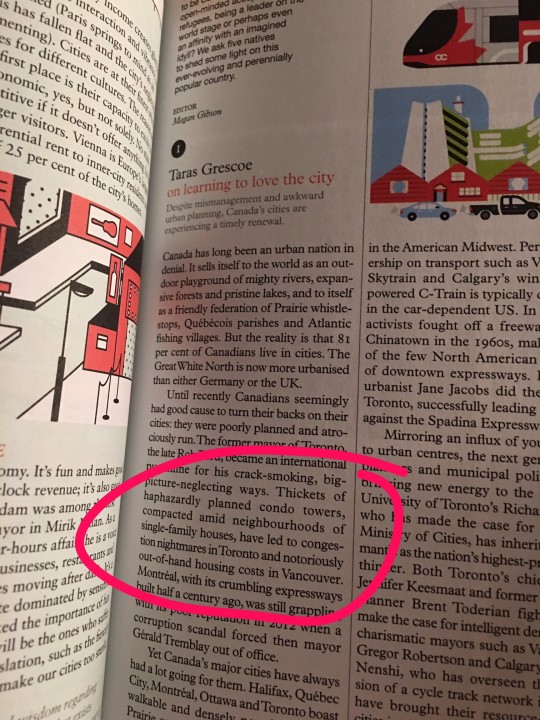
    I couldn’t sleep last night, so I got up and pulled out an old issue of Monocle magazine from my nightstand. I then stumbled upon the following article by Taras Grescoe.

    What really stood out for me was this line:

    “Thickets of haphazardly planned condo towers, compacted amid neighbourhoods of single-family houses, have led to congestion nightmares in Toronto and notoriously out-of-hand housing costs in Vancouver.”

    It bothered me for a few reasons:

    – The frame of reference is the single-family house. It perpetuates the cultural bias that what matters most in cities, like Toronto and Vancouver, is low-rise housing.

    – I don’t get the “haphazardly planned” comment. New tower development has been heavily concentrated in the downtown core, growth centers, along the Yonge subway corridor, and so on. Their built form is also significantly influenced by their relationship to these low-rise “Neighbourhoods.”

    – I believe that building up, as opposed to out, is the way to address congestion nightmares. Though I will concede that our ability to plan and execute on transit in this city is positively deplorable. 

    – How did thickets of condos create an affordability problem in Vancouver? Many factors at play in this city, including a powerful geographic supply constraint.

    Those are just a few of my thoughts from early this morning. What are yours?

  • America’s urban infrastructure — what to do?

    The Penn Institute for Urban Research recently asked a dozen experts to weigh in on the topic of urban infrastructure in the United States. More specifically: What should the US do? It is a direct response to President Trump’s inauguration speech, where he described America’s infrastructure in terms of “disrepair and decay.”

    The urban experts include Eugénie L. Birch, Saskia Sassen, Susan Wachter, Richard P. Voith, and many others. Richard Voith’s piece is called, Historical Patterns of Infrastructure Funding. (I was his teaching assistant while I was at Penn and I still follow his work.) 

    I found it interesting how infrastructure funding has shifted from the federal level to the local municipal level – especially in the realm of public transit. Given the rise of urban centers, this makes intuitive sense. But Voith also argues that “relying only on local funding of transportation will almost certainly result in an under supply of infrastructure.”

    For the full Expert Voices series, click here. I think many of you will like it.

  • Blaze Laserlights

    This is a great idea:

    It is a bicycle light – by a London-based company called Blaze – that forward projects a bicycle symbol 6m in front of you as you ride. It also has a really bright white light.

    They will be (or have been) installed on London’s entire bike-share fleet and they are currently being piloted in New York City. Here is a video of it in action.

    One of the things I always watch for when I’m cycling is being in a car’s blindspot. Signalling seems to be a dying art, so you never know when someone might turn into you. If this light is able to project in front of the car and signal to the driver that a cyclist is nearby, then I could see this being a big safety improvement. Of course, this is just one scenario where a light like this might be helpful.

    Have any of you tried it?

    Image: Blaze

  • Uber Movement

    Uber just announced that it will be providing access to the (anonymized) traffic flow data generated from its over 2 billion rides. This new product is called Uber Movement and the goal is to help cities make better infrastructure decisions. Because indirectly, that also benefits them. 

    Here’s an excerpt from TechCrunch:

    “We don’t plan infrastructure, we don’t plan cities, we’re never going to do that,” explained Uber Product Manager Jordan Gilbertson in a briefing. Not controlling those aspects of Uber’s business means that it must do whatever possible to influence their improvement indirectly, which Movement can certainly help to do. More efficient transportation in a city in general means more efficient Uber service delivery, happier customers and better usage rates.

    You can request access to Uber Movement today. But the service will be made available first to city planners and policymakers, and then to the general public. I would be very curious to see what the data reveals for Toronto, as well as for other cities.