Daily insights for city builders, delivered every morning at 6 AM ET. I’m Brandon Donnelly — a Toronto-based real estate developer and founder of Globizen. I’ve been writing here since 2013.

Tag: traffic congestion

  • Istanbul may have the worst traffic congestion in the world

    I just learned about the TomTom Traffic Index today. It covers 404 cities across 58 countries, and uses anonymized traffic data from more than 600 million drivers (people who use TomTom’s tech) to come up with a list of the cities with the worst traffic congestion.

    Here’s the global top 10 (for 2021):


    And here’s the North American top 10 (also for 2021):

    The way to interpret these congestion level percentages is to think of them as additional time over and above baseline free-flowing traffic times. For example, a 62% congestion level for Istanbul, means that a trip that would take 30 minutes without any traffic congestion, will instead take, on average, 18.6 minutes longer (0.62 x 30 minutes).

    We all like to complain about traffic in our home city, but these percentages certainly help to put things into a global perspective.

  • Are car tunnels the solution to traffic congestion?

    Elon Musk recently posted this Twitter survey asking if we, the people, would like “super safe, Earthquake-proof tunnels under [our] cities to solve traffic.” It was leading in that the “no” response was, “No, I like traffic.” And it was initially vague in that it wasn’t clear how these tunnels would be used. Though, most of us could probably guess. Elon later added in the thread that these road tunnels would be for zero emission vehicles only and they would be limited to EVs (from all auto companies, not just Tesla). Finally, Elon stated that these tunnels are not intended to replace other solutions, such as light rail, rather to supplement them.

    At the time of writing this post, nearly 1.5 million people had responded to the survey and about 67% of them said “definitely” to Earthquake-proof tunnels. Elon’s reaction: “Stop whining, subway Stalinists, the people have spoken.” Notwithstanding the majority, this is a divisive topic and the reactions are mixed. City planner Brent Toderian responded by saying that this “solution” would merely result in more cars, more driving, and more emissions. Steve Jurvetson, on the other hand, argued that this would be the cheapest way to add lanes and prepare for the inevitable EV-only future. (Steve sits on Tesla’s board and recently launched a venture fund that, among other things, invests in sustainable mobility.)

    The crux of this divide is a view about how cities should work. And it often becomes like dogma. Is it optimal for us to all be driving around in individual vehicles — EV or not? Will autonomous vehicles actually help solve the traffic problem? Or is building on the backbone of mass transit the only way to properly design a big and efficient city? Whether it’s lip service or not, Elon seems to acknowledge that both cars and transit are important, and that both can work together to supplement each other.

    What is clear to me is that cities, at the scale of say Tokyo, wouldn’t function nearly as efficiently if it weren’t for their extensive fixed rail networks. At the same time, there are many cities (or portions of cities) that do not have the prerequisite population and employment densities to support this same level of transit investment. And that has created a strong pull away from transit (and active transport such as cycling) toward private vehicles. Sprawling cities signal to people that they should probably be driving. This is one of the reasons why land use should never be separated from mobility discussions.

    How autonomous vehicles change all of this remains to be seen. Though I do think it will make cars less private and more public transit-like. Studies show that most of us are pretty good at coming up with incremental improvements to the things we already know and understand. i.e. This is how I would make this car better. But we’re far worse at coming up with and predicting tectonic shifts in the landscape. And autonomy is probably one of those shifts. But as long as our built form remains heterogeneous, I am inclined to believe that a mixture of mobility solutions will be needed. Maybe that means car tunnels. Or maybe it doesn’t.

    Photo by Ricardo Gomez Angel on Unsplash

  • Global mobility index

    Below is a short video that was created by the MIT Senseable City Lab, World Economic Forum and TomTom for a study on how people move in 100 cities around the world. They call it the Global Mobility Index.

    It shows congestion levels (using real-time traffic data from TomTom), commute times, and an estimate for the percentage of trips that could be shared if people were willing to wait up to 5 minutes.

    In the case of Toronto, they estimate that 99% of trips could be shared and that it would increase average speeds by ~7.9 km/h and reduce overall traffic levels by ~44.09%.

    Their solution to solving traffic congestion is a cocktail that involves car-sharing, bike-sharing, and public transit. It’s about developing a “mobility portfolio.” Seems sensible.

    I found myself wanting more information and data after watching the video. Still, it was interesting to see what the authors describe as the “pulse of our cities.”

    If you can’t see it below, click here.

    [youtube https://www.youtube.com/watch?v=ciJEHGMtpWc?rel=0&w=560&h=315]

  • We’re still on road pricing

    The New York Times recently argued that self-driving cars can’t cure traffic, but that economics can. Here is the key soundbite:

    “Maybe autonomous cars will be different from other capacity expansions,” Mr. Turner said. “But of the things we have observed so far, the only thing that really drives down travel times is pricing.”

    The argument here is that capacity expansions – such as additional lanes – never solve the problem of gridlock. Yes lane widening projects increase capacity, but the latent demand is so strong that the problem never gets solved. Even in places like Houston.

    We talked a lot about this phenomenon on the blog a few years ago when Toronto was embroiled in debate over the Gardiner Expressway East. But it’s interesting to think about self-driving cars as simply another incremental capacity expansion.

    I have no doubt that this technology will make more efficient use of our roads. Carpooling will be a lot easier – as is already the case. Cars will be able to drive closer together. We’ll be able to stop abrupt breaking and swift land changes, which actually create systemic traffic problems for everybody else.  And the list goes on.

    But there will still be limits to how many people can be efficiently moved on a particular strip of road. Exactly how there are limits to how many people can be efficiently moved via a particular subway tunnel, streetcar line, and so on.

    So if latent demand continues to outstrip available capacity, which has historically been the case, then we are once again back to the politically unpopular idea of pricing away congestion. As much as people criticize it as regressive, I believe that’s where we’re headed.

  • How to encourage traffic congestion in your city

    City
    Observatory recently republished their
    commentary
    on a report (released earlier this year) called Who Pays
    for Roads
    . I missed their original post, so this is new to me.

    The report
    and commentary are all about the mispricing of roads/driving and the fallacy
    that “user fees” (gas taxes, tolls, and so on) are enough to completely cover
    the costs associated with driving.

    I have been
    a vocal supporter of road pricing and/or congestion charges here in Toronto, and
    so I’d like to share two pieces from their commentary.

    The first
    is this paragraph, which talks about how mispricing leads to demand issues
    (i.e. traffic congestion):  

    The conventional
    wisdom of road finance is that we have a shortfall of revenue: we “need” more
    money to pay for maintenance and repair and for new construction. But the huge
    subsidy to car use has another equally important implication: because user fees
    are set too low, and because, in essence, we are paying people to drive more,
    we have excess demand for the road system. If we priced the use of our roads to
    recover even the cost of maintenance, driving would be noticeably more
    expensive, and people would have much stronger incentives to drive less, and to
    use other forms of transportation, like transit and cycling. The fact that user
    fees are too low not only means that there isn’t enough revenue, but that there
    is too much demand. One value of user fees would be that they would discourage
    excessive use of the roads, lessen wear and tear, and in many cases obviate the
    need for costly new capacity.

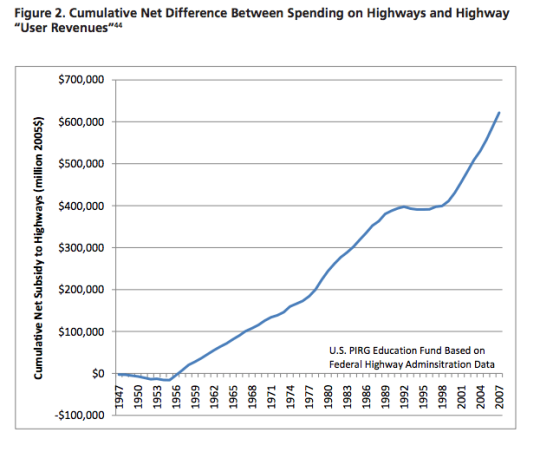
    And the second is this chart, which shows the cumulative net
    subsidy to highways in the US from the late 1940’s:

    image

    The point of all this is that when you subsidize something
    it’s because you’d like to see more, not less of it. So why then are we even surprised by the crippling traffic that plagues our
    cities? We are doing a lot to encourage exactly that.

  • Who are you planning for?

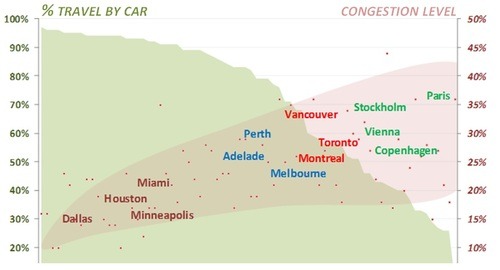
    I just came across the following chart via City Clock:

    It came from a study that looked at 74 cities in terms of two measures: the percentage of people that travel by car and the traffic congestion levels within those cities.

    The way to read the chart is to first look at the red dots. Each dot represents one of the cities studied. The position of the red dot corresponds to that city’s congestion levels. So for example, if we were to take Toronto, the congestion level is 27%.

    If you then take that same dot and draw a vertical line to the top of the green shaded area, you get the percentage of people who travel by car. In the case of Toronto, it is 56%.

    What’s interesting about this chart is that as congestion levels rise, it forces people out of their cars. In other words, the cities with the highest congestion levels also have the lowest auto share percentages.

    But the other way I interpret this chart is that the decision is almost binary: you’re either planning for cars or you’re planning for people. Based on this data, it’s hard to have both.

  • 5 ways in which you’ve got it wrong when it comes to cities

    About a month ago, a reader of ATC and friend of mine suggested that I write a post on some of the common misconceptions that people hold about cities. I immediately thought it was a good idea and so I started a draft post with some of my initial thoughts.

    Over the past couple of weeks I’ve been collecting fallacies as they came to me, waiting until I reached a nice round number like 5. Well today, I reached that number. So here are 5 misconceptions that I think people often hold about cities. If you have any others, or if you disagree, please share your thoughts in the comment section below.

    1. Adding more lanes will solve traffic congestion

    There’s a saying I read somewhere: Adding more lanes to solve traffic congestion is like loosening your belt to deal with obesity. I can’t remember where I read it, but I like it a lot because it gets at the heart of this fallacy: Trying to build our way out of traffic congestion has proven time and time again to be a losing battle. In fact, it has been shown to make traffic even worse as a result of “induced demand.” The more roads you build, the more people drive.

    2. A suburban home is always cheaper

    While it is true that the direct cost of a suburban home is usually less than one in the center of a city, many people often neglect to factor in the indirect costs of a home purchase – the biggest of which is usually transportation costs.

    As you move out from the center of a city and home prices start to fall, I like to think of it as transfer from housing costs to transportation costs. In other words, what you save on the price of your home, simply gets used to pay for a car (or perhaps a second car), as well as the additional time you’re going to spend traveling.

    So how much is an hour of your time worth? Have you ever attached a value to it and added it to the price of your home? Because if you factor in transportation costs and your time, you might find that your suburban home is actually more expensive.

    3. Opposing new development and advocating for affordable housing is a responsible way to build cities

    Community opposition is a big part of the development game. But what a lot of people don’t think about is that when you oppose or stop new development (let’s say it’s residential), the demand for that housing doesn’t go away. 

    In fact, all it does is create more pressure on the housing stock that does exist and foster an environment where the rich will starting outbidding the poor for housing. More simply, you end up creating a supply constrained market and that drives up home prices. Demand > supply. So in reality, opposing new development and, at the same time, advocating for more affordable housing is a contradiction.

    As a comparative example, let’s think about another basic human need: water.

    Imagine that you could only buy water from stores (it didn’t come out of taps). But that every time the delivery people were trying to bring more water to these stores, that there was a group of people who fought and opposed them. These opposers already had enough water for themselves and they didn’t want additional water being sold as it would bring new customers into their local grocery store and disrupt their way of life.

    This, of course, caused the price of water to rise as the rich people started offering more for the water. This in turn made it difficult for the poorer folk to afford any water at all. But instead of allowing the delivery people to simply deliver more water, it was decided that out of the water that they have, that some of it should be earmarked as “affordable water” and priced accordingly. That would guarantee that the poorer folk could still have some.

    Does that sound like a sensible solution to you?

    4. Developers don’t want to build big apartments

    Here in Toronto there’s a somewhat pervasive belief that developers don’t want to build big condo and apartment units. The thought is that small units are more profitable and so developers are doing everything they can to squeeze people into small units. But I’ve argued before that this isn’t the case. It’s far more nuanced than that.

    To illustrate this point, imagine you’re a developer debating between building two 500 square foot condo units or one 1,000 square foot condo unit. If you build the two 500 square foot condo units you’ll need 2 x kitchens, 2 x entry doors, 2 x separate color selection appointments, 2 x separate PDI appointments, and you’ll have to pay development charges on two 1 bedroom units (to name only a few things).

    On the other hand, if you build one 1,000 square foot condo unit you’re only going to need 1 of each of the items listed above and you’ll be paying development charges on only one 2 bedroom condo unit (which currently works out to be less than what you’d be paying for the two 1 bedroom units – it’s not quite double).

    Which one do you think would be cheaper to build?

    5. Technology is going to make cities irrelevant

    Lastly, during the dot com era there was a growing belief that technology and the internet were going to make cities and real estate irrelevant. Capital was flowing out of real estate and into tech companies, because that was seen as the future. Bricks and mortar were passé.

    But since then we’ve learned that it’s actually the opposite. Paradoxically, technology has made cities even more important. The returns to being smart and talented are huge in the right place. So much so that our biggest concern shouldn’t be whether cities are going to become irrelevant, but whether we’re concentrating too much wealth and talent in only a select few.

    So there you have it, 5 misconceptions about cities. I’m sure there are many others, so I’d love to hear from you in the comment section below.

  • New startup wants to solve urban congestion through data and lotteries

    image

    If you’re a regular reader of Architect This City, you’ll know that I’m a supporter of congestion and road pricing. Any valuable good or service, such as a road, that’s offered for all intents and purposes as free, will never be able to keep up with demand. You need to price it.

    However, the political risk associated with implementing something like this has made it such that few cities around the world have done it. London and Singapore are the two most common examples.

    The more populist solution is to simply build more roads and highways, even though study after study shows that this doesn’t work. If it did, we would have already solved the problem of traffic congestion. And we most certainly haven’t.

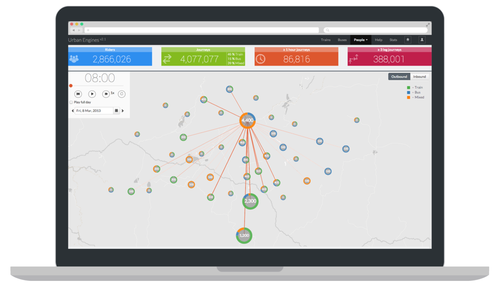
    Which is why I’m excited about a new startup that recently launched called Urban Engines. Their solution is twofold. It’s based on incentives and on treating people and cars in cities as sensors that feed back data into their network. Here’s a brief video. If you can’t see it below, click here.

    [youtube https://www.youtube.com/watch?v=oaCp5Tl-uAc]

    The data piece is almost a no-brainer (provided they can get the data). The more data we can collect about the way people and cars move in a city, the more they’ll be able to optimize and manage the flows. The possibilities are endless.

    But what I found really interesting is their incentives based approach. Typical road pricing methods are, one could argue, a punitive approach. As traffic increases so does the price of the road. (I like to look at it as efficient pricing.)

    With Urban Engines, their approach is the opposite: it’s to reward people–through money and lotteries–for driving during off peak times. It’s smart because selling a reward program to cities will be a lot easier than selling a new charge.

    Overall, this a great example of how startups are stepping up to solve some of our most important societal problems. For more information on Urban Engines, check out their website and this writeup on CityLab.

  • How could cities better connect all their residents to economic opportunity?

    image

    This blog post is a submission to a group blogging event being put on by Meeting of the Minds and Living Cities. The focus is on urban opportunity. Click here for more information about the event.

    Since the beginning of time, the purpose of cities has been to bring people together to socialize with one another and to generate wealth. And, today, more than ever, the potential returns of being smart and being in a global city are huge. Cities are our economic unit. They are what’s driving the global economy.

    But as the world continues to urbanize at an unprecedented rate and as the global economy becomes increasingly concentrated in select urban centers, how do we ensure that all city dwellers are connected to the economic opportunities being made available by this new information age?

    Here are 3 suggestions.

    First, we need broad and equitable access to education. I was deliberate in talking about the “returns of being smart.” Education and the right skills are even more critical today, because the labour market is not what it used to be. In Edward Glaeser’s book, Triumph of the City, he talks a lot about Detroit and how the greatest thing the city–and the car industry–did in its history was create lots of high paying jobs for people with little or no education. However it was also possibly the worst thing Detroit did because, today, the city is now stuck with that legacy. And those same high paying jobs for people with little or no education aren’t coming back. The labour market has changed. 

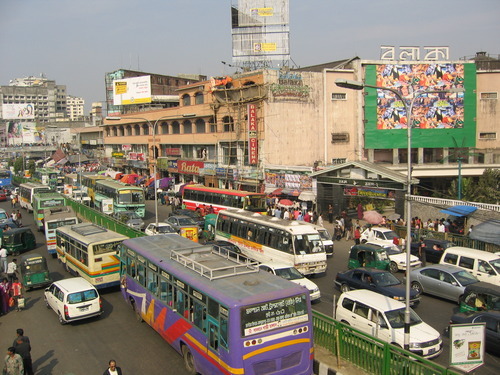
    Second, we need to ensure that people living in cities have the opportunity to be physically connected. That our cities offer strong transportation and mobility options and that our cities are designed to be inclusive. When I was visiting a friend in Los Angeles a few years ago and lamenting about the traffic, he responded by telling me that LA traffic is merely a socioeconomic problem. If you have the means, you get to live in desirable central neighborhoods where your commute is entirely reasonable. And if you don’t have the means, well, then you get stuck with a horrible 2-hour commute. We know that the rich will always outbid the poor for housing in any city, but as much as possible, we need to give people physical mobility so that they can then achieve economic mobility.

    At the same time, the design of individual neighborhoods and buildings matters a great deal. If you’ve ever watched The Human Scale, you’ll likely remember the line:

    “First we shape our cities and then our cities shape us.”

    As one example, the documentary talks about how masterfully modernist architecture from the 60s and 70s achieved extreme forms of social isolation. It cleansed the urban environment of any sort of public life and brought it all up into disconnected towers. The problem was that it was far too rational. The power of cities lies in their organic and evolving nature. And when you constrain them with mechanisms such as single use zoning and other restrictions, you stifle their potential to generate economic opportunities for their residents–which, as we’ve said, is one of the main reasons people choose to live in cities in the first place. 

    Finally–and this is a bit of a tie in for everything we’ve been talking about–we need to be proactive about inequality. Research shows that there’s a direct correlation between income inequality and social mobility. The more income inequality a city or country has, the less intergenerational social mobility it has–not to mention that it also leads to more crime and other negative externalities. This is a complex issue though, and I won’t pretend that it can be easily solved with a better public transit and more bike lines. It’s something much deeper and more broad. This one is about a belief that cities should be designed to enhance everybody’s quality of life and to make everybody richer, not just a few.

    Photo: Wikimedia