Daily insights for city builders, delivered every morning at 6 AM ET. I’m Brandon Donnelly — a Toronto-based real estate developer and founder of Globizen. I’ve been writing here since 2013.

Tag: tourism

  • The Venice syndrome — or is it?

    We were walking through Old Nice today and we stumbled on a fresh pasta shop called Clé aux Pâtes (highly recommend). I went in to grab supplies for dinner and then started chatting with the friendly lady behind the counter. She explained to me that all of the pasta is made on-site every morning and that the shop has been there since 1932.

    I then made a comment that their customer base must have changed considerably over the decades. Underlying this statement was an assumption that it is now mostly tourists. But she corrected me and said that lots of locals also shop there. I then turned to look at the line behind me and, for what it’s worth, there was French being spoken.

    But I left thinking about the composition of the neighbourhood. Old Nice is made up of several statistical areas. The oldest and densest is called Vieux Nice-Sainte-Réparate. It’s just under 50,000 square metres, which is about the size of the Distillery District in Toronto. As of 2022, it had a total full-time population of 1,187 people. This works out to a respectable figure of 23,912 people per km2.

    However, the area’s population has been in decline since at least 2007, when it had 1,798 people. The obvious culprit is more hotels, short-term rentals, and secondary homes. I had Gemini review the area’s census data, and it estimates that only somewhere between 35-45% of the area’s housing serves as primary residences.

    This data would suggest that Old Nice is another example of what has been called the “Venice syndrome.” Tourism is now the trade, leading to a decline in population. But it’s interesting to think about the extent to which the area may also serve as an open-air mall for locals. That’s a more resilient place to be. Of course, all I have to go on is a pasta anecdote.

  • How do you make a street less touristy?

    La Rambla is arguably Barcelona’s most famous street. It’s a tree-lined street that runs 1.2 kilometres from the Plaça de Catalunya in the north to Port Vell in the south. Its origin dates back to the 15th century when the original stream was drained and the semblance of a street started to emerge.

    In the centuries that followed, the street came to serve as an important anchor for urban life in Barcelona. It provided a spine of open space within a dense medieval fabric of narrow streets. But alongside the rise of Barcelona as a global tourist destination, the street came to be seen more as a place for tourists than as a place for local urban life.

    This desire to create more “sustainable tourism” is one of the impetuses behind the ~€56 million revitalization project that is currently underway and is expected to be completed in 2027.

    But this raises a fascinating city-building question: How do you actually make a street less, you know, touristy? Tourists like visiting Barcelona and walking on this street, and so aren’t business owners going to just naturally cater to them? And aren’t landlords just going to rent to whoever will pay the highest rents?

    Here’s some of what Barcelona is doing:

    • Transversal flows: This one is fascinating to me. It was found that tourists tend to walk the street longitudinally (up and down), whereas locals tend to walk it transversally. In other words, locals are more likely to cross it coming from one of the surrounding neighbourhoods. The new design now privileges these more local flows.
    • Expanded pedestrian zones: Car traffic is being reduced to one 3.5-metre lane in each direction. This frees up more space for pedestrians, which is expected to help with overcrowding.
    • Room for culture: Dedicated spaces are being created to allow for more cultural programming. This is also part of a broader strategy to elevate the kind of tourism that the city receives.
    • Commercial licensing restrictions: As I understand it, the city is actively working to limit the licenses given out to souvenir shops (and the like) along the street. A meaningful amount of retail is also housed in kiosks and stands within the public right-of-way, where the city has even greater control.
    • Mercat de la Boqueria: One of the main anchors on La Rambla is the publicly owned market. But over the years, the product mix started to skew toward ready-to-eat foods and other to-go products designed for tourists. New restrictions have been put in place, or will be, that cap tourist-oriented offerings at 50%, allowing more space for local shopping needs. Interestingly enough, I have read that the merchants were in favour of this cap because the emphasis on tourist products was driving down margins. You instead want people coming in and grocery shopping for their families.

    These are just some of the initiatives that are being undertaken to rebalance La Rambla and find a more sustainable equilibrium between tourists and locals. It also dovetails with some of the other broader moves that Barcelona has implemented, such as its short-term rental ban and the right of first refusal (ROFR) that it enjoys over certain buildings and homes in order to grow the city’s public housing stock.

    It’ll be interesting to evaluate the effectiveness of these moves once the street is complete. La Rambla has many centuries of history and it has always evolved alongside Barcelona. Today is no different.


    Images from Barcelona City Council

  • From unfashionable, dirty, and full of prostitutes, to too many tourists

    Cities are complicated. And we have spoken before about how it can sometimes feel like they never really reach homeostasis. In extreme cases, it might seem like they’re either decaying and losing people, or they’re too successful.

    I was reminded of this again this morning while reading an article about how Rome’s historic city center is being overrun with Airbnbs and tourists, and how it is pushing out the locals. It has, arguably, become too successful as a tourist destination.

    Of course, this problem isn’t unique to Rome. Venice has the same thing going on, though probably to a greater extent. And Amsterdam is currently working to attract more highbrow tourists and to move their red light district out of the city center.

    But the question I have is: What’s the right amount of tourism? If 25,000 listings is too many for Rome, what’s the right number? And do cities ever really achieve homeostasis, where, you know, things feel just right? Here’s an excerpt from the above article that describes what parts of Rome were like before the tourism boom:

    Ms. Rapaccini remembers when Monti was a quiet, authentic haven for arty types and locals. She and her late partner, the film director Mario Monicelli, who received six Oscar nominations, moved to Monti in 1988. The area was unfashionable, dirty and full of prostitutes, but beautiful in its gritty way, “like a little village” even though it was in the heart of a big, bustling city, she recalls. The apartments were cheap and the area began to attract film types, journalists and artisans – none of them rich – who mixed easily with local workers and shop owners.

    It’s a romantic description of what sounds like a pretty gritty area. Unfashionable, dirty, and full of prostitutes is apparently better than full of annoying American tourists. And perhaps it is. But then what was the area like before it was unfashionable, dirty, and full of prostitutes? Was that also better?

    I have no idea. But cities are constantly changing and evolving, and they were doing it long before any of us arrived, especially in the case of an ancient city like Rome. Maybe that’s what makes it so difficult to hang onto that exact moment in time when everything was just right.

    Chart: Globe and Mail

  • Amsterdam wants fewer drunk and annoying people

    Back in 2014, Amsterdam became the first city to have what is referred to as a “night mayor.” And at the time, including here on this blog, this was generally viewed as a pretty progressive thing to do. It recognized that there is an important nighttime economy and that, with the right leadership, it be harnessed for broader economic development purposes. As a result, many cities followed suit and appointed their own night mayors. (Toronto did not, despite my repeated posts.)

    But fast forward to today and things feel different. Night mayors aren’t talked about as much in city building circles. And Amsterdam is actually trying to limit overall tourism growth. It is working to relocate its Red Light District to outside of the city center and it hopes to reduce the amount of people who come to the city just to misbehave. To be clear, it still wants tourists; it just wants more people who do things like go to museums:

    The Netherlands’ capital plans to launch a deterrence campaign later this month aimed at tourists who go wild during their visits. In addition to new ads, the city has proposed rules in its infamous Red Light District, such as a ban on smoking marijuana in the street, earlier weekend closing times for bars, clubs and sex-work establishments and reduced alcohol sales. 

    Amsterdam’s liberal rules for drugs and prostitution have long attracted travelers looking to let loose, but officials say they are taking it too far and harming the quality of life for residents. 

    This is an interesting situation because usually the problem is, “how do we get more tourists to come and visit our city? Should we maybe build a casino or a Ferris wheel or something else equally as big?” Instead, the problem here is, “we have way too many drunk and annoying tourists. How do we swap them for more cultured visitors?” Of course, one solution is to just tell people that they are annoying and that they should stop coming. And that’s generally what the ad campaigns plan to do.

    An alternative approach might be to celebrate all of the other things that one can do in Amsterdam.

  • Daydreaming about traveling again

    One of my favorite pastimes these days is planning out all of the places I am going to travel to once it is safe to do so and the world fully reopens. Traveling was something that I prioritized before COVID-19 and it is something that I know I will get back to sooner rather than later. But in the short-term, the travel and tourism industry is of course feeling it. According to this recent article from FT, there were 67 million fewer tourists around the world in March 2020 compared to last year. And in April, passenger demand was down even further with a 94% year-over-year decline. This is something, because globally, tourism is believed to account for about 10% of the world’s economic output. Over the last five years, 1 out of every 4 new jobs around the world was in the travel and tourism space. And for some countries, such as Cambodia, tourism accounts for over 30% of overall GDP.

    What has also happened over the last decade is that South and East Asia & Pacific has begun collecting a greater share of global tourism dollars, which is or was at about US$1.6 trillion in total. East Asia is now comparable to Europe & Central Asia — it may even be receiving a few more dollars at this point. However, there are some key differences. Tourism in Europe, more so than other region, relies on international travel. And since domestic travel is likely to recover before international travel, Europe is perhaps the most exposed in this regard. Europe also has a pretty pronounced peak. There is something magical about the Mediterranean in July and August and that is indeed when most people visit Europe (see above FT charts). Broadly speaking, the rest of the world doesn’t seem to experience this same overt seasonality. (If you think back to the start of COVID-19, you might remember that Asia’s travel “peak” usually happens in December.)

    Will international travellers feel confident enough by July and August? And if they don’t and Europe misses summer 2020, will travel plans get pushed to later in the year or will Europe need to wait for summer 2021? For me it’s feeling like a summer of road trips and local vacations. But that doesn’t mean I’m not thinking about and planning for much more. My suitcase and passport are ready. What about you?

    Charts: Financial Times

  • Battle of the Bungehuis

    image

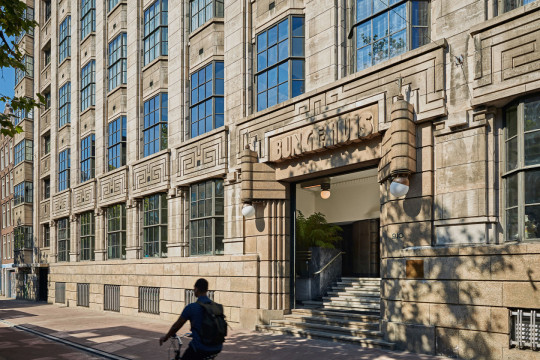
    This past July, Soho House Amsterdam opened up in the storied Bungehuis building. Not really news, other than the fact that FT just published this article talking about the building’s history and some of the project’s hurdles, which I of course found interesting.

    Completed in 1934, the Bungehuis originally served as the offices for a prominent trading company. The architect was ADN van Gendt. When he died during the building’s construction, Willem Jacob Klok took over.

    Also noteworthy about the building’s construction is that, according to Wikipedia, twenty houses had to be demolished in order for it to be constructed.

    This underscores a point that I have made before on the blog. Cities are not static. Most of us probably look at the Bungehuis and consider it to be quite a handsome piece of architecture. Some of us may even go so far as to say that we don’t make buildings like they used to.

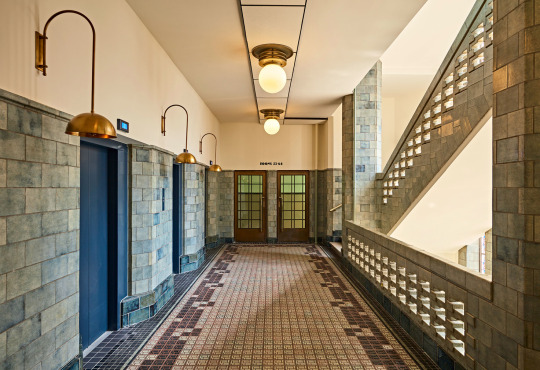
    Soho House is on record saying that they were “not very budget-conscious” during the renovation because of the sense of responsibility that they felt around the building and its history.

    image

    But I think it’s important to note that this building was initially built for a for-profit company and things had to be demolished in order for it to come to fruition. 

    I can’t say for sure whether this development was opposed in the 1930s, but it may have been. Cities and buildings have a way of ingratiating themselves over time.

    In any event, starting in the 1970s, the building became home to the arts faculty at the University of Amsterdam. And as recent as 2015, it became home to the Bungehuis occupations – a protest occupation started by students and staff of the University who were opposed to a slew of academic cuts.

    image

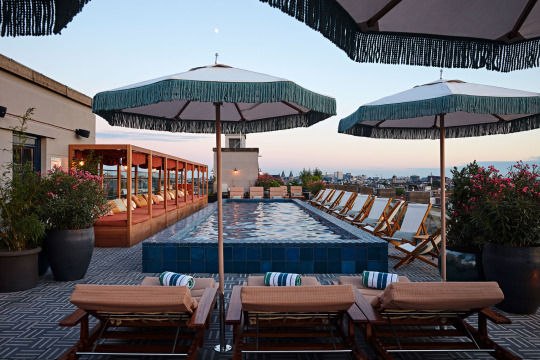
    Then in a state of poor repair, the building was ultimately sold to Aedes Real Estate, who now leases it to the Soho House Group for their private club and 79 room hotel. Above is a picture of the club’s rooftop pool and lounge.

    The big hurdle, or at least one of them, was the fact that Amsterdam currently has a moratorium on new hotels – as a way to try and mitigate “overtourism” – unless it can be demonstrated that it will represent “an extraordinary addition to the existing stock.”

    Since Soho House Amsterdam opened in July, I guess we know the answer to that test. But it sounds like it may have been a battle. That wouldn’t be a first for this building.

    Images: Soho House Group

  • Cities are the destinations

    image

    Resonance Consulting out of Vancouver has a new report out: 2018 Future of Millennial Travel. You can download a free copy here. Resonance does great work and really gets content marketing.

    The first chapter immediately caught my attention, perhaps because it’s called, Cities are the Destinations. It talks about how big cities as a travel destination are a highly underreported tourism metric. Historically it’s been all about beach vacations and escaping.

    According to their survey, Millennials (aged 20 to 36 years old as of March 16, 2017) are almost as likely to travel to a major city (38%) as they are to travel to a beach resort (40%) in the next 24 months. (I wonder where the mountains fit in.)

    Also interesting is that this number increases when household earnings increase beyond $100,000. This subset of respondents is most likely to visit a major city on their next vacation (40%). It’s all about new experiences.

    I’m not an expert on travel and tourism, but Resonance is calling this a sea change and a likely indicator that, in the near future, big cities will become the dominant travel destination. Is your city ready?

    Photo by Nathan Ziemanski on Unsplash

  • The views are different here

    Tourism Toronto launched a new campaign this week and with it came a great video that has been making the rounds online. It feels authentic. It actually feels like Toronto. Watch it here if you can’t see it embedded below. 

    [youtube https://www.youtube.com/watch?v=eS_tYWIoZzk?rel=0&w=560&h=315]

    But why exactly is it a successful example of place branding?

    Resonance (place branding consultancy) wrote a post about it and also spoke with Tourism Toronto’s EVP and Chief Marketing Officer. Here’s an interesting excerpt about the two things they wanted to achieve in the campaign/video:

    “The campaign—and certainly this video—is trying to achieve two things,” Andrew Weir, Tourism Toronto’s executive vice president and chief marketing officer, tells Resonance. “First, international visitors tend to think of destinations by country, so we had to connect Toronto to the Canadian story.” He says the sprawling, wild country is still generally known for mountains, forests and wilderness, and Toronto wasn’t connecting to that narrative. Enter the “Canada’s Downtown” identity as a way to both incorporate the destination in a national context and differentiate from it. “Toronto is home of the country’s stock exchange, the center of media, the big sports teams are here, we have the long-run theater productions,” Weir rhymes off. “It is the urban center of Canada.”

    The second objective for the campaign (and one held high throughout the commercial) was to be unabashedly proud of the city’s unique alchemy, diversity and inclusivity.

    “We’ve seen the foundation for local pride laid by people and brands like Drake and the Raptors and we wanted to build on that, to separate ourselves from other cities. We tapped into that energy that’s embedded in Toronto’s identity and sense of place.”

    Pride—and a devotion to inclusivity and openness—jumps off the screen. Given the current political direction towards closed borders and suspicion, the goosebumps pop often while viewing.

    At the end of the day though, I think it comes down to the fact that it feels like it captures the zeitgeist of Toronto. As I said at the beginning of this post, it feels authentic. And good place branding doesn’t invent identity. It takes things that are already latent and then exploits them.

    It’s either that or I just like seeing the Chinese food place I go to at 3am featured in a video.

  • Alleys and laneways

    In addition to having an incredible mountain just 12 miles away, the town of Jackson is also a really cool place in its own right. It’s a cowboy town with endless wilderness all around it. But since it’s such a big tourist destination, the town is filled with great restaurants, art galleries, and the obligatory real estate brokerages trying to sell vacation properties.

    Here’s what the town looks like from the top of Snow King (the in-town ski mountain). Photo credit: David Stubbs for the New York Times.

    But from a land use standpoint, I also find the town really interesting because of its network of fine grain alleys. Here’s a picture of Gaslight Alley. For those of you who are regular readers of this blog, you’re probably aware that I’m a big supporter of laneway housing in Toronto. I think it’s a hidden opportunity. It could be another—more intimate—layer to the city.

    Today, building a laneway house is virtually a non-starter with the City of Toronto. Whether it’s issues of utilities or the fact that laneways don’t easily accommodate service vehicles (maybe we need smaller service vehicles), the city has a litany of reasons for why they just won’t work.

    But I’m absolutely certain that we could figure out solutions to all of the obstacles if we really put our minds to it. It’s not a question of not being able to do it, it’s a question of not wanting to do it.

  • I don’t get Las Vegas real estate

    If you had to pick an epicentre for the housing bust of 2008, I’d say that Las Vegas would be a pretty safe bet.

    Las Vegas home prices doubled between 2002 and 2006 (the peak), and then fell 62% through to 2012! According to RealtyTrac, Las Vegas saw the highest rate of foreclosure (in 2009) compared to any other major city in the US. 1 out of every 13 properties was in foreclosure. That’s pretty incredible.

    Now, hindsight is always 20/20, but from the beginning I had a hard time understanding Las Vegas from a real estate standpoint. You have a city that’s running out of water and who’s major economic drivers are tourism, gambling and conventions. Not only are these industries highly cyclical, but they don’t create a lot of high paying local jobs.

    So for home prices to double in the span of 4 years, it must mean that there’s a lot of investor activity in the market. But how much is a lot? As one example, the 678 unit Meridian Private Residences, which was a condo conversion done by American Invsco, apparently only sold 14 units to end users. The remaining 98% of the units were bought by investors.

    Those are pretty scary numbers – both for investors and end users. And while times today are certainly nowhere near as frothy, I still don’t get Las Vegas real estate.