Daily insights for city builders, delivered every morning at 6 AM ET. I’m Brandon Donnelly — a Toronto-based real estate developer and founder of Globizen. I’ve been writing here since 2013.

Tag: toronto

  • Panel: What is Smart Now?

    image

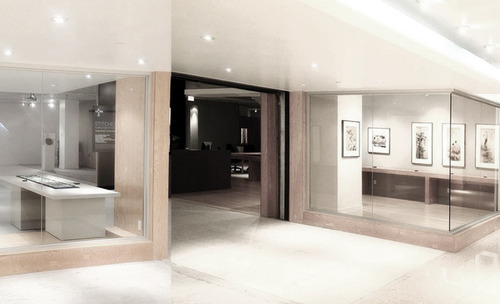
    This Tuesday evening at 630pm, WORKSHOP – which is a design studio, gallery, and retail shop located in Yorkville, Toronto – will be hosting a panel discussion titled: What is Smart Now?

    On the panel will be a building scientist, a computer scientist, and two architects. The moderator will be Larry Wayne Richards, who is Creative Director of WORKSHOP and the former dean of the Faculty of Architecture, Landscape, and Design at the University of Toronto. He was dean when I was completing my undergraduate degree and is one of my favorite people in the world of Toronto architecture.

    Here’s a bit more on the panel:

    For more than half a century, visionaries and companies such as Monsanto, Hewlett-Packard, Microsoft, and Samsung have promoted the concept of technologically smart homes with highly integrated, interactive systems.  However few of these homes have actually been realized, leaving us to wonder why.

    Meanwhile, architects, builders, and home owners have become aware of the advantages of being smart in terms of energy efficiency and sustainability, from using common sense to selectively employing high-tech.  

    But now, with the digital realm and software advancing rapidly, will sophisticated smart home systems merge with recent advances in high performance materials and energy-efficient construction, making “totally smart” (and affordable) homes commonplace? Will we finally be living in the magical future that was imagined 50 years ago?  And what are the implications for architects and architectural education?

    And here are the panelists:

    • PAUL DOWSETT, Architect and Founding Principal, Sustainable TO
    • SRINIVASAN KESHAV, Professor of Computer Science, University of Waterloo
    • TED KESIK, Professor of Building Science, University of Toronto
    • JANNA LEVITT, Founding Partner, LGA Architects, Toronto
    • LARRY WAYNE RICHARDS (Moderator), Creative Director, WORKSHOP

    Given the current “Internet of Things” trend and the fact that software is creeping into so many non-tech fields, such as housing, I think this is a really timely discussion to be having. I also think it’s critical for these kinds of conversations to be cross-disciplinary. There are infinite opportunities in the housing market for people who are able to think in that way.

    If you’d like to attend, click here to sign up. It’s free and open to the public. WORKSHOP is located in the lower concourse level of 80 Bloor Street West.

    Image: WORKSHOP
  • The ultimate Toronto transit map

    image

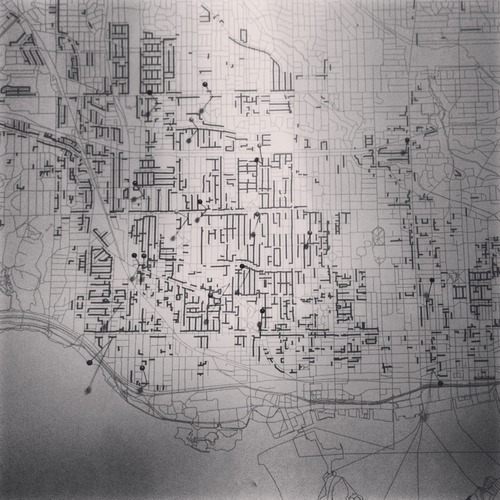
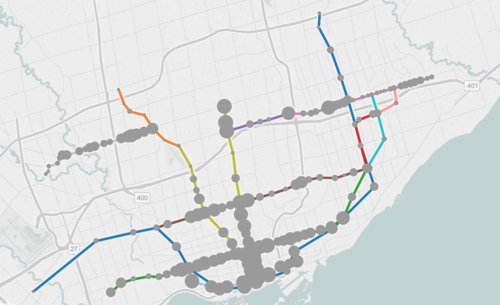
    If you live in Toronto and only give serious thought to one thing today, it should be to this interactive transit map created by Metro.

    The map shows all existing, planned, and proposed transit lines in the city, and then overlays population densities, commuting patterns, household income, and so on. It’s a super valuable map that I think reveals a lot about how we should be focusing our energies to get Toronto moving.

    So what sorts of things does it tell us? I’ll give 2 examples.

    If you look at commuting patterns across the Bloor-Danforth subway line, you’ll see that Runnymede station in the west is where people switch over from taking transit to driving. People west of that station tend to drive. Naturally, it also happens to coincide with where population densities start to fall off.

    By contrast, if you look at the east side of the city along the Danforth and beyond, the entire stretch more or less relies on transit to get around. Part of this likely has to do with income levels, but it’s also because of the availability of the Gardiner Expressway. There’s no equivalent in the east end. Dylan Reid of Spacing Magazine believes this makes a case for some sort of road pricing along the Gardiner, and I would agree.

    As a second example, look at the population densities along the proposed Downtown Relief Line, Finch LRT, and John Tory’s SmartTrack line. Outside of the core, the population densities are relatively low along the proposed SmartTrack line – which is never a good thing for rapid transit.

    There’s also no Sherbourne station on the SmartTrack line, which happens to have the highest population density across the entire Relief Line – 22,131 people per square kilometre! That’s more than any other stop along the Yonge-University subway line except for Wellesley station.

    I’ve written about this a lot before, but I think we need to do a better job of matching up transit investment with expected customer demand. Too often we let politics get in the way of rationale decision making. Maybe it’s time we did something like set minimum population densities. If you want a subway line in your area, you have to first bring the people.

    What else does this map tell you?

  • The Tesla Easter egg

    I was rushing to get to a real estate forum dinner last night and so instead of walking — which is normally what I would have done — I decided to grab an UberX. As some of you might be aware, I like UberX. It’s convenient to use. And the fares are cheaper than regular taxis. So why wouldn’t I use it?

    But last night I got an extra treat. A guy named Mike picked me up in his Tesla Model S:

    //platform.twitter.com/widgets.js

    According to Mike there are two of these “Easter eggs“ in the UberX Toronto fleet, which I was also told is now up to hundreds of cars. So it’s not everyday that you’ll get picked up in a Tesla.

    If you’ve never been in a Tesla, the first thing you’ll likely notice is the absolutely epic screen that sits in the dash. Most people’s laptops don’t have a screen this big. It’s gorgeous.

    But there are a bunch of small details that also standout. For example, the door handles sit flush with the door until they’re needed. Here’s a video of how they work:

    [youtube https://www.youtube.com/watch?v=UxavZ2QxuLY]

    But the real question that is probably on your mind is: Why is some guy with a Tesla driving around Toronto offering rides via UberX? That was certainly one of the first questions I asked him after I got in the car.

    And the answer is that he does it for fun.

    He actually owns a medical clinic in Markham, but comes downtown on the evenings and weekends to drive around and meet new people. In fact, he called it the “best networking tool on the planet.” Because as soon as he picks people up in his Tesla, they immediately take him seriously and want to have a conversation. That has translated into business relationships and even invites to parties. As in, he drives a group to a party and they ask him to come in — which he said he often does.

    If he really took it seriously and did it full-time, he figures he could make around $40,000 – 50,000 a year driving for UberX. And I believe that’s close to what a regular taxi driver would make. But again, that’s not why he’s doing it. Isn’t it interesting how things change?

  • A video and conversation about laneways

    Two weeks ago I gave a brief presentation at The Laneway Project’s inaugural summit here in Toronto. I then wrote about it here on ATC.

    At the time, I wasn’t sure if the event was being filmed or not, but it turns out it was. So here is my presentation from the event. It’s just over 7 minutes. Click here if you can’t see it below.

    [youtube https://www.youtube.com/watch?v=vdMNC1BtUz8]

    If you’d like to see the other 5 presentations and the Q&A session, click here. 

    Following the event, I was also interviewed by a radio show out of Calgary called Space + Place. If you are really into laneways and would like to listen to that as well, go here.

    I’ve said this before, but I’ll say it again: I continue to be amazed by how much interest there is — both here in Toronto and elsewhere — in laneways. They may be overlooked today, but that’s going to change. It’s inevitable.

  • Community building on the east side of downtown

    Yesterday evening I went to the Toronto Christmas Market in the Distillery District. I had actually never been before, but it was something that I had been meaning to check out for a few years now. And it was wonderful. If you’ve never been, I would highly recommend you go. This past weekend was the opening weekend and it runs all throughout Advent until Sunday, December 21st.

    For those of who might not be aware, the Christmas Market festivity is a longstanding tradition that originated primarily in German-speaking Europe. Accounts of a “December market” were found as early as the end of the 13th century. The Toronto Christmas Market is a slightly more recent tradition (it’s only about 5 years old), but it was already selected as one of the world’s best.

    But Christmas carollers and hot toddies aside, the Market is also a fantastic opportunity to see the Distillery District in all its glory. Every time I visit the Distillery, I can’t help but feel how lucky we are to have a district like this in the city. The architecture and scale of the place is incredible and – alongside the Toronto Islands and Kensington Market, sometimes – it’s pretty much the only car free zone we have.

    However as someone who lived near the Distillery District in its early days, I remember how much of an “island” it was when it first opened. It felt disconnected from the rest of the city and the only way to get people there was to hold a special event. The retailers and galleries struggled and many didn’t last.

    With all the condos that have been built, literally on top of the neighborhood, that has changed dramatically. Today the area has become much more balanced as a mixed-use community. But the real tipping point, I think, will come next year when Toronto hosts the Pan Am Games and the West Don Lands neighborhood starts to come online just to the east of Cherry Street.

    Now all of a sudden the Distillery District won’t feel like the edge of downtown anymore, it will feel more like the middle of it. As my friend Alex Bozikovic of the Globe and Mail pointed out to me this weekend, the Pan Am Games are going to put the east side of downtown on people’s radars. And I would completely agree. Once that happens, the Distillery District will finally start to reach its maximum potential.

  • Fun Friday: Toronto Skyline Porn [Video]

    This video of Toronto has been making the rounds online over the past few days (click here if you can’t see it below):

    //player.vimeo.com/video/112944154

    It was created by 25-year-old filmmaker Ryan Emond and the aerial shots were filmed using a drone.

    He also made this one a few years ago called Toronto Tempo (click here if you can’t see it below):

    //player.vimeo.com/video/30788720

    I love his passion for this city. 10 years ago, it felt like it was almost fashionable to hate on Toronto. Young people would always talk about moving to some other more exciting city. But that has completely changed. Today there’s a real passion for this city. And I love that.

  • How to apply for information

    This morning I was at Toronto City Hall looking for old drawings of a building that I’m now working on. While I was there, I also ran into John Tory, and so I was given the opportunity to congratulate him in person on his recent mayoral win. But that’s irrelevant to this discussion.

    What I instead want to talk about is access to information.

    We are living in a world that produces an unprecedented amount of data and information. Back in 2010, Eric Schmidt – the former CEO of Google – quite famously stated that we were creating as much information in the span of 2 days as we did from the dawn of civilization up until 2003. And that was 4 years ago. So I can only imagine what the numbers look like today. The internet is basically a giant data generating machine.

    But a lot of that information isn’t all that useful and much of the really useful information that’s out there isn’t yet digitally accessible in the ways that we have now become accustomed to. For example, for me to access old drawings and documents for a building in Toronto, I had to do the following…

    First, I had to file what’s called an Application for Routine Disclosure. It was a 2-page form that I was able to submit to the city over email. The fee for this application was $66.60. Once the city confirmed receipt of this application, they then went looking in their archives for any drawings and documents that might exist.

    After about a week, I called them up and they informed me that drawings had been found and I could now setup an appointment between the hours of 8:30am and 11:30am, Monday to Friday. I went in the next day and the lady – who was very helpful I must say – presented me with a stack of microfiche sheets (I think that’s what they’re called).

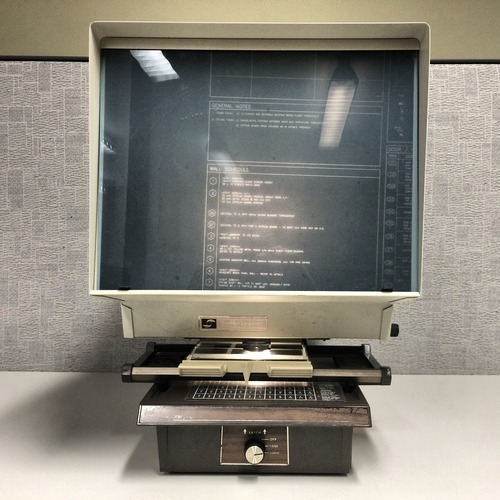
    I then took these sheets and walked over to a machine (shown below) where I could inspect the drawings. Everything about the machine had to be reversed. In order to get the drawings to show up properly, I had to put the microfiche sheets in upside down and mirrored left-to-right. 

    image

    As I looked through the sheets, I was then instructed to demarcate – with a post-it note – which drawings I wanted a copy of. At the end of it all, the lady filled out another form that would be sent to a printing shop who would then convert these microfiche drawings into PDF files for me. I think that will end up costing a few hundred dollars when it’s all said and done.

    However, at this point, I also learned that this procedure applied only to drawings, and not to any of the other documents that I was able to find on the microfiche sheets. For non-drawing documents, I actually had to file what’s called a Freedom of Information application at a separate counter upstairs. So I did that. I applied to free the information. It was only $5, but the turnaround time for that is 30 days.

    Now, I realize that we’re talking about old drawings and documents. Some of them were from the 1940s. But I’m a big believer in the value of open information. And so today was a good reminder to me that, even though we now have a tremendous amount of useful information at our fingertips, there’s still lots of valuable information that’s really difficult to get.

  • I’m back from Startup Weekend

    image

    I usually write on Architect This City every day. But this past weekend I skipped both Saturday and Sunday, which is something I haven’t done in the 15 months that I’ve been writing this blog. I hate missing days. I really do. But I had no choice. I was at Startup Weekend here in Toronto.

    For those of you unfamiliar with the global Startup Weekend initiative, let me tell you how it works.

    Last Friday night, hundreds of people from Toronto’s startup community convened at the MakeWorks coworking space in Toronto’s west end to pitch and hear new business ideas. The floor is always open to anyone who would like to pitch, but you only have 60 seconds (hard stop) to convince the crowd that your idea is worth pursuing. This past weekend there were about 40 pitches.

    Following the pitches, the crowd then gets to vote on their favorite ideas. The top pitches – there were 13 selected this past weekend – get to move on and the people who delivered those pitches become team leaders. They are then asked to get up one more time to tell the crowd who they need to develop their idea over the weekend. Once that happens, everyone starts scrambling around to try and put together a team. It’s all about hustle.

    Immediately after the teams are formed, the work starts.

    By Sunday at 5pm, you’re expected to have validated your idea and problem in front of real people, executed on some sort of minimum viable product (the solution), and ideally brought in some of your initial customers. Because at the end of the weekend, all the teams get up and deliver a 5 minute pitch in front of a panel of judges who assess you on how well you did against those 3 objectives.

    It’s a weekend of raw adrenaline. I wouldn’t be surprised if I lost about 5-10 pounds as a result of how little food I ate and how much coffee I consumed.

    I pitched a real estate related idea – just like I did 2 years ago at the last Startup Weekend I attended – and I was fortunate enough to win the top pitch on Friday night. I think it may have been because I said fuck in my pitch. Although, a lot of people also remembered me from the previous Startup Weekend and started calling me “Mr. Real Estate.”

    //platform.twitter.com/widgets.js

    Our team ultimately didn’t place – which may have been because it was an Internet of Things themed Startup Weekend and we weren’t that – but I think we developed a super solid business idea.

    Either way, I had a blast. We knocked on people’s doors to validate our idea. We got a ton of positive feedback on what we were trying to do. And I was fortunate enough to meet a bunch of smart and ambitious people. I was so impressed by what our team accomplished.

    But what I also love about events like Startup Weekend is that it shows you how vibrant the startup ecosystem really is in Toronto. There is no shortage of passionate entrepreneurs in this city fighting to change the world. And what’s great about this community is that they all know how hard it is to start something from nothing, and so they’re incredibly supportive. 

    If you have any interest, I would encourage you to check out events like Startup Weekend. They’re a lot of fun and they all contribute to the greatness of this city.

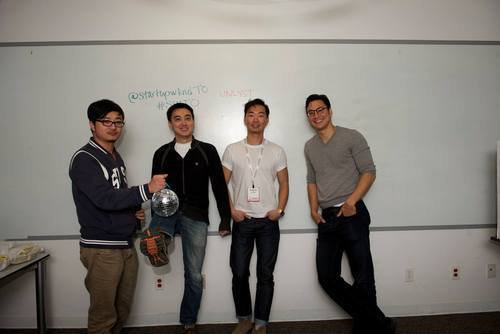
    Image: The Unlyst Team at Startup Weekend TO 2014 (Jerry, Louis, Landon, and me)

  • Laneway summit post-mortem

    image

    Last night was The Laneway Project’s inaugural summit here in Toronto. And I think it was a huge success. This is what the crowd looked like (don’t forget to check the upstairs balcony area):

    //platform.twitter.com/widgets.js

    Over 350 people showed up to fill The Great Hall at Queen West and Dovercourt. It was absolutely incredible. To be honest, I initially thought that it would end up as a small group of city geeks. I mean, it was a summit to effectively talk about back alleys.

    But it turns out that there are a ton of people in this city who are passionate about rethinking our urban fabric and finding new uses for these underutilized public spaces. And that’s both really encouraging and exciting. Many thanks to everyone who came out!

    The Laneway Project team did an incredible job spreading awareness and, given the success of this initial summit, I can only imagine where this initiative will end up in the future. So a big congratulations to Mackenzie Keast, Ariana Cancelli, and Michelle Senayah for making this happen.

    I’m not sure if the event was filmed or not, but hopefully it was and it’ll be made available online. But in the event that it wasn’t, I did want to share one question that the panel got during the Q&A session after our presentations.

    The comment made was basically that Toronto will never be Sydney, Melbourne, or Seattle when it comes to our laneways. They have a temperate climate and we don’t. So while it’s nice to show great pictures of their laneways, it’s just not going to happen here.

    And that really pissed me off.

    So I responded by saying that I disagree. Saying that we’ll never be Sydney or Seattle is capitulating. There are many months of the year where it’s beautiful outside in Toronto, so just because we have a winter doesn’t mean we should throw our hands up in the air and give up.

    I then went on to argue that the fact that we have a “shorter season” should be all the more reason that we need fantastic outdoor and public spaces. For the months of the year where it’s beautiful outside, we should be maximizing our enjoyment!

    I hope many of you agree as well. Happy Friday all 🙂

  • Toronto seeks injunction to stop Uber

    image

    One evening this past spring I was leaving a Rotman School event at Liberty Grand on the west side of Toronto. There aren’t a lot of taxis coming through this part of the city, so I figured I was going to have to wait while I hailed one from my phone. But as luck would have it, one happened to be pulling up just as I walked out of the hall.

    As he drove up and rolled down the window, I told him that I was going to the St. Lawrence Market area and that I needed to pay by credit card (I was trying to be a nice guy and avoid the inevitable fight when he was dropping me off). He responded by saying, “My machine is broken. Can’t you pay with cash?” I told him, “No, unfortunately I don’t have any cash on me. I need to pay with credit card.” He then rolled up his window and drove up closer to the entrance of the hall.

    Faced with this scenario, I did what most people would probably do nowadays: I pulled out my phone so that I could hail either an Uber or a Hailo cab (I’m sad that Hailo has since left the North American market). I decided on Hailo (it was cheaper until UberX came along) and ordered a car.

    But within a few minutes, the same taxi with the broken credit card machine circled back around, rolled down his window, and told me that his machine was now working and he would take me to the St. Lawrence Market. Knowing exactly what had happened, I said to him, “Wooooow, that’s funny that within the span of a few minutes your machine has magically started working again.” He wasn’t happy with that response.

    Now, we all know why he didn’t want to take my credit card. He didn’t want to pay the fees and he wanted the cold hard cash. And who can really blame him for wanting to maximize his profits. But for the end user, this experience sucks. When it’s 2 in the morning and all you want to do is go home to bed, you don’t care about the few dollars he’s trying to save. You just, want, to go, home.

    And that’s one of the reasons why Uber (and previously Hailo) is having such a huge impact on the market. Even before UberX arrived (the cheaper alternative), lots of people were more than willing to pay the Uber premium. And they continue to pay their controversial surge prices. But that’s because the experience is so much better than what’s offered today.

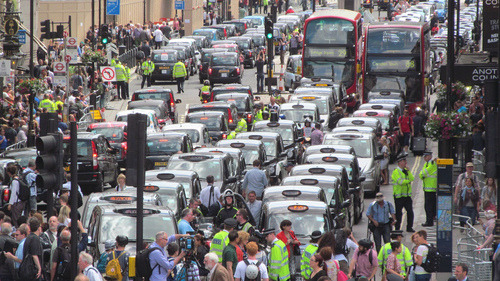
    We all know that Uber is under a lot of fire for what they do, but Toronto mayor Tory is 100% right in saying that ridesharing and peer-to-peer taxis are here to stay. Toronto may be seeking a court injunction to stop the service in this city, but I would agree that it’s likely going to be a big waste of money. The cat is already out of the bag.

    What’s happening here is no dissimilar to what happened with Napster. A court order may have forced the company to shut down, but it didn’t maintain the status quo for the music industry. That industry went, and continues to go through, a lot of change. So a better option, would be for everyone to sit down together and figure out what the future of the taxi industry is going to look like. Because I can guarantee you that it’ll continue to change.

    Image: Anti-Uber protest in London (Flickr)