Daily insights for city builders, delivered every morning at 6 AM ET. I’m Brandon Donnelly — a Toronto-based real estate developer and founder of Globizen. I’ve been writing here since 2013.

Tag: toronto

  • Additional thoughts on land prices

    Daniel Hertz over at City Observatory just published a post talking about why land costs are so important when it comes to home prices. More specifically though, his post is intended to refute a claim that multifamily housing is always going to be more expensive than single family housing.

    The key concept here – which is critical to understanding urban real estate economics – is that home values are essentially made up of two things: the land and the improvements (i.e. the building). 

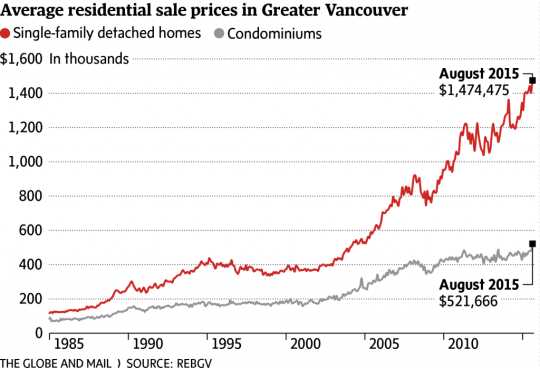
    When home prices rapidly appreciate, as has been the case in cities like Vancouver (see below) and Toronto, it’s not the building, but the land that’s really driving the price up. 

    And as you can see from the chart below (which Daniel shared in his post), it is possible for multifamily housing to be less expensive than single family housing. 
    image

    So why was someone arguing that multifamily housing is more expensive?

    Well if you look at just construction costs, then this is generally true. Single family housing is typically wood frame construction, whereas multifamily housing is usually reinforced concrete or some other material that allows you to build up. In these latter cases, the price per square foot to build is going to be higher.

    But Daniel’s argument is that when you build multifamily housing, you also begin to amortize the cost of the land over more housing units. So you begin to use land more efficiently and that offsets the higher construction costs.

    However, two thoughts come to mind.

    First, the value of a piece of land is entirely dependent on what you can build on it. And the more you can build on it, the more the land is worth. So as densities increase, so do land prices.

    Second, a big part of why condominiums are so much more affordable is that they’re smaller. In 2014, the average condo size in Metro Vancouver was estimated to be 840 square feet. I couldn’t find the average size of a detached house in the city, but let’s assume for a second that it’s 2,500 sf. 

    If that were the case, then a detached house, despite being more expensive overall, would still be cheaper on a per square foot basis. You would be paying less for every square foot of livable space. True that doesn’t make the house more affordable, but I think it’s a bit unfair to compare apples (small condo) to oranges (large house).

    So what I would really like to see is a graph of all-in low-rise and high-rise per square foot prices over time and for various cities. Because I would be curious to see at what point – if ever – they intersect.

  • Urbanism Online: #capital

    image

    For those
    of you from Ottawa, I’m going to be in town this Thursday evening talking
    at an event put on by the National Capital Commission called Urbanism
    Online
    . It’s all about how blogging, social media, and online discussions can
    and are contributing to the betterment of cities.

    The other
    bloggers include:

    – Marc-André Carignan, Montreal, Kollectif.net

    – Jillian Glover, Vancouver, This City Life

    – Robert Smythe, Ottawa, UrbSite

    The event is
    now full, but email them or tweet me if you’d really like to come
    and I’ll certainly ask about space availability. I’m sure it’s going to be a great discussion.

    I have a bit of a soft spot for Ottawa. I used to spend a lot of time there when I was working on an office building at 150 Elgin Street. (Key tenants include The Canada Council for the Arts, KPMG, and Shopify.)

    I haven’t been back since the building was completed, so I’m excited to see how it turned out.

    Update: The event will also be streamed on Periscope, here.

  • Bringing public transit into the 21st century

    New York Subway by Lok Yiu Cheung on 500px.com

    https://500px.com/embed.js

    I think we’ve hit peak millennial.

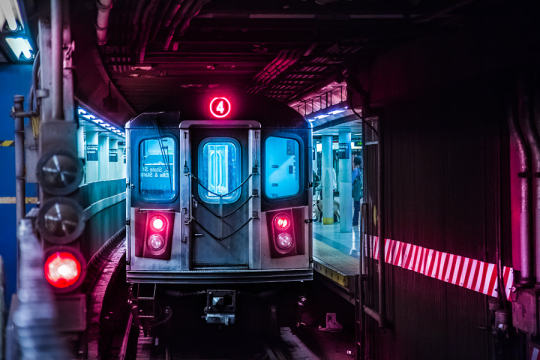
    Last Friday the Governor of New York, Andrew Cuomo, and the Metropolitan Transit Authority, announced that 30 subway stations will be redesigned and that “millennial-friendly amenities” would be added throughout the system. 

    As you might guess, this includes adding phone chargers in train cars and buses and wifi throughout all the stations (by the end 2016). They will also be replacing the MetroCard with an all digital fare system that will include mobile payments.

    But the reality is that this isn’t about being millennial-friendly. This is about joining the 21st century.

    Here in Toronto, we finally have our PRESTO card working on all streetcars and in almost 40% of the city’s subway stations. This is a huge improvement over our laughable and antiquated token system, but it’s not enough. I really hope the next rollout is a mobile app that will allow everyone to pay with just their phone.

    We also have wifi in about 30% of our subway stations, but again this is not enough. By the time you get authenticated (do you need to have Twitter now?), your train is usually arriving and then you enter a tunnel where no wifi exists. We need to be looking at the entire tunnel network. (Related topic: LinkNYC) 

    I say all this because I am a big supporter of public transit. Despite all the positive things I write about Uber, ridesharing, and driverless cars, I do not believe that they will eradicate the need for a strong transit backbone. This is fundamental to our city building efforts. 

    So let’s do our best to delight people when they take transit.

  • Urban infill case study: 1234 Howard Street in San Francisco

    Urban infill developments can be tough. The sites are often small and/or narrow and that creates a lot of design challenges. Access to light is a common problem.

    But constraints can also be beautiful, because they have a way of forcing creativity. 

    When I was in architecture school, I used to find it easier to work when I was given constraints and challenges. It gave me something to latch onto, as opposed to just starting with a blank canvas. A big part of design, at least for me, is about solving problems. So give me a problem to solve!

    One of the ways that architects and designers often deal with the access to light problem is by carving out lightwells or courtyards to bring light down into the building. This can be used when you have a deep site or when you’re building right up against the property line and you can’t have any windows.

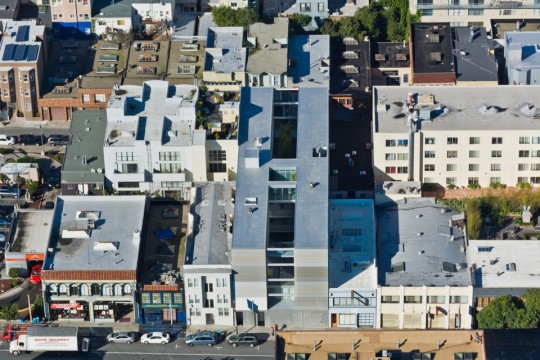
    One project that I’ve always liked for this reason – as well as the fact that it’s beautifully designed – is 1234 Howard Street in San Francisco. It looks like this from above:

    image

    The site is 50′ x 165′ and it spans an entire block. 

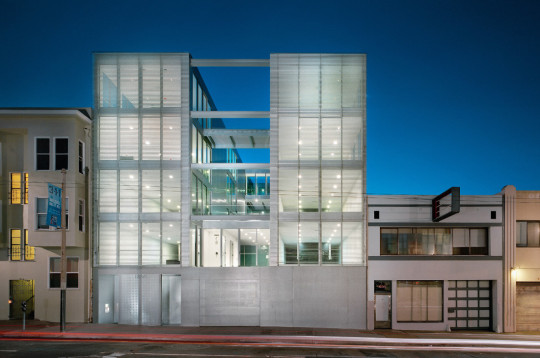
    In order to get lots of light into all of the units, the architects (Stanley Saitowitz | Natoma Architects) split the site up into 3 “bars”, each of which would be somewhere around 16′ x 165′. The middle “bar” was then dedicated to a courtyard that cuts through the entire building.

    image

    The two flanking bars were then further subdivided into 2 units per bar, which translates into 4 units per floor x 4 floors. The ground floor is just common areas and parking.

    The advantage of this design strategy is that the apartments now have windows running the length of the courtyard, where as typically on narrow deep lots you would end up with “bowling alley” units and windows just on one end.

    The disadvantage of this design strategy is that you’re now just over 16′ away from seeing what your neighbor is eating for dinner, among other things. 

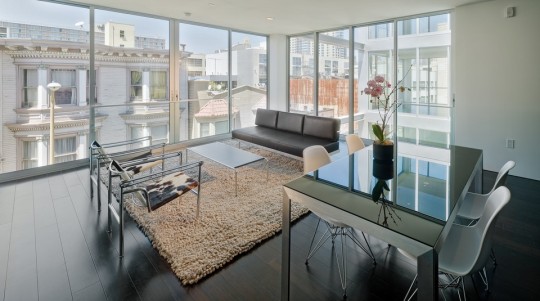
    But with the right window coverings, I’m sure we’d all survive in these apartments with their Bulthaup kitchens and Miele appliances.

    image

    I love seeing creative solutions to tight urban sites. And one of the things that I worry about, with things like the Mid-Rise Performance Standards here in Toronto, is that we’re reducing or even eliminating the possibility for these kinds of creative solutions.

    I recognize that 1234 Howard is not the same as an avenue mid-rise site in Toronto with low-rise residential behind it. But the thought still crossed my mind as I was writing this piece.

    All photos via Stanley Saitowitz | Natoma Architects Inc.

  • The year of the laneway

    Earlier this week, Metro News published an article saying that it’s going to be a big year for laneways in Toronto:

    “2016 is going to be the year where the evolution of our laneways lands at the forefront of our public realm strategy,” said Downtown Yonge BIA chair Mark Garner, who’s heading up the revitalization of O’Keefe Lane near Ryerson University.

    In addition to the Downtown Yonge BIA, much of this is being spearheaded by the non-profit group, The Laneway Project. This year they are expected to unveil plans for the revitalization of 3 laneways in the city – one of which is right in my backyard.

    I have a lot of respect for what The Laneway Project, the Downtown Yonge BIA, and others are doing in support of rethinking our laneways. And so today I just wanted to publicly thank them for their efforts. Thank you 🙂

  • What do you think of parking stackers?

    One of the things that’s becoming a lot more common in Toronto is parking stackers. For small infill sites there’s simply no other way to fit in the parking. You can’t lay out a traditional parking garage.

    But while it’s still relatively new for Toronto, I think many of you would be surprised by how many projects there are in the pipeline right now that plan to use parking stackers. In the next 5 to 10 years, they are going to be quite common.

    Some of you might be wondering how they work. There are a bunch of different solutions, from stackers to elevators and palettes, but here’s an example of a triple car stacker:

    In this case, there’s a below grade pit and an open space that goes up into the second floor. This way each car remains accessible without having to move any of the others. If you want the car on the top shelf, just lower the other 2 into the pit. If you want want the car on the bottom shelf, just raise the other 2 into the second floor space (which is what’s shown above).

    But here’s what I’m really curious about: How do you feel about parking stackers? Would you live an apartment or condo where that was how you had to park your car? Or would it be a deal breaker? Please let us know in the comment section below.

  • Should you buy a car or just take Uber?

    Urban dawn by Raymond  on 500px.com

    https://500px.com/embed.js

    My friend Evgeny published a great blog post today called, On Car Ownership And The Future Of Transportation. 

    And in it he made the argument that instead of buying a car and an expensive downtown Toronto parking spot (average price: $40,000 – 60,000), most of us urbanites would be better of just taking a taxi or Uber.

    This got me thinking: At what point does it really make sense to completely forgo owning a car? (Full disclosure: I own both a car and a downtown parking spot.) So I decided to dig into the numbers a bit more and compare 4 mobility options:

    • Owning a car ($25,000 upfront) + downtown parking spot ($40,000 upfront) and driving yourself everywhere
    • Taking a regular taxi exclusively ($3.25 base + $1.75 per km)
    • Taking an UberX exclusively ($2.50 base + $1 per km)
    • Or, taking a futuristic driverless car everywhere (here I assumed $1.50 base + $0.25 per km)

    With the above numbers, I then assumed 15,000 km traveled per year and an average trip length of 15 km (so 1,000 trips per year). The trip length and number of trips per year matter because of the “base fare” that is charged when you take a taxi or Uber.

    I also assumed that the cost of owning a car is $0.60 per km (estimated from this Globe and Mail article) and that there is an opportunity cost to NOT renting out your downtown parking spot ($200/month). That is, every month that you spend driving yourself around and parking your car, you are forfeiting parking revenue.

    Finally, I looked at a 10 year time horizon and then “discounted” all the costs back to today’s dollars so that I could compare each mobility option.

    So what did I find?

    image

    What this says is that if you’re driving 15,000 km per year (average trip length 15km), then you’re better off taking UberX everywhere, as opposed to going out, buying a car and parking spot, and driving yourself around.

    But does this hold true at different travel distances?

    Based on my model, once you hit around 18,000 km per year, then you’re better of with option 1 (owning a car). That’s because the per km savings associated with driving yourself around are enough to offset the upfront costs of the car and parking spot.

    On the flip side, when you drop below 7,500 km traveled per year, even a regular taxi starts to make sense. That’s because you’re simply not traveling enough to reap the benefits of owning a car/parking spot. Again, high upfront costs; lower per km operating costs.

    Of course, there are a number of things I didn’t consider in my model. For one, most people finance their car and parking spot (it is bundled into their home mortgage). So I’m sure there are ways that you could change the above outcomes using leverage.

    At the same time, I didn’t account for the fact that when you’re being driven around (as opposed to driving around) you have the flexibility of doing work, responding to emails, and so on. If you want to attach a value to your time, then the scale would tip back in favor of taxis and Uber.

    But all of this was really just to make one point: look how cheap it could be to ride around in a driverless car. When that becomes the reality in our cities, which it will, it’s going to completely transform our current beliefs around cars, parking, and many other things.

    I guess that’s why General Motors just invested $500 million in the peer-to-peer ridesharing company, Lyft. They know the shit is coming.

  • Art is the new steel — a photo essay of Hamilton, Ontario

    Today, myself and a few others spent the afternoon urban exploring Hamilton, Ontario with Thomas Allen of the blog, Rebuild Hamilton. If you don’t read his blog, you should. Since he started writing about 3 years ago, he has really emerged as the online voice of Hamilton’s urban resurgence.

    If you’re from Toronto, you’ve probably been hearing rumblings about good things happening west of the city. Rumblings about people leaving overpriced Toronto for greener and more affordable pastures in Hamilton, and even that it was destined to become the Brooklyn of Toronto. That basically means Millennials, trendy coffee shops, and beards. (For the record, Thomas’s beard is very nice.)

    With all this talk of affordable housing and beards, I decided that it was time to make a pilgrimage. Below is a short photo essay of what we saw.

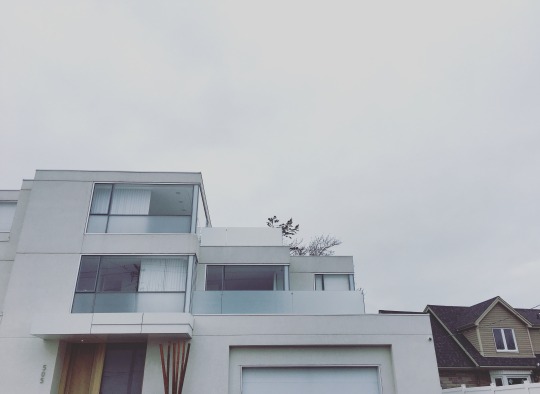
    We started the day east of Hamilton where we found this beauty along the waterfront. I don’t know who designed it, but it’s called the Cube House and it was construction managed by Toms + McNally Design. You’re going to want to click through to their website to see the interior photos. 

    image

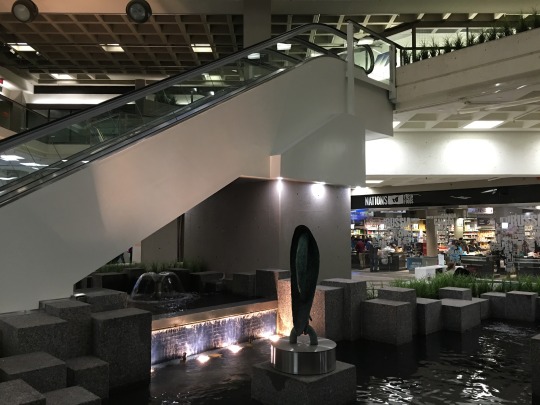
    We then made our way downtown to Jackson Square. Jackson Square is one of two downtown malls (the other is the post-modern City Centre Mall). It has seen a lot of investment in recent years and I was impressed to find a thriving grocery store. 

    image

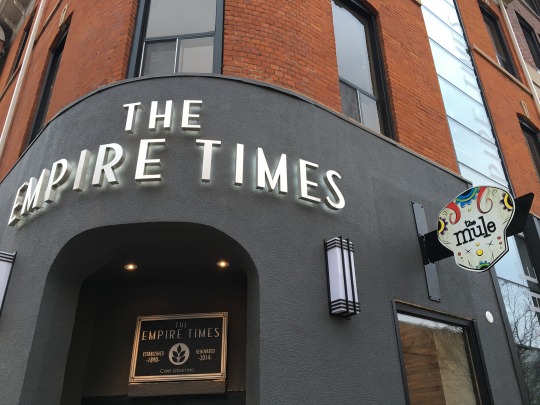
    Then came a taco and craft beer pit stop at The Mule. I would definitely recommend this spot if you happen to find yourself in the area.

    imageimage

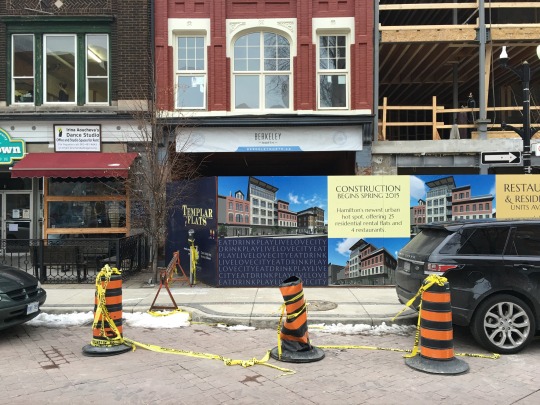
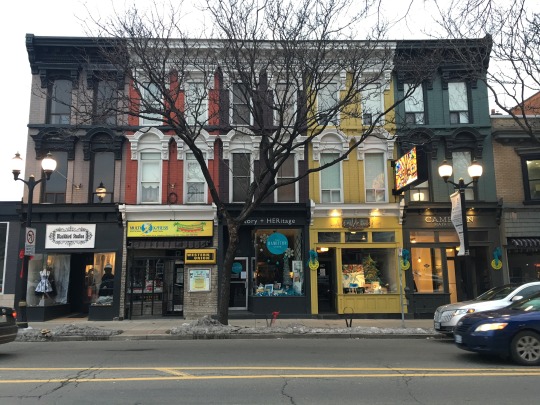
    Following this, we walked James Street North, which we were told has only really come up in the past 5 years or so. And alongside with this resurgence has come the slogan: Art is the new steel. This, of course, is responding to the fact that Hamilton is the steel capital of Canada, but that the industry is facing many challenges. I think it’s a neat slogan.

    imageimage

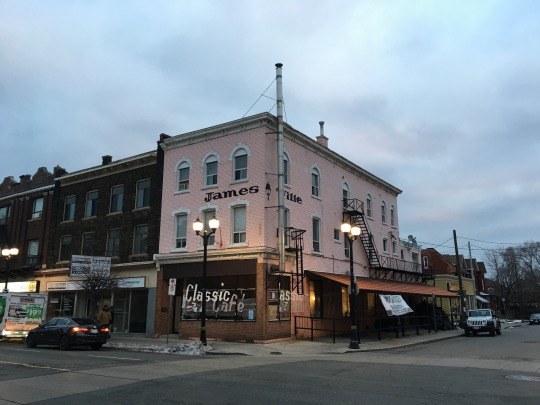
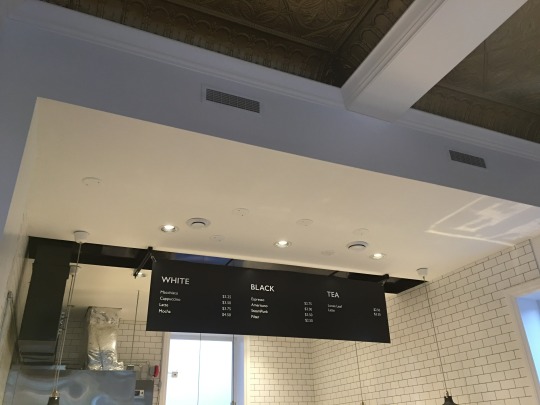
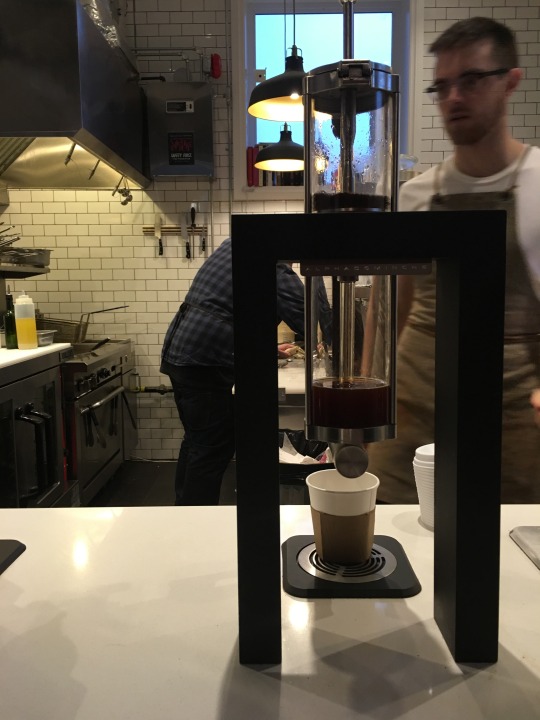
    On James Street we stopped in at Saint James Espresso Bar & Eatery, and it was everything we had hoped for and more. It was more because not only was it a cool space with great coffee, but they had some fancy thing called steam punk coffee.

    imageimage

    After James Street, we then drove around checking out some of the other areas in the city such as Kirkendall and neighboring Dundas.

    All in all, this afternoon was a great reminder that we are truly living in an urban century. It’s not just the Toronto’s, Berlin’s and Shanghai’s of the of the world that are laying down bike lanes, investing in art and culture, and generally reimagining their city centers. It’s also happening in smaller and mid-sized cities such as Hamilton. And that’s really exciting.

  • 5 random charts related to cities and real estate

    I was reading through PwC and ULI’s 2016 Emerging Trends in Real Estate report this evening and a handful of charts stood out to me. They’re not all related to each other, which is why this blog post is called what it is. But I think you’ll find them relevant to many of the things we talk about on this blog.

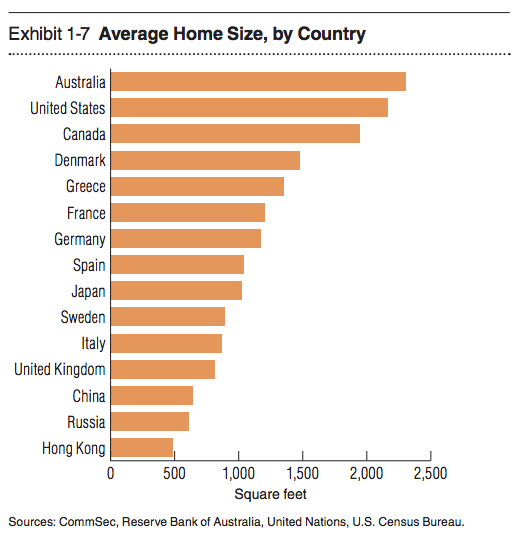
    1. Average home size by country

    With all the interest today in “small urban spaces” it’s interesting to see that the average home size for half the countries on this list is somewhere between 500 and ~1100 sf. It’s also amazing to see Hong Kong hovering just below 500 sf.

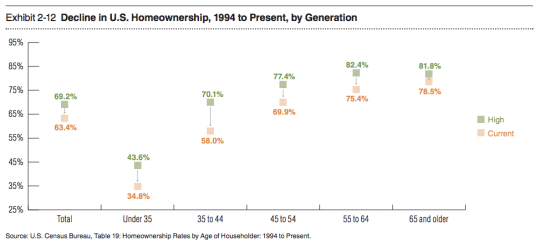
    2) The decline in homeownership in the US

    I like to follow home ownership rates because there’s a lot of debate around whether or not this obsession with homeownership – which has been so central to the ethos of countries like the US and Canada – is at all falling out of a favor. This chart shows some pretty significant drops from previous highs.

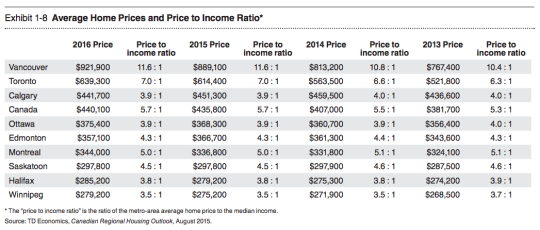
    3) Average home prices and the price to income ratio in major Canadian cities

    Not surprisingly, Vancouver and Toronto are the top of this list with the highest average home prices and the highest price to income ratios (i.e. the worst affordability).

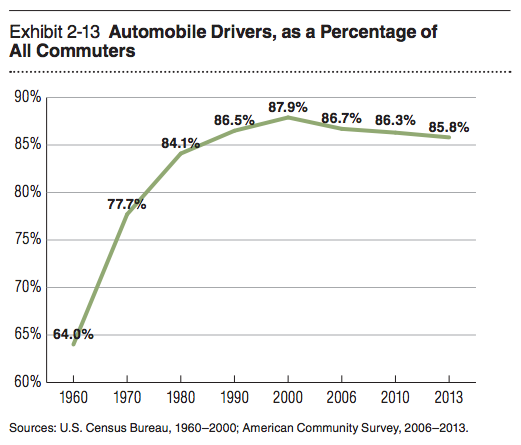
    4) Drivers as a percentage of all commuters in the US

    This chart is similar to what you would see if you looked at vehicle miles traveled. I’ve heard some people say that driving is now once again on the rise, but for the past decade and a half it’s been on a slow and steady decline.

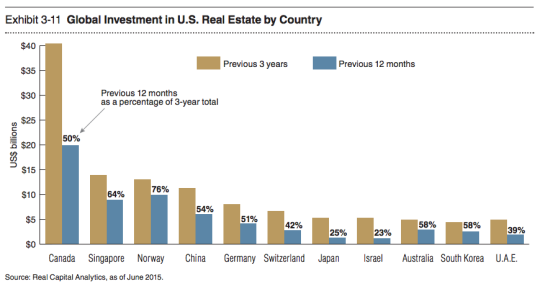
    5) Countries buying US real estate

    Canada is a big buyer of US real estate. But with the dollar where it is today, I am sure that number is headed downwards.

  • Our urban history in 50 buildings

    At the time of writing this post, it’s still 2015 – at least here in Toronto. But by the time you (subscribers) get this post in your inbox, it will be 2016. So happy new year! I am thrilled about getting this year started and I hope you feel the same way.

    To kick things off, I thought I would share a great interactive post from Guardian Cities called, A history of cities in 50 buildings. It’s a look at our urban history through 50 important and pivotal buildings. Buildings such as Southdale Center, which was the first fully enclosed, climate-controlled shopping mall, and Chicago’s Home Insurance Building, which was a building that really set the stage for the modern skyscraper that we know today.

    Not all of these buildings have left a positive legacy on our cities. I am sure that some of you would argue that the creation of the suburban shopping mall, with its corresponding “sea of parking”, was not a step forward for cities, but a step backwards. The architect behind Southdale Center, Victor Gruen, has even gone on record saying that he refuses “to pay alimony for those bastard developments.” He hated the shopping mall.

    But like them or not, these buildings are part of our urban history, and I think it’s not only interesting but important to understand their impacts. If you want to see which important buildings were missed, at least according to Guardian readers, click here. I have to say that I was happy to see both Montréal and Toronto represented in the original list, as well as a few other buildings that I’ve written about here.

    On that note, happy new year to you all, again, and many thanks for reading Architect This City. If you have any suggestions for content you would like to see on this blog in 2016, please leave it in the comment section below. This may be my personal blog, but my goal is to make it valuable for all of you. Hopefully I achieve that sometimes.