Daily insights for city builders, delivered every morning at 6 AM ET. I’m Brandon Donnelly — a Toronto-based real estate developer and founder of Globizen. I’ve been writing here since 2013.

Tag: the economist

  • The high cost of poor land use

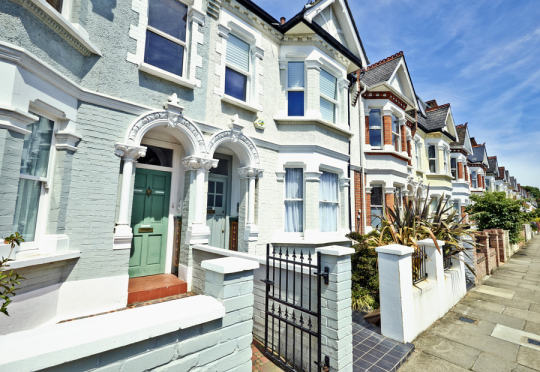
    Photograph London street of early 20th century Edwardian terraced houses by Bombaert Patrick on 500px

    London street of early 20th century Edwardian terraced houses by Bombaert Patrick on 500px

    Over the weekend The Economist published an interesting article called, Space and the city: Poor land use in the world’s greatest cities carries a huge cost. The argument is that land isn’t scarce. It’s the land use policies we have created that are artificially limiting supply and driving up real estate values.

    In fact, land is not really scarce: the entire population of America could fit into Texas with more than an acre for each household to enjoy. What drives prices skyward is a collision between rampant demand and limited supply in the great metropolises like London, Mumbai and New York. In the past ten years real prices in Hong Kong have risen by 150%. Residential property in Mayfair, in central London, can go for as much as £55,000 ($82,000) per square metre. A square mile of Manhattan residential property costs $16.5 billion.

    And part of the reason this has become so prevalent is because of the shifts we’ve seen in our economy and the great return back to cities.

    In the 20th century, tumbling transport costs weakened the gravitational pull of the city; in the 21st, the digital revolution has restored it. Knowledge-intensive industries such as technology and finance thrive on the clustering of workers who share ideas and expertise. The economies and populations of metropolises like London, New York and San Francisco have rebounded as a result.

    So how do we get better at meeting real estate demand in our cities? The Economist has two suggestions.

    One:

    First, they should ensure that city-planning decisions are made from the top down. When decisions are taken at local level, land-use rules tend to be stricter. Individual districts receive fewer of the benefits of a larger metropolitan population (jobs and taxes) than their costs (blocked views and congested streets). Moving housing-supply decisions to city level should mean that due weight is put on the benefits of growth. Any restrictions on building won by one district should be offset by increases elsewhere, so the city as a whole keeps to its development budget.

    Two:

    Second, governments should impose higher taxes on the value of land. In most rich countries, land-value taxes account for a small share of total revenues. Land taxes are efficient. They are difficult to dodge; you cannot stuff land into a bank-vault in Luxembourg. Whereas a high tax on property can discourage investment, a high tax on land creates an incentive to develop unused sites. Land-value taxes can also help cater for newcomers. New infrastructure raises the value of nearby land, automatically feeding through into revenues—which helps to pay for the improvements.

    These recommendations will probably be unsettling for a number of people. 

    I would imagine that many communities would prefer to have planning and growth decisions happen bottom up, as opposed to top down. But I think there’s some truth to this recommendation and I don’t think it has to mean completely excluding bottom up feedback. Communities and individuals are naturally going to look out for their own self-interests. And so I think many would agree that there’s value in having a holistic urban strategy in place.

    Recommendation number two pertaining to land value taxes is a loaded one. So I’m going to save my specific comments for a dedicated post on LVTs. 

    But I will say that I don’t think trying to squeeze landowners into development via taxes is the most efficient and immediate way to address supply shortages. In advance of this, we should be examining the current barriers to development. Because we’re talking about hyper competitive global cities with perpetual supply deficits. And I don’t believe the problem is incentive-based. The problem is finding sites. The problem is finding ways to build.

    What do you all think? This is an interesting topic of discussion.

  • The value of cheap housing

    Photograph Houston Sunrise by Cliff Baise on 500px

    Houston Sunrise by Cliff Baise on 500px

    Urbanists generally don’t like to talk about cities like Houston. It sprawls. It’s car oriented. It’s over air-conditioned. In other words, it’s the antithesis of the dense and walkable cities that urbanists today like to tout as being exemplary. 

    But despite all this, Houston is one of, if not the, fastest growing city in America. According to The Economist, the population of the Houston metro area grew faster than any other city in America between 2000 and 2010. And between 2009 and 2013, its real GDP grew by 22%.

    So why is that? Here’s a snippet from that same Economist article (“Life in the sprawl”):

    Paradoxically, perhaps the city’s biggest strength is its sprawl. Unlike most other big cities in America, Houston has no zoning code, so it is quick to respond to demand for housing and office space. Last year authorities in the Houston metropolitan area, with a population of 6.2m, issued permits to build 64,000 homes. The entire state of California, with a population of 39m, issued just 83,000. Houston’s reliance on the car and air-conditioning is environmentally destructive and unattractive to well-off singletons. But for families on moderate incomes, it is a place to live well cheaply.

    So while Houston may not check off all of Jane Jacobs’ boxes, it does provide one important thing: cheap housing. And that’s clearly valuable for a huge number of people.

    But the other interesting thing about the snippet above, is that it starts to illustrate how frequently supply constrained markets operate with housing deficits. 

    The fact that the entire state of California issued only about 30% more building permits than the Houston metro – which you could easily argue is closer to a “perfect market” – tells me that there’s probably a lot of people bidding for the same housing in California.

    That’s less so the case in Houston.

  • Is the world urbanizing or suburbanizing?

    The Economist recently published an essay called, A Planet of Suburbs – The world is becoming ever more suburban, and the better for it. The argument is basically that the “great urbanization” that everyone loves to talk about these days is actually a misnomer. From Chicago to Chennai, it’s not the urban core that’s growing. It’s the suburbs. And so what we’re seeing should actually be called the great suburbanization.

    The basis for this argument is that wealth fuels sprawl. As people become richer, they naturally consume more of everything – including space. It’s a natural market outcome.

    Take for example, the path of many of Toronto’s ethnic groups. In the first half of the 20th century, College Street was the Little Italy. Then it shifted north and St. Clair Avenue West became the more authentic Little Italy. Today, many Italians now live north of the city in Woodbridge. In fact, last weekend I was on St. Clair West and was disappointed to learn that one of my favorite butchers had closed up shop and “moved to Woodbridge.”

    However, there are also many supporters of the exact opposite outcome. From Edward Glaeser to Alan Ehrenhalt, many have argued that we’re in the midst of a “great inversion.” The suburbs are no longer a threat to urban centers. It’s the urban centers who are threatening the suburbs. The suburbs are dead. Long live the city.

    So which is it?

    Well, The Economist does cite two examples where true urbanization is actually taking place. It’s happening in Tokyo and London. In both cases, it’s the city center that is growing the fastest – not the suburbs. The explanation for Tokyo is its aging population. And the explanation for London is its restrictive greenbelt, which effectively stops the possibility of any further sprawl.

    Here in Toronto – where there is also a greenbelt in place – we know that the population of the downtown core is growing at an incredible pace. A recent report by the city – called Comprehensive to the Core – revealed that the downtown core is growing at 4 times the rate of the rest of the city.

    But what about the suburbs?

    If we look at the province of Ontario’s growth projections, it is indeed the suburbs which are expected to grow the fastest up until 2036. Here is a diagram showing percentage growth rates:

    image

    In absolute numbers, the city of Toronto alone is expected to add about 0.66 million people between 2012 and 2036, and the suburbs are expected to add almost 1.9 million.

    There are a number of potential explanations for this differential, but I think it’s largely because land is cheaper in the suburbs, it’s easier to add new housing supply, population densities are lower, and we’re talking about very different land areas.

    The city of Toronto is 630 square kilometers. If you tack on the suburbs, the Greater Toronto Area is 7,124 square kilometers. That means Toronto makes up less than 9% of the total land area. And yet it is expected to contribute 25% of the region’s population growth. 

    Still, the suburbs are where the bulk of the population growth is expected to happen over the coming decades.

    However, the “great inversion” that authors like Alan Ehrenhalt have been talking about should not really be interpreted as the death of the suburbs. What he’s instead talking about is a socioeconomic or demographic reversal: center cities used to be poor and now they’re becoming rich.

    Here’s how he put it:

    What we are seeing is a reversal in which the words “inner city,” which a generation ago connoted poverty and slums, [are going to mean] the home of wealthier people and people who have a choice about where they live, and the suburbs are going to be the home of immigrants and poorer people. And Census figures show that that’s taking place.

    In this context, we are still living through the great urbanization. We’re seeing a shift in consumer preference and a shift in where wealth is choosing to locate. That’s a profound change.

    And while we’re obviously still suburbanizing, I don’t agree that we’re better for it. In fact, left unchecked, this demographic inversion could actually prove to be quite damaging to our suburbs.

    Image: Flickr

  • How are you being shaped?

    image

    “We shape the cities, and then our cities shape us.” That’s one of my favorite lines from the documentary The Human Scale, featuring Danish architect and urban designer Jan Gehl. I like it because I don’t think many of us think enough about the way in which the built environment – that we create – ultimately goes on to influence the way we live our lives.

    One of the most interesting connections for me is the link between urban form and public health. There’s been a lot of talk over the years about how suburban sprawl is, or might be, making us fat (among other things). We’ve created environments that are only navigable by cars and that has forced many of us into sedentary lifestyles. We sit in our cars, and then we sit in our offices.

    So today I’d like to conduct a bit of a poll. If you’d like to participate, please share the following 3 things in the comment section below: 1) your city, 2) the type of neighborhood you live in (urban, suburban, rural, etc.), and 3) the amount of time you spend walking or doing something active on an average day.

    Here’s me:

    I live downtown Toronto in the St. Lawrence Market neighborhood (urban). I take the subway to work and the station is a 10 minute walk from my place. So as a bare minimum, I spend at least 20 minutes a day walking. But since I also walk to do most of my regular errands, and since my gym is another 10 minute walk from my place, I’d say I average a good 30-45 minutes of walking each day.

    Now it’s your turn 🙂

    This is a pretty crude survey, but with the advent of things like smartwatches and health monitors, I think we’ll soon have lots of great data on the ways in which our cities might shape our health.

    Image: The Economist

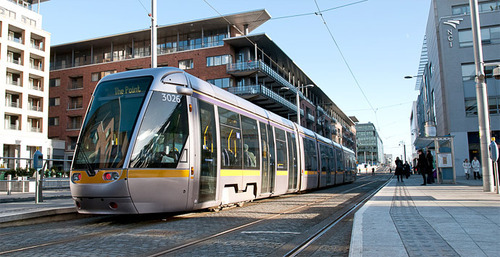
  • Why light rail isn’t a waste of money

    Last weekend a friend of mine sent me an article from The Economist talking about why trams, streetcars, and light rail are a waste of money. The argument is basically that steetcars are expensive, less efficient, and that – despite North America’s renewed interest in them – we should instead be spending our scarce public dollars on more buses.

    Here’s a snippet from the article:

    …but cash spent on streetcars displaces spending on other, more cost-effective forms of public transport like buses, which offer cheaper and more-efficient service but are considerably less sexy. The capital cost per mile of a streetcar is between $30m and $75m, while a rapid bus service costs anywhere between $3m and $30m, according to the American Public Transportation Association.

    Now, there’s no question that buse routes are initially cheaper to implement. You don’t have track to build. But I don’t agree that the cost structure is quite that simple if you consider the number of people you need to move in your city. I struggle to see buses as a more efficient service.

    The big difference between modern light rail and buses is capacity. Toronto’s new streetcars will move about 3 times as many people as your typical bus. So you’d need to triple the number of buses and triple the number of drivers – adding to your labor costs – if you want to have a chance at moving the same number of people. 

    Streetcars are also electric, which means they run on a renewable energy source. We’re in the process of making this switch with private transport, so why go backwards when it comes to public transport? You can certainly run electric buses as well, but then you’re building overhead power lines and bringing up your initial costs.

    I think the challenge is that when people think of light rail, they think of slow lumbering streetcars. I agree that many of these lines are inefficient and I’ve written about it. But there are a number of ways to implement light rail. And when done well it can efficiently move a lot of people for costs that are far less than a subway.

    Image: Aecom

  • Why Vancouver’s housing market hinges on China’s economy

    Last week a friend of mine sent me a really fascinating article from The Economist talking about the role of foreign investors in Vancouver’s housing market. If you subscribe to The Economist, you can click here to read the article. If you don’t subscribe, you’ll have to rely solely on what I’m about to say.

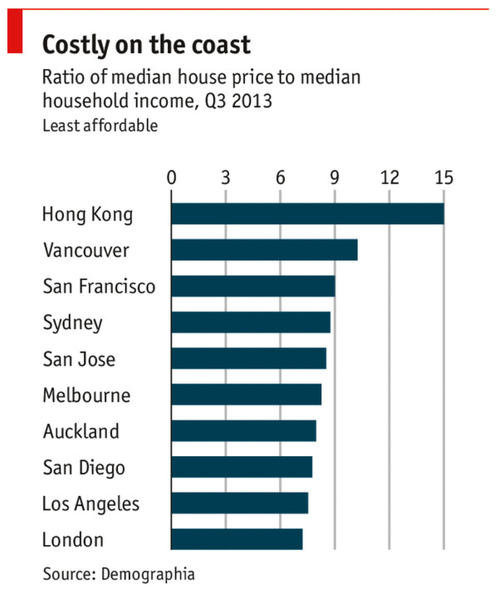
    In case you weren’t aware, Vancouver is an incredibly expensive city when it comes to real estate. The average price for a single-family detached house is now around C$1 million. By some measures, that makes it the most expensive housing market in North America. Here’s a chart that looks at house prices as they relate to household income:

    image

    According to The Economist, the median household income in Vancouver is $68,970. This places them 23rd out of 28 in terms of Canada’s major cities. So how is it that homes are, on average, selling for $1 million? The locals don’t seem to be able to afford them.

    Well, it’s a well known fact that Chinese buyers continue to be an integral part of Vancouver’s housing market. In fact, up until this year, Canada offered a fast track option for citizenship applications if you brought at least $800,000 into the country.

    So we know that foreign buyers are having an impact. It’s a phenomenon we’re seeing in many other cities around the world, such as London. But to what extent is hard to measure–which has forced analysts to get creative.

    To try and figure out what percentage of homes are going to foreign buyers, analysts have been looking at macro data, filing through sales records, and even monitoring utility bills to see which homes might be sitting empty.

    What they found is that there’s a fairly significant correlation between economic activity in China, and Vancouver’s housing market. When the Chinese economy does well, so do Vancouver homes. Interesting. Still, that doesn’t quantify impact.

    When analysts looked for utility bills that would suggest an empty home, they found that only about 8% of high end downtown condos were likely sitting empty. That’s a relatively small amount. It could be vacancy rate.

    But when they looked for “mainland Chinese-sounding names” on sales records, they found that for homes priced $3M and up, almost ¾ of the buyers could be from mainland China. Now that’s a significant number!

    I found this all rather fascinating and I thought you all might as well. It yet again reminds me of how much opacity there is in real estate markets. We’re all craving better data. Why else would people be scouring utility bills?