Daily insights for city builders, delivered every morning at 6 AM ET. I’m Brandon Donnelly — a Toronto-based real estate developer and founder of Globizen. I’ve been writing here since 2013.

Tag: tesla

  • Driverless cars, urban mobility, and Toronto’s Gardiner Expressway

    image

    About a week ago I wrote a post questioning what driverless cars will mean for cities. I ended by saying that that it feels as if we’re going to see increasing tension between private and public transport.

    What I meant by that was simply that conventional notions around private car use are going to change. And ultimately that is going to mean that we need to rethink public transport and how that fits into a broader urban mobility framework.

    What do I mean by this?

    The International Transport Forum at the OECD recently published a fascinating report called, Urban Mobility System Upgrade: How shared self-driving cars could change city traffic. And it deals with exactly the sorts of things I am thinking about.

    The study looked of what might happen when all cars become self-driving in a mid-sized European city (specifically Lisbon, Portugal). They leveraged existing transportation data from the city, but replaced 100% of the human powered cars with two types of self-driving cars: TaxiBots and AutoVots.

    TaxiBots were driverless cars that would be shared with multiple people at the same time. In other words, they were a kind of pseudo-public transit. And AutoVots we’re your more conventional private taxi. They picked up one person at a time.

    So, what did they find?

    In the first scenario, they combined their TaxiBots and AutoVots with public transit (light rail) and discovered that the same number of people could be moved around with only 10% of the cars currently on the road. That’s a 90% reduction!

    They also found that the city needed 20% less on-street parking and 80% less off-street parking since driverless cars don’t need to sit idle waiting for a driver.

    In the second scenario, they removed mass transit from the equation. And in this instance they found that the city was still able to get around, but with an 80% reduction in the number of cars on the road. Remarkably, it also led to a 10% reduction in rush hour commute times.

    These are pretty profound changes. Reducing the number of cars on the road by 80-90% is a significant change. 

    But it’s also why I’ve been thinking about the tension between private and public transport. As we get better at optimizing “cars” (their definition will change), what becomes the role of true public transit?

    Ultimately, I think what will happen is a blurring of the two. In the example above, the TaxiBots served basically as small scale public transit. But that does not necessarily mean that true mass transit will become irrelevant. We’re just going to need to rethink how the entire mobility network fits together.

    I’d now like to bring this discussion back to Toronto for a minute.

    As many of you probably know from this blog, Toronto is on the cusp of deciding what to do with the eastern portion of the Gardiner Expressway (an elevated highway that runs across the downtown waterfront). It will go to City Council next month. 

    I firmly believe that we should remove it, but there many people who believe we shouldn’t. The main objection seems to be that the traffic projections indicate that removing it could make commuting into downtown – by car – 3 to 5 minutes longer by 2031

    By today’s standards, I believe this concern represents an outdated way of thinking about cities and urban mobility. Adding more lanes is like loosening your belt to deal with obesity. However, it gets even worse when you think about urban mobility in the context of this post.

    Given the profound transportation changes that are currently underway, I think there’s a strong likelihood that the Gardiner projections we have today will be completely wrong by 2031. I don’t know know for sure, but I’m guessing the models don’t account for the efficiencies being created by driverless cars and peer-to-peer networks.

    In other words, I am suggesting that those 3 to 5 minutes could prove to be a red herring. The relevant question should be: Which decision will allow Toronto to build the absolute best waterfront in the world? And in my opinion that leads to removing the Gardiner East.

    If you feel similarly, I would encourage you to write your local City Councillor.
  • Tesla introduces a battery for your home

    image

    By accident, this week on Architect This City seems to be turning into Elon Musk week.

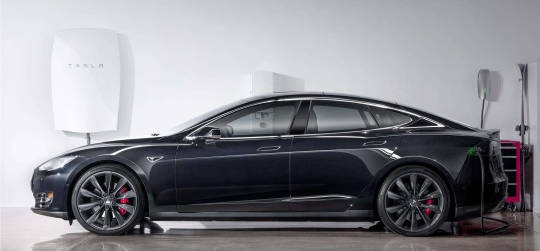
    Yesterday, Musk announced something called the Powerwall home battery. Measuring about 3′ x 4′, the shield looking battery pack will charge using the electricity generated from solar panels (or from the grid when rates are at their lowest) and then power your home.

    It’s designed for consumers and will cost between US$3,000 – $3,500 depending on capacity. The individual Powerwalls can also be daisy chained to increase capacity. It will be available starting this summer.

    A wall battery may not seem all that interesting to some, but I think this is actually a big deal for a few reasons.

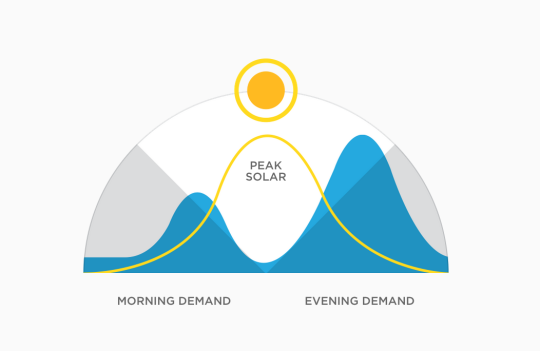
    Renewable energy is often both intermittent and produced when you don’t need it. Here’s a great chart from Tesla that shows what I mean:

    image

    During peak solar hours, most people aren’t home and most people aren’t consuming at peak levels. That’s why it’s important to be able to store the energy that you collect, whether it be from solar, wind or other renewal energy source. And from what I hear from my friends in the industry, storage has been a bit of an Achilles heel for adoption.

    It will also help to further decentralize energy production. What is produced locally (from say solar panels) will be stored locally for when it’s needed locally. This is in contrast to centralized production or producing energy locally and then feeding any excess capacity into the grid for use somewhere else. That requires transmission and will be by definition less efficient.

    Finally, the other interesting thing about Powerwall is that it closes the loop on two of Musk’s businesses: SolarCity and Tesla. SolarCity is about the production of renewable energy and Tesla is about the consumption renewable energy. But as the chart above shows, storage is often needed to link those two activities in an efficient way.

    All of this makes me excited about Powerwall.

    If any of you are an expert in this industry (which I am not) or you just have additional thoughts, I would love to hear from you in the comment section below.

    Images: Tesla

  • What will driverless electric cars mean for cities?

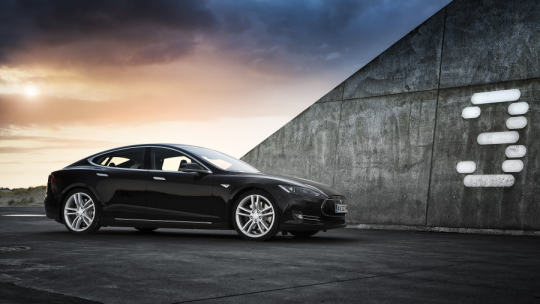
    Photograph T E S L A by Thomas Juel on 500px

    T E S L A by Thomas Juel on 500px

    Yesterday I posted a video about the career of Elon Musk. And it reminded me of something that’s been on my mind as I think about transportation, cities, and the future.

    Elon’s story for why he founded SolarCity, Tesla, and SpaceX is incredibly compelling. He chose problems and industries that he felt would move humanity forward. He felt that we needed sustainable forms of energy production (SolarCity), sustainable forms of transport (Tesla), and a way for humans to occupy other planets (SpaceX). That’s incredible ambition.

    Today though, I just want to focus on the transportation piece.

    Electric and driverless vehicles, I believe, are a step in the right direction. I honestly believe that at some point in the not too distant future we’re going to look back at that time when people used to drive their own cars and wonder how we ever allowed that to happen.

    But fundamentally, I think there still remains a question of how best to plan our cities. 

    There’s lots of talk today about peak car and the death of the automobile. Certainly within planning and urbanist circles, there’s an almost universal belief that planning (most of) our cities around the car, as opposed to people, was a huge mistake. Multimodal solutions with a public transit backbone are now the way forward.

    But will that always be the case as the notion of the “car” evolves?

    Intuitively, driverless vehicles feels like a massive opportunity to leverage data and better optimize our private transport assets. We know that the utilization rate for most private cars is incredibly low and so there’s lots of room to improve how we use and share private vehicles and how we move people around cities.

    But how big is that opportunity? Does a city filled with driverless electric vehicles and with networks like Uber mean that public transportation now becomes less important? And if so, how much less important?

    I can’t help but feel like private and public transport are on a collision course right now. I suppose that isn’t anything new. But this time around I wonder if private transport won’t figure out a way to achieve similar efficiencies to large scale public transport.

  • Bloomberg Risk Takers: Elon Musk

    Elon Musk is one hell of an entrepreneur. I just finished watching this “Bloomberg Risk Takers” video. 

    [youtube https://www.youtube.com/watch?v=mh45igK4Esw?rel=0&w=560&h=315]

    It’s about 45 minutes long, but well worth it. What’s astounding is both is willingness to go all-in and his commitment to solving big, meaningful problems. Click here if you can’t see the video above.

    Once you’re done watching, you should then read this Quora answer from his first wife talking about what it takes to be that great.

  • The Tesla Easter egg

    I was rushing to get to a real estate forum dinner last night and so instead of walking — which is normally what I would have done — I decided to grab an UberX. As some of you might be aware, I like UberX. It’s convenient to use. And the fares are cheaper than regular taxis. So why wouldn’t I use it?

    But last night I got an extra treat. A guy named Mike picked me up in his Tesla Model S:

    //platform.twitter.com/widgets.js

    According to Mike there are two of these “Easter eggs“ in the UberX Toronto fleet, which I was also told is now up to hundreds of cars. So it’s not everyday that you’ll get picked up in a Tesla.

    If you’ve never been in a Tesla, the first thing you’ll likely notice is the absolutely epic screen that sits in the dash. Most people’s laptops don’t have a screen this big. It’s gorgeous.

    But there are a bunch of small details that also standout. For example, the door handles sit flush with the door until they’re needed. Here’s a video of how they work:

    [youtube https://www.youtube.com/watch?v=UxavZ2QxuLY]

    But the real question that is probably on your mind is: Why is some guy with a Tesla driving around Toronto offering rides via UberX? That was certainly one of the first questions I asked him after I got in the car.

    And the answer is that he does it for fun.

    He actually owns a medical clinic in Markham, but comes downtown on the evenings and weekends to drive around and meet new people. In fact, he called it the “best networking tool on the planet.” Because as soon as he picks people up in his Tesla, they immediately take him seriously and want to have a conversation. That has translated into business relationships and even invites to parties. As in, he drives a group to a party and they ask him to come in — which he said he often does.

    If he really took it seriously and did it full-time, he figures he could make around $40,000 – 50,000 a year driving for UberX. And I believe that’s close to what a regular taxi driver would make. But again, that’s not why he’s doing it. Isn’t it interesting how things change?

  • Multi-modal cities are the new reality

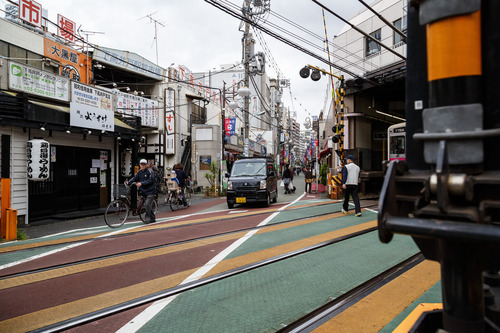
    CityLab published an article last week on multi-modal cities that caught my attention (because it used a picture of Toronto with about 3 or 4 streetcars stacked up along Queen Street). The premise of the article is that all of this car vs. transit debate is actually missing the bigger picture: our cities are multi-modal and we need to be planning for that.

    That’s not to say that the shift away from cars isn’t a good thing. It is. But it’s not as simple as saying that, instead of driving, people should now only take transit. In today’s cities people walk, bike, take streetcars, take buses, take subways, take taxis, take private shuttles, use Uber, and, yes, they still drive.

    From my own experience, this is absolutely how I get around Toronto today. I walk to the gym. I ride my bike whenever I’m going somewhere downtown. I take the subway to my office in midtown because it’s far and I would be too sweaty if I biked there. I use Uber and Hailo when I’m going out at night. And I drive when I need to go to the suburbs or leave the city.

    But the key takeaway here is that we now have a much tougher challenge on our hands. When we were only optimizing for cars – however detrimental to our cities that was – we only had one mode to plan for. Now we have several. Some of which are public and some of which are private.

    However we also have access to technologies that we didn’t have before. We are networked in ways that weren’t possible before and we’re at the dawn of many profound mobility changes, such as driverless cars. (Have you read about Tesla’s new Autopilot feature yet?)

    So as I’ve said before, I really believe that we need to look at this, not as a war on the car, but as a war on inefficiency. The problem we are trying to solve relates to mobility: What’s the best way to move lots of people around dense urban regions? Stop focusing so much on the technologies and focus more on the people.

    Image: Flickr

  • The landscape of electric charging stations

    The car had a profound impact on the landscape of our cities (and that’s probably the understatement of the year). Not only did it force the decentralization of our cities (i.e. sprawl), but it dotted the landscape with gas stations and other things that cars required.

    According to the Verge, the first gas station was built in 1905 in Missouri. And it was really thought of as a side business for pharmacies and other business owners. But as of 2012, there were 121,466 gas stations throughout the United States. It obviously became a big business.

    But as we make the transition from gasoline cars to electric ones, we’re going to need a new network of “refill” stations. In fact, this network is probably more important than the cars themselves if the goal is widespread adoption.

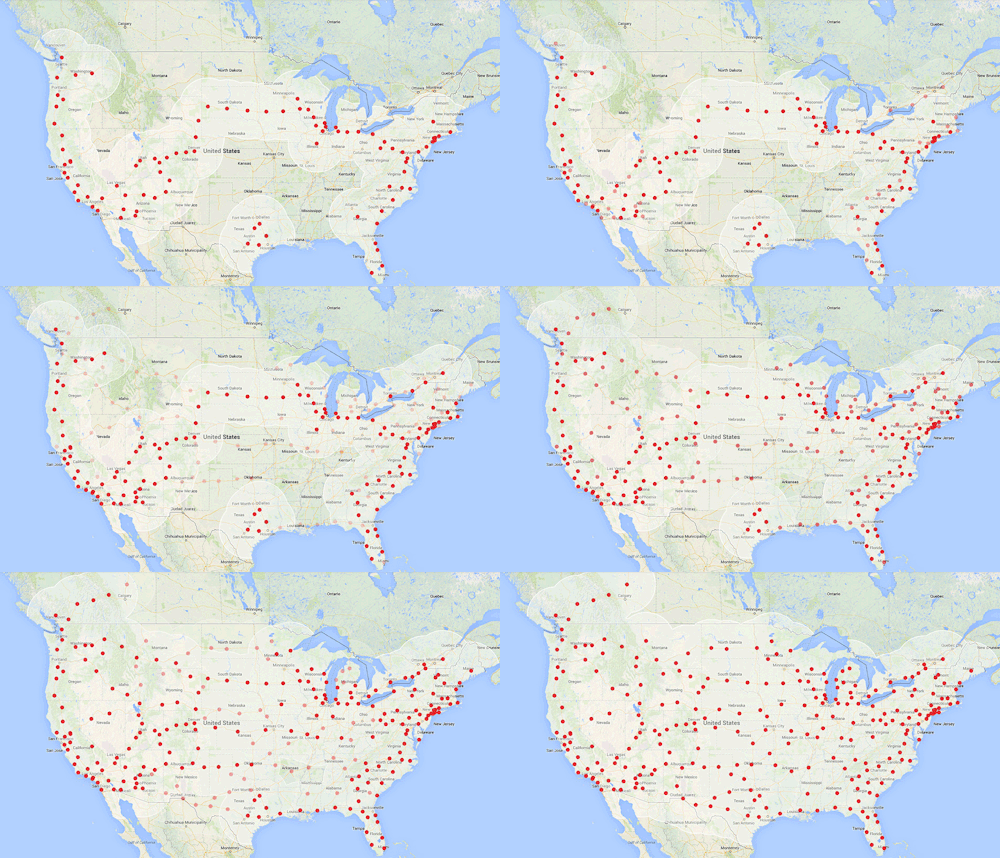
    Below is an animated GIF depicting Tesla’s plans to blanket North America with its Supercharger stations by the end of 2015. By then they will have covered off 98% of the US population and many of the most densely populated parts of Canada.

    But there are two important differences when it comes to comparing Supercharger stations vs. traditional gas stations.

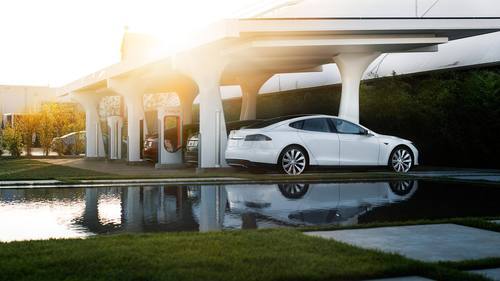
    First of all, these won’t be the only places where drivers will be able to recharge. People will also charge their Tesla at home. In fact, I would assume that for regular city driving, most people would do just that. It’s far more convenient to just drive home, plug in your car, and have it recharge while you’re sleeping (just like we already do with our smartphones). And if this is the case, then these Supercharger stations will be primarily used for long drives, which means we probably won’t need as many within our cities.

    Secondly, these Supercharger stations are free to Tesla drivers (provided you purchase that option with your car). This is really interesting, because it changes the economics of the industry. Selling gas is no longer a profit center. 

    But what I wonder – especially now that Tesla has open-sourced its technologies – is how these free Supercharger stations will ultimately fit into the broader electric vehicle market. Will other manufacturers create Tesla Supercharger compatible cars? Or will we see a rival set of charging stations emerge?

    My sense is that Tesla is doing what it can to ensure it becomes the standard.

  • Rules are made to be broken. So which one is next?

    Jevon MacDonald of StartupNorth published an interesting article today called, You are supposed to break the rules. It talks about entrepreneurship and how great companies are built by disregarding the way things are done today.

    And I think it’s for that reason that many stupid sounding ideas (think Airbnb and its initial idea of offering air mattresses) actually turn out to be great ideas. In reality, they weren’t stupid ideas. They just contravened the norm, and that made them sound stupid. It made people feel uncomfortable. And as humans, we tend to have a bias towards things that reinforce our existing view of the world.

    In any case, Jevon talks about some of the “big rules” that are being broken today. His list includes:

    But really he’s talking about Uber, Tesla, and Airbnb. They are the startups breaking those rules. However, that’s old news for most of us. What’s more interesting are the following two takeaways.

    The first is his prediction that startups are going to start running into more and more regulatory hurdles. In other words, we’re going to see more, not less, litigation. And I think he’s right. As technology starts to creep into other industries (like it has with the taxi industry, the car industry, and the hospitality industry), we’ll probably see a lot of incumbents fighting to hold on.

    The second interesting takeaway for me was that out of his list of “big rules”, the real estate industry (i.e. the MLS) is the only one that doesn’t have a formidable disruptor attached to it. Which makes me wonder: Is something like Opendoor.com inevitable?

  • Right answer to the wrong question

    Yesterday I wrote a post on why Norway loves Tesla Motors. The lesson was that if you want people to adopt sustainability, just make it cheaper. But here’s something to ponder: Are electric vehicles the right answer to the wrong question? (Jeff Speck in Walkable City)

    Now, don’t get me wrong, I think electric vehicles are great. They’re certainly better than gas vehicles from a sustainability standpoint. But is the ideal city of the future one where everyone is driving around in electric vehicles? Or is it one where the majority of people walk, bike and take transit? It’ll likely be a mixture of both scenarios, but I think it’s important for cities to know where they want to go.

    Switching from gas to electric solves some problems, but it doesn’t solve all of them. Traffic congestion and lost productivity, for example, don’t go away. So I would say that electric vehicles are part of the right answer—but there’s still lots of other work to be done.

  • Why Norway loves Tesla Motors

    Norway imposes big levies on the sale of fuel burning vehicles. They can amount to more than 100% of the sale price—effectively doubling the price of a vehicle. It’s a supertax.

    Exempt from these taxes, however, are electric vehicles. This has not surprisingly made Elon Musk’s Tesla Motors an incredibly popular choice. In fact, Norway has become Tesla’s best overseas market with the highest per capita sales.

    And it’s because it makes economic sense, at least for some. Here’s how a Norwegian would save by buying the Tesla Model S

    “EV drivers enjoy breaks on levies the government imposes on vehicle purchases to the tune of about $135,000 for the Model S, which has a local starting base price of about $112,000. In other words, if the Model S had a gas engine, like comparable luxury cars, it would cost nearly $250,000 to own one in Norway.”

    But this approach has been criticized as a subsidy for the wealthy. People are buying a Tesla S instead of a Porsche. However, you could argue that the intent of the supertax is being fulfilled: more people are buying electric vehicles. Which is why the per capita fleet of plug-in electric vehicles as a whole in Norway is the largest in the world.

    So the lesson here is that if you want people to adopt sustainability, just make it cheaper.

    Credit to Evgeny of 500px for giving me the idea for this post.