Daily insights for city builders, delivered every morning at 6 AM ET. I’m Brandon Donnelly — a Toronto-based real estate developer and founder of Globizen. I’ve been writing here since 2013.

Tag: technology

  • Should Switzerland adopt an unconditional basic income guarantee?

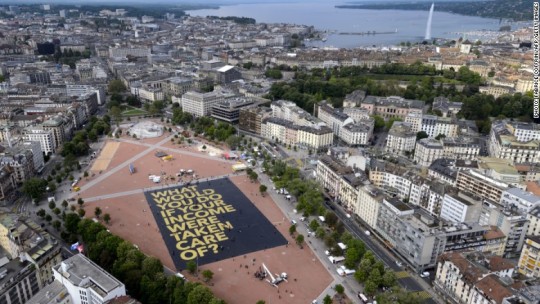
    On June 5, 2016, Switzerland will become the first country to hold a national referendum on the introduction of an Unconditional Basic Income. The proposal is essentially an income guarantee that would ensure everyone in the country is paid a minimum after-tax amount of 2,500 Swiss francs per month.

    The idea is that this would replace various other social programs. But unlike traditional welfare, people would be allowed to work. If you happened to be making less than 2,500 Swiss francs per month, then you would simply get topped up to ensure you hit this minimum income level.

    Supporters believe that a dramatic rethink of income redistribution is needed in our current information economy where income inequality is rising and productivity gains don’t seem to be getting applied evenly. 

    There is also an argument that a basic income guarantee could encourage more entrepreneurship. If we didn’t need to work, would more of us start a company and/or pursue our passions?

    Personally, I’m not sure about an income guarantee. It’s difficult to predict the broader impacts. But it’s worth exploring and many people – are various ends of the political spectrum – are doing just that. (Additional reading material can be found here, here, and here.)

    I haven’t made up my mind on this topic, so I would be curious to hear your thoughts in the comments below.

    Image: CNN Money
  • Introducing Tech:NYC

    Following the lead of San Francisco, a new non-profit, member-supported organization for New York tech companies has just launched. It’s called Tech:NYC. Here are their goals, taken from this blog post:

    Tech:NYC’s primary goals are to support the growth of the technology sector in New York City, to increase civic engagement by leaders of the New York tech community, and advocate for policies that will attract tech talent, jobs, and opportunity to NYC.

    Tech:NYC will advocate for policies that: 1) underscore a regulatory environment that supports the growth of technology companies and technology talent in NYC; 2) promote inclusivity; and 3) ensure access for all New Yorkers to connectivity, technology tools, and training.

    What makes something like this important is that many public policy issues are now rooted in the tech sector. Think about all the debate regarding ride-sharing, home-sharing, drone regulation, contract employees, and so on.

    But what is also clear is that many cities are struggling to deal with these issues. As I’ve argued before, just saying no to innovation that doesn’t fit neatly into our currently regulatory boxes is often shortsighted. 

    So how do we put in place policies that deliver the right results and that are balanced? How do we grow the tech base while at the same time managing the disruptive fallout? That’s what this group hopes to do.

    And it strikes me that every big city could likely benefit from an organization like this.

  • The Death and Life of Great Italian Cities

    image

    I am sure that a lot of you know where the title of this post comes from. It’s a riff on one of the most important and influential books in the world of city planning: The Death and Life of Great American Cities by Jane Jacobs (1961).

    But when Jane Jacobs first wrote this book, there was no such thing as smartphones and nobody was “checking-in” to hipster dive bars on Foursquare

    So instead of leveraging big data, her analyses and arguments were based on observation. She walked the streets of New York and Toronto and figured out what made cities thrive and what made cities die. That was her brilliance.

    Today, however, we have data – lots of it. And so recently, a group of researchers set out to test Jane Jacob’s theories using mobile phone data. The study was called, The Death and Life of Great Italian Cities:
    A Mobile Phone Data Perspective
    .

    More specifically, they set out to test the following 4 essential conditions:

    “She [Jane Jacobs] argued that, to promote urban life in large cities, the physical environment should be characterized by diversity at both the district and street level. Diversity, in turn, requires four essential conditions: (i) mixed land uses, that is, districts should serve more than two primary functions, and that would attract people who have different purposes; (ii) small blocks, which promote contact opportunities among people; (iii) buildings diverse in terms of age and form, which make it possible to mix high-rent and low-rent tenants; and (iv) sufficient dense concentration of people and buildings.”

    To accomplish this, the team assembled and studied data from the following sources:

    • Mobile phone activity (specifically internet activity)
    • OpenStreetsMap Data
    • Census Data
    • Land Use Information
    • Infrastructure Data
    • Foursquare Data (Venues API)

    Ultimately, they determined that Jane Jacobs knew what she was talking about. The above conditions are essential to urban vibrancy and they apply to Italian cities, just as they did and do to American cities. But this test was valuable, because the more that we can measure and quantify cities, the better I think we’ll get at creating and promoting urban vitality. 

    Now imagine if you overlaid the findings of their report with residential and commercial rents. I bet you’d also find that there’s a strong business case for urban vitality.

    I’ve heard a number of people say that, eventually, every company will be a software/technology company. And I don’t think we’re far off from that reality. To me, this study feels like an early example of what that might look like for city building.

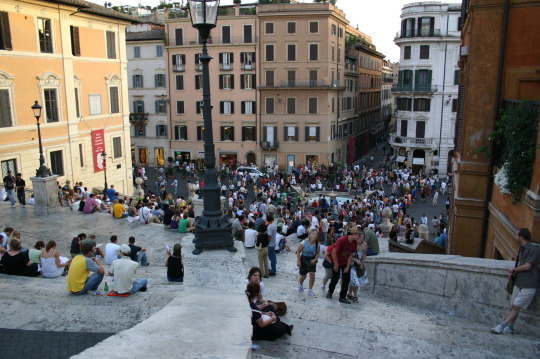
    On a side note, the picture at the top of this post is of the Spanish Steps in Rome. I took it on a weekend trip in 2007. I was living in Dublin at the time.

  • Technology x Business x Design

    John Maeda – Design Partner at venture capital firm KPCB – recently
    published the second and 2016 edition of his #DesignInTech
    Report
    . I shared his first one almost exactly a year ago.

    His core thesis is that we are heading towards a world where technology,
    business, and design become closely integrated – in school, in business, and so
    on. Throughout the report he looks at the increasing impact that design and
    designers are having within the startup ecosystem.

    Here are a few verbatim bullet points:

    – Design isn’t just about beauty; it’s about market relevance and meaningful
    results.

    – 36% of the top 25 funded startups are co-founded by
    designers, up from 20% in 2015.

    – The general word “design” will come to mean less as we
    will start to qualify the specific kind of design we mean.

    – Currently design education lags the technology industry’s
    needs for data-oriented, coding enabled graduates with business acumen.

    – We must consciously invest in education to develop a
    more hybrid perspective on creativity in the 21st century:
    Technology x Business x Design.

    – President Obama’s signing of ESSA (Every Student
    Succeeds Act) into law in 2015 is a positive sign: by turning STEM into STEAM (adding Art) in K-12 education as a US priority.

    As somebody who studied design (architecture), business,
    and computer science (briefly, before switching to architecture), I probably
    have a bit of a biased view here. But to the extent that I can be objective, I
    really see this as the future. I am a big supporter of the transformation from STEM to STEAM.

    Below is a quote that Maeda uses to end his report, which I will also use to end this post:

    “Engineers are efficient problem solvers. Business people think short term. Designer want things to be elegant and beautiful. All three need to create collaboration and harmony, and honor the value each other brings. There needs to be a new kind of ‘multi-dimensional’ approach to design that is yet to be invented.” –Linda Holliday

  • AMYGDALA — An installation that converts social media sentiment into audiovisual art

    It’s becoming harder and harder to think of tech as a distinct silo. Tech is embedding itself into so many traditional industries that, one day, every company will probably be a software/technology company in some regards. 

    It’s for this reason that I often think and write about tech and its impacts on the built environment.

    An interesting example of this phenomenon is a recent art installation by fuse* called AMYGDALA. What it does is translate collective social media sentiment (specifically from Twitter) into an audiovisual art installation housed within an urban space.

    Here’s how they describe the project:

    “The news and thoughts of users spread across social networks in real time. And so an event with worldwide implications immediately involves millions of people sharing their own opinions and emotions: happiness, anger, sadness, disgust, amazement or fear. Thus, imagining Internet as a living organism, we might think that its emotional state may be given by the overall emotions shared by users at any given time. AMYGDALA listens to shared thoughts, interprets states of mind and translates the data gathered into an audiovisual installation capable of representing the collective emotional state of the net and its changes on the basis of events that take place around the world.”

    And here’s a video of it in action (click here if you can’t see it below):

    [vimeo 154049756 w=500 h=281]

    What I like about the project is how it takes something digital and ephemeral and then both aggregates and translates it into something physical within the urban environment. It’s a perfect visual representation of how technology and networks are – for better or for worse – seeping into our daily lives.

  • The Business Blockchain Series

    I just backed this project on Kickstarter.

    https://www.kickstarter.com/projects/wmougayar/the-business-blockchain-books/widget/card.html?v=2

    I haven’t backed a lot of projects on Kickstarter, but I definitely enjoy the process of discovering a project that I’m interested in and then providing a small, seemingly insignificant, sum of money to help make it a reality.

    In this case, it’s a collection of two books by William Mougayar about Bitcoin, blockchains, cryptocurrency, and decentralization.

    These are all topics that I’ve touched on before on this blog, albeit with much less rigor than what I’m sure William will be applying to his books. I wrote this post about 2 years ago, when I first started wrapping my head around Bitcoin. And more recently, I wrote posts about how the blockchain could transform home buying and how Honduras is building a decentralized land registry system using the blockchain technology.

    So while at first glance it may seem like these books having nothing at all to do with city building and real estate, I am betting that they will over the long term, which is why I am doing my homework today.

    Here’s a snippet from William’s Kickstarter page:

    “The fundamental characteristics of blockchains are puzzling to consumers, corporations, governments, policy makers and regulators, because their implementation challenges centrally orchestrated trust, and enables a new kind of trust: one that is distributed, decentralized, from peer to peer, and not centrally managed by any single entity. Take any service, and add “without previous center-based authority”, and replace by “peer to peer, trust-based network”, and you will start to imagine the possibilities.”

    If all of this isn’t enough to pique your interest, then you should also know that William is from Toronto. Great things come out of this city 🙂

  • The benefits of sharing — what real estate could learn from tech

    One of the reasons I decided to start blogging was because I saw how open the tech community had become – with respect to sharing their ideas and experiences – and I thought that the same thing could and should be done in real estate, as well as in city building more broadly.

    But in many ways, the real estate industry is the antithesis of the tech industry. We are slow moving and secretive of our ideas. Now, some of this is driven by fundamental differences in terms of how these two sectors operate. It’s a lot easier to test and iterate on your ideas in tech than it is with actual bricks-and-mortar. But I still think about ways in which we, in real estate, could be pushing the envelope.

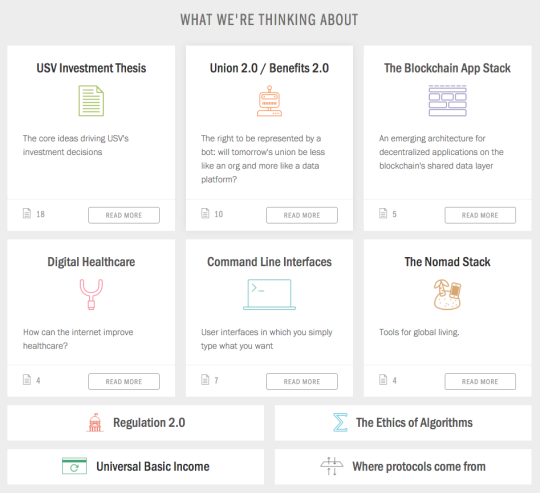
    As one example of what I’m talking about, take Union Square Ventures in New York. They call themselves a “thesis-driven venture capital firm”, which means they come up with a framework and core set of ideas, and then use those to drive their investment decisions.

    You would think that these frameworks and ideas would be pretty sensitive. I mean, they are the core drivers of their business. But their entire website is actually set up around sharing and collaborating – with the public – on these ideas. Here’s a screenshot:

    image

    Each topic is something they are “thinking about” and something they want to make an investment in (or already have). Fascinating.

    Many of you, I’m sure, would argue that there are risks to doing this. But there are also benefits, some of which are driven by collective intelligence. By sharing their ideas and hypotheses with the public, it helps to evolve their thinking. After all, their investment thesis is not a static thing. It grows over time.

    But in addition to this, it also makes it abundantly clear to their customers (entrepreneurs) what they believe in and what they look for. And I am sure this helps them with deal flow. More and more customers aren’t just “buying” a product, they are also “buying” a philosophical underpinning and belief system.

    Can you imagine a real estate firm doing something like this? I can. But it’s not happening yet, as far as I know.

  • 16 mobile theses and how tech might change the built environment

    Caucasian woman standing near passing subway in train station by Gable Denims on 500px.com

    https://500px.com/embed.js

    One of the things that I try and do here on this blog is examine the intersection of design, real estate, and technology. I didn’t explicitly set out to do that, but more and more I find myself thinking that way when I’m writing and when I’m giving talks.

    Part of that is because of my passions, but part of it is because there is a big and important overlap. One example of that is autonomous, self-driving cars. The tech community is enamoured with driverless cars, but everyone involved in the built environment should also be thinking about their impacts. Because it’ll be significant.

    Benedict Evans – who is a venture capitalist with Andreessen Horowitz in the Valley – recently published a post called, 16 mobile theses. It’s a look at 16 topics, trends, and shifts that are happening in the tech space. (There’s also a related podcast discussion.)

    If you’re involved in internet products, you absolutely need to give it a read. But I also think it’s interesting to read it through the lens of a designer or real estate person. Productivity is changing. Notions around the living room are changing. And yes, autonomous vehicles are going to have a profound impact on the urban landscape of our cities – just as cars did initially.

    Below are 3 excerpts from Benedict’s post that I really enjoyed.

    The first is about mobile and just how massive it is:

    “The mobile ecosystem, now, is heading towards perhaps 10x the scale of the PC industry, and mobile is not just a new thing or a big thing, but that new generation, whose scale makes it the new centre of gravity of the tech industry. Almost everything else will orbit around it.”

    The second is about how “networked” is quickly becoming a given:

    “Our grandparents could have told you how many electric motors they owned – there was one in the car, one in the fridge and so on, and they owned maybe a dozen. In the same way, we know roughly how many devices we own with a network connection, and, again, our children won’t. Many of those uses cases will seem silly to us, just as our grandparents would laugh at the idea of a button to lower a car window, but the sheer range and cheapness of sensors and components, mostly coming out of the smartphone supply chain, will make them ubiquitous and invisible – we’ll forget about them just as we’ve forgotten about electric motors.”

    And the third is about those self-driving cars:

    “The move to electric and the move (if and when) to autonomous, self-driving cars fundamentally change what a car is, but also what the whole automotive system might look like. Electricity changes the mechanical complexity of cars and hence changes who might build them and what they might look like. Autonomy and on-demand services change who buys them, meaning the buying criteria will be different. But they could also change the urban landscape just as much as cars themselves did – what do mass-market retail or restaurants look like if no-one needs to park?”

    Can you think of other ways in which tech will impact cities and the spaces we occupy?

  • Honduras is building a decentralized land registry system using the bitcoin blockchain

    Tegucigalpa by José López on 500px.com

    https://500px.com/embed.js

    I am very interested in bitcoin because of the underlying technology behind it – namely the blockchain. And that’s because it has the potential to be applied to and to disrupt many different industries and sectors, including real estate.

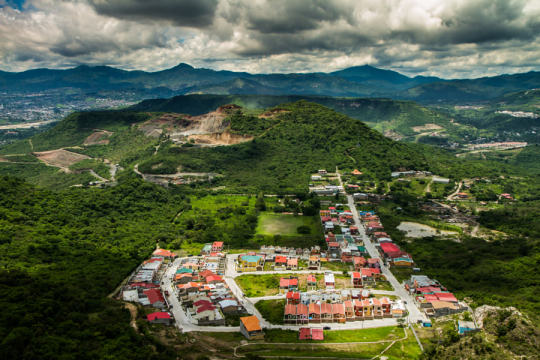
    That’s why I was fascinated to learn over the weekend that Honduras, with the help of a Texas-based company called Epigraph, is in the midst of building a permanent land title registry system based on the blockchain architecture.

    This is particularly important for Honduras because the country currently suffers from a significant amount of land fraud. And according to Reuters, 60% of land is actually undocumented. So the impact of a secure blockchain-based registry system could be transformational.

    Obviously the impetus for Honduras doing this is to fix the broken system that they currently have in place. But there’s no reason that it couldn’t also be done in the developed world to reduce transaction costs and improve overall transparency in the marketplace.

    Hopefully Honduras will show us how it is done.

    If you’re curious and would like to learn more about the blockchain, here’s a short primer. Once you’ve read that, you can then check out this post I wrote talking about how the blockchain could be applied to real estate.

  • My blogging methodology

    I often get asked about the methodology behind my blogging. (Though I have written a few posts about it already.) 

    Most people seem to assume that I sit down on the weekends. Draft a content calendar. Write a bunch of posts. And then queue them up for the coming weeks. 

    I don’t do any of that (besides sit down).

    Instead, I get up every morning and I write something. Sometimes I wake up with an idea that’s been bouncing around in my head and sometimes I wake up with no idea what I’m going to write about. 

    In the latter case I just start reading the internet over breakfast until something interesting catches my attention.

    But in both cases, what you are reading about is what I am thinking about at that moment in time. 

    Because in addition to a blog about cities, this blog is about a discipline and a habit. It is about taking time every day to step away from tasks, sort through my thoughts, and write something. It’s one thing to think about something; it’s another thing to write about it.

    And so as much as I hope you all get value out of this blog, it also very much about the personal benefits I receive from doing this same thing over and over and over again.

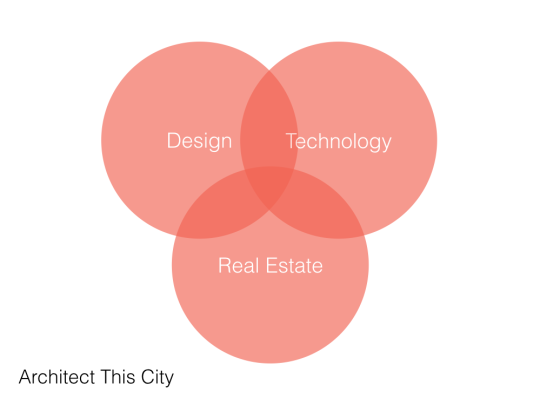
    Now, in terms of the content, the focus is obviously on city building. But I’m more specifically interested in the following 3 areas and their overlap:

    If you’re a regular reader you know this.

    I didn’t set out to focus in this way, but it just happened over time. This is what I’m passionate about and so I naturally started applying it to our discussion on cities and city building.

    And finally, in terms of writing style, I’ve found myself adopting a particular structure.

    I often start with a personal note – almost as if this were purely a personal blog. Then I dig into a particular city building issue and try to uncover one particular way of looking at it. And then I end with a decisive position. I’ve seen this format on other blogs and I really like it.

    Obviously I don’t always follow this structure. For example, sometimes I haven’t made up my mind on a particular issue. But I try to. I lean towards the belief that a decisive wrong answer is better than a wishy washy right answer. So I push myself to take stances and have an opinion. 

    But in the end, the goal of every post is simply to present one idea for all of us to think about and then discuss. I’d like to believe that it keeps us all sharp. Hopefully it’s working for you.