Daily insights for city builders, delivered every morning at 6 AM ET. I’m Brandon Donnelly — a Toronto-based real estate developer and founder of Globizen. I’ve been writing here since 2013.

Tag: technology

  • Doing new things

    image

    I just finished reading Peter Thiel’s new book, Zero to One: Notes on Startups, or How to Build the Future. For those of you who may not be well-versed in the world of technology geeks, Peter Thiel is an entrepreneur and investor. He was one of the founders of PayPal back in 1998 and was the first outside investor in Facebook in 2004. He invested $500,000 for a 10.2% stake in the company!

    While the focus of the book is obviously on technology startups, it’s less about “here’s how you build a startup” (there is no formula) and more about “here’s how to think about the world, humanity, and the future of our civilization.” So even if you’re not a founder, or startup and technology enthusiast, I think you’d still find it really interesting.

    As one example, Thiel makes the distinction early on in the book between what he calls “vertical or intensive progress” and “horizontal or extensive progress.” The specific example he gives is of typewriters and word processors. If you take one typewriter and figure out how to make 100 of them, you’ve made horizontal progress. However, if you’ve just replaced typewriters with word processors, you’ve made vertical progress.

    In other words, vertical progress is doing new things and horizontal progress is just copying things that we know already work. In the grand scheme of the world, he argues that globalization is really just a form of horizontal progress. The rise of China is a result of them copying what has already worked in developed countries. But the true way to advance our economy and civilization is to not just copy – that’s easy – it’s to do, new, things.

    That, of course, is a lot harder to do. But to build the future, you need to build things and do things that haven’t been done before.

    Which is why Thiel actually gives $100,000 to a handful of college students every year so that they can drop-out and pursue a startup. In his mind, our education system is just perpetuating the status quo. MBAs move money around without creating anything new. Lawyers just preserve value and mitigate risk, also without creating anything new (Thiel is trained as a lawyer). And so he doesn’t believe that is the best way forward.

    This may not sit right with many of you, but questioning the status quo is a prerequisite if you’re trying to do new things.

  • What the largest real estate development project in the United States looks like

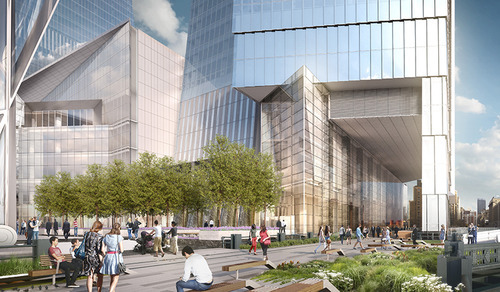
    Urban Land Magazine recently published an interesting article on the Hudson Yards project in New York, which is the largest private real estate development project ever undertaken in the United States. Click here for the article. Thanks to my friend Evan Schlecker for passing it along. It’s a good read.

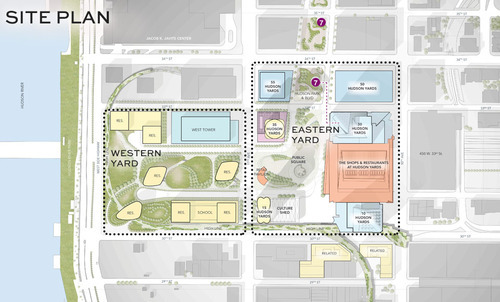
    The project is being co-developed by Related out of New York and Oxford Properties out of Toronto, and when it’s all said and done, it’ll be over 17 million square feet of commercial and residential space. It’s a $20 billion development project. 

    But beyond just being massive and epic, there are a bunch of other things that make this project unique. You can read about them all in Urban Land, but I’d like to share a few snippets with you all here:

    The first is about the project’s placement on top of a rail yard:

    In order to make use of a site already occupied by a working rail yard—including more than 30 tracks for the Long Island Rail Road and three train tunnels, with a fourth under construction—most of the development will be built atop two steel-and-concrete platforms. That base, and the buildings on it, will be supported by hundreds of concrete-filled caissons, which will be drilled between the rail lines into the bedrock.

    Because the location of the tracks and tunnels limits the placement of caissons, only 38 percent of the site can be used to support buildings.

    The second is about the project’s use of technology:

    Beyond that, a vast number of sensors embedded in the site’s infrastructure will collect mountains of data on everything from temperature and air quality to pedestrian and vehicle traffic. That information, which will be scrutinized in real time by managers in an effort to fine-tune Hudson Yards’ operation, will also be shared with New York University (NYU) researchers, who will turn Hudson Yards into a laboratory for studying urban life and finding ways to improve its quality.

    And the last one is about how it interfaces with the High Line (click here if you don’t know what that is):

    Pedersen [of Kohn Pedersen Fox Associates] found an intriguing way to address the building’s surroundings. He allowed the High Line—a public park built on a historic freight rail line elevated above the West Side—to penetrate underneath the tower through a 60-foot-long (18.3 m) public passageway, so that the building will interact with the park and its visitors. Inside the building, a dramatic atrium “becomes the terminus of the High Line as it moves from south to north,” he says.

    So there are a lot of interesting and exciting things going on with this project. What’s amazing though is how “vertical” this community will be. You have rail lines below grade. Platforms on top. Retail at grade and across multiple levels. And an elevated linear park cutting through the buildings. Not every city can make this work. New York can.

    Images: Hudson Yards New York

  • How technology could completely change the real estate development industry

    If you’re involved in the built environment in any way, shape, or form – as a developer, architect, policy maker, and so on – I would highly recommend you watch the video below. My friend Candice Luck, who I went to Rotman with, sent it to me this morning with a link starting at the 24 minute mark. I haven’t yet watched the whole thing, but given how interesting this short section was, I plan to.

    The video is a talk by Steve Jurvetson, who is a venture capitalist with DFJ. He was one of the founding investors in Hotmail and currently sits on the board of companies like SpaceX and Tesla Motors. At the 24 minute mark he talks about a startup called Flux.io that hasn’t yet launched their product, but is working towards “reimagining building design”. They’re a spin-off from Google X and plan to officially launch in early 2015.

    Rather than try and describe the video here, I will just say that it’s an incredible example of how technology and digitization could completely change the real estate development industry. If you can’t see the video below, click here. The video starts at the Flux.io section.

    [youtube https://www.youtube.com/watch?v=IPgyb6euISs]

  • Riding an escalator for the first time

    image

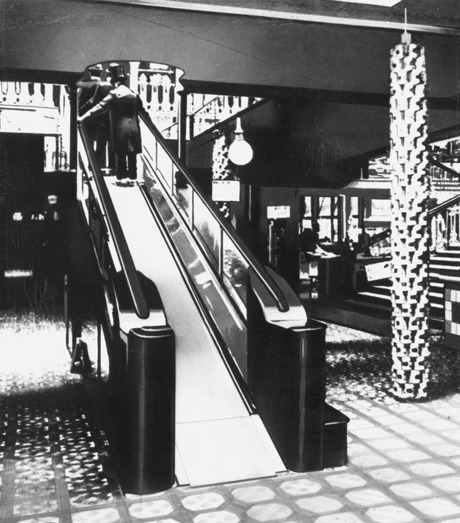
    On Wednesday, November 16th, 1898, Harrods department store in London opened up the first escalator – or moving staircase as it was called – in England. The first escalator-like machine in the world had actually been patented many decades before in the US, but this was the first real application in England and likely one of the first in the world.

    At the end of the 1800s, this was a big deal. Victorian England had never seen or experienced anything like this before and people were genuinely concerned about its use. More specifically, people worried what such a rapid change in elevation would do to the body. It was believed that it could discombobulate your inner workings. People were unnerved.

    Which is why when it was first introduced at Harrods, people were offered brandy and other substances at the top of the escalator in order “to revive them after their ordeal.” Riding an escalator was no small feat for these people.

    Now to us today, this sounds ludicrous. Most of us probably ride a few escalators a day. They’re ubiquitous. But I tell this story because I think it clearly underlines how disruptive the new and unknown can feel, and how difficult it can be for us to accept sometimes.

    If you go back throughout history, you could easily replace escalators for many other new technologies: the printing press, the automobile, the internet, and so on. And in some cases we were wrong to worry, and in other cases we were right to worry.

    Cars, for example, have had a pretty dramatic impact on our lives and the way we build our cities. And since the very beginning, they had no shortage of critics. But does that mean we should have never invented the car? I don’t think so.

    As I said earlier this week week, the goal in my mind is to find the right balance between preservation and progress. Just as we shouldn’t be so quick to erase our architectural history, we shouldn’t be so quick to erase our way of life.

    But at the same time, it’s important to remain open minded to what’s coming. I’m optimistic about the future. Change can be a great thing, even if it may feel as uncomfortable as riding an escalator for the first time. Maybe you just need a bit of brandy to calm your nerves.

    Image: Pinterest

  • Trying out the Oculus Rift virtual reality headset

    image

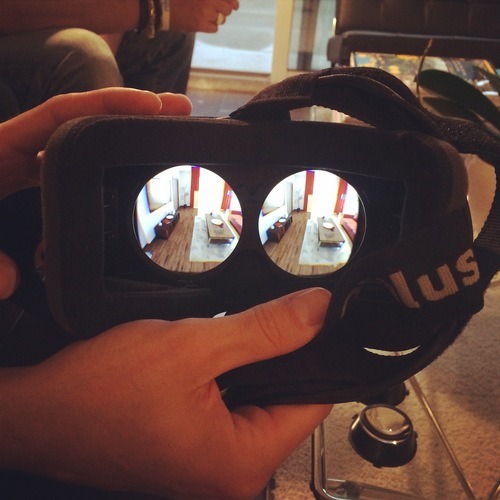
    This week on Architect This City is turning out to have a big focus on technology. And it’s not going to stop today, because this evening I had the chance to try the Oculus Rift virtual reality headset for the first time (many thanks to Dave Payne of Invent Dev for the demo). As a reminder, Oculus is the company that Facebook recently acquired for $2 billion.

    Now virtual reality certainly isn’t a new idea and lots of people have been promising – for a long time – that it was going to revolutionize the world. Which may be why I had somewhat low expectations going into this. But I have to say that I was blown away. Despite being a bit choppy (to get good visuals it ran at around 15 frames per second), I was shocked at how immersive the experience was.

    Here’s a picture of Rick exploring the (virtual) space behind him:

    image

    It was actually really strange watching somebody move around as they explored another world. The demo that Dave showed us was of an apartment suite. You could walk around the living room. Turn around and see the front door. Walk up to the window and admire the view outside. It was incredible, but somewhat scary at the same time.

    Obviously there are ton of potential use cases for this. I’m imagining a buyer touring a condo suite and picking their finishes before it’s even built. I’m imagining an architect designing a building in 1:1 scale by waving their hands around in a virtual world. I’m imagining “traveling” to a beach to treat seasonal affective disorder. And the list goes on.

    This isn’t going to happen overnight. I actually got a bit nauseous because of how choppy the video got at times. But I can certainly see the potential. Virtual reality is coming. It’s clearly the future of gaming. And I’m sure it’ll get applied to many other areas of the economy. I guess that’s why Facebook bought these guys for $2 billion.

    If you have an interest or need in the 3D visualization space, I would encourage you to reach out to Dave at Invent Dev. He’s super passionate about the work that he’s doing and is looking to collaborate with more people in the design and real estate spaces. Thanks again Dave.

  • What makes a city a smart one?

    There’s a lot of buzz around the idea of a “smart city.” IBM is involved. Cisco is involved. And so are many others. But what exactly is a smart city? 

    In the Electric City talk below, Adam Greenfield provides his definition, while at the same time being critical of the ones we currently use today, such as this one: It’s the missing link – the connective tissue – between the real estate and technology sectors. (Personally, I find this definition really interesting.)

    He also goes on to argue that the way we’re largely thinking about smart cities today is incorrect. We’re far too centralized and administrative in our thinking. Instead, we should be focused on leveraging the crowds of people in our cities that are now virtually all networked.

    He then goes on to list 5 technological preconditions to any smart city:

    1. Broadband connectivity
    2. Low-cost smartphones or personal devices
    3. Commitment to open municipal data
    4. Cheap public interfaces
    5. Cloud computing infrastructure

    If you’re interested in this topic, I suggest you watch his talk. It’s only about 10 minutes long. Click here if you can’t see it below.

    [youtube https://www.youtube.com/watch?v=9keDwTBmZ3o?rel=0]

    Update: This post was revised to reflect the fact that Adam Greenfield is “sharply critical” of the real estate + technology definition of a smart city.

  • 5 ways in which you’ve got it wrong when it comes to cities

    About a month ago, a reader of ATC and friend of mine suggested that I write a post on some of the common misconceptions that people hold about cities. I immediately thought it was a good idea and so I started a draft post with some of my initial thoughts.

    Over the past couple of weeks I’ve been collecting fallacies as they came to me, waiting until I reached a nice round number like 5. Well today, I reached that number. So here are 5 misconceptions that I think people often hold about cities. If you have any others, or if you disagree, please share your thoughts in the comment section below.

    1. Adding more lanes will solve traffic congestion

    There’s a saying I read somewhere: Adding more lanes to solve traffic congestion is like loosening your belt to deal with obesity. I can’t remember where I read it, but I like it a lot because it gets at the heart of this fallacy: Trying to build our way out of traffic congestion has proven time and time again to be a losing battle. In fact, it has been shown to make traffic even worse as a result of “induced demand.” The more roads you build, the more people drive.

    2. A suburban home is always cheaper

    While it is true that the direct cost of a suburban home is usually less than one in the center of a city, many people often neglect to factor in the indirect costs of a home purchase – the biggest of which is usually transportation costs.

    As you move out from the center of a city and home prices start to fall, I like to think of it as transfer from housing costs to transportation costs. In other words, what you save on the price of your home, simply gets used to pay for a car (or perhaps a second car), as well as the additional time you’re going to spend traveling.

    So how much is an hour of your time worth? Have you ever attached a value to it and added it to the price of your home? Because if you factor in transportation costs and your time, you might find that your suburban home is actually more expensive.

    3. Opposing new development and advocating for affordable housing is a responsible way to build cities

    Community opposition is a big part of the development game. But what a lot of people don’t think about is that when you oppose or stop new development (let’s say it’s residential), the demand for that housing doesn’t go away. 

    In fact, all it does is create more pressure on the housing stock that does exist and foster an environment where the rich will starting outbidding the poor for housing. More simply, you end up creating a supply constrained market and that drives up home prices. Demand > supply. So in reality, opposing new development and, at the same time, advocating for more affordable housing is a contradiction.

    As a comparative example, let’s think about another basic human need: water.

    Imagine that you could only buy water from stores (it didn’t come out of taps). But that every time the delivery people were trying to bring more water to these stores, that there was a group of people who fought and opposed them. These opposers already had enough water for themselves and they didn’t want additional water being sold as it would bring new customers into their local grocery store and disrupt their way of life.

    This, of course, caused the price of water to rise as the rich people started offering more for the water. This in turn made it difficult for the poorer folk to afford any water at all. But instead of allowing the delivery people to simply deliver more water, it was decided that out of the water that they have, that some of it should be earmarked as “affordable water” and priced accordingly. That would guarantee that the poorer folk could still have some.

    Does that sound like a sensible solution to you?

    4. Developers don’t want to build big apartments

    Here in Toronto there’s a somewhat pervasive belief that developers don’t want to build big condo and apartment units. The thought is that small units are more profitable and so developers are doing everything they can to squeeze people into small units. But I’ve argued before that this isn’t the case. It’s far more nuanced than that.

    To illustrate this point, imagine you’re a developer debating between building two 500 square foot condo units or one 1,000 square foot condo unit. If you build the two 500 square foot condo units you’ll need 2 x kitchens, 2 x entry doors, 2 x separate color selection appointments, 2 x separate PDI appointments, and you’ll have to pay development charges on two 1 bedroom units (to name only a few things).

    On the other hand, if you build one 1,000 square foot condo unit you’re only going to need 1 of each of the items listed above and you’ll be paying development charges on only one 2 bedroom condo unit (which currently works out to be less than what you’d be paying for the two 1 bedroom units – it’s not quite double).

    Which one do you think would be cheaper to build?

    5. Technology is going to make cities irrelevant

    Lastly, during the dot com era there was a growing belief that technology and the internet were going to make cities and real estate irrelevant. Capital was flowing out of real estate and into tech companies, because that was seen as the future. Bricks and mortar were passé.

    But since then we’ve learned that it’s actually the opposite. Paradoxically, technology has made cities even more important. The returns to being smart and talented are huge in the right place. So much so that our biggest concern shouldn’t be whether cities are going to become irrelevant, but whether we’re concentrating too much wealth and talent in only a select few.

    So there you have it, 5 misconceptions about cities. I’m sure there are many others, so I’d love to hear from you in the comment section below.

  • Rules are made to be broken. So which one is next?

    Jevon MacDonald of StartupNorth published an interesting article today called, You are supposed to break the rules. It talks about entrepreneurship and how great companies are built by disregarding the way things are done today.

    And I think it’s for that reason that many stupid sounding ideas (think Airbnb and its initial idea of offering air mattresses) actually turn out to be great ideas. In reality, they weren’t stupid ideas. They just contravened the norm, and that made them sound stupid. It made people feel uncomfortable. And as humans, we tend to have a bias towards things that reinforce our existing view of the world.

    In any case, Jevon talks about some of the “big rules” that are being broken today. His list includes:

    But really he’s talking about Uber, Tesla, and Airbnb. They are the startups breaking those rules. However, that’s old news for most of us. What’s more interesting are the following two takeaways.

    The first is his prediction that startups are going to start running into more and more regulatory hurdles. In other words, we’re going to see more, not less, litigation. And I think he’s right. As technology starts to creep into other industries (like it has with the taxi industry, the car industry, and the hospitality industry), we’ll probably see a lot of incumbents fighting to hold on.

    The second interesting takeaway for me was that out of his list of “big rules”, the real estate industry (i.e. the MLS) is the only one that doesn’t have a formidable disruptor attached to it. Which makes me wonder: Is something like Opendoor.com inevitable?

  • The death of driving

    image

    Last night my father and I were walking to dinner and he commented to me that he thinks my generation will be a lot healthier than his–at least on average–given how much more my generation walks. I responded by reaffirming to him how little I drive these days and how much I enjoy that.

    Then today, I was watching this short clip of the The High Road with celebrity chef Mario Batali, where he interviews venture capitalist Fred Wilson. During their tour around New York City, Mario asks Fred what he thinks the future of transportation will be. Fred responds by saying that nobody will drive anymore. He then went on to say that the technology for driverless cars is already ready, but that we as a society just aren’t ready for it, yet.

    Finally, on my way home from wakeboarding today, I stumbled upon this Guardian Cities article talking about Helsinki’s ambitious plan to make owning a car pointless. By 2025, the goal is have a “point-to-point mobility on-demand system” that will integrate all forms of mobility into one booking and payment platform. Think everything from public transit to carpools to taxis. 

    As I read on, I then discovered that Helsinki is already offering on-demand public minibuses that allow people to specify their own routes on their smartphone. The system then aggregates all of the requests and establishes the most efficient route based on the immediate demand. Coincidentally enough, it’s quite similar to a use case I wrote about for driverless cars.

    All of this got me thinking that one day we’ll probably look back at that time when people used to drive their own vehicles around as some antiquated and hilarious moment from the past.

    Image: Observatoire

  • Opendoor.com raises $9.95M to make selling your home as easy as a few clicks

    image

    If you’re a regular reader of ATC, you’ll know that I’ve been following the startup Opendoor.com for a few months now. I first wrote about it when it was codenamed Homerun and I just recently wrote about them as preface to a real estate survey I was conducting.

    Well, about an hour go it was announced that they’ve just raised $9.95M in venture funding from everyone and their grandmother. Here’s the list of investors (via TechCrunch):

    Paypal co-founder Max Levchin, Former YouTube and Facebook CFO Gideon Yu, Eventbrite co-founder Kevin Hartz, Y Combinator’s Sam Altman, Quora CEO Adam D’Angelo, Yammer co-founder David Sacks, Angelist’s Naval Ravikant, Yelp CEO Jeremy Stoppelman, Box CEO Aaron Levie, Initialized Capital’s Harjeet Taggar, Garry Tan and Alexis Ohanian, Former Twitter vice president Elad Gil, Blippy co-founder David King, Flixster co-founder Joe Greenstein, Angel investor Mike Greenfield, Quora co-founder Charlie Cheever, Path’s Dave Morin, Facebook vice president Dan Rose, Trevor Traina, Resolute Ventures’ Mike Hirshland, Caffeinated Capital’s Ray Tonsing, Felicis’ Aydin Senkut, True Ventures’ Om Malik, Thrive Capital’s Josh Kushner, Crunchfund’s Michael Arrington (who disclaimer: founded TechCrunch) and SV Angel.

    Not surprisingly, there are quite a few people who see an opportunity in the $20 trillion US residential real estate market – which I think is a good thing. This is a space that–despite its size–hasn’t seen an awful lot of innovation.

    There still isn’t a lot of information about the product, but there’s a clear focus on creating liquidity in the marketplace. Despite being located in San Francisco, the company will be launching in 3 markets outside of California – where liquidity isn’t as great for homeowners.

    The goal is to transform the typical 90 day selling process into a few clicks online. Homeowners submit their home to the platform and then Opendoor makes an instant offer to buy. Done.

    What I wonder then is if it’s going to be an arbitrage play. They buy the homes below market (because they’re offering total liquidity) and then they turn around and sell them at market.

    Do you have any guesses as to their business model?