Daily insights for city builders, delivered every morning at 6 AM ET. I’m Brandon Donnelly — a Toronto-based real estate developer and founder of Globizen. I’ve been writing here since 2013.

Tag: tech

  • Transparent offer platform

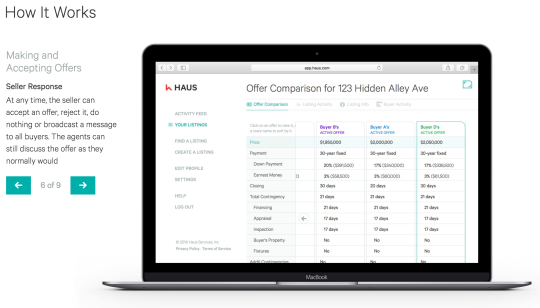
    A new “transparent offer platform” called Haus has just launched in California to serve the residential real estate market. The way it works is that all offers are submitted online. And once an offer has been confirmed, it – along with all of its terms – gets revealed to every other potential buyer. See image below.
    image

    I’ve seen a number of different iterations of this same idea, which tells me that this is a well-identified problem in the real estate market. Here’s a snippet from a recent TechCrunch article announcing Haus:

    “We think the openness will create a more efficient market and that the number of offers and price will ultimately be dependent on demand,” said Haus GM Sarah Ham. “Bidding wars are a common, almost accepted, part of the real estate process today. But with our approach, buyers know where they stand. Buyers will know what they need to offer to make their offer competitive, but they also won’t negotiate against themselves.”

    I completely agree that this is a problem that needs to be solved. It will create a more efficient marketplace. However, in this market, I suspect that the current information asymmetries largely benefit sellers, to the detriment of buyers. So I wonder if the supply-side of the marketplace will be willing to participate at scale. What’s really in it for them?

    Side note: Haus is the latest project from Expa, which is a “startup studio” that works on its own ideas, as well as partners with other founders. I am very interested in this approach to creation because I think you have to try and make a lot of things if you want to do truly innovative things.


  • Rinse and repeat

    image

    Venture capitalist Matt Turck has a post up on his blog that is packed full of information about the New York City tech ecosystem. (He has also written similar posts about Berlin and Paris.)

    His overall thesis is that New York – as a startup/tech hub – is only now starting to catch up to the hype of 4 or 5 years ago. He now refers to NYC as the de facto Number 2 after the Bay Area.

    If you’re interested in all of this, you can go read his full post. But I would like to pull out 2 points. The first is about the “rinse and repeat” cycle that happens over time that allows cities to become substantive startup hubs:

    As any student of emerging tech ecosystems knows, the key dynamic to success is the “rinse and repeat” cycle. You need several waves of successful tech companies to go through the whole cycle of founding, financing, scaling and significant exit.   Post-exit, the hope is that successful founders, employees and investors then contribute back both money and expertise to the next generation of tech startups, a few of which eventually become highly successful themselves and then provide money and expertise to the following generation.

    The trouble is, each successive cycle takes years, because the average successful startup takes 5 to 10 years to get to a large exit.

    One key reason the Silicon Valley has become such a powerful network is that this “rinse and repeat” cycle has been happening there for decades, at least since the 1940s and 1950s (Hewlett Packard), with a real acceleration in the 1970s and 1980s (Apple IPO, founding of Kleiner Perkins, etc).

    I’ve written about this idea before, but didn’t refer to it as “rinse and repeat.” I’m thinking about adopting that terminology going forward.

    The second is a list of New York-based startups. Matt uses it as an example of how entrepreneurial activity in New York is operating across a broad cross-section of different industries. That’s an important characteristic to identify.

    However, I also thought you might find it valuable to see what startups are out there, particularly if you happen to work in one of the below verticals/horizontals. I certainly went right to the real estate line.

    Fintech: Betterment, IEX, Fundera, Bond, Orchard, Bread
    Health: Oscar, Flatiron Health, ZocDoc, Hometeam, Recombine, Celmatix, BioDigital, ZipDrug
    Education: General Assembly, Schoology, Knewton, Skillshare, Flatiron School, Codecademy
    Real estate: WeWork, HighTower, VTS, Compass, Common, Reonomy
    Enterprise SaaS: InVision, NewsCred, Sprinklr, Namely, JustWorks, Greenhouse, Percolate, Mark43, Movable Ink
    Commerce infrastructure: Bluecore, Custora, Welcome Commerce
    Marketplaces: Kickstarter, Vroom, 1stdibs
    On Demand: Handy, Via, Managed by Q, Hello Alfred
    Food: Blue Apron, Plated, Maple
    IoT/Hardware: littleBits, Canary, Peloton, Shapeways, SOLS, Estimote, Dash, GoTenna, Raden, Ringly, Augury, Drone Racing League
    AR/VR/3D: Sketchfab, Floored

    I was happy to see my friends at Floored in the above list. They are under AR/VR/3D, but they service the real estate industry.

  • One lease for the world

    image

    If you’re looking for more evidence that the way we live and work is changing, then check out a new startup called Roam. They describe themselves as an international network of communal spaces. So far, they have locations in Ubud (Bali), Miami, and Madrid. Buenos Aires and London are coming soon.

    The way it works is that you start by signing a lease for either a week or a month. You get a private room and bathroom, but everything else, from the co-working spaces to the kitchens, are shared amongst the community. Like other co-working and co-living environments, the community they build is critical.

    However, what really differentiates Roam is that you can sign one lease and then live all over the world, freely traveling across their properties. All of the locations are offered up at the same price and you can stay for as long as you’d like.

    In my line of work, I don’t have the flexibility of living like a global nomad. But today, there are many people who can. And I also know that there are many people who would prefer to live like this. It’s liberating in so many ways.

    My friend and I actually had a similar idea to this back in University and we spent some time working on it. At the time, and this was over a decade ago, we felt that there was a segment of people who increasingly wanted to live like global citizens. I still believe that to be true and, clearly, so do others.

    To date, Roam has raised $3.4 million in funding.

    Image: Ubud kitchen via Roam

  • The back-end of our cities

    I love cities. We all love cities right now. 

    Everyone, for good reason, seems to be fixated on both people returning to cities (like those narcissistic Millennials) and people urbanizing for the very first time. This latter scenario is happening rapidly across the developing world and in many cases – but not all cases – it is helping to lift people out of extreme poverty.

    But by most measures, urban areas represent only about 2-3% of the world’s land area, despite housing over 50% of our population. So here’s an interesting thought for this morning: What is happening and what will happen with the remaining 97-98%?

    In this recent talk by architect Rem Koolhaas, he attempts to dissect the future of living, loving, and working through the lens of architecture. However, he starts by saying that architecture is, in fact, too slow to properly capture the zeitgeist of any time period. It is, “an unbelievably slow art.” That said, Koolhaas has a remarkable ability to identify what is happening (see Delirious New York) and then call it out in a way that you probably haven’t thought about. 

    In the above talk, he hones in on the impact of Silicon Valley – certainly the spirit of our time – on the rural landscape outside of our cities. Interestingly enough, he also talks about how the tech industry has begun to borrow terminology from architecture in order to describe itself.

    Screenshot from the video:

    image

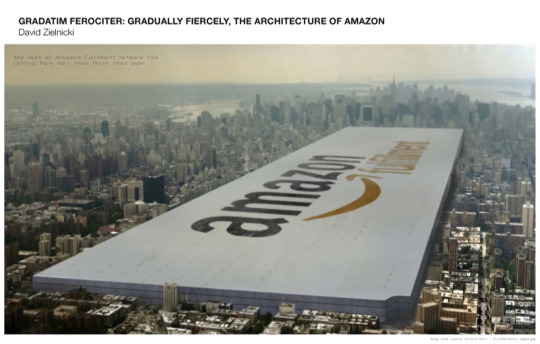
    Despite their ethereal appearance, technology giants still have large physical footprints for servers, production, logistics, and so on. But there’s no reason – or way – to accommodate them inside of our cities and so they cluster outside, in the 97-98% areas. These are places like the Tahoe-Reno Industrial Center, which is the home of Tesla’s new Gigafactory.

    Because of sheer scale and because there’s no need for them to possess much in the way of humanistic qualities, these are spaces which are void of architecture, urbanism, and, in some cases, a light spectrum beyond what is absolutely necessary for the specific function of the building (discussed in the video).

    Of course, the periphery has long serviced the core. But Koolhaas’ thinking has, as it often does, made me consider this phenomenon in a slightly different way. He paints a picture of a spiky world where we are all crammed into sensor and app-driven cities (the front-end), all of which are then powered by big mechanistic boxes that many of us may be naive to (the back-end). In some ways it feels like the Matrix. What we see and experience could just be the tip of the iceberg.

    Architecture may be unbearably slow, but as a society we have always built what matters to us most at the time. At one point it was places of worship. But today, at least for part of our landscape, it is boxes not intended for us to really experience. Maybe that’s not really architecture. Maybe it is simply the back-end for our cities.

  • Building new, better cities

    Earlier today my friend Saadat sent me the following tweet:

    //platform.twitter.com/widgets.js

    It’s a link to a new research project by Y Combinator – the famed Silicon Valley seed accelerator. They want to explore the possibility of building new and better cities.

    I don’t have the time for something like this, but if any of you are city experts (I know a lot of you are) and you’re based in or willing to be based in San Francisco (I think they are flexible on this), you should absolutely consider applying to be their full time “Cities Researcher.” The deadline is July 30, 2016.

    Here’s a taste of what they are thinking about…

    There are many high-level questions we want to think through, for example:

    – What should a city optimize for?

    – How should we measure the effectiveness of a city (what are its KPIs)?

    – What values should (or should not) be embedded in a city’s culture?

    – How can cities help more of their residents be happy and reach their potential?

    – How can we encourage a diverse range of people to live and work in the city?

    – How should citizens guide and participate in government?

    – How can we make sure a city is constantly evolving and always open to change?


    And there are tactical questions we want to dig into, for example:

    – How can we make and keep housing affordable? This is critical to us; the cost of housing affects everything else in a city.

    – How can we lay out the public and private spaces (and roads) to make a great place to live?

    – Can we figure out better zoning laws?

    – What is the right role for vehicles in a city?

    – Should we have human-driven cars at all?

    – How can we have affordable high-speed transit to and from other cities?

    – How can we make rules and regulations that are comprehensive while also being easily understandable?

    – Can we fit all rules for the city in 100 pages of text?

    – What effects will the new city have on the surrounding community?

    The convergence of city building and tech is something that I’m deeply interested in. I also think it’s inevitable. And I think that Toronto – thanks to our robust real estate industry – is in an ideal position to be a leader in this space. So I would love to see someone from here take on this job.

    But even if you’re not from Toronto, you should still apply because it’s an exciting initiative 🙂

  • World after capital

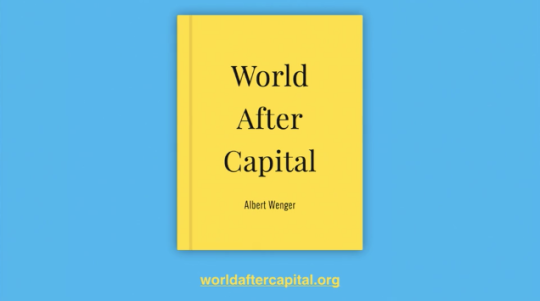
    Albert Wenger is currently in the process of writing a book called World After Capital. The book isn’t finished yet. It still exists in a crude rough draft form. But already he has made it freely available online. You’re also welcome to comment and contribute to the book as he works on it.

    Why has he done it this way? 

    Because this format of publishing is in line with where he believes the world is heading. He believes we are headed towards a world where new forms of surplus – brought about by technological innovation – will create greater levels of freedom: economic freedom, informational freedom, and psychological freedom.

    His overall thesis is that the world has been moving through a series of scarcities. As hunter and gathers, the scarcity was food. In our agricultural period, we learned how to create food surpluses (which freed up more of our time), but it then produced land scarcity. Once the industrial revolution hit we once again freed up more of our time through surpluses, but then the scarcity became centered around capital. We also started to negatively impact the environment. Today, as we clearly move away from the industrial economy towards a knowledge and information economy, Albert believes the new scarcity is attention. (I wrote a related post about a month ago.)

    If you’re interested in this topic and don’t feel like diving into his book, I suggest you watch this 23 minute presentation by Albert Wenger. I watched it this morning and he talks about everything I mention above. 

    Here’s one of his slides that I felt was important to share:

    Why it’s interesting to think about this shift is because there will inevitably be positive and negative outcomes associated with it; there will inevitably be groups who, probably because of self-interest, would rather cling to the past; and because there are pressing global issues that we need to be focusing our attention on – issues such as climate change.

    I can’t help but wonder about all the ways this shift could reverberate through the economy and our cities. Earlier this week I wrote a post about architecture as a tool for capital. But with our current fixation on “starchitecture”, one could argue that we have already transformed architecture into a new tool – a tool for grabbing attention. If you believe that attention is the new scarcity, then this makes perfect sense.

  • Conversational investing

    I’ve been spending my mornings this weekend, listening, watching, and reading things. I’m always reading to find content for this blog, but I’ve allocating more time to consumption this weekend. So you might be noticing a slightly different varietal of posts over the past few days.

    This morning it’s a podcast called Dorm Room Tycoon. It’s an interview with Andy Weissman, who is a partner with the New York venture capital firm, Union Square Ventures. The topic is “how we invest” and I’m enjoying the discussion.

    Andy describes their firm as being boutique and thesis-driven. Meaning they have theses and they look for companies that dovetail with them. But in addition, he also labels their approach as “conversational investing.”

    What does that mean?

    It means they listen, watch, and read. They blog (all the partners write their own personal blog). They engage and discuss. They put themselves and the firm “out there”. And they don’t pretend to have all the answers or to be able to predict the future. Instead they let their conversations – both internal and with the broader market – help them make their investing decisions.

    So why do I bring this up?

    Because in my own small way, I am trying to do the same with real estate development, architecture, and city building. I write every day to learn and because I am infinitely curious. If you want to know what I’m thinking about, read this blog.

    It’s for this reason that my favorite blog posts are the ones in which there’s lots of discussion in the comment section. It’s the market talking back, telling me whether I’m out to lunch or not. Ultimately, this idea of “conversational investing” is really about iterative decision making.

    Here’s the podcast embed in case you would also like to listen:

    [soundcloud url=”https://api.soundcloud.com/tracks/266734055″ params=”auto_play=false&hide_related=false&show_comments=true&show_user=true&show_reposts=false&visual=true” width=”100%” height=”450″ iframe=”true” /]

    Regardless, the Dorm Room Tycoon is worth checking out. They have other interviews with people like Malcolm Gladwell and Simon Sinek.

  • A money back guarantee on your next home

    image

    I’ve written about Opendoor.com a few times. As far as I can tell, they are the furthest ahead in terms of disrupting the residential real estate market. So I like to follow them quite closely.

    They’ve recently launched some new features, so I figured it would be a good time to check-in on what they’re up to. But first – for those of you might not be familiar with Opendoor – here’s what they do.

    Opendoor offers instant liquidity to homeowners by buying homes site unseen. The fee they charge seems to amount to less than 10% of the value of the home. 

    They also say that they typically offer prices that are about 1-3% less than the market value of the home 3 months into the future. (Apparently 3 months is the average time-on-market for the cities in which they operate.)

    Once they’ve bought the home, they then make improvements and put it back on the market. As of today, they are buying about 10 homes a day in the two markets in which they operate (Phoenix and Dallas). They are spending about $75 million a month buying homes.

    To mitigate their risk, they won’t buy a home built before 1960, a home that was pre-fabricated, a home with a solar lease, and so on. They also stick to values that are between $100,000 to $600,000. But apparently this covers off about 90% of homes in the United States. (You can read their full FAQ here.)

    To accomplish all of this, they have raised about $110 million in venture capital.

    What’s fascinating about all of this is that they are starting to create a seamless marketplace. As they continue to buy more homes (and aggregate supply), more buyers are starting to come to their marketplace. They also allow people to easily find local contractors.

    Over time as they gain scale and as their algorithms improve, one could imagine their pricing becoming more competitive, them taking more of the market, and them bearing much less market risk as homes quickly trade. 

    They liken their model to car trade-ins. Apparently 60% of people who buy a new car are trading in an old one. That’s an interesting comparison that I hadn’t thought about before.

    So what’s new?

    Two things

    First, they are offering a 30 day full refund on new home purchases. In other words, if you buy a home through their platform and, for whatever reason, you end up not liking it, they’ll buy it back (minus some transaction costs and so on).

    Second, they are providing a 180-point inspection report to buyers and if anything breaks in the first two years of ownership (presumably it is something that contravenes the inspection), they’ll come and fix it.

    These additions are helpful because it starts to target buyers, which will help them fill out the other side of their marketplace. It also promotes greater transparency because now they’re partially on the hook for the home’s performance.

    I like what they are doing and, again, I can’t think of any other company making such big bets in this space.

  • Should Switzerland adopt an unconditional basic income guarantee?

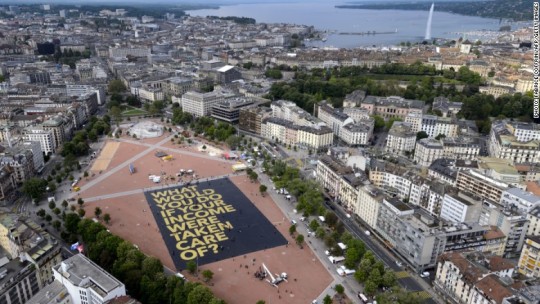
    On June 5, 2016, Switzerland will become the first country to hold a national referendum on the introduction of an Unconditional Basic Income. The proposal is essentially an income guarantee that would ensure everyone in the country is paid a minimum after-tax amount of 2,500 Swiss francs per month.

    The idea is that this would replace various other social programs. But unlike traditional welfare, people would be allowed to work. If you happened to be making less than 2,500 Swiss francs per month, then you would simply get topped up to ensure you hit this minimum income level.

    Supporters believe that a dramatic rethink of income redistribution is needed in our current information economy where income inequality is rising and productivity gains don’t seem to be getting applied evenly. 

    There is also an argument that a basic income guarantee could encourage more entrepreneurship. If we didn’t need to work, would more of us start a company and/or pursue our passions?

    Personally, I’m not sure about an income guarantee. It’s difficult to predict the broader impacts. But it’s worth exploring and many people – are various ends of the political spectrum – are doing just that. (Additional reading material can be found here, here, and here.)

    I haven’t made up my mind on this topic, so I would be curious to hear your thoughts in the comments below.

    Image: CNN Money

  • Towards decentralized city building

    One of the
    most profound shifts taking place today – because of new technologies – is
    that of decentralization. I’ve written about this before, but I keep coming
    back to it because I find it so fascinating.

    It’s
    happening to varying degrees, but as a general trend, I believe it is leading
    to better data (less information asymmetries), more efficient markets, and the
    removal of many middle people. In the past, some intermediaries were necessary in
    order to act as proxies for portions of the market. But I believe that is
    changing.

    So what’s
    an example of this? Bitcoin. Bitcoin is an example of decentralization because
    no one entity controls it. It operates through a decentralized public ledger.
    And because of this, it has the potential to be highly disruptive to the way we
    think about currencies today.

    Put another
    way, I see decentralization as a way to leverage the wisdom of crowds. I am
    convinced that large groups of people can be incredibly intelligent when they’re
    allowed to contribute in the right ways. And I think this could solve many
    different problems, from the infighting we see within cities to broader market phenomena.

    As another example,
    there’s something new in the venture capital space called DAO – which stands
    for Decentralized
    Autonomous Organization
    . Essentially it’s a decentralized VC platform based
    off of a Bitcoin derivative currency.

    But perhaps
    the most noteworthy and relevant feature is that it allows its large pool of
    investors to anonymously vote on which investments to pursue. This is in
    contrast to a more centralized approach where an investment committee would
    meet behind closed doors in a big boardroom and make a decision. This would be the
    more typical approach.

    If you’re
    not in the tech space, the above may not seem all that exciting to you. But I
    see many parallels between venture capital and real estate development, which is
    one of the reasons I follow the space. So I can’t help but wonder what this
    trend could ultimately mean for real estate, design, and other city building industries.

    I can
    certainly imagine a world where the forces that shape our cities are more
    collective and decentralized in nature. It’s already starting to happen through crowdsourcing, social media, ridesharing, and other online platforms.