Daily insights for city builders, delivered every morning at 6 AM ET. I’m Brandon Donnelly — a Toronto-based real estate developer and founder of Globizen. I’ve been writing here since 2013.

Tag: tech

  • What Facebook knows about you

    Here is an eye-opening article from data scientist Vicki Boykis outlining the number of ways in which Facebook collects data about its users. It’s called: What should you think about when using Facebook?

    One of the more surprising tidbits from Boykis’ article is that Facebook collects keystrokes. That means if you start typing a status update but never actually post it, that information is still fair game.

    Facebook previously used this data for a study on self-censorship. That sounds like like a fascinating study, but I’m sure the thought is also scaring many of you if you care about privacy.

    Here is a quote from the article that gets at the core of what is going on:

    “The fundamental purpose of most people at Facebook working on data is to influence and alter people’s moods and behaviour. They are doing it all the time to make you like stories more, to click on more ads, to spend more time on the site.”

    A worthwhile read. And in case you didn’t already know, if you go to Settings -> Download a copy of your Facebook data, you can get a pretty good dump of your activity, including every private message you’ve ever sent on the platform.

  • Big bad (software) developers

    “There is no higher God in Silicon Valley than growth. No sacrifice too big for its craving altar. As long as you keep your curve exponential, all your sins will be forgotten at the exit.” –David Heinemeier Hansson

    Snap Inc. went public last week. Offering price was $17. Closing price on the first day was $24.48. Given that the company is not profitable and may never be profitable (their caveat, not mine), many people have been asking: Is a valuation somewhere around $34 billion justifiable?

    This is a common question when it comes to tech companies. And the answer usually comes down to something along the lines of this:

    The Snapchat story “is all about growth,” Mr. Nathanson said. “It’s not about economics.”

    It’s about the future.

    I love Snapchat and I think the company is run by a very creative founder. But now that Snapchat Stories was stolen by Instagram, they need, in my humble opinion, something new and killer to stick.

    How else will they meet their growth targets?

    On a related note, I recommend you read a piece by David Heinemeier Hansson called: Exponential growth devours and corrupts. That’s where the quote at the top of this post is from.

    Here is an excerpt:

    What sucker wants to earn $10 million/year at a 52.5% tax rate when you can get away with hundreds of millions in one take at just 15%? Nobody, that’s who.

    It’s hard to argue that boards, founders, and their financiers aren’t just doing exactly what the incentives are coaxing them to do.

    Which is why growth is now everything and residual value is nothing. In fact, the latter can be outright harmful to the former. When you’re being priced on the hopes and dreams of potential, reality can be a dangerous and undesired competitor. Best just to appeal to the exponential curve and let the imagination roam free. An epic capital gains score awaits!

  • The Anti-Portfolio

    In the world of venture capital, it is not uncommon to make most of your money off only a small fraction of your investments. Here’s how Fred Wilson describes his firm’s “batting average”:

    “I’ve said many times on this blog that our target batting average is “1/3, 1/3, 1/3” which means that we expect to lose our entire investment on 1/3 of our investments, we expect to get our money back (or maybe make a small return) on 1/3 of our investments, and we expect to generate the bulk of our returns on 1/3 of our investments.”

    I’m guessing that this is one of the reasons why mistakes are more readily embraced – or even celebrated – in venture capital and in tech. It’s part of the DNA of the industry.

    A perfect example of this is something called the Anti-Portfolio. Venture capital firm, Bessemer Venture Partners, has a page up on their website dedicated to “honoring those we missed.” It is a list of phenomenally successful companies that for various reasons BVP decided not to invest in. That is, they had the opportunity but they decided to pass.

    Here’s a taste (copied verbatim from their site):

    • [Apple] BVP had the opportunity to invest in pre-IPO secondary stock in Apple at a $60M valuation. BVP’s Neill Brownstein called it “outrageously expensive.”
    • [Facebook] Jeremy Levine spent a weekend at a corporate retreat in the summer of 2004 dodging persistent Harvard undergrad Eduardo Saverin’s rabid pitch. Finally, cornered in a lunch line, Jeremy delivered some sage advice “Kid, haven’t you heard of Friendster? Move on. It’s over!”
    • [Google] Cowan’s college friend rented her garage to Sergey and Larry for their first year. In 1999 and 2000 she tried to introduce Cowan to “these two really smart Stanford students writing a search engine”. Students? A new search engine? In the most important moment ever for Bessemer’s anti-portfolio, Cowan asked her, “How can I get out of this house without going anywhere near your garage?”

    As I was going through BVP’s Anti-Portfolio, I immediately thought about how different this sensibility is compared to the real estate industry. I mean, could you imagine a developer celebrating all of the sites she or he passed on and all of the projects that lost or made no money?

    One of the reasons you do this is to learn from your mistakes. So perhaps we could all use some sort of “anti-portfolio.”

  • People stay the same

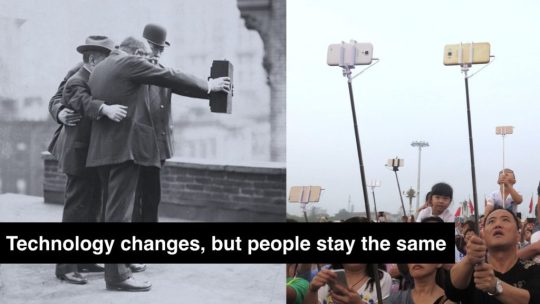
    Andrew Chen recently delivered a keynote at StartCon in Australia called: What’s Next in Growth? You can find his entire talk, here, on his blog. 

    One of the themes of his talk is that, “technology changes, but people stay the same.” I like that. See above.

    But more specifically, his presentation focuses on 3 techniques for growing businesses and products: customer referrals, viral content, and bootstrapping marketplaces. All of it is interesting, but I’m particularly fascinated by the last one.

    Marketplaces are all around us. Uber is a marketplace that pairs drivers and riders. Bars are a marketplace that try to pair people together. Finding, trading, and transacting (whatever that might mean for the marketplace in question) seems so fundamental to humans. And cities really empower that.

    The challenge with marketplaces is that they’re hard to start. There’s always a chicken-and-egg problem and so one side of the marketplace usually needs to be “hacked” at the beginning.

    Uber is a perfect example of this. At the outset, it didn’t have enough liquidity in its marketplace to compete with incumbent taxis. That is, it took longer to get an Uber than to get a taxi. 

    So instead, the value proposition was not about speed (or cheapness); it was about luxury. Uber was “everyone’s private driver.” That made waiting acceptable. You were getting a different level of service. The first Uber I ever called in Toronto took 20 minutes to get to my place in midtown.

    But obviously as liquidity increased, Uber was able to move downmarket and capture more (most) of the taxi market. Marketplaces are powerful once they get going. Network effects.

    I say all of this because, as many of you know, I have spent a lot of time wondering about the future of real estate marketplaces

    At the same time, I also think that many of these seemingly tech-focused lessons could be applied to cities. Starting an online marketplace is difficult. So is building a new neighborhood from scratch. In the end, it’s always about people.

  • Move fast and…

    I like this article – called Speed as a Habit – by Dave Girouard, CEO of the personal finance startup Upstart. It’s all about the importance of speed in business. Speed wins.

    “When you think about it, all business activity really comes down to two simple things: Making decisions and executing on decisions. Your success depends on your ability to develop speed as a habit in both.”

    What makes this topic so interesting is that, for a number of reasons, speed has a tendency to get sacrificed. It might be because the plan isn’t yet perfect or because there’s a belief that Y can’t happen until X is complete. 

    Perhaps it’s because the value of speed is harder to measure than the value of “perfection.”

    I particularly like the notion that you know you’re going fast enough when there’s a bit of discomfort and you’re feeling stretched, but not overstretched in an unsustainable way. Here’s another excerpt from Dave’s article:

    “While I was at Google, Larry Page was extremely good at forcing decisions so fast that people were worried the team was about to drive the car off a cliff. He’d push it as far as he could go without people crossing that line of discomfort. It was just his fundamental nature to ask, “Why not? Why can’t we do it faster than this?” and then wait to see if people started screaming. He really rallied everyone around this theory that fast decisions, unless they’re fatal, are always better.”

    A big part of this, I find, is momentum. An object at rest stays at rest. But an object in motion stays in motion. Remember this law? In this context, it is decisions that power motion and help to build and sustain momentum.

    Of course, the ideal outcome is both lightning fast and high quality decisions.

    The title of this post is homage to Facebook’s original corporate motto: “Move fast and break things.” This slogan was later adjusted to “Move fast with stable infrastructure”, which I think demonstrates our constant struggle between speed and quality.

  • Turning data exhaust into gold

    Last year, social media company Foursquare predicted that Chipotle would see a ~30% drop in its Q1 2016 sales. It knew this because the geo-location data from people using its app (check-ins and passive visits) was also down. They had figured out the relationship between foot traffic and sales. I think I wrote about this in the first half of last of year.

    Not surprisingly, lots of companies – including those on Wall Street – are now starting to pay attention to data sets such as these. Matt Turck wrote a great blog post about it this morning, called: The New Gold Rush? Wall Street Wants your Data. Here’s an excerpt:

    That a social media company could be building a data asset of immense value to Wall Street is part of an accelerating trend known as “alternative data”. As just about everything in our lives is getting sensed and captured by technology, financial services firms have been turning their attention to startups, with the hope of mining their data to extract the type of gold nuggets that will enable them to beat the market.

    The opportunity is open to a wide range of startups.  Many tech companies these days generate an interesting “data exhaust” as a by-product of their core activity.  If your company offers a payment solution, you may have interesting data on what people buy. A mobile app may accumulate geo-location data on where people shop or how often they go to the movies.  A connected health device may know who gets sick when and where.  A commerce company may have data on trends and consumer preferences. A SaaS provider may know what corporations purchase, or how many employees they hire, in which region. And so on and so forth.

    We may be calling this alternative data right now, but it is almost certainly just a matter of time before it simply becomes: the data. 

    I like the term “data exhaust” that Matt uses, because it feels like it accurately captures what is going on right now. The new economy is producing a lot of byproduct. If you clean it up and package it in the right way, then you might be creating additional value. But if you don’t, then it’s probably just exhaust.

  • Kanju (and the future of cities)

    There is so much interest in cities right now and I think that is absolutely wonderful. Earlier today my friend Derek shared a video with me on Twitter called, The Future of Cities. It’s by YouTuber Oscar Boyson, who I recognize from some of Casey Neistat’s videos, but whose own videos I have never watched before.

    I highly recommend you watch this video. It’s just over 18 minutes. If you can’t see the video below, click here.

    [youtube https://www.youtube.com/watch?v=xOOWk5yCMMs?rel=0&w=560&h=315]

    It’s well-executed, a joy to watch, and packed full of information and ideas. There are soundbites from lots of well known urbanists (both living and dead). And I also love how Oscar crowdsourced ideas and content from cities all around the world.

    The title of this blog post will make sense once you’ve watched the video.

  • Opendoor.com is so risky that it may just work

    image

    I have been writing about the startup Opendoor.com for over 2 years now. And I continue to believe that they are the most promising disruptor in the residential real estate space. 

    Here is the first post that I wrote back in July 2014 after they raised their first round of funding. Here is the second post that I wrote after they launched in Phoenix. And here is another post that I wrote 6 months ago where I argued, once again, that they are doing something worth paying attention to. (This last post explains how the platform works.)

    Well, about a week ago it was announced that they have raised another round of funding: a $210 million Series D. In all likelihood, the company’s valuation is now over $1 billion. Here’s the Techcrunch announcement where the message was: huge ass number; risky business model.

    In response to this, Ben Thompson wrote a terrific and widely shared blog post called, Opendoor: A Startup Worth Emulating. I love his post because he says what I have firmly believed and argued for many years: Zillow and Redfin are not disruptive real estate startups.

    This is what he says about Zillow:

    “And yet, the most successful real estate startup, Zillow (which acquired its largest competitor Trulia a couple of years ago), is little more than a glorified marketing tool: the company makes most of its revenue by getting real estate agents — the ones collecting 6% of fees, split between the buying and selling agents — to pay to advertise their houses on the site. Certainly a free tool that makes it easier to find houses in a more intuitive way is valuable — Zillow has acquired the sort of userbase that allow it to build an advertising business for a reason — but at the end of the day the company is a tax on a system that hasn’t really changed in decades.”

    And though very risky, he argues that Opendoor is far better positioned to shake up the status quo. 

    Here are two of his key points:

    “Sellers are uniquely disadvantaged under the current system, which is another way of saying they are an underserved market with unmet needs.” [Sellers are the side of the market that Opendoor is specifically targeting.]

    “Opendoor has a new business model: taking advantage of a theoretical arbitrage opportunity (earning fees on houses sold at a slight mark-up) by leveraging technology in pursuit of previously impossible scale that should, in theory, ameliorate risk.”

    And here’s what that could ultimately mean for the industry:

    “Opendoor has many more reasons why it might fail than Zillow or Redfin, but its potential upside is far greater as a result. First is the immediate opportunity: sellers who can’t wait. However, as Opendoor grows its seller base, especially geographically, its risk will start to decrease thanks to diversification and sheer size; that will allow it to lower its “market risk” charge which will lead to more sellers. More sellers means both less risk and an increasingly compelling product for buyers to access, first with a real estate agent and eventually directly. More buyers will mean lower marketing costs and faster sell-through, which will lower risk further and thus lower prices, pushing the cycle forward. It’s even possible to envision a future where Opendoor actually does uproot the anachronistic real estate agent system that is a relic of the pre-Internet era, and they will have done so with realtors not only not fighting them but, on the buying side, helping them.”

    I’m with Ben on this.

  • What could a connected lockbox mean for the residential real estate business?

    image

    I just discovered an interesting Dallas-based startup this morning called TOOR. They were on Shark Tank and haven’t yet launched their product, but it’s essentially a connected lockbox. Lockboxes are a mainstay of the residential real estate industry (they hold the keys so that co-operating agents can show a property) and they are becoming even more common nowadays because of Airbnb rentals.

    What caught my attention about TOOR is the app that goes along with the lockbox that also allows people to search for homes. Once you’ve found a home you can even find an agent for an escorted tour. I’m not clear on the exact workflow, but I am thinking that if you buy this connected lockbox you then have the opportunity to put your home up for sale on their platform.

    This is interesting because the app will also verify user identities and scan people’s IDs, so it helps to solve the security problem that agents today now solve. I could imagine the app storing my credit card so that if I go into a home unescorted and I do something mischievous, it then charges me. It also makes it really easy to just drive around and pop into homes by instantly scheduling appointments.

    In any event, I may have the exact user flows a bit wrong, but it’s fascinating to think about how something as simple as a connected lockbox could start to chip away at the status quo.

  • Your own signpost

    Work Market is an “on-demand talent marketplace.” They connect companies who need work done with skilled freelancers who are looking to do work. Conceptually, we’ve seen this before.

    But this morning, as I was reading this interview with the CEO, the following lines got me thinking:

    “By 2040, I’m pretty confident that every skilled worker will have their own signpost. You will be your own enterprise, in a much more meaningful way than the lip service of today.”

    We are already seeing this phenomenon play out. Social media, for instance, has made all of us our own media brands. So it’s not outlandish to believe that we will also see more, not less, of this in the labor market.

    But what I started thinking about is how this changing relationship between business and labor will ultimately manifest itself in our cities. 

    If we are indeed shifting toward a fluid and dynamic labor market where not only do people switch jobs more frequently, but they have their own signposts, then I have got to believe that urban density will only become more important. We’ll all need to be “plugged in” to the market – both online and offline.

    But what are your thoughts? I think this could make for an interesting discussion in the comments.