Daily insights for city builders, delivered every morning at 6 AM ET. I’m Brandon Donnelly — a Toronto-based real estate developer and founder of Globizen. I’ve been writing here since 2013.

Tag: taipei

  • More lights on buildings!

    Back in undergrad, I spent a summer living and working in Taipei and Hong Kong. It was my first time being in either of these cities and I absolutely loved it. I was studying architecture. I was really developing my love of big cities. And these felt like two very real and big cities.

    Below is a cheesy tourist photo that I paid someone to take of me from the Kowloon Pier. I still have access to it because obviously my mom has it framed and prominently displayed in her kitchen:

    I’m sharing this photo because one of the things that really stood out to me about Hong Kong, in particular, was how they lit their buildings. There were neon signs (which is something that Hong Kong is, or least was, famous for); lights shining up into the sky (bad, I know); and full light shows and animations across entire building elevations.

    I immediately thought to myself: “Why don’t we have fun like this? Especially considering that Toronto can get kind of dark during the winter.”

    Well, some twenty years later, we are now starting to have more lights. We fought hard for our placemaking sign at Junction House. The CN Tower has since been illuminated. And most recently, we got 160 Front Street West. But it turns out that building lights can be a little divisive:

    My view is exactly what it was when I first landed in hot and humid Hong Kong. And so I respectfully disagree with Jocelyn Squires (though I have great admiration for her work). Architectural lighting adds color and dynamism to our cities. It can also help our cities from all looking the same.

    Let’s stop being so conservative and have some fun. Nice work, 160 Front.

  • New Taipei Performing Arts Center by OMA

    The new OMA-designed Taipei Performing Arts Center opened up last Sunday and so you’ll now find lots of articles, photos, and drone videos circulating around online. The two partners-in-charge, Rem Koolhaas and David Gianotten, were also on this Monocle on Design episode talking about the genesis of the project and how they worked to optimize the various theater spaces.

    My favorite part of the whole story is how they actually won the design competition. The site is located next to Taipei’s renowned Shilin Night Market. And I can attest to this fame because I spent a summer living in Taipei while I was in university. This night market was the thing I was immediately told I needed to visit as soon as I stepped off the plane. And they weren’t wrong. I spent many a nights with those stinky tofu dishes that smell like feet but actually taste pretty good.

    But for whatever reason, the competition brief stipulated that the night market was to be torn down in order to make way for this new performing arts center. And since it was in the brief, almost everyone took it as a non-negotiable given. The only firm that didn’t — out of 140 bidders — was OMA. They questioned why the city couldn’t have both: a new performing arts center and their wildly successful night market.

    So that’s how OMA — at least partially — won the competition. And I’m certain that Taipei is better for it.

  • Shinjuku east exit cat — a new trompe-l’œil in Tokyo

    Last month, a giant 4K digital cat was installed on a billboard near Shinjuku station in Tokyo. See above tweet. It was created using a 26 x 62 foot LED display, and the resulting effect is very much a trompe-l’œil. The cat looks like it’s sitting on a ledge that is carved into the side of a building.

    The cat doesn’t have a name. But the New York Times has reported that locals have started to call it “Shinjuku east exit cat” because of where it is situated relative to the station. I am going to assume that this name sounds a little more endearing in Japanese.

    Having spent a fair bit of time in Asia in my twenties — mainly Taipei, Tokyo, and Hong Kong — I’ve always been impressed by how playful Asian cities are with their buildings, billboards, signage, and lighting. It can make us feel overly conservative. A trip to Tokyo can be like a trip to the future.

    I appreciate that most people don’t want their cities to be overrun with advertising, and that’s what billboards are usually for. It can get tacky. I get it. But sometimes it just makes sense to stick a massive 3D cat on the side of your building. It’s fun and it captures people’s attention.

  • Driving, walking, and taking transit during coronavirus

    The above chart from Bloomberg City Lab shows driving, walking, and transit mobility for 12 cities during this pandemic. The data source is Apple’s mobility index, which is based on travel queries within its app. So this isn’t going to capture how everyone is moving about, but presumably it is somewhat indicative. Although I couldn’t tell you the last time I used an app to tell me where to walk. Maybe that’s just me though.

    A few things are worth point out. As we have seen before on this blog, Seattleites (do people actually use this demonym?) stopped using transit at a faster rate than most other cities in the US. And according to the above chart, they have also been slower to return to it. This has me continuing to wonder, “why is Seattle such an outlier?” Generally though, these graphs do seem to suggest that people are shying away from transit.

    Taipei looks to have fared the best out of this subset of cities, which is consistent with what has been publicly reported about its handling of the pandemic. Taipei has turned out to be an exemplar city during all of this. This probably has a lot to do with the fact that it remembers SARS and knew what to do — the least of which was to simply take it seriously at the outset.

    Image: Bloomberg City Lab

  • A 17.6 square meter apartment in Taipei

    Dezeen recently announced its 2019 interior award winners and this 17.6 square meter (~190 square foot) flat in Taipei was selected for “small interior of the year.” Designed by the Taiwanese studio A Little Design, the space features a 3.4m ceiling height and a queen-size sleeping loft. The design is very well done.

    But as I was looking through the photos, I couldn’t help but think, “This is about the size of a parking spot in Toronto.” Typically, the minimum dimensions for a parking space are 2.6m wide by 5.6m long. If either side is obstructed or the drive aisle is substandard, these dimensions need to be increased.

    So we’re not far off.

    Some of you will interpret this to mean that the apartment is too small; whereas some of you will interpret this to mean that the spaces we dedicate to cars are too big. It’s a matter of perspective. But what is clear is that there is a market for small urban spaces. Here are some other examples from São Paulo, Beirut, and Moscow.

    Photo: Hey! Cheese

  • And the award for the tallest building of the year goes to…

    The Guardian recently published an article on vanity height in skyscrapers. What this is referring to is the unoccupied portions of tall buildings which are built purely for vanity reasons – that is, to increase the face height of the building and claim some superlative title.

    Example: 

    The tallest building in the world is currently the Burj Khalifa in Dubai. It’s 828m tall. To put that into perspective, the CN Tower in Toronto is 553m. But according to the Council on Tall Buildings and Urban Habitat, 29% of the Burj Khalifa’s height is actually unoccupied or “vanity space.” In other buildings, such as the Burj al Arab (also in Dubai), the amount of unusable space is as high as 39%. 

    For the purists out there, this of course raises the question of what should should be counted when assessing building height. Should it only be spaces where humans typically inhabit? The CN Tower has a lot of unoccupied space, which is why it is frequently excluded from these sorts of ego rankings. 

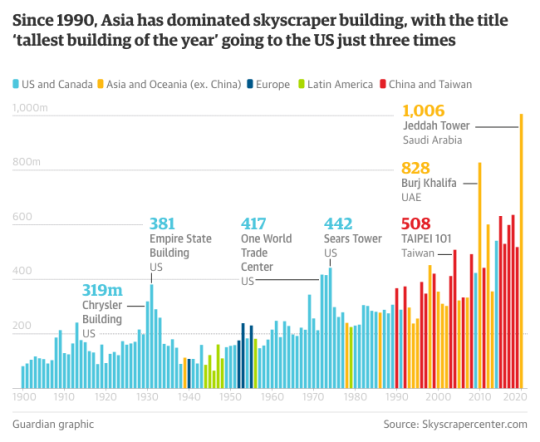
    But semantics aside, this is obviously not a new phenomenon and it’s interesting to think about this race to the sky as a proxy for what’s going on in the world. Below is a chart showing which regions have been able to lay claim to the “tallest building of the year” since 1900. 

    Since 1990, it has been all about Asia and Oceania and China and Taiwan…

  • 3 word addresses

    image

    When I was in undergrad, I spent a summer in Taipei. One of the things I remember about that summer was how difficult it was to locate building addresses. Sure, there was the whole language barrier thing, but I swear that some of those alleys (which I loved) didn’t follow a consistent numerical logic.

    It turns out that a lot of the world is actually poorly addressed. Think about the favelas in Brazil. How are they addressed? (Not actually a rhetorical question; I’ve never been.)

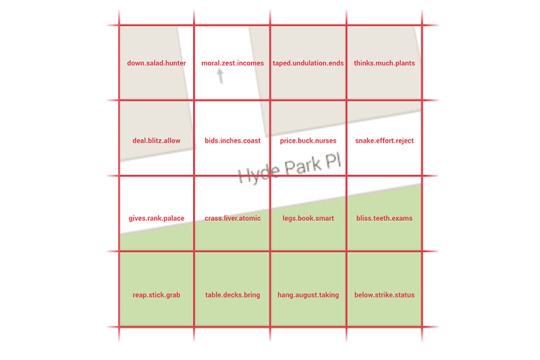
    A company out of the UK called what3words is trying to solve this problem. What they have done is created a 3m x 3m grid of the entire world and assigned a 3 word address to each square. Apparently that translates into about 57 trillion squares.

    This is similar to long / lat coordinates, except that 3 words are far more user friendly than a string of numbers. They are more easily remembered and more easily communicated to other people. The front door of the Starbucks in my neighborhood looks to be migrate.stunner.racing.

    One service that has built upon the what3words platform is a bike taxi service in Delhi that offers female drivers for female customers. It’s called Bikxie Pink and the 3 word addresses aim to solve the safety problem of inefficient pick-ups and drop-offs.

    Even in places where addressing isn’t generally a problem, I could see what3words helping. Interesting platform.

    Images: what3words

  • Taller and skinnier

    Tall buildings will sway in the wind. And when they get taller and skinnier, the swaying becomes more pronounced.

    In seismically active cities, such as Tokyo and Taipei, “tuned mass dampeners” are often used near the top of tall buildings to offset the swaying caused by an earthquake.

    But tuned mass dampeners are also found in cities like New York, so that developers can build even taller and skinnier.

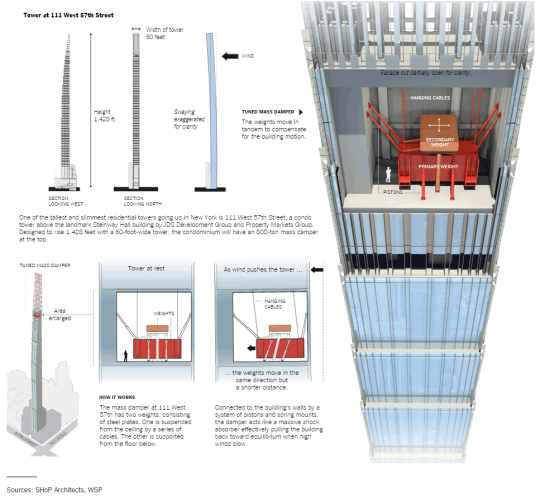
    Below is a diagram from the New York Times showing what one looks like and how it works. The example tower is 111 West 57th Street.

    Basically the masses are tuned to oscillate at a different frequency than the rest of the tower. So when the wind blows and the tower is moving one way, the weights are moving in the opposite direction and forcing the tower back towards some sort of equilibrium. 

    Neat. Structures was one of my favorite classes in architecture school.

  • Waterfront Cities of the World comes to Toronto

    image

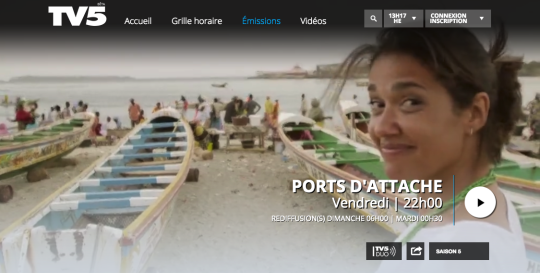
    This morning I was interviewed for a Montreal-produced TV show called Ports D’Attache. The English version of the show is called “Waterfront Cities of the World” and it airs on Discovery. 

    Here’s a list of all the cities they’ve visited in the first 4 seasons and here are all the shows from the first 2 seasons in English (which you can watch online for free).

    Rather than a travel show, it’s a look at the “spirit and soul” of each waterfront city through the lens of “local personalities.” There’s definitely a lot of fodder for city geeks and so I thought you all might find the series interesting.

    Toronto was the last stop of season 5. The other cities from this season include Philadelphia, Budapest, Rome, Taipei and Kuala Lumpur, to name only a few of them. 

    I’m glad that they decided to come to Toronto and I’m delighted that they invited me to be on the show. The team was great and, if you haven’t already noticed, I love supporting this city.

    The show will first be released in French (with my comments dubbed over), but an English version will follow. Once that version is released, I’ll circulate a link.

  • justthedesign:

    Hallway/Staircase At Casa Demo Taipei Taiwan By TBDC