Daily insights for city builders, delivered every morning at 6 AM ET. I’m Brandon Donnelly — a Toronto-based real estate developer and founder of Globizen. I’ve been writing here since 2013.

Tag: switzerland

  • K-shaped housing market

    If you’ve been following the housing market (in most cities) over the last year, this chart likely won’t surprise you. It is from a recent City Observatory article by Joe Cortright talking about the “k-shaped housing market” that we have seen emerge over the last year. The above is for the US, but I would imagine that the chart would look similar for Canada, as well as for other countries. Here’s an excerpt from the article:

    There’s an obvious explanation for the different trajectories of house prices and rents:  Low income workers rent; high income workers own and buy homes. High income households have been barely grazed by the Covid-19 recession.  In fact, the combination of low interest rates and enforced savings (because many kinds of consumption spending, including dining, entertainment, travel and even much retail have been constrained by lockdowns), mean higher income households may find housing a much more attractive spending item.  If you can’t go out to dinner, or take a vacation, you have more money to spend on a new home.  Low wage workers are in the opposite situation.  Low wage workers have borne the brunt of the recession; they are also much more likely to be renters than higher income households.

    It is perhaps worth reiterating that our fixation on homeownership is not universal. If you live in Switzerland — a very wealthy country — you’re more likely to rent than own. And if you live in Germany, you’re more likely to live in an apartment than in a low-rise house. Still, that doesn’t change the fact that the impacts of COVID-19, and our lockdowns, have been felt unequally. This chart is an example of that.

  • Voi Cube — the first store in Switzerland without any employees

    Swiss supermarket chain, Migros, has just launched what is being called the first store in Switzerland to not have any employees. The concept, called the Voi Cube, is a small container-like outparcel space that is open 24/7 and offers about 500 or so everyday items. You enter using their app, you grab what you need, and then you check yourself out. (Presumably the doors don’t open back up until you’ve paid.)

    The concept is being positioned as a convenience add-on to its existing grocery store business. Swiss federal labor laws still prohibit retail staff from working on Sundays, and so this is a clever way for people to shop for essentials during that time. They just got rid of the labor component. It also begins to show just how flexible and adaptable grocery stores can be as the retail landscape continues to evolve.

  • Der Wickelfisch

    A colleague in the office recently introduced me to a Swiss invention called the Wickelfisch (or baby fish). Below is a video showing you how they work. They’re so neat. So Swiss. And I obviously just ordered one. They’re available via this US company for $12-20, depending on the size.

    The video is of people swimming in the Rhein. Because swimming downstream in rivers — and ending up in a different location — is so popular in Switzerland, the Whickelfisch was invented as a way to keep your clothes and belongings dry. It also acts as a flotation device.

    I’m not planning on floating down the Don River anytime soon, but a Wickelfisch looks like the perfect bag to bring to the beach. Especially if you don’t want to leave your stuff unattended to while you go for a swim.

    Of course, the other neat thing about this video is that it shows you how awesome it is to have clean and swimmable water running through the middle of a city. Most people I know are afraid to swim in Lake Ontario out of fear they might grow a 6th toe.

    That’s too bad.

  • The 2018 Henley Passport Index

    image

    I still have every passport that I have ever owned. The older ones are far more interesting because I was younger and always looking for creative ways to travel around the world. The older I get the less interesting my passports get. Now I find it difficult to travel away from my desk at lunch.

    Passports are highly symbolic to me. It equals a particular kind of freedom. But I suppose that’s because I have a pretty good passport. 

    According to the 2018 Henley Passport Index, the Canadian passport is tied for 5th – along with Switzerland, Ireland, and the United States – in terms of the number of countries you can access without a visa. 176 countries in total.

    The highest ranking countries this year are Japan and Singapore. With those passports you have visa-free access to 180 countries. The last place country, at 105th, is Afghanistan. You get 24 countries.

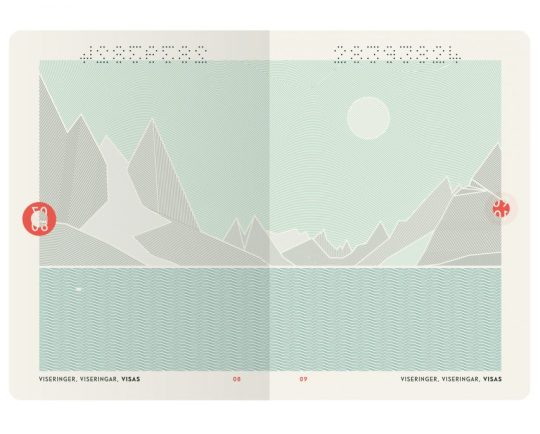
    Switching to design – because that matters – I think you would be hard-pressed to find better looking ones than the new Norwegian passport (pictured above and set to be put into circulation later this year) and the Swiss passport. The Swiss passport is allegedly the first to be professionally designed.

    How does your passport fare on the Passport Index?

    Image: Dezeen

  • Our bias toward homeownership

    We have a cultural bias toward homeownership in this country. Other countries have it too. We believe that homeownership is what you should aspire to.

    In 2011, Statistics Canada pegged the homeownership rate at 69%. 9.2 million households out of a total of 13.3 million. Other more recent data suggests that it’s probably a bit lower, though still higher than that of the US since the financial crisis.

    Regardless, more owners than renters.

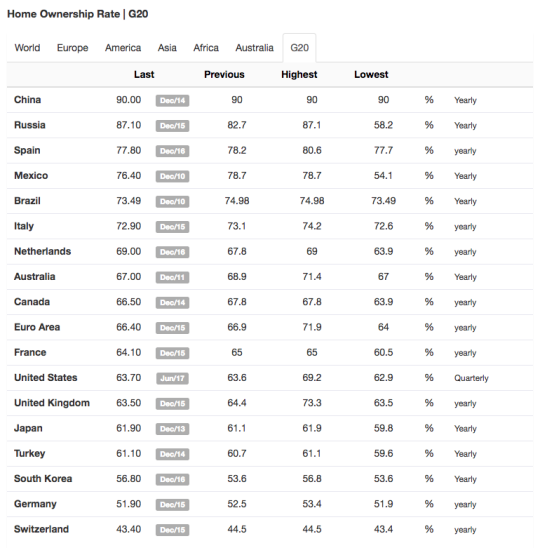
    I am not here to throw stones. I get it. I own my home. However, I do think it’s important to put this into perspective. Below is a chart from Trading Economics of homeownership rates in the G20:

    image

    At the bottom of the list – with the lowest homeownership rates – are Germany and Switzerland. Germany appears almost evenly split between owners and renters. And Switzerland is more renters than owners. 

    Both of these countries are wealthy. Both have a higher GDP per capita than that of Canada according to the World Bank and the International Monetary Fund. 

    Anecdotally, I can also say that some of the wealthiest people I know have made the decision to rent. They have simply decided to invest their capital elsewhere.

    I’m not trying to insinuate any sort of correlation with these statements, but I am trying to draw attention to a cultural bias.

  • Crypto Valley is emerging in this small Swiss canton

    There are 26 cantons in Switzerland. One of the smaller cantons is Zug. It has a population of around 122,000 people and an area of 239 square kilometers. The capital of the canton is the town of Zug, which itself has a population of about 29,256 (as of December 2015) and an area of 21.61 square kilometers. 

    To help put that into perspective, a single municipal ward in downtown Toronto (Ward 28 – Toronto Centre-Rosedale) had a population of over 66,000 people back in 2011.

    But as small as Zug may be, it is known as one of the most business friendly jurisdictions in the world. It has some of the lowest corporate taxes and the local revenue service prides itself on calling each taxpayer a “client” as opposed to a “debtor.” 

    As of 2010, the canton’s registry listed more than 29,000 companies, with more than 1,000 arriving and being started each year. There are about as many companies in the canton as there are people in the town of Zug.

    It’s a classic example of jurisdictional arbitrage and it’s one that Zug seems determined to keep. In July 2016, the town of Zug began accepting digital currencies, such as Bitcoin, as payment for city fees. 

    The impetus for doing so was to help advance Zug’s position as a global center for cryptocurrency innovation. There’s a very real government supported push to make Zug into “Crypto Valley.” And startups from around the world who are working in this space are starting to take notice. To me this feels like a natural extension given the canton’s existing strengths and reputation. (More reading here and here.)

    I’ve been to Zug maybe twice and, at first blush, it could easily pass for your average sleepy-yet-affluent Swiss town. But then you think about all of the money that flows through this place and you quickly understand why that modest, but very tasty, breakfast sandwich just cost you all of the CHF’s in your wallet. 

    Of course, if the entrepreneurs in Zug get their way, we won’t be carrying around wallets anymore. We’ll be paying with some sort of crypto varietal. And that would only strengthen this canton’s story: You don’t necessarily need to be big to be globally impactful – just put the right policies in the place. 

    Oh, and have a very high quality of life and an immensely beautiful natural setting. Those things help as well.

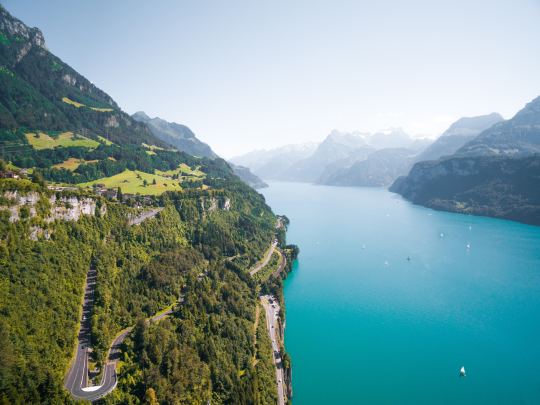
    Photo by Martin Sattler on Unsplash. The above photo is actually of Morschach in Switzerland, not of Zug. I couldn’t find a royalty free image of the latter. Please forgive me for the false advertising.

  • Weekend architecture roundup

    image

    Things have been far too serious around here this week with talk of interest rates, unrealized gains, flooding, and the EU referendum. So let’s change that and do a bit of an architecture roundup. It has been on my agenda for a few weeks now to move toward some sort of regular post about architecture and design.

    1.

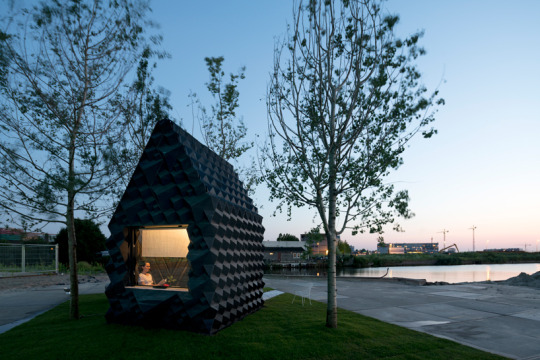
    DUS architects of Amsterdam recently completed a fully 3D printed urban cabin (pictured above). It totals 8 square meters and was printed using “bio-plastic,” which means the entire structure could be shredded and reprinted into something else. The Urban Cabin is a research experiment, but the thinking is that 3D printed homes could serve as an “on-demand housing solution” in rapidly urbanizing cities, in disaster areas, and so on. That said, the niche use case can quickly become the mainstream use case.

    2.

    REX has just released their design for a Performing Arts Center on the World Trade Center site. The design is a minimalist “mystery box” that provides an infinitely customizable interior canvas for directors. I have long been interested in the work of REX because of the hyper-rationale approach they quite often bring to architecture. It’s about allowing architecture to emerge from the project’s constraints, programmatic requirements, and so on. Here’s a video of the project.

    3.

    Finally, this Swiss chalet (not the restuarant) in the town of Anzère has got me pretty excited about the upcoming snowboard season. It was designed by the Amsterdam-based firm SeARCH. And I love the dichotomy between the raw exposed concrete and the softer wood details. Also note how the garage, situated beneath the house, is built into the mountain. It is connected to the house above via an elevator that is also carved into the mountain. Sadly, my ski retreats don’t typically involve James Bond-style lairs.

    Image: Copyright Ossip

  • New all-year, multi-valley, ski and snowboard destination approved in British Columbia

    I know it’s only August, but I am already thinking of snowboarding.

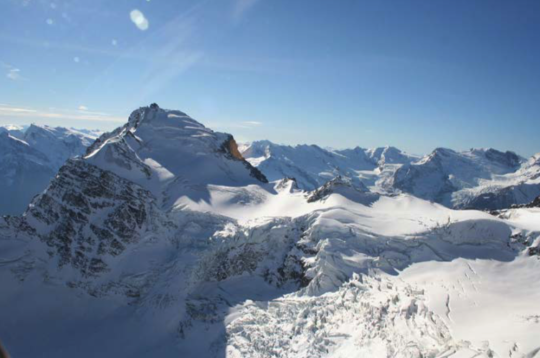
    And I just recently learned that the British Columbia government has given the go ahead for a new multi-peak and year-round ski destination near Valemount, BC. The summits will include Mount Pierre Elliot Trudeau, Twilight Glacier, Glacier Ridge, and Mount Arthur Meighen.

    Here is a photo of Mount Meighen (taken in September) from the project’s master plan.
    image

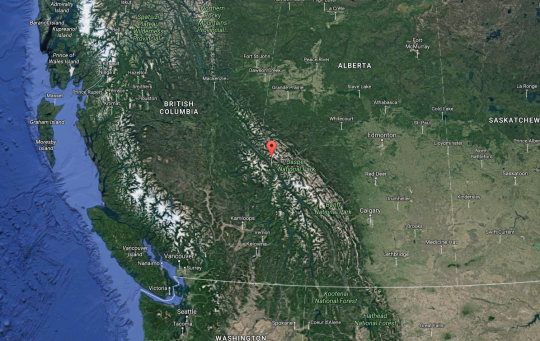
    Here is where Valemount is situated. It’s a 7 hour drive from Vancouver and a 5.5 hour drive from Edmonton.
    image

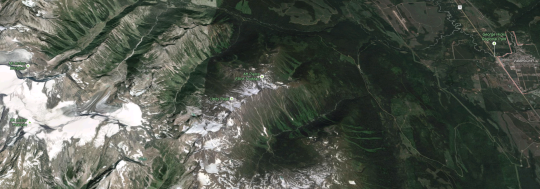
    Here is the mountain range in relation to Valemount. Right hand side of the image. Sorry, I know it’s small.
    image

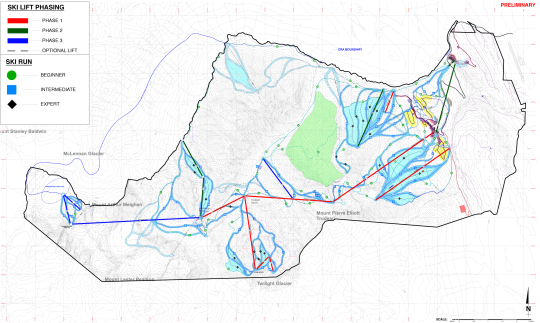
    Here is the master plan that just got approved. Valemount is once again on the right / east.
    image

    And here is why this is a big deal (at least in my world):

    – Valemount has the potential to be “the third largest lift-serviced non-contiguous vertical” in the world at 2,260m (7,415 feet). Zermatt, Switzerland and Chamonix, France are number 1 and 2. Of course, it would still get the title of the largest vertical drop in North America.

    – There are a number of glaciers that would allow for summer / year-long snowboarding.

    – They want to create a multi-valley snowboarding experience, similar to the European Alps.

    – The mountain range has one of the highest average snowfalls in Canada. Valemount gets 5.36m (211 inches) per year and at an elevation of 1,800m it’s 14m (551 inches) of snowfall per year. This is more than Whistler. Because of this, they are not planning any snowmaking.

    – There’s an airport nearby.

    – One of their guiding principles is to minimize the environmental impact.

    Construction is expected to begin in the spring of 2017 and the plan is to open to the public by December 2017. The first phase will include Twilight Glacier at an elevation of 2,530m (8,301 feet). So right from the outset, there will be summer skiing.

    If you’re curious what the master plan for a ski resort looks like, you can download the entire report here. It’s only 324 pages.

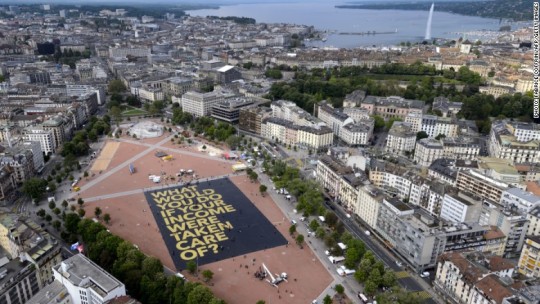
  • Should Switzerland adopt an unconditional basic income guarantee?

    On June 5, 2016, Switzerland will become the first country to hold a national referendum on the introduction of an Unconditional Basic Income. The proposal is essentially an income guarantee that would ensure everyone in the country is paid a minimum after-tax amount of 2,500 Swiss francs per month.

    The idea is that this would replace various other social programs. But unlike traditional welfare, people would be allowed to work. If you happened to be making less than 2,500 Swiss francs per month, then you would simply get topped up to ensure you hit this minimum income level.

    Supporters believe that a dramatic rethink of income redistribution is needed in our current information economy where income inequality is rising and productivity gains don’t seem to be getting applied evenly. 

    There is also an argument that a basic income guarantee could encourage more entrepreneurship. If we didn’t need to work, would more of us start a company and/or pursue our passions?

    Personally, I’m not sure about an income guarantee. It’s difficult to predict the broader impacts. But it’s worth exploring and many people – are various ends of the political spectrum – are doing just that. (Additional reading material can be found here, here, and here.)

    I haven’t made up my mind on this topic, so I would be curious to hear your thoughts in the comments below.

    Image: CNN Money

  • Morphosis proposes tallest building in Europe — in the Swiss Alps

    image

    A controversial design proposal for the tallest building in Europe has been making the rounds online over the past few days. Designed by Morphosis Architects, the 381 meter-tall tower is being proposed in Vals in the Swiss Alps. 

    And pretty much everyone seems to hate it.

    When I first came across the design, I truthfully had to do a double take to see if it was actually a real proposal. But it seems to be. Everyone is writing about it.

    Clearly there are some interesting tensions at play here. You have a hyper-urban building typology in a mountain town setting, but with materials that are intended to make it dematerialize into the landscape.

    So I thought we could have a discussion about it in the comments.

    Is a small mountain town the right place for the tallest building in Europe? Could it work as a one-off tower?

    Image: Morphosis Architects via ArchDaily